Celebrity Birthdays - June

Ah, June — school’s out, pools are open, and June birthday people are here to remind you that the fun starts now.
These stars are summer’s opening act, kicking off long days, warm nights, and questionable tan lines. Grab a lemonade and join us in celebrating the folks who make June the month of all things bright and loud.

- Details
- Category: Celebrity Birthdays - June
Shia LaBeouf’s career has taken more turns than a GPS with a weak signal and a mind of its own. One minute he’s the scrappy kid on a Disney Channel show, the next he’s swinging through the jungle with Indiana Jones, then he’s live-streaming performance art while wearing a paper bag on his head that says “I am not famous anymore.” He’s the rare actor who seems just as comfortable in a blockbuster robot explosion as he is sitting silently in an art gallery for six hours straight, which makes following his career less like watching Hollywood news and more like tracking an unpredictable weather pattern. With Shia, you never quite know what’s coming next—but you can be sure it won’t be boring.
 June 11, 1986, in Los Angeles, California

Trivia
- Shia’s first name comes from the Hebrew word for “gift from God,” while his last name, LaBeouf, is French for “the beef,” making his full name sound like a very spiritual steak.
- He was named after his grandfather, who was a comedian and physician, which may explain both his sense of humor and his occasional life prescriptions.
- Shia earned a Daytime Emmy Award in 2003 for his role on Even Stevens, beating out several adult actors while he was still a teenager.
- He became one of the few actors in history to appear in three of the highest-grossing films ever at the time: Transformers, Transformers: Revenge of the Fallen, and Indiana Jones and the Kingdom of the Crystal Skull.

- Details
- Category: Celebrity Birthdays - June
Colleen Camp has the kind of career where you suddenly spot her in a movie and think, “Wait a minute, I know her!” She’s been the witty side character, the glamorous guest star, the mysterious maid, and probably the only person who could survive both Apocalypse Now and a Clue dinner party in the same résumé. If Hollywood were a big, chaotic house full of secret passages and oddball characters, Colleen Camp would be the one who knows where all the doors lead—and still manages to steal the scene on her way through.
 June 7, 1953, in San Francisco, California
Trivia
- She appeared in the war epic Apocalypse Now (1979).
- She is best known for playing Yvette the maid in the cult classic Clue (1985).
- She has guest-starred on shows like The Love Boat and Magnum, P.I.
- She worked as a producer on the comedy film The House Bunny (2008).
- She began her career in smaller television and film roles in the 1970s.
- She has appeared in both serious dramas and broad comedies.
- She is an avid birdwatcher and gardener.

- Details
- Category: Celebrity Birthdays - June
Julie White has perfected the art of playing characters who say exactly what everyone else is too polite—or too scared—to say. On screen, she’s the kind of mom who will embarrass you in front of your friends, the neighbors, and possibly a few giant robots. On stage, she can verbally dismantle an entire room with a single speech. Off screen, though, she’s a book-loving, gardening, animal-rescuing sweetheart—which just proves that the funniest, sharpest characters are often powered by the nicest people.
June 4, 1961, in San Diego, California
Trivia
- Julie White won the 2007 Tony Award for The Little Dog Laughed.
- She played Nadine on the sitcom Grace Under Fire for several seasons.
- She is widely recognized as Judy Witwicky in the Transformers film series.
- White spent many years working in regional theater before gaining national fame.
- She is an advocate for animal rescue and pet adoption.

- Details
- Category: Celebrity Birthdays - June
Landing a starring role on a hit television series is impressive enough. Doing it almost immediately after graduating from drama school is the sort of thing that makes aspiring actors stare at their résumés and sigh dramatically. Fortunately for Camila Mendes, talent, timing, and plenty of determination all arrived at the audition together.
June 29, 1994, in Charlottesville, Virginia
Trivia
- She is of Brazilian heritage and speaks Portuguese.
- Graduated from New York University's Tisch School of the Arts in 2016.
- Riverdale was her first professional acting audition.
- Played Veronica Lodge for all seven seasons of Riverdale.
- Won the Teen Choice Award for Choice Scene Stealer in 2017.
- Starred in The Perfect Date with Noah Centineo.
- Appeared in the hit film Palm Springs.
- Starred in Dangerous Lies, Do Revenge, Upgraded, and Música.
- Details
- Category: Celebrity Birthdays - June
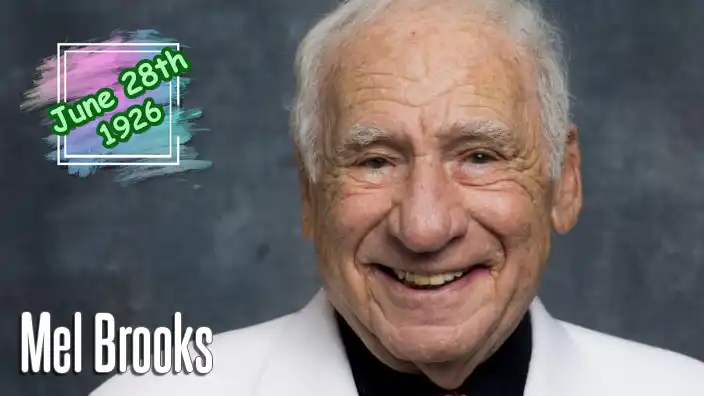
Mel Brooks has spent a lifetime proving that absolutely nothing is safe from a good joke. Cowboys, monsters, space heroes, kings, outlaws, vampires, and even history itself have all wandered into his comedy workshop and come out considerably funnier than they went in. If laughter adds years to your life, Brooks may be personally responsible for keeping half of Hollywood pleasantly behind schedule.
June 28, 1926, in Brooklyn, New York
Trivia
- Wrote for Your Show of Shows with Carl Reiner, Neil Simon, and Woody Allen.
- Co-created Get Smart with Buck Henry.
- Won an Academy Award for The Producers (1967).
- Directed both Blazing Saddles and Young Frankenstein in 1974.
- Created Spaceballs, High Anxiety, and Robin Hood: Men in Tights.
- Adapted The Producers into a record-breaking Broadway musical.
- Is one of the select entertainers to achieve EGOT status.
- Was married to Academy Award-winning actress Anne Bancroft for 41 years.
- Details
- Category: Celebrity Birthdays - June
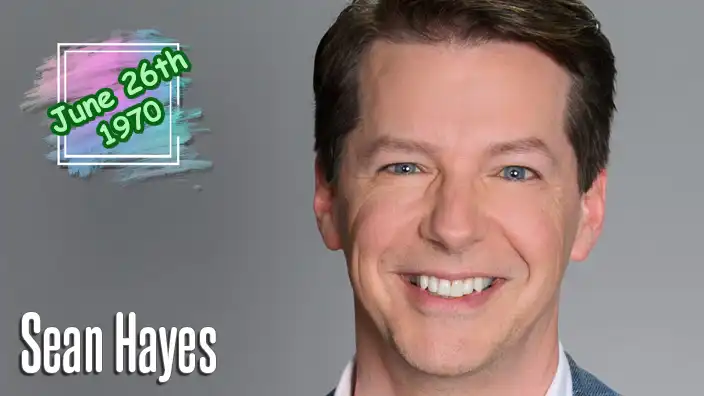
Some performers spend years trying to steal every scene they're in. Sean Hayes solved that problem by simply walking into the room. Armed with impeccable comic timing, expressive facial reactions, and enough energy to power a small city, he's made audiences laugh for decades. Whether he's playing the unforgettable Jack McFarland, collecting awards on Broadway, or chatting with celebrity guests on a hit podcast, Hayes has mastered the rare art of making comedy look effortless—something that is, of course, anything but.
June 26, 1970, in Evergreen Park, Illinois
Trivia
- Studied piano performance at Illinois State University.
- Worked as a classical pianist before acting.
- Best known as Jack McFarland on Will & Grace.
- Won a Primetime Emmy Award for Will & Grace.
- Received six Golden Globe nominations.
- Co-founded Hazy Mills Productions.
- Produced Hot in Cleveland and Grimm.
- Made his Broadway debut in Promises, Promises.
- Won the 2023 Tony Award for Good Night, Oscar.
- Co-hosts the SmartLess podcast with Jason Bateman and Will Arnett.
- Hosted the Tony Awards in 2010.

- Details
- Category: Celebrity Birthdays - June
Tate Taylor is the kind of filmmaker who might spend the morning directing a tense thriller scene and the afternoon rummaging through an antique shop looking for a 1930s coffee grinder. He’s got one foot in Hollywood and the other in a dusty old Southern attic full of history. And honestly, that probably explains a lot—when you grow up surrounded by stories, sometimes the only logical thing to do is grab a camera and start telling a few of your own.
June 3, 1969, in Jackson, Mississippi
Trivia
- Tate Taylor grew up in Jackson, Mississippi, the setting for The Help.
- He was childhood friends with The Help author Kathryn Stockett.
- Octavia Spencer, who won an Oscar for The Help, is a longtime friend of Taylor’s.
- He directed the James Brown biopic Get on Up in 2014.
- Taylor has acted in films and shows, including Breaking Bad.

- Details
- Category: Celebrity Birthdays - June
Willa Holland has the kind of cool, effortless vibe that makes it look like she just rolled out of bed, grabbed a guitar, fed the dogs, snapped a gorgeous travel photo, and accidentally became a television star before lunch. While other actors are busy perfecting their red-carpet poses, Willa seems more interested in finding the nearest sushi spot or planning her next adventure. She gives off the energy of someone who could save a city in a superhero show at night, then spend the next morning arguing with a barista about whether coffee counts as breakfast. Honestly, if laid-back confidence were a superpower, she’d never even need the costume.
June 18, 1991, in Los Angeles, California
Trivia
- She has a fascination with marine biology and enjoys visiting aquariums whenever she travels to a new city.
- Willa Holland once voiced the character of Aqua in the popular video game "Kingdom Hearts."
- Willa is an advocate for mental health awareness and has openly discussed her own struggles with anxiety to help others.
- Willa is an accomplished pianist and often uses music as a way to relax and express herself creatively.
- Willa was discovered by Steven Spielberg at the age of seven during a family holiday, which led to her signing with Ford Modeling Agency.

- Details
- Category: Celebrity Birthdays - June
Anne Winters may be a rising Hollywood star, but give her a board game and she’ll happily spend the evening arguing over hotel properties and triple-word scores. Somewhere between intense dramatic scenes and red-carpet events, she’s probably plotting a ruthless Monopoly strategy. And if her on-screen characters are any indication, you might want to think twice before agreeing to be the banker.
June 3, 1994, in Dallas, Texas
Trivia
- Anne Winters was born and raised in Dallas, Texas.
- She played Chloe Rice on the Netflix series 13 Reasons Why.
- Her role in Tyrant marked her first major TV breakthrough.
- She appeared opposite Nicolas Cage in Mom and Dad.
- Winters is a fan of board games like Monopoly and Scrabble.
- Details
- Category: Celebrity Birthdays - June
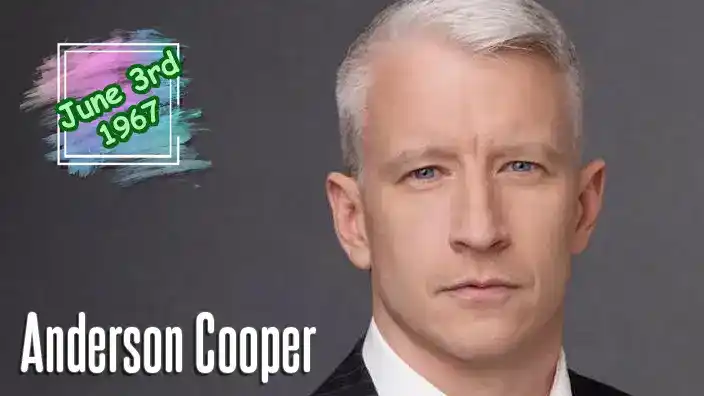
Anderson Cooper has reported from war zones, hurricanes, and political conventions—so there’s very little left that can surprise him. But according to friends, the one thing that truly rattles him is a messy desk. Somewhere in the world, chaos may be unfolding, but you can bet that his notes are still neatly stacked and color-coded. When the breaking news graphic pops up, the world may be in turmoil—but Anderson’s pen is exactly where it’s supposed to be.
June 3, 1967, in New York City, New York
Trivia
- Anderson Cooper is the son of artist and socialite Gloria Vanderbilt.
- He graduated from Yale University with a degree in political science.
- He began his career by filming war-zone reports on his own.
- Cooper hosted the reality show The Mole before becoming a major CNN anchor.
- He has won multiple Emmy Awards for his journalism.
- Details
- Category: Celebrity Birthdays - June
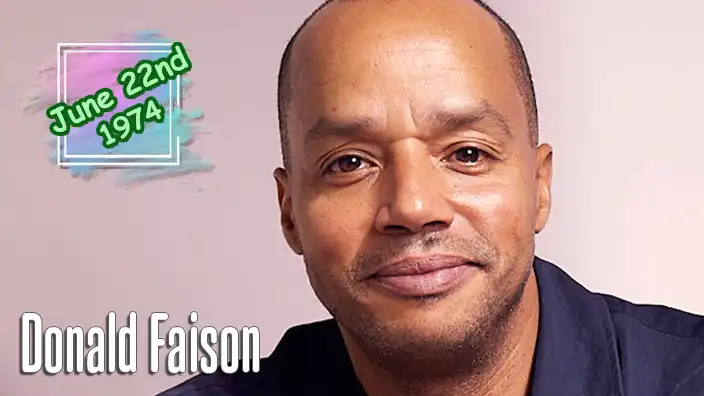
Hospitals are usually associated with serious business, but Donald Faison spent years convincing audiences that they could also be home to dance routines, elaborate practical jokes, and some of television's funniest friendships. Best known as Dr. Chris Turk on Scrubs, Faison combined comedy, charm, and impeccable timing to become one of the most memorable faces of early-2000s television. Born on June 22, 1974, he built a career proving that laughter can sometimes be the best medicine.
June 22, 1974. in Harlem, New York
Trivia
- Attended the Professional Children's School in Manhattan.
- Played Murray Duvall in Clueless (1995).
- Reprised Murray in the Clueless television series.
- Starred as Dr. Christopher Turk on Scrubs.
- Appeared in all nine seasons of Scrubs.
- Co-starred with Zach Braff throughout the series.
- Appeared in the football drama Remember the Titans.
- Starred in the sitcom The Exes.
- Has worked extensively as a voice actor.
- Co-hosts the Fake Doctors, Real Friends podcast.
- Known for both comedy and dramatic performances.
- Details
- Category: Celebrity Birthdays - June
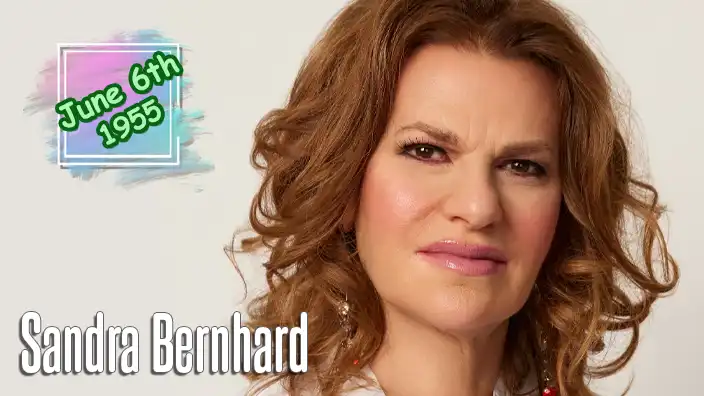
Sandra Bernhard never seemed particularly interested in staying in one lane. Stand-up comedian? Sure. Actress? Absolutely. Singer? Why not? Over the years, she has built a career out of surprising audiences, challenging expectations, and proving that entertainment is a lot more interesting when nobody follows the usual script. On Sandra Bernhard's birthday, we celebrate a performer whose career has included comedy clubs, television sets, movie screens, concert stages, and probably a few places where nobody quite knew what was going to happen next. Fortunately for her fans, that's usually where the fun begins.
June 6, 1955, in Flint, Michigan
Trivia
- Raised in Scottsdale, Arizona.
- Worked as a manicurist before becoming famous.
- Appeared on The Richard Pryor Show early in her career.Starred as Masha in The King of Comedy.
- Played Nancy Bartlett Thomas on Roseanne.
- Is also a singer, author, and radio host.
- Named one of Comedy Central's 100 Greatest Stand-Ups.
- Hosts the SiriusXM program Sandyland.
- Has maintained an entertainment career spanning nearly five decades.

- Details
- Category: Celebrity Birthdays - June
Alanis Morissette made it socially acceptable to scream-sing your feelings in the car with the windows up. She turned heartbreak into a stadium event and made angst sound poetic. And somewhere out there, someone is still passionately debating whether that spoon situation was technically ironic. Alanis probably smiles, shrugs, and writes another brilliant lyric about it.
June 1, 1974, in Ottawa, Canada
Trivia
- Jagged Little Pill has sold over 30 million copies worldwide.
- She won the Grammy Award for Album of the Year in 1996.
- She played God in the film Dogma (1999).
- Her music inspired a Broadway adaptation of Jagged Little Pill.
- She began her career as a teen pop singer in Canada.
- She has been open about her struggles with depression and eating disorders.
- Details
- Category: Celebrity Birthdays - June
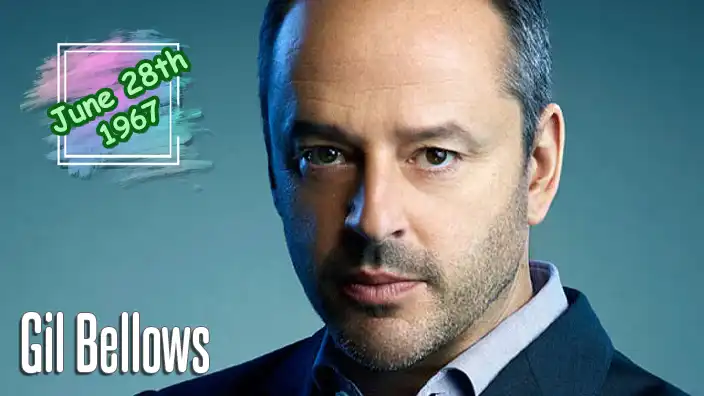
Hollywood is full of actors who can make an entrance, but Gil Bellows has mastered something much trickier—making audiences remember him long after the scene is over. Whether he's practicing law in a television courtroom, surviving prison in one of cinema's greatest films, or quietly stealing scenes without making a fuss about it, Bellows has built a career that proves you don't always need the loudest voice in the room to leave the biggest impression.
June 28, 1967, in Vancouver, Canada
Trivia
- Played Tommy Williams in The Shawshank Redemption (1994)
- Best known as Billy Thomas on Ally McBeal.
- Won a Screen Actors Guild Award as part of the Ally McBeal ensemble.
- Is also a producer, screenwriter, and director.
- Executive produced HBO's Emmy-winning Temple Grandin.
- Received a Peabody Award for Temple Grandin.
- Co-wrote, co-directed, produced, and starred in 3 Days in Havana.
- Appeared in Smallville, 11.22.63, Patriot, The Handmaid's Tale, American Gods, and Chucky.

- Details
- Category: Celebrity Birthdays - June
Robin Lord Taylor has the rare ability to make a top hat, a limp, and a sinister grin look downright stylish. As The Penguin, he could terrify an entire room without raising his voice—just a quiet sentence and that look in his eyes, and suddenly everyone’s checking for exits. Off screen, though, he’s more likely to be found tending his garden, which is comforting. After all, it’s nice to know the guy who ruled Gotham’s underworld is also perfectly capable of keeping a tomato plant alive.
June 4, 1978, in Shueyville, Iowa
Trivia
- Robin Lord Taylor studied theater at Northwestern University.
- He was college friends and later roommates with comedian Billy Eichner.
- His role as The Penguin on Gotham ran for all five seasons of the series.
- He appeared in The Walking Dead before his big breakthrough.
- Taylor is an avid gardener and often shares his plants on social media.

- Details
- Category: Celebrity Birthdays - June
Before there was Auto-Tune, vocal coaches, or pop stars lip-syncing through fog machines, there was Ann Wilson — belting out rock ballads with enough force to knock the hairspray off the '70s. Today, we crank the volume and raise a lighter (real or app-based) to celebrate the birthday of the woman who made “Crazy on You” feel like a spiritual awakening. If you've ever attempted to hit one of her high notes in the car, you already know: there’s only one Ann.
June 19, 1950, in San Diego, California
Trivia
- She moved frequently due to her father's military career, which exposed her to various cultures and music styles.
- Ann is best known as the lead vocalist of the rock band Heart, which she formed with her sister Nancy Wilson.
- Ann is an accomplished flautist who often incorporated the instrument into Heart’s music.
- She is a passionate advocate for animal rights and supports several animal welfare organizations.
- Despite her rock star persona, she enjoys knitting and often makes handmade gifts for friends and family.

- Details
- Category: Celebrity Birthdays - June
Paul Giamatti has built an entire career out of looking slightly stressed, mildly confused, and deeply concerned about something just off-camera. He’s the only actor who can walk into a scene, sigh heavily, rub his forehead, and instantly make you believe he’s been dealing with life’s nonsense since the early 1700s. If Hollywood ever makes a movie about a guy trying to assemble a complicated piece of furniture while questioning the meaning of existence, Paul Giamatti will not only star in it—he’ll probably win an award for it too.
June 6, 1967, in New Haven, Connecticut
Trivia
- He won an Emmy for his portrayal of John Adams in the HBO miniseries.
- He received an Oscar nomination for Cinderella Man (2005).
- He voiced characters in animated films like Turbo and The Ant Bully.
- He has a deep interest in astronomy and science.
- He often plays intellectual, anxious, or deeply human characters.
- He has worked in film, television, stage, and voice acting.
- He is known for his love of literature and classical music.

- Details
- Category: Celebrity Birthdays - June
Daryl Sabara spent his childhood saving the world with high-tech gadgets, jetpacks, and spy parents, which is a pretty tough act to follow in real life. After all, once you’ve battled villains before your voice finished changing, regular adulthood can feel suspiciously low on laser watches and secret headquarters. Still, Daryl managed the transition just fine—trading in spy missions for voice acting, dance moves, and family life—though somewhere deep down, you just know he still checks every briefcase for hidden buttons, just in case.
June 14, 1992, in Torrance, California
Trivia
- Best known as Juni Cortez in Spy Kids.
- Has an identical twin brother, Evan.
- Voiced characters in The Polar Express.
- Appeared as a dancer before acting.
- Married singer Meghan Trainor in 2018.
- Big fan of comic books and superheroes.

- Details
- Category: Celebrity Birthdays - June
Neil Patrick Harris has played so many confident, fast-talking characters that you almost expect him to enter every room with a dramatic spotlight and a perfectly timed one-liner. As Barney Stinson, he made wearing a suit sound like a heroic act, as if neckties were some kind of superhero uniform. In real life, he’s a magician, a Broadway star, and a guy who goes all-out for family Halloween costumes—so honestly, if he ever revealed he could pull a rabbit out of a briefcase while singing a show tune, nobody would be all that surprised. With NPH, there’s always a sense that the next trick is just about to happen.
June 15, 1973, in Albuquerque, New Mexico
Trivia
- He got his big break as the title character in Doogie Howser, M.D. at age 16.
- He played Barney Stinson on How I Met Your Mother for nine seasons.
- He won a Tony Award for Hedwig and the Angry Inch in 2014.
- He has hosted the Tony Awards multiple times.
- He once served as president of the Magic Castle in Hollywood.
- He appeared as a wild version of himself in Harold & Kumar Go to White Castle.
- He is married to actor and chef David Burtka.
- He and his family are famous for elaborate Halloween costumes each year.
- Details
- Category: Celebrity Birthdays - June
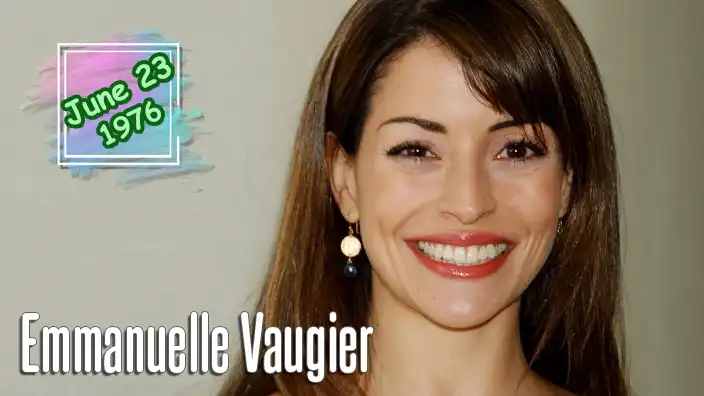
Television has introduced audiences to vampires, detectives, secret agents, Las Vegas crime investigators, and the occasional highly memorable ex-girlfriend. Emmanuelle Vaugier has somehow managed to play all of these types of characters and more without appearing to age in the process. Over the years, viewers have spotted her turning up in hit shows across nearly every genre imaginable. One week she might be solving crimes, the next dealing with supernatural threats, and somewhere in between making life considerably more complicated for Charlie Harper on Two and a Half Men. For an actress whose career spans decades, Vaugier has developed a remarkable talent for appearing exactly where television fans least expect—and most enjoy—seeing her.
June 23, 1976, in Vancouver, Canada
Trivia
- Began her career through modeling and commercials.
- Played Mia on Two and a Half Men.
- Played Detective Jessica Angell on CSI: NY.
- Appeared in Saw II, Saw IV, and Saw VI.
- Appeared in Smallville.
- Appeared in Stargate SG-1.
- Appeared in Supernatural.
- Played The Morrigan in Lost Girl.
- Has more than 100 acting credits.
- Active in animal welfare causes.
- One of Canada's most recognizable television actresses.

- Details
- Category: Celebrity Birthdays - June
Bonnie Tyler sings every line like the fate of the universe depends on it. If she ever asked you to pass the salt, it would probably sound like the opening line of a power ballad: “I NEED… THE SAAAAALT!” And somehow, you’d feel emotional handing it to her. That’s her magic. She could probably sing a grocery list and make it sound like the most dramatic moment of the decade. Eggs? Bread? Milk? Suddenly it’s a chart-topping anthem about breakfast and destiny.
June 8, 1951, in Skewen, Neath, Wales
 July 8, 2026, in Faro, Portugal
Trivia
- Bonnie Tyler’s real name is Gaynor Hopkins. She chose her stage name by randomly picking it from a newspaper!
- She had surgery on her vocal cords in 1976, which resulted in her distinctive raspy voice.
- "Total Eclipse of the Heart" was originally offered to Meat Loaf, but he turned it down.
- Bonnie once owned a five-star hotel in Portugal. Rock star by night, hotelier by day!
- She has a star on the Birmingham Walk of Stars, right next to Ozzy Osbourne. Rock royalty, indeed.
From Our Marks Catelog
-

Single parenthood is a crash course in multitasking—where making dinner, helping with homework, and dodging Lego...
-

Balloons are the life of any party, with their bright colors and whimsical shapes, but they also...
-

Letting things go is a skill we all think we have—until we’re in the shower five years later, replaying an...
-

Some holidays ask for deep reflection. Others demand fireworks, feasts, or elaborate decorations....
-
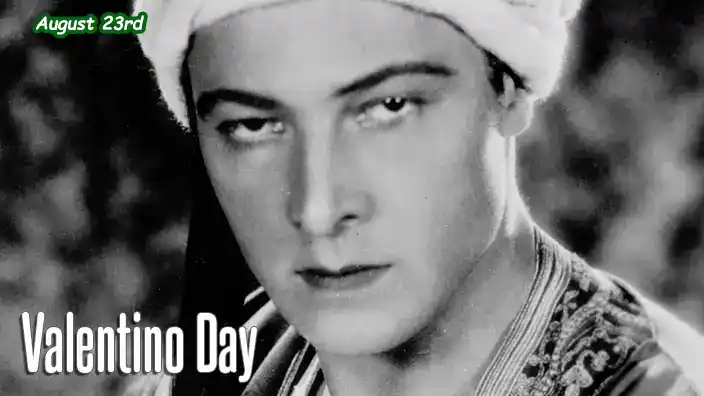
With a gaze that could melt ice and a mustache so perfectly groomed it might have had its own...
-

Imagine having the uncanny ability to make even the driest statistics sound like the punchline to a...

