Celebrity Birthdays - June

Ah, June — school’s out, pools are open, and June birthday people are here to remind you that the fun starts now.
These stars are summer’s opening act, kicking off long days, warm nights, and questionable tan lines. Grab a lemonade and join us in celebrating the folks who make June the month of all things bright and loud.

- Details
- Category: Celebrity Birthdays - June
Julie White has perfected the art of playing characters who say exactly what everyone else is too polite—or too scared—to say. On screen, she’s the kind of mom who will embarrass you in front of your friends, the neighbors, and possibly a few giant robots. On stage, she can verbally dismantle an entire room with a single speech. Off screen, though, she’s a book-loving, gardening, animal-rescuing sweetheart—which just proves that the funniest, sharpest characters are often powered by the nicest people.
 June 4, 1961, in San Diego, California

Trivia
- Julie White won the 2007 Tony Award for The Little Dog Laughed.
- She played Nadine on the sitcom Grace Under Fire for several seasons.
- She is widely recognized as Judy Witwicky in the Transformers film series.
- White spent many years working in regional theater before gaining national fame.
- She is an advocate for animal rescue and pet adoption.

- Details
- Category: Celebrity Birthdays - June
Pat Boone once went from singing “Love Letters in the Sand” to covering heavy metal—and somehow made it sound like something you could play at a church picnic. That takes courage. While the rest of the world was growing their hair out and rebelling, Pat kept his pressed jacket, polished smile, and steady handshake. And honestly? There’s something impressive about a man who can outlast trends, outlive critics, and still surprise you when you least expect it.
 June 1, 1934, in Jacksonville, Florida
Trivia
- Pat Boone attended Columbia University while launching his music career.
- He was the second-biggest charting artist of the 1950s behind Elvis Presley.
- He hosted The Pat Boone Chevy Showroom from 1957 to 1960.
- He released a swing-style heavy metal album in 1997 that stunned fans.
- He has written multiple books focused on Christian faith and values.
- He holds patents related to energy-efficient housing concepts.

- Details
- Category: Celebrity Birthdays - June
Allen has hosted and performed stand-up specials throughout his career.Tim Allen has spent decades proving that if something doesn’t work, the obvious solution is more power—more horsepower, more voltage, or at the very least, a louder grunt. He’s the only man who could convincingly play a handyman who breaks everything, a space ranger who doesn’t know he’s a toy, and Santa Claus who got the job because of a workplace accident. Somewhere out there, there’s probably a toolbox that opens itself when he walks into the room, just out of respect. And if it doesn’t, he’ll fix it—right after he adds a bigger engine to it.
June 13, 1953, in Denver, Colorado
Trivia
- He served over two years in federal prison before launching his comedy career.
- He studied communications in college and discovered stand-up there.
- In 1995, he had the number one TV show, movie, and book at the same time.
- He voiced Buzz Lightyear in all the main Toy Story films.
- He is a passionate car collector with several custom-built vehicles.
- Home Improvement was the most-watched sitcom in the U.S. during the 1990s.
- He turned down massive pay raises to keep Home Improvement from stretching past its creative peak.
- Allen has hosted and performed stand-up specials throughout his career.

- Details
- Category: Celebrity Birthdays - June
Joshua Jackson has had one of the most interesting career paths imaginable: from hockey-playing kid to teen heartthrob to dimension-hopping science-fiction hero. At this point, the only thing he hasn’t done is play a time-traveling chef who solves crimes with a frying pan. And honestly, if someone pitched that show, he’d probably nail it. After all, if you can survive both a hockey rink and a parallel universe, you can probably handle just about any script Hollywood throws your way.
June 11, 1978, in Vancouver, British Columbia
Trivia
- His mother was a casting director.
- He starred as Charlie Conway in The Mighty Ducks trilogy.
- He played Pacey Witter on Dawson’s Creek from 1998 to 2003.
- He starred as Peter Bishop on Fringe for five seasons.
- He appeared in the drama series The Affair.
- He made his Broadway debut in Children of a Lesser God in 2018.
- He is a fan of soccer.
- He became a father in 2020.

- Details
- Category: Celebrity Birthdays - June
Paul Schulze has played so many serious, intense characters that you half-expect him to walk into a room and immediately start delivering a speech about life, morality, or a looming federal crisis. He’s been a priest who loved pasta a little too much, a government agent who took his job very seriously, and a pharmacist with a heart bigger than his common sense. If there’s ever a TV show about a deeply conflicted man standing in a dimly lit room, looking worried while holding a cup of coffee, Paul Schulze is probably already cast. And honestly, he’ll probably be the best part of the scene.
June 12, 1962, in New York City
Trivia
- He studied acting at SUNY Purchase.
- He played Father Phil Intintola on The Sopranos.
- He portrayed Ryan Chappelle on 24.
- He appeared in the thriller Panic Room with Jodie Foster.
- He starred as Eddie Walzer on Nurse Jackie.
- Schulze has appeared in multiple Law & Order episodes.
- He has a strong background in theater.
- He often plays intense or morally complex characters.

- Details
- Category: Celebrity Birthdays - June
Tate Taylor is the kind of filmmaker who might spend the morning directing a tense thriller scene and the afternoon rummaging through an antique shop looking for a 1930s coffee grinder. He’s got one foot in Hollywood and the other in a dusty old Southern attic full of history. And honestly, that probably explains a lot—when you grow up surrounded by stories, sometimes the only logical thing to do is grab a camera and start telling a few of your own.
June 3, 1969, in Jackson, Mississippi
Trivia
- Tate Taylor grew up in Jackson, Mississippi, the setting for The Help.
- He was childhood friends with The Help author Kathryn Stockett.
- Octavia Spencer, who won an Oscar for The Help, is a longtime friend of Taylor’s.
- He directed the James Brown biopic Get on Up in 2014.
- Taylor has acted in films and shows, including Breaking Bad.

- Details
- Category: Celebrity Birthdays - June
Robin Lord Taylor has the rare ability to make a top hat, a limp, and a sinister grin look downright stylish. As The Penguin, he could terrify an entire room without raising his voice—just a quiet sentence and that look in his eyes, and suddenly everyone’s checking for exits. Off screen, though, he’s more likely to be found tending his garden, which is comforting. After all, it’s nice to know the guy who ruled Gotham’s underworld is also perfectly capable of keeping a tomato plant alive.
June 4, 1978, in Shueyville, Iowa
Trivia
- Robin Lord Taylor studied theater at Northwestern University.
- He was college friends and later roommates with comedian Billy Eichner.
- His role as The Penguin on Gotham ran for all five seasons of the series.
- He appeared in The Walking Dead before his big breakthrough.
- Taylor is an avid gardener and often shares his plants on social media.

- Details
- Category: Celebrity Birthdays - June
Josh Segarra has the kind of energy that makes you suspect he’s secretly had three espressos before every scene. One minute he’s singing in a Broadway musical, the next he’s delivering a villain monologue that makes heroes nervous, and somewhere in between he’s probably warming up for karaoke night. If enthusiasm were a superpower, Segarra wouldn’t need to audition for superhero shows—he’d just show up and they’d hand him a cape.
June 3, 1986, in Longwood, Florida
Trivia
- He studied acting at NYU’s Tisch School of the Arts.
- He played the villain Prometheus on the CW series Arrow.
- Segarra starred as Emilio Estefan in the musical On Your Feet!.
- He is a big professional wrestling fan.

- Details
- Category: Celebrity Birthdays - June
Maria Menounos seems like the kind of person who could wake up at 4 a.m., host a live show, interview three celebrities, record a podcast, squeeze in a workout, cook a Greek family dinner, and still have time to reorganize the living room “just because it felt cluttered.” Meanwhile, the rest of us are proud of ourselves for locating our car keys before noon. If Maria ever offered a “day in my life” schedule, most people would need a nap just reading it. Somewhere, a Dunkin’ Donuts manager from her teenage years is probably still shaking their head and saying, “Yeah, I knew she wasn’t going to stick around long.”
June 8, 1978, in Medford, Massachusetts
Trivia
- Maria speaks fluent Greek.
- She once worked as a janitor to pay for her education.
- Maria has a black belt in karate.
- She has interviewed every US President since Bill Clinton.
- Maria is a co-founder of the charity "Take Action Hollywood!"
- She directed and produced the independent film "Serial Buddies."
- Maria has battled a brain tumor and emerged stronger than ever.
- She is a published author, with books on health and wellness.

- Details
- Category: Celebrity Birthdays - June
Peter Dinklage has the rare ability to walk into a scene, say one perfectly delivered line, and leave everyone else looking like they forgot their scripts at home. Whether he’s trading insults in a medieval court or voicing a very important animated bird, he brings the same calm confidence, sharp wit, and unmistakable presence. He doesn’t rely on size, noise, or flashy theatrics—just timing, intelligence, and that slightly raised eyebrow that says, “I know something you don’t.” It’s the kind of performance style that proves you don’t need to tower over everyone to dominate a scene… you just need to be the smartest person in the room.
June 11, 1969, in Morristown, New Jersey
Trivia
- Peter Dinklage was the only actor the creators of Game of Thrones seriously considered for the role of Tyrion Lannister.
- He has a form of dwarfism called achondroplasia, but he has consistently avoided roles that rely on stereotypes, choosing characters with depth and intelligence.
- Before his acting career took off, he worked at a data-processing company, where he once accidentally deleted the entire database.
- Dinklage turned down several early acting jobs because they required him to play elves or leprechauns.
- He is a longtime vegetarian and animal-rights advocate, and he once appeared in a PETA campaign encouraging people to adopt, not shop, for pets.
- His breakout role came in the 2003 indie film The Station Agent, which earned him widespread critical praise.
- He provided the voice of the Mighty Eagle in The Angry Birds Movie and its sequel.
- Despite playing one of television’s most famous drinkers on Game of Thrones, the “wine” he drank on set was usually just juice.

- Details
- Category: Celebrity Birthdays - June
If you’ve ever swayed dramatically to a Cure song while staring thoughtfully out a rainy window, you can probably thank Simon Gallup’s bass line for that mood. While the rest of the band created the atmosphere, his bass made sure you felt it in your spine. Meanwhile, when he’s not fueling gothic soundtracks to teenage introspection worldwide, he’s likely restoring a motorcycle or tending a garden. Rock legend by night. Practical craftsman by day. That’s range.
June 1st, 1960, in Duxhurst, England
Trivia
- Simon Gallup joined The Cure in 1979.
- He briefly left the band in 1982 after internal tensions but returned in 1984.
- His bass playing is central to classics like “A Forest” and “In Between Days.”
- He is known for his preference for Fender bass guitars.
- Outside of music, he enjoys vintage motorcycles and gardening.

- Details
- Category: Celebrity Birthdays - June
If Joan Rivers were at your birthday party, she’d hug you, compliment your cake, and then immediately ask why you chose that shirt. Not in a mean way—just in a “we need to talk about your life choices” kind of way. Within ten minutes, she’d have roasted your decorations, your haircut, and possibly your dog’s fashion sense, and somehow you’d still be laughing. That was her magic. Joan could insult the wallpaper, the host, and the punch bowl, and everyone would still thank her for coming—because when she said it, it was funny, honest, and just a little too true.
June 8, 1933, in Brooklyn, New York
Trivia
- Joan Rivers graduated from Barnard College in 1954 with a degree in English.
- Her real name was Joan Alexandra Molinsky.
- She was a frequent guest host for Johnny Carson on The Tonight Show.
- In 1986, she became the first woman to host a network late-night talk show.
- She won a Daytime Emmy Award for The Joan Rivers Show in 1990.
- Joan won Celebrity Apprentice in 2009.
- She wrote more than a dozen books, including humor and memoir titles.
- Joan was an outspoken supporter of animal rights and AIDS charities.

- Details
- Category: Celebrity Birthdays - June
Richard Madden has built an impressive career playing kings, princes, soldiers, and superheroes, which must make everyday life a bit confusing. Imagine the poor delivery driver: is he dropping off a parcel to the King in the North, a Disney prince, or an immortal cosmic warrior? Meanwhile, Richard’s probably just standing there in sweatpants, wondering if he remembered to buy milk. It’s the classic actor’s dilemma—on screen he’s saving kingdoms and galaxies, but off screen he’s still trying to figure out what to cook for dinner without accidentally setting off the smoke alarm.
June 18, 1986, in Elderslie, Scotland
Trivia
- Richard Madden is an avid supporter of the Glasgow football team, Celtic F.C., and often attends matches when his schedule allows.
- Despite his rugged on-screen persona, Richard Madden has a fear of heights and avoids activities like bungee jumping or skydiving.
- He is fluent in French, having studied the language extensively, and often practices by reading French literature.
- Richard Madden once worked as a greeter at a Disneyland park during a break between acting gigs, a job he recalls fondly.
- He has a hidden talent for baking and enjoys making traditional Scottish shortbread, a skill he picked up from his grandmother.

- Details
- Category: Celebrity Birthdays - June
Karl Urban has one of those faces that looks equally at home in medieval armor, a futuristic space uniform, or a long leather coat while threatening corrupt superheroes. He’s spent so much time fighting orcs, criminals, aliens, and super-powered maniacs that you get the feeling he probably checks under the bed at night just in case there’s a rogue villain hiding there. And yet, off-screen, he’s the kind of laid-back New Zealander who’d probably rather be surfing than saving the galaxy. It’s comforting to know that if the world ever does end, there’s a decent chance Karl Urban will show up wearing the right costume for the situation.
June 7, 1972, in Wellington, New Zealand
Trivia
- He made his screen debut at the age of eight in a New Zealand television commercial.
- He played multiple different characters on Xena: Warrior Princess.
- He is a passionate surfer and often returns to New Zealand to hit the waves.
- He kept Judge Dredd’s helmet on for the entire Dredd film to stay true to the comics.
- He is a big fan of rugby and supports New Zealand’s national team, the All Blacks.
- He originally auditioned for the role of Aragorn in The Lord of the Rings.
- His mother worked in the film industry, which helped spark his interest in acting.
- He has appeared in both Star Trek and The Lord of the Rings, two of the biggest franchises in film history.
- Details
- Category: Celebrity Birthdays - June
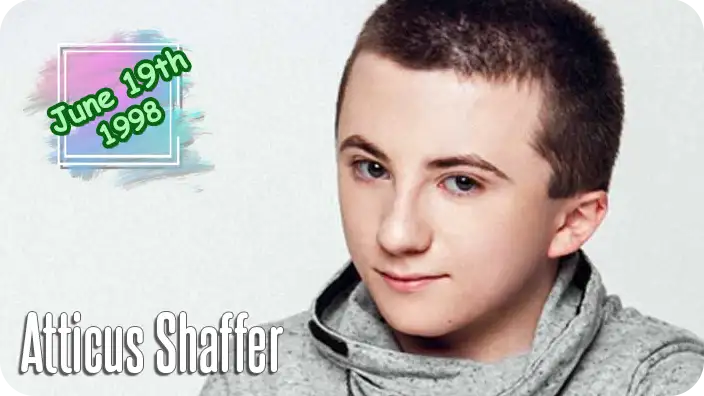
If you’ve ever met someone who whispers to themselves mid-sentence, obsesses over books like they’re rare treasure, and has the comedic timing of a Swiss watch, chances are you’ve either met Brick Heck or you’re related to someone who needs decaf. Today, we celebrate the birthday of Atticus Shaffer — the actor who turned awkward brilliance into an art form and made whispering your own name on national television weirdly charming.
June 19, 1998, in Santa Clarita, California
Trivia
- He was diagnosed with osteogenesis imperfecta, a genetic condition that affects bone density, at a young age.
- Atticus is an avid gamer and enjoys playing video games in his spare time.
- Atticus is best known for his role as Brick Heck on the popular TV series "The Middle," which aired from 2009 to 2018.
- Despite his condition, Atticus has a fearless approach to life and often jokes about his height and unique voice.
- He has a YouTube channel where he shares his thoughts on various topics, including faith, acting, and everyday life.

- Details
- Category: Celebrity Birthdays - June
Alanis Morissette made it socially acceptable to scream-sing your feelings in the car with the windows up. She turned heartbreak into a stadium event and made angst sound poetic. And somewhere out there, someone is still passionately debating whether that spoon situation was technically ironic. Alanis probably smiles, shrugs, and writes another brilliant lyric about it.
June 1, 1974, in Ottawa, Canada
Trivia
- Jagged Little Pill has sold over 30 million copies worldwide.
- She won the Grammy Award for Album of the Year in 1996.
- She played God in the film Dogma (1999).
- Her music inspired a Broadway adaptation of Jagged Little Pill.
- She began her career as a teen pop singer in Canada.
- She has been open about her struggles with depression and eating disorders.
- Details
- Category: Celebrity Birthdays - June
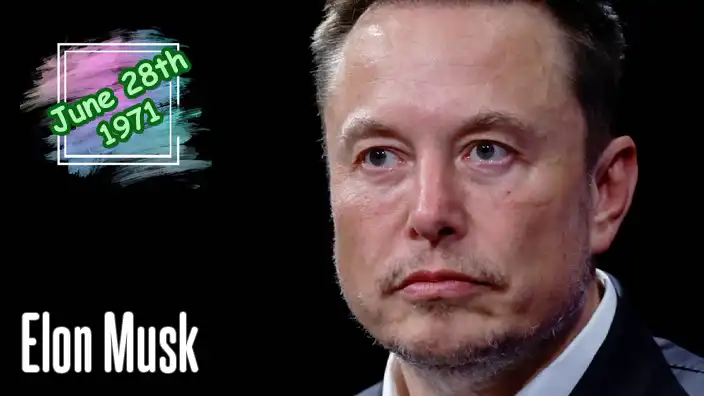
Most people celebrate a birthday by blowing out candles and hoping for a nice dinner. Elon Musk celebrates by launching rockets, building electric cars, digging tunnels, developing brain-computer technology, debating artificial intelligence, and occasionally rewriting the day's news before breakfast. Keeping up with him can feel less like following a businessman and more like trying to read tomorrow's headlines a day early.
June 28, 1971, in Pretoria, South Africa
Trivia
- Holds degrees in economics and physics from the University of Pennsylvania.
- Co-founded Zip2 before helping create PayPal.
- Founded SpaceX in 2002.
- Became CEO of Tesla in 2008.
- Acquired Twitter in 2022 and renamed it X in 2023.
- Co-founded Neuralink and The Boring Company.
- Has appeared as himself in The Simpsons, The Big Bang Theory, and Rick and Morty.
- Has long promoted the goal of establishing a human settlement on Mars.
- Has frequently ranked among the world's wealthiest people.

- Details
- Category: Celebrity Birthdays - June
Some people ease into fame. Judy Garland kicked down the door, sang “Over the Rainbow,” and accidentally became one of the most beloved performers in history before she was old enough to vote. She survived studio schedules that would make a drill sergeant nervous, wore shoes so sparkly they could guide aircraft, and still found time to become a concert legend, a movie icon, and the mother of another superstar. If life really were a trip to Oz, Judy didn’t just follow the yellow brick road—she sang it into existence.
June 10, 1922, in Grand Rapids, Minnesota
 June 22, 1969, in London, England
Trivia
- Born as Frances Ethel Gumm.
- Performed with her sisters as “The Gumm Sisters.”
- Won a special Juvenile Academy Award in 1940.
- Dorothy’s shoes were silver in the original book.
- Mother of Liza Minnelli.
- Her 1961 Carnegie Hall concert became a best-selling album.
- Starred in her own TV show in the early 1960s.
- Details
- Category: Celebrity Birthdays - June
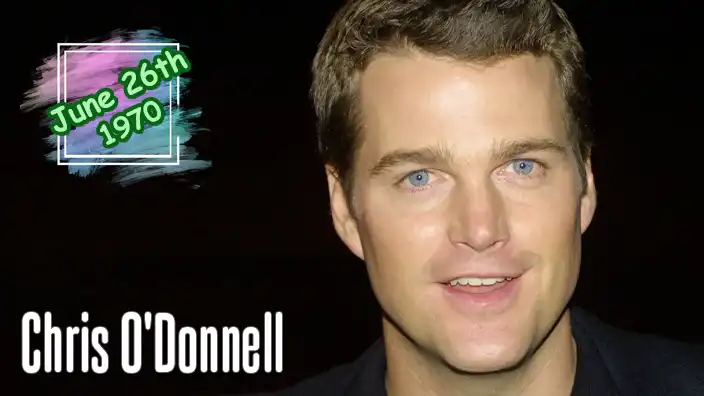
Not every actor gets the chance to battle supervillains alongside Batman, climb icy mountains, solve international crimes for fourteen television seasons, and still be known in Hollywood as one of the nicest people you'll ever meet. Chris O'Donnell has managed all of that while largely avoiding the celebrity drama that often comes with fame. His career has been built on steady performances, smart choices, and the refreshing ability to let his work do the talking.
June 26, 1970, in Winnetka, Illinois
Trivia
- Graduated from Boston College with a marketing degree.
- Began as a model and commercial actor.
- Earned a Golden Globe nomination for Scent of a Woman.
- Played Robin in Batman Forever (1995).
- Reprised Robin in Batman & Robin (1997).
- Starred in The Three Musketeers (1993).
- Played G. Callen on NCIS: Los Angeles for 14 seasons.
- Appeared in Vertical Limit and Kinsey.
- Married Caroline Fentress in 1997.
- Father of five children.
- Several family members made cameo appearances on NCIS: Los Angeles.
- Joined the cast of 9-1-1: Nashville in 2025.

- Details
- Category: Celebrity Birthdays - June
Mark Curry has the rare ability to make you laugh about things you swore you weren’t going to talk about. He’ll tell a story about family, sports, or life’s curveballs—and by the end, you’re laughing so hard you forget you were supposed to be serious. If timing is everything, Curry’s still running the clock like he’s up by two with ten seconds left—and yes, he’s taking the shot.
June 1, 1961, in Oakland, California
Trivia
- He starred in Hangin’ with Mr. Cooper from 1992 to 1997.
- He hosted Showtime at the Apollo, winning over tough live audiences.
- He appeared in the blockbuster film Armageddon (1998).
- He suffered severe burns in a 2006 home accident and returned to comedy afterward.
- He frequently participates in celebrity basketball events.
- He has been an advocate for mental health awareness.

- Details
- Category: Celebrity Birthdays - June
Ice Cube has one of the most famous serious faces in entertainment, the kind that looks like it could scare a parking ticket into apologizing. But then he shows up in a comedy like Friday or 21 Jump Street, and suddenly that same tough-guy stare is delivering some of the funniest lines in the movie. It’s the cinematic equivalent of a grizzly bear telling a perfectly timed joke. You laugh, but you’re also not entirely sure if you should. Somehow, Ice Cube has made a whole career out of that exact balance—and it works every time.
June 15, 1969, in Los Angeles, California
Trivia
- He was a founding member of the rap group N.W.A.
- He wrote many of N.W.A.’s most famous lyrics.
- His solo album AmeriKKKa’s Most Wanted was a major success.
- He made his acting debut in Boyz n the Hood.
- He co-wrote and starred in the Friday film series.
- He directed the film The Players Club.
- He co-founded the BIG3 professional basketball league.
From Our Marks Catelog
-

Single parenthood is a crash course in multitasking—where making dinner, helping with homework, and dodging Lego...
-

Balloons are the life of any party, with their bright colors and whimsical shapes, but they also...
-

Letting things go is a skill we all think we have—until we’re in the shower five years later, replaying an...
-

Some holidays ask for deep reflection. Others demand fireworks, feasts, or elaborate decorations....
-
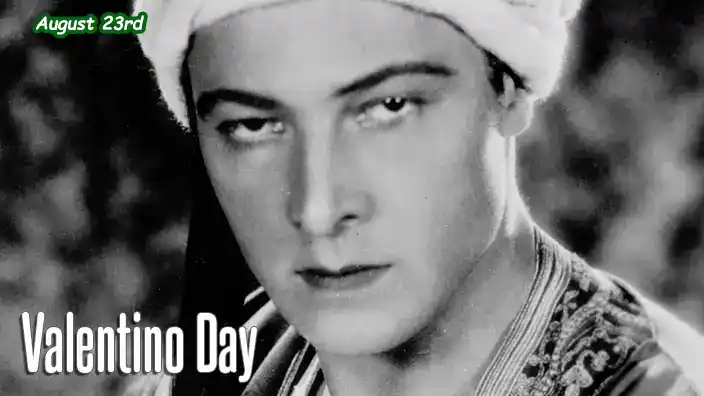
With a gaze that could melt ice and a mustache so perfectly groomed it might have had its own...
-

Imagine having the uncanny ability to make even the driest statistics sound like the punchline to a...

