June 28, 1971, in Pretoria, South Africa
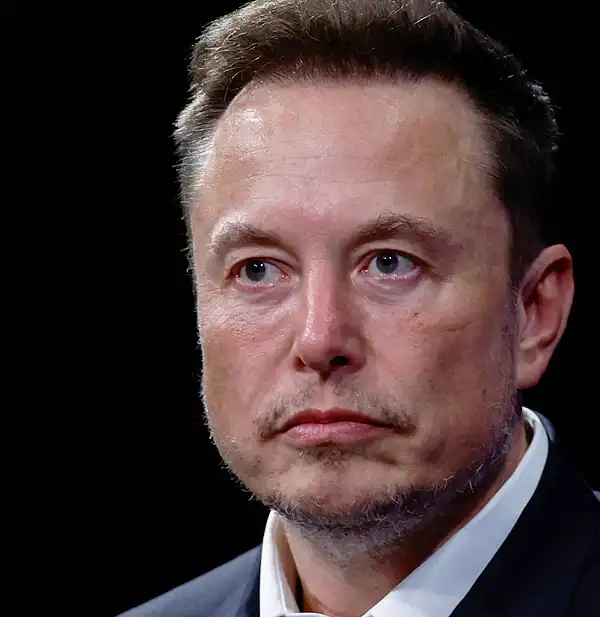
There are ambitious people, and then there's Elon Musk—the sort of fellow who looks at a traffic jam and decides tunnels are the answer, glances at the night sky and thinks, "We should probably live there," and sees a social media platform and figures, "I'll buy that too." Agree with him or not, one thing is certain: if there's a quiet day in Elon Musk's world, historians will probably classify it as a clerical error.
Musk is one of the most influential—and certainly one of the most debated—entrepreneurs of the 21st century. As the driving force behind companies including SpaceX, Tesla, Neuralink, The Boring Company, and X, he has played a major role in advancing electric vehicles, reusable rockets, satellite communications, artificial intelligence, and brain-computer interface technology. Few business leaders have reshaped as many industries in a single career.
Musk developed an interest in computers at an early age and taught himself programming as a child. At just 12 years old, he created and sold a simple computer game called Blastar, giving an early glimpse of the entrepreneurial spirit that would later define his career. After leaving South Africa, he moved to Canada through his mother's citizenship before eventually studying at the University of Pennsylvania, earning degrees in economics and physics. He briefly enrolled in graduate studies at Stanford University but left after only two days, convinced that the rapidly growing internet offered greater opportunities than academia.
His first major business success came with Zip2, an online business directory and mapping software company he co-founded with his brother, Kimbal Musk. When Compaq acquired Zip2 in 1999, Musk received enough capital to fund his next venture, X.com, an online financial services company. X.com eventually evolved into PayPal, which was purchased by eBay in 2002 for $1.5 billion. That sale provided Musk with the financial foundation to pursue ideas many people considered wildly unrealistic.
Rather than settling into early retirement on a tropical island, Musk did something considerably more complicated. In 2002 he founded SpaceX with the goal of dramatically reducing the cost of space travel and ultimately making humanity a multi-planetary species. The company's early years were difficult, with several rocket failures bringing it close to collapse. Persistence eventually paid off as the Falcon rocket family, Dragon spacecraft, and reusable launch technology transformed commercial spaceflight. Today, SpaceX regularly launches satellites, astronauts, and scientific missions while operating the expanding Starlink satellite internet network.
Musk joined Tesla as an early investor in 2004 and became its Chief Executive Officer in 2008. Under his leadership, Tesla grew from a niche electric sports car manufacturer into one of the world's most recognizable automotive companies. The company's Model S, Model 3, Model X, Model Y, Cybertruck, and advances in battery technology helped accelerate the global shift toward electric transportation. Tesla also expanded into energy storage systems and solar technology, broadening its focus beyond automobiles.
His interests have rarely remained confined to a single field. Musk founded The Boring Company to develop tunnel-based transportation systems intended to reduce urban congestion. He co-founded Neuralink, which develops brain-computer interface technology aimed at treating neurological conditions and potentially expanding human interaction with computers. In artificial intelligence, he co-founded OpenAI in 2015 before later departing and establishing xAI, reflecting his belief that AI development should remain competitive and transparent.
In 2022, Musk completed his acquisition of Twitter, later rebranding the platform as X. The purchase attracted enormous public attention and sparked widespread debate over free speech, content moderation, platform management, and the future of social media. His leadership of X has remained one of the most closely watched aspects of his business career.
Innovation has always come hand in hand with controversy. Musk's outspoken personality, frequent social media posts, management style, and willingness to make bold public statements have often generated headlines beyond his technological achievements. Admirers view him as a visionary willing to challenge established industries, while critics question aspects of his leadership, business decisions, and public conduct. Few modern business figures generate stronger opinions, which perhaps explains why discussions about Elon Musk rarely remain short.
Away from business, Musk is also known for his interest in science fiction, engineering, gaming, and ambitious long-term goals for humanity. He has frequently spoken about establishing permanent settlements on Mars, developing sustainable energy solutions, expanding artificial intelligence responsibly, and ensuring the long-term survival of human civilization. Whether these ideas ultimately succeed or not, they have encouraged broader public conversations about what the future could look like.
Musk has also made numerous cameo appearances in popular culture. He has appeared as himself in television programs including The Simpsons, The Big Bang Theory, Young Sheldon, South Park, and Rick and Morty, often showing a willingness to poke fun at his own public image.
Financially, Musk has frequently ranked among the wealthiest individuals in the world, with his net worth fluctuating alongside the valuations of Tesla, SpaceX, and his other companies. Regardless of the precise number on any given day, his influence on technology, transportation, energy, and space exploration remains extraordinary.
Perhaps Elon Musk's greatest contribution is that he has encouraged people to think on a larger scale. Electric cars were once considered impractical. Reusable rockets seemed unrealistic. Private companies launching astronauts sounded like science fiction. Today, all are part of everyday conversation. While not every prediction has come true, and not every project has proceeded exactly as planned, Musk has repeatedly demonstrated that ambitious ideas backed by persistence can reshape entire industries.
Whether history ultimately remembers him as one of the greatest innovators of his generation, one of its most controversial entrepreneurs, or perhaps a bit of both, Elon Musk has already secured a place among the defining business figures of modern times. His career continues to challenge assumptions about technology, transportation, communication, and humanity's future beyond Earth.