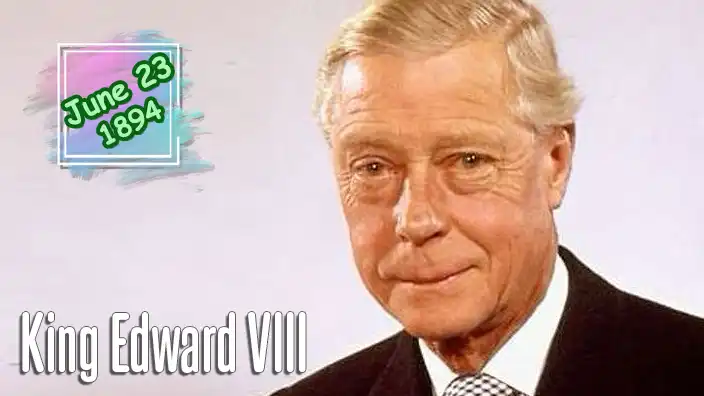
June 23, 1894, in Richmond Park, England
 May 28, 1972, in Paris, France
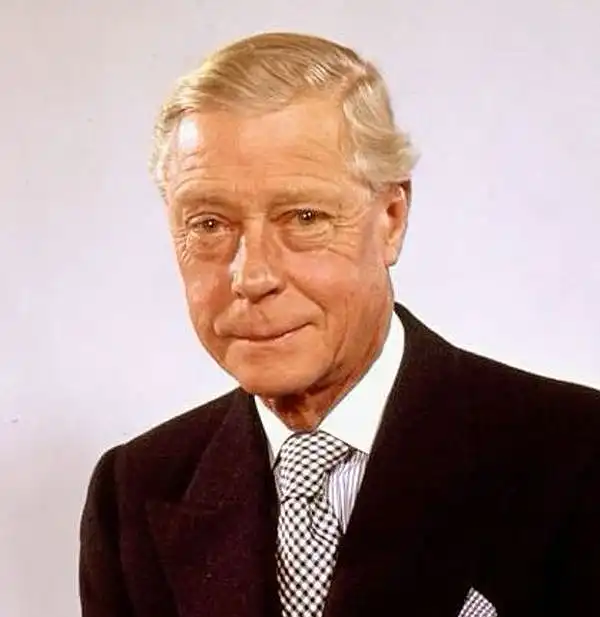
Edward VIII was born Edward Albert Christian George Andrew Patrick David on June 23, 1894, at White Lodge in Richmond Park, Surrey, England. He was the eldest son of the future King George V and Queen Mary and was known within the family by his last given name, David. As the oldest son, Edward was destined to inherit the throne from birth, a responsibility that shaped much of his early life.
Like many royal heirs of his era, Edward received a rigorous education and military training. He attended the Royal Naval College at Osborne and Dartmouth before serving in the British Army during the First World War. Although his royal status prevented him from serving directly on the front lines, he visited troops extensively and became enormously popular with soldiers and the public. His willingness to travel and meet ordinary people helped create an image of a modern prince who was more approachable than many of his royal predecessors.
In 1911, he became Prince of Wales, a title traditionally given to the heir apparent. Over the next twenty-five years, Edward undertook hundreds of public engagements throughout Britain and across the British Empire. He toured Canada, Australia, India, South Africa, New Zealand, and numerous other territories. His charm, confidence, and good looks made him one of the most recognizable public figures of the era. Newspapers followed his activities closely, and many people viewed him as the future face of a modern monarchy.
However, Edward's private life often attracted as much attention as his public duties. He developed a reputation as a socialite and was frequently linked to high-profile romances. These relationships occasionally caused concern within royal circles, where expectations for a future king were often far more restrictive than those faced by ordinary citizens.
Everything changed on January 20, 1936, when King George V died and Edward became King Edward VIII. After waiting more than four decades to inherit the throne, he finally became monarch. The problem was that his reign would last only 326 days.
At the center of the crisis was Wallis Simpson, an American socialite whom Edward wished to marry. Simpson was in the process of obtaining her second divorce, creating a constitutional problem. As head of the Church of England, Edward was expected to uphold church teachings regarding marriage and divorce. The British government, along with governments throughout the Empire, opposed the proposed marriage.
Edward faced a choice unlike any encountered by a modern British monarch. He could abandon the relationship and remain king, or he could marry Wallis Simpson and give up the throne.
He chose love.
On December 10, 1936, Edward signed the Instrument of Abdication. The following day, he delivered a radio broadcast explaining his decision to the public. His most famous words became part of history:
"I have found it impossible to carry the heavy burden of responsibility and to discharge my duties as King as I would wish to do without the help and support of the woman I love."
His younger brother became King George VI, and the line of succession changed forever. Without Edward's abdication, it is unlikely that George VI's daughter would later become Queen Elizabeth II.
Following the abdication, Edward was given the title Duke of Windsor. On June 3, 1937, he married Wallis Simpson in France. The couple remained together for the rest of Edward's life, living primarily in France and traveling extensively.
The years that followed were not without controversy. During the 1930s, Edward and Wallis visited Germany and met Adolf Hitler. Historians continue to debate the extent of Edward's political views and his attitudes toward Germany during this period. Documents released decades later revealed concerns within British government circles regarding some of his opinions and associations.
During the Second World War, Edward served as Governor of the Bahamas from 1940 to 1945. Although far removed from the center of royal and political life, he carried out official duties throughout the war years. His time in the Bahamas represented the most significant governmental position he held after abdicating.
In the decades that followed, Edward and Wallis became fixtures of international high society. They socialized with celebrities, politicians, aristocrats, and wealthy business figures. Their lives were chronicled in newspapers, magazines, books, and documentaries, ensuring that public fascination with the couple never entirely faded.
Edward died in Paris on May 28, 1972, at the age of 77. Wallis Simpson survived him by fourteen years. He was buried at the Royal Burial Ground at Frogmore, near Windsor Castle, and Wallis was later buried beside him.
Today, Edward VIII remains one of the most studied and debated figures in royal history. To some, he was a romantic who sacrificed a crown for love. To others, he was a monarch who abandoned duty during a critical period. Whatever interpretation one prefers, there is no denying that his decisions altered the course of British history. His abdication reshaped the monarchy, changed the line of succession, and ultimately helped pave the way for the reign of Queen Elizabeth II, one of the most significant monarchs in modern history.
Few kings have ruled for less than a year. Even fewer have remained household names nearly a century later. Edward VIII accomplished both.