Celebrity Birthdays - June

Ah, June — school’s out, pools are open, and June birthday people are here to remind you that the fun starts now.
These stars are summer’s opening act, kicking off long days, warm nights, and questionable tan lines. Grab a lemonade and join us in celebrating the folks who make June the month of all things bright and loud.
- Details
- Category: Celebrity Birthdays - June
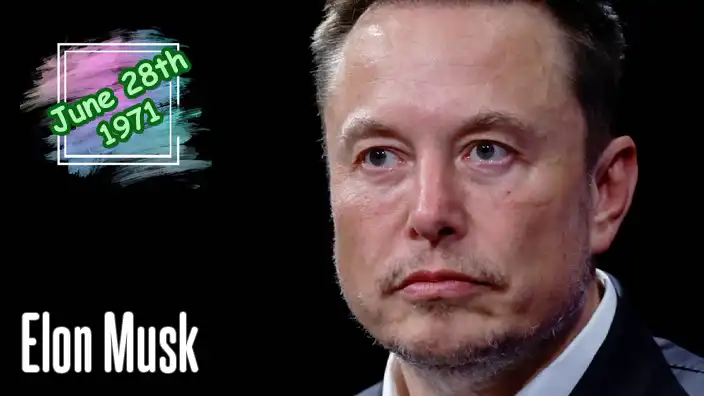
Most people celebrate a birthday by blowing out candles and hoping for a nice dinner. Elon Musk celebrates by launching rockets, building electric cars, digging tunnels, developing brain-computer technology, debating artificial intelligence, and occasionally rewriting the day's news before breakfast. Keeping up with him can feel less like following a businessman and more like trying to read tomorrow's headlines a day early.
 June 28, 1971, in Pretoria, South Africa

Trivia
- Holds degrees in economics and physics from the University of Pennsylvania.
- Co-founded Zip2 before helping create PayPal.
- Founded SpaceX in 2002.
- Became CEO of Tesla in 2008.
- Acquired Twitter in 2022 and renamed it X in 2023.
- Co-founded Neuralink and The Boring Company.
- Has appeared as himself in The Simpsons, The Big Bang Theory, and Rick and Morty.
- Has long promoted the goal of establishing a human settlement on Mars.
- Has frequently ranked among the world's wealthiest people.

- Details
- Category: Celebrity Birthdays - June
Ryan McCartan has the kind of career that makes you wonder if he secretly spins a giant “talent wheel” every morning. Acting? Sure. Singing? Of course. Broadway? Why not. One day he’s on a Disney set, the next he’s belting out show tunes in front of a packed theater, and somewhere in between he’s probably doing push-ups and scouting the nearest taco truck. If multitasking were an Olympic sport, Ryan would already have a gold medal—and he’d be celebrating it with extra salsa.
June 14, 1993, in Excelsior, Minnesota
Trivia
- Born in Excelsior, Minnesota.
- Starred as Diggie on Liv and Maddie.
- Played Fiyero on Broadway in Wicked.
- Appeared in The Rocky Horror Picture Show TV remake.
- Formerly part of the duo The Girl and the Dreamcatcher.
- Enjoys fitness and outdoor activities.
- Big fan of tacos.

- Details
- Category: Celebrity Birthdays - June
Eamonn Walker has played so many calm, commanding authority figures that you half-expect him to show up and take charge whenever something goes wrong. Flat tire? He’ll organize a rescue team. Burnt toast? He’ll deliver a speech about responsibility and teamwork. As Chief Boden, he makes leadership look so natural that if he ever walked into a real firehouse, the firefighters might just hand him a helmet and say, “All right, boss, what’s the plan?” And honestly, he’d probably have one.
June 12, 1962, in London, England
Trivia
- An injury led him to transition from dance to acting.
- He trained at the New York Film Academy.
- He gained major recognition as Kareem Saïd on Oz.
- He appeared in the acclaimed series The Wire.
- He played Dr. Stephen Dakarai on ER.
- He stars as Chief Wallace Boden on Chicago Fire.
- He is a fan of jazz music.

- Details
- Category: Celebrity Birthdays - June
Neil Patrick Harris has played so many confident, fast-talking characters that you almost expect him to enter every room with a dramatic spotlight and a perfectly timed one-liner. As Barney Stinson, he made wearing a suit sound like a heroic act, as if neckties were some kind of superhero uniform. In real life, he’s a magician, a Broadway star, and a guy who goes all-out for family Halloween costumes—so honestly, if he ever revealed he could pull a rabbit out of a briefcase while singing a show tune, nobody would be all that surprised. With NPH, there’s always a sense that the next trick is just about to happen.
June 15, 1973, in Albuquerque, New Mexico
Trivia
- He got his big break as the title character in Doogie Howser, M.D. at age 16.
- He played Barney Stinson on How I Met Your Mother for nine seasons.
- He won a Tony Award for Hedwig and the Angry Inch in 2014.
- He has hosted the Tony Awards multiple times.
- He once served as president of the Magic Castle in Hollywood.
- He appeared as a wild version of himself in Harold & Kumar Go to White Castle.
- He is married to actor and chef David Burtka.
- He and his family are famous for elaborate Halloween costumes each year.

- Details
- Category: Celebrity Birthdays - June
Chris Evans spent nearly a decade playing the most upright, noble, and selfless superhero in cinema—and then immediately followed it up by playing a spoiled, sweater-wearing villain in Knives Out. That’s range. He went from carrying a vibranium shield to lounging around in chunky knitwear while insulting his relatives, and somehow he looked equally convincing in both. If Hollywood ever makes a movie about a polite New England guy who rescues a dog, grills burgers, and occasionally saves the world, they won’t even need a script. They’ll just hand Chris a camera and say, “Be yourself.”
June 13, 1981, in Boston, Massachusetts
Trivia
- Chris Evans was raised in Sudbury, Massachusetts.
- His mother was a youth theater director.
- He studied acting at the Lee Strasberg Theatre and Film Institute.
- He first played a superhero as the Human Torch in Fantastic Four.
- He portrayed Captain America from 2011 to 2019.
- He directed and starred in the romantic drama Before We Go.
- His rescue dog, Dodger, is a social media favorite.
- He co-founded the civic engagement site A Starting Point.

- Details
- Category: Celebrity Birthdays - June
Shia LaBeouf’s career has taken more turns than a GPS with a weak signal and a mind of its own. One minute he’s the scrappy kid on a Disney Channel show, the next he’s swinging through the jungle with Indiana Jones, then he’s live-streaming performance art while wearing a paper bag on his head that says “I am not famous anymore.” He’s the rare actor who seems just as comfortable in a blockbuster robot explosion as he is sitting silently in an art gallery for six hours straight, which makes following his career less like watching Hollywood news and more like tracking an unpredictable weather pattern. With Shia, you never quite know what’s coming next—but you can be sure it won’t be boring.
June 11, 1986, in Los Angeles, California
Trivia
- Shia’s first name comes from the Hebrew word for “gift from God,” while his last name, LaBeouf, is French for “the beef,” making his full name sound like a very spiritual steak.
- He was named after his grandfather, who was a comedian and physician, which may explain both his sense of humor and his occasional life prescriptions.
- Shia earned a Daytime Emmy Award in 2003 for his role on Even Stevens, beating out several adult actors while he was still a teenager.
- He became one of the few actors in history to appear in three of the highest-grossing films ever at the time: Transformers, Transformers: Revenge of the Fallen, and Indiana Jones and the Kingdom of the Crystal Skull.

- Details
- Category: Celebrity Birthdays - June
Ruby Rose has made a career out of looking effortlessly cool while the rest of us are still deciding what to wear. She’s played assassins, superheroes, musicians, and rebels—and somehow makes all of it seem like a casual Tuesday. If confidence were currency, she’d never need to check her bank account.
 March 20, 1986, in Melbourne, Australia
Trivia
- Ruby Rose gained early fame as a presenter on MTV Australia.
- She played Stella Carlin on Orange Is the New Black.
- She starred in John Wick: Chapter 2 and The Meg.
- She portrayed Batwoman in the CW television series.
- She has been an outspoken advocate for LGBTQ+ rights and mental health awareness.
- Her distinctive androgynous style made her a fashion industry standout.

- Details
- Category: Celebrity Birthdays - June
Seeing Tom Jones in concert is less like attending a show and more like witnessing a natural phenomenon. Somewhere between the opening note and the final encore, gravity stops working on nearby undergarments, grown adults start dancing like it’s a wedding reception in 1968, and Tom himself strolls around the stage like a man who knows he could probably sing the phone book and still get a standing ovation. At his concerts, the energy is high, the notes are higher, and the laundry situation remains, shall we say, historically consistent.
June 7, 1940, in Pontypridd, Wales
Trivia
- He was once nicknamed “The Voice” because of his powerful, booming vocals.
- His 1965 hit “It’s Not Unusual” made him an international star almost overnight.
- He won the Grammy Award for Best New Artist in 1966.
- Fans in the late 1960s and 1970s famously threw underwear on stage during his shows.
- He recorded a memorable cover of Prince’s “Kiss” with The Art of Noise in 1988.
- His 1999 album Reload became one of the best-selling albums of his career.
- Queen Elizabeth II knighted him in 2006 for his services to music.
- He has sold over 100 million records worldwide.
- He has served as a coach on The Voice UK, mentoring younger singers.
- He once performed a duet with Elvis Presley on his television show.
- Despite his wild stage image, he is known to enjoy quiet hobbies like gardening and golf.
- Details
- Category: Celebrity Birthdays - June
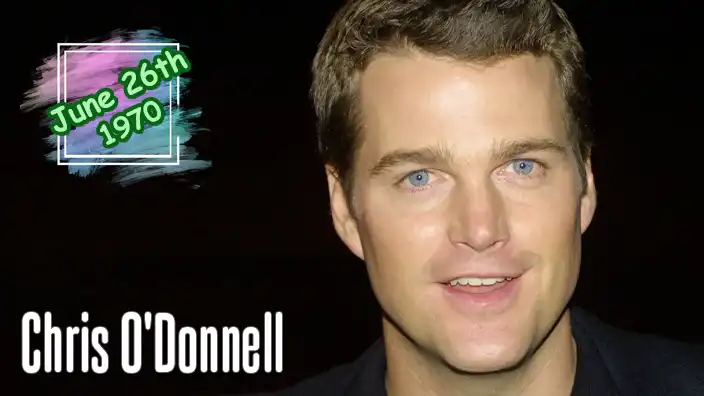
Not every actor gets the chance to battle supervillains alongside Batman, climb icy mountains, solve international crimes for fourteen television seasons, and still be known in Hollywood as one of the nicest people you'll ever meet. Chris O'Donnell has managed all of that while largely avoiding the celebrity drama that often comes with fame. His career has been built on steady performances, smart choices, and the refreshing ability to let his work do the talking.
June 26, 1970, in Winnetka, Illinois
Trivia
- Graduated from Boston College with a marketing degree.
- Began as a model and commercial actor.
- Earned a Golden Globe nomination for Scent of a Woman.
- Played Robin in Batman Forever (1995).
- Reprised Robin in Batman & Robin (1997).
- Starred in The Three Musketeers (1993).
- Played G. Callen on NCIS: Los Angeles for 14 seasons.
- Appeared in Vertical Limit and Kinsey.
- Married Caroline Fentress in 1997.
- Father of five children.
- Several family members made cameo appearances on NCIS: Los Angeles.
- Joined the cast of 9-1-1: Nashville in 2025.

- Details
- Category: Celebrity Birthdays - June
Before there was Auto-Tune, vocal coaches, or pop stars lip-syncing through fog machines, there was Ann Wilson — belting out rock ballads with enough force to knock the hairspray off the '70s. Today, we crank the volume and raise a lighter (real or app-based) to celebrate the birthday of the woman who made “Crazy on You” feel like a spiritual awakening. If you've ever attempted to hit one of her high notes in the car, you already know: there’s only one Ann.
June 19, 1950, in San Diego, California
Trivia
- She moved frequently due to her father's military career, which exposed her to various cultures and music styles.
- Ann is best known as the lead vocalist of the rock band Heart, which she formed with her sister Nancy Wilson.
- Ann is an accomplished flautist who often incorporated the instrument into Heart’s music.
- She is a passionate advocate for animal rights and supports several animal welfare organizations.
- Despite her rock star persona, she enjoys knitting and often makes handmade gifts for friends and family.

- Details
- Category: Celebrity Birthdays - June
She danced with cartoon cats, judged talent like a sparkly oracle, and somehow made “Straight Up” both a banger and a life philosophy. Today, we celebrate the birthday of Paula Abdul — the pop icon who proved you can go from Lakers cheerleader to Grammy-winning sensation faster than Simon Cowell can roll his eyes. She’s choreographed legends, survived the ‘90s fashion wars, and still manages to hit high notes and high kicks like it's no big deal.
June 19, 1962, in San Fernando, California
Trivia
- Paula rose to fame in the 1980s as a choreographer for the Laker Girls and later for high-profile music videos.
- She launched a successful music career with hits like "Straight Up" and "Opposites Attract," winning a Grammy for Best Music Video for the latter.
- Paula is an avid animal lover and has worked with various animal rescue organizations.
- She has spoken publicly about her struggles with chronic pain and spinal injuries, advocating for awareness and support.
- Details
- Category: Celebrity Birthdays - June
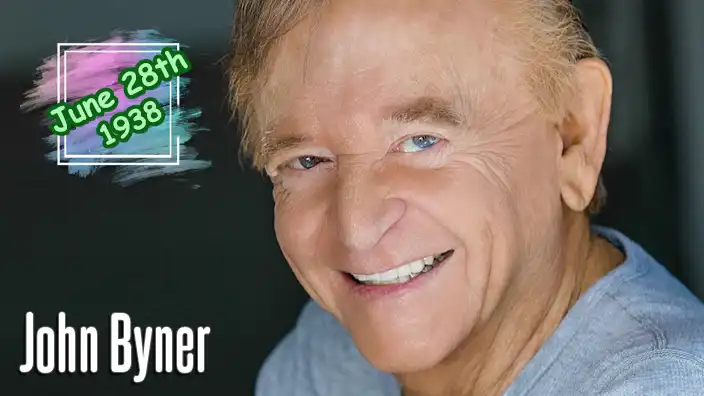
Some people can barely remember where they left their car keys. John Byner spent decades remembering the voices, mannerisms, and quirks of dozens of famous people without mixing up John Wayne with Dean Martin or accidentally having an aardvark sound like Ed Sullivan. That kind of comic talent doesn't come with an instruction manual—it comes with years of practice, perfect timing, and a wonderfully flexible set of vocal cords.
June 28, 1938, in New York City, New York
Trivia
- He became known for impressions of John Wayne, Dean Martin, Jackie Mason, and Ed Sullivan.
- He made numerous appearances on The Ed Sullivan Show.
- He also appeared on The Tonight Show Starring Johnny Carson.
- He voiced both title characters in The Ant and the Aardvark cartoons.
- His ant voice was inspired by Dean Martin.
- His aardvark voice was inspired by Jackie Mason.
- He hosted the sketch comedy series Bizarre.
- Bizarre helped introduce Bob Einstein’s Super Dave Osborne character.

- Details
- Category: Celebrity Birthdays - June
Leah Remini has the kind of personality that suggests she’s never lost an argument—and if she has, it’s only because she decided the other person wasn’t worth the effort. On The King of Queens, she could shut down Doug with a single look that said, “You tried something dumb again, didn’t you?” In real life, she’s just as direct, the sort of person who would walk into a fancy Hollywood party, head straight for the snack table, and loudly ask why nobody thought to serve real Italian food. With Leah, what you see is what you get—and it usually comes with a punchline.
June 15, 1970, in Brooklyn, New York
Trivia
- She starred as Carrie Heffernan on The King of Queens for nine seasons.
- She appeared as Stacey Carosi on Saved by the Bell.
- She competed on Dancing with the Stars in 2013.
- She later co-hosted Dancing with the Stars in 2022.
- She wrote the bestselling memoir Troublemaker.
- Her docuseries Scientology and the Aftermath won an Emmy Award.
- She reunited with Kevin James on Kevin Can Wait.
- She is known for her outspoken and candid personality.

- Details
- Category: Celebrity Birthdays - June
Paul McCartney has reached that rare level of fame where he can walk into a room, hum a random tune, and there’s a good chance it will turn into a classic. Most people spend years trying to write one decent song, while Paul casually stacked up hits like he was collecting coupons. Somewhere in the world, there’s probably a notebook he forgot about in 1965 that contains three melodies good enough to top the charts today. And while the rest of us complain about standing too long at the grocery store, he’s still out there performing three-hour concerts, waving to the crowd like, “Alright, just one more before tea.”
June 18, 1942, in Liverpool, England
Trivia
- He wrote the melody for “Yesterday” in a dream and reportedly woke up thinking he’d accidentally copied it from someone else.
- “Yesterday” has become one of the most covered songs in music history.
- He is one of the best-selling songwriters of all time, with more than 100 million singles sold as part of the Beatles.
- McCartney is the only artist to be inducted into the Rock and Roll Hall of Fame twice—once with the Beatles and once as a solo artist.
- He has performed for audiences that include British royalty, American presidents, and millions of fans at major global events.
- He was knighted in 1997, officially becoming Sir Paul McCartney.
- His song “Mull of Kintyre” became one of the best-selling singles in UK history.
- Details
- Category: Celebrity Birthdays - June
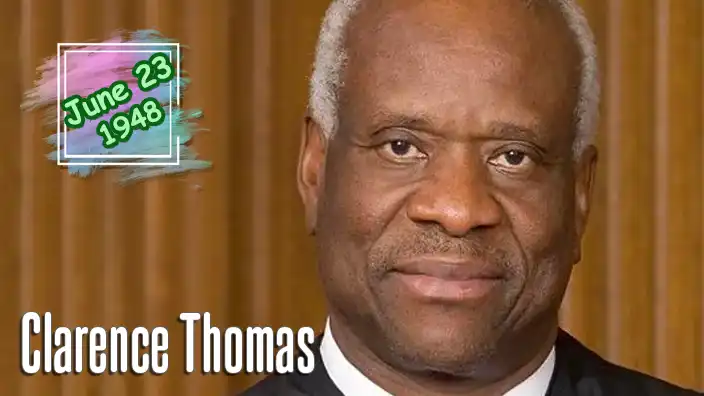
Few people spend more than three decades at the same job without becoming part of the office furniture. Clarence Thomas has managed to serve on the United States Supreme Court since 1991 while remaining one of the most discussed, debated, analyzed, quoted, criticized, praised, and scrutinized figures in American public life. In a profession where people literally wear the same black robe every day, standing out is no small achievement. Whether people agree with him, disagree with him, or need a law degree and three cups of coffee to understand his latest opinion, Clarence Thomas has spent decades ensuring that nobody ignores his place in American legal history.
June 23, 1948, in Pin Point, Georgia
Trivia
- First person in his family to attend college.
- Graduated from the College of the Holy Cross.
- Earned a law degree from Yale Law School.
- Worked as an Assistant Attorney General in Missouri.
- Served as Chairman of the EEOC.
- Appointed to the D.C. Circuit Court in 1990.
- Nominated to the Supreme Court by President George H. W. Bush.

- Details
- Category: Celebrity Birthdays - June
If you ever needed someone to calmly plan an escape from a maximum-security facility, Wentworth Miller is your guy. Not because he’s done it in real life — let’s be clear — but because he once convinced millions of viewers he could map one out with a pencil, a tattoo artist, and sheer brainpower. Meanwhile, most of us struggle to find our car keys. Some people bring snacks to the party. Wentworth brings contingency plans.
June 2, 1972, in Chipping Norton, England
Trivia
- Wentworth Miller was born in England but raised in Brooklyn, New York.
- He graduated from Princeton University with a degree in English literature.
- His breakout role as Michael Scofield earned him a Golden Globe nomination.
- He wrote the screenplay for the 2013 thriller Stoker.
- He publicly came out in 2013 in a letter addressing anti-LGBTQ+ legislation in Russia.

- Details
- Category: Celebrity Birthdays - June
For years, Noah Wyle was the doctor America trusted most—even though he was only pretending. If you watched enough ER, you probably felt more confident walking into a hospital just because Dr. Carter was on duty somewhere. He had that calm, reassuring presence that said, “Yes, this situation is complicated, but I’ve got it.” Of course, if aliens invaded, he could handle that too—because apparently, Noah Wyle’s career plan was simple: save patients, save books, and, when necessary, save the entire human race.
June 4, 1971, in Hollywood, California
Trivia
- Noah Wyle was the longest-running original cast member on ER.
- He received multiple Emmy nominations for his role as Dr. John Carter.
- He portrayed Steve Jobs in the TV movie Pirates of Silicon Valley.
- Wyle attended Northwestern University to study theater.
- He serves as Artistic Producer at The Blank Theatre Company.
- Details
- Category: Celebrity Birthdays - June
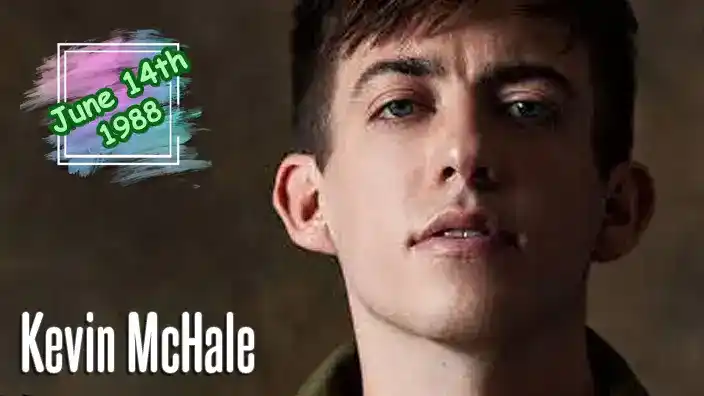
Kevin McHale has one of those careers that sounds like it was planned by a very energetic career counselor with too much coffee. First, he’s in a boy band. Then he’s starring on a hit musical TV show. Next thing you know, he’s dancing in sequins on national television and hosting a podcast about it all. At this point, if someone announced he was training to be an astronaut who sings show tunes in zero gravity, most fans would just shrug and say, “Yeah, that tracks.”
June 14, 1988, in Plano, Texas
Trivia
- He was a member of the boy band NLT before acting.
- He played Artie Abrams on Glee from 2009 to 2015.
- He co-hosts the Showmance podcast with Jenna Ushkowitz.
- He competed on Dancing with the Stars.
- He is a trained dancer as well as a singer and actor.
- He is an outspoken animal lover.
- He grew up in Plano, Texas.
- He remains close friends with several Glee cast members.

- Details
- Category: Celebrity Birthdays - June
Jodie Whittaker has one of those careers where her job description occasionally includes “save the universe before lunch.” One day she’s a deeply emotional character in a gripping crime drama, and the next she’s sprinting down a corridor, waving a glowing gadget, and explaining time travel to confused aliens and even more confused humans. Somewhere in the middle of all that, she still finds time to cheer for her football team and listen to punk rock. It’s the sort of life where your biggest daily decision might be, “Should I take the bus… or the time machine?”
June 17, 1982, in Skelmanthorpe, England
Trivia
- She gained widespread acclaim for her emotional performance as Beth Latimer in the hit crime drama Broadchurch.
- Before acting, she considered becoming a forensic psychologist.
- She is a devoted supporter of Huddersfield Town football club.
- She made her professional stage debut at Shakespeare’s Globe Theatre.
- She has a fear of heights and spiders.
- She is married to actor and writer Christian Contreras.
- She once said that playing the Doctor felt like being handed “the keys to the biggest, most magical toy box in the world.”

- Details
- Category: Celebrity Birthdays - June
Sean Pertwee has the kind of voice that makes you sit up straight, even if he’s just ordering tea. If he read the grocery list out loud, the eggs would probably salute. On screen, he’s the guy you want in charge when things go sideways—whether it’s werewolves, criminals, or a moody teenage billionaire. Off screen, though, he’s just as likely to be found cooking dinner, which is comforting. After all, if Alfred Pennyworth is in the kitchen, you know the meal will be on time, properly seasoned, and probably served with a stern lecture about discipline.
June 4, 1964, in Hammersmith, England
Trivia
- Sean Pertwee comes from a distinguished acting family; his father, Jon Pertwee, was famous for playing the Third Doctor in the long-running TV series "Doctor Who."
- He trained at the prestigious Bristol Old Vic Theatre School, which has produced many notable actors.
- Pertwee has a tattoo of a bat on his forearm, a nod to his role in "Gotham" and his affection for the Batman franchise.
- He has appeared in several British television series, including "Luther" and "The Tudors," showcasing his versatility as an actor.
- Pertwee is an advocate for animal rights and often supports various animal welfare organizations.

- Details
- Category: Celebrity Birthdays - June
Gina Gershon has the kind of career that feels like it was planned by someone spinning a wheel labeled “Bold Choices Only.” One minute she’s in a teen classic, the next she’s ruling the stage in Las Vegas, then suddenly she’s in a stylish crime thriller or belting out songs on Broadway. You get the sense that if someone handed her a script about a singing, guitar-playing detective who solves crimes at a yoga retreat, she’d just shrug, say “Why not?” and start rehearsing her lines before lunch. And honestly, that fearless attitude is exactly why audiences keep watching.
June 10, 1962, in Los Angeles, California
Trivia
- Studied acting at NYU’s Tisch School of the Arts.
- Appeared in Pretty in Pink (1986).
- Played Cristal in the cult classic Showgirls (1995).
- Starred in the crime thriller Bound (1996).
- Performed on Broadway as Sally Bowles in Cabaret.
- Co-wrote the children’s book Camp Creepy Time.
From Our Marks Catelog
-

Single parenthood is a crash course in multitasking—where making dinner, helping with homework, and dodging Lego...
-

Balloons are the life of any party, with their bright colors and whimsical shapes, but they also...
-

Letting things go is a skill we all think we have—until we’re in the shower five years later, replaying an...
-

Some holidays ask for deep reflection. Others demand fireworks, feasts, or elaborate decorations....
-
With a gaze that could melt ice and a mustache so perfectly groomed it might have had its own...
-

Imagine having the uncanny ability to make even the driest statistics sound like the punchline to a...

