Celebrity Birthdays - June

Ah, June — school’s out, pools are open, and June birthday people are here to remind you that the fun starts now.
These stars are summer’s opening act, kicking off long days, warm nights, and questionable tan lines. Grab a lemonade and join us in celebrating the folks who make June the month of all things bright and loud.

- Details
- Category: Celebrity Birthdays - June
Maria Menounos seems like the kind of person who could wake up at 4 a.m., host a live show, interview three celebrities, record a podcast, squeeze in a workout, cook a Greek family dinner, and still have time to reorganize the living room “just because it felt cluttered.” Meanwhile, the rest of us are proud of ourselves for locating our car keys before noon. If Maria ever offered a “day in my life” schedule, most people would need a nap just reading it. Somewhere, a Dunkin’ Donuts manager from her teenage years is probably still shaking their head and saying, “Yeah, I knew she wasn’t going to stick around long.”
 June 8, 1978, in Medford, Massachusetts

Trivia
- Maria speaks fluent Greek.
- She once worked as a janitor to pay for her education.
- Maria has a black belt in karate.
- She has interviewed every US President since Bill Clinton.
- Maria is a co-founder of the charity "Take Action Hollywood!"
- She directed and produced the independent film "Serial Buddies."
- Maria has battled a brain tumor and emerged stronger than ever.
- She is a published author, with books on health and wellness.

- Details
- Category: Celebrity Birthdays - June
For years, Noah Wyle was the doctor America trusted most—even though he was only pretending. If you watched enough ER, you probably felt more confident walking into a hospital just because Dr. Carter was on duty somewhere. He had that calm, reassuring presence that said, “Yes, this situation is complicated, but I’ve got it.” Of course, if aliens invaded, he could handle that too—because apparently, Noah Wyle’s career plan was simple: save patients, save books, and, when necessary, save the entire human race.
 June 4, 1971, in Hollywood, California
Trivia
- Noah Wyle was the longest-running original cast member on ER.
- He received multiple Emmy nominations for his role as Dr. John Carter.
- He portrayed Steve Jobs in the TV movie Pirates of Silicon Valley.
- Wyle attended Northwestern University to study theater.
- He serves as Artistic Producer at The Blank Theatre Company.

- Details
- Category: Celebrity Birthdays - June
Gina Gershon has the kind of career that feels like it was planned by someone spinning a wheel labeled “Bold Choices Only.” One minute she’s in a teen classic, the next she’s ruling the stage in Las Vegas, then suddenly she’s in a stylish crime thriller or belting out songs on Broadway. You get the sense that if someone handed her a script about a singing, guitar-playing detective who solves crimes at a yoga retreat, she’d just shrug, say “Why not?” and start rehearsing her lines before lunch. And honestly, that fearless attitude is exactly why audiences keep watching.
June 10, 1962, in Los Angeles, California
Trivia
- Studied acting at NYU’s Tisch School of the Arts.
- Appeared in Pretty in Pink (1986).
- Played Cristal in the cult classic Showgirls (1995).
- Starred in the crime thriller Bound (1996).
- Performed on Broadway as Sally Bowles in Cabaret.
- Co-wrote the children’s book Camp Creepy Time.

- Details
- Category: Celebrity Birthdays - June
Kathy Baker has the rare ability to play characters who seem completely normal—and somehow make them the most interesting person in the room. She’s the kind of actress who could play someone watering houseplants for two hours, and you’d still be glued to the screen, wondering about her backstory. Meanwhile, the rest of us can’t even keep a cactus alive without it filing a formal complaint. If Kathy ever starred in a movie about folding laundry, it would probably win awards and make you cry by the final spin cycle.
June 8, 1950, in Midland, Texas
Trivia
- She has a degree in French from the University of California, Berkeley.
- Kathy once worked as a waitress at the famous Magic Castle in Hollywood.
- She has a penchant for playing complex, multi-dimensional characters.
- Kathy has been married twice and has two children.
- She is an avid reader and has a particular fondness for the works of Jane Austen.
- In addition to her acting career, Kathy is also a talented painter.
- She has a star on the Hollywood Walk of Fame, which she received in 1997.

- Details
- Category: Celebrity Birthdays - June
Penelope Wilton has mastered the art of the polite but devastatingly effective English stare. On Downton Abbey, she could correct someone’s entire worldview with a single raised eyebrow and a gentle sentence about compassion. She’s the sort of character you’d want at your dinner table—partly for the conversation, and partly because if anyone got out of line, she’d put them back in their place with perfect manners and zero wasted words.
June 3, 1946, in Scarborough, England
Trivia
- Penelope Wilton trained at the Drama Centre London.
- She starred in the sitcom Ever Decreasing Circles in the 1980s.
- She played Isobel Crawley in Downton Abbey and its films.
- Both of her parents were actors.
- She has worked extensively with the Royal Shakespeare Company.

- Details
- Category: Celebrity Birthdays - June
Bonnie Tyler sings every line like the fate of the universe depends on it. If she ever asked you to pass the salt, it would probably sound like the opening line of a power ballad: “I NEED… THE SAAAAALT!” And somehow, you’d feel emotional handing it to her. That’s her magic. She could probably sing a grocery list and make it sound like the most dramatic moment of the decade. Eggs? Bread? Milk? Suddenly it’s a chart-topping anthem about breakfast and destiny.
June 8, 1951, in Skewen, Neath, Wales
 July 8, 2026, in Faro, Portugal
Trivia
- Bonnie Tyler’s real name is Gaynor Hopkins. She chose her stage name by randomly picking it from a newspaper!
- She had surgery on her vocal cords in 1976, which resulted in her distinctive raspy voice.
- "Total Eclipse of the Heart" was originally offered to Meat Loaf, but he turned it down.
- Bonnie once owned a five-star hotel in Portugal. Rock star by night, hotelier by day!
- She has a star on the Birmingham Walk of Stars, right next to Ozzy Osbourne. Rock royalty, indeed.

- Details
- Category: Celebrity Birthdays - June
Claire Holt has one of the strangest career résumés imaginable: she started as a mermaid and then became a thousand-year-old vampire. At this rate, her next role will probably be an alien queen or a time-traveling pirate. She’s spent so much time playing supernatural creatures that if someone handed her a script where she just played a regular person with a normal office job, she’d probably flip through it and ask, “So… when do I grow fangs or a tail?”
June 11, 1988, in Brisbane, Australia
Trivia
- She starred as Emma in H2O: Just Add Water.
- She played Rebekah Mikaelson in The Vampire Diaries and The Originals.
- She was a competitive swimmer and water polo player growing up.
- She appeared in the thriller 47 Meters Down.
- She starred in the crime series Aquarius.
- She is a fitness enthusiast who enjoys yoga and running.
- She is open about her experiences with anxiety.
- She is a devoted dog lover.

- Details
- Category: Celebrity Birthdays - June
Luke Youngblood has managed to build a career where he’s best known for either announcing magical sports or yelling “Pop! Pop!” at random intervals, which is honestly a pretty great résumé. Not everyone can say they’ve worked at Hogwarts and a fictional community college without even needing a time-turner. Somewhere out there, there’s probably a crossover universe where Lee Jordan is commentating a Quidditch match while Magnitude runs through the stands shouting his catchphrase. And frankly, that sounds like a show people would absolutely watch.
June 12, 1986, in London, England
Trivia
- Luke Youngblood played Lee Jordan in the first three Harry Potter films.
- He portrayed Magnitude on the TV series Community.
- His famous catchphrase on Community was “Pop! Pop!”
- He has performed in West End musical productions.
- He played Benny in In the Heights in London.
- Luke began acting as a child in British television shows.
- He is also a trained singer and dancer.

- Details
- Category: Celebrity Birthdays - June
Boz Scaggs is the kind of guy who could probably walk into a room, hum a single note, and suddenly everyone’s drink tastes smoother and the lighting gets more flattering. Somewhere, a disco ball slowly lowers from the ceiling, even if you’re just standing in your kitchen. Meanwhile, the rest of us try to sing “Lowdown” in the shower and end up sounding like a squeaky screen door. Boz makes it look effortless—like being that cool is just part of his daily routine, right after a cup of coffee and before a perfectly timed guitar riff.
June 8, 1944, in Canton, Ohio
Trivia
- Boz's real first name is William.
- He got his nickname "Boz" in high school.
- He owns a vineyard in Napa Valley.
- Boz was a member of the Steve Miller Band before going solo.
- "Lowdown" won him a Grammy Award.
- He's not a fan of social media.
- Boz loves fine wine and good books.
- He was inducted into the Rock and Roll Hall of Fame with the Steve Miller Band.
- Boz's album "Silk Degrees" went multi-platinum.
- He enjoys spending time with his family when he's not working.

- Details
- Category: Celebrity Birthdays - June
Kenny G has a musical style so smooth it could calm down a room full of angry cats. His saxophone sound is the audio equivalent of a warm cup of tea, a soft couch, and a gentle breeze all rolled into one. If life ever gets too stressful, you just know Kenny could step into the room, play a few notes, and suddenly everyone would stop arguing, sit down, and start discussing their feelings in a very calm, reasonable tone. Frankly, the world might be a quieter place if we kept a Kenny G track on standby for emergencies.
June 5, 1956, in Seattle, Washington
Trivia
- He performed with Barry White’s Love Unlimited Orchestra as a teenager.
- His album Breathless is the best-selling instrumental album in U.S. history.
- He has sold more than 75 million records worldwide.
- He won a Grammy for “Forever in Love.”
- He holds a Guinness World Record for holding a saxophone note for over 45 minutes.
- He is an avid golfer and a licensed pilot.
- He has appeared as himself in films and television shows.

- Details
- Category: Celebrity Birthdays - June
Mark Wahlberg is famous for waking up at an hour most people consider the middle of the night, hitting the gym, eating a perfectly measured breakfast, and probably negotiating a business deal before the rest of us have even found the coffee maker. If you ever complain about being tired, just remember that somewhere out there, Mark has already worked out twice, filmed a scene, checked on his burger chain, and still has time to remind you that you should probably be doing more push-ups. He’s living proof that discipline can take you far—though most of us would settle for just making it out of bed on the first alarm.
June 5, 1971, in Boston, Massachusetts
Trivia
- He was the youngest of nine children.
- He was originally part of the group New Kids on the Block with his brother Donnie.
- He later formed Marky Mark and the Funky Bunch, scoring a hit with “Good Vibrations.”
- His role in The Departed earned him an Academy Award nomination.
- He trained intensely for his role in The Fighter.
- He co-owns the Wahlburgers restaurant chain with his brothers.
- He was once one of the highest-paid actors in Hollywood.

- Details
- Category: Celebrity Birthdays - June
Karl Urban has one of those faces that looks equally at home in medieval armor, a futuristic space uniform, or a long leather coat while threatening corrupt superheroes. He’s spent so much time fighting orcs, criminals, aliens, and super-powered maniacs that you get the feeling he probably checks under the bed at night just in case there’s a rogue villain hiding there. And yet, off-screen, he’s the kind of laid-back New Zealander who’d probably rather be surfing than saving the galaxy. It’s comforting to know that if the world ever does end, there’s a decent chance Karl Urban will show up wearing the right costume for the situation.
June 7, 1972, in Wellington, New Zealand
Trivia
- He made his screen debut at the age of eight in a New Zealand television commercial.
- He played multiple different characters on Xena: Warrior Princess.
- He is a passionate surfer and often returns to New Zealand to hit the waves.
- He kept Judge Dredd’s helmet on for the entire Dredd film to stay true to the comics.
- He is a big fan of rugby and supports New Zealand’s national team, the All Blacks.
- He originally auditioned for the role of Aragorn in The Lord of the Rings.
- His mother worked in the film industry, which helped spark his interest in acting.
- He has appeared in both Star Trek and The Lord of the Rings, two of the biggest franchises in film history.

- Details
- Category: Celebrity Birthdays - June
Richard Madden has built an impressive career playing kings, princes, soldiers, and superheroes, which must make everyday life a bit confusing. Imagine the poor delivery driver: is he dropping off a parcel to the King in the North, a Disney prince, or an immortal cosmic warrior? Meanwhile, Richard’s probably just standing there in sweatpants, wondering if he remembered to buy milk. It’s the classic actor’s dilemma—on screen he’s saving kingdoms and galaxies, but off screen he’s still trying to figure out what to cook for dinner without accidentally setting off the smoke alarm.
June 18, 1986, in Elderslie, Scotland
Trivia
- Richard Madden is an avid supporter of the Glasgow football team, Celtic F.C., and often attends matches when his schedule allows.
- Despite his rugged on-screen persona, Richard Madden has a fear of heights and avoids activities like bungee jumping or skydiving.
- He is fluent in French, having studied the language extensively, and often practices by reading French literature.
- Richard Madden once worked as a greeter at a Disneyland park during a break between acting gigs, a job he recalls fondly.
- He has a hidden talent for baking and enjoys making traditional Scottish shortbread, a skill he picked up from his grandmother.

- Details
- Category: Celebrity Birthdays - June
Dave Franco somehow built a career playing magicians, drug dealers, awkward interns, and cult-movie sidekicks, all while quietly fostering kittens at home. It’s like his résumé was assembled by pulling random jobs out of a hat—“Okay, today you’re a street magician… tomorrow you’re directing a horror movie… and in between, you’re bottle-feeding a litter of rescue cats.” If Hollywood ever makes a movie about a low-key guy who saves kittens and accidentally becomes famous, Dave probably won’t even need a script. He’ll just show up and play himself.
June 12, 1985, in Palo Alto, California
Trivia
- He originally studied psychology at the University of Southern California.
- He gained attention on the ninth season of Scrubs.
- He starred in 21 Jump Street and Now You See Me.
- He played Greg Sestero in The Disaster Artist.
- He made his directorial debut with The Rental in 2020.
- He is married to actress Alison Brie.
- He is known for fostering cats.

- Details
- Category: Celebrity Birthdays - June
If Hollywood handed out awards for “Most Likely to Be the Only Sane Person in the Room,” Frankie Faison would need a bigger trophy case. Whether he’s keeping a cool head around Hannibal Lecter, trying to manage chaos in The Wire, or offering fatherly advice in The Equalizer, he always seems like the one guy who brought common sense to the set. You just know if things went sideways in real life, Frankie would calmly step forward, fold his arms, and say, “Alright, let’s all take a breath and stop doing whatever foolishness this is.” And honestly, the world could use a little more of that energy.
June 10, 1949, in Newport News, Virginia
Trivia
- Frankie Faison received a Tony Award nomination for Fences on Broadway.
- He has appeared in three films featuring Hannibal Lecter: The Silence of the Lambs, Hannibal, and Red Dragon.
- He is one of the few actors to appear in both the Hannibal Lecter film series and the TV series The Wire, two of the most respected crime franchises ever made.
- Faison has performed extensively in theater, film, and television, making him a true triple-threat actor.
- He studied at NYU’s Tisch School of the Arts, one of the most prestigious acting programs in the country.
- Details
- Category: Celebrity Birthdays - June
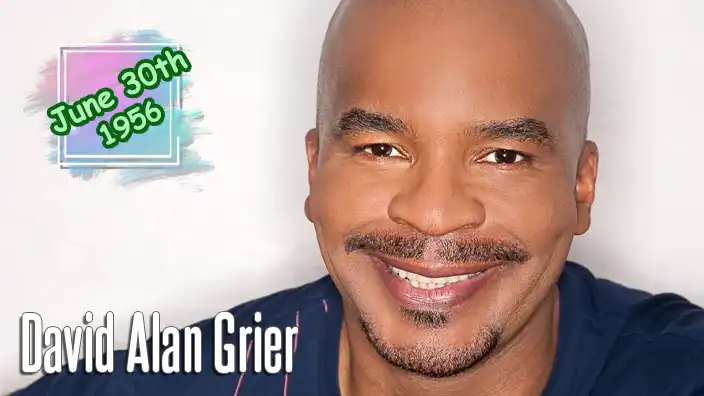
Some performers can make you laugh with a single look. David Alan Grier can do it before he's even spoken a word. Whether he's delivering razor-sharp comedy, commanding the Broadway stage, or stealing scenes in a Hollywood blockbuster, Grier has spent decades proving that talent, timing, and a perfectly raised eyebrow are a winning combination.
June 30, 1956, in Detroit, Michigan
Trivia
- Rose to fame on In Living Color.
- Made his film breakthrough in A Soldier's Story.
- Won the Tony Award for A Soldier's Play.
- Has enjoyed successful careers in comedy, drama, and musical theatre.
- Appeared in Boomerang alongside Eddie Murphy.
- Starred in Jumanji: The Next Level.
- Published the memoir Barack Like Me.
- Has worked as a stand-up comedian and television host.
- Has appeared in dozens of television series over four decades.

- Details
- Category: Celebrity Birthdays - June
If Disney villains ever needed a junior executive team, Jadah’s Celia would absolutely be running it by lunchtime. Meanwhile, in real life, Jadah somehow balances acting, singing, dancing, fitness, baking, and social media without breaking a sweat. Most of us feel accomplished if we answer a couple emails and remember where we left our coffee. She’s over here building an entertainment empire before dinner.
June 2, 2005, in Fontana, California
Trivia
- She gained widespread recognition as Celia in Descendants 3.
- She released her debut single “Staycation” in 2020.
- She enjoys dancing and frequently shares choreography online.
- She has spoken about staying positive in the face of social media criticism.

- Details
- Category: Celebrity Birthdays - June
Peter Dinklage has the rare ability to walk into a scene, say one perfectly delivered line, and leave everyone else looking like they forgot their scripts at home. Whether he’s trading insults in a medieval court or voicing a very important animated bird, he brings the same calm confidence, sharp wit, and unmistakable presence. He doesn’t rely on size, noise, or flashy theatrics—just timing, intelligence, and that slightly raised eyebrow that says, “I know something you don’t.” It’s the kind of performance style that proves you don’t need to tower over everyone to dominate a scene… you just need to be the smartest person in the room.
June 11, 1969, in Morristown, New Jersey
Trivia
- Peter Dinklage was the only actor the creators of Game of Thrones seriously considered for the role of Tyrion Lannister.
- He has a form of dwarfism called achondroplasia, but he has consistently avoided roles that rely on stereotypes, choosing characters with depth and intelligence.
- Before his acting career took off, he worked at a data-processing company, where he once accidentally deleted the entire database.
- Dinklage turned down several early acting jobs because they required him to play elves or leprechauns.
- He is a longtime vegetarian and animal-rights advocate, and he once appeared in a PETA campaign encouraging people to adopt, not shop, for pets.
- His breakout role came in the 2003 indie film The Station Agent, which earned him widespread critical praise.
- He provided the voice of the Mighty Eagle in The Angry Birds Movie and its sequel.
- Despite playing one of television’s most famous drinkers on Game of Thrones, the “wine” he drank on set was usually just juice.
- Details
- Category: Celebrity Birthdays - June
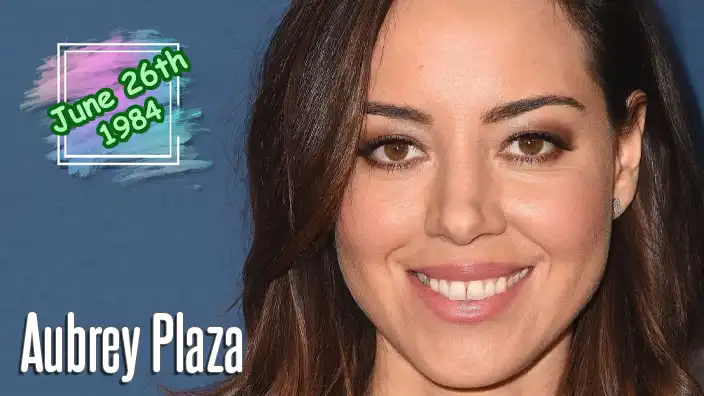
Some actors become famous for playing the hero, others for playing the villain. Aubrey Plaza somehow became famous by looking as though she'd rather be anywhere else—and audiences absolutely loved her for it. With razor-sharp wit, perfectly timed deadpan delivery, and a talent for making awkward silences funnier than most punchlines, Plaza has built one of Hollywood's most distinctive careers. Beneath that famously unamused expression, however, is a versatile actress, producer, comedian, and writer whose range extends far beyond the dry humor that first made her a household name.
June 26, 1984, in Wilmington, Delaware
Trivia
- Graduated from NYU's Tisch School of the Arts.
- Performed with the Upright Citizens Brigade Theatre.
- Best known as April Ludgate in Parks and Recreation.
- Played Julie Powers in Scott Pilgrim vs. the World.
- Starred in Safety Not Guaranteed.
- Earned critical acclaim for Black Bear.
- Produced and starred in Emily the Criminal.
- Played Harper Spiller in The White Lotus Season 2.
- Received Emmy and Golden Globe nominations for The White Lotus.
- Appeared as Lenny Busker in Legion.
- Voiced characters in The Legend of Korra and Monsters University.
- Recovered fully after suffering a stroke at age 20.
- Known for her signature deadpan comedic style.

- Details
- Category: Celebrity Birthdays - June
Anne Winters may be a rising Hollywood star, but give her a board game and she’ll happily spend the evening arguing over hotel properties and triple-word scores. Somewhere between intense dramatic scenes and red-carpet events, she’s probably plotting a ruthless Monopoly strategy. And if her on-screen characters are any indication, you might want to think twice before agreeing to be the banker.
June 3, 1994, in Dallas, Texas
Trivia
- Anne Winters was born and raised in Dallas, Texas.
- She played Chloe Rice on the Netflix series 13 Reasons Why.
- Her role in Tyrant marked her first major TV breakthrough.
- She appeared opposite Nicolas Cage in Mom and Dad.
- Winters is a fan of board games like Monopoly and Scrabble.

- Details
- Category: Celebrity Birthdays - June
Tate Taylor is the kind of filmmaker who might spend the morning directing a tense thriller scene and the afternoon rummaging through an antique shop looking for a 1930s coffee grinder. He’s got one foot in Hollywood and the other in a dusty old Southern attic full of history. And honestly, that probably explains a lot—when you grow up surrounded by stories, sometimes the only logical thing to do is grab a camera and start telling a few of your own.
June 3, 1969, in Jackson, Mississippi
Trivia
- Tate Taylor grew up in Jackson, Mississippi, the setting for The Help.
- He was childhood friends with The Help author Kathryn Stockett.
- Octavia Spencer, who won an Oscar for The Help, is a longtime friend of Taylor’s.
- He directed the James Brown biopic Get on Up in 2014.
- Taylor has acted in films and shows, including Breaking Bad.
From Our Marks Catelog
-

Single parenthood is a crash course in multitasking—where making dinner, helping with homework, and dodging Lego...
-

Balloons are the life of any party, with their bright colors and whimsical shapes, but they also...
-

Letting things go is a skill we all think we have—until we’re in the shower five years later, replaying an...
-

Some holidays ask for deep reflection. Others demand fireworks, feasts, or elaborate decorations....
-
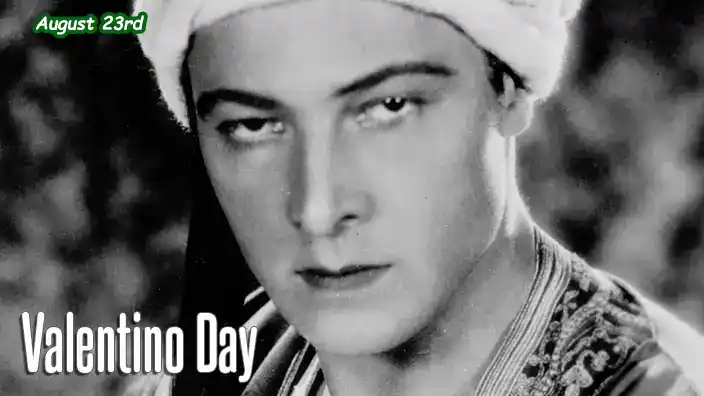
With a gaze that could melt ice and a mustache so perfectly groomed it might have had its own...
-

Imagine having the uncanny ability to make even the driest statistics sound like the punchline to a...

