Celebrity Birthdays - June

Ah, June — school’s out, pools are open, and June birthday people are here to remind you that the fun starts now.
These stars are summer’s opening act, kicking off long days, warm nights, and questionable tan lines. Grab a lemonade and join us in celebrating the folks who make June the month of all things bright and loud.

- Details
- Category: Celebrity Birthdays - June
Bill Burr is the kind of guy who can turn a simple trip to the grocery store into a ten-minute rant about self-checkout machines, parking lots, and the suspiciously cheerful voice on the automated receipt printer. He has a special talent for sounding like he’s about two sentences away from yelling at a cloud, but somehow you end up agreeing with every word. One minute he’s furious about modern society, the next he’s admitting he can’t find his car keys because they’re in his own hand. It’s that perfect mix of outrage and self-awareness that makes you think, “Yeah, he’s losing his mind… but he’s got a point.”
 June 10, 1968, in Canton, Massachusetts

Trivia
- Bill Burr once worked as a dental assistant before pursuing comedy.
- He has a helicopter pilot's license.
- Bill is known for his love of heavy metal music.
- He voices Frank Murphy in "F Is for Family."
- Bill Burr made a guest appearance in the "Star Wars" series "The Mandalorian."
- He's a die-hard sports fan, especially of the Boston teams.
- Bill has a special knack for ranting about everyday annoyances, which is a staple of his comedy.

- Details
- Category: Celebrity Birthdays - June
Tate Taylor is the kind of filmmaker who might spend the morning directing a tense thriller scene and the afternoon rummaging through an antique shop looking for a 1930s coffee grinder. He’s got one foot in Hollywood and the other in a dusty old Southern attic full of history. And honestly, that probably explains a lot—when you grow up surrounded by stories, sometimes the only logical thing to do is grab a camera and start telling a few of your own.
June 3, 1969, in Jackson, Mississippi
Trivia
- Tate Taylor grew up in Jackson, Mississippi, the setting for The Help.
- He was childhood friends with The Help author Kathryn Stockett.
- Octavia Spencer, who won an Oscar for The Help, is a longtime friend of Taylor’s.
- He directed the James Brown biopic Get on Up in 2014.
- Taylor has acted in films and shows, including Breaking Bad.
- Details
- Category: Celebrity Birthdays - June
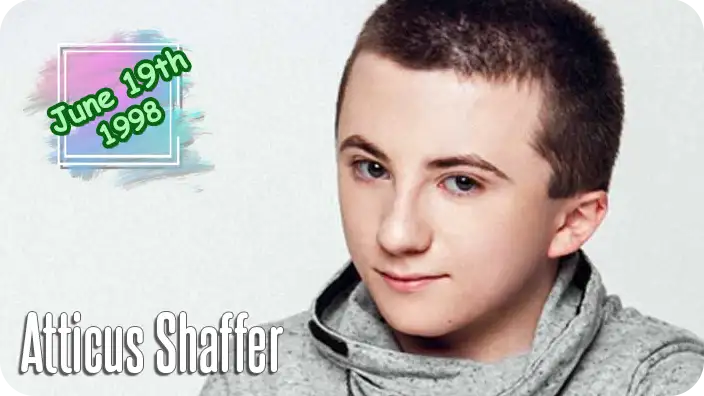
If you’ve ever met someone who whispers to themselves mid-sentence, obsesses over books like they’re rare treasure, and has the comedic timing of a Swiss watch, chances are you’ve either met Brick Heck or you’re related to someone who needs decaf. Today, we celebrate the birthday of Atticus Shaffer — the actor who turned awkward brilliance into an art form and made whispering your own name on national television weirdly charming.
June 19, 1998, in Santa Clarita, California
Trivia
- He was diagnosed with osteogenesis imperfecta, a genetic condition that affects bone density, at a young age.
- Atticus is an avid gamer and enjoys playing video games in his spare time.
- Atticus is best known for his role as Brick Heck on the popular TV series "The Middle," which aired from 2009 to 2018.
- Despite his condition, Atticus has a fearless approach to life and often jokes about his height and unique voice.
- He has a YouTube channel where he shares his thoughts on various topics, including faith, acting, and everyday life.

- Details
- Category: Celebrity Birthdays - June
Pat Boone once went from singing “Love Letters in the Sand” to covering heavy metal—and somehow made it sound like something you could play at a church picnic. That takes courage. While the rest of the world was growing their hair out and rebelling, Pat kept his pressed jacket, polished smile, and steady handshake. And honestly? There’s something impressive about a man who can outlast trends, outlive critics, and still surprise you when you least expect it.
June 1, 1934, in Jacksonville, Florida
Trivia
- Pat Boone attended Columbia University while launching his music career.
- He was the second-biggest charting artist of the 1950s behind Elvis Presley.
- He hosted The Pat Boone Chevy Showroom from 1957 to 1960.
- He released a swing-style heavy metal album in 1997 that stunned fans.
- He has written multiple books focused on Christian faith and values.
- He holds patents related to energy-efficient housing concepts.

- Details
- Category: Celebrity Birthdays - June
Aaron Taylor-Johnson has played a superhero with no powers, a superhero with super speed, a monster-fighting soldier, and a dangerously unhinged criminal—all before most people figure out what they’re doing with their lives. He’s the kind of actor who seems perfectly comfortable dodging explosions one year and wearing period costumes the next. Somewhere out there, a casting director is probably looking at his résumé and thinking, “We need someone who can fight, brood, run fast, and look intense while doing it.” And Aaron just sighs, stretches, and says, “All right, what century are we in this time?”
June 13, 1990, in High Wycombe, England
Trivia
- Aaron began acting at the age of six.
- He played John Lennon in the biographical film Nowhere Boy.
- He won a Golden Globe for Nocturnal Animals in 2017.
- He married director Sam Taylor-Johnson, whom he met on the set of Nowhere Boy.
- He took his wife’s last name, becoming Aaron Taylor-Johnson.
- He played Quicksilver in Avengers: Age of Ultron.
- He appeared in Christopher Nolan’s Tenet.
- He is a fan of classic rock bands like Led Zeppelin.
- Details
- Category: Celebrity Birthdays - June
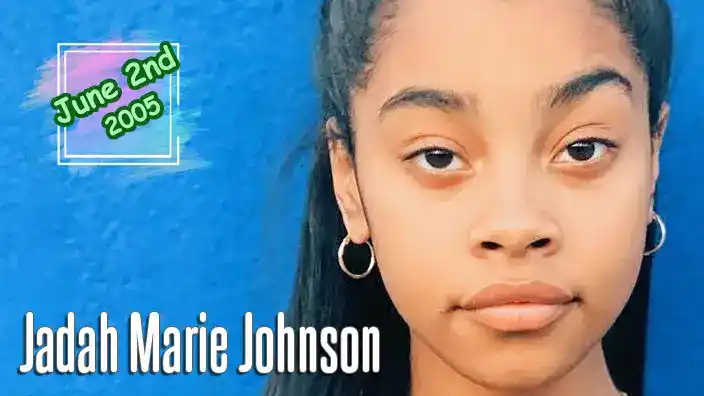
If Disney villains ever needed a junior executive team, Jadah’s Celia would absolutely be running it by lunchtime. Meanwhile, in real life, Jadah somehow balances acting, singing, dancing, fitness, baking, and social media without breaking a sweat. Most of us feel accomplished if we answer a couple emails and remember where we left our coffee. She’s over here building an entertainment empire before dinner.
 June 2, 2005, in Fontana, California
Trivia
- She gained widespread recognition as Celia in Descendants 3.
- She released her debut single “Staycation” in 2020.
- She enjoys dancing and frequently shares choreography online.
- She has spoken about staying positive in the face of social media criticism.

- Details
- Category: Celebrity Birthdays - June
DJ Qualls has made an entire career out of being the guy who looks like he accidentally wandered onto the set and then somehow became everyone’s favorite character. Whether he’s dodging zombies, hunting ghosts, or just trying to survive a college road trip, he always gives off the energy of someone who packed snacks, forgot the map, and still ended up saving the day. He’s proof that you don’t need superhero muscles or a square jaw to be memorable—sometimes all you need is a good sense of humor, a little awkward charm, and the ability to look surprised in every situation.
June 10, 1978, in Nashville, Tennessee
Trivia
- Survived Hodgkin’s lymphoma as a teenager.
- Broke out in the comedy Road Trip (2000).
- Played Garth in Supernatural.
- Portrayed Citizen Z in the zombie series Z Nation.

- Details
- Category: Celebrity Birthdays - June
Mark Wahlberg is famous for waking up at an hour most people consider the middle of the night, hitting the gym, eating a perfectly measured breakfast, and probably negotiating a business deal before the rest of us have even found the coffee maker. If you ever complain about being tired, just remember that somewhere out there, Mark has already worked out twice, filmed a scene, checked on his burger chain, and still has time to remind you that you should probably be doing more push-ups. He’s living proof that discipline can take you far—though most of us would settle for just making it out of bed on the first alarm.
June 5, 1971, in Boston, Massachusetts
Trivia
- He was the youngest of nine children.
- He was originally part of the group New Kids on the Block with his brother Donnie.
- He later formed Marky Mark and the Funky Bunch, scoring a hit with “Good Vibrations.”
- His role in The Departed earned him an Academy Award nomination.
- He trained intensely for his role in The Fighter.
- He co-owns the Wahlburgers restaurant chain with his brothers.
- He was once one of the highest-paid actors in Hollywood.

- Details
- Category: Celebrity Birthdays - June
Mae Whitman has had one of those careers where you keep realizing, “Wait… she was in that too?” She’s been the president’s daughter during an alien invasion, a fairy with wings, a sarcastic teen on a sitcom, and the emotional center of a family drama. At this point, if someone told you she once voiced a talking toaster in a cartoon, you’d probably just nod and say, “Yeah, that sounds about right.” She’s basically the entertainment industry’s secret ingredient—show up, add Mae Whitman, and suddenly everything tastes better.
June 9, 1988, in Los Angeles, California
Trivia
- Daughter of voice actress Pat Musick.
- Appeared in Independence Day (1996) as the president’s daughter.
- Played Ann Veal in Arrested Development.
- Voiced Katara in Avatar: The Last Airbender.
- Voiced Tinker Bell in Disney’s Tinker Bell films.
- Starred as Amber Holt in Parenthood.

- Details
- Category: Celebrity Birthdays - June
Mark Curry has the rare ability to make you laugh about things you swore you weren’t going to talk about. He’ll tell a story about family, sports, or life’s curveballs—and by the end, you’re laughing so hard you forget you were supposed to be serious. If timing is everything, Curry’s still running the clock like he’s up by two with ten seconds left—and yes, he’s taking the shot.
June 1, 1961, in Oakland, California
Trivia
- He starred in Hangin’ with Mr. Cooper from 1992 to 1997.
- He hosted Showtime at the Apollo, winning over tough live audiences.
- He appeared in the blockbuster film Armageddon (1998).
- He suffered severe burns in a 2006 home accident and returned to comedy afterward.
- He frequently participates in celebrity basketball events.
- He has been an advocate for mental health awareness.
- Details
- Category: Celebrity Birthdays - June
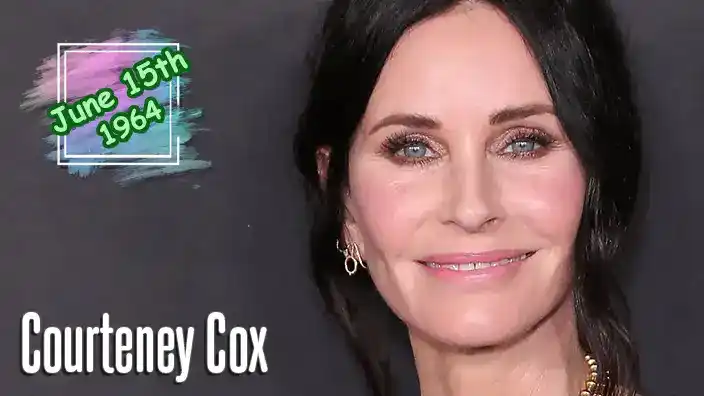
Courteney Cox has spent so many years playing neat, organized, slightly high-strung characters that you half expect her to walk into any room with a label maker and a disinfectant wipe. As Monica, she could spot a crooked picture frame from across the apartment and fix it before anyone else even noticed it was crooked. In real life, she’s admitted she likes things tidy—but probably not to the point of vacuuming the vacuum cleaner. Still, if you ever visit her house, you get the feeling the throw pillows are standing at attention, the counters are shining, and somewhere in the distance, you can almost hear Monica whispering, “Could this place be any cleaner?”
June 15, 1964, in Birmingham, Alabama
Trivia
- She was the first Friends cast member to be nominated for a Golden Globe (Cougar Town).
- She originally auditioned for the role of Rachel on Friends.
- She has appeared in every film of the Scream franchise.
- She once worked as a model before becoming an actress.
- Her daughter, Coco, was named after her nickname.
- She directed several episodes of Cougar Town.
- She’s a skilled piano player and enjoys music sessions with friends.
- She has a passion for interior design and home renovation.
- Details
- Category: Celebrity Birthdays - June
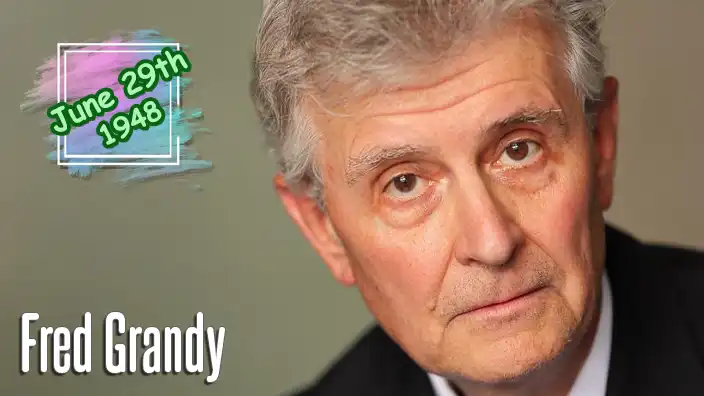
Fred Grandy may be best remembered as Gopher from The Love Boat, but his career took a route most actors never attempt without a very confused travel agent: Hollywood sitcom fame, Congress, nonprofit leadership, radio commentary, and back to performance. Most people leave a cruise with sunburn and a souvenir cup; Grandy left with a public profile sturdy enough to carry him all the way to Washington.
June 29, 1948, in Sioux City, Iowa
Trivia
- He played Burl “Gopher” Smith on The Love Boat.
- The Love Boat aired as a regular series from 1977 to 1986.
- Grandy later served four terms in the U.S. House of Representatives.
- He represented Iowa in Congress from 1987 to 1995.
- Before acting fame, he worked as an aide to Congressman Wiley Mayne.
- He later served as president and CEO of Goodwill Industries International.
- He appeared on The Mindy Project in a recurring role.
- His son Charlie Grandy became a television writer and producer.
- Grandy has reunited with The Love Boat cast for fan events and cruises.
- Details
- Category: Celebrity Birthdays - June
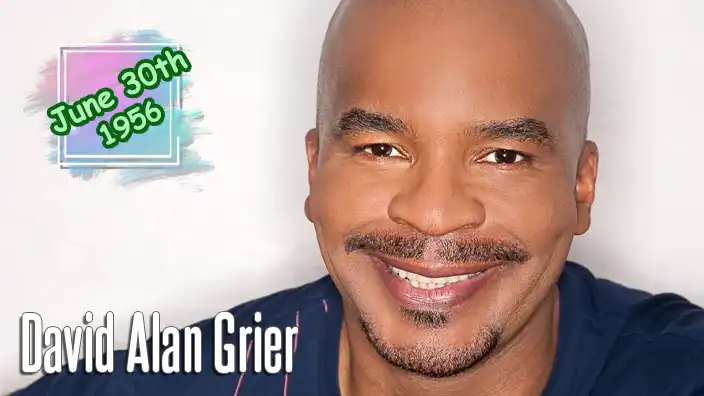
Some performers can make you laugh with a single look. David Alan Grier can do it before he's even spoken a word. Whether he's delivering razor-sharp comedy, commanding the Broadway stage, or stealing scenes in a Hollywood blockbuster, Grier has spent decades proving that talent, timing, and a perfectly raised eyebrow are a winning combination.
June 30, 1956, in Detroit, Michigan
Trivia
- Rose to fame on In Living Color.
- Made his film breakthrough in A Soldier's Story.
- Won the Tony Award for A Soldier's Play.
- Has enjoyed successful careers in comedy, drama, and musical theatre.
- Appeared in Boomerang alongside Eddie Murphy.
- Starred in Jumanji: The Next Level.
- Published the memoir Barack Like Me.
- Has worked as a stand-up comedian and television host.
- Has appeared in dozens of television series over four decades.

- Details
- Category: Celebrity Birthdays - June
Dr. Ruth proved that you don’t need to be tall to be a giant in your field. At 4 feet 7 inches, she could barely see over some podiums, but she could certainly see right through people’s excuses for poor communication. With her cheerful accent and unstoppable energy, she turned late-night radio into a classroom for grown-ups—and probably made a few listeners blush while she was at it. If confidence were measured in decibels, she’d have been ten feet tall.
June 4, 1928, in Frankfurt, Germany
 July 12, 2024, in Manhatten, New York
Trivia
- Dr. Ruth was only 4 feet 7 inches tall but served as a sniper in the Haganah.
- Her radio show Sexually Speaking began as a small midnight program.
- She wrote more than 40 books on sex, relationships, and psychology.
- She earned a doctorate in education from Columbia University.
- She continued teaching and speaking publicly well into her 90s.
- Details
- Category: Celebrity Birthdays - June
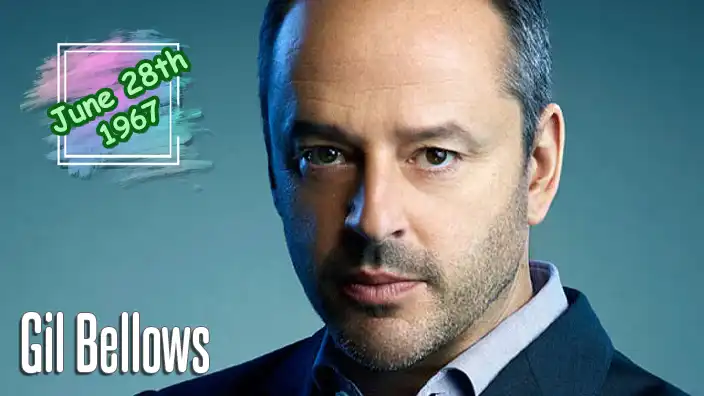
Hollywood is full of actors who can make an entrance, but Gil Bellows has mastered something much trickier—making audiences remember him long after the scene is over. Whether he's practicing law in a television courtroom, surviving prison in one of cinema's greatest films, or quietly stealing scenes without making a fuss about it, Bellows has built a career that proves you don't always need the loudest voice in the room to leave the biggest impression.
June 28, 1967, in Vancouver, Canada
Trivia
- Played Tommy Williams in The Shawshank Redemption (1994)
- Best known as Billy Thomas on Ally McBeal.
- Won a Screen Actors Guild Award as part of the Ally McBeal ensemble.
- Is also a producer, screenwriter, and director.
- Executive produced HBO's Emmy-winning Temple Grandin.
- Received a Peabody Award for Temple Grandin.
- Co-wrote, co-directed, produced, and starred in 3 Days in Havana.
- Appeared in Smallville, 11.22.63, Patriot, The Handmaid's Tale, American Gods, and Chucky.

- Details
- Category: Celebrity Birthdays - June
Angelina Jolie has lived enough different lives to keep three biographies busy. One minute she’s leaping off temples as Lara Croft, the next she’s flying a plane, visiting a refugee camp, or directing a historical drama. Somewhere in between, she’s also raising six kids and collecting knives. Most people struggle to finish a weekend to-do list, and she’s out here running what feels like three careers and a small international airport.
June 4, 1975, in Los Angeles, California
Trivia
- Angelina Jolie won an Academy Award for Girl, Interrupted (1999).
- She performed many of her own stunts as Lara Croft.
- Jolie became a UNHCR Goodwill Ambassador in 2001.
- She holds a private pilot’s license.
- She directed Unbroken, based on the life of Louis Zamperini.

- Details
- Category: Celebrity Birthdays - June
If you survived watching Meet the Parents without cringing at least once, you may be superhuman. Through all that chaos, Teri Polo stood calmly in the middle of it like someone who had already rehearsed every possible awkward family dinner scenario. Meanwhile, most of us panic if our in-laws ask about our five-year plan. She handled De Niro’s interrogation scenes with grace — which frankly deserves its own award category.
June 1st, 1969, in Dover, Delaware
Trivia
- She originally trained as a ballet dancer before pursuing acting.
- She played Pam Byrnes in the Meet the Parents trilogy.
- She starred as Stef Adams Foster in The Fosters from 2013 to 2018.
- She filed for bankruptcy in 2014 but continued working steadily afterward.

- Details
- Category: Celebrity Birthdays - June
Helen Hunt has spent so many years playing sensible, grounded characters that you almost expect her to walk into chaotic situations just to restore order. In Twister, while everyone else was screaming about flying cows and exploding barns, she looked like the only person who had actually read the safety instructions. And in romantic comedies, she often played the voice of reason—the one character quietly wondering why everyone else was making such terrible decisions. If real life ever gets too dramatic, you get the feeling Helen Hunt would just grab a surfboard, head for the ocean, and let the waves sort things out while everyone else is still arguing about whose fault it was.
June 15, 1963, in Culver City, California
Trivia
- Helen won four Emmy Awards for Mad About You.
- She won the Academy Award for As Good as It Gets.
- She starred in the blockbuster tornado film Twister.
- Her father, Gordon Hunt, was a respected acting coach and director.
- Helen began acting on television as a child in the 1970s.
- She co-wrote and directed the film Then She Found Me.
- She earned an Oscar nomination for The Sessions.
- She is an avid surfer and a longtime yoga enthusiast.
- Details
- Category: Celebrity Birthdays - June
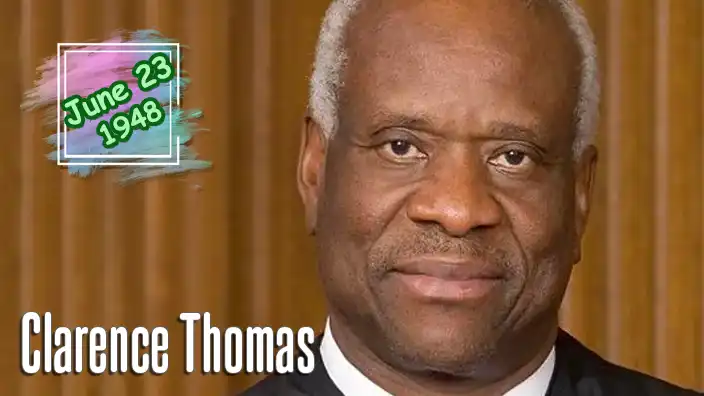
Few people spend more than three decades at the same job without becoming part of the office furniture. Clarence Thomas has managed to serve on the United States Supreme Court since 1991 while remaining one of the most discussed, debated, analyzed, quoted, criticized, praised, and scrutinized figures in American public life. In a profession where people literally wear the same black robe every day, standing out is no small achievement. Whether people agree with him, disagree with him, or need a law degree and three cups of coffee to understand his latest opinion, Clarence Thomas has spent decades ensuring that nobody ignores his place in American legal history.
June 23, 1948, in Pin Point, Georgia
Trivia
- First person in his family to attend college.
- Graduated from the College of the Holy Cross.
- Earned a law degree from Yale Law School.
- Worked as an Assistant Attorney General in Missouri.
- Served as Chairman of the EEOC.
- Appointed to the D.C. Circuit Court in 1990.
- Nominated to the Supreme Court by President George H. W. Bush.

- Details
- Category: Celebrity Birthdays - June
Gina Gershon has the kind of career that feels like it was planned by someone spinning a wheel labeled “Bold Choices Only.” One minute she’s in a teen classic, the next she’s ruling the stage in Las Vegas, then suddenly she’s in a stylish crime thriller or belting out songs on Broadway. You get the sense that if someone handed her a script about a singing, guitar-playing detective who solves crimes at a yoga retreat, she’d just shrug, say “Why not?” and start rehearsing her lines before lunch. And honestly, that fearless attitude is exactly why audiences keep watching.
June 10, 1962, in Los Angeles, California
Trivia
- Studied acting at NYU’s Tisch School of the Arts.
- Appeared in Pretty in Pink (1986).
- Played Cristal in the cult classic Showgirls (1995).
- Starred in the crime thriller Bound (1996).
- Performed on Broadway as Sally Bowles in Cabaret.
- Co-wrote the children’s book Camp Creepy Time.

- Details
- Category: Celebrity Birthdays - June
Penelope Wilton has mastered the art of the polite but devastatingly effective English stare. On Downton Abbey, she could correct someone’s entire worldview with a single raised eyebrow and a gentle sentence about compassion. She’s the sort of character you’d want at your dinner table—partly for the conversation, and partly because if anyone got out of line, she’d put them back in their place with perfect manners and zero wasted words.
June 3, 1946, in Scarborough, England
Trivia
- Penelope Wilton trained at the Drama Centre London.
- She starred in the sitcom Ever Decreasing Circles in the 1980s.
- She played Isobel Crawley in Downton Abbey and its films.
- Both of her parents were actors.
- She has worked extensively with the Royal Shakespeare Company.
From Our Marks Catelog
-

Single parenthood is a crash course in multitasking—where making dinner, helping with homework, and dodging Lego...
-

Balloons are the life of any party, with their bright colors and whimsical shapes, but they also...
-

Letting things go is a skill we all think we have—until we’re in the shower five years later, replaying an...
-

Some holidays ask for deep reflection. Others demand fireworks, feasts, or elaborate decorations....
-
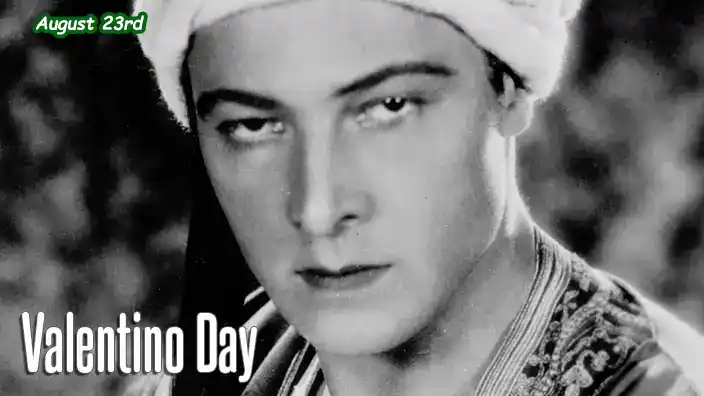
With a gaze that could melt ice and a mustache so perfectly groomed it might have had its own...
-

Imagine having the uncanny ability to make even the driest statistics sound like the punchline to a...

