Celebrity Birthdays - June

Ah, June — school’s out, pools are open, and June birthday people are here to remind you that the fun starts now.
These stars are summer’s opening act, kicking off long days, warm nights, and questionable tan lines. Grab a lemonade and join us in celebrating the folks who make June the month of all things bright and loud.

- Details
- Category: Celebrity Birthdays - June
Alanis Morissette made it socially acceptable to scream-sing your feelings in the car with the windows up. She turned heartbreak into a stadium event and made angst sound poetic. And somewhere out there, someone is still passionately debating whether that spoon situation was technically ironic. Alanis probably smiles, shrugs, and writes another brilliant lyric about it.
 June 1, 1974, in Ottawa, Canada

Trivia
- Jagged Little Pill has sold over 30 million copies worldwide.
- She won the Grammy Award for Album of the Year in 1996.
- She played God in the film Dogma (1999).
- Her music inspired a Broadway adaptation of Jagged Little Pill.
- She began her career as a teen pop singer in Canada.
- She has been open about her struggles with depression and eating disorders.

- Details
- Category: Celebrity Birthdays - June
KJ Apa has spent so many years playing Archie Andrews that there’s a good chance some people think he was born with bright red hair and a guitar in his hands. In reality, he’s a laid-back New Zealander who probably feels more at home on a surfboard than in a small-town American diner discussing teenage drama. One minute he’s delivering emotional speeches about friendship and loyalty, and the next he’s getting his roots touched up again because being a natural brunette apparently isn’t part of the Archie job description. Somewhere, his real hair is probably just waiting for retirement.
 June 17, 1997, in Auckland, New Zealand
Trivia
- His father is a Samoan high chief in their family’s village.
- Before Riverdale, he starred in the New Zealand soap opera Shortland Street.
- He is a natural brunette and has to dye his hair red to play Archie Andrews.
- He plays guitar and piano and has performed his own singing in film roles.
- He starred in the faith-based film I Still Believe (2020) as musician Jeremy Camp.
- He became a father in 2021.
- He enjoys surfing, road trips, and outdoor activities.
- He is a big fan of comic books, especially Marvel characters.
- Details
- Category: Celebrity Birthdays - June
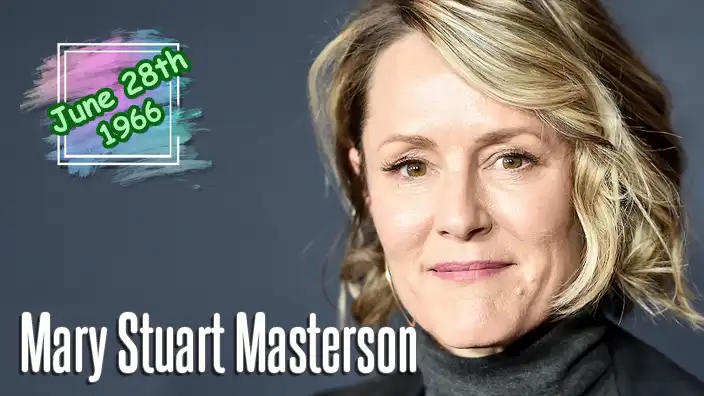
Some actors spend their careers chasing the next big blockbuster. Mary Stuart Masterson seems to have preferred collecting memorable characters instead. Whether she's charming audiences in a heartfelt drama, surviving the occasional emotional roller coaster on screen, or making us laugh just when we thought we were about to cry, she has quietly built the sort of career that leaves viewers saying, "Oh, I love her in that!"—even if they need a minute to remember which "that" they're talking about.
June 28, 1966, in New York City, New York
Trivia
- Attended the Professional Children's School in New York.
- Made her film debut in The Stepford Wives (1975).
- Starred in Disney's The Journey of Natty Gann (1985).
- Played Idgie Threadgoode in Fried Green Tomatoes (1991).
- Starred opposite Johnny Depp in Benny & Joon (1993).
- Appeared in the Broadway revival of Nine.
- Has worked as an actress, producer, and director.
- Is an advocate for affordable childcare and family-friendly workplace policies.
- Has appeared in Blindspot, For Life, NCIS, and Law & Order: SVU.
- Continues to work in film, television, and theatre.

- Details
- Category: Celebrity Birthdays - June
Frank Grillo seems like the kind of guy who wakes up at 5 a.m., does 500 push-ups, runs ten miles, spars with a heavyweight, and then casually eats a protein shake the size of a small aquarium. Meanwhile, the rest of us are negotiating with the snooze button and wondering if walking to the fridge counts as cardio. If Frank ever offered to be your personal trainer, you’d probably get in the best shape of your life—or at least learn how to dramatically collapse in slow motion like an action-movie extra.
June 8, 1965, in New York City
Trivia
- Frank studied business at New York University before turning to acting.
- He appeared in over 20 commercials early in his career, including ads for major brands.
- He is a trained boxer and has practiced Brazilian jiu-jitsu for years.
- His role in Warrior was one of his first major film breakthroughs.
- He played Sergeant Leo Barnes in two Purge films.
- Frank has worked both as an actor and producer on several action projects.
- He has appeared in multiple Marvel Cinematic Universe films as Crossbones.

- Details
- Category: Celebrity Birthdays - June
Most people go camping and hope there’s a clean bathroom and maybe a coffee maker nearby. Bear Grylls goes camping and immediately starts chewing on a stick, drinking from a suspicious puddle, and explaining how to cook a beetle over a tiny fire. He’s the only guy who can look at a perfectly good sandwich and say, “No thanks, I’ll just eat this handful of moss instead.” If Bear ever showed up at a backyard barbecue, you just know he’d wander off into the bushes, come back with a handful of leaves, and say, “This is much more nutritious.” And somehow, you’d believe him.
June 7, 1974, in London, England
Trivia
- He earned the nickname “Bear” from his sister when he was a baby.
- He served in the British SAS before becoming a TV star.
- He broke his back in a parachuting accident at age 21.
- He climbed Mount Everest at 23, one of the youngest climbers at the time.
- He has crossed the North Atlantic in an inflatable boat.
- He holds a black belt in Shotokan karate.
- He practices yoga to stay flexible and focused.
- His autobiography Mud, Sweat, and Tears became a bestseller.

- Details
- Category: Celebrity Birthdays - June
Robert Englund might be the only man in the world who can walk into a room and make people both smile and instinctively check their closets. For decades, he spent his nights on screen chasing teenagers through their dreams, yet in real life he’s the sort of fellow who’d probably offer you a cup of tea and talk about art or gardening. It’s a strange thought: somewhere out there, the face of Freddy Krueger might be quietly watering petunias while the neighbors have absolutely no idea they’re living next door to one of the most famous nightmares in movie history.
June 6, 1947, in Glendale, California
Trivia
- He studied at the Royal Academy of Dramatic Art in London.
- He originally auditioned for the role of Han Solo in Star Wars.
- He helped his friend Mark Hamill get the audition that led to Luke Skywalker.
- He played Freddy Krueger in eight films.
- He starred as Willie in the sci-fi TV series V.
- He directed the horror film 976-EVIL in 1988.
- He has done extensive voice acting in animated shows and video games.

- Details
- Category: Celebrity Birthdays - June
John Cho has built a career on the rare talent of looking completely calm while everything around him descends into chaos. Whether he’s fleeing zombies, navigating space, or just trying to order fast food, he somehow manages to keep the expression of a man who expected a quiet afternoon and instead got handed a science-fiction trilogy. He also holds the distinguished honor of turning a two-word movie line into a cultural landmark, proving that sometimes all it takes is perfect timing, perfect delivery, and absolutely no idea that you’re about to be quoted for the next twenty years. If Hollywood had more actors with his mix of wit, charm, and dry humor, even alien invasions would feel slightly more organized.
June 16, 1972, in Seoul, South Korea
Trivia
- John Cho moved to the United States with his family when he was six years old.
- John graduated from the University of California, Berkeley, with a degree in English.
- Cho gained widespread recognition for his role as Harold Lee in the "Harold & Kumar" film series, which became a cult favorite.
- He made history as the first Asian-American romantic lead in a mainstream Hollywood film in "Searching" (2018).

- Details
- Category: Celebrity Birthdays - June
If there were an award for “Most Likely to Survive Literally Anything on Television,” Sarah Wayne Callies would need a bigger trophy shelf. Prison break? Handled. Zombie apocalypse? Managed. Alien occupation? Navigated. At this point, if the next show involves time-traveling pirates with laser sharks, we’re confident she’ll keep a calm expression, deliver a thoughtful monologue, and somehow still make it to parent-teacher night.
June 1, 1977, in La Grange, Illinois
Trivia
- Sarah Wayne Callies earned an MFA from the National Theatre Conservatory before landing major television roles.
- She reprised her role as Sara Tancredi when Prison Break returned for its 2017 revival.
- She has directed episodes of television, expanding her work beyond acting.
- She has lived in multiple countries, including time spent in Hawaii and abroad during her childhood.
- She is an outspoken advocate for refugee rights and global humanitarian causes.

- Details
- Category: Celebrity Birthdays - June
If you ever walked into a Wayans family reunion, you’d probably hear enough jokes in ten minutes to fill an entire season of television. Keenen would be in the corner, calmly watching the chaos he helped create, like a proud general surveying his comedy troops. Someone would trip over a chair, someone else would turn it into a sketch idea, and before dessert was served, three movie deals and a sitcom pilot would be in the works. In the Wayans world, even the potato salad probably has better timing than most stand-up comics.
June 8, 1958, in New York City
Trivia
- Keenen is the second oldest of ten Wayans siblings.
- He created In Living Color in 1990, which ran for five seasons.
- The show launched the careers of Jim Carrey, Jamie Foxx, and Jennifer Lopez.
- He directed the first Scary Movie, which grossed over $275 million worldwide.
- Keenen originally studied engineering at Tuskegee University before switching to comedy.
- He co-wrote the cult classic parody film I’m Gonna Git You Sucka.
- The Wayans family has produced dozens of films, TV shows, and comedy specials across multiple decades.

- Details
- Category: Celebrity Birthdays - June
If there were an award for “Most Likely to Master Three Careers Before Breakfast,” Lilimar would be a top contender. Acting? Check. Modeling? Check. Voice work? Check. Somewhere between fashion shoots and saving animated empires in space, she still finds time to paint and advocate for animals. The rest of us feel accomplished if we answer three emails before lunch. She casually builds a résumé that makes multitasking look like an extreme sport.
June 2, 2000, on Margarita Island, Venezuela
Trivia
- Lilimar began competing in beauty pageants at a young age.
- She voiced Cleopatra in the animated series Cleopatra in Space.
- Her breakout television role was Sophie in Bella and the Bulldogs.
- She is passionate about animal rescue and adoption advocacy.

- Details
- Category: Celebrity Birthdays - June
Luke Youngblood has managed to build a career where he’s best known for either announcing magical sports or yelling “Pop! Pop!” at random intervals, which is honestly a pretty great résumé. Not everyone can say they’ve worked at Hogwarts and a fictional community college without even needing a time-turner. Somewhere out there, there’s probably a crossover universe where Lee Jordan is commentating a Quidditch match while Magnitude runs through the stands shouting his catchphrase. And frankly, that sounds like a show people would absolutely watch.
June 12, 1986, in London, England
Trivia
- Luke Youngblood played Lee Jordan in the first three Harry Potter films.
- He portrayed Magnitude on the TV series Community.
- His famous catchphrase on Community was “Pop! Pop!”
- He has performed in West End musical productions.
- He played Benny in In the Heights in London.
- Luke began acting as a child in British television shows.
- He is also a trained singer and dancer.
- Details
- Category: Celebrity Birthdays - June
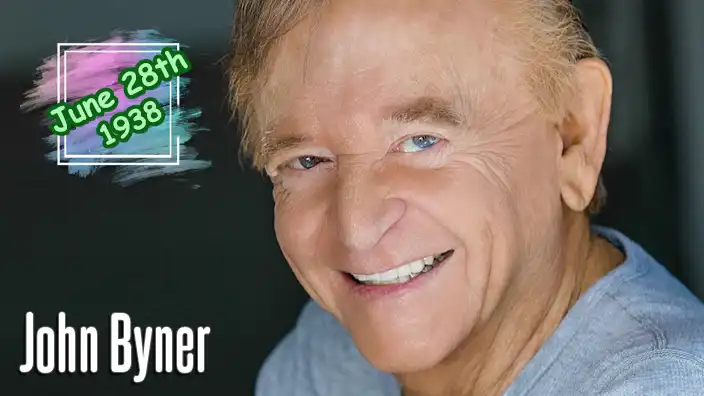
Some people can barely remember where they left their car keys. John Byner spent decades remembering the voices, mannerisms, and quirks of dozens of famous people without mixing up John Wayne with Dean Martin or accidentally having an aardvark sound like Ed Sullivan. That kind of comic talent doesn't come with an instruction manual—it comes with years of practice, perfect timing, and a wonderfully flexible set of vocal cords.
June 28, 1938, in New York City, New York
Trivia
- He became known for impressions of John Wayne, Dean Martin, Jackie Mason, and Ed Sullivan.
- He made numerous appearances on The Ed Sullivan Show.
- He also appeared on The Tonight Show Starring Johnny Carson.
- He voiced both title characters in The Ant and the Aardvark cartoons.
- His ant voice was inspired by Dean Martin.
- His aardvark voice was inspired by Jackie Mason.
- He hosted the sketch comedy series Bizarre.
- Bizarre helped introduce Bob Einstein’s Super Dave Osborne character.

- Details
- Category: Celebrity Birthdays - June
DJ Qualls has made an entire career out of being the guy who looks like he accidentally wandered onto the set and then somehow became everyone’s favorite character. Whether he’s dodging zombies, hunting ghosts, or just trying to survive a college road trip, he always gives off the energy of someone who packed snacks, forgot the map, and still ended up saving the day. He’s proof that you don’t need superhero muscles or a square jaw to be memorable—sometimes all you need is a good sense of humor, a little awkward charm, and the ability to look surprised in every situation.
June 10, 1978, in Nashville, Tennessee
Trivia
- Survived Hodgkin’s lymphoma as a teenager.
- Broke out in the comedy Road Trip (2000).
- Played Garth in Supernatural.
- Portrayed Citizen Z in the zombie series Z Nation.
- Details
- Category: Celebrity Birthdays - June
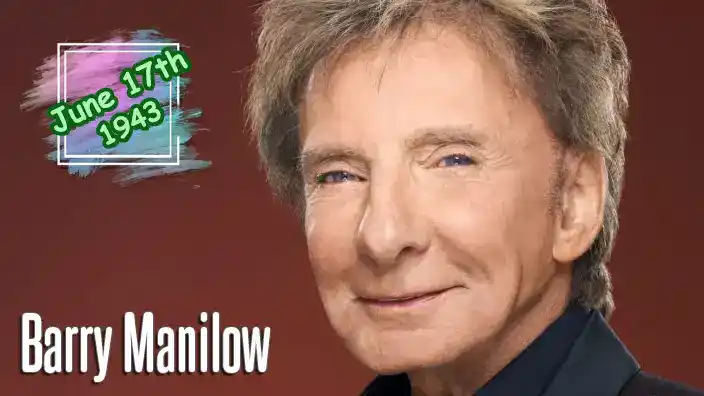
Barry Manilow has spent decades proving that you don’t need leather pants, smashed guitars, or a stage dive to be a rock star—you just need a piano, a tuxedo, and a melody that refuses to leave people’s heads for the next 40 years. He wrote songs about showgirls, Copacabana dancers, and even Mandy, whoever she was, and somehow convinced the world that emotional ballads and soft lighting could fill arenas. His concerts often look less like rock shows and more like elegant reunions where thousands of fans sing along in perfect harmony, waving programs instead of lighters. And somewhere in the middle of it all, Barry sits at the piano, smiling calmly, knowing full well that he’s got the entire crowd humming his tunes all the way home.
June 17, 1943, in Brooklyn, New York
Trivia
- Barry Manilow was born on June 17, 1943, in Brooklyn, New York.
- His birth name was Barry Alan Pincus, and he later adopted his mother's maiden name, Manilow, professionally.
- Barry's big break came in 1974 with his hit single "Mandy," which topped the charts and launched his career.
- He has sold over 85 million records worldwide, making him one of the best-selling artists of all time.
- Barry is a self-proclaimed "tech geek" who enjoys staying up to date on the latest technology trends.
- Details
- Category: Celebrity Birthdays - June
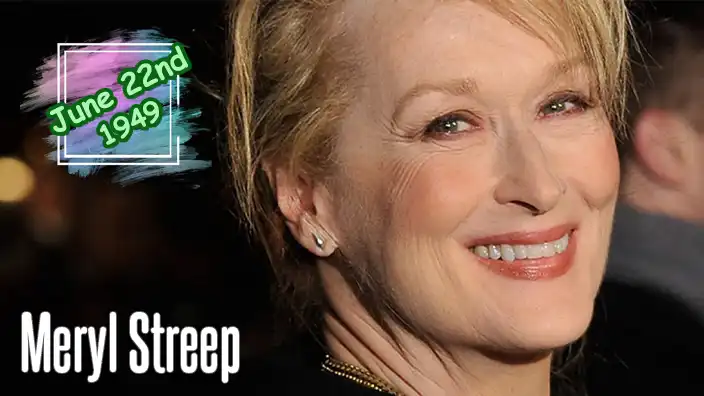
Some people collect awards. Some collect movie roles. Meryl Streep appears to have collected entire careers. Over the course of more than five decades, she has transformed herself into prime ministers, chefs, singers, authors, fashion editors, and just about anyone else Hollywood could imagine. If acting were an Olympic sport, there would probably be a rule limiting how many medals one person could win. Born on June 22, 1949, Meryl Streep has spent a lifetime setting a standard that leaves audiences impressed, critics scrambling for new compliments, and fellow actors wondering if she secretly has extra hours in her day.
June 22, 1949 in Summit, New Jersey
Trivia
- Her full name is Mary Louise Streep.
- The nickname "Meryl" was invented by her father.
- Graduated from Vassar College in 1971.
- Earned an MFA from the Yale School of Drama in 1975.
- Made her film debut in Julia (1977).
- Received her first Oscar nomination for The Deer Hunter (1978).
- Won her first Academy Award for Kramer vs. Kramer (1979).
- Won Best Actress Oscars for Sophie's Choice and The Iron Lady.
- Originally trained as a singer before focusing on acting.
- Known for her ability to perform a wide variety of accents.
- Has won multiple Emmy and Golden Globe Awards.
- Widely regarded as one of the greatest actresses in film history.

- Details
- Category: Celebrity Birthdays - June
Angelina Jolie has lived enough different lives to keep three biographies busy. One minute she’s leaping off temples as Lara Croft, the next she’s flying a plane, visiting a refugee camp, or directing a historical drama. Somewhere in between, she’s also raising six kids and collecting knives. Most people struggle to finish a weekend to-do list, and she’s out here running what feels like three careers and a small international airport.
June 4, 1975, in Los Angeles, California
Trivia
- Angelina Jolie won an Academy Award for Girl, Interrupted (1999).
- She performed many of her own stunts as Lara Croft.
- Jolie became a UNHCR Goodwill Ambassador in 2001.
- She holds a private pilot’s license.
- She directed Unbroken, based on the life of Louis Zamperini.
- Details
- Category: Celebrity Birthdays - June
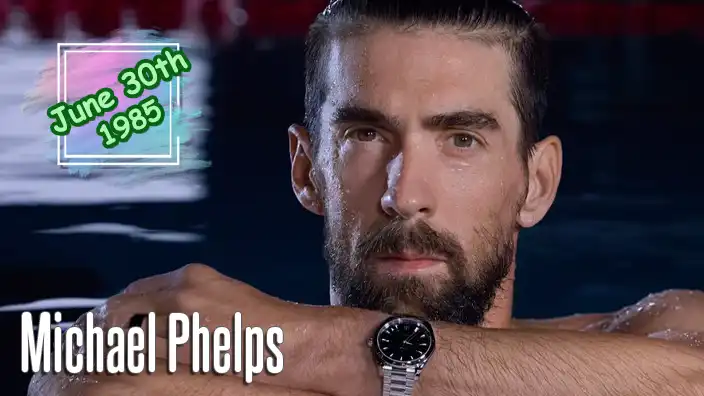
Most people celebrate a trip to the swimming pool by floating on an inflatable flamingo and wondering where the sunscreen went. Michael Phelps took a slightly different approach—he collected Olympic gold medals like they were souvenir postcards. By the time he climbed out of the water, record books needed extra pages just to keep up.
June 30, 1985, in Baltimore, Maryland
Trivia
- Won a record 28 Olympic medals.
- Captured an unprecedented 23 Olympic gold medals.
- Won eight gold medals at the 2008 Beijing Olympics.
- Competed in five Olympic Games.
- Set 39 world records during his career.
- Qualified for his first Olympics at just 15 years old.
- Trained throughout his career under coach Bob Bowman.
- Founded the Michael Phelps Foundation to promote water safety.
- Has been an advocate for mental health awareness since retiring.
- Was awarded the Presidential Medal of Freedom in 2024.

- Details
- Category: Celebrity Birthdays - June
Joe Montana was so calm under pressure that there’s a good chance he could have ordered a sandwich during a two-minute drill and still led a game-winning drive. While defenders were charging at him like runaway trucks, he looked like a man deciding what to have for dinner. Somewhere out there, a quarterback is sweating through his jersey with ten seconds left on the clock, and an old clip of Joe Montana is playing on the big screen—standing in the huddle, cool as ever, probably thinking, “Relax, fellas. We’ve got this.” And somehow, he always did.
June 11, 1956, in New Eagle, Pennsylvania
Trivia
- His full name is Joseph Clifford Montana Jr.
- He won four Super Bowls with the San Francisco 49ers.
- He was named Super Bowl MVP three times.
- He earned the nickname “Joe Cool” for his calm demeanor.
- He led Notre Dame to a national championship in 1977.
- He was drafted in the third round of the 1979 NFL Draft.
- He finished his career with the Kansas City Chiefs.
- He was inducted into the Pro Football Hall of Fame in 2000.

- Details
- Category: Celebrity Birthdays - June
Laurie Metcalf has the rare ability to look completely calm while her character’s life is falling apart in twelve different directions. Give her a phone, a bad decision, and a slightly awkward living room, and she can turn it into award-winning television. As Jackie on Roseanne, she could go from confident to confused to catastrophically emotional in the time it takes most people to microwave popcorn. You get the feeling that if Laurie ever played a perfectly normal, drama-free character, the rest of the cast would start arguing just to give her something to react to—because watching Laurie Metcalf handle chaos is half the fun.
June 16, 1955, in Carbondale, Illinois
Trivia
- She helped found Chicago’s famed Steppenwolf Theatre Company.
- She originally studied German before choosing acting.
- She has won two Tony Awards in back-to-back years.
- She is the voice of Andy’s mom in the Toy Story films.
- She won an Emmy for a guest role on The Big Bang Theory.
- Her daughter Zoe Perry is also an actress.
- Zoe has played younger versions of her mother’s characters.
- She’s known in the industry as an “actor’s actor.”
- She prefers theater work over Hollywood parties.

- Details
- Category: Celebrity Birthdays - June
Dana Carvey has spent his life proving that a pair of glasses, a funny voice, and a strange wig can change the world. While most people try to avoid awkward silences, Dana built an entire career on them—usually followed by a bizarre impression or a high-pitched giggle. Somewhere out there, there’s probably a drum set, a golf club, and a Church Lady wig all in the same closet, just waiting for their next big moment. And honestly, that sounds like a perfectly reasonable way to live.
June 2, 1955, in Missoula, Montana
Trivia
- Dana Carvey won a Primetime Emmy Award in 1993 for his work on Saturday Night Live.
- His George H. W. Bush impression was so popular that even the president himself praised it.
- He plays multiple musical instruments, including drums and guitar.
- The Dana Carvey Show featured future comedy heavyweights like Stephen Colbert and Steve Carell.
- He voiced the character Pops in The Secret Life of Pets films.

- Details
- Category: Celebrity Birthdays - June
Julianna Margulies has played so many smart, capable professionals that if you ran into her in real life, you’d probably start asking her for legal advice, a medical diagnosis, and maybe a book recommendation all at once. She’d calmly listen, nod thoughtfully, and somehow look like she already had the perfect solution. Meanwhile, the rest of us can’t even decide what to watch on TV without consulting three apps and a snack. That’s the Margulies effect—she makes competence look so natural that you almost forget how rare it is.
June 8, 1966, in Spring Valley, New York
Trivia
- She was once roommates with actor Ron Eldard, who also appeared on ER.
- Margulies turned down a $27 million offer to stay on ER for two more seasons, opting to pursue other projects instead.
- She has a black belt in karate. So, think twice before challenging her to a duel.
- Julianna is fluent in French, a skill she often showcases in interviews.
- She has narrated several audiobooks, including Growing Up X by Ilyasah Shabazz.
- Margulies is a huge fan of the TV show Breaking Bad and has said she would love to have been a part of it.
- She has a son named Kieran with her husband, Keith Lieberthal, whom she married in 2007.
From Our Marks Catelog
-

Brussels sprouts: the tiny green orbs that have been sparking dinner table debates for...
-

Elegance, mystery, and just the right amount of arrogance—some things demand admiration without lifting...
-

National Cake Day is the one day of the year when it's socially acceptable to have your cake and eat...
-

Forget glow-in-the-dark snack cakes and cheese that comes in a spray can—there’s something wildly...
-

If there were an Olympic event for clumsiness, someone would be rolling down the hill, missing their...
-

Gazpacho Soup Day isn’t just a day to honor cold tomato soup; it’s a day to revel in the absurdity of...

