June 30, 1985, in Baltimore, Maryland
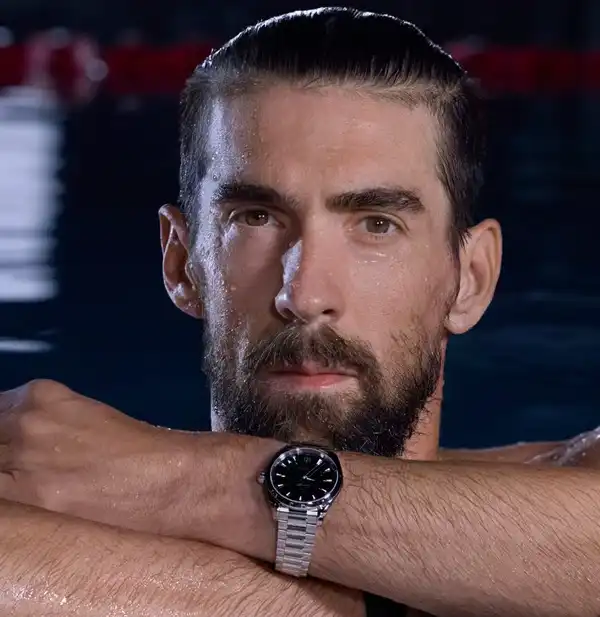
Born Michael Fred Phelps II, Michael Phelps is widely regarded as the greatest competitive swimmer of all time. During a remarkable career spanning five Olympic Games, he rewrote the record books by winning an astonishing 28 Olympic medals, including an unprecedented 23 gold medals, making him the most decorated Olympian in history.
Phelps discovered swimming at the age of seven, partly to channel his boundless energy after being diagnosed with Attention Deficit Hyperactivity Disorder (ADHD). Under the guidance of legendary coach Bob Bowman, his extraordinary talent quickly became apparent. By the age of 15, he had already qualified for the 2000 Olympic Games in Sydney, becoming the youngest male swimmer to represent the United States at the Olympics in nearly seven decades. Although he did not win a medal in Australia, his performances signaled that a future superstar had arrived.
His breakthrough came at the 2004 Olympic Games in Athens, where he captured six gold medals and two bronze medals, immediately establishing himself among the world's elite swimmers. Four years later, at the 2008 Beijing Olympics, Phelps achieved one of the greatest accomplishments in sporting history by winning eight gold medals in a single Games. In doing so, he surpassed Mark Spitz's long-standing record of seven gold medals set in 1972, a feat many believed would never be broken.
Phelps continued to dominate at the 2012 London Olympics, adding four gold and two silver medals before announcing his retirement. The retirement, however, proved temporary. After returning to competition, he once again amazed the sporting world at the 2016 Rio de Janeiro Olympics, winning five gold medals and one silver. His final Olympic appearance brought his career total to 28 medals, a record that remains unmatched across every Olympic sport.
His success extended well beyond the Olympics. Throughout his career, Phelps won 26 World Championship gold medals and set 39 world records, more than any swimmer before him. His versatility was remarkable, excelling in butterfly, freestyle, individual medley, and relay events. His combination of physical ability, relentless training, and fierce competitive drive transformed expectations of what a swimmer could achieve.
Several physical characteristics contributed to his dominance. Standing 6 feet 4 inches tall with an unusually long wingspan, large hands and feet, flexible ankles, and exceptional lung capacity, Phelps possessed many natural advantages. Yet coaches and teammates consistently emphasized that his success was built as much on discipline as genetics. His famously demanding training schedule often included swimming six or seven days a week, covering thousands of miles in the pool over the course of his career.
Away from competition, Phelps has become an outspoken advocate for mental health awareness. Following his retirement, he spoke candidly about experiencing depression and the emotional challenges elite athletes often face. By sharing his own experiences, he has encouraged others to seek help and helped reduce the stigma surrounding mental health, particularly within the sporting community.
Phelps has also devoted considerable time to charitable work through the Michael Phelps Foundation, which promotes water safety, healthy lifestyles, and opportunities for young swimmers. His influence extends beyond competitive swimming, inspiring millions of children to learn to swim while encouraging future athletes to pursue excellence through dedication and perseverance.
Few athletes in any sport have dominated their competition as completely as Michael Phelps. His collection of Olympic medals may stand for generations, but perhaps his greatest legacy is demonstrating how extraordinary commitment, resilience, and hard work can elevate natural talent into sporting greatness. Whether viewed through the lens of Olympic history or athletic achievement, Michael Phelps remains the standard against which swimmers around the world are measured.