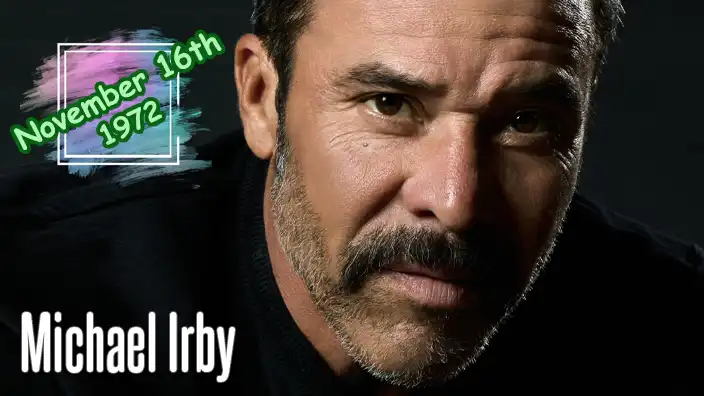
November 16, 1972, in Palm Springs, California

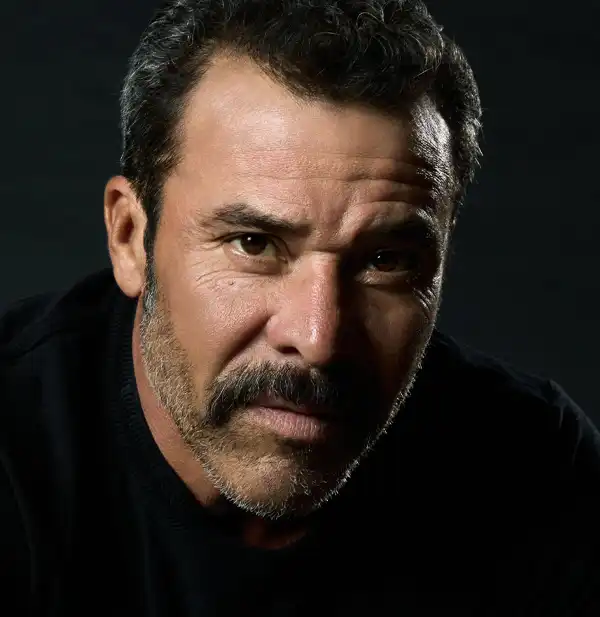
Michael Clinton Irby was born on November 16, 1972, in Palm Springs, California. Raised in a family with African American and Mexican American roots, he developed an appreciation for different cultures and experiences that would later contribute to his versatility as an actor. His parents, Ernie and Cynthia Irby, raised him alongside his two brothers, Jason and Ernest III. Long before Hollywood came calling, however, Irby had his sights set on a very different career. Rather than dreaming of television cameras and movie premieres, he was passionate about soccer and determined to make his mark on the playing field. His early ambitions involved scoring goals, not delivering dramatic monologues while surrounded by heavily armed television criminals.
Irby's soccer abilities eventually took him to Europe, where he played as part of a Team USA soccer program. His athletic ambitions came to an unfortunate end following injuries sustained in a car accident, forcing him to reconsider his future. For someone who had invested considerable time and effort in becoming a professional athlete, the change was significant. However, what initially appeared to be a major setback ultimately opened the door to an entirely different profession. Instead of continuing to pursue a career in competitive sports, Irby turned his attention toward education and the performing arts. Hollywood would eventually benefit from the change, although the soccer world might reasonably have wondered what happened to one of its promising young players.
After returning to California, Irby attended College of the Desert in Palm Desert and Orange Coast College in Costa Mesa. His interest in acting developed during his studies, particularly after encouragement from a drama instructor who recognized his potential as a performer. Acting offered a new opportunity to channel the discipline, determination, and competitive instincts he had developed through sports. He subsequently moved to New York City to study at the American Academy of Dramatic Arts, where he received formal theatrical training. The transition from soccer to acting required him to develop an entirely different set of skills, although both professions demanded preparation, teamwork, and the ability to perform under pressure. Fortunately, actors generally have fewer opponents attempting to tackle them while they deliver their lines.
During his time in New York, Irby became interested in poetry and spoken-word performance, developing an appreciation for language and emotional expression that complemented his acting studies. His interest in writing helped him explore the relationship between personal experiences, storytelling, and performance. This creative background would later become an important part of his professional identity, particularly when his own poetry found its way into television productions. Unlike actors who focus exclusively on memorizing dialogue, Irby developed an interest in the creative process behind the words themselves, giving him another way to approach complicated characters.
Michael Irby began establishing his professional acting career during the late 1990s, appearing in smaller film productions and television programs. His early credits included the independent thriller Silent Prey (1997), followed by appearances on the long-running NBC crime drama Law & Order. The series became an important early opportunity for Irby, who portrayed several different characters across separate episodes. Appearing repeatedly on the same television program in different roles might seem confusing to viewers paying particularly close attention, but it demonstrated his ability to transform himself convincingly. One week he could be a suspect, another week a witness, and nobody needed to explain why the same fellow kept turning up in New York's criminal investigations.
His early film career included Piñero (2001), a biographical drama about Puerto Rican poet and playwright Miguel Piñero, starring Benjamin Bratt. Irby portrayed Reinaldo Povod, appearing in a production that explored artistic creativity, personal struggles, and the cultural environment surrounding New York's Nuyorican literary movement. The film's subject matter connected naturally with Irby's own interest in poetry and performance. He also appeared in The Last Castle (2001), a prison drama starring Robert Redford and James Gandolfini. These early roles provided opportunities to work alongside established performers while developing the screen presence that would eventually make him a familiar face in American television.
As his career progressed, Irby accumulated appearances in popular crime dramas, including CSI: Miami, CSI: NY, and other television productions. His ability to portray authoritative, intimidating, or morally complicated characters made him particularly well suited to police procedurals and action-oriented dramas. Rather than relying entirely on physical appearance, he developed a performance style that combined controlled dialogue, subtle facial expressions, and an ability to communicate tension without excessive movement. His characters frequently appeared to be considering several possible courses of action, none of which seemed particularly encouraging for whoever happened to be standing opposite them.
A significant breakthrough arrived in 2006 when Irby joined the CBS military action drama The Unit, created by David Mamet and inspired by the experiences of former Delta Force operator Eric L. Haney. The series followed an elite group of American special operations soldiers conducting dangerous classified missions while their families attempted to manage the challenges of military life. Irby portrayed Sergeant First Class Charles Grey, a highly trained operative whose responsibilities required exceptional physical ability, discipline, and composure under pressure. The role provided Irby with an opportunity to combine his athletic background with his developing dramatic skills, creating a character who was both physically convincing and emotionally complex.
Working alongside Dennis Haysbert, Scott Foley, Robert Patrick, and Max Martini, Irby became an important member of the ensemble cast. The Unit featured elaborate military operations, international assignments, dangerous confrontations, and complicated personal relationships. Charles Grey was frequently involved in missions requiring tactical expertise, quick decisions, and absolute trust in his fellow soldiers. Irby's performance helped establish the character as a dependable member of the team, capable of handling dangerous situations without unnecessary theatrics. Considering the number of explosions, firefights, and international emergencies featured in the series, remaining calm was probably a useful professional qualification.
The Unit ran for four seasons from 2006 to 2009, earning a dedicated following among viewers interested in military action and character-driven drama. Irby's portrayal of Charles Grey became one of his defining television performances, introducing him to a much larger audience and establishing his reputation as a reliable dramatic actor. The series also gave him an opportunity to develop lasting professional relationships with fellow cast members, including Dennis Haysbert and Max Martini. His work demonstrated that he could sustain a major supporting character across multiple seasons while contributing meaningfully to an ensemble production.
Following The Unit, Irby continued building his television career through appearances in numerous successful series. His credits included 24, Bones, NCIS: Los Angeles, Castle, The Good Wife, Person of Interest, Hawaii Five-0, and Elementary. These productions allowed him to explore characters from different professional and personal backgrounds, ranging from investigators and military personnel to suspects and criminals. His versatility helped him avoid becoming permanently associated with a single role, even as casting directors continued recognizing his particular talent for portraying men who looked as though they knew considerably more than they were prepared to reveal.
In 2013, Irby joined the science-fiction police drama Almost Human, starring Karl Urban and Michael Ealy. Set in a futuristic society where human police officers work alongside advanced android partners, the series combined traditional detective storytelling with technological speculation. Irby portrayed Detective Richard Paul, a police officer whose antagonistic relationship with Urban's character, John Kennex, contributed to the show's workplace tensions. The futuristic setting provided a different environment for Irby's familiar combination of authority, skepticism, and confrontation. Apparently, even in a world filled with sophisticated artificial intelligence and advanced robotics, police departments still have colleagues who make everyone else's working day considerably more difficult.
Irby also appeared in the second season of HBO's critically acclaimed crime anthology True Detective in 2015. He portrayed Detective Elvis Ilinca, working within a complicated investigation involving corruption, organized crime, and political influence in California. The season featured Colin Farrell, Rachel McAdams, Vince Vaughn, and Taylor Kitsch, with Irby's character contributing to the intricate network of law enforcement officers and criminal figures. His performance suited the series' dark atmosphere, where almost everyone appeared to be hiding something and even an ordinary conversation could become deeply suspicious. The role reinforced his ability to operate convincingly within serious, psychologically demanding television dramas.
His additional television work included Taken, the NBC action series inspired by the popular film franchise, and SEAL Team, another military drama centered on elite American special operations personnel. In SEAL Team, Irby portrayed Adam Seaver, an experienced Navy SEAL whose responsibilities included training and leadership. The role returned him to the military environment that had helped establish his reputation on The Unit. His convincing portrayal of military professionals reflected both his physical discipline and his ability to communicate authority without relying on exaggerated performances.
One of Irby's most recognizable roles arrived in 2018 when he joined the FX crime drama Mayans M.C., a spin-off of the popular motorcycle club series Sons of Anarchy. Created by Kurt Sutter and Elgin James, the series followed the Mayans Motorcycle Club along the California-Mexico border, exploring the complicated relationships between organized crime, family loyalty, political influence, and personal ambition. Irby portrayed Obispo "Bishop" Losa, the president of the Santo Padre charter of the Mayans Motorcycle Club. Bishop was a hardened leader whose responsibilities required him to maintain control over a volatile group of men while navigating dangerous rivalries and internal disagreements.
Bishop quickly became one of the series' most compelling characters, combining fierce loyalty with a volatile temper and deeply personal emotional struggles. Irby's performance captured the contradictions of a man who demanded discipline from others while frequently struggling to control his own anger. Beneath Bishop's intimidating exterior were grief, regret, and complicated relationships that made him considerably more than a conventional television gangster. His leadership style could be described as direct, uncompromising, and occasionally in need of professional counseling. Unfortunately, motorcycle clubs in television dramas rarely seem interested in establishing a human resources department.
Throughout the five-season run of Mayans M.C., which concluded in 2023, Bishop experienced shifting alliances, leadership conflicts, betrayals, and personal tragedies. Irby portrayed these developments with increasing emotional complexity, revealing the vulnerability beneath the character's aggressive behavior. His scenes frequently balanced explosive confrontations with quieter moments of reflection, allowing audiences to understand the emotional consequences of Bishop's decisions. The performance demonstrated Irby's ability to make a deeply flawed character compelling without suggesting that his actions were always justified. Bishop might have been loyal to his motorcycle club, but he was certainly not the sort of fellow most people would invite to supervise a children's birthday party.
While working on Mayans M.C., Irby simultaneously appeared in another critically acclaimed television series, HBO's dark comedy Barry. Created by Alec Berg and Bill Hader, the series followed Barry Berkman, a former Marine turned contract killer who attempts to abandon his violent profession and become an actor in Los Angeles. Irby portrayed Cristobal Sifuentes, a Bolivian criminal leader whose relationships with rival gang members produced some of the show's most unexpectedly touching and absurd moments. The role offered a remarkable contrast to Bishop Losa, demonstrating Irby's ability to move between intense crime drama and sophisticated dark comedy.
Cristobal's relationship with Chechen mobster NoHo Hank, portrayed by Anthony Carrigan, became one of Barry's most memorable storylines. What began as a complicated criminal alliance developed into a romantic relationship that introduced genuine affection and vulnerability into a world otherwise dominated by violence and betrayal. Irby's performance provided an essential emotional balance to Carrigan's flamboyant comic style. While NoHo Hank frequently approached criminal activity with the enthusiasm of someone organizing a particularly elaborate office party, Cristobal often appeared to be the only person in the room who understood that their business arrangements could end very badly.
The relationship between Cristobal and NoHo Hank became increasingly important as Barry progressed, exploring themes of loyalty, identity, love, and the consequences of violence. Irby's ability to portray tenderness and emotional uncertainty contrasted sharply with the intimidating criminal characters he had previously played. His performance helped demonstrate that even within a dark comedy about professional killers, audiences could become deeply invested in relationships built upon genuine human connection. Barry concluded in 2023 after four seasons, leaving behind a reputation as one of television's most inventive combinations of comedy, psychological drama, and crime storytelling.
Irby's film career has been similarly varied, featuring appearances in major studio productions and smaller independent projects. In Flightplan (2005), starring Jodie Foster, he portrayed Obaid, a passenger whose presence becomes part of the film's atmosphere of suspicion and uncertainty. He also appeared in Law Abiding Citizen (2009), the crime thriller starring Gerard Butler and Jamie Foxx, portraying Detective Garza. These films demonstrated his ability to contribute memorable supporting performances within large productions, often bringing credibility to characters whose screen time was relatively limited.
In Fast Five (2011), Irby portrayed Zizi, a criminal associate working for Brazilian businessman and drug lord Hernan Reyes. The film, starring Vin Diesel, Paul Walker, and Dwayne Johnson, transformed the Fast & Furious franchise into an increasingly elaborate action spectacle involving international criminals, spectacular vehicle chases, and enough automotive destruction to make an insurance adjuster consider early retirement. Irby's character became involved in the dangerous confrontations surrounding the film's central heist, providing another opportunity for the actor to demonstrate his talent for portraying threatening figures in high-pressure situations.
Irby continued appearing in films including Faster (2010), Last Seen Alive (2022), and the science-fiction action thriller Osiris (2025). In Last Seen Alive, starring Gerard Butler, he portrayed Oscar, contributing to a suspenseful story about a man's desperate search for his missing wife. His participation in productions across different genres reflected his continuing ability to adapt to changing entertainment trends while maintaining a recognizable screen presence. Whether the story involved international criminals, missing persons, or science-fiction threats, Irby brought the same commitment to making his characters believable.
His more recent television credits include the Netflix legal drama The Lincoln Lawyer, in which he portrayed DEA agent James De Marco during the show's third season in 2024. The character became involved in a complicated criminal investigation that challenged attorney Mickey Haller, played by Manuel Garcia-Rulfo. Irby's performance once again explored the uncomfortable territory between authority and corruption, demonstrating his ability to portray characters whose professional positions do not necessarily reveal their true motivations. He also appeared as Father Ramirez in the comedy series Lopez vs Lopez, showing that his acting repertoire extends beyond crime dramas and heavily armed confrontations.
In 2026, Irby appeared in The Night Agent, the Netflix political action thriller, portraying a character named Michael in the third season. He also received a guest credit in the television series The Hawk, continuing a career that has included an impressive range of network, cable, and streaming productions. His ability to remain active across different platforms reflects the value of versatility in an entertainment industry where viewing habits and production methods continue changing. For Irby, moving between television networks, streaming services, and feature films has become a familiar part of professional life.
Away from the camera, Irby maintains an interest in poetry and creative writing, particularly spoken-word performance. His original poetry has occasionally been incorporated into his television work, allowing him to contribute to the creative development of characters beyond conventional acting responsibilities. This interest in language provides another dimension to his professional identity, demonstrating that his talents are not limited to physical performances and intimidating screen personas. It also offers a rather entertaining contrast to his most famous characters, many of whom seem considerably more comfortable issuing threats than discussing the finer points of poetic expression.
Irby is married to actress Susan Matus, whom he met during his acting studies in New York, and the couple have a son. Although his professional life frequently involves portraying dangerous criminals, military operatives, and morally complicated characters, his personal interests have included family life, writing, and artistic development. His background as an athlete has also remained an important part of his story, illustrating how unexpected changes in personal circumstances can lead to entirely new opportunities. What began as the disappointment of an interrupted soccer career ultimately developed into a successful and enduring profession in entertainment.
Michael Irby's career is particularly notable for the variety of characters he has portrayed without becoming restricted to a single cultural identity or professional stereotype. His work includes military specialists, detectives, gang leaders, government agents, criminals, and emotionally complicated supporting characters. Although many of these roles share elements of authority or intimidation, Irby consistently finds ways to distinguish them through individual motivations, relationships, and emotional responses. His portrayal of Bishop Losa in Mayans M.C. is fundamentally different from his performance as Cristobal Sifuentes in Barry, even though both characters operate within dangerous criminal organizations.
His performances also demonstrate the importance of supporting actors in successful television productions. While leading performers frequently receive the greatest publicity, memorable supporting characters provide the relationships, conflicts, and emotional depth that make fictional worlds convincing. Irby's ability to contribute substantially to ensemble casts has helped sustain his career across numerous productions. Whether working alongside Dennis Haysbert in The Unit, J. D. Pardo in Mayans M.C., or Bill Hader and Anthony Carrigan in Barry, he has repeatedly demonstrated that a well-developed supporting character can become one of a show's most memorable attractions.
From the soccer fields of his youth to the demanding world of Hollywood television and film production, Michael Irby has followed an unusual professional journey. His career reflects determination, adaptability, and a willingness to explore characters who are rarely straightforward heroes or villains. He has portrayed some of television's toughest personalities while also revealing unexpected vulnerability, humor, and humanity beneath their intimidating appearances. And although his characters have spent an extraordinary amount of time surrounded by criminals, firearms, and dangerous situations, Irby's greatest professional achievement may be something considerably simpler: convincing audiences that even the most frightening man in the room probably has a complicated story worth hearing.
References & Sources