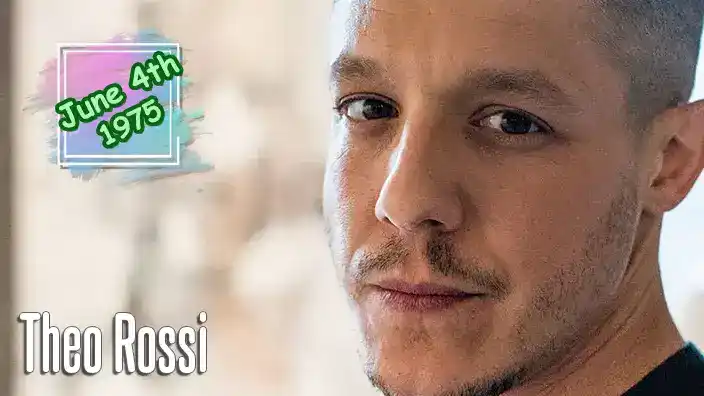
June 4, 1975, in Grays, England

Russell Brand is a comedian, actor, author, and commentator whose career has been anything but ordinary. With his rapid-fire speech, philosophical tangents, and rock-star style, Brand has built a reputation as one of the most unpredictable and outspoken figures in modern entertainment.
Russell Edward Brand was born in Grays, Essex, England, and raised primarily by his mother after his parents separated when he was young. His childhood was far from easy. He spent time in and out of hospitals due to health issues and later struggled with addiction as a teenager. These early hardships would shape both his comedic voice and his later work in recovery advocacy.
Brand discovered acting and performance during his school years and later attended the Italia Conti Academy of Theatre Arts in London. His early career was a mix of stand-up comedy, acting gigs, and television appearances. Even in those early days, he stood out—not just for his humor, but for his flamboyant fashion sense. Tight jeans, open shirts, scarves, eyeliner, and a mane of dark hair became his signature look, making him instantly recognizable.
He first gained widespread attention in the United Kingdom as a television and radio presenter. His quick wit and unpredictable style made him popular with younger audiences, but his boundary-pushing humor also brought controversy. One of the most infamous incidents came in 2008, when he and broadcaster Jonathan Ross left inappropriate voicemail messages for actor Andrew Sachs during a radio show. The scandal, later dubbed “Sachsgate,” caused public outrage and led to Brand’s resignation from the BBC.
Despite the controversy, his career soon took off internationally. In 2008, he appeared in the comedy Forgetting Sarah Marshall, playing the outrageous rock star Aldous Snow. The character was such a hit that he reprised the role in the spin-off film Get Him to the Greek (2010). Brand also starred in a remake of Arthur (2011), playing the lovable, irresponsible millionaire originally made famous by Dudley Moore.
Alongside his acting career, Brand established himself as a successful author. His memoir My Booky Wook (2007) became a bestseller, followed by Booky Wook 2 (2010), which detailed his journey through fame, addiction, and recovery. Later, he wrote Revolution (2014), a more serious work exploring his political and social views.
Brand’s struggles with addiction were well documented, but he has been sober since 2002. Recovery became a central part of his life and public identity. He has spoken openly about the importance of treatment programs and has worked to support people facing similar challenges.
In the 2010s, Brand’s focus shifted increasingly toward social and political commentary. He launched a YouTube series called The Trews and later hosted the podcast Under the Skin, where he interviewed thinkers, authors, and public figures. His discussions often blend humor, spirituality, philosophy, and social criticism, reflecting his interest in Eastern philosophy, meditation, and personal growth.
Off stage, Brand is known for his eclectic interests. He practices yoga, reads widely, and often discusses literature, philosophy, and politics with the same enthusiasm he once reserved for stand-up routines. He’s also a well-known cat lover, frequently sharing stories about his feline companions.
His career, like his personality, has been full of ups and downs. Controversies, reinventions, and dramatic shifts in direction have all been part of the journey. Yet through it all, Brand has remained a compelling and influential public figure—someone who can make audiences laugh one moment and think deeply the next.
Russell Brand’s story is one of transformation. From troubled youth to international comedy star, from tabloid headline to recovery advocate and commentator, he has continually reinvented himself. As he celebrates his birthday on June 4, his career remains a reminder that even the most chaotic paths can lead to meaningful change.