November birthdays get Thanksgiving, which means they get pie. Lots of pie. They’ll tell you it’s a burden, but don’t believe them.
So let’s give thanks for the people who bring a little sparkle to the early dark evenings. These celebrities are proof that November can be cozy, colorful, and full of reasons to celebrate.
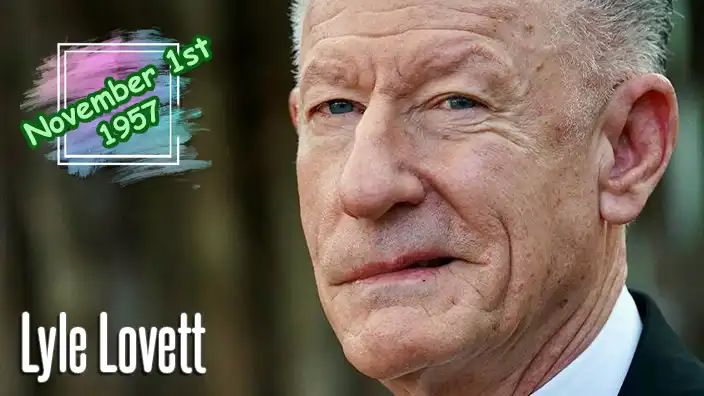
Lyle Lovett has spent his career proving that a Texas drawl, a spectacular head of hair, and a wonderfully dry sense of humor can take a man a long way. With four Grammy Awards, a successful acting career, and enough musical styles to confuse a Nashville record executive, Lovett has made being delightfully different something of an art form.
November 1, 1957, in Houston, Texas
![]()
Natalia Tena has survived the magical mayhem of Harry Potter, the deadly politics of Game of Thrones, and the dangerous underworld of John Wick. When she isn't dodging spells, swords, or assassins, she's playing the accordion and singing with her band. Apparently, an ordinary day at the office simply wouldn't do.
November 1, 1984, in London, England
![]()
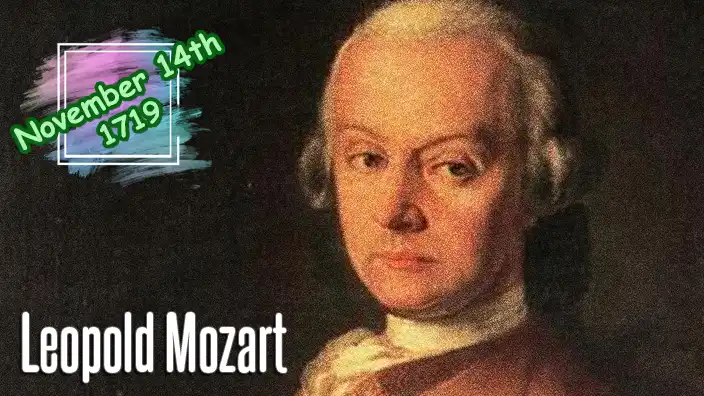
Raising one musical prodigy would be enough to exhaust most parents, but Leopold Mozart somehow managed to educate, promote, and transport a young genius across Europe while maintaining his own respected career as a composer and teacher. Part father, part music professor, part tour manager, and likely part miracle worker, Leopold helped shape classical music history long before modern parents were merely trying to survive school recitals. His birthday is the perfect time to salute the man who proved that exceptional parenting sometimes comes with sheet music and international travel.
November 14, 1719, in Augsburg, Germany
May 28, 1787, in Salzburg, Austria
![]()
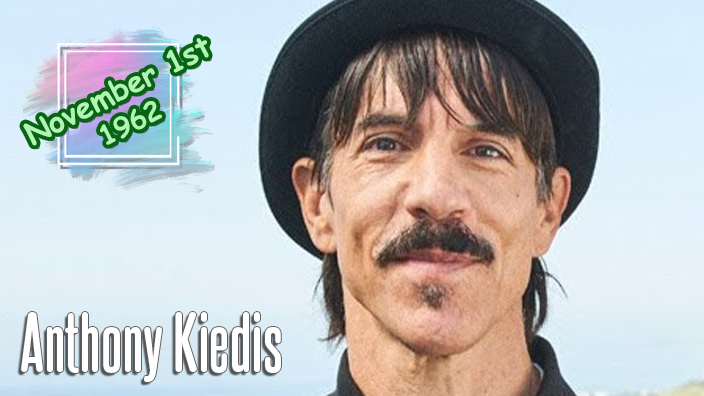
Anthony Kiedis has spent decades proving that shirts are optional, energy is unlimited, and standing still on stage is apparently against band policy. As the unmistakable voice of the Red Hot Chili Peppers, he has turned funk, rock, rap, and a healthy dose of California madness into a musical career that refuses to cool down.
November 1, 1962, in Grand Rapids, Michigan
![]()
Gary Player is the South African golfing legend who collected nine major championships, conquered courses across six continents, and earned the nickname "The Black Knight." Famous for his relentless fitness routine and determination, he has spent a lifetime proving that success comes from hard work. While most golfers are looking for an excuse to avoid the gym, Player has probably finished his workout before breakfast and is already complaining about his putting.
November 1, 1935, in Johannesburg, South Africa
![]()
Anthony Ramos is the Broadway star who played two characters in Hamilton, apparently deciding that one role simply wasn't enough work. Since then, he's danced through In the Heights, battled giant robots in Transformers, and chased tornadoes in Twisters. For a fellow who started out singing in school, he's certainly found some rather noisy ways to make a living.
November 1, 1991, in Brooklyn, New York
![]()
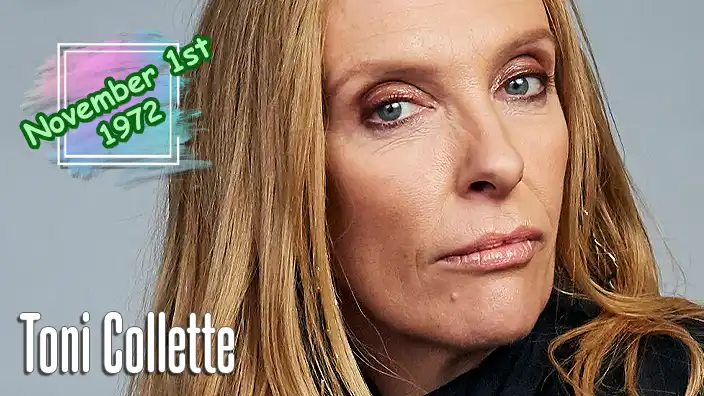
Toni Collette is the Australian actress who can make you laugh, cry, or sleep with the lights on, sometimes all in the same film. From an awkward bride-to-be in Muriel's Wedding to a terrified mother in Hereditary, she's mastered just about every emotion Hollywood can throw at her. And unlike most of us on a Monday morning, she makes the whole thing look effortless.
November 1, 1972, in Sydney, Australia
![]()
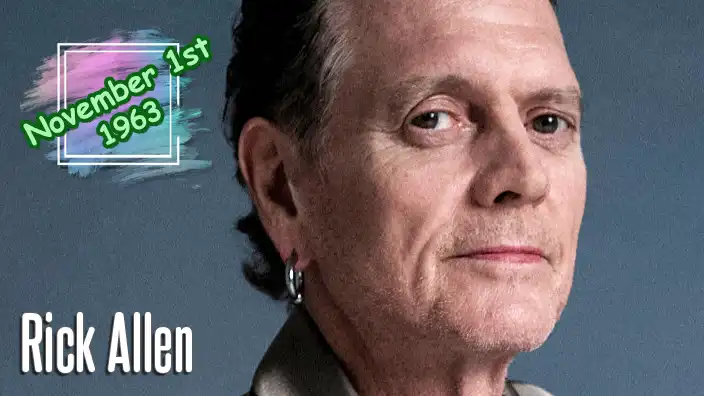
Rick Allen is the legendary Def Leppard drummer who proved that losing an arm doesn't mean losing your rhythm. With extraordinary determination, a specially designed drum kit, and enough musical talent to shake an entire stadium, he turned what could have ended his career into one of rock music's most inspiring comeback stories. And after all these years, he's still making plenty of noise!
November 1, 1963, in Dronfield, England
![]()
With their wrinkly faces, stocky builds, and an attitude that screams “I do what I want”, Bulldogs are the...
Hamburgers are proof that sometimes the best things in life come sandwiched between two buns and...
Chocolate is the magical bean that turns bad days into bearable ones and good days into...
This is the official holiday for everyone who's ever wanted to throw their alarm clock across the...
D-Day was not just a military operation—it was a moment when the fate of the free world hung in the...
Chocolate caramel is like the dynamic duo of the dessert world, Batman and Robin, if they swapped...
On November 1, 1512, the magnificent ceiling of the Sistine Chapel in Vatican City was unveiled to the public, revealing one of the greatest artistic achievements of the Italian Renaissance. Painted by Michelangelo Buonarroti over approximately four years, the extraordinary collection of frescoes transformed the chapel's ceiling into a breathtaking display of biblical history, human anatomy, and artistic imagination. Commissioned by Pope Julius II in 1508, the project presented an enormous challenge for Michelangelo, who considered himself primarily a sculptor rather than a painter. Nevertheless, he created a masterpiece featuring more than 300 figures, including nine central scenes from the Book of Genesis. Among them is the world-famous Creation of Adam, depicting God reaching toward Adam with their fingertips almost touching. It remains one of the most recognizable images in art history.
Born in Caprese, Italy, in 1475, Michelangelo grew up in Florence, where his extraordinary artistic abilities became apparent during his youth. He trained under the painter Domenico Ghirlandaio and later attracted the attention of Lorenzo de' Medici, whose patronage helped develop his talents. Before beginning work on the Sistine Chapel ceiling, Michelangelo had already established his reputation through remarkable sculptures, including Pietà and David. Painting the chapel ceiling required him to master the demanding technique of fresco painting, applying pigments to freshly laid plaster while working on scaffolding high above the chapel floor. The physically exhausting project tested his patience, endurance, and artistic skills, but the completed ceiling established a new standard for Renaissance painting and secured his reputation as one of history's greatest artists.
Michelangelo continued creating extraordinary works long after completing the Sistine Chapel ceiling. Returning to Rome in 1534, he began another monumental Vatican commission, The Last Judgment, painted on the chapel's altar wall between 1536 and 1541. The dramatic fresco depicts the Second Coming of Christ and the final judgment of humanity, combining powerful religious imagery with Michelangelo's exceptional understanding of the human form. He also contributed to major architectural projects, including St. Peter's Basilica, and continued working until his death in 1564. More than five centuries after its unveiling, the Sistine Chapel ceiling remains one of the world's most celebrated artistic achievements, attracting millions of visitors who gaze upward in admiration. Michelangelo might have preferred sculpting marble, but fortunately for the rest of us, he was rather good with a paintbrush, too.
On November 1, 1800, President John Adams became the first American president to live in the White House, although the famous Washington, D.C., residence was still very much a work in progress. Originally called the President's House, the grand building was intended to serve as the permanent home of the nation's chief executive following the federal government's relocation from Philadelphia to the newly established capital. Adams had been staying at Tunnicliffe's City Hotel since June while construction continued. When he finally arrived at the presidential mansion, workers were still completing parts of the interior, although furniture from the Adams family's former Philadelphia residence had been installed and a portrait of George Washington was already hanging on a wall. The country's most important house was officially occupied, even if the finishing touches were running a little behind schedule.
Despite the unfinished surroundings, Adams initially expressed satisfaction with his new residence. On November 2, he wrote to his wife, Abigail, who was still in Massachusetts, expressing his hopes that future presidents would govern with wisdom and integrity. His famous wish that only honest and wise men would ever rule beneath its roof later became an important part of White House history. However, when Abigail arrived later that month, she discovered that presidential living was considerably less comfortable than the building's impressive appearance suggested. The enormous rooms were cold and damp, requiring fires to be maintained throughout the house to make it reasonably habitable. With limited suitable facilities for household chores, Abigail even used the unfinished East Room to hang the family's laundry. Apparently, being First Lady came with the unexpected privilege of operating Washington's most prestigious indoor clothesline.
Unfortunately for the Adams family, their time in the new presidential residence was brief. Thomas Jefferson defeated John Adams in the presidential election of 1800, ending his hopes of serving a second term. Abigail departed Washington in February 1801, relieved to leave the chilly mansion behind, while John Adams returned to Massachusetts before Jefferson's inauguration on March 4. The couple had occupied the White House for only a few months, but their residency established an enduring American tradition. Over the following centuries, the building would be expanded, renovated, damaged by fire, and transformed into one of the world's most recognizable government residences. As for John and Abigail Adams, they earned the distinction of being its first occupants, along with the dubious honor of discovering that even a presidential mansion can have a few problems with the heating.
On November 1, 1945, the first issue of Ebony magazine was published, introducing a groundbreaking publication dedicated to celebrating African American life, culture, achievements, and social progress. Founded by publisher John H. Johnson just months after the end of World War II, the monthly magazine offered something largely missing from mainstream American media: positive, authentic, and wide-ranging coverage of Black Americans. Its debut issue featured profiles of novelist Richard Wright and jazz singer Hazel Scott, alongside articles exploring African Americans in publishing, racial divisions in Brazil, and an African art sale in Philadelphia. Inspired by the popular format of Life magazine, Johnson created a publication that placed Black experiences at the center of the story rather than treating them as an occasional footnote. Readers responded enthusiastically, and Ebony quickly became one of the most influential magazines in American publishing.
Throughout the following decades, Ebony helped transform how African Americans were represented in the media. Its pages celebrated entertainers, athletes, business leaders, politicians, writers, and everyday families while also confronting racial inequality and discrimination. Distinguished photographers, including Pulitzer Prize winner Moneta Sleet Jr., documented important moments in Black American history, capturing subjects ranging from Billie Holiday and Miles Davis to Shirley Chisholm and Thurgood Marshall. In 1951, Johnson expanded his publishing empire with Jet, a weekly magazine that became another important voice in African American journalism. Both publications played significant roles during the Civil Rights Movement, reporting on segregation, injustice, and the struggle for equal rights. Ebony featured a regular advice column by Dr. Martin Luther King Jr. during the late 1950s, while Jet's coverage of the 1955 murder of Emmett Till, including photographs from his funeral, helped awaken national outrage and strengthen demands for civil rights.
By the 1960s and 1970s, Ebony had become a familiar presence in millions of American homes, and its growing readership attracted major advertisers who had previously overlooked the economic influence of Black consumers. Johnson's publishing success eventually made him one of America's wealthiest businessmen, earning him a place on the Forbes 400 list in 1982 as its first Black male member. Beyond its commercial achievements, Ebony preserved an extraordinary visual and written record of African American history, documenting cultural milestones, political struggles, changing fashions, and generations of remarkable individuals. Its influence extended far beyond magazine racks, helping reshape American journalism and challenge longstanding stereotypes. When John H. Johnson launched Ebony in 1945, he wasn't simply starting another magazine. He was making sure millions of Americans could finally see their own lives, accomplishments, and communities reflected in the pages they read. And judging by the magazine's enormous success, readers had been waiting a very long time for exactly that.
On November 1, 1952, the United States detonated the world's first full-scale thermonuclear device, marking a frightening new chapter in the history of nuclear weapons. Code-named Ivy Mike, the experimental hydrogen bomb was detonated on Elugelab Island in the Enewetak Atoll of the Marshall Islands, then administered by the United States as part of a United Nations trust territory. Unlike the atomic bombs dropped on Japan in 1945, which released energy through nuclear fission, the new device used nuclear fusion to unleash vastly greater destructive power. The explosion produced an estimated yield of 10.4 megatons of TNT, approximately 700 times the explosive force of the bomb dropped on Hiroshima. The blast completely destroyed Elugelab Island, leaving behind an enormous underwater crater and demonstrating that humanity had developed weapons capable of destruction on an almost unimaginable scale.
The successful test followed growing tensions between the United States and the Soviet Union during the early Cold War. After the Soviets tested their first atomic bomb in August 1949, American officials became increasingly concerned about losing their nuclear advantage. President Harry S. Truman authorized an accelerated hydrogen bomb development program in January 1950, despite serious objections from prominent scientists. Among the critics was J. Robert Oppenheimer, who had played a leading role in developing the original atomic bomb during World War II. Oppenheimer and other opponents questioned both the military necessity and the moral consequences of producing weapons with such extraordinary destructive capabilities. They also warned that developing the hydrogen bomb would encourage the Soviet Union to pursue similar technology, creating an increasingly dangerous competition in which each side sought bigger and more powerful weapons.
Those concerns soon proved justified. In August 1953, the Soviet Union tested a thermonuclear device, followed by a much more powerful two-stage hydrogen bomb in November 1955. The American advantage established by Ivy Mike had been remarkably brief, and the nuclear arms race continued escalating throughout the Cold War. Both superpowers eventually accumulated enormous nuclear arsenals, prompting international efforts to limit testing, prevent the spread of nuclear weapons, and reduce the risk of global catastrophe. The 1952 explosion at Enewetak remains a defining moment in military and scientific history, illustrating both the extraordinary capabilities of nuclear technology and the terrible consequences of its misuse. Humanity had successfully discovered how to release the energy that powers the stars, then immediately demonstrated why bringing a little piece of the Sun down to Earth was not necessarily a brilliant idea.
On November 1, 1993, the Maastricht Treaty officially came into effect, establishing the European Union (EU) and beginning a new era of political and economic cooperation across Europe. Named after the Dutch city of Maastricht, where it was signed on February 7, 1992, the agreement built upon decades of European cooperation following the devastation of World War II. Its ambitious goals included strengthening the European Parliament, developing common foreign and security policies, expanding cooperation on justice and home affairs, and preparing for a shared European currency. The treaty also established the framework for economic and monetary union, including the eventual creation of the European Central Bank. After centuries of wars, shifting borders, and political rivalries, European leaders were attempting something rather unusual: getting neighboring countries to work together without first arguing over who owned which piece of land.
The original European Union consisted of 12 member nations: Belgium, Denmark, France, Germany, Greece, Ireland, Italy, Luxembourg, the Netherlands, Portugal, Spain, and the United Kingdom. Each had ratified the Maastricht Treaty, committing to closer cooperation while retaining its own national government and identity. The agreement introduced European Union citizenship, giving citizens additional rights, including the ability to live and move freely within member countries under applicable EU rules. It also laid the foundation for the euro, which was introduced for electronic and financial transactions in 1999 before euro banknotes and coins entered circulation in 2002. European integration continued expanding, with Austria, Finland, and Sweden joining in 1995, followed by additional countries in subsequent years. The European Union gradually became one of the world's most influential economic and political organizations, although reaching agreement among its members occasionally required more patience than assembling furniture without instructions.
Despite its achievements, the European Union has faced considerable political and economic challenges, including disagreements over national sovereignty, immigration, financial policies, and the balance of power between European institutions and individual governments. One of its most significant turning points came in June 2016, when voters in the United Kingdom chose to leave the EU in a referendum widely known as Brexit. Following years of negotiations, the United Kingdom formally withdrew on January 31, 2020, becoming the first member country to leave the organization. Nevertheless, the Maastricht Treaty remains a defining milestone in modern European history, transforming a community primarily focused on economic cooperation into a broader political union. It was an ambitious attempt to replace centuries of European rivalry with shared goals, common institutions, and regular meetings where everyone could disagree politely before eventually signing something.