November 16, 1967, in San Francisco, California

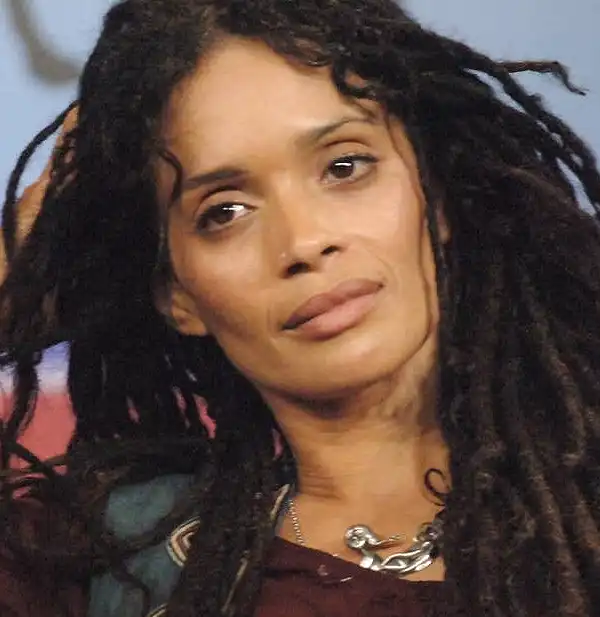
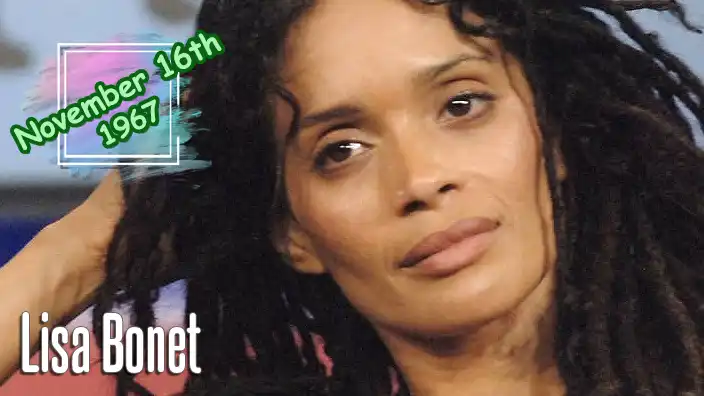
Lisa Michelle Bonet was born on November 16, 1967, in San Francisco, California. Her father, Allen Bonet, was an African American opera singer, while her mother, Arlene Litman, was a teacher of Jewish heritage. Growing up in California, Bonet developed an interest in performing arts at an early age, eventually pursuing acting opportunities that would introduce her to national audiences while she was still a teenager. Her upbringing exposed her to different cultural influences and artistic traditions, helping shape the distinctive personality and independent outlook that would later become closely associated with her public image. Long before she became a familiar face on American television, Bonet was already developing the individuality that would distinguish her from many other young performers.
Bonet attended Birmingham High School in Van Nuys, California, and pursued acting through professional training and auditions. Her early work included television appearances and commercial opportunities, providing experience in front of the camera before she secured the role that would transform her career. During the early 1980s, American television was dominated by family sitcoms featuring familiar domestic situations, recognizable personalities, and lessons about growing up. Bonet's arrival would introduce a character whose approach to family life was considerably more unconventional than the typical television teenager. Denise Huxtable was about to become one of the most recognizable young women on American television, and fashion retailers would soon discover that matching her wardrobe was not an assignment for the fainthearted.
In 1984, Bonet was cast as Denise Huxtable in the NBC sitcom The Cosby Show, which premiered on September 20 of that year. The series followed the Huxtable family, an affluent African American household living in Brooklyn, New York. Bill Cosby portrayed obstetrician Cliff Huxtable, while Phylicia Rashad played his wife, attorney Clair Huxtable. Their five children provided an endless supply of family disagreements, misunderstandings, and comic situations, with Denise occupying a particularly memorable position among the siblings. Bonet's character was intelligent, independent, occasionally rebellious, and determined to develop her own identity rather than simply follow the expectations of her parents.
Denise quickly became a favorite among viewers, particularly teenagers and young adults who recognized her desire for independence. Unlike many sitcom characters whose personalities were defined by predictable behavior, Denise frequently surprised audiences with her unconventional clothing choices, changing ambitions, and relaxed attitude toward traditional expectations. Her wardrobe featured oversized jackets, layered fabrics, colorful accessories, unusual hats, and combinations that seemed to operate according to their own mysterious fashion regulations. While other television characters carefully coordinated their outfits, Denise appeared to approach her wardrobe with the confidence of someone who knew that fashion rules were merely suggestions.
Bonet's portrayal helped make Denise an important cultural figure during the 1980s. Her distinctive appearance influenced contemporary fashion trends, particularly among young women interested in alternative styles and individual expression. The character's combination of bohemian influences, vintage clothing, and relaxed sophistication created a recognizable visual identity that stood apart from the polished fashion commonly associated with television celebrities. Bonet herself became known for an unconventional personal style that frequently mirrored the individuality of her fictional character. Her influence extended beyond the screen, demonstrating how television performers could shape popular culture through clothing, attitude, and personality as well as dialogue.
The Cosby Show became one of the most successful television programs of its era, regularly attracting enormous audiences and helping establish NBC's Thursday-night comedy lineup as a major television institution. The series presented an affluent African American family whose professional achievements, family relationships, and everyday experiences challenged the limited portrayals of Black family life that had frequently appeared on American television. Bonet's performance contributed to the show's appeal by introducing a young character whose independence and creativity created opportunities for both comedy and meaningful family discussions. Denise's disagreements with her parents were often humorous, but they also reflected familiar conflicts between generations over personal freedom, education, and responsibility.
In 1986, Bonet received a Primetime Emmy Award nomination for Outstanding Supporting Actress in a Comedy Series for her performance on The Cosby Show. The recognition demonstrated that her work had attracted critical attention beyond the program's enormous commercial popularity. Her ability to portray Denise with natural warmth, understated humor, and emotional authenticity helped distinguish the character from more exaggerated sitcom personalities. Rather than relying entirely on obvious punchlines, Bonet often delivered her most effective moments through subtle expressions and carefully timed reactions. Sometimes a single look from Denise communicated considerably more than an entire lecture from her television father.
As Denise grew older, the character's educational ambitions became an important part of the series' storyline. In 1987, NBC launched A Different World, a spin-off following Denise as she attended the fictional Hillman College, a historically Black college in Virginia. The new series expanded the Huxtable universe beyond the family home, introducing audiences to college life, student relationships, academic challenges, and the cultural traditions of historically Black colleges and universities. Bonet became the central performer during the show's first season, portraying Denise as she attempted to adjust to the responsibilities and unfamiliar experiences of higher education.
A Different World premiered on September 24, 1987, and initially focused on Denise's experiences alongside an ensemble of fellow students and college staff. The cast included Marisa Tomei, Dawnn Lewis, Jasmine Guy, Kadeem Hardison, and Sinbad, each contributing distinctive personalities to the fictional campus community. The series combined comedy with discussions of student life, relationships, financial difficulties, and cultural identity. Bonet's character provided an established connection to The Cosby Show, helping introduce viewers to a new setting and a different collection of stories. Denise's adjustment to college was occasionally less than smooth, which probably reassured parents everywhere that even television families with successful doctors and lawyers could produce children who found higher education rather confusing.
Although A Different World was created around Denise Huxtable, Bonet appeared only during its first season. She became pregnant with her first child, and the character was subsequently written out of the series. The program continued without Denise, eventually developing into an influential ensemble comedy that explored important social and cultural issues affecting college students. Under the creative direction of Debbie Allen, the series expanded its treatment of subjects including racism, relationships, education, and social responsibility. Although Bonet's involvement was relatively brief, her character provided the original foundation for a program that would remain an important part of American television history.
Bonet's departure from A Different World coincided with major developments in her personal life. In November 1987, she married musician Lenny Kravitz, then known professionally as Romeo Blue, in Las Vegas. Their relationship attracted considerable public attention because both were young entertainers developing distinctive artistic identities. The couple welcomed their daughter, Zoë Kravitz, in December 1988. Their marriage eventually ended in divorce in 1993, but they maintained a cooperative relationship as parents. Zoë subsequently established her own successful career as an actress, singer, and filmmaker, continuing the family's involvement in the entertainment industry.
After leaving A Different World, Bonet returned to The Cosby Show, appearing again as Denise Huxtable. Her character's storylines reflected changes in her fictional life, including a surprise marriage to Navy officer Martin Kendall, portrayed by Joseph C. Phillips, and the responsibilities of becoming a stepmother to his young daughter, Olivia, played by Raven-Symoné. These developments introduced new family dynamics, allowing the series to explore Denise's transition from independent teenager to married adult. The character's decisions continued to surprise her parents, who frequently discovered important developments in Denise's life at approximately the same time as everyone watching at home.
Bonet's association with The Cosby Show ended before the series concluded in 1992. By that point, she had become one of the most recognizable performers associated with the program, despite her intermittent appearances during its later seasons. Her portrayal of Denise remained particularly influential among viewers who appreciated the character's unconventional style and independent personality. Although the series' legacy has subsequently been affected by the criminal convictions and public controversies surrounding its leading actor, Bonet's individual contribution remains part of the broader history of American television and the development of more varied portrayals of young Black women.
While her television career was developing, Bonet also began pursuing film roles that allowed her to move beyond the familiar image of Denise Huxtable. Her most controversial early film appearance came in Angel Heart (1987), a psychological horror mystery directed by Alan Parker and starring Mickey Rourke and Robert De Niro. Bonet portrayed Epiphany Proudfoot, a young woman whose involvement in a mysterious investigation leads to increasingly disturbing revelations. The film explored supernatural themes, violence, and adult subject matter that differed dramatically from the family-friendly environment of The Cosby Show.
Her performance in Angel Heart attracted considerable attention because of the film's explicit content and its contrast with her television image. The production generated controversy surrounding its original rating, while Bonet's participation challenged expectations about the types of roles appropriate for a young actress associated with a popular family sitcom. For Bonet, the film represented an opportunity to demonstrate her abilities beyond conventional television comedy and establish herself as an independent performer. The decision also illustrated her willingness to accept professional risks rather than remain permanently associated with a single successful character.
Despite the controversy, Angel Heart developed a following among audiences interested in psychological horror and supernatural mysteries. Bonet's performance contributed to the film's unsettling atmosphere, and her character played an important role in its increasingly complicated storyline. The film demonstrated that she could handle emotionally demanding material while working alongside established dramatic performers. Her transition from sitcom television to adult-oriented cinema was not without professional challenges, but it reinforced her determination to pursue projects that reflected her own artistic interests rather than simply satisfy audience expectations.
During the 1990s, Bonet appeared in a relatively limited number of film and television productions, choosing projects selectively rather than maintaining a constant presence in mainstream entertainment. She appeared in Bank Robber (1993), an independent crime comedy, and Final Combination (1994), a thriller also released under the title Dead Connection. These projects allowed her to explore different genres while maintaining a degree of independence from the demands of major television production. Her relatively infrequent appearances contributed to an increasingly private public image, distinguishing her from performers who actively pursued continuous media attention.
In 1998, Bonet appeared in Enemy of the State, the action thriller directed by Tony Scott and starring Will Smith and Gene Hackman. She portrayed Rachel Banks, a former girlfriend of Smith's character, Robert Clayton Dean, who becomes involved in a dangerous conspiracy surrounding government surveillance and political corruption. The film explored concerns about privacy, technology, and the expanding capabilities of intelligence agencies, themes that would become increasingly relevant in the following decades. Bonet's performance provided an important connection within the story's complicated network of characters, demonstrating her ability to contribute effectively to a major Hollywood action production.
Enemy of the State became a commercial success and introduced Bonet to audiences who might have known her primarily from television. Her character's involvement in the investigation helped establish the personal stakes surrounding the film's central conspiracy. The production's fast-paced storytelling and elaborate action sequences contrasted with the intimate family comedy that had originally made her famous. For an actress whose career began with household disagreements and college adventures, participating in a thriller involving surveillance satellites and government conspiracies represented a considerable change of scenery.
Bonet continued her film career with an appearance in High Fidelity (2000), the romantic comedy-drama directed by Stephen Frears and starring John Cusack. Based on Nick Hornby's novel, the film followed a Chicago record-store owner struggling to understand his romantic failures and personal relationships. Bonet portrayed Marie DeSalle, a talented singer whose brief relationship with Cusack's character, Rob Gordon, becomes part of his complicated romantic journey. Her performance reflected the film's musical atmosphere and its exploration of relationships through popular culture.
High Fidelity developed a lasting following among audiences who appreciated its combination of music, humor, and emotional honesty. Bonet's character contributed to the film's examination of romantic attraction, personal insecurity, and the tendency to analyze relationships as though they were carefully organized record collections. Her understated performance provided an appealing contrast to the central character's constant self-examination. While Rob spent much of the film attempting to understand his emotional problems through elaborate lists and musical references, Marie appeared considerably more comfortable simply living her life.
In 2003, Bonet appeared in Biker Boyz, an action drama centered on the world of underground motorcycle racing. The film starred Laurence Fishburne, Derek Luke, Orlando Jones, and Djimon Hounsou, exploring rivalries, family relationships, and personal ambition within a competitive racing community. Bonet portrayed Queenie, a character connected to the film's central motorcycle culture. The production offered another opportunity to work within a distinctive ensemble cast and explore a setting far removed from her earlier television roles. Her participation reflected her continuing interest in projects that presented unconventional communities and relationships.
Bonet also appeared in the television adaptation of Life on Mars, which aired on ABC from 2008 to 2009. The series followed a modern New York City detective who unexpectedly finds himself transported to 1973 after a traffic accident. Bonet portrayed Maya Daniels, the detective's girlfriend in the present-day storyline. The production combined crime drama, science fiction, and historical nostalgia, offering an unusual narrative structure that explored differences between contemporary policing and the social environment of the 1970s. Her performance contributed to the emotional mystery surrounding the central character's experiences.
In 2014, Bonet appeared in the television series The Red Road, a SundanceTV drama starring Jason Momoa and Martin Henderson. The series explored tensions between residents of a small New Jersey community and members of a nearby Native American tribe. Bonet portrayed Sky Van Der Veen, a character connected to the show's complicated network of relationships and conflicts. Her appearance reunited her professionally with Momoa, with whom she had developed a personal relationship several years earlier. The production allowed Bonet to participate in a serious drama that examined identity, community, and social tensions.
Bonet and Jason Momoa began their relationship in 2005 and welcomed two children together, daughter Lola Iolani and son Nakoa-Wolf. The couple married in 2017, although their marriage later ended. They publicly announced their separation in January 2022, and their divorce was finalized in July 2024. Throughout their relationship, the family attracted media interest because of both performers' successful careers and distinctive public images. Despite their separation, Bonet and Momoa emphasized their continuing commitment to their children and family responsibilities.
Bonet also appeared in the Showtime crime drama Ray Donovan, portraying Marisol Campos during the show's fourth season in 2016. The series starred Liev Schreiber as a professional fixer working for wealthy and powerful clients in Los Angeles. Bonet's character became involved in a storyline surrounding a professional boxer and his complicated family relationships. Her performance demonstrated her continuing ability to portray emotionally complex characters within serious television dramas. The role also provided another example of her preference for selective appearances rather than maintaining a constant presence in mainstream entertainment.
Throughout her career, Lisa Bonet has maintained a distinctive public image associated with artistic independence, unconventional fashion, and a preference for privacy. Unlike many performers who regularly promote their personal lives through media appearances and social networking platforms, Bonet has generally avoided excessive publicity. Her approach has contributed to an enduring sense of individuality, allowing audiences to associate her with a recognizable personal style rather than a constantly changing celebrity persona. Her influence on fashion has remained particularly significant, with her bohemian clothing choices, natural hairstyles, and relaxed approach to personal presentation continuing to inspire designers and fashion enthusiasts.
Bonet's fashion influence began during the 1980s but has continued across subsequent decades. Her preference for layered clothing, vintage-inspired garments, textured fabrics, and unconventional accessories helped establish an aesthetic that later became widely associated with bohemian fashion. Her willingness to experiment with hairstyles, including dreadlocks and natural textures, also contributed to broader conversations about personal identity and beauty standards. Rather than adopting every passing trend, Bonet developed a recognizable appearance that reflected her own preferences. In an industry where celebrity wardrobes are frequently coordinated by teams of stylists, her individuality became an important part of her appeal.
Her influence also extends through her daughter, Zoë Kravitz, who has established a successful career in film, television, music, and directing. Zoë's performances in productions including Big Little Lies, The Batman, and High Fidelity have introduced another generation of audiences to the family's artistic talents. The 2020 television adaptation of High Fidelity, starring Zoë, created an interesting connection with Lisa Bonet's appearance in the original 2000 film. Although the two performers developed their careers independently, their shared involvement with the same story provided a memorable example of artistic connections across generations.
Lisa Bonet's contribution to American television is particularly important because of the cultural impact of Denise Huxtable. During the 1980s, the character offered viewers a portrayal of a young African American woman who was intelligent, creative, independent, and comfortable expressing her individuality. Denise did not always make sensible decisions, but her mistakes and ambitions reflected recognizable experiences of adolescence and early adulthood. Bonet's natural performance helped make the character believable, allowing audiences to appreciate her imperfections without reducing her to a conventional rebellious teenager.
Her role in A Different World also contributed to the development of a television series that introduced historically Black college life to a broad national audience. Although the program evolved considerably after her departure, its original connection to Denise Huxtable helped establish the foundation for its later success. The series eventually became known for addressing social issues alongside comedy, demonstrating that television entertainment could explore important subjects while remaining accessible to mainstream audiences. Bonet's involvement therefore forms part of a larger history of African American representation in American television.
As an actress, Bonet has consistently favored individuality over conventional Hollywood expectations. Her career includes relatively few leading film roles compared with some performers who achieved similar early fame, but her performances have often left lasting impressions. Whether portraying the independent Denise Huxtable, the mysterious Epiphany Proudfoot, or the musically talented Marie DeSalle, she has brought a recognizable combination of confidence, sensitivity, and understated charisma to her characters. Her willingness to pursue unconventional projects has contributed to a career that cannot easily be summarized through commercial success alone.
Lisa Bonet's lasting appeal comes from her ability to remain memorable without constantly seeking public attention. Her work on The Cosby Show and A Different World helped define an important period in American television, while her film performances demonstrated a willingness to explore challenging material and different genres. Her influence on fashion and popular culture has continued long after Denise Huxtable first appeared on television screens, illustrating how a distinctive character can inspire audiences far beyond the original program.
From her childhood in California to her emergence as a television star and respected character actress, Lisa Bonet has followed a professional path defined by independence and personal expression. She helped create one of the most recognizable television characters of the 1980s, challenged expectations through unconventional film roles, and maintained a distinctive identity in an industry that frequently rewards conformity. Denise Huxtable may have occasionally driven her fictional parents to distraction, but Lisa Bonet's greatest achievement has been demonstrating that being yourself can leave a lasting impression. And if that involves wearing three different patterns, an enormous hat, and enough accessories to confuse a fashion editor, so much the better!