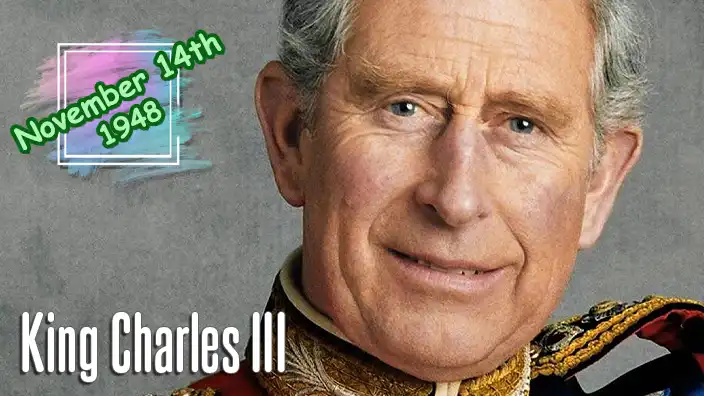
November 14, 1948, in London, England

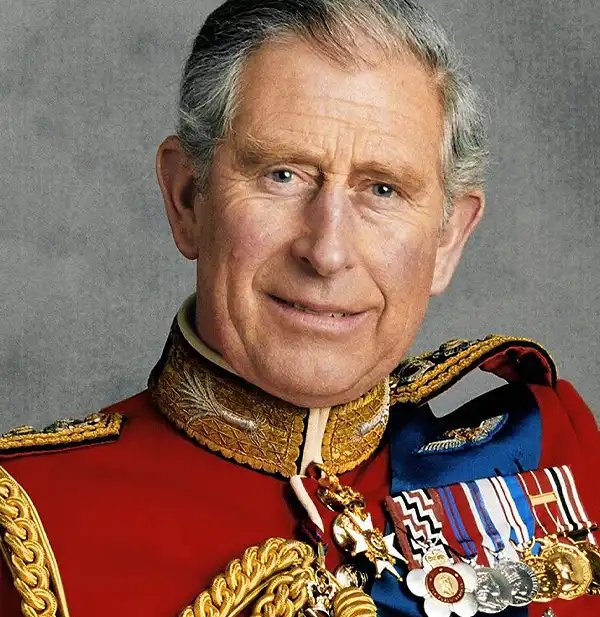
Charles Philip Arthur George was born on November 14, 1948, at BucKingham Palace in London, England, becoming the first child of Princess Elizabeth and Prince Philip, Duke of Edinburgh. His birth occurred during the reign of his grandfather, King George VI, at a time when Britain was still recovering from the enormous economic and social consequences of the Second World War. His mother was heir presumptive to the throne, placing Charles in the direct line of succession from the moment he arrived. Unlike most newborn children, whose immediate concerns involve feeding, sleeping, and maKing their parents exhausted, Charles entered the world with a future already shaped by constitutional tradition, centuries of royal history, and the expectation that he might one day become King of the United Kingdom.
Charles's early childhood changed dramatically on February 6, 1952, when King George VI died and his mother became Queen Elizabeth II. Charles, still a small child, immediately became heir apparent to the British throne. He subsequently received the traditional titles associated with his position, including Duke of Cornwall in England and Duke of Rothesay in Scotland. In 1958, Elizabeth II formally created him Prince of Wales and Earl of Chester, although his investiture as Prince of Wales would not take place until 1969. Growing up as the future monarch meant that Charles experienced childhood under circumstances very different from those of most British children. Family life, education, public appearances, and personal interests were all influenced by the knowledge that his eventual responsibilities would extend far beyond the usual questions of employment and career advancement.
Charles was initially educated at home by a governess, Catherine Peebles, before becoming the first heir apparent to attend a school rather than receive his entire education through private tutoring. He attended Hill House School in London and later Cheam School in Berkshire, where his father had previously studied. In 1962, Charles entered Gordonstoun School in Scotland, an institution known for its demanding physical activities, outdoor education, and emphasis on personal discipline. Gordonstoun had also been attended by Prince Philip, who strongly believed in the school's educational philosophy. Charles's experiences there were frequently portrayed in later accounts as challenging, although he also participated in music, theatre, and outdoor activities. For a young prince accustomed to royal residences, boarding-school life offered an introduction to a rather different British institution: the shared dormitory, where even a future King could discover that somebody else had borrowed his belongings.
During his education, Charles developed interests in history, literature, music, and the performing arts. He participated in school theatrical productions and demonstrated an appreciation for Shakespeare, an enthusiasm that would continue throughout his adult life. In 1966, he spent two terms at Timbertop, a remote campus of Geelong Grammar School in Victoria, Australia. The experience introduced him to outdoor challenges and a different educational environment, and he later spoke positively about his time there. His studies eventually took him to Trinity College, Cambridge, where he initially studied archaeology and anthropology before changing to history. In 1970, he graduated with a Bachelor of Arts degree, becoming the first heir to the British throne to earn a university degree. The achievement represented a departure from earlier royal educational traditions and reflected the increasing expectation that future monarchs should receive a broad academic education.
Charles's formal investiture as Prince of Wales took place on July 1, 1969, at Caernarfon Castle in Wales. The ceremony, attended by Queen Elizabeth II and other members of the Royal Family, was broadcast internationally and became one of the most prominent royal events of the decade. Charles delivered portions of his speech in Welsh, having studied the language at the University College of Wales in Aberystwyth in preparation for the occasion. The investiture connected him symbolically with a title that had been associated with the heir to the English and later British throne for centuries. However, the ceremony also attracted protests from Welsh nationalists who opposed the institution and its historical associations. The event illustrated the complicated relationship between royal tradition, national identity, and changing public attitudes within the United Kingdom.
Following university, Charles undertook military training, continuing a longstanding tradition of service among members of the Royal Family. He began his naval career in 1971 and served in the Royal Navy aboard several ships, including HMS Norfolk, HMS Minerva, and HMS Jupiter. He also trained as a helicopter pilot and served with 845 Naval Air Squadron, gaining experience in naval aviation. In 1976, he commanded the coastal minehunter HMS Bronington, completing a period of service that included practical responsibilities rather than merely ceremonial duties. His naval experience exposed him to the discipline, teamwork, and operational demands of military life, providing an understanding of the armed forces that would remain relevant throughout his royal career. Being a prince may have brought certain privileges, but the Royal Navy still expected its officers to understand that ships operate according to the laws of physics rather than royal preference.
Charles also trained as a pilot with the Royal Air Force, developing skills that complemented his naval aviation experience. His military service became an important part of his preparation for future responsibilities, particularly because the British monarch serves as the ceremonial head of the armed forces. Throughout his adult life, Charles maintained close relationships with military organizations, attending commemorations, reviewing troops, and supporting veterans and service personnel. His involvement reflected the monarchy's longstanding connection with Britain's military institutions, although his personal experience provided an additional perspective on the lives and responsibilities of those serving in uniform.
During the 1970s and early 1980s, Charles increasingly undertook official duties on behalf of Queen Elizabeth II, representing the monarchy at ceremonies, diplomatic events, and charitable engagements. His position as Prince of Wales required extensive travel throughout the United Kingdom and overseas, where he met political leaders, community organizations, business representatives, and members of the public. Over time, he developed a distinctive approach to royal responsibilities, combining traditional ceremonial duties with a growing interest in social issues, environmental conservation, education, and community development. Rather than limiting his activities to official appearances, Charles became actively involved in organizations addressing practical problems, sometimes attracting criticism for expressing views on subjects that were considered politically sensitive.
In 1976, Charles established The Prince's Trust, using money received when he left the Royal Navy to support disadvantaged young people. The organization initially focused on helping individuals develop confidence, practical skills, and employment opportunities, particularly those facing difficult social or economic circumstances. Over subsequent decades, the charity expanded significantly, providing training, mentoring, business support, and educational opportunities to young people throughout the United Kingdom and beyond. The Prince's Trust became one of Charles's most prominent charitable achievements, assisting large numbers of people in developing careers and establishing businesses. Its work reflected his belief that young people should have opportunities to develop their abilities regardless of their family backgrounds or financial circumstances.
Charles's personal life became a subject of intense public interest during the late 1970s and early 1980s, particularly as speculation increased about his future marriage. On July 29, 1981, he married Lady Diana Spencer at St Paul's Cathedral in London, in a ceremony watched by an enormous international television audience. The wedding was widely described as a fairy-tale event, combining elaborate royal tradition with extraordinary public enthusiasm. Diana became Princess of Wales, and the couple soon became among the most photographed people in the world. Their first son, Prince William, was born on June 21, 1982, followed by Prince Harry on September 15, 1984. The births strengthened the immediate line of succession and attracted considerable public attention, with the young royal family becoming a central focus of British and international media coverage.
Despite the glamorous public image surrounding their marriage, Charles and Diana experienced serious personal difficulties. Their relationship became increasingly strained, and both eventually acknowledged that the marriage had broken down. The couple formally separated in 1992 and divorced in 1996, following years of intense media scrutiny and public controversy. Their difficulties became part of a broader debate about the pressures of royal life, personal privacy, and the changing expectations placed upon the monarchy. Charles's relationship with Camilla Parker Bowles, whom he had known for many years, also attracted substantial attention and criticism. The period was particularly difficult for the Royal Family, whose private relationships were increasingly examined through television interviews, newspaper reports, and public discussion.
The death of Diana, Princess of Wales, in a car crash in Paris on August 31, 1997, became one of the most significant and emotionally charged events in modern British royal history. Charles traveled to Paris with Diana's sisters to accompany her body back to Britain, and he supported William and Harry during the period of national mourning that followed. The tragedy prompted widespread public reflection on the monarchy, the media, and the treatment of public figures. For Charles, it also meant helping his sons navigate an intensely personal loss under extraordinary public scrutiny. The circumstances demonstrated the difficulties of balancing family responsibilities with the expectations attached to royal status, particularly when private grief became a matter of international attention.
Charles married Camilla Parker Bowles on April 9, 2005, in a civil ceremony at Windsor Guildhall, followed by a service of prayer and dedication at St George's Chapel, Windsor Castle. Camilla received the title Duchess of Cornwall, and the couple gradually established a public partnership through charitable activities, official visits, and royal engagements. Their marriage followed years of public controversy, but Camilla increasingly developed her own role within the Royal Family, supporting literacy initiatives, domestic abuse survivors, and other charitable causes. Over time, she became an important companion and supporter of Charles's official responsibilities. When he eventually became King, she assumed the title Queen Consort and was crowned alongside him in 2023.
One of Charles's most enduring interests has been environmental conservation. Long before climate change became a central issue in international political discussions, he publicly expressed concerns about pollution, deforestation, waste, and the consequences of unsustainable agricultural practices. During the 1970s, he began advocating for environmental protection and responsible land management, positions that sometimes attracted ridicule from commentators who considered his concerns eccentric or premature. Charles continued promoting conservation throughout subsequent decades, supporting initiatives involving sustainable agriculture, biodiversity, renewable energy, and environmental education. His longstanding commitment made him one of the most prominent royal advocates for environmental issues, although critics have sometimes questioned the consistency between his public advocacy and aspects of the Royal Family's lifestyle.
Charles's environmental interests became particularly visible through his management of the Duchy of Cornwall estate, which provided income for the Prince of Wales during his years as heir apparent. He supported organic farming methods and developed the Duchy Home Farm at Highgrove in Gloucestershire as an example of environmentally conscious agriculture. In 1990, the Duchy Originals brand was established to market organic food products, with profits supporting charitable causes. The initiative reflected Charles's belief that agriculture should balance commercial productivity with environmental responsibility and animal welfare. His advocacy occasionally attracted criticism from supporters of conventional agricultural methods, but it also helped raise public awareness of organic food production at a time when such products were less widely available.
Architecture and urban planning have also occupied an important place in Charles's public life. He has frequently expressed concern about modern building design, arguing that new developments should respect local traditions, human scale, and the character of existing communities. His views attracted considerable controversy, particularly among architects who believed that his preferences placed excessive emphasis on traditional styles. In 1984, he famously criticized a proposed extension to London's National Gallery, describing it as a "monstrous carbuncle" on the face of a much-loved friend. The remark became one of the most frequently quoted royal comments on architecture, demonstrating that Charles was prepared to express strong opinions about buildings even when the architectural profession might have preferred him to remain diplomatically silent.
His interest in traditional urban design contributed to the development of Poundbury, an experimental community on Duchy of Cornwall land near Dorchester in Dorset. Construction began in the 1990s, following planning principles influenced by architect and urban designer Léon Krier. Poundbury was designed to combine residential properties, workplaces, shops, and public spaces within a walkable community, drawing inspiration from traditional British towns. Supporters praised its emphasis on mixed-use development and architectural continuity, while critics questioned aspects of its design and appearance. Regardless of differing opinions, the project demonstrated Charles's willingness to translate his architectural ideas into a practical development rather than simply criticizing other people's buildings from a comfortable royal residence.
Charles has also maintained a lifelong interest in art, particularly watercolor painting. His landscapes frequently depict locations in Britain and abroad, reflecting his appreciation for natural scenery, historic architecture, and traditional artistic techniques. He has exhibited his work and supported arts organizations, including initiatives encouraging young people to develop creative skills. His interests extend to classical music, opera, theatre, and literature, and he has maintained connections with numerous cultural institutions. These activities have contributed to his public identity as a monarch with a broad range of intellectual and artistic interests, although his enthusiasm for traditional architecture and landscape painting has occasionally encouraged the impression that he might have been perfectly happy living several centuries earlier.
As the years passed, Charles became increasingly experienced in representing the monarchy at major national and international events. He attended state occasions, visited Commonwealth countries, supported charitable organizations, and undertook diplomatic responsibilities on behalf of Queen Elizabeth II. His public engagements often focused on education, environmental protection, religious communities, and opportunities for disadvantaged young people. He also established and supported organizations dedicated to preserving traditional craftsmanship and promoting sustainable development. These activities helped define his long period as Prince of Wales, during which he gradually developed a public role that extended well beyond the ceremonial duties traditionally associated with the heir to the throne.
Charles became the longest-serving heir apparent in British history, having held that position since his mother's accession in 1952. His extraordinary period of preparation meant that he witnessed enormous political, technological, and cultural changes before eventually becoming King. During his lifetime, Britain experienced the end of its postwar recovery, the expansion of television, the transformation of the Commonwealth, the development of the internet, and numerous changes in public attitudes toward the monarchy. Charles's long apprenticeship provided extensive experience but also required patience, as the constitutional structure of hereditary monarchy does not provide a conventional promotion timetable. Unlike most professions, there was no annual performance review in which he could politely ask whether the senior position might become available.
On September 8, 2022, Queen Elizabeth II died at Balmoral Castle in Scotland, ending a reign that had lasted more than seventy years. Charles immediately became King Charles III under the constitutional principle that the Crown passes to the successor upon the death of the reigning monarch. His accession marked the beginning of a new chapter in British royal history, with the country experiencing its first change of monarch since 1952. Charles delivered his first televised address as King the following day, paying tribute to his mother's lifetime of service and expressing his commitment to fulfilling the responsibilities of the Crown. The transition also brought changes throughout the monarchy, including new titles for members of the Royal Family and adjustments to official ceremonies, institutions, and symbols.
Charles was formally proclaimed King by the Accession Council at St James's Palace on September 10, 2022. The ceremony followed longstanding constitutional traditions, combining historical procedures with the public recognition of a new sovereign. His eldest son, William, became heir apparent and subsequently received the title Prince of Wales. Charles's accession also made him monarch of the United Kingdom and fourteen other independent Commonwealth realms, including Canada, Australia, and New Zealand. Although these countries share the same monarch, each maintains its own constitutional arrangements, governments, and legal institutions. The King's responsibilities therefore involve several distinct constitutional relationships rather than the direct political control once associated with earlier British monarchs.
The coronation of King Charles III and Queen Camilla took place on May 6, 2023, at Westminster Abbey in London. Conducted by the Archbishop of Canterbury, the ceremony incorporated centuries-old traditions while introducing elements intended to reflect the diversity of contemporary Britain. Charles was anointed, invested with royal regalia, and crowned with St Edward's Crown, while Camilla was crowned with Queen Mary's Crown. The ceremony was attended by representatives of governments, religious communities, charitable organizations, and royal families from around the world. It was broadcast internationally, allowing millions of viewers to witness an event combining ancient symbolism with modern television production. For Charles, the occasion represented the formal ceremonial recognition of a role he had been preparing to undertake for most of his life.
As monarch, Charles performs constitutional and ceremonial duties that include appointing prime ministers, opening Parliament, receiving foreign ambassadors, and representing the United Kingdom at state occasions. Under Britain's constitutional monarchy, political decisions are made by elected governments, while the sovereign is expected to remain politically impartial. This requirement has involved an adjustment from Charles's earlier role as Prince of Wales, when he was able to express personal views more openly on environmental issues, architecture, and social concerns. As King, he must balance his longstanding interests with the constitutional expectation that the monarch should not become involved in party-political disputes. It is a considerable change for someone who spent decades publicly discussing everything from organic farming to the questionable appearance of modern office buildings.
Charles has also continued supporting the Commonwealth, a voluntary association of independent countries with historical and contemporary connections to Britain. As Head of the Commonwealth, he participates in meetings and ceremonial events intended to encourage cooperation among member nations. The position is separate from his role as monarch of the Commonwealth realms, since many Commonwealth members are republics or have their own monarchies. His involvement reflects the continuing evolution of Britain's international relationships, particularly as countries reassess the historical legacy of colonialism and the modern relevance of royal institutions. Charles has acknowledged difficult aspects of imperial history while emphasizing dialogue, cooperation, and the importance of addressing contemporary challenges.
The early years of Charles's reign have also included personal and institutional challenges. In February 2024, BucKingham Palace announced that he had been diagnosed with a form of cancer following treatment for an unrelated enlarged prostate. The palace did not publicly identify the specific type of cancer. Charles temporarily reduced his public-facing engagements while receiving treatment, although he continued undertaKing constitutional duties and later resumed public appearances. The announcement prompted messages of support from political leaders, public figures, and members of the public around the world. His experience also drew attention to the importance of medical examinations and the difficulties faced by public figures whose health becomes a matter of widespread interest.
Throughout his public life, Charles has been the subject of considerable scrutiny and differing opinions. Supporters have praised his commitment to charitable work, environmental protection, traditional craftsmanship, and community development, while critics have questioned aspects of his personal conduct, public interventions, and the continuing role of hereditary monarchy in modern society. His long period as Prince of Wales made him one of the most familiar members of the Royal Family, but familiarity did not necessarily produce universal agreement about his views or actions. The monarchy itself remains a subject of public debate, particularly regarding its constitutional position, financial arrangements, historical associations, and relationship with contemporary British society.
Charles's reign represents an important transition between two generations of British monarchy. Queen Elizabeth II became closely associated with continuity, restraint, and a lifetime of public service, while Charles entered the throne with decades of established interests and a more openly expressed philosophy about environmental responsibility and social development. His challenge has been to preserve the constitutional traditions of the monarchy while adapting its public role to contemporary expectations. This balance between continuity and change is particularly significant for an institution whose ceremonies and symbols reach back centuries, even as the society surrounding it continues to evolve.
King Charles III's life has followed an extraordinary path from royal childhood and naval service to charitable leadership, environmental advocacy, and eventual accession to the British throne. His interests in conservation, architecture, education, and the arts have shaped a distinctive public identity, while his personal experiences have unfolded under an intensity of public attention that few individuals ever encounter. Whether admired for his dedication to traditional institutions and environmental causes or questioned over his views and the role of monarchy, Charles remains a significant figure in modern British history. After spending more than seven decades preparing to become King, he finally assumed the position in 2022, demonstrating that patience can indeed be rewarded. Although in his particular case, the reward involved a crown, several palaces, a mountain of constitutional responsibilities, and the discovery that retirement is not traditionally included in the royal job description.
The Royal Family – The King: Official biography, royal duties, charitable work, and personal history. The Royal Family – King Charles III Encyclopaedia Britannica – Charles III: Biography, education, military service, marriages, and accession to the throne. King Charles III – Britannica The Royal Family – The Coronation: Official information about the coronation of King Charles III and Queen Camilla. The Coronation The King's Trust: History and charitable work of the organization originally established as The Prince's Trust. The King's Trust Historic England: Information about Britain's historic buildings, architecture, and conservation. Historic England BBC News: Reporting and historical coverage of the British monarchy, the accession of Charles III, and his reign. BBC NewsReferences & Sources