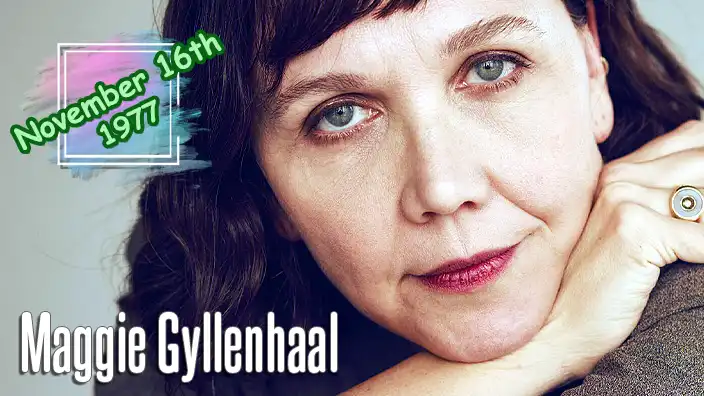
November 16, 1977, in New York City

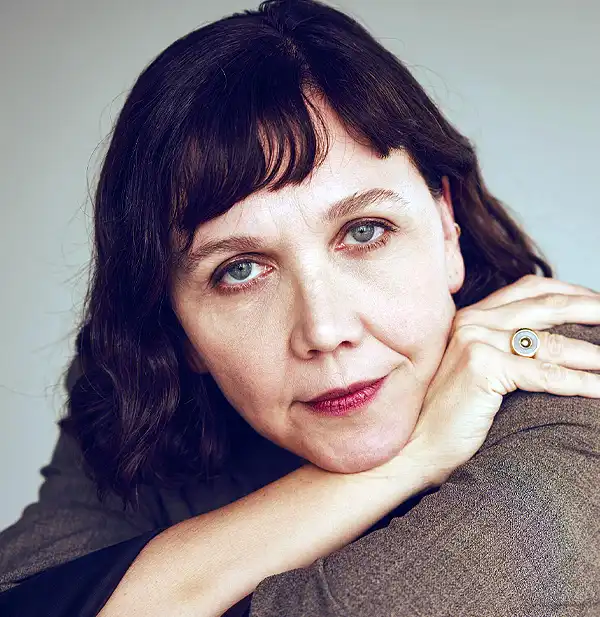
Maggie Gyllenhaal, whose full name is Margalit Ruth Gyllenhaal, was born on November 16, 1977, in New York City. She grew up in a family deeply involved in the entertainment industry, with her father, Stephen Gyllenhaal, working as a film director and her mother, Naomi Foner, establishing herself as a successful screenwriter. Her younger brother, Jake Gyllenhaal, also pursued acting and became an internationally recognized Hollywood star. With filmmakers for parents and another aspiring performer in the household, family conversations probably involved considerably more discussion about scripts, characters, and camera angles than the average dinner table. Nevertheless, Maggie would eventually establish a distinctive career that extended well beyond her family's professional connections.
Although born in New York, Gyllenhaal spent much of her childhood in Los Angeles, where she attended Harvard-Westlake School. Growing up around the film industry provided opportunities to observe the creative process, but it also exposed her to the challenges and uncertainties of professional entertainment. She developed an early appreciation for storytelling and performance, eventually pursuing acting while maintaining an interest in literature and academic study. Her upbringing encouraged intellectual curiosity and creative independence, qualities that would later become important characteristics of her acting choices and filmmaking career.
Gyllenhaal attended Columbia University in New York City, graduating with a degree in English literature in 1999. Her studies exposed her to classical and contemporary writing, providing a strong foundation for understanding complicated characters and narrative structures. She also studied acting at the Royal Academy of Dramatic Art in London, further developing her theatrical skills. Unlike performers who enter Hollywood directly from childhood television or commercial work, Gyllenhaal combined early screen experience with a substantial academic education. Her interest in literature would eventually become particularly significant when she began adapting novels for the cinema.
Her earliest film appearances included small roles in productions directed by her father, beginning with Waterland (1992), starring Jeremy Irons and Ethan Hawke. She subsequently appeared in A Dangerous Woman (1993) and Homegrown (1998), both also directed by Stephen Gyllenhaal. These early experiences allowed her to become familiar with film production while working alongside established performers. Although family connections provided opportunities, they did not automatically establish her as a successful actress. She still needed to develop the professional skills and individual screen presence necessary to compete in an industry where a recognizable surname might open a door but could not guarantee that audiences would appreciate what happened afterward.
Following her university education, Gyllenhaal began pursuing more substantial acting opportunities. She appeared in John Waters' satirical comedy Cecil B. Demented (2000), a film that explored the absurdities of Hollywood filmmaking through the adventures of a group of radical underground movie enthusiasts. The production's unconventional humor and deliberately provocative style suited Gyllenhaal's emerging interest in unusual characters and independent cinema. Rather than immediately pursuing conventional romantic comedies or glamorous leading roles, she demonstrated a willingness to participate in projects that challenged audience expectations.
In 2001, Gyllenhaal appeared in the psychological science-fiction drama Donnie Darko, directed by Richard Kelly and starring her younger brother, Jake Gyllenhaal. She portrayed Elizabeth Darko, the older sister of Jake's troubled teenage character. The film combined suburban family life with time travel, psychological mystery, and the deeply unsettling appearance of a giant rabbit named Frank. Although its initial theatrical release was limited, Donnie Darko gradually developed a devoted following through home video and word of mouth. The movie became an important cult classic, introducing Maggie Gyllenhaal to audiences interested in unconventional independent filmmaking. It also gave the Gyllenhaal siblings an opportunity to portray fictional brother and sister, which presumably reduced the amount of research required to understand sibling disagreements.
Her major breakthrough arrived with the independent romantic comedy-drama Secretary (2002), directed by Steven Shainberg and starring James Spader. Gyllenhaal portrayed Lee Holloway, a young woman who begins working as a secretary for an eccentric attorney and develops an unconventional romantic relationship with her employer. The film explored psychological vulnerability, personal identity, intimacy, and the complexities of human relationships through dark humor and emotionally challenging subject matter. Gyllenhaal's performance required considerable sensitivity because the character's behavior and emotional experiences could easily have been reduced to sensationalism. Instead, she portrayed Lee as an intelligent, vulnerable, and increasingly self-aware woman discovering her own identity.
Secretary became a significant independent film success and established Gyllenhaal as a serious dramatic actress. Her performance earned a Golden Globe nomination for Best Actress in a Motion Picture – Musical or Comedy, along with recognition from the National Board of Review and other critics' organizations. The film demonstrated her willingness to accept demanding roles that explored subjects outside conventional Hollywood romance. It also established a pattern that would continue throughout her career: Gyllenhaal frequently gravitated toward characters whose motivations were complicated, whose decisions were sometimes uncomfortable, and whose emotional lives resisted easy explanations.
Following Secretary, Gyllenhaal appeared in several notable productions, including Adaptation (2002), Confessions of a Dangerous Mind (2002), and Mona Lisa Smile (2003). In Adaptation, directed by Spike Jonze and written by Charlie Kaufman, she contributed to a film that explored the difficulties of screenwriting through a deliberately complicated mixture of reality and fiction. Confessions of a Dangerous Mind, directed by George Clooney, examined the extraordinary claims of television personality Chuck Barris, while Mona Lisa Smile placed Gyllenhaal alongside Julia Roberts, Kirsten Dunst, and Julia Stiles in a drama about women's education and social expectations during the 1950s.
In Mona Lisa Smile, Gyllenhaal portrayed Giselle Levy, a student at Wellesley College whose unconventional attitudes toward relationships and social expectations distinguished her from many of her classmates. The film explored the conflict between traditional expectations for women and emerging opportunities for professional and personal independence. Gyllenhaal's character challenged the rigid social conventions surrounding the fictional college environment, providing another opportunity for the actress to portray a woman unwilling to accept the limitations imposed upon her. Her performance contributed to the film's broader discussion of education, identity, and the meaning of personal fulfillment.
Gyllenhaal continued developing her reputation through independent productions such as Casa de los Babys (2003), Criminal (2004), and Happy Endings (2005). These films allowed her to explore different dramatic environments while working with directors interested in character-driven storytelling. Her performances frequently emphasized emotional complexity rather than conventional glamour, establishing her as an actress particularly effective at portraying flawed, intelligent, and sometimes contradictory individuals. She became associated with independent cinema at a time when smaller productions were increasingly recognized for offering substantial roles to performers interested in challenging material.
In 2006, Gyllenhaal delivered another acclaimed performance in Sherrybaby, directed by Laurie Collyer. She portrayed Sherry Swanson, a young woman recently released from prison who struggles to rebuild her life and reconnect with her daughter while confronting substance dependency and the consequences of past decisions. The role demanded an emotionally exposed performance, exploring motherhood, recovery, family conflict, and the difficulties of reintegration into ordinary society. Gyllenhaal approached the character without attempting to disguise her mistakes or make her artificially sympathetic. Instead, she presented Sherry as a complicated individual whose desire for change frequently collided with deeply established patterns of behavior.
Her performance in Sherrybaby earned another Golden Globe nomination, this time for Best Actress in a Motion Picture – Drama. Critics praised her ability to portray a character whose vulnerability and determination existed alongside selfishness and poor judgment. The film reinforced Gyllenhaal's reputation for selecting roles that challenged conventional expectations about female protagonists. Rather than seeking characters who were consistently admirable or easily understood, she explored women whose emotional experiences reflected the contradictions of real life. It was not always comfortable viewing, but it demonstrated her willingness to prioritize artistic credibility over audience approval.
The same year, Gyllenhaal appeared in Oliver Stone's World Trade Center (2006), starring Nicolas Cage and Michael Peña. The film dramatized the experiences of Port Authority police officers trapped beneath the rubble following the September 11, 2001, terrorist attacks. Gyllenhaal portrayed Allison Jimeno, the wife of officer Will Jimeno, played by Peña. Her performance focused on the emotional uncertainty experienced by family members waiting for news of loved ones involved in the disaster. The role required restraint and sensitivity, emphasizing the personal consequences of a national tragedy rather than the spectacle of the event itself.
Gyllenhaal also appeared in the imaginative comedy-drama Stranger Than Fiction (2006), starring Will Ferrell, Emma Thompson, Dustin Hoffman, and Queen Latifah. She portrayed Ana Pascal, an independent bakery owner who becomes romantically involved with Ferrell's character, Harold Crick, an Internal Revenue Service auditor who discovers that his life is being narrated by an unseen author. The film combined romantic comedy, literary fantasy, and philosophical questions about fate and personal choice. Gyllenhaal's performance provided warmth and spontaneity, contrasting with Harold's rigidly organized existence. Her character's relationship with an IRS employee was particularly remarkable, considering that most people prefer their encounters with tax officials to involve as little romance as possible.
In 2008, Gyllenhaal reached an enormous international audience when she portrayed Rachel Dawes in Christopher Nolan's superhero blockbuster The Dark Knight. She replaced Katie Holmes, who had played the character in Batman Begins (2005), joining Christian Bale, Heath Ledger, Aaron Eckhart, Michael Caine, Gary Oldman, and Morgan Freeman. Rachel was a prosecutor and childhood friend of Bruce Wayne, whose relationships with Batman and district attorney Harvey Dent became central to the film's emotional storyline. Gyllenhaal brought a mature, independent quality to the character, portraying Rachel as a professional woman whose personal decisions were not determined entirely by the men competing for her affection.
The Dark Knight became one of the most successful and influential superhero films ever produced, earning widespread critical acclaim and enormous box-office revenue. Heath Ledger's performance as the Joker received particular recognition, including a posthumous Academy Award for Best Supporting Actor. Gyllenhaal's portrayal of Rachel contributed to the film's exploration of sacrifice, moral responsibility, and the consequences of violence. Her character's fate became a pivotal moment in the story, dramatically influencing both Bruce Wayne and Harvey Dent. Although superhero films frequently feature spectacular action sequences, Rachel's storyline demonstrated that emotional consequences could be just as important as elaborate explosions and expensive vehicles.
The enormous success of The Dark Knight introduced Gyllenhaal to viewers who might not have encountered her independent films. However, rather than concentrating exclusively on major studio productions, she continued pursuing a mixture of commercial and character-driven projects. Her career choices demonstrated that she valued the complexity of a role more than the size of a film's budget. For an actress who had already worked with giant rabbits, unconventional secretaries, and mysterious narrators, Gotham City's criminal population was simply another unusual collection of colleagues.
In 2009, Gyllenhaal appeared in Crazy Heart, the musical drama starring Jeff Bridges as Otis "Bad" Blake, a struggling country music performer whose career and personal life have been damaged by years of alcohol abuse. Gyllenhaal portrayed Jean Craddock, a journalist and single mother who develops a complicated romantic relationship with Blake. Her character must balance personal affection with the responsibility of protecting her young son, creating an emotionally challenging situation that explores love, trust, addiction, and personal boundaries. Gyllenhaal's performance brought warmth and credibility to the story, providing an essential emotional counterbalance to Bridges' troubled central character.
Crazy Heart earned Gyllenhaal her first Academy Award nomination, for Best Supporting Actress, while Bridges won the Oscar for Best Actor. The film's success marked another important milestone in her career, demonstrating her ability to contribute substantially to an acclaimed production without occupying the central role. Her portrayal of Jean emphasized emotional intelligence and personal responsibility, particularly as the character confronted the consequences of Blake's destructive behavior. Rather than presenting romance as a magical solution to deeply rooted problems, the film explored the difficult decisions required when affection conflicts with the need for stability and safety.
Gyllenhaal subsequently appeared in the family fantasy Nanny McPhee and the Big Bang (2010), also released in the United States as Nanny McPhee Returns. She portrayed Isabel Green, a mother struggling to manage her children and a family farm during the Second World War while her husband served in the military. The film starred Emma Thompson as the magical nanny whose unconventional methods gradually restore order to a chaotic household. Gyllenhaal's performance provided a warm and sympathetic center to the story, demonstrating her ability to work effectively in family entertainment. After years of psychologically complicated dramas, appearing in a film where magical assistance could resolve household problems must have seemed like a rather attractive professional change.
In Hysteria (2011), Gyllenhaal portrayed Charlotte Dalrymple, a progressive young woman challenging Victorian social conventions in a historical romantic comedy. The film explored nineteenth-century medical attitudes toward women's health and the development of an early electric massage device. Gyllenhaal's character questioned the restrictive expectations imposed upon women and advocated for greater social responsibility. Her performance combined humor with an interest in historical inequality, reflecting the recurring themes of independence and personal freedom found throughout her career. The film's unusual subject matter also demonstrated that Gyllenhaal remained perfectly comfortable participating in productions that might make polite dinner conversation considerably more complicated.
She also starred in Won't Back Down (2012), portraying Jamie Fitzpatrick, a working-class mother campaigning to improve her daughter's struggling public school. Working alongside Viola Davis, Gyllenhaal explored the challenges faced by parents, teachers, and communities attempting to address educational difficulties. The film examined questions surrounding school administration, parental involvement, and educational reform, presenting characters whose personal motivations were shaped by their experiences with the public school system. Gyllenhaal's performance emphasized determination and frustration, creating a protagonist who refused to accept that bureaucratic obstacles should prevent meaningful change.
In 2013, Gyllenhaal appeared in White House Down, the action thriller directed by Roland Emmerich and starring Channing Tatum and Jamie Foxx. She portrayed Secret Service agent Carol Finnerty, contributing to a story involving a violent attack on the White House and an elaborate conspiracy. The production offered another opportunity to participate in large-scale commercial entertainment, contrasting with the intimate dramas that had become central to her reputation. Her character's professional responsibilities required composure during extraordinary circumstances, although the film's relentless action probably made an ordinary day at the office seem like an appealing alternative.
Gyllenhaal's television career reached an important milestone in 2014 when she starred in the British political thriller miniseries The Honourable Woman. She portrayed Nessa Stein, an Anglo-Israeli businesswoman whose efforts to promote cooperation in the Middle East become entangled in espionage, political intrigue, and personal trauma. The series explored complicated international relationships and the consequences of historical conflicts through a suspenseful narrative. Gyllenhaal's performance required her to portray a woman balancing public responsibilities with deeply private emotional struggles, creating one of the most demanding characters of her career.
The Honourable Woman received widespread critical praise, and Gyllenhaal won the Golden Globe Award for Best Actress in a Miniseries or Television Film in 2015. She also received a Primetime Emmy nomination for Outstanding Lead Actress in a Limited Series or Movie. The recognition demonstrated her ability to anchor a complex television production while maintaining the emotional authenticity that distinguished her film performances. Her portrayal of Nessa Stein became one of the defining achievements of her acting career, illustrating the increasing opportunities available to established film performers in ambitious television dramas.
In 2014, Gyllenhaal also appeared in the independent musical comedy-drama Frank, starring Michael Fassbender and Domhnall Gleeson. She portrayed Clara, a musician associated with an eccentric experimental band led by a mysterious performer who wears an enormous papier-mâché head. The film explored artistic creativity, personal identity, and the complicated relationship between originality and commercial success. Gyllenhaal's character was confrontational, intensely committed to the band's unusual musical approach, and generally unimpressed by conventional expectations. Considering that the group's lead singer spent much of the film wearing an enormous artificial head, Clara's skepticism toward ordinary society was perhaps understandable.
Gyllenhaal continued her television success with HBO's The Deuce, which aired from 2017 to 2019. Created by David Simon and George Pelecanos, the series explored the development of New York City's commercial sex industry during the 1970s and 1980s. Gyllenhaal portrayed Eileen "Candy" Merrell, a sex worker who gradually becomes involved in filmmaking and production. The character's professional ambitions and complicated personal experiences allowed the series to examine questions of exploitation, independence, economic opportunity, and changing cultural attitudes. Gyllenhaal also served as a producer, becoming increasingly involved in the creative decisions shaping the production.
Her performance in The Deuce received critical acclaim and earned a Golden Globe nomination for Best Actress in a Television Series – Drama. The role required her to explore difficult subject matter while maintaining the character's intelligence, ambition, and emotional complexity. Candy's transition into filmmaking also created an interesting parallel with Gyllenhaal's own developing interest in directing and producing. Through the series, she gained additional experience participating in creative decisions beyond acting, helping prepare her for the next major stage of her professional career.
In 2018, Gyllenhaal starred in The Kindergarten Teacher, a psychological drama directed by Sara Colangelo. She portrayed Lisa Spinelli, a kindergarten teacher who becomes increasingly obsessed with the poetic abilities of one of her young students. The film explored artistic ambition, personal dissatisfaction, and the ethical boundaries surrounding adult relationships with children. Gyllenhaal's performance presented a deeply complicated protagonist whose desire to nurture creativity gradually develops into troubling behavior. The role demonstrated her continued interest in characters whose motivations cannot easily be categorized as entirely admirable or entirely destructive.
The Kindergarten Teacher received considerable critical praise, particularly for Gyllenhaal's emotionally layered performance. The film required audiences to consider the difference between genuine artistic appreciation and unhealthy personal obsession, exploring how apparently positive intentions can become harmful when individuals lose sight of appropriate boundaries. Gyllenhaal's ability to portray these contradictions helped make the film a compelling psychological study. It also reinforced her reputation for selecting projects that challenged viewers rather than simply reassuring them.
After decades of acting, Gyllenhaal made a major transition into filmmaking with The Lost Daughter (2021), her feature directorial debut. She adapted the screenplay from the novel by acclaimed Italian author Elena Ferrante, creating a psychological drama centered on motherhood, identity, regret, and the complicated emotional experiences of women. The film starred Olivia Colman, Jessie Buckley, Dakota Johnson, and Ed Harris, following a university professor whose seaside holiday becomes increasingly unsettling as memories of her earlier experiences as a mother begin resurfacing. Gyllenhaal's adaptation explored difficult emotions that are often absent from conventional portrayals of motherhood, presenting its characters with unusual honesty and psychological complexity.
The Lost Daughter premiered at the Venice International Film Festival in 2021, where Gyllenhaal won the Golden Osella for Best Screenplay. The film subsequently received widespread critical acclaim and three Academy Award nominations, including Best Adapted Screenplay for Gyllenhaal, Best Actress for Olivia Colman, and Best Supporting Actress for Jessie Buckley. Gyllenhaal also received recognition from the Directors Guild of America and other film organizations, establishing herself as a significant filmmaking talent with her first feature-length production. It was an extraordinary achievement for a director making her debut, particularly with a film that challenged familiar expectations about maternal behavior and emotional responsibility.
Her success with The Lost Daughter demonstrated that her interest in complicated female characters extended beyond the roles she selected as an actress. As a writer and director, she could shape entire narratives around experiences that mainstream cinema sometimes treats as uncomfortable or difficult to discuss. Her filmmaking emphasized psychological detail, nuanced performances, and the importance of allowing characters to remain contradictory. Rather than providing simple moral judgments, she encouraged audiences to examine their own assumptions about responsibility, personal freedom, and the emotional demands of family life.
Gyllenhaal's transition into directing also reflected her longstanding interest in literature and storytelling. Her academic background, extensive acting experience, and work as a producer provided a foundation for understanding the different creative responsibilities involved in filmmaking. Directing required her to coordinate performances, visual storytelling, editing, production design, and numerous other elements that contribute to a finished film. Her experience as an actress helped her communicate effectively with performers, while her understanding of narrative structure informed her approach to adapting complex literary material.
In 2026, Gyllenhaal returned to directing with The Bride!, a bold reimagining of the Frankenstein mythology. Written and directed by Gyllenhaal, the film starred Jessie Buckley as the Bride and Christian Bale as Frankenstein's creature, alongside Peter Sarsgaard, Annette Bening, Jake Gyllenhaal, and Penélope Cruz. Set in 1930s Chicago, the story follows a lonely creature who seeks assistance from a scientist in creating a companion, only for the experiment to produce extraordinary and dangerous consequences. The film combined horror, romance, crime, and social rebellion, demonstrating Gyllenhaal's willingness to explore a very different cinematic style from her intimate directorial debut.
Released theatrically in March 2026, The Bride! represented a substantial expansion of Gyllenhaal's filmmaking ambitions. The production featured elaborate period settings, large-scale visual design, and an ensemble cast of internationally recognized performers. Its reinterpretation of familiar literary characters reflected her interest in exploring established stories from unconventional perspectives. Rather than simply reproducing the traditional Frankenstein narrative, Gyllenhaal approached the material through questions of identity, autonomy, desire, and personal transformation. The project also brought several members of her professional and personal circle together, including her husband, Peter Sarsgaard, and her brother, Jake Gyllenhaal. Apparently, family reunions in the Gyllenhaal household can now involve resurrected bodies, elaborate costumes, and an entire Hollywood production crew.
Beyond her film and television work, Gyllenhaal has maintained an active interest in theater. She appeared in stage productions including Closer, Homebody/Kabul, Uncle Vanya, and Three Sisters, demonstrating her ability to perform demanding dramatic material before live audiences. In 2014, she made her Broadway debut in Tom Stoppard's The Real Thing, appearing alongside Ewan McGregor and Cynthia Nixon. Theater provided opportunities to explore characters through sustained performances without the editing and repeated takes associated with filmmaking. Her stage experience also contributed to her understanding of character development and dramatic structure, skills that later became valuable in her directing career.
Gyllenhaal married actor Peter Sarsgaard in May 2009, following several years together. The couple have two daughters, Ramona and Gloria, and have occasionally collaborated professionally. Sarsgaard appeared in The Lost Daughter and The Bride!, reflecting their shared involvement in the entertainment industry. Their relationship has attracted public interest, although Gyllenhaal has generally maintained a distinction between her professional work and family life. Balancing filmmaking, acting, and parenting presents considerable challenges, particularly when major productions require extended periods of travel and intensive preparation.
Throughout her career, Gyllenhaal has also supported charitable organizations and social causes, including efforts involving poverty relief, education, and women's rights. She has participated in public discussions about representation in entertainment, particularly the availability of substantial roles for women and the importance of female filmmakers. Her experiences as an actress and director have informed her perspective on the industry's creative opportunities and limitations. Rather than focusing exclusively on personal achievements, she has contributed to broader conversations about how films are made, whose stories receive attention, and how performers can participate more meaningfully in creative decisions.
One of the most distinctive aspects of Gyllenhaal's career is her consistent willingness to portray women whose behavior challenges conventional expectations. Her characters have included a psychologically vulnerable secretary, a mother struggling with addiction, a journalist confronting an unstable relationship, a politically influential businesswoman, and a teacher whose artistic ambitions become destructive. These performances reflect an interest in emotional contradictions and the complexities of personal identity. Gyllenhaal has frequently avoided characters designed simply to be likable, preferring individuals whose experiences encourage audiences to reconsider familiar assumptions.
Her filmmaking has continued this approach by placing complicated female experiences at the center of her stories. The Lost Daughter challenged idealized portrayals of motherhood, while The Bride! explored autonomy and transformation through a reimagined horror narrative. These projects demonstrated that Gyllenhaal's creative interests extend beyond individual performances to the larger questions of narrative perspective and artistic representation. Her development as a filmmaker also illustrates how established actors can successfully move into writing, directing, and producing when given opportunities to expand their professional responsibilities.
Maggie Gyllenhaal's achievements include Academy Award nominations for acting and screenwriting, a Golden Globe Award, numerous critical honors, and recognition for her work in independent cinema, television, and theater. Her career has encompassed superhero blockbusters, intimate psychological dramas, historical thrillers, literary adaptations, and experimental filmmaking. Few performers move so comfortably between projects as different as The Dark Knight, Secretary, Crazy Heart, and The Lost Daughter, yet Gyllenhaal has consistently brought intelligence and emotional credibility to each.
From her early appearances in films directed by her father to her emergence as an acclaimed actress and filmmaker, Maggie Gyllenhaal has built a career defined by curiosity, independence, and a willingness to take creative risks. She has demonstrated that compelling stories do not require perfect heroes, predictable relationships, or comfortable conclusions. Her performances and films frequently ask audiences to confront difficult emotions, complicated choices, and characters who refuse to behave according to expectations. And while she may once have needed Batman to help protect Gotham City, her career behind the camera suggests that Maggie Gyllenhaal is perfectly capable of running the entire production herself. Cape optional.
References & Sources