Mark The Days - March

March is the month that can’t make up its mind—snow boots in the morning, flip-flops by dinner. It’s like the year’s awkward teenager: moody, unpredictable, and occasionally dressed like a leprechaun. One minute you're bracing for a blizzard, the next you're sunburned from walking to the mailbox. Somewhere in the chaos, we celebrate pi, potatoes, poetry, and the mystical power of green beer. March is when things start to wake up, thaw out, and go just a little sideways. And frankly, we wouldn’t have it any other way.

- Details
National OmazingYou Day is the one glorious day of the year when you are officially encouraged to stop apologizing for existing and start appreciating the fact that you’ve somehow survived alarm clocks, endless passwords, awkward conversations, junk email, and people who still don’t understand how grocery store self-checkout works. It’s a celebration of confidence, kindness, and realizing that maybe — just maybe — you’re doing better than you think.
Celebrated: Annually, on March 25th
Celebrate National OmazingYou Day on March 25 with positivity, fun facts, and ways to boost confidence while encouraging others


- Details
Somewhere between dramatic sword fights, spontaneous musical numbers, and at least one actor forgetting their line and pretending it was intentional, something magical happens. Theatre manages to blend chaos and art with a straight face, all while someone in the front row unwraps a candy louder than a thunderstorm. It's the only place where it's totally normal to die tragically, come back for curtain call, and then go out for tacos.
Celebrated: Annually, on March 27th
Celebrate World Theatre Day on March 27th with fun facts, history, and creative ways to honor the magic of live performance around the world.


- Details
If there were an Olympic event for clumsiness, someone would be rolling down the hill, missing their cue, and landing face-first in a pile of bamboo—only to sit there happily munching away as if that was the plan all along. They live life at their own pace, prioritizing snacks, naps, and the occasional awkward tumble, all while maintaining an expression that says, “I meant to do that.” With a diet that requires them to eat for most of the day and an energy level that rarely rises above "mildly interested," it's a wonder they even manage to function. And yet, against all odds, they continue to exist, proving that sometimes, just being adorably unbothered is enough to survive.
Celebrated: Annually, on March 16th
Explore the fascinating world of giant pandas, their ancient lineage, and their role as symbols of wildlife conservation on National Panda Day.

- Details
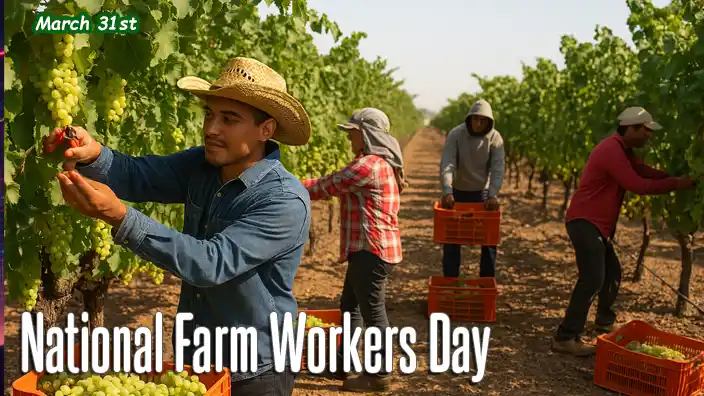
Farm workers are the only people who can outwork the sun and still have energy left to laugh at a tractor that won’t start… again. They can eyeball a watermelon and tell you if it’s ripe, spot a worm from twenty paces, and hold a full conversation with a stubborn goat while picking peppers with one hand. Forget CrossFit—try hauling crates of cabbage in 90-degree heat while outrunning a chicken with an attitude problem. It’s tough work, but somehow, these legends of the land manage to find the humor between the hoeing and the hay bales.
Celebrated: Annually, on March 31st
National Farm Workers Day commemorates the legacy of César Chávez and highlights the ongoing struggle for fair wages and working conditions in the agricultural sector.


- Details
Medal of Honor recipients are not defined by glory but by grit, sacrifice, and a fierce commitment to their brothers and sisters in arms. Many never sought recognition, and some never lived to receive it. Their stories echo through history—acts of valor performed not for medals, but because others needed saving, missions needed completing, or duty demanded it. They are quiet heroes, often humble and reluctant to speak of their deeds, yet their courage has shaped the legacy of freedom. Each medal bears the weight of selflessness, etched with the names of those who chose to run toward danger when retreat would have been easier.
Celebrated: Annually, on March 25th
Explore the history, significance, and modern legacy of the Medal of Honor in honor of National Medal of Honor Day, observed every year on March 25th

- Details
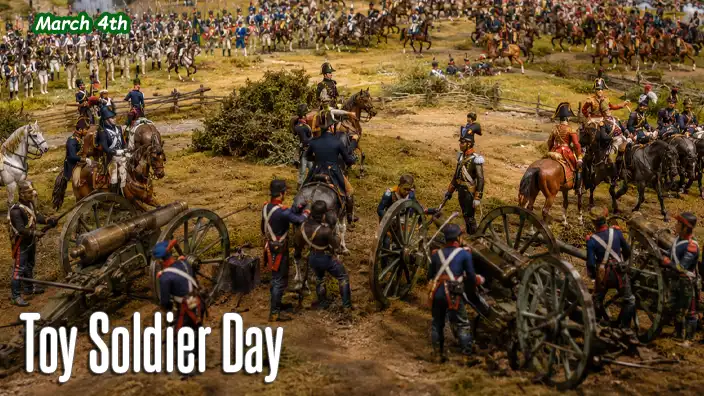
For generations, toy soldiers have bravely defended bedrooms, conquered living room carpets, and survived attacks from cats, vacuum cleaners, and younger siblings. Toy Soldier Day salutes these tiny heroes and the imaginations that sent them into battle.
Celebrated: Annually, on March 4th
Discover Toy Soldier Day, from antique lead soldiers to plastic army men that fueled generations of imaginative adventures

- Details
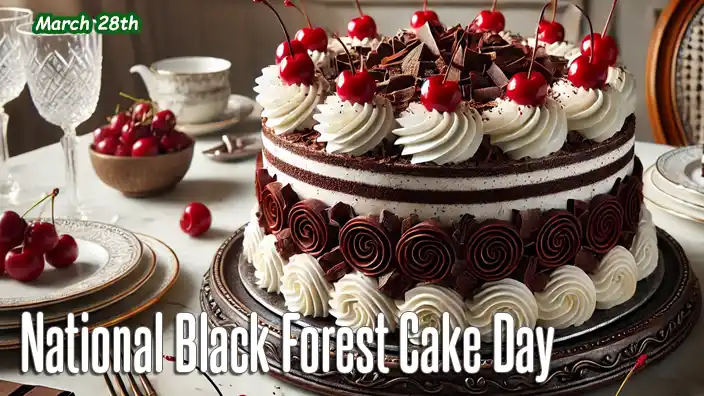
Look, we get it—Black Forest Cake is visually irresistible. Those glossy cherries, those dreamy layers of whipped cream and chocolate... it’s basically the supermodel of desserts. But let’s be clear: licking your screen will not deliver the rich flavor, satisfying texture, or nutritional value you’re hoping for. All you’ll get is a smudgy screen and a deep sense of disappointment. So do yourself a favor—step away from the monitor and toward a fork because this cake deserves to be savored, not swiped.
Celebrated: Annually, on March 28th
Celebrate National Black Forest Cake Day on March 28 with layers of chocolate, cherries, whipped cream, and the rich history behind this iconic dessert.


- Details
Tolkien Reading Day arrives every March 25, inviting readers to open a J.R.R. Tolkien book and wander into Middle-earth without leaving the comfort of their favorite chair. Read about hobbits, heroes, elves, dragons, and dangerously influential jewelry while enjoying enough snacks to make second breakfast look like a warm-up.
Celebrated: Annually, on March 25th
Open a Tolkien book, pack a second breakfast, and head for Middle-earth—no wizard, walking staff, or troublesome ring required


- Details
Girl Scout Sunday marks a special day in the Girl Scout calendar, celebrated on the Sunday before March 12th, the Girl Scouts' birthday. It's a day dedicated to reflection and spirituality, allowing Girl Scouts across the nation to connect with their faith communities and participate in religious services. This observance embodies the Girl Scouts' commitment to diversity and inclusivity, encouraging members to express gratitude, reflect on their personal beliefs, and recognize the common values that unite them, such as service, kindness, and respect for others. Through participation in Girl Scout Sunday, Scouts reaffirm their pledge to help people at all times and to live by the Girl Scout Law, making it a poignant reminder of the organization's foundational principles.
Celebrated: Annually, on the Sunday Before March 12th
Celebrate Girl Scout Sunday with us! A day of faith, community service, and leadership, honoring the values and contributions of Girl Scouts everywhere.

- Details
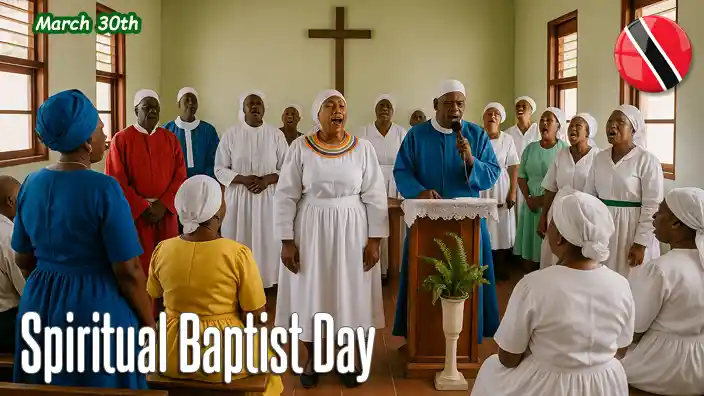
Ah, the British—masters of tea, understatement, and sticking rigidly to rules no one else remembers writing. When it came to the Spiritual Baptists, colonial authorities simply couldn’t cope with worship that didn’t involve quiet pew-sitting, a polite hymn, and possibly a biscuit afterward. The boisterous blend of African tradition and Christian praise must’ve felt like a spiritual jazz concert to folks who believed religious enthusiasm should never raise one's eyebrows, let alone the roof. So, in classic British fashion, they banned the noise rather than understand the music—because if there’s one thing more terrifying to an empire than rebellion, it’s rhythm.
Celebrated: Annually, on March 30th
Spiritual Baptist Day, a tribute to spiritual freedom and cultural heritage, with lively services and meaningful observances in Trinidad and Tobago.


- Details
International Wheelchair Day rolls around every March 1st, and it's the one day of the year when wheelchairs outshine every hot rod and convertible on the planet. It's not just about celebrating these marvelous mobility machines; it's a day when we acknowledge the incredible people who use them. Think of it as a tribute to the world's most exclusive club, where the wheels are always spinning, and the members are rolling models of resilience and innovation. So, on this day, let's raise a toast (or a wheelie) to wheelchairs and their users, who navigate life's twists and turns with more grace and gusto than a ballet dancer on two wheels.
Celebrated: Annually, on March 1st
International Wheelchair Day celebrates the freedom and independence wheelchairs provide. Learn about its history, impact, and the global movement it has become.


- Details
Imagine a world where cookies are the currency and young entrepreneurs wield power with a smile and a sash full of badges — welcome to The Girl Scouts. These intrepid adventurers navigate the wilds of suburban cookie sales with the cunning of seasoned business moguls, all while mastering survival skills that could put any reality TV survival show contestant to shame. Picture a troop leader, map and compass in hand, guiding her team through the treacherous terrain of a local park, only to end the expedition with a lesson on how to craft the perfect s'more. Yes, in the universe of the Girl Scouts, 'roughing it' means running out of Thin Mints, and the most feared creature is the mythical "Sold-Out Sign" beast. Here, badges are not just awards; they're battle scars from the front lines of crafting, camping, and community service, proudly worn on their sashes like medals of honor.
Celebrated: Annually, on March 12th
Discover the legacy of empowerment and community service behind the Girl Scouts of the USA with a history of shaping leaders and changemakers.


- Details
Smiling works in almost any situation. Forgot someone’s name? Smile. Tripped over absolutely nothing in front of a crowd? Smile. Accidentally replied “you too” when the waiter said “enjoy your meal”? Yep, smile. It’s your universal get-out-of-awkwardness-free card, a magical shield that says, “Hey, I’m human, and life’s ridiculous sometimes.” Plus, a big goofy grin is scientifically proven to make people wonder what you’re up to—so even if you don’t have it all together, at least they’ll think you’re having the time of your life!
Celebrated: Annually, on March 1st
Uncover the benefits of smiling, from boosting mood to improving health. Join us in celebrating Share a Smile Day and spread happiness wherever you go!


- Details
Swirling in a glass like a tiny, boozy masterpiece, it’s the kind of drink that makes you feel like a sophisticated socialite—even if you’re just wearing sweatpants and avoiding eye contact with the bartender. With every sip, the flavors dance between refreshing and dangerously deceptive because, let’s be honest, that fruity garnish is just a distraction from the fact that you’re essentially drinking a cleverly disguised potion of chaos. One moment, you’re savoring the artistry, and the next, you’re enthusiastically explaining your life’s ambitions to a stranger who just wanted to order a beer.
Celebrated: Annually, on March 24th
Explore the spirited celebration of National Cocktail Day, a day dedicated to the art, science, and slight mischief of mixology, from the Roaring Twenties to modern bars. Cheers to a love affair with cocktails!

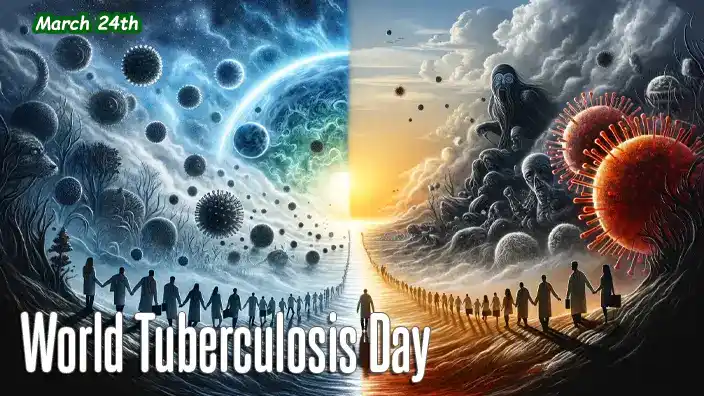
- Details
Tuberculosis (TB) poses significant health risks as one of the top 10 causes of death worldwide and the leading cause from a single infectious agent, ranking above HIV/AIDS. It primarily affects the lungs (pulmonary TB) but can also impact other parts of the body (extrapulmonary TB). TB is highly contagious; the bacteria spread through the air when an infected person coughs or sneezes. Without proper treatment, TB can be fatal. It is particularly dangerous for people with weakened immune systems, including those living with HIV, malnutrition, or diabetes. Moreover, the rise of drug-resistant TB forms complicates treatment, posing a major public health challenge and highlighting the urgent need for effective control measures.
Celebrated: Annually, on March 24th
World Tuberculosis Day commemorates the discovery of the TB-causing bacterium and highlights the global fight against this deadly disease.


- Details
Seagrass may not win any beauty contests or headline ocean documentaries, but it’s out there every day doing the kind of work that keeps the whole marine world from falling apart. It feeds manatees, shelters fish, protects coastlines, and even helps fight climate change—all without asking for applause. Frankly, if seagrass had a résumé, the rest of the ocean would be looking for new jobs.
Celebrated: Annually, on March 1st
Learn about seagrass ecosystems, their role in ocean health, and why World Seagrass Day highlights these vital underwater habitats.


- Details
A Good Hair Day is like winning the follicle lottery. You wake up, glance in the mirror, and—gasp—your hair is actually doing what it’s supposed to. No cowlicks, no frizz, no rogue strands sticking out like they’re trying to pick up a radio signal. It’s smooth, shiny, and bouncing with the confidence of someone who remembered their reusable bags at the grocery store. You weren’t planning to conquer the world today, but hey—when your hair shows up ready to lead, you just follow along.
Celebrated: Annually, on March 26th
Celebrate Good Hair Day with fun facts, hair history, psychology, and tips to boost confidence and tame your mane—because great hair deserves applause.


- Details
The great thing about Canberra Day is that it gives Aussies yet another excuse to fire up the barbie, crack open a cold one, and engage in the sacred art of friendly debate—usually about who cooks the best snags or whether tomato sauce belongs in the fridge. The air is filled with the unmistakable scent of sizzling meat, the occasional singed eyebrow from an overenthusiastic grill master, and the sound of someone yelling, “Chuck us another beer, mate!” Meanwhile, kids run wild, dodging rogue cricket balls, while an uncle attempts to explain the entire history of Canberra with a sausage in one hand and a tinnie in the other. It’s a day of food and fun, and, most importantly, reminding everyone that while Sydney and Melbourne might be flashier, Canberra gets a whole day off just for existing.
Celebrated: Annually, on the Second Monday in March
Experience Canberra Day, a lively homage to the city’s heritage, featuring festivals, fireworks, and community gatherings in the heart of Australia.

From Our Marks Catelog
-

Brussels sprouts: the tiny green orbs that have been sparking dinner table debates for...
-
Elegance, mystery, and just the right amount of arrogance—some things demand admiration without lifting...
-

National Cake Day is the one day of the year when it's socially acceptable to have your cake and eat...
-

Forget glow-in-the-dark snack cakes and cheese that comes in a spray can—there’s something wildly...
-
If there were an Olympic event for clumsiness, someone would be rolling down the hill, missing their...
-
Gazpacho Soup Day isn’t just a day to honor cold tomato soup; it’s a day to revel in the absurdity of...

