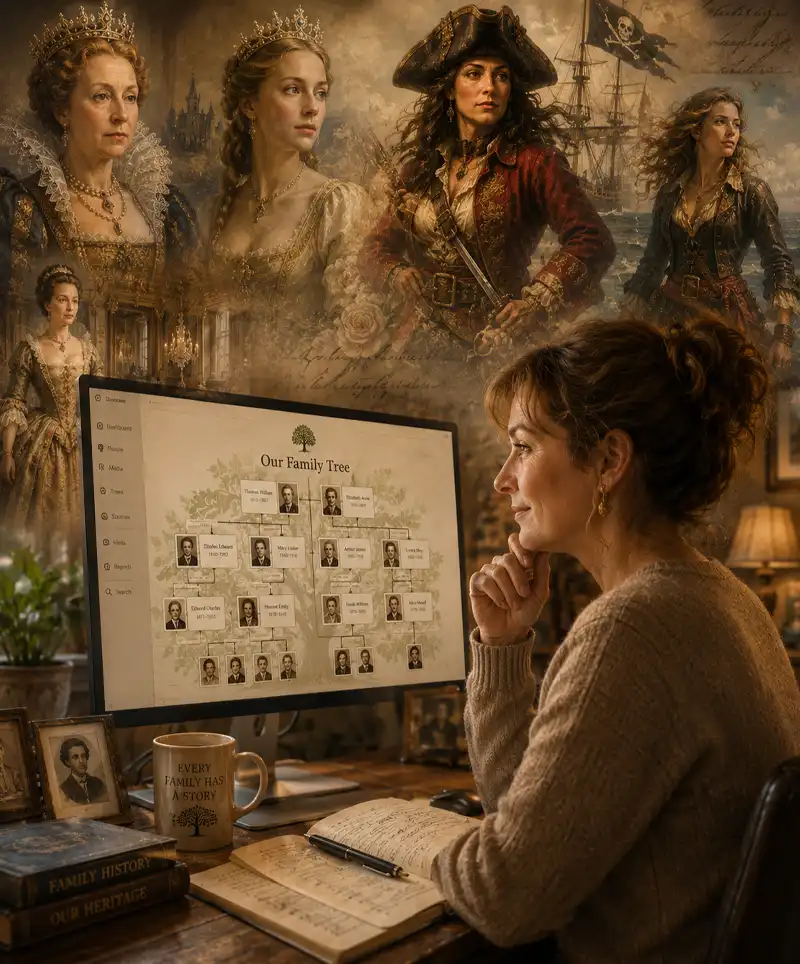
Digging Up Family Secrets Since Forever
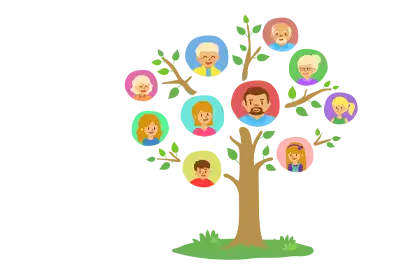
Every family has at least one mysterious relative. You know the one. The uncle nobody talks about, the great-aunt who “married into trouble,” or the ancestor who apparently fought in three wars, discovered gold, and once punched a bear. Whether those stories are true is another matter entirely, but that is exactly why National Genealogy Day exists. It is a celebration dedicated to tracing family history, uncovering long-lost connections, and discovering that your family tree may be less of a tree and more of a tangled jungle vine.
National Genealogy Day encourages people to research their ancestry, preserve family stories, and connect with generations that came before them. Thanks to modern technology, genealogy research has become one of the fastest-growing hobbies in the world. What once required dusty courthouse visits and hours turning microfilm reels can now be done from the comfort of your living room while wearing slippers and arguing with a DNA results website.
What Is National Genealogy Day?
National Genealogy Day is celebrated on the second Saturday in March and is dedicated to exploring family history, tracing ancestry, and preserving the stories of past generations. The day encourages people to dig into old records, organize family photographs, interview relatives, and uncover the fascinating — and sometimes downright strange — details hidden within their family trees.
The celebration shines a spotlight on genealogy, the study of family lineage and ancestral connections. Researchers often use birth certificates, census reports, military records, immigration documents, cemetery archives, and family stories to piece together their histories. Modern DNA testing has also added a powerful new tool, helping millions discover relatives and ethnic backgrounds they never knew existed.
For many people, genealogy becomes part detective work, part history lesson, and part emotional roller coaster. One moment you are discovering an ancestor who fought bravely in wartime, and the next you are learning someone in the family line was arrested for stealing livestock in 1892. Family trees are rarely boring.
In the past, genealogy research often required long visits to libraries, courthouses, cemeteries, and church archives. Today, online databases and DNA testing services have made ancestry research more accessible than ever before. Millions of people now use genealogy websites to search historical records, connect with distant relatives, and uncover details that previous generations never knew.
For many families, National Genealogy Day is also about preservation. Old photographs fade, memories disappear, and important stories can easily vanish if they are never recorded. The holiday serves as a reminder to capture those details while older relatives are still around to tell them. After all, once Grandma is gone, nobody may ever know why there is a mysterious photograph of a man standing beside a chicken wearing a bow tie.
The History of Genealogy Research
Genealogy has been practiced for centuries. Ancient rulers carefully recorded family lines to prove royal authority, inheritance rights, and social standing. In many cultures, preserving ancestry was considered essential because family history shaped everything from land ownership to political power.
In the United States, genealogy became especially popular during the late 19th and early 20th centuries. Historical societies, libraries, and churches began preserving records that researchers still use today. Over time, hobbyists evolved into serious family historians, documenting generations of relatives and organizing massive family reunions where everyone wears matching shirts and nobody remembers who half the people are.
The internet completely changed genealogy research. Digital archives, searchable databases, and DNA testing services made family history accessible to ordinary people. Suddenly, discovering your great-great-grandparents no longer required a detective badge and a train ticket.
Why National Genealogy Day Matters
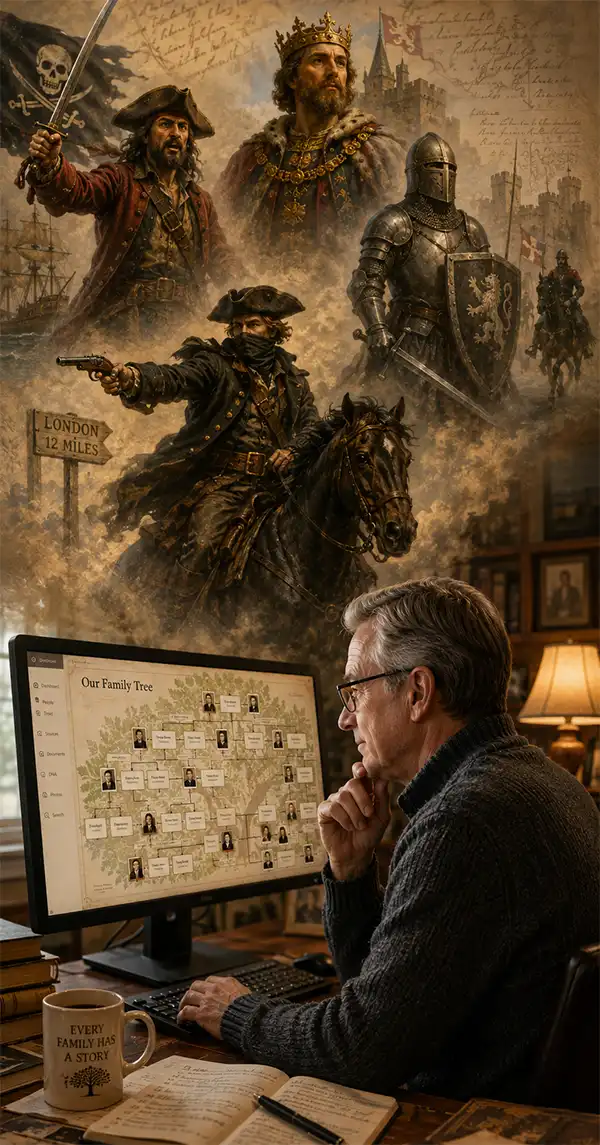
National Genealogy Day matters because family stories disappear quickly if nobody records them. One generation remembers the details. The next remembers fragments. By the third generation, someone claims Great Grandpa invented the toaster and escaped pirates on horseback.
Researching family history preserves memories that might otherwise vanish forever. Old letters, photographs, military medals, recipes, and oral traditions help families stay connected to their roots. Genealogy also helps people understand how historical events affected their ancestors, including immigration, wars, economic struggles, and cultural traditions.
For adopted individuals or people separated from biological relatives, genealogy research can provide emotional connections and important answers about heritage and identity.
It also reminds us that history is not just something that happened in textbooks. History happened to our families too.
The Rise of DNA Genealogy
One of the biggest changes in genealogy research has been the rise of consumer DNA testing. Millions of people have mailed tiny tubes of saliva across the country hoping to learn more about their ancestry.
Sometimes the results are fascinating. Sometimes they are confusing. Occasionally, they start arguments at Thanksgiving dinner that nobody was emotionally prepared for.
DNA genealogy can reveal ethnic origins, migration patterns, and unknown relatives. It has reunited separated families, solved historical mysteries, and even helped law enforcement identify unknown individuals in criminal investigations.
Still, traditional genealogy research remains important because DNA alone does not tell the full story. Records, photographs, and personal stories provide the human details behind the percentages and charts.
Famous Family Trees and Surprising Discoveries
Genealogy research has uncovered some remarkable family connections over the years. Numerous U.S. presidents have been linked through distant family lines, and many celebrities have discovered unexpected ancestral ties.
Some people uncover royal bloodlines. Others discover connections to historical events or famous figures. Many simply learn that their ancestors were hardworking farmers, laborers, soldiers, or immigrants who survived difficult circumstances to create better lives for future generations.
And occasionally someone discovers that their “family heirloom” is actually an old soup pot from 1948. Genealogy research is full of surprises.
How to Celebrate National Genealogy Day
One of the best ways to celebrate National Genealogy Day is by talking to older relatives. Family stories are often more valuable than official records because they preserve personality, humor, and everyday details that documents cannot capture.
People also celebrate by organizing old photographs, building family trees, scanning historical documents, or visiting cemeteries and hometowns connected to their ancestors. Others spend the day exploring genealogy websites or taking DNA ancestry tests.
Some families turn genealogy into a group activity, comparing research findings and piecing together long-forgotten branches of the family tree. Just be prepared for the possibility that Cousin Larry may not appreciate learning he is technically related to everybody within three counties.
Fun Facts About Genealogy
Genealogy is full of surprises, mysteries, and occasional moments where you discover half your family tree appears to be named John, William, Mary, or Elizabeth. From royal bloodlines to scandalous family secrets and relatives who somehow vanished into history right after “borrowing” a horse, the world of ancestry research is packed with strange and fascinating discoveries. Here are a few fun facts that prove your family tree may have more twists than a daytime soap opera.
- Genealogy is one of the most popular hobbies in the world, especially in the United States and Europe.
- The longest documented family tree belongs to the Chinese philosopher Confucius and spans more than 2,500 years.
- Census records are among the most valuable tools for genealogy researchers because they capture snapshots of entire households over time.
- Many genealogy enthusiasts refer to themselves as “genealogists,” though some jokingly prefer “professional snoops.”
- The television series Who Do You Think You Are? helped fuel public interest in ancestry research by revealing the family histories of celebrities.
The Lasting Appeal of Family History
National Genealogy Day reminds us that every family has a story worth preserving. Some stories are heroic, others are heartbreaking, and many are hilariously strange. Together, they form the foundation of who we are.
Genealogy research connects generations across time, giving modern families a clearer understanding of the people who came before them. It also proves that no matter how ordinary life may seem today, somebody several generations from now may look back at us with fascination, confusion, and perhaps mild concern over how many photographs we took of our dinners.