Mark The Days - March

March is the month that can’t make up its mind—snow boots in the morning, flip-flops by dinner. It’s like the year’s awkward teenager: moody, unpredictable, and occasionally dressed like a leprechaun. One minute you're bracing for a blizzard, the next you're sunburned from walking to the mailbox. Somewhere in the chaos, we celebrate pi, potatoes, poetry, and the mystical power of green beer. March is when things start to wake up, thaw out, and go just a little sideways. And frankly, we wouldn’t have it any other way.

- Details
Before movies lived on hard drives, clouds, or mysterious “servers somewhere,” they lived on reels—long, fragile strips of film that whirred, clicked, and occasionally misbehaved in projection booths around the world. Reel Film Day is a celebration of that beautifully mechanical era, when movies had weight, texture, and the very real possibility of ending abruptly if someone missed a cue. Reel Film Day invites us to appreciate the craft, patience, and controlled chaos that once powered cinema—no buffering required.
Celebrated: Annually, on March 5th
Reel Film Day on March 5th celebrates classic filmmaking, film reels, and the analog craft that shaped cinema before the digital age.

- Details
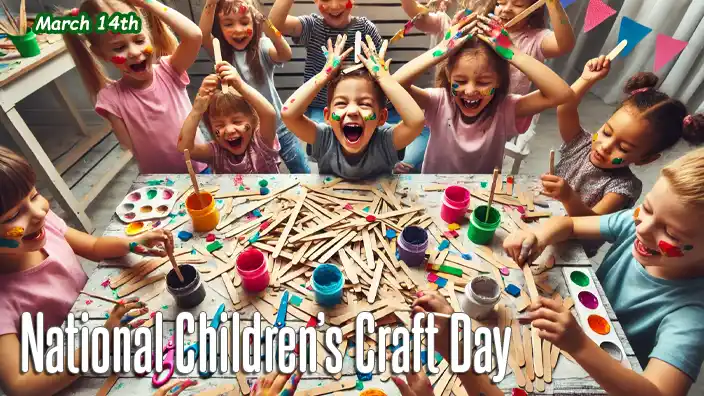
It starts with good intentions—just a simple craft project, a little glue, a few popsicle sticks. But within minutes, chaos erupts. The glitter? Everywhere. The glue? Somehow in their hair, on the dog, and mysteriously on the ceiling. Scissors disappear, only to reappear in the hands of the one child who definitely shouldn’t have them. And despite having an entire table to work on, the markers always find their way onto the walls. But in the end, after the paint dries (on both the paper and their faces), they hold up their creation like a masterpiece, beaming with pride—because in their eyes, that lopsided, glue-covered mess is nothing short of genius.
Celebrated: Annually, on March 14th
Discover the significance of National Children’s Craft Day, its history, and why arts and crafts are essential for children's growth and creativity.


- Details
Certified nurses are like superheroes, only with stethoscopes instead of capes and an uncanny ability to function on caffeine and three hours of sleep. They can decipher doctor’s handwriting that looks like ancient hieroglyphics, find a vein in the dark with one hand while holding a patient’s chart in the other, and somehow remain calm when a patient insists their cousin’s neighbor’s herbal tea is better than prescribed medication. They’ve mastered the art of the “I’m listening” nod while speed-walking down a hallway, and their ability to keep a straight face when hearing the wildest medical complaints deserves an award. If multitasking were an Olympic sport, certified nurses would take the gold every time!
Celebrated: Annually, on March 19th
Discover the importance of Certified Nurses Day, recognizing the expertise and commitment of certified nurses who elevate healthcare standards and patient outcomes.

- Details
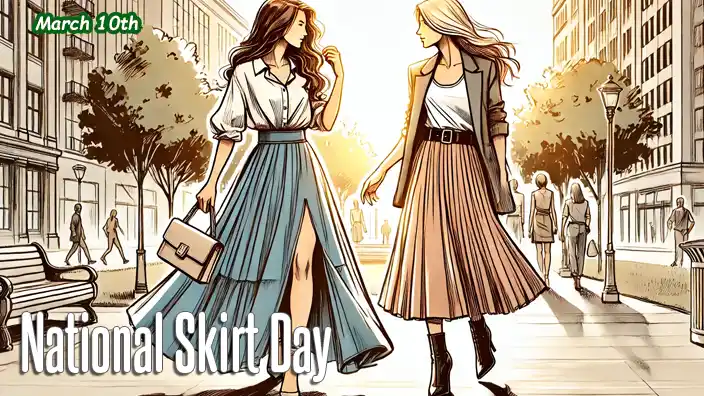
The skirt is the ultimate fashion paradox—it’s both breezy and dignified, rebellious and refined. It’s the only piece of clothing that lets you twirl like a majestic ballerina one moment and battle an unexpected gust of wind like an action hero the next. Wear it too short, and suddenly, every chair feels like a strategic challenge. Wear it too long, and you might accidentally mop the floor with style. But no matter the length, fabric, or era, the skirt remains a timeless wardrobe MVP—because let’s face it, pants just don’t have the same flair for drama!
Celebrated: Annually, on March 10th
Celebrate National Skirt Day by exploring the rich history and diverse styles of skirts, a timeless fashion piece for all. Embrace your unique style today!


- Details
Behold the most persuasive argument ever placed on a dinner table. No speeches required, no debate necessary — just a quiet plate of Oreos patiently waiting to test your willpower. Spoiler alert: your willpower never stood a chance.
Celebrated: Annually, on March 6th
Discover the story of the Oreo, its surprising history, traditions, and tasty ways to celebrate National Oreo Cookie Day.

- Details
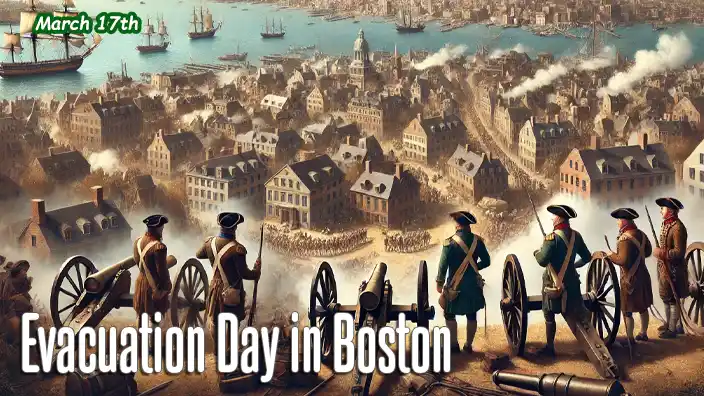
As the British fleet sailed out of Boston Harbor on March 17, 1776, the American revolutionaries stood atop Dorchester Heights, arms crossed, probably muttering something like, “Don’t let the harbor hit you on the way out!” After nearly a year of occupying the city, General Howe and his redcoats were finally making their dramatic exit—though it was less of a charge into battle and more of a frantic pack-your-things-and-run situation. One can only imagine the British officers on deck, peering back at the shoreline, seeing Washington’s men waving smugly and the Grand Union Flag flapping proudly over Boston, thinking, “Well, this is awkward.” Meanwhile, Henry Knox, the mastermind behind the whole cannon-moving stunt, was probably in the background grinning ear to ear, already contemplating his next impossible mission—like, say, convincing Congress that his soldiers deserved a raise.
Celebrated: Annually, on March 17th
Explore the fascinating history of Evacuation Day, Boston's lesser-known holiday, commemorating the bloodless victory of George Washington's forces in 1776.


- Details
If wildlife could send us a group text, it would probably read: “We were here first.” World Wildlife Day is our annual reminder that the planet is not a single-species operation. From elephants roaming the savanna to bees running the world’s most important unpaid internship program, nature has been quietly keeping things balanced while we argue about Wi-Fi speeds. Maybe it’s time we return the favor.
Celebrated: Annually, on March 3rd
World Wildlife Day highlights conservation, biodiversity, and why protecting animals and ecosystems is vital for our planet’s future.


- Details
Reading to a child is one of those rare moments when time slows down and the world shrinks to the size of a picture book. One minute you’re a responsible adult, and the next you’re doing a surprisingly convincing dragon voice while a small critic in pajamas corrects your every mispronounced word. Pages get turned too early, favorite lines must be repeated exactly, and heaven help you if you try to skip a paragraph. But somewhere between the giggles and the dramatic sound effects, something quietly wonderful happens. The child isn’t just hearing a story—they’re learning that your voice is a safe place, that books are doors to other worlds, and that a few minutes together at the end of the day can feel like the best part of it.
Celebrated: Annually, on March 19th
Celebrate International Read to Me Day by sharing stories, building bonds, and inspiring a love of reading through the simple joy of reading aloud.


- Details
There are musical instruments, and then there are bagpipes—the proud, booming declaration that subtlety has officially left the building. Few sounds in human history have managed to inspire battlefield courage, ceremonial dignity, and the occasional startled tourist quite like the mighty bagpipe. International Bagpipe Day celebrates this legendary instrument in all its thunderous glory, honoring centuries of tradition, cultural pride, and the brave souls who learned to master an instrument that essentially requires wrestling music out of an inflated airbag.
Celebrated: Annually, on March 10th
Celebrate International Bagpipe Day and the world’s boldest instrument—proving for centuries that music, history, and impressive lung power make a memorable combination


- Details
Imagine a world where cookies are the currency and young entrepreneurs wield power with a smile and a sash full of badges — welcome to The Girl Scouts. These intrepid adventurers navigate the wilds of suburban cookie sales with the cunning of seasoned business moguls, all while mastering survival skills that could put any reality TV survival show contestant to shame. Picture a troop leader, map and compass in hand, guiding her team through the treacherous terrain of a local park, only to end the expedition with a lesson on how to craft the perfect s'more. Yes, in the universe of the Girl Scouts, 'roughing it' means running out of Thin Mints, and the most feared creature is the mythical "Sold-Out Sign" beast. Here, badges are not just awards; they're battle scars from the front lines of crafting, camping, and community service, proudly worn on their sashes like medals of honor.
Celebrated: Annually, on March 12th
Discover the legacy of empowerment and community service behind the Girl Scouts of the USA with a history of shaping leaders and changemakers.


- Details
When aliens finally make first contact, one of two things will happen: either they’ll be incredibly advanced and share mind-blowing technology, or they’ll take one look at our reality TV shows and decide to keep us quarantined for the safety of the universe. Imagine the moment—world leaders gather, cameras rolling, humanity holding its breath, and then the alien steps forward and says, “Take me to your leader,” only to be handed a smartphone and told, “That depends… do you mean politically, socially, or on Twitter?” At that point, they might just turn their spaceship around and leave us a one-star review on the intergalactic Yelp.
Celebrated: Annually, on March 15th
Explore the history of World Contact Day, from its telepathic origins in 1953 to modern scientific efforts in the search for alien life.

- Details
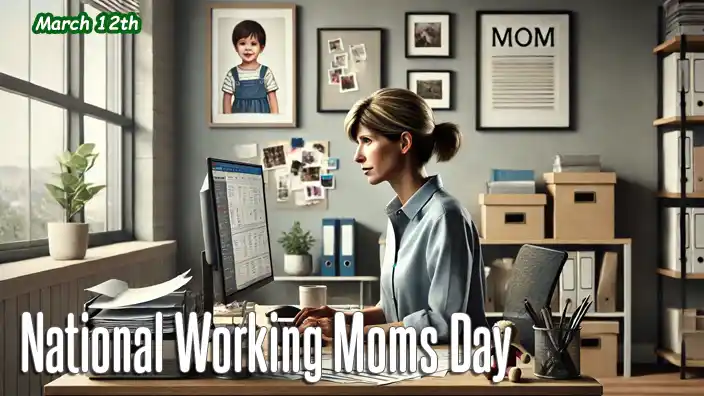
Working moms have mastered a level of multitasking that would make NASA engineers weep. They can schedule a Zoom meeting, pack a lunch, and locate a missing shoe—all while negotiating a peace treaty between their arguing kids. Their coffee intake is directly proportional to the number of unanswered emails, and their idea of “me time” is an uninterrupted trip to the grocery store. They can function on three hours of sleep, remember every school event, and still pull off a last-minute Halloween costume like a seasoned magician. Forget superheroes—working moms are the real ones out here saving the day, one chaotic morning at a time!
Celebrated: Annually, on March 12th
Explore the evolution of working moms, their superpowers, and how they reshape the workforce while juggling family life every day.

- Details
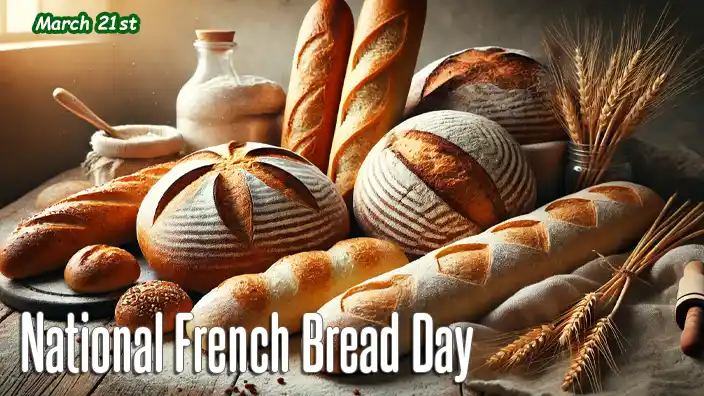
French bread is proof that sometimes, the simplest things in life are also the most dangerous. One moment, you're joyfully tearing into a baguette, and the next, you're engaged in a full-blown wrestling match with a loaf that's sturdier than your willpower. That crust? It's basically edible armor. And let’s not forget the silent but deadly crumbs—those little ninjas find their way into every crevice of your life, from your lap to your couch cushions. But despite the minor hazards, we keep coming back for more because, let’s be honest—few things in life are as satisfying as conquering a fresh, warm, crusty baguette.
Celebrated: Annually, on March 21st
Join the celebration of National French Bread Day on March 21st! Indulge in crispy baguettes and learn about their delicious history and versatility.

- Details
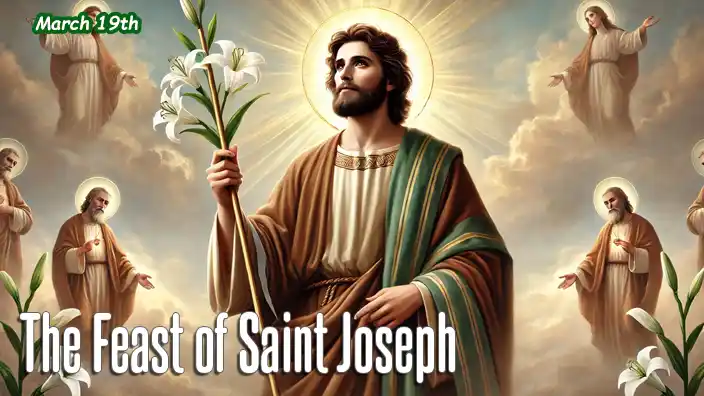
Saint Joseph might just be the most underrated dad in history. Imagine raising the Son of God—no pressure, right? While other dads were teaching their kids how to throw a rock, Joseph was probably making sure Jesus didn’t accidentally perform miracles at the dinner table. He worked tirelessly as a carpenter, proving that even in divine households, somebody still had to fix that wobbly chair. Silent but steadfast, Joseph didn’t get a lot of lines in the Bible, but his actions spoke louder than words—probably because he was too busy making sure young Jesus didn’t walk on water before bath time.
Celebrated: Annually, on March 19th
Discover the life of Saint Joseph, a humble carpenter and devoted father, and learn how his legacy continues to inspire and protect families today.

From Our Marks Catelog
-

Brussels sprouts: the tiny green orbs that have been sparking dinner table debates for...
-
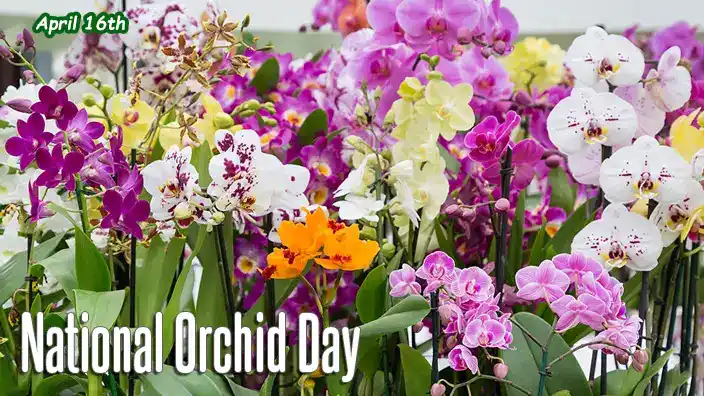
Elegance, mystery, and just the right amount of arrogance—some things demand admiration without lifting...
-
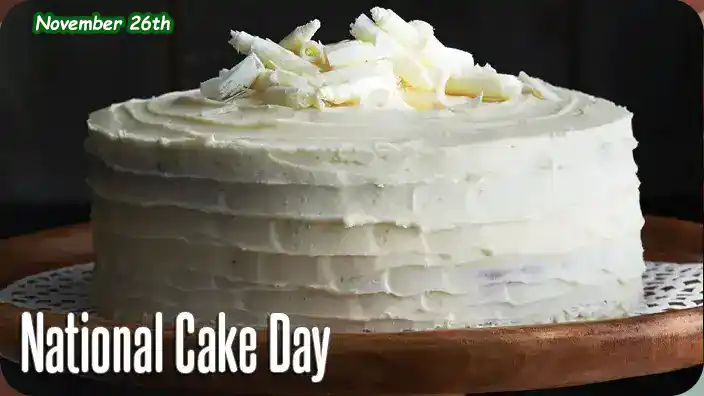
National Cake Day is the one day of the year when it's socially acceptable to have your cake and eat...
-

Forget glow-in-the-dark snack cakes and cheese that comes in a spray can—there’s something wildly...
-
If there were an Olympic event for clumsiness, someone would be rolling down the hill, missing their...
-
Gazpacho Soup Day isn’t just a day to honor cold tomato soup; it’s a day to revel in the absurdity of...

