Sharing the Planet, One Paw at a Time
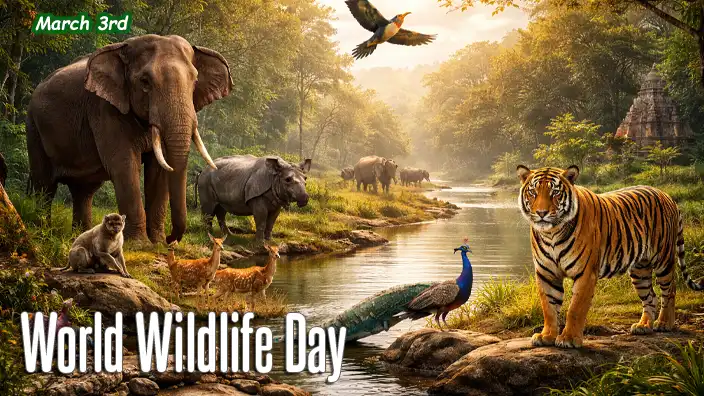
If the animals ever hold a press conference, you can bet they’ll have a few things to say about how we’ve been running the place. World Wildlife Day is our annual reminder that this planet was not built exclusively for rush hour traffic and online shopping. It belongs just as much to elephants, eagles, sea turtles, and that suspicious raccoon who keeps checking your trash cans at midnight.
World Wildlife Day is observed every year on March 3rd. The date marks the anniversary of the signing of CITES (the Convention on International Trade in Endangered Species of Wild Fauna and Flora) in 1973. In 2013, the United Nations officially proclaimed March 3rd as World Wildlife Day to celebrate and raise awareness of the world’s wild animals and plants. In short, this is not just about cuddly pandas and photogenic dolphins. It is about ecosystems, biodiversity, and the intricate web of life that sustains us all.
Why Wildlife Actually Matters (Yes, Even the Weird Ones)
Wildlife does more than decorate nature documentaries or give us something majestic to slap on a calendar. Every species, from the glamorous lion to the humble earthworm, plays a role in keeping ecosystems functioning. Nature is not random chaos; it is a system. And systems, as we all know, do not perform well when key parts go missing.
Take pollinators. Bees, butterflies, birds, and even bats are responsible for pollinating a significant portion of the crops humans rely on. No pollinators, no almonds. No berries. No coffee. And if you think people are cranky now, imagine a world without coffee. Civilization might not survive that one.
Predators, often misunderstood and unfairly cast as villains, are essential for maintaining balance. They prevent herbivore populations from exploding, which protects vegetation and allows entire landscapes to regenerate. Remove top predators and ecosystems can spiral into overgrazed, degraded environments. It is not sentimental; it is ecological math.
Then there are the less glamorous contributors. Decomposers like fungi, insects, and bacteria break down organic matter, returning nutrients to the soil. Without them, forests would choke on their own fallen leaves and life would grind to a halt. It is not flashy work, but it is foundational.
Wetlands filter water. Forests absorb carbon dioxide and release oxygen. Mangroves protect coastlines from storms. Coral reefs support marine biodiversity and protect shores from erosion. These natural systems perform services that would cost billions, if not trillions, of dollars to replicate artificially—and even then, we would probably mess it up.
Biodiversity also supports medical discovery. Many medicines originate from compounds found in plants and animals. When a species disappears, potential medical breakthroughs can vanish with it. That is not just a loss for nature lovers; it is a loss for humanity.
And yes, even the so-called “weird” species matter. The blobfish, the aye-aye, the pangolin—these are not evolutionary mistakes. They are specialized organisms adapted to specific niches. The fact that they do not look like something you would cuddle does not make them expendable.

In the end, wildlife matters because it sustains the systems that sustain us. Food, water, clean air, climate stability—these are not luxuries. They are necessities. We are not separate from wildlife, observing it from a comfortable distance. We are part of the same living network.
So the next time you see a snake, a bat, or a bug that makes you recoil, remember: that creature is doing its job. The real question is whether we are doing ours.
The Threats Wildlife Face
Wildlife is resilient, but it is not invincible. For thousands of years, species adapted to shifting climates, predators, and natural disasters. What they were not designed to handle was highways slicing through migration routes, forests cleared in months instead of centuries, and oceans filling with plastic faster than fish can swim. The modern world moves at a pace nature simply did not sign up for.
Today’s threats are layered and interconnected. Habitat loss pushes animals into smaller spaces. Climate change alters food sources and breeding patterns. Pollution poisons land and sea. Illegal trade targets rare species precisely because they are rare. It is not one single villain twirling a mustache. It is a combination of pressures that, together, strain ecosystems to their limits.
Let’s not sugarcoat it. Wildlife today faces serious pressure from:
- Habitat loss due to urban expansion and agriculture
- Climate change is altering ecosystems
- Pollution in oceans, rivers, and forests
- Illegal wildlife trade
- Overfishing and overhunting
Species are disappearing at rates far beyond natural levels of extinction. When a species vanishes, it does not politely wave goodbye. It takes its ecological role with it.
The illegal wildlife trade alone is worth billions of dollars annually. That means endangered animals are being poached not just by desperate individuals but by organized criminal networks. It is not a minor issue. It is a global one.
The Role of Conservation Efforts
The good news? Conservation works when people commit to it.
Protected areas, wildlife corridors, anti-poaching efforts, and sustainable practices have helped recover species once on the brink. The bald eagle in the United States made a remarkable comeback thanks to habitat protection and banning harmful pesticides. The giant panda population has improved due to coordinated conservation strategies.
Conservation is not about freezing the world in time. It is about smart management, balancing human needs with ecological responsibility, and planning for future generations.
Everyday Actions That Actually Help
You do not need to move into a treehouse and swear off electricity to support wildlife. Practical steps make a difference:
- Support sustainable products and certified seafood
- Reduce plastic use
- Conserve water and energy
- Support reputable conservation organizations
- Learn about local species and habitats
- Teach children to respect wildlife instead of fearing it
And here is a radical idea: spend time outdoors. When people value something, they are more likely to protect it.
A Little Perspective
World Wildlife Day is not about guilt. It is about awareness and responsibility. Humans are remarkably capable creatures. We have built cities, crossed oceans, and put satellites in orbit. Surely we can manage to share the planet without driving every other species into retirement.
The truth is simple. Healthy wildlife populations mean healthy ecosystems. Healthy ecosystems mean a stable climate, reliable food systems, and cleaner air and water. This is not abstract. It is personal.

So on March 3rd, take a moment to appreciate the world beyond sidewalks and screens. Watch birds. Visit a park. Learn about a species you have never heard of. Support conservation efforts.
And if you see that raccoon again, maybe secure the trash lid. Conservation is important, but so is common sense.