Mark The Days - March

March is the month that can’t make up its mind—snow boots in the morning, flip-flops by dinner. It’s like the year’s awkward teenager: moody, unpredictable, and occasionally dressed like a leprechaun. One minute you're bracing for a blizzard, the next you're sunburned from walking to the mailbox. Somewhere in the chaos, we celebrate pi, potatoes, poetry, and the mystical power of green beer. March is when things start to wake up, thaw out, and go just a little sideways. And frankly, we wouldn’t have it any other way.
- Details
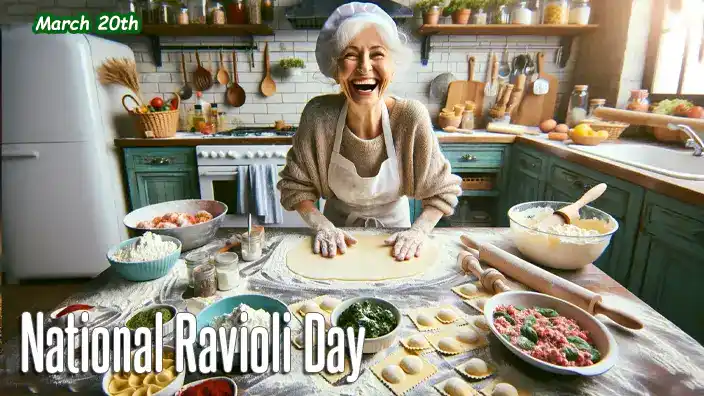
Versatile, compact, and endlessly delightful, ravioli takes pasta to a whole new level of fun. Each little pocket is like a culinary surprise package, daring you to guess its contents—whether it’s a classic ricotta and spinach filling or something adventurous like pumpkin and sage. It’s pasta dressed to impress, effortlessly blending comfort food vibes with gourmet flair. Even if it’s straight from a can, ravioli brings a touch of elegance to the table, reminding us all that good things truly do come in small, delicious packages.
Celebrated: Annually, on March 20th
Explore the rich history and global variations of ravioli, from its Italian origins to modern culinary creativity. Celebrate National Ravioli Day with joy!


- Details
The dish dares to ask, "What if we took a tough cut of beef, soaked it in a brine strong enough to challenge the Dead Sea, and then paired it with a vegetable known for its...distinctive aroma?" It's like the culinary world's odd couple - one's salty, the other's a gas, and together, they create a meal that captures millions' hearts and stomachs. This duo proves that with enough seasoning and patience, even the most unlikely pair can turn into something spectacularly delicious. Just remember to crack a window open; it's not the dish's flavor that lingers in the air. It's a reminder of the hearty, humorous meal you just enjoyed.
Celebrated: Annually, on March 17th
Explore the evolution of corned beef and cabbage from an immigrant adaptation to a cherished American tradition.


- Details
It starts with a tux that doesn’t quite fit, a dress that required six Pinterest boards to choose, and a frantic search for a boutonniere that isn’t wilted. Add in a three-hour hair appointment, a pre-dance dinner where no one actually eats, and a dance floor scattered with uncomfortable shoes by 9 p.m.—and voilà, the magic of prom. It's like a glamorous fairy tale... if the fairy godmother also forgot to mention the glitter gets everywhere and you'll definitely be photobombed by someone doing the worm.
Celebrated: Annually, on March 31st
Celebrate National Prom Day on March 31st—honoring teenage tradition, glitzy outfits, and the unforgettable dance that marks the end of high school.


- Details
Barbie has had more careers than most people have had hot meals, and she’s done it all in heels. She’s been an astronaut, a doctor, a CEO, and even a mermaid—because why stop at reality when you can have fins? She’s aged gracefully over the decades (which is impressive considering she’s permanently 19), and despite never bending her elbows properly, she’s managed to build an empire. Meanwhile, poor Ken has spent 60 years as an accessory, always standing in the background with his molded plastic hair, wondering if he’ll ever get his own Dreamhouse.
Celebrated: Annually, on March 9th
Explore the iconic journey of Barbie, a doll that has inspired generations with her diverse careers and timeless style. Join the celebration of National Barbie Day.


- Details
Saint Joseph might just be the most underrated dad in history. Imagine raising the Son of God—no pressure, right? While other dads were teaching their kids how to throw a rock, Joseph was probably making sure Jesus didn’t accidentally perform miracles at the dinner table. He worked tirelessly as a carpenter, proving that even in divine households, somebody still had to fix that wobbly chair. Silent but steadfast, Joseph didn’t get a lot of lines in the Bible, but his actions spoke louder than words—probably because he was too busy making sure young Jesus didn’t walk on water before bath time.
Celebrated: Annually, on March 19th
Discover the life of Saint Joseph, a humble carpenter and devoted father, and learn how his legacy continues to inspire and protect families today.


- Details
National Fruit Compote Day is here to remind us that sometimes the fanciest-sounding dishes are just fruit that decided to dress up a little. No baking degree required, no complicated techniques—just fruit, a bit of sweetness, and the patience to not eat it straight from the pot (a challenge many of us fail with dignity).
Celebrated: Annually, on March 1st
Join us for National Fruit Compote Day with easy ideas, history, and tasty ways to enjoy this simple, versatile fruit dish at home.


- Details
The skirt is the ultimate fashion paradox—it’s both breezy and dignified, rebellious and refined. It’s the only piece of clothing that lets you twirl like a majestic ballerina one moment and battle an unexpected gust of wind like an action hero the next. Wear it too short, and suddenly, every chair feels like a strategic challenge. Wear it too long, and you might accidentally mop the floor with style. But no matter the length, fabric, or era, the skirt remains a timeless wardrobe MVP—because let’s face it, pants just don’t have the same flair for drama!
Celebrated: Annually, on March 10th
Celebrate National Skirt Day by exploring the rich history and diverse styles of skirts, a timeless fashion piece for all. Embrace your unique style today!

- Details
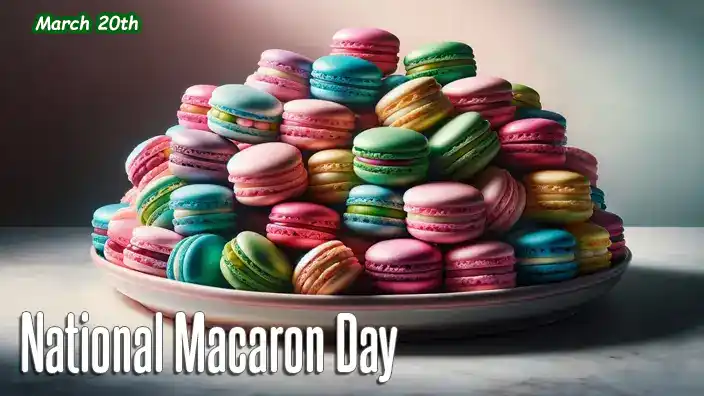
Delicate, colorful, and deceptively difficult to make, these tiny treats have an attitude that rivals even the most temperamental soufflé. One wrong move, and they crack, collapse, or worse—refuse to grow their signature little feet, leaving you with expensive almond dust instead of an elegant dessert. Yet, despite their diva-like demands, they have a way of making anyone feel fancy, as if biting into one instantly elevates you to Parisian royalty. Just don’t mistake them for their coconut cousin, or you’ll have an angry pastry chef chasing you down with a rolling pin.
Celebrated: Annually, on March 20th
National Macaron Day: A celebration of the popular petite pastry known for its array of flavors, bringing joy and sweetness to palates worldwide.


- Details
Reading to a child is one of those rare moments when time slows down and the world shrinks to the size of a picture book. One minute you’re a responsible adult, and the next you’re doing a surprisingly convincing dragon voice while a small critic in pajamas corrects your every mispronounced word. Pages get turned too early, favorite lines must be repeated exactly, and heaven help you if you try to skip a paragraph. But somewhere between the giggles and the dramatic sound effects, something quietly wonderful happens. The child isn’t just hearing a story—they’re learning that your voice is a safe place, that books are doors to other worlds, and that a few minutes together at the end of the day can feel like the best part of it.
Celebrated: Annually, on March 19th
Celebrate International Read to Me Day by sharing stories, building bonds, and inspiring a love of reading through the simple joy of reading aloud.


- Details
Wearing white coats that somehow attract every coffee stain in a five-mile radius, these miracle-workers juggle sleep deprivation, mysterious rashes, and a patient base convinced WebMD holds ancient truths. They can pronounce drug names with 17 syllables but will call your son’s pet gecko “interesting” because it blinked at them funny. Somewhere between their fifth cup of coffee and the 2 a.m. page about “weird foot tingling,” they still manage to save lives, calm nerves, and pretend they don’t mind your detailed dream analysis during a physical.
Celebrated: Annually, on March 30th
Celebrate National Doctors Day on March 30 with a look at the history, humor, and heart behind the people who keep us healthy and (mostly) stitched together.


- Details
If there were an Olympic event for clumsiness, someone would be rolling down the hill, missing their cue, and landing face-first in a pile of bamboo—only to sit there happily munching away as if that was the plan all along. They live life at their own pace, prioritizing snacks, naps, and the occasional awkward tumble, all while maintaining an expression that says, “I meant to do that.” With a diet that requires them to eat for most of the day and an energy level that rarely rises above "mildly interested," it's a wonder they even manage to function. And yet, against all odds, they continue to exist, proving that sometimes, just being adorably unbothered is enough to survive.
Celebrated: Annually, on March 16th
Explore the fascinating world of giant pandas, their ancient lineage, and their role as symbols of wildlife conservation on National Panda Day.


- Details
If wildlife could send us a group text, it would probably read: “We were here first.” World Wildlife Day is our annual reminder that the planet is not a single-species operation. From elephants roaming the savanna to bees running the world’s most important unpaid internship program, nature has been quietly keeping things balanced while we argue about Wi-Fi speeds. Maybe it’s time we return the favor.
Celebrated: Annually, on March 3rd
World Wildlife Day highlights conservation, biodiversity, and why protecting animals and ecosystems is vital for our planet’s future.


- Details
Science is the only field where you can accidentally blow something up and still get published. It's the noble art of poking the universe with a stick to see what happens—and then writing a 40-page paper about the stick. From the folks who figured out how to split atoms (on purpose!) to the ones who gave us glow-in-the-dark cats, science proves that curiosity may have killed the cat, but it also cloned it, studied its genome, and published the results in Nature.
Celebrated: Annually, on March 26th
Celebrate National Science Appreciation Day on April 14th by exploring fun facts, famous scientists, and the wonders of how science shapes everyday life.


- Details
Smiling works in almost any situation. Forgot someone’s name? Smile. Tripped over absolutely nothing in front of a crowd? Smile. Accidentally replied “you too” when the waiter said “enjoy your meal”? Yep, smile. It’s your universal get-out-of-awkwardness-free card, a magical shield that says, “Hey, I’m human, and life’s ridiculous sometimes.” Plus, a big goofy grin is scientifically proven to make people wonder what you’re up to—so even if you don’t have it all together, at least they’ll think you’re having the time of your life!
Celebrated: Annually, on March 1st
Uncover the benefits of smiling, from boosting mood to improving health. Join us in celebrating Share a Smile Day and spread happiness wherever you go!

- Details
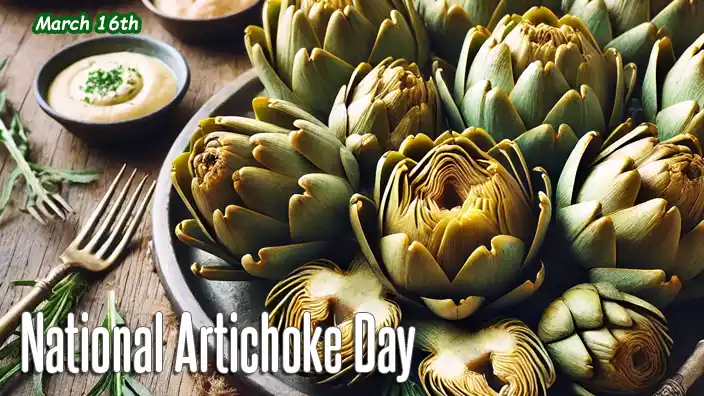
Peeling an artichoke is a bit like trying to unwrap a particularly stubborn gift—except instead of shiny wrapping paper, you get a spiky green fortress daring you to reach the treasure inside. It’s nature’s way of saying, “If you want my delicious heart, you’re going to have to work for it.” And work, you do—pulling off leaves one by one like some kind of culinary archaeologist, scraping tiny bits of edible goodness with your teeth, all while questioning if this is truly the most efficient way to eat a vegetable. But then, at last, you reach the artichoke heart—soft, buttery, and totally worth the struggle. It’s basically the food equivalent of a tough guy with a heart of gold—intimidating on the outside but pure delight on the inside.
Celebrated: Annually, on March 16th
Discover the fascinating world of artichokes, from their Mediterranean origins to their nutritional benefits and fun facts, all celebrated on National Artichoke Day.


- Details
On Saint Patrick's Day, it's universally accepted that everyone's at least a wee bit Irish, even if the closest they've come to Ireland is choosing the green crayon over the blue one. It's the one day when wearing green from head to toe is considered stylish rather than a bold fashion statement. As for the rivers dyed green, beers turned emerald, and folks suddenly finding any excuse to claim Irish ancestry, we can only say, "Sure, and isn't it a grand day to celebrate?" Remember, on March 17th, the only way to avoid being pinched by leprechauns—or your cheeky friends—is by embracing the green. So, dust off your shamrock glasses, practice saying "Sláinte!" without spitting on the person next to you, and prepare for a day filled with laughter, questionable accents, and maybe just a touch too much enthusiasm for corned beef and cabbage.
Celebrated: Annually, on March 17th
Explore the vibrant traditions and history of Saint Patrick's Day, a global celebration of Irish heritage and whimsical festivities. Join in the fun and joy.


- Details
Every March 20, grills across America nervously glance over their propane tanks as Great American Meatout Day encourages the nation to flirt shamelessly with vegetables. It’s the one day when carrots feel empowered, beans gain confidence, and even the most devoted burger enthusiast may cautiously whisper, “Alright, let’s see what this veggie burger can do.” Whether you’re embracing plant-based living or simply giving your arteries a brief holiday, this observance proves that skipping meat for a day doesn’t mean sacrificing flavor—just perhaps a little bacon-induced emotional support.
Celebrated: Annually, on March 20th
Join us for the Great American Meatout Day to learn its history, benefits, and celebration ideas while exploring healthy, sustainable alternatives to meat.


- Details
Certified nurses are like superheroes, only with stethoscopes instead of capes and an uncanny ability to function on caffeine and three hours of sleep. They can decipher doctor’s handwriting that looks like ancient hieroglyphics, find a vein in the dark with one hand while holding a patient’s chart in the other, and somehow remain calm when a patient insists their cousin’s neighbor’s herbal tea is better than prescribed medication. They’ve mastered the art of the “I’m listening” nod while speed-walking down a hallway, and their ability to keep a straight face when hearing the wildest medical complaints deserves an award. If multitasking were an Olympic sport, certified nurses would take the gold every time!
Celebrated: Annually, on March 19th
Discover the importance of Certified Nurses Day, recognizing the expertise and commitment of certified nurses who elevate healthcare standards and patient outcomes.

From Our Marks Catelog
-

Brussels sprouts: the tiny green orbs that have been sparking dinner table debates for...
-
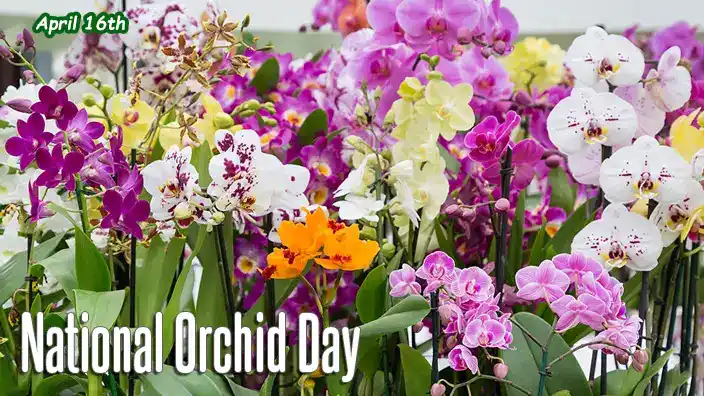
Elegance, mystery, and just the right amount of arrogance—some things demand admiration without lifting...
-

National Cake Day is the one day of the year when it's socially acceptable to have your cake and eat...
-

Forget glow-in-the-dark snack cakes and cheese that comes in a spray can—there’s something wildly...
-
If there were an Olympic event for clumsiness, someone would be rolling down the hill, missing their...
-

Gazpacho Soup Day isn’t just a day to honor cold tomato soup; it’s a day to revel in the absurdity of...


