Mark The Days - March

March is the month that can’t make up its mind—snow boots in the morning, flip-flops by dinner. It’s like the year’s awkward teenager: moody, unpredictable, and occasionally dressed like a leprechaun. One minute you're bracing for a blizzard, the next you're sunburned from walking to the mailbox. Somewhere in the chaos, we celebrate pi, potatoes, poetry, and the mystical power of green beer. March is when things start to wake up, thaw out, and go just a little sideways. And frankly, we wouldn’t have it any other way.

- Details
Goofing off is the unsung hero of mental health—a rebellious act of joy sandwiched between “I should be working” and “Eh, it can wait.” It’s when you suddenly decide that organizing paperclips by color or building a rubber band ball is more important than your actual job. Your to-do list stares at you in despair, but you? You’re perfecting your chair spin technique like it’s an Olympic sport. And somehow, despite accomplishing absolutely nothing, you feel weirdly accomplished.
Celebrated: Annually, on March 22nd
Celebrate National Goof Off Day with laughs, fun facts, and science-backed reasons to embrace silliness and take a well-earned break from adulting.

- Details
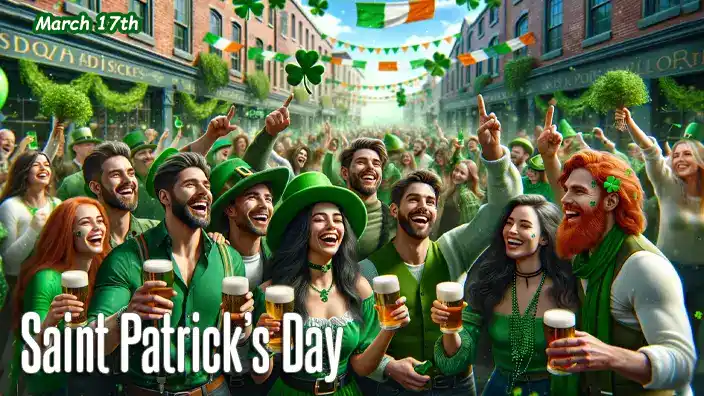
On Saint Patrick's Day, it's universally accepted that everyone's at least a wee bit Irish, even if the closest they've come to Ireland is choosing the green crayon over the blue one. It's the one day when wearing green from head to toe is considered stylish rather than a bold fashion statement. As for the rivers dyed green, beers turned emerald, and folks suddenly finding any excuse to claim Irish ancestry, we can only say, "Sure, and isn't it a grand day to celebrate?" Remember, on March 17th, the only way to avoid being pinched by leprechauns—or your cheeky friends—is by embracing the green. So, dust off your shamrock glasses, practice saying "Sláinte!" without spitting on the person next to you, and prepare for a day filled with laughter, questionable accents, and maybe just a touch too much enthusiasm for corned beef and cabbage.
Celebrated: Annually, on March 17th
Explore the vibrant traditions and history of Saint Patrick's Day, a global celebration of Irish heritage and whimsical festivities. Join in the fun and joy.


- Details
Trying to gain control when your life looks like a live-action blooper reel is a special kind of comedy. You stride into the room with a planner, a confident smile, and a color-coded pen… only to trip over the dog, spill coffee on your to-do list, and realize you're wearing mismatched shoes—again. You say things like, "I've got this," while your toddler paints the cat, your phone starts updating mid-call, and your Roomba escapes under the couch to start a new life. It’s a performance piece called “Everything’s Fine!”, starring you, and directed by sheer chaos.
Celebrated: Annually, on March 30th
Celebrate National I Am In Control Day on March 30 by taking charge of your life. Discover its history and ways to reclaim your personal power.

- Details
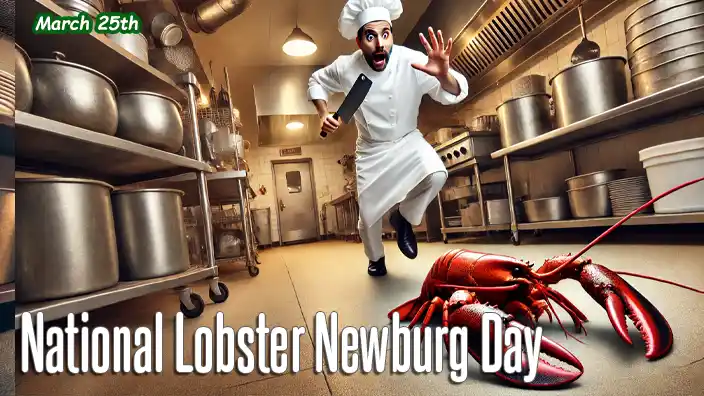
Lobster Newburg isn’t just a dish—it’s a buttery, boozy love letter to excess. It’s what happens when someone looks at a lobster and thinks, “You know what this needs? Cream, egg yolks, and a splash of alcohol. Maybe two splashes.” It’s the kind of meal that wears a velvet robe, smokes a pipe, and listens to jazz while reclining on a fainting couch. One bite and you’re not just eating seafood—you’re dining like a Victorian aristocrat who just inherited a shipping empire.
Celebrated: Annually, on March 25th
Celebrate National Lobster Newburg Day with the rich history, creamy recipes, and quirky origins of this indulgent American seafood classic.

- Details
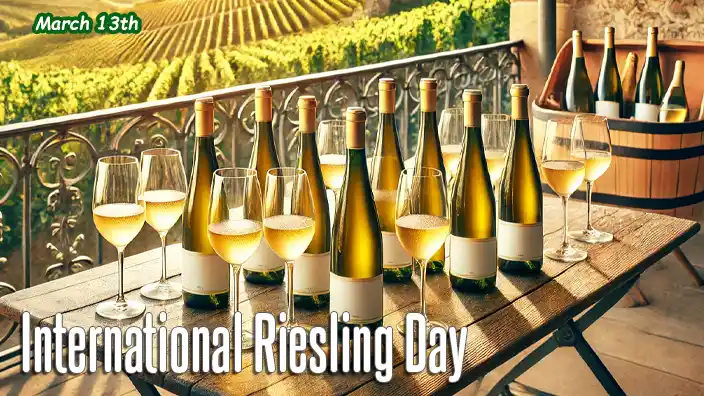
Some wines demand an air of sophistication—the swirl, the sniff, the knowing nod—but not this one. This one is the life of the party, the charming guest who pairs well with everything from haute cuisine to last night’s cold pizza. It’s the only wine that can flirt with spicy food and not break a sweat, the one that ages like a rock star who refuses to retire. And just when you think you’ve figured it out—boom!—it hits you with aromas of honey, citrus, and, inexplicably, a whiff of freshly paved asphalt. But true fans know that’s just part of the magic, because if there’s one thing this wine doesn’t do, it’s take itself too seriously. Cheers!
Celebrated: Annually, on March 13th
Join wine lovers worldwide in honoring Riesling, the noble grape celebrated for its adaptability and exceptional flavors. Explore ways to enjoy this special day.


- Details
When aliens finally make first contact, one of two things will happen: either they’ll be incredibly advanced and share mind-blowing technology, or they’ll take one look at our reality TV shows and decide to keep us quarantined for the safety of the universe. Imagine the moment—world leaders gather, cameras rolling, humanity holding its breath, and then the alien steps forward and says, “Take me to your leader,” only to be handed a smartphone and told, “That depends… do you mean politically, socially, or on Twitter?” At that point, they might just turn their spaceship around and leave us a one-star review on the intergalactic Yelp.
Celebrated: Annually, on March 15th
Explore the history of World Contact Day, from its telepathic origins in 1953 to modern scientific efforts in the search for alien life.

- Details
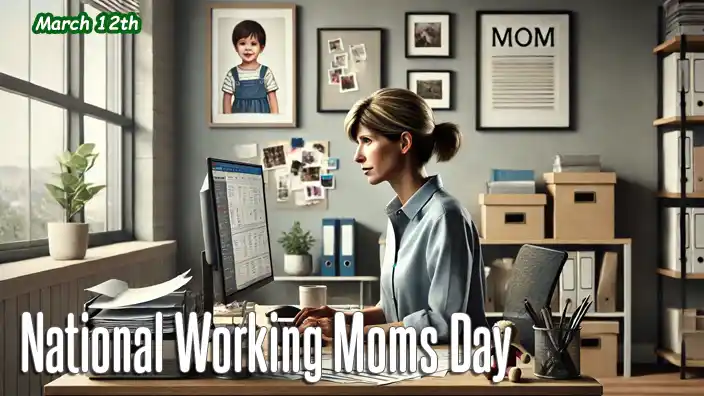
Working moms have mastered a level of multitasking that would make NASA engineers weep. They can schedule a Zoom meeting, pack a lunch, and locate a missing shoe—all while negotiating a peace treaty between their arguing kids. Their coffee intake is directly proportional to the number of unanswered emails, and their idea of “me time” is an uninterrupted trip to the grocery store. They can function on three hours of sleep, remember every school event, and still pull off a last-minute Halloween costume like a seasoned magician. Forget superheroes—working moms are the real ones out here saving the day, one chaotic morning at a time!
Celebrated: Annually, on March 12th
Explore the evolution of working moms, their superpowers, and how they reshape the workforce while juggling family life every day.

- Details
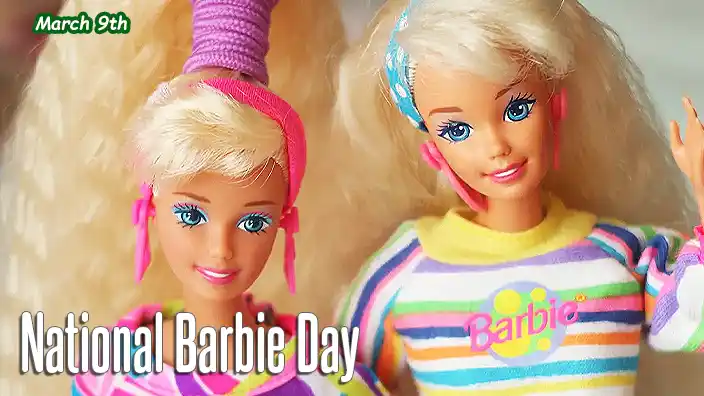
Barbie has had more careers than most people have had hot meals, and she’s done it all in heels. She’s been an astronaut, a doctor, a CEO, and even a mermaid—because why stop at reality when you can have fins? She’s aged gracefully over the decades (which is impressive considering she’s permanently 19), and despite never bending her elbows properly, she’s managed to build an empire. Meanwhile, poor Ken has spent 60 years as an accessory, always standing in the background with his molded plastic hair, wondering if he’ll ever get his own Dreamhouse.
Celebrated: Annually, on March 9th
Explore the iconic journey of Barbie, a doll that has inspired generations with her diverse careers and timeless style. Join the celebration of National Barbie Day.

- Details
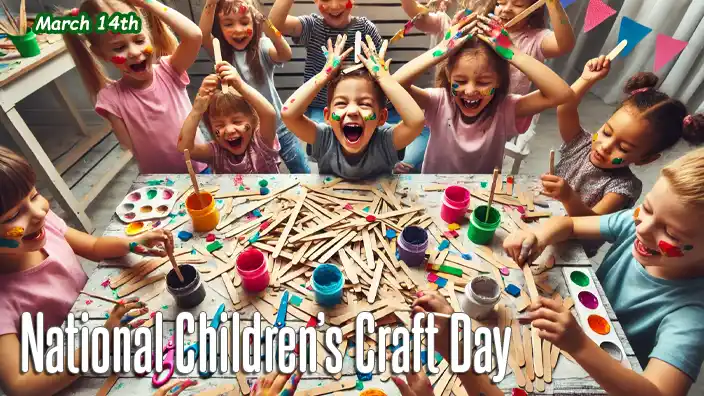
It starts with good intentions—just a simple craft project, a little glue, a few popsicle sticks. But within minutes, chaos erupts. The glitter? Everywhere. The glue? Somehow in their hair, on the dog, and mysteriously on the ceiling. Scissors disappear, only to reappear in the hands of the one child who definitely shouldn’t have them. And despite having an entire table to work on, the markers always find their way onto the walls. But in the end, after the paint dries (on both the paper and their faces), they hold up their creation like a masterpiece, beaming with pride—because in their eyes, that lopsided, glue-covered mess is nothing short of genius.
Celebrated: Annually, on March 14th
Discover the significance of National Children’s Craft Day, its history, and why arts and crafts are essential for children's growth and creativity.


- Details
Some music makes you dance, some makes you cry, and some—like acoustic soul—makes you stare out the window like you’re in a dramatic indie film, even if you're just watching squirrels fight over a Cheeto. It's the genre that shows up with nothing but a guitar and a heart full of feelings, softly wrecking your emotional stability one verse at a time. Acoustic soul doesn’t need a beat drop—it just needs a mic, a vibe, and someone willing to cry a little into their herbal tea.
Celebrated: Annually, on March 27th
Celebrate the power and beauty of acoustic soul music with a look at its roots, key artists, and how to enjoy its raw, heartfelt sound today.


- Details
A Good Hair Day is like winning the follicle lottery. You wake up, glance in the mirror, and—gasp—your hair is actually doing what it’s supposed to. No cowlicks, no frizz, no rogue strands sticking out like they’re trying to pick up a radio signal. It’s smooth, shiny, and bouncing with the confidence of someone who remembered their reusable bags at the grocery store. You weren’t planning to conquer the world today, but hey—when your hair shows up ready to lead, you just follow along.
Celebrated: Annually, on March 26th
Celebrate Good Hair Day with fun facts, hair history, psychology, and tips to boost confidence and tame your mane—because great hair deserves applause.


- Details
Saint Gertrude of Nivelles may have lived in the 7th century, but she managed a schedule that would make any modern executive reach for a stronger cup of coffee. She ran a monastery, welcomed travelers, supported scholars, cared for the poor, and somehow still found time to become the unofficial patron saint of mice. Most people today struggle to keep one houseplant alive, but Gertrude was apparently responsible for an entire religious community and the local rodent population. It’s comforting to know that even in the Middle Ages, someone out there was calmly handling both deep spiritual matters and whatever was nibbling at the grain sacks.
Celebrated: Annually, on March 17th
Learn about Saint Gertrude of Nivelles, the 7th-century abbess known for her faith, hospitality, and curious connection to mice and travelers.


- Details
If there were ever a condiment that refused to stay in its lane, it’s ranch. What started as a simple salad dressing somehow worked its way onto wings, pizza, fries, and anything else that sits still long enough. National Ranch Day celebrates that creamy, herby overachiever that turned “just a dip” into a full-blown lifestyle. At this point, ranch isn’t just invited to the table—it’s running the show, and nobody’s complaining.
Celebrated: Annually, on March 10th
Check out the history of Ranch with fun facts and humor, learn about America’s favorite creamy dressing and dip

- Details
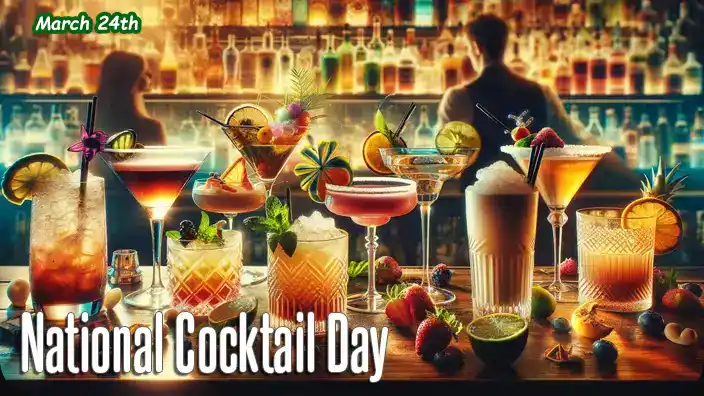
Swirling in a glass like a tiny, boozy masterpiece, it’s the kind of drink that makes you feel like a sophisticated socialite—even if you’re just wearing sweatpants and avoiding eye contact with the bartender. With every sip, the flavors dance between refreshing and dangerously deceptive because, let’s be honest, that fruity garnish is just a distraction from the fact that you’re essentially drinking a cleverly disguised potion of chaos. One moment, you’re savoring the artistry, and the next, you’re enthusiastically explaining your life’s ambitions to a stranger who just wanted to order a beer.
Celebrated: Annually, on March 24th
Explore the spirited celebration of National Cocktail Day, a day dedicated to the art, science, and slight mischief of mixology, from the Roaring Twenties to modern bars. Cheers to a love affair with cocktails!


- Details
A marriage proposal is one of those life moments where everything is supposed to be perfect—but reality loves a good plot twist. Maybe you rehearsed a heartfelt speech, only to forget every word the second you got down on one knee. Or perhaps you chose a scenic cliffside, only to have a gust of wind nearly send the ring flying into the abyss. And let’s not forget the classic “hiding the ring in dessert” move—because nothing says romance like an engagement ring covered in cheesecake and mild panic as your partner almost swallows it. At the end of the day, though, no matter how it happens, the only thing that really matters is the “yes” (and keeping the ring out of the ocean).
Celebrated: Annually, on March 20th
Discover the origins of National Proposal Day and explore creative ways to pop the question while avoiding common proposal pitfalls.

- Details
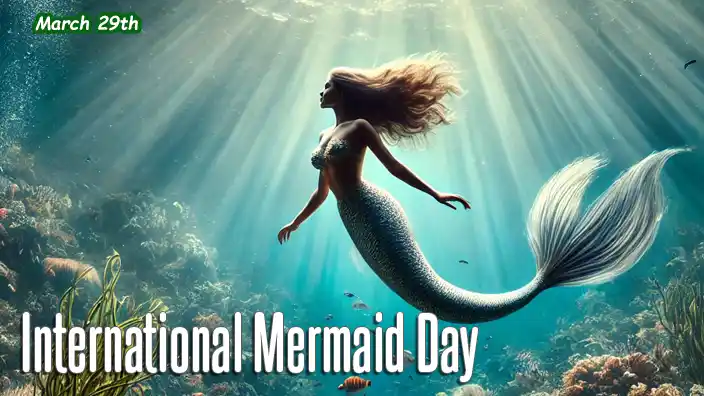
Mermaids are basically the ocean’s version of influencers—glamorous, mysterious, and always surrounded by fish that somehow adore them. They spend their days brushing their hair with seafood utensils, lounging on inconveniently sharp rocks, and singing to sailors who never seem to question why their GPS suddenly stops working. No one knows how they manage flawless waves in their hair while living in actual waves, but honestly, we suspect some kind of magical sea conditioner. They’re fabulous, slightly dramatic, and always down for a splashy entrance.
Celebrated: Annually, on March 29th
Discover the rich history of mermaids, from ancient myths to modern influencers. Explore their global variations and pop culture presence.

- Details
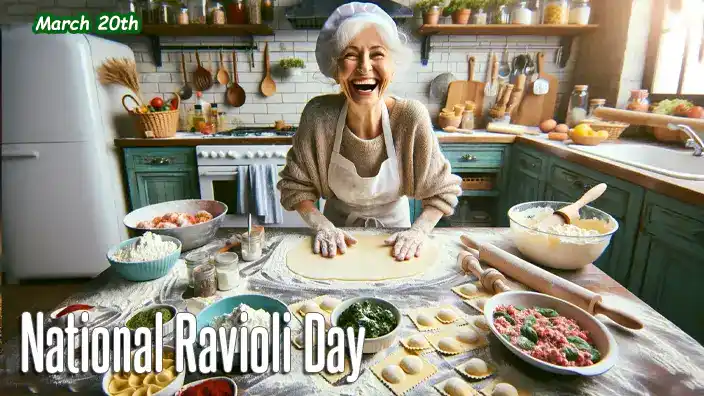
Versatile, compact, and endlessly delightful, ravioli takes pasta to a whole new level of fun. Each little pocket is like a culinary surprise package, daring you to guess its contents—whether it’s a classic ricotta and spinach filling or something adventurous like pumpkin and sage. It’s pasta dressed to impress, effortlessly blending comfort food vibes with gourmet flair. Even if it’s straight from a can, ravioli brings a touch of elegance to the table, reminding us all that good things truly do come in small, delicious packages.
Celebrated: Annually, on March 20th
Explore the rich history and global variations of ravioli, from its Italian origins to modern culinary creativity. Celebrate National Ravioli Day with joy!


- Details
Seagrass may not win any beauty contests or headline ocean documentaries, but it’s out there every day doing the kind of work that keeps the whole marine world from falling apart. It feeds manatees, shelters fish, protects coastlines, and even helps fight climate change—all without asking for applause. Frankly, if seagrass had a résumé, the rest of the ocean would be looking for new jobs.
Celebrated: Annually, on March 1st
Learn about seagrass ecosystems, their role in ocean health, and why World Seagrass Day highlights these vital underwater habitats.

From Our Marks Catelog
-

Brussels sprouts: the tiny green orbs that have been sparking dinner table debates for...
-
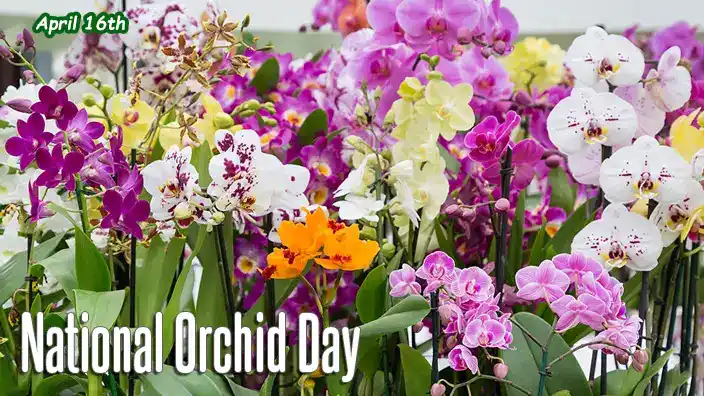
Elegance, mystery, and just the right amount of arrogance—some things demand admiration without lifting...
-
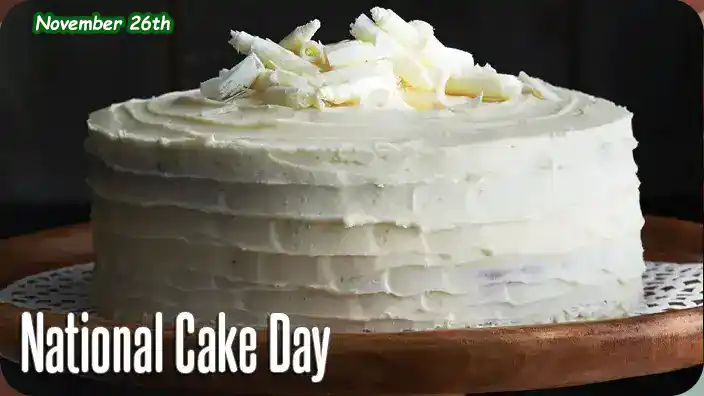
National Cake Day is the one day of the year when it's socially acceptable to have your cake and eat...
-

Forget glow-in-the-dark snack cakes and cheese that comes in a spray can—there’s something wildly...
-

If there were an Olympic event for clumsiness, someone would be rolling down the hill, missing their...
-
Gazpacho Soup Day isn’t just a day to honor cold tomato soup; it’s a day to revel in the absurdity of...

