Mark The Days - March

March is the month that can’t make up its mind—snow boots in the morning, flip-flops by dinner. It’s like the year’s awkward teenager: moody, unpredictable, and occasionally dressed like a leprechaun. One minute you're bracing for a blizzard, the next you're sunburned from walking to the mailbox. Somewhere in the chaos, we celebrate pi, potatoes, poetry, and the mystical power of green beer. March is when things start to wake up, thaw out, and go just a little sideways. And frankly, we wouldn’t have it any other way.

- Details
For most of history, Niagara Falls has done one thing extremely well: making an unbelievable amount of noise while throwing water everywhere. So when the mighty falls suddenly went quiet in 1848, people didn’t know whether to panic, pray, or walk out onto the riverbed looking for souvenirs. Thanks to a massive ice jam, one of the world’s greatest natural wonders temporarily forgot how to behave, creating a moment so strange that it still sounds made up nearly two centuries later.
Celebrated: Annually, on March 29th
Discover the strange but true story behind Niagara Falls Runs Dry Day and the 1848 ice jam that nearly stopped the famous falls


- Details
There’s something magical about a hot tub—it’s the only place where it's socially acceptable to stew like a human teabag while pretending it's a wellness activity. You step in, instantly lose track of time, and somehow start sharing your deepest secrets with people you barely know. The jets start up, and suddenly you’re in a high-powered bubble massage that feels like it’s both healing your soul and rearranging your kidneys. And let’s be honest—no one ever really knows the hot tub rules, but we all silently agree to pretend that the bubbles make everything sanitary.
Celebrated: Annually, on March 28th
Celebrate National Hot Tub Day on March 28th with relaxing soaks, fun facts, and tips on enjoying the bubbly bliss of modern hot tub luxury.


- Details
Being awesome is not about flexing in the mirror or announcing your greatness to unsuspecting bystanders. It’s about quietly handling your business like a competent adult while the world spins in mild chaos around you. It’s returning the shopping cart. It’s fixing the leaky faucet instead of “monitoring the situation” for six months. It’s showing up on time, doing the hard thing, and not demanding a parade afterward. Real awesomeness doesn’t need a spotlight. It just needs a little backbone, a little effort, and maybe a decent cup of coffee.
Celebrated: Annually, on March 10th
Celebrate International Day of Awesomeness on March 10 with humor, history, and simple ways to be extraordinary in everyday life.


- Details
James Ronald Webster is a towering figure in Anguilla's march towards self-determination, embodying the spirit of resilience, leadership, and unyielding commitment to his homeland. As the Father of the Nation, his visionary leadership not only steered Anguilla through pivotal moments of its history but also laid the foundations for a future filled with hope, prosperity, and autonomy. Celebrated every March 2nd, James Ronald Webster Day is a testament to his enduring legacy, inspiring generations to uphold the values of unity, integrity, and national pride that he championed. His life's work resonates deeply within the heart of every Anguillan, a beacon of inspiration that illuminates the path forward.
Celebrated: Annually, on March 2nd
Learn about James Ronald Webster's early life, political inception, and leadership qualities that shaped his vision for Anguilla's autonomy and prosperity.


- Details
Chocolate caramel is like the dynamic duo of the dessert world, Batman and Robin, if they swapped crime-fighting for confectionery delights and wore aprons instead of capes. Imagine caramel, with its gooey, stretchy self, getting into a sticky situation only to be rescued by the smooth, dashing hero chocolate. Together, they embark on epic taste adventures, leaving a trail of wrappers and satisfied sighs in their wake. It's the kind of partnership that makes you believe in true love, or at least in the power of comfort eating. So, the next time you find yourself unwrapping a chocolate caramel treat, remember: you're not just indulging in a snack, you're witnessing the delicious harmony of confectionery's most beloved power couple.
Celebrated: Annually, on March 19th
Experience the magic of chocolate and caramel coming together on National Chocolate Caramel Day. Celebrate creativity, share happiness, and savor the blissful journey of these delightful flavors

- Details
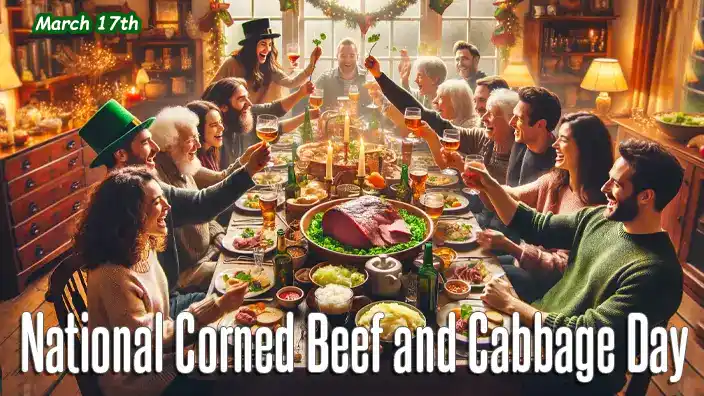
The dish dares to ask, "What if we took a tough cut of beef, soaked it in a brine strong enough to challenge the Dead Sea, and then paired it with a vegetable known for its...distinctive aroma?" It's like the culinary world's odd couple - one's salty, the other's a gas, and together, they create a meal that captures millions' hearts and stomachs. This duo proves that with enough seasoning and patience, even the most unlikely pair can turn into something spectacularly delicious. Just remember to crack a window open; it's not the dish's flavor that lingers in the air. It's a reminder of the hearty, humorous meal you just enjoyed.
Celebrated: Annually, on March 17th
Explore the evolution of corned beef and cabbage from an immigrant adaptation to a cherished American tradition.


- Details
The relationship between military dogs and their handlers is one of profound mutual respect, trust, and unspoken understanding forged under the most challenging conditions imaginable. These teams train rigorously together, forming a bond that is as much about companionship as it is about survival. In the heat of battle or the silence of a reconnaissance mission, the handler and dog rely on each other implicitly, communicating through gestures, commands, and an intuitive sense of each other's needs and responses. This partnership transcends the mere practicalities of military operations, embodying a deeper connection that remains indelible long after their service ends, symbolizing the extraordinary inter-species camaraderie found amidst the rigors of duty.
Celebrated: Annually, on March 13th
Discover the significance of K9 Veterans Day, a tribute to the service and sacrifices of military dogs. Learn about their varied roles, from detection and tracking to emotional support and casualty evacuation.


- Details
Seagrass may not win any beauty contests or headline ocean documentaries, but it’s out there every day doing the kind of work that keeps the whole marine world from falling apart. It feeds manatees, shelters fish, protects coastlines, and even helps fight climate change—all without asking for applause. Frankly, if seagrass had a résumé, the rest of the ocean would be looking for new jobs.
Celebrated: Annually, on March 1st
Learn about seagrass ecosystems, their role in ocean health, and why World Seagrass Day highlights these vital underwater habitats.

- Details
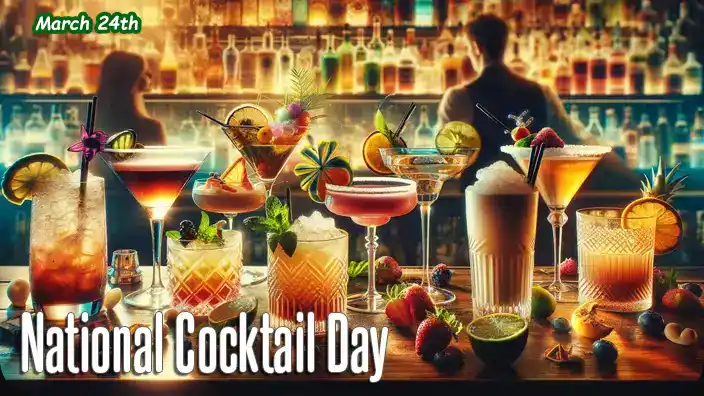
Swirling in a glass like a tiny, boozy masterpiece, it’s the kind of drink that makes you feel like a sophisticated socialite—even if you’re just wearing sweatpants and avoiding eye contact with the bartender. With every sip, the flavors dance between refreshing and dangerously deceptive because, let’s be honest, that fruity garnish is just a distraction from the fact that you’re essentially drinking a cleverly disguised potion of chaos. One moment, you’re savoring the artistry, and the next, you’re enthusiastically explaining your life’s ambitions to a stranger who just wanted to order a beer.
Celebrated: Annually, on March 24th
Explore the spirited celebration of National Cocktail Day, a day dedicated to the art, science, and slight mischief of mixology, from the Roaring Twenties to modern bars. Cheers to a love affair with cocktails!

- Details
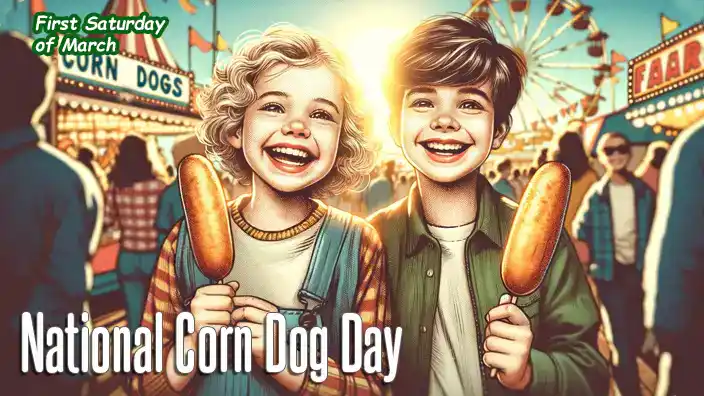
The ultimate fusion of convenience and carnival, proving that anything can be improved by sticking it on a stick and dunking it in batter. They're the culinary equivalent of a high-five, blending the sophistication of a hot dog with the whimsy of a county fair. Imagine the scene: sophisticated gourmets, corn dog in hand, debating the merits of mustard versus ketchup, while secretly longing for a dip in nacho cheese. In a world of complex cuisines, the corn dog stands tall (on a stick), a testament to the joy of simple pleasures and the universal language of deliciousness.
Celebrated: Annually, on the First Saturday of March Madness
From fairs to gourmet food trucks, corn dogs have evolved into a beloved snack. Learn how to celebrate National Corn Dog Day with fun ideas and recipes.

- Details
It starts with a tux that doesn’t quite fit, a dress that required six Pinterest boards to choose, and a frantic search for a boutonniere that isn’t wilted. Add in a three-hour hair appointment, a pre-dance dinner where no one actually eats, and a dance floor scattered with uncomfortable shoes by 9 p.m.—and voilà, the magic of prom. It's like a glamorous fairy tale... if the fairy godmother also forgot to mention the glitter gets everywhere and you'll definitely be photobombed by someone doing the worm.
Celebrated: Annually, on March 31st
Celebrate National Prom Day on March 31st—honoring teenage tradition, glitzy outfits, and the unforgettable dance that marks the end of high school.

- Details
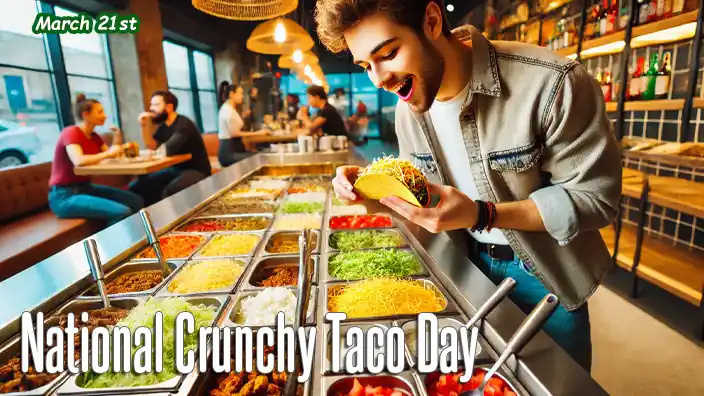
Crunchy tacos are nature’s way of reminding us that good things don’t last forever—but they sure are fun while they do! One bite in, and suddenly it’s a race against gravity as tiny taco shards scatter like confetti at a surprise party. You try to keep it together, but the shell has other plans, betraying you mid-bite as fillings tumble onto your plate (or worse, your lap). Yet, do we mind? Absolutely not! Because each bite is a crispy, delicious rollercoaster of flavor, and if you’re not wearing at least a little bit of your taco by the end, were you even really eating one?
Celebrated: Annually, on March 21st
Join the celebration of National Crunchy Taco Day on March 21st! Discover the history, fun facts, and ways to enjoy this delicious taco style.

- Details
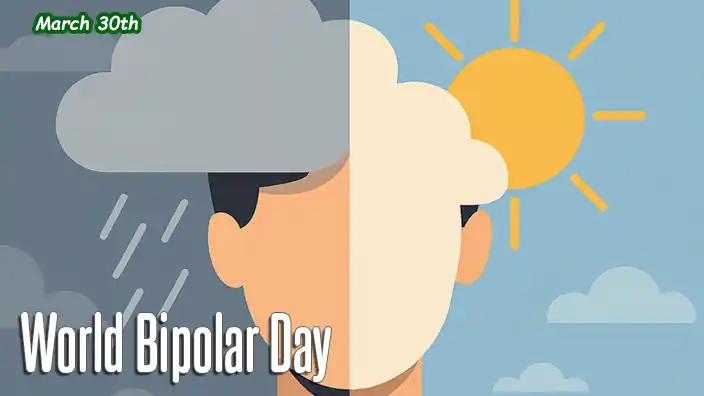
Some people hear "bipolar" and immediately assume it means someone changes moods faster than a cat hearing a vacuum cleaner. They picture someone flipping from thrilled to furious in the time it takes to microwave a burrito. The truth is a little more complex—and a lot less cartoonish. Bipolar disorder isn’t about being “moody” or “dramatic,” and it definitely can’t be fixed with herbal tea and a motivational quote. But bless their hearts, the well-meaning folks still try to help by saying things like, “Have you tried just being more positive?”—as if the brain were a light switch instead of, say, a 4D chess game played in a wind tunnel.
Celebrated: Annually, on March 30th
World Bipolar Day raises awareness and celebrates resilience in people with bipolar disorder. Learn about its impact and how to support those affected.


- Details
National OmazingYou Day is the one glorious day of the year when you are officially encouraged to stop apologizing for existing and start appreciating the fact that you’ve somehow survived alarm clocks, endless passwords, awkward conversations, junk email, and people who still don’t understand how grocery store self-checkout works. It’s a celebration of confidence, kindness, and realizing that maybe — just maybe — you’re doing better than you think.
Celebrated: Annually, on March 25th
Celebrate National OmazingYou Day on March 25 with positivity, fun facts, and ways to boost confidence while encouraging others


- Details
It starts with something simple—holding the door open for a stranger. But then, suddenly, you’re stuck there, holding the door for an entire parade of people who all decided to go shopping simultaneously. You smile through gritted teeth as an elderly lady, a mom with a stroller, and a guy carrying an unreasonable number of grocery bags all shuffle past. Just as you think you're free, someone jogs up from 20 feet away, giving you that Oh, you're holding it for me? look. And so, you stand, questioning your life choices, knowing full well that this is how it begins—you’re now officially a Good Samaritan, and there’s no turning back.
Celebrated: Annually, on March 13th
Join the movement of kindness on National Good Samaritan Day! Learn how to perform random acts of kindness and inspire others to make a difference.

- Details
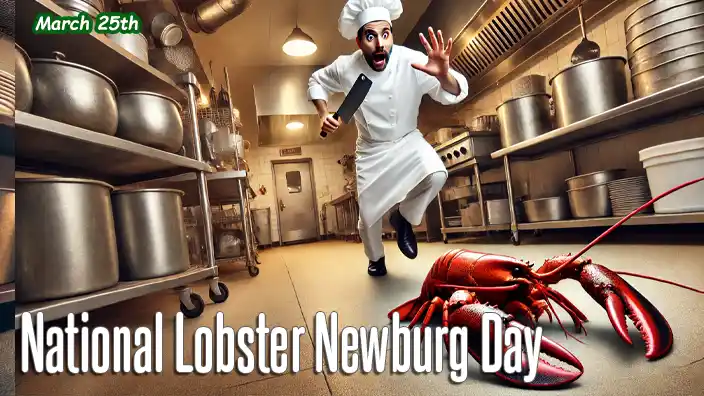
Lobster Newburg isn’t just a dish—it’s a buttery, boozy love letter to excess. It’s what happens when someone looks at a lobster and thinks, “You know what this needs? Cream, egg yolks, and a splash of alcohol. Maybe two splashes.” It’s the kind of meal that wears a velvet robe, smokes a pipe, and listens to jazz while reclining on a fainting couch. One bite and you’re not just eating seafood—you’re dining like a Victorian aristocrat who just inherited a shipping empire.
Celebrated: Annually, on March 25th
Celebrate National Lobster Newburg Day with the rich history, creamy recipes, and quirky origins of this indulgent American seafood classic.


- Details
World Obesity Day is that polite but firm reminder that your body keeps receipts. It remembers the late-night drive-through, the “just one more slice,” and the week you swore you’d start walking… next Monday. But this day isn’t about guilt trips or kale lectures. It’s about understanding how modern life quietly stacked the odds against us—and how a little common sense, consistency, and maybe fewer “value-sized” decisions can tip them back in our favor.
Celebrated: Annually, on March 4th
Learn the facts about World Obesity Day, its global impact, health risks, and practical prevention strategies in this informative, humorous guide.


- Details
There are musical instruments, and then there are bagpipes—the proud, booming declaration that subtlety has officially left the building. Few sounds in human history have managed to inspire battlefield courage, ceremonial dignity, and the occasional startled tourist quite like the mighty bagpipe. International Bagpipe Day celebrates this legendary instrument in all its thunderous glory, honoring centuries of tradition, cultural pride, and the brave souls who learned to master an instrument that essentially requires wrestling music out of an inflated airbag.
Celebrated: Annually, on March 10th
Celebrate International Bagpipe Day and the world’s boldest instrument—proving for centuries that music, history, and impressive lung power make a memorable combination

From Our Marks Catelog
-

Brussels sprouts: the tiny green orbs that have been sparking dinner table debates for...
-
Elegance, mystery, and just the right amount of arrogance—some things demand admiration without lifting...
-
National Cake Day is the one day of the year when it's socially acceptable to have your cake and eat...
-

Forget glow-in-the-dark snack cakes and cheese that comes in a spray can—there’s something wildly...
-

If there were an Olympic event for clumsiness, someone would be rolling down the hill, missing their...
-
Gazpacho Soup Day isn’t just a day to honor cold tomato soup; it’s a day to revel in the absurdity of...

