Mark The Days - April

April is nature’s reboot—birds start singing, flowers show off, and pollen declares war on sinuses everywhere. It’s the month that says, “Hey, let’s start fresh!” and then dumps rain on your new shoes. April kicks off with April Fool’s Day, just to remind us not to take anything too seriously—including that forecast. One day it's sunny and lovely, the next you're building an ark. But in between the drizzle and sneezes, there's a sense that things are coming back to life—and possibly plotting something. April’s playful, unpredictable, and just a little unhinged. We like that in a month.

- Details
Administrative Professionals are the superheroes of the office, armed with the superpower of multitasking. Without them, schedules would crumble, files would play hide and seek, and meetings would be mythological events often discussed but rarely seen. They're the glue that holds the office together, often spotted rescuing coffee-deprived colleagues and taming wild photocopiers. Truly, where would we be without their heroic efforts to keep the chaos at bay while wearing a headset like a crown? Probably locked out of Zoom, searching for misplaced reports in the Bermuda Triangle of our desks!
Celebrated: Annually, on Wednesday of the Last Full Week of April
Explore the significance of Admin Day, a tribute to the unsung heroes holding workplaces together. Learn about its origins, ways to celebrate, and the global recognition of administrative professionals.
- Details
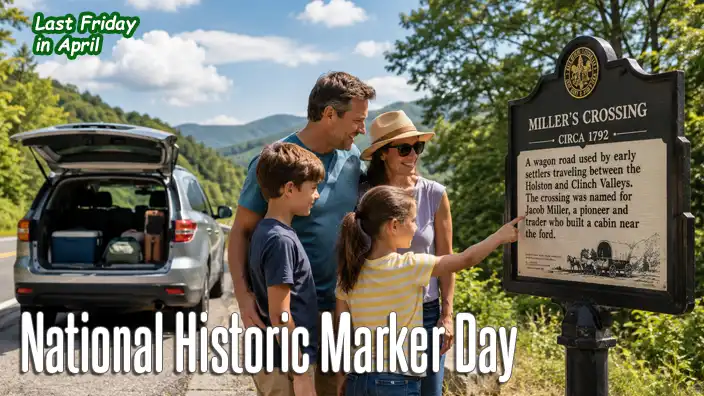
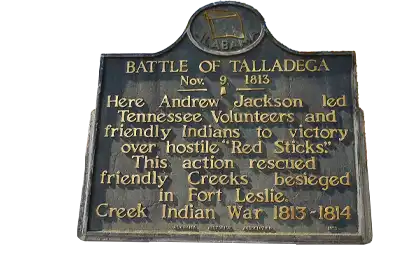
Some people drive past historic markers without a second glance. Others slam on the brakes, pull over, and discover that a quiet field once hosted a battle, a famous speech, or the world's most determined turnip farmer. National Historic Marker Day celebrates the signs that prove history happened everywhere—and that even the most ordinary-looking places often have a story worth telling.
Celebrated: Annually, on the Last Friday in April
Ever wondered why there's a plaque in the middle of nowhere? National Historic Marker Day celebrates the signs, stories, and surprising history hiding along our roads

- Details
Sure, CDs may be shiny, sleek, and capable of skipping to any track with a single click, but let’s be honest—they lack the drama of the eight-track. An eight-track didn’t just play music, it had mood swings. It would abruptly switch programs mid-song like it just remembered it had somewhere else to be. CDs are like polite dinner guests who stay in their lane and wipe their feet at the door. Eight-tracks were that unpredictable uncle who crashes the party, tells wild stories, eats all the dip, and somehow ends up being everyone's favorite memory.
Celebrated: Annually, on April 11th
Celebrate National Eight-Track Tape Day by diving into the nostalgic world of the iconic eight-track tapes, the music format that defined a generation.


- Details
The U.S. Air Force Academy is the only place where you can earn a degree in aerospace engineering, log flight hours, and still have time to perfect your golf swing before lunch. Nestled high in the Colorado mountains—because of course the Air Force wanted the high ground—it’s a campus that looks like it was designed by someone who binge-watched Star Trek and said, “Yes, but make it patriotic.” Cadets there learn how to lead, fly, and operate some of the most advanced tech on Earth… all while keeping their uniforms so crisp you could shave with them.
Celebrated: Annually, on April 1st
Celebrate U.S. Air Force Academy Day with facts and history. Honoring cadets who aim high and soar higher—just watch out for low-flying egos.


- Details
Malbec is the kind of wine that doesn’t apologize for being bold. It’s dark, smooth, and perfectly happy sitting next to a grilled steak while you explain—very confidently—why you suddenly understand vineyard soil chemistry after two glasses.
Celebrated: Annually, on April 17th
Learn about Malbec Day, the story of the Malbec grape, and why this rich red wine pairs perfectly with steak.

- Details
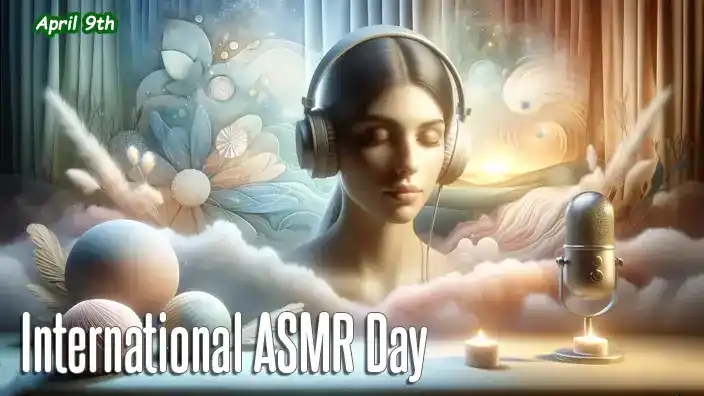
Imagine a world where the sound of a pickle crunching or someone whispering about medieval pottery can send shivers down your spine—in a good way. It’s like your brain has a VIP pass to a spa day, but instead of cucumbers on your eyes, you get soft tapping, gentle crinkling, and the occasional roleplay of a medieval scribe documenting your grocery list. Some people find it mesmerizing, and others feel like they’re being serenaded by a librarian with a secret passion for bubble wrap. Whatever the case, it's proof that the internet will always find a way to turn the strangest things into a global phenomenon.
Celebrated: Annually, on April 9th
Discover the soothing world of ASMR and its celebration on International ASMR Day, April 9th. Explore the tingling sensation triggered by auditory and visual stimuli, offering relaxation and comfort.


- Details
This is the one day a year when you suddenly realize you’ve been dressing like your best friend, your coworker, or (gasp!) your dog this entire time. It’s a day when doppelgängers roam freely, parents mix up their own children, and somewhere, two strangers in a coffee shop are awkwardly staring at each other, wondering if they were separated at birth. Siblings take it as an opportunity to swap places, bosses panic when they can’t tell who’s who, and celebrities brace themselves for an influx of "Hey, has anyone ever told you that you look just like—" comments. Whether intentional or accidental, one thing is certain—by the end of the day, you’ll either find your twin or be utterly convinced you have a long-lost one somewhere.
Celebrated: Annually, on April 20th
Discover the origins and significance of National Look-Alike Day, a fun holiday celebrating doppelgängers and the joy of spotting look-alikes. Find out more about this amusing day!

- Details
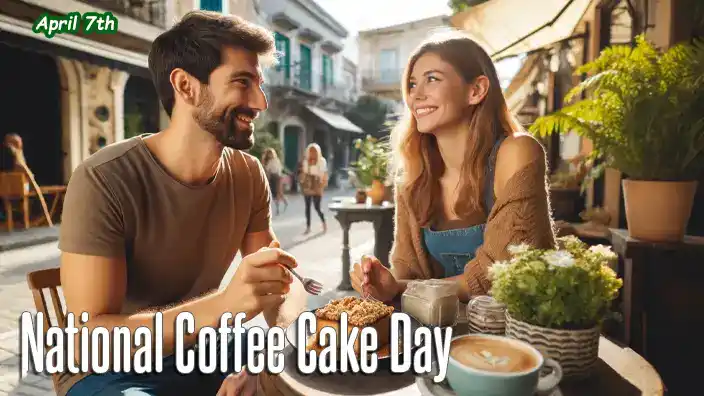
There’s something magical about a treat that somehow justifies itself as a breakfast item while clearly being dessert in disguise. It’s the rebel of the pastry world, casually strolling into morning meetings and brunch tables like it belongs there, even though it’s basically just cake with a PR makeover. Slathered in cinnamon, topped with streusel, and often sporting a crumbly texture that leaves a delightful mess everywhere, it demands to be eaten with coffee—because, obviously, balance is important.
Celebrated: Annually, on April 7th
Celebrate the delicious world of National Coffee Cake Day and its history. Discover how this pastry tradition combines cozy coffee moments and baked treats.


- Details
Picture a dog so responsible that it can guide someone through a crowded city, stop at curbs, avoid obstacles, and politely ignore the smell of a hot dog stand. That’s a guide dog—part navigator, part bodyguard, part best friend. While the rest of us are still trying to remember where we left our car keys, these four-legged professionals are calmly leading their humans through traffic like seasoned tour guides. International Guide Dog Day celebrates these remarkable dogs who prove, beyond any doubt, that sometimes the smartest one in the room is the one with the wagging tail.
Celebrated: Annually, on the Last Wednesday in April
International Guide Dog Day honors the highly trained dogs that provide independence, safety, and companionship to people who are blind or visually impaired.

- Details
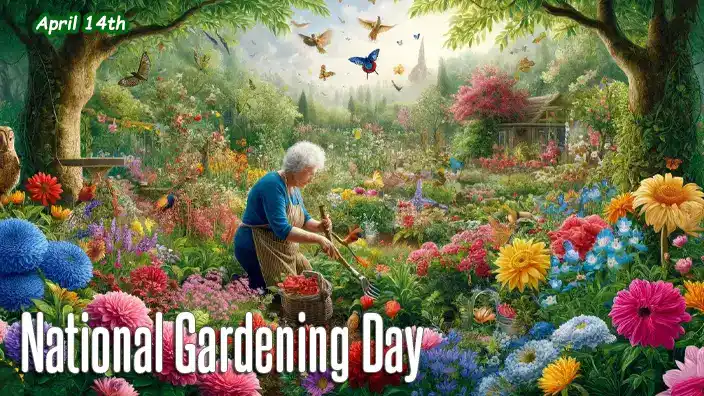
There’s something profoundly humbling about spending hours planting, watering, and talking sweetly to your garden, only to have one rogue squirrel dig up your hard work in under five minutes. Gardening is an adventure in patience, where you wage tiny wars against weeds, outsmart snails with makeshift defenses, and pretend you totally meant to plant that mysterious vine overtaking your yard. It’s a hobby where hope springs eternal, especially when you plant something new and whisper, “Please don’t die,” as if sheer willpower alone can keep it alive.
Celebrated: Annually, on April 14th
Discover the joys of gardening on National Gardening Day, a day to celebrate the therapeutic benefits, health advantages, and emotional sanctuary that gardening offers. Get your hands dirty and reap the rewards!


- Details
There’s a moment in life when words just won’t cut it—when stubbing your toe, spotting a spider the size of a dinner plate, or watching your phone plummet toward the pavement demands something far more primal. That’s when the glorious, full-throttle, unfiltered scream comes in. Whether it’s an ear-splitting shriek of terror, an over-the-top horror movie wail, or just the kind of high-pitched yelp that makes dogs in the next county tilt their heads in confusion, screaming is humanity’s built-in alarm system. It’s loud, it’s dramatic, and let’s be honest—sometimes it’s just plain fun.
Celebrated: Annually, on April 24th
Discover the thrill of Scream Day, an unconventional holiday dedicated to the art of screaming, celebrating all things scary, and unleashing your inner thrill-seeker.


- Details
You haven’t truly lived until you’ve walked straight into a lamppost while admiring a cloud shaped like a cat riding a unicycle. Looking up at the sky is nature’s way of saying, “Hey, quit doom-scrolling and remember there’s a whole universe above your head doing cartwheels with stars, birds, and occasionally an aggressively curious squirrel in a tree.” It’s the only show that runs 24/7, costs nothing, and occasionally features surprise guest appearances by UFOs—or as your uncle insists, “just government weather balloons.”
Celebrated: Annually, on April 14th
Explore the captivating history and science behind the sky. From ancient stargazers to modern-day sky watching, learn why looking up is a timeless celebration.


- Details
Easter is the most joyous celebration on the Christian calendar—a day when the stone was rolled away, death was defeated, and hope walked right out of the tomb. It’s a time of hallelujahs, sunrise services, and children in tiny bow ties who somehow manage to get chocolate on their shoes before breakfast. We gather in churches and around dinner tables to rejoice in the miracle of the resurrection—while also politely pretending not to notice Aunt Margaret’s third helping of deviled eggs. It’s a day of light, life, and love—with just a hint of powdered sugar on top.
Celebrated: Annually, on the First Sunday after the Full Moon that occurs on or after the Spring Equinox (Mar 28, 2027)
Discover the rich traditions and spiritual significance of Easter, a global celebration of hope, renewal, and the resurrection of Jesus Christ.


- Details
Welcome to the one day a year when people suddenly feel the urge to replace "hello" with "salutations", "hungry" with "ravenous", and "tired" with "experiencing an acute deficiency of restorative slumber." It’s a day when conversations become unintentionally hilarious, as even the most eloquent speakers find themselves tripping over their own verbosity. Somewhere, a Scrabble champion is cackling with delight, an English teacher is shedding a single tear of pride, and a poor soul who just wanted a simple chat is frantically Googling what “circumlocution” means. Whether you’re dropping jaw-dropping jargon like a linguistic show-off or just smiling and nodding through someone else’s verbal acrobatics, one thing is certain—by the end of the day, at least one person will pull a muscle, reaching for the dictionary.
Celebrated: Annually, on April 21st
Big Word Day celebrates the richness of the English language with elaborate terms, linguistic revelry, and cultural exploration. Join word lovers worldwide in this linguistic fiesta!


- Details
Some heroes wear capes. Some carry swords. Bugs Bunny carries a carrot and a smart remark. For more than eighty years, this relaxed rabbit has been frustrating hunters, confusing villains, and proving that the quickest way out of trouble is usually a clever joke and a well-timed disguise.
Celebrated: Annually, on April 30th
Celebrate National Bugs Bunny Day and explore the history of the famous Looney Tunes rabbit who made “What’s up, Doc?” a pop culture legend.


- Details
If there’s one thing history has taught us, it’s that even the grandest plans can meet an iceberg-sized reality check. Titanic Remembrance Day isn’t about making light of tragedy—it’s about remembering that confidence should always travel with caution, preferably in the same lifeboat. So while we reflect with respect, we can also acknowledge a timeless truth: no matter how advanced we think we are, nature still has the final say—and it doesn’t accept reservations.
Celebrated: Annually, on April 15th
Titanic Remembrance Day honors the lives lost in 1912 while reflecting on lessons in safety, history, and human resilience.


- Details
Imagine the cloud as the universe's most exclusive nightclub, where data goes to mingle, party, and occasionally get lost in the bathroom. It's a place where your selfies rub shoulders with top-secret government files, and your forgotten shopping lists dance alongside blockbuster movie scripts. Managed by the most discreet bouncers—encryption and firewalls—it's the ultimate digital rendezvous spot where everyone and everything is supposed to be secure. Just remember, what happens in the cloud stays in the cloud... until someone forgets their password.
Celebrated: Annually, on April 3rd
Discover the significance of World Cloud Security Day as we celebrate the heroes of the digital age. Learn about the evolution of cloud storage, the importance of data protection, and fun ways to mark the day.

- Details
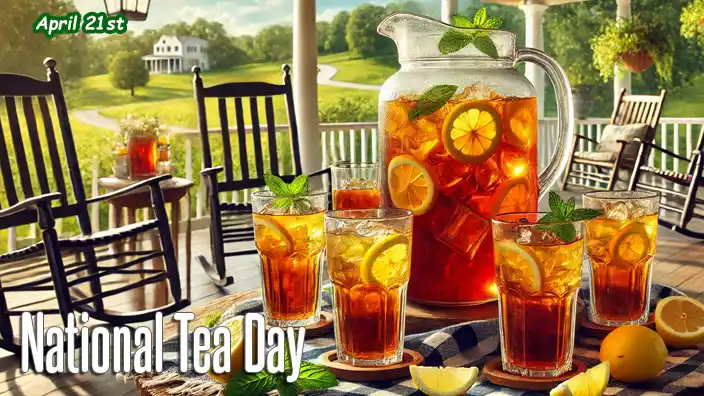
Tea is more than just a drink—it’s a hug in a cup, a legal stimulant, and the only socially acceptable excuse to pause life and dramatically stare out the window. It has the uncanny ability to solve problems (or at least make you too relaxed to care about them). Feeling stressed? Have some tea. Feeling cold? Tea. Just received shocking gossip? Oh honey, put the kettle on! And while coffee drinkers charge into the day like caffeinated tornadoes, tea drinkers take the slow, sophisticated route—steeping their leaves, contemplating life, and judging people who don’t know the difference between oolong and Earl Grey. But make no mistake—beneath that delicate porcelain cup lies a silent powerhouse, ready to warm your soul, wake your senses, and possibly burn your tongue when you get impatient.
Celebrated: Annually, on April 21st
Join tea lovers worldwide in honoring National Tea Day! Discover the traditions, fun facts, and unique ways to celebrate this beloved beverage.

From Our Marks Catelog
-

Brussels sprouts: the tiny green orbs that have been sparking dinner table debates for...
-
Elegance, mystery, and just the right amount of arrogance—some things demand admiration without lifting...
-
National Cake Day is the one day of the year when it's socially acceptable to have your cake and eat...
-

Forget glow-in-the-dark snack cakes and cheese that comes in a spray can—there’s something wildly...
-

If there were an Olympic event for clumsiness, someone would be rolling down the hill, missing their...
-
Gazpacho Soup Day isn’t just a day to honor cold tomato soup; it’s a day to revel in the absurdity of...

