
Putting the “Fool” in Fossil Fuel Since 2004
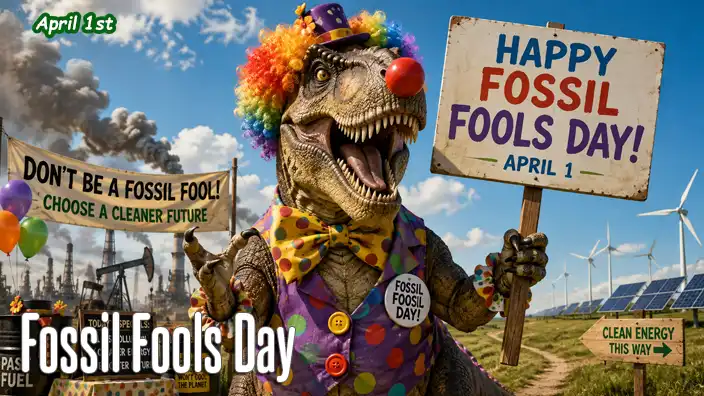
April 1 is traditionally the day for fake news from your family, suspicious announcements from companies and discovering that someone has replaced the sugar with salt. Fossil Fools Day, however, takes the familiar fun of April Fools' Day and gives the wordplay an environmental purpose. Instead of fooling your friends, the day asks whether continuing to rely heavily on coal, oil and natural gas might be the bigger joke — except this particular punchline comes with carbon emissions.
Fossil Fools Day is observed annually on April 1 as an environmental awareness and action day focused on fossil fuels, climate change, pollution and the transition toward cleaner sources of energy. The name combines "fossil fuels" with "April Fools' Day," allowing environmental campaigners to use humor, satire and creative demonstrations to address subjects that can otherwise become rather heavy rather quickly.
At its heart, Fossil Fools Day asks a straightforward question: with growing knowledge about the environmental consequences of burning fossil fuels and continuing advances in alternative energy technology, how should societies meet their enormous energy needs in the future?
That question is considerably more complicated than a bumper sticker.
Fossil fuels have powered much of modern civilization. Coal helped drive the Industrial Revolution, petroleum transformed transportation, and natural gas became an important source of electricity generation, industrial heat and household energy. Modern economies, transportation systems, manufacturing, agriculture and international trade developed around abundant supplies of concentrated energy.
The problem is what happens when those fuels are extracted and burned.
Coal, oil and natural gas contain carbon that has been stored underground for millions of years. Burning them releases carbon dioxide into the atmosphere. Carbon dioxide is a greenhouse gas, and increasing its concentration contributes to the warming of Earth's climate.
The combustion of fossil fuels can also produce other forms of air pollution. Depending upon the fuel, technology and pollution controls involved, emissions can include nitrogen oxides, sulfur dioxide and particulate matter. Extraction, refining and transportation can create additional environmental risks, including oil spills, methane leakage, habitat disruption and water contamination.
Fossil Fools Day uses its deliberately cheeky name to draw attention to those consequences while encouraging discussion about how energy can be produced differently.
How Fossil Fools Day Began
Fossil Fools Day traces its origins to 2004, when students and environmental activists organized coordinated actions across high schools and universities in the United States and Canada. More than 125 activities reportedly took place during that first campaign. Many borrowed directly from the playful spirit of April Fools' Day, using pranks, theatrical demonstrations and creative public displays to draw attention to fossil fuel dependence.
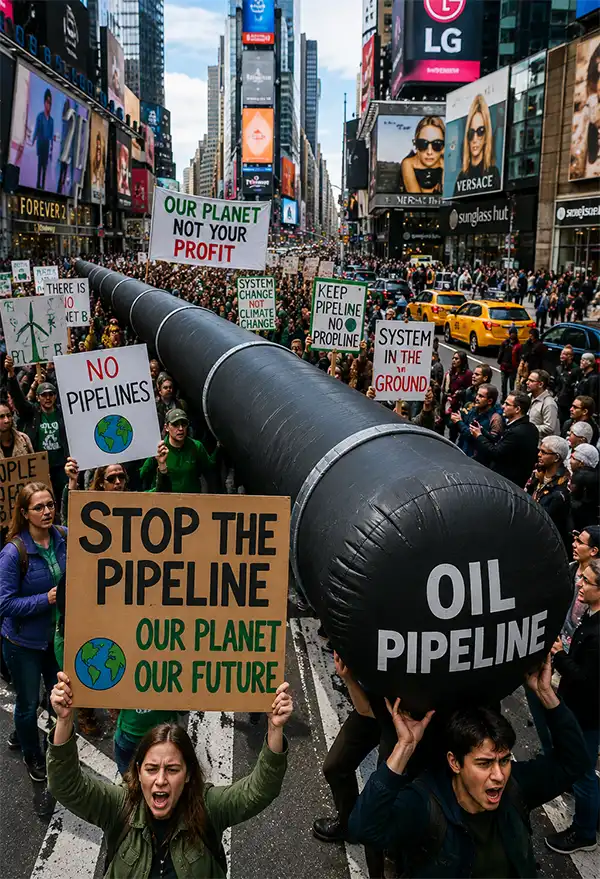
One example involved creating a mock oil spill in a public fountain. Another campaign used an inflatable pipeline to protest proposed fossil fuel infrastructure.
The basic strategy was clever: if you want people to pay attention to a complicated environmental issue on April 1, competing with whoopee cushions and fake pregnancy announcements using a 94-page technical report probably isn't going to work.
Humor provided the doorway and the environmental message came through it.
The observance subsequently expanded beyond its North American beginnings. Fossil Fools Day activities have taken place in cities around the world, with environmental groups including Rising Tide and other climate organizations organizing demonstrations, educational campaigns and public events.
By 2008, Fossil Fools Day actions were being reported in countries including the United States, Canada, Britain, Australia, New Zealand and South Africa. Activities ranged from peaceful demonstrations and street theater to bicycle events, banners and protests targeting fossil fuel infrastructure.
The exact form of Fossil Fools Day varies because there is no single international authority determining how everyone must observe it. It functions more as a decentralized environmental campaign, allowing local organizations and individuals to focus on energy issues affecting their own communities.
What Exactly Are Fossil Fuels?
Despite the name, fossil fuels are not the result of somebody digging up a Tyrannosaurus rex and discovering that it comes in unleaded. Fossil fuels are carbon-rich energy resources formed from the remains of ancient living organisms that were buried beneath layers of sediment and subjected to heat, pressure and geological processes over millions of years. The three principal fossil fuels used today are coal, petroleum and natural gas, and although they share an ancient biological origin, they did not all form in quite the same way.
Coal developed primarily from enormous quantities of ancient plant material that accumulated in swampy environments. As those plants died, they became buried beneath sediment where increasing heat and pressure gradually transformed the organic material, first into peat and eventually into different grades of coal. Petroleum and natural gas generally have different origins, forming largely from microscopic marine organisms, algae and other organic matter that settled on ancient seabeds and became buried beneath layers of sediment. Over immense periods of time, heat and pressure converted that material into hydrocarbons, which could then migrate through rock and accumulate in underground geological formations.
This is also why the familiar idea that gasoline is essentially liquefied dinosaurs is more entertaining than accurate. Dinosaurs certainly lived during portions of the immense geological periods involved, but petroleum owes far more of its existence to ancient microorganisms than to Tyrannosaurus rex. It may disappoint the eight-year-old inside all of us, but your car is not being propelled down the highway by a velociraptor.
What makes fossil fuels particularly useful is the large amount of energy stored within their chemical bonds. When coal, petroleum products or natural gas are burned, that stored chemical energy is released and can be used to generate electricity, provide heat, power engines and support industrial processes. Their high energy density, relative ease of transportation and enormous historical availability helped make fossil fuels central to the development of modern industrial civilization.
The difficulty is that creating them naturally takes millions of years, while humanity consumes them on a vastly shorter timescale. For practical human purposes, once coal, oil or natural gas is extracted and burned, nature cannot replace it at anything approaching the rate at which we use it. That is why fossil fuels are classified as nonrenewable energy resources — and why Fossil Fools Day asks us to think seriously about what will eventually take their place.
Why Fossil Fuels Became So Important
It is easy to criticize fossil fuels from the perspective of the modern environmental debate while overlooking the enormous role they played in building the world we live in. Coal, petroleum and natural gas became dominant not because previous generations were foolish, but because these fuels offered concentrated, reliable and relatively transportable sources of energy at precisely the time rapidly industrializing societies needed them. For more than two centuries, fossil fuels powered factories, transportation, electricity generation and economic development on a scale that earlier civilizations could scarcely have imagined.
Coal was the first fossil fuel to transform society on a massive scale. During the Industrial Revolution, coal-fired steam engines pumped water from mines, powered machinery, moved ships and eventually drove locomotives across expanding railway networks. Steam power allowed factories to operate on a much larger scale and freed many industries from dependence on waterwheels and other geographically limited sources of mechanical power. Later, coal became one of the principal fuels used to generate electricity, helping bring reliable power to homes, businesses and industries.
Petroleum produced another revolution. Once crude oil could be efficiently extracted, refined and distributed, it provided fuels ideally suited to internal combustion engines. Gasoline and diesel helped make automobiles, trucks, tractors and other machinery practical on an enormous scale, while petroleum-based aviation fuels eventually helped connect continents by air. Ships, construction equipment and military vehicles also became heavily dependent on petroleum, creating a worldwide transportation system built largely around oil.
Natural gas became increasingly important for heating, cooking, industrial processes and electricity generation. It can be transported through extensive pipeline networks and burned efficiently in modern power plants, making it an important part of energy systems in many countries. Natural gas also became an important industrial feedstock, contributing to the manufacture of fertilizers, chemicals and other products that modern economies use every day.
Fossil fuels are also used for considerably more than simply producing energy. Petroleum and natural gas provide raw materials for the petrochemical industry, which produces plastics, synthetic fibers, solvents, lubricants, paints, chemicals and countless other products. Modern agriculture has also benefited enormously from fossil-fuel-powered machinery, transportation and fertilizers, helping farmers produce and distribute food on a scale necessary to support billions of people.
Their usefulness helps explain why replacing fossil fuels is such a complicated undertaking. Modern civilization did not merely decide one morning that coal, oil and natural gas seemed fashionable; transportation networks, electrical grids, factories, farms, homes and entire national economies developed around them over generations. Much of the infrastructure still operating today was designed with those fuels in mind.
The question raised by Fossil Fools Day, therefore, is not whether humanity was foolish to use fossil fuels in the first place. They provided extraordinary benefits and helped create much of the prosperity, mobility and technological development associated with the modern world. The more useful question is whether remaining heavily dependent upon them indefinitely makes sense now that their environmental consequences are better understood and alternative energy technologies are becoming increasingly practical. Understanding why fossil fuels became so important is essential to understanding why moving beyond them cannot happen simply by pulling a very large plug out of the wall.
Fossil Fuels and Climate Change
Climate change is the central environmental issue associated with modern Fossil Fools Day campaigns. When coal, oil and natural gas are burned, carbon that has been stored underground for millions of years combines with oxygen and is released primarily as carbon dioxide. Human activities have substantially increased the concentration of carbon dioxide in the atmosphere since the Industrial Revolution, with fossil fuel combustion responsible for the largest share of those emissions.
Carbon dioxide is one of several greenhouse gases that influence Earth's climate. The natural greenhouse effect is essential because it keeps the planet warm enough to support life, but increasing concentrations of carbon dioxide, methane and other greenhouse gases strengthen that effect by trapping additional heat within the climate system. Measurements show that atmospheric carbon dioxide concentrations are now considerably higher than they were before widespread industrialization, while global average temperatures have also risen.
The consequences extend beyond simply having warmer summers. A warming climate affects oceans, ice, rainfall patterns and ecosystems around the world. Glaciers and ice sheets lose mass, seawater expands as it warms, and both processes contribute to rising sea levels. Climate change can also influence the frequency or severity of certain extreme weather events, while shifting temperature and precipitation patterns can affect agriculture, water supplies, wildlife and natural habitats.
The relationship between fossil fuels and climate change also involves more than carbon dioxide released during combustion. Natural gas consists primarily of methane, a powerful greenhouse gas that can escape during production, processing and transportation. Coal mining and petroleum operations can also release methane, meaning the climate impact of fossil fuels begins before the fuel reaches a power plant, factory, furnace or vehicle.
Fossil Fools Day activists therefore argue that reducing dependence on fossil fuels is an important part of limiting future climate change. That does not mean shutting down every power station, parking every vehicle and returning civilization to candles by Tuesday. The challenge is a gradual transition toward lower-carbon sources of energy while maintaining the reliable electricity, transportation, heating and industrial production upon which modern societies depend. That balance — reducing emissions without forgetting that several billion people rather enjoy having electricity — is where much of the real energy debate begins.
It Isn't Just About Carbon Dioxide
Carbon dioxide receives most of the attention when fossil fuels and climate change are discussed, but it is only part of the environmental story. Extracting, processing, transporting and burning coal, oil and natural gas can affect air, water and land long before the resulting energy reaches a home, vehicle or factory. The extent of those effects varies considerably according to the fuel involved, the method of extraction, local conditions, technology and the environmental safeguards in place.
Air pollution is one of the most established concerns. Burning fossil fuels can release pollutants including sulfur dioxide, nitrogen oxides and fine particulate matter, all of which can affect air quality and human health. Coal historically produced particularly significant quantities of several pollutants, although modern power plants can use scrubbers, filters and other pollution-control technologies to substantially reduce many emissions. Vehicles and industrial facilities have likewise become considerably cleaner in many countries because of improved engines, fuels, emission controls and environmental regulations.
Natural gas presents a different challenge because it consists primarily of methane. When burned efficiently, natural gas generally produces less carbon dioxide per unit of energy than coal, but methane can escape during drilling, processing, storage and transportation. Because methane is a powerful greenhouse gas, preventing leaks throughout the natural gas supply system is an important part of reducing its overall climate impact.
Oil brings its own set of risks. Petroleum must be extracted, transported to refineries, processed into useful products and distributed, creating opportunities for leaks and spills along the way. Major tanker and offshore drilling accidents have demonstrated how damaging large oil spills can be to marine and coastal ecosystems, while smaller spills and leaks can contaminate soil and water. Pipelines generally move enormous quantities of fuel safely, but failures can have serious local consequences when they occur.
Extraction itself can also reshape landscapes. Surface coal mining can remove vegetation and alter terrain, underground mining produces waste and presents water-management challenges, while oil and natural gas development requires wells, roads, pipelines and supporting infrastructure. These activities can disturb wildlife habitats and place pressure on local water resources if they are poorly managed. At the same time, regulations, restoration requirements and improved extraction techniques can reduce some of those effects, which is why the environmental footprint of fossil fuel production varies so widely from one operation to another.
This broader picture helps explain why Fossil Fools Day is concerned with more than carbon dioxide alone. Climate change may dominate the modern conversation, but air pollution, methane leakage, water quality, habitat disruption and the risks associated with extracting and transporting fuels are also part of the equation. Fossil fuels have provided enormous benefits to modern society, but obtaining that energy has never been environmentally free — nature, rather inconsiderately, continues to send an invoice.
Renewable Energy Enters the Conversation
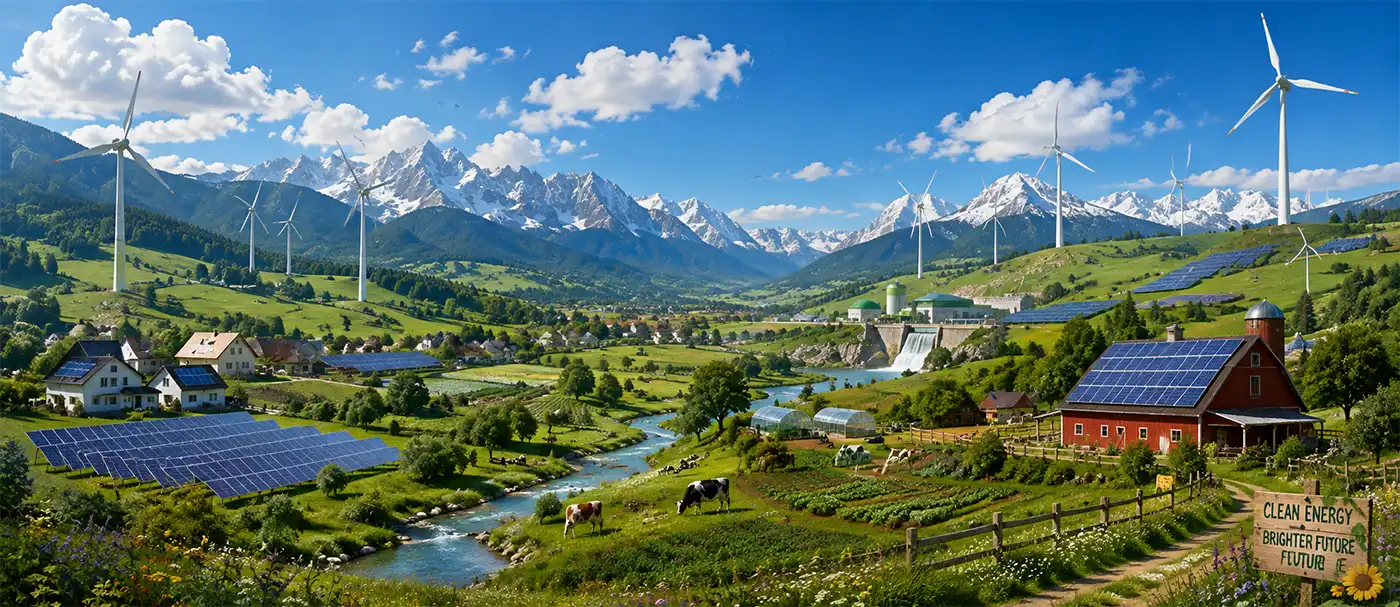
Fossil Fools Day is not simply about criticizing coal, oil and natural gas. An equally important part of the conversation concerns what can realistically replace some of the energy they provide. Renewable energy technologies have expanded considerably in recent decades, particularly solar and wind power, while hydroelectricity has supplied large amounts of renewable electricity for generations. Geothermal energy, which makes use of heat from within the Earth, provides another option in locations where geological conditions make it practical.
Solar energy has become increasingly common on everything from residential rooftops to enormous utility-scale installations. Photovoltaic panels generate electricity without burning fuel, and once installed they produce no direct air pollution during normal operation. Their obvious limitation is that sunlight is not available continuously, and output changes with weather, season and time of day. Large solar installations also require suitable land or other surfaces, while widespread rooftop solar can require changes in the way local electrical distribution systems operate.
Wind power faces a similar combination of opportunity and limitation. Modern turbines can generate substantial amounts of electricity in areas with dependable wind resources, and offshore wind can take advantage of strong coastal winds. However, turbines must be located where conditions are suitable, electricity must be transmitted from generating areas to consumers, and wind generation naturally varies. Hydroelectric power is more controllable in many circumstances and can provide enormous quantities of electricity, but large dams can alter rivers, affect fish populations, flood landscapes and change surrounding ecosystems.
As renewable energy supplies a greater percentage of electricity, the supporting infrastructure becomes increasingly important. Electrical grids must balance generation and demand continuously, which becomes more complicated when a growing portion of production depends upon changing sunlight and wind. Battery storage, pumped-storage hydroelectricity, expanded transmission networks, demand management and connections between different regions can all help balance those variations.
Renewable energy therefore offers powerful tools for reducing fossil fuel consumption, but describing the transition as simply replacing dirty energy with clean energy understates the engineering involved. Every energy source requires infrastructure, materials, land, investment and compromises of some kind. There is no enormous green switch hidden behind a government building that can simply be flipped from "Fossil" to "Renewable." If there were, somebody would presumably have found it by now.
What About Nuclear Energy?
Any serious discussion about reducing fossil fuel dependence eventually encounters nuclear power. Although nuclear energy is not renewable in the same sense as solar or wind power because reactors require mined nuclear fuel, operating nuclear plants can produce enormous quantities of electricity without directly burning fossil fuels. Their direct carbon dioxide emissions during operation are very low, which has led many governments, scientists and energy planners to consider nuclear power as part of a lower-carbon electricity system.
Nuclear energy also has an advantage that solar and wind generation do not always provide: reactors can produce large amounts of electricity continuously, regardless of whether the sun is shining or the wind is cooperating. Existing nuclear plants consequently provide dependable generation in a number of countries and can reduce the amount of electricity that would otherwise need to come from coal or natural gas.
The technology brings substantial challenges of its own. Nuclear power plants are expensive to build, major projects can take many years to complete, and radioactive waste must be safely managed for extremely long periods. Accidents such as those at Chernobyl and Fukushima also left a lasting impression on public attitudes toward nuclear safety, even as reactor designs and safety systems have continued to develop.
Fossil Fools Day campaigns have traditionally emphasized renewable energy, but the wider debate over reducing carbon emissions increasingly includes arguments both for and against nuclear power. That debate illustrates an important reality about energy policy: every option comes with benefits, costs and compromises. Reliable and affordable electricity cannot be created simply by declaring one technology virtuous and another unacceptable. Electrical grids, rather inconveniently, remain unimpressed by slogans.
Transportation and the Fossil Fuel Problem
Electricity generation is only part of the fossil fuel question. Transportation remains heavily dependent upon petroleum because gasoline, diesel and aviation fuels provide enormous amounts of energy in forms that can be easily carried aboard vehicles. Cars, trucks, ships, aircraft, agricultural machinery and construction equipment developed around liquid fuels, creating a transportation system that cannot simply be converted to another energy source overnight.
Electric vehicles offer one increasingly practical alternative for passenger cars and some commercial vehicles. Because electric motors are highly efficient, replacing gasoline or diesel vehicles with electric models can reduce direct fuel consumption, particularly when the electricity used to charge them comes from lower-carbon sources. Battery technology continues to improve, although vehicle cost, charging infrastructure, driving range, battery materials and electricity generation all remain parts of the broader environmental calculation.
Public transportation, cycling and walking can also reduce petroleum consumption, particularly in densely populated cities where homes, workplaces, shops and services are located relatively close together. Fossil Fools Day campaigns have often included bicycle rides and transportation demonstrations for precisely this reason. Better public transit and communities designed to reduce unnecessary driving can make alternatives to private vehicles considerably more practical.
Geography, however, matters enormously. Someone living in central Amsterdam may reasonably bicycle to work, pick up groceries on the way home and wonder why anyone needs a car. Someone living 40 miles from town in rural America might hear the same suggestion and begin wondering whether the person making it has ever actually seen rural America. Transportation solutions have to account for distance, population density, climate, physical ability and the practical needs of individuals rather than assuming one approach works everywhere.
Reducing transportation emissions will therefore involve a mixture of technologies and choices rather than a single replacement for petroleum. Electric vehicles, more efficient engines, alternative fuels, public transportation and improved urban planning can all contribute. Aircraft, ocean shipping and heavy equipment present additional challenges that will require technologies suited to their particular demands.
The Role of Individual Choices
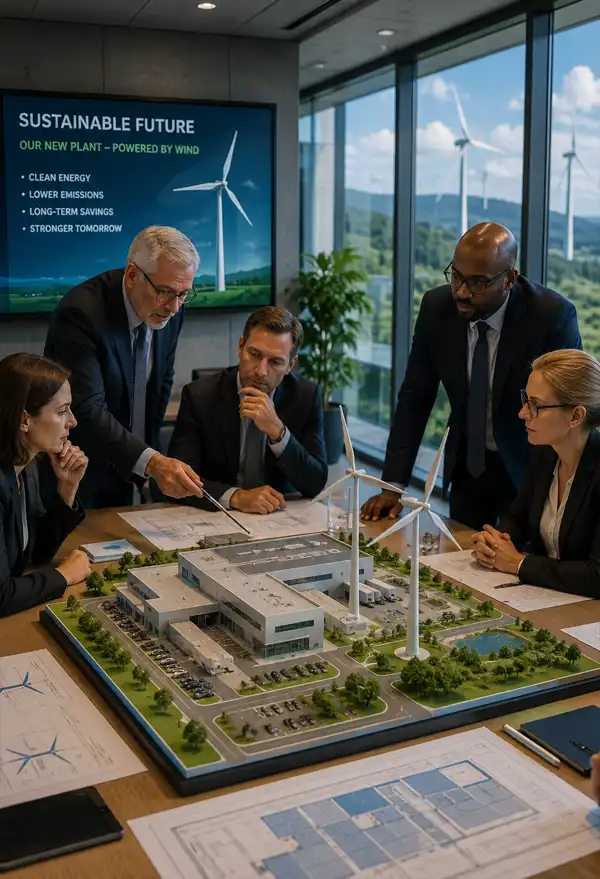
Fossil Fools Day encourages people to consider their own energy consumption, but that does not mean every individual must reorganize an entire life around calculating carbon emissions. Many useful changes are remarkably ordinary. Improving home insulation, using efficient heating and cooling systems, choosing energy-efficient appliances and turning off equipment that is not being used can reduce energy consumption while often lowering household expenses at the same time.
Transportation choices can also make a difference when circumstances allow. Some people may choose electric or hybrid vehicles, while others may use public transportation, carpool, combine several errands into one journey or simply keep an existing vehicle properly maintained. Someone replacing a furnace or water heater may consider a more efficient model, while homeowners in suitable locations may investigate rooftop solar. The most practical choices will vary considerably according to income, climate, housing and location.
No single household action is going to solve climate change, but that does not make individual decisions meaningless. When millions of households use less energy or adopt more efficient technologies, the cumulative effect can become significant. Consumer choices can also influence which products manufacturers develop and which technologies businesses decide are worth investing in.
At the same time, environmental responsibility needs to remain practical. A message that demands unrealistic sacrifices from ordinary people is unlikely to maintain public support for very long. Reducing unnecessary energy consumption is sensible; suggesting everyone retreat to a candlelit cave and survive on locally sourced turnips is probably going to encounter resistance somewhere around the turnips.
Corporate and Government Responsibility
Individual choices occur within energy systems largely created by governments and businesses. A homeowner cannot choose to commute by train if no railway exists, buy electricity from a particular source if the local grid does not offer that option, or install rooftop solar if the building is unsuitable. Fossil Fools Day campaigns have therefore historically directed considerable attention toward corporations, financial institutions and government policies rather than placing responsibility entirely on individual consumers.
Environmental activists have targeted oil and gas companies, coal operations, pipelines, power stations and banks financing fossil fuel projects. Their argument is that major investment decisions made today can determine energy production and emissions for decades. A power station, refinery or pipeline is not built with the expectation that everyone will reconsider the arrangement next Thursday.
Governments also have substantial influence over the direction of energy systems. Regulations can establish pollution standards, while taxation and subsidies can encourage or discourage particular technologies. Public investment can support electricity transmission, transportation systems and scientific research, while permitting and planning decisions determine which projects can actually be constructed. Energy security, affordability and employment must also be considered because governments have responsibilities extending beyond emissions alone.
Corporations make equally important choices about where private investment is directed, which technologies are developed and how quickly new products reach consumers. Many traditional energy companies have themselves invested in renewable power, battery technology, carbon management and other emerging industries while continuing to supply fossil fuels demanded by existing markets.
The transition toward lower-carbon energy therefore involves households, businesses and governments working within the same complicated system. Expecting consumers alone to solve the problem by remembering to switch off the kitchen light would certainly make energy policy easier, but unfortunately the kitchen light has been unfairly accused.
Climate Justice and Fossil Fools Day
Another important theme associated with Fossil Fools Day is climate justice, which considers not only how climate change occurs but also who experiences its consequences. Greenhouse gas emissions have accumulated over generations of industrial development, yet the benefits of that development and the environmental costs associated with it have not been distributed equally around the world.
Some communities and countries that contributed relatively little to historical greenhouse gas emissions may nevertheless face significant risks from rising sea levels, changing rainfall, extreme heat or other climate-related changes. Lower-income communities may also have fewer resources available to prepare for disasters, adapt infrastructure or recover after damaging events.
Similar concerns exist closer to the sources of fossil fuels. Communities located near mines, refineries, power plants, ports and heavily traveled transportation corridors can experience pollution and environmental disruption more directly than people who simply consume the energy or products produced there. Decisions about closing high-emission industries can create another problem by threatening communities whose jobs and local economies have depended upon those industries for generations.
Climate justice advocates therefore argue that the transition toward cleaner energy should consider who receives the benefits, who bears the costs and who participates in making the decisions. A successful transition needs to address workers and communities affected by economic change as well as the environmental goals themselves. Otherwise, solving one problem can simply create another group of people with a very legitimate reason to be unhappy about it.
Humor With a Serious Purpose
The most distinctive feature of Fossil Fools Day is right there in its name. Environmental campaigns often deal with subjects that are complicated, technical and occasionally depressing. Climate models, atmospheric chemistry, energy economics and international negotiations do not naturally suggest a fun afternoon, particularly once someone produces a 300-page report containing seventeen graphs.
Fossil Fools Day takes advantage of April 1 to approach those subjects differently. Since its beginnings, campaigners have used costumes, mock oil spills, parody advertisements, fake corporate announcements, street theater, banners and other forms of satire to attract attention. The humor gives people an accessible entry point into conversations about fossil fuels, pollution and energy policy without requiring them to begin by understanding atmospheric chemistry.
That approach can be remarkably effective because people remember things that make them laugh. A clever visual demonstration or well-designed parody can communicate an idea to people who would never voluntarily attend a two-hour lecture about carbon emissions. Humor can also challenge powerful organizations without turning every environmental message into an angry confrontation.
There is, however, a difference between creative protest and behavior that overshadows the message. Damaging property, creating dangerous situations or deliberately causing serious disruption can shift public attention away from the environmental issue and toward the conduct of the protesters themselves. If the purpose of Fossil Fools Day is to question foolish decisions, becoming the biggest fool on the evening news rather undermines the branding.
How to Observe Fossil Fools Day
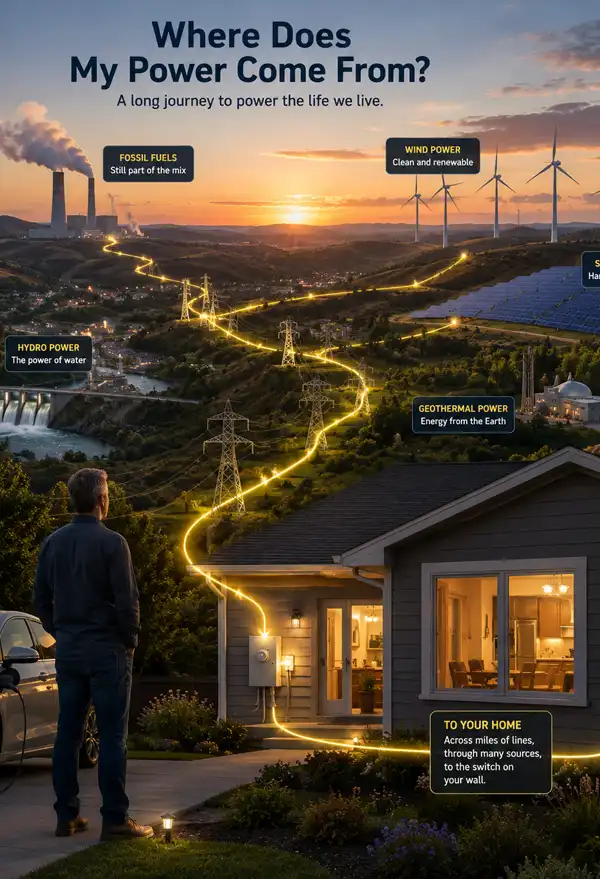
You do not need a protest sign, megaphone or convenient object to chain yourself to in order to observe Fossil Fools Day. One of the most useful ways to participate is simply to understand more about the energy you use every day. Most of us flick a switch without giving much thought to whether the resulting electricity came from natural gas, coal, nuclear power, hydroelectricity, solar panels, wind turbines or some combination of them.
Start by finding out how electricity is generated in your area and look at your own household energy consumption. Heating and cooling often account for a substantial portion of residential energy use, so insulation, efficient equipment and sensible thermostat settings can make a meaningful difference. Replacing inefficient appliances when they reach the end of their useful lives and eliminating unnecessary electricity consumption can reduce both energy use and household bills.
Transportation provides another opportunity for practical changes. Combining errands, keeping tires properly inflated, maintaining a vehicle, carpooling when convenient or occasionally choosing another form of transportation can reduce fuel consumption without requiring anyone to sell the family car tomorrow morning. People considering a new vehicle can also compare gasoline, hybrid and electric options according to their actual driving requirements rather than assuming one choice is automatically correct for everyone.
Fossil Fools Day is also an excellent excuse to learn something new. Explore how solar panels work, why electrical grids require constant balancing, how batteries store electricity, where gasoline comes from or why transmission lines are important to renewable energy development. Look into proposed energy projects in your community and learn enough to form an informed opinion about them.
Energy is one of the foundations of modern civilization, yet most of us rarely think about it until the power goes out or gasoline becomes expensive. Understanding where energy comes from, what it costs and what alternatives are available is considerably more useful than shouting at strangers about it — and generally requires less police involvement.
Fossil Fools Day Trivia
Before we consign fossil fuels to the geological naughty corner, there are a few things worth knowing about the energy sources that helped build the modern world. From ancient plants becoming coal to the disappointing discovery that gasoline isn't really made from dinosaurs, these Fossil Fools Day fun facts prove that energy history has plenty of surprises buried beneath the surface.
- Fossil Fools Day is observed every April 1.
- Its name combines "fossil fuels" and "April Fools' Day."
- The observance began in 2004.
- Early activities took place across the United States and Canada.
- More than 125 actions were reportedly coordinated during the first campaign.
- Students and youth climate activists played an important role in its beginnings.
- Early campaigns deliberately used April Fools-style pranks.
- A mock oil spill was among the early demonstrations.
- Fossil Fools Day later developed into an international campaign.
- Rising Tide has been one organization associated with the observance.
- Coal, petroleum and natural gas are the three principal fossil fuels.
- Fossil fuels take millions of years to form.
- Fossil fuels are classified as nonrenewable resources.
- Coal largely originates from ancient plant material.
- Oil does not consist primarily of decomposed dinosaurs.
- Petroleum largely formed from ancient microscopic organisms and organic matter.
Fossil Fools Day Is About the Future
The name Fossil Fools Day is deliberately silly, but the question behind it is anything but. Modern civilization requires enormous quantities of energy to provide electricity, transportation, heating, cooling, communications, manufacturing, agriculture and countless services that billions of people depend upon every day. Reliable and affordable energy has also helped improve living standards around the world, and developing countries understandably want access to the same opportunities industrialized nations have enjoyed.
At the same time, the environmental consequences associated with heavy fossil fuel consumption cannot simply be ignored. Climate change, air pollution and the environmental effects of extraction have created strong reasons to develop cleaner ways of producing and using energy. The challenge is doing so without sacrificing the reliability and affordability upon which modern societies depend.
Meeting that challenge will require a combination of renewable energy, improved electrical grids, energy storage, efficiency, new technologies and, in some countries, nuclear power. Transportation and industrial processes will require their own solutions, while governments and businesses must decide how quickly existing infrastructure can realistically be replaced. Scientific research, private investment and sensible public policy will all play roles.
It is equally important to recognize the scale of the undertaking. The world's current energy system was constructed over more than two centuries and represents an enormous investment in power stations, pipelines, vehicles, refineries, electrical networks, factories and transportation infrastructure. Changing that system is possible, and it is already happening, but pretending it can be completely rebuilt overnight does little to advance the conversation.
That is ultimately where the April 1 joke becomes useful. Fossil Fools Day asks whether knowing what we now know about fossil fuels and simply refusing to consider better alternatives would be the real foolishness. It does not require pretending that the answers are simple; in fact, understanding how complicated the transition will be makes the discussion more valuable.
April Fools' jokes are supposed to end when April 1 is over. The energy decisions made today will remain with us for generations. That makes them worth getting right.
Fossil Fools Day FAQ
Fossil Fools Day may begin with a clever April 1 pun, but it raises plenty of genuine questions about fossil fuels, climate change, renewable energy and the future of the world's energy supply. These frequently asked questions separate the facts from the foolery and explain what the day is about, why it matters and how you can take part without chaining yourself to a pipeline before breakfast.
When is Fossil Fools Day celebrated?
Fossil Fools Day is observed annually on April 1, deliberately coinciding with April Fools' Day. The name is a play on "fossil fuels" and "April Fools," using humor to encourage discussion about fossil fuel dependence, pollution, climate change and cleaner energy alternatives.
What is Fossil Fools Day?
Fossil Fools Day is an environmental awareness and action day focused on the use of coal, oil and natural gas and their effects on the environment and climate. Activities have included educational events, demonstrations, satire, bicycle rides and campaigns promoting renewable energy and energy efficiency.
When did Fossil Fools Day begin?
Fossil Fools Day began in 2004, when students and environmental activists organized more than 125 coordinated actions at schools and universities across the United States and Canada. The idea later spread internationally, with environmental organizations and local groups organizing their own April 1 activities.
Why is it called Fossil Fools Day?
The name combines fossil fuels with April Fools' Day. Organizers chose April 1 to use humor, parody and satire to question continued dependence on fossil fuels and draw attention to environmental and energy issues that can otherwise seem overwhelmingly technical.
What are the main fossil fuels?
The three principal fossil fuels are coal, petroleum and natural gas. They formed from ancient organic material that was buried and transformed by geological heat and pressure over millions of years. Because they take so long to form, they are considered nonrenewable energy resources.
Are fossil fuels really made from dinosaurs?
Not generally, despite one of the most persistent popular myths about petroleum. Coal formed primarily from ancient plant material, while most petroleum and natural gas developed from microscopic marine organisms, algae and other organic matter. Dinosaurs were certainly around during parts of Earth's fossil-fuel-forming history, but filling your gas tank does not amount to pouring in a Tyrannosaurus rex.
Why are fossil fuels associated with climate change?
Burning coal, petroleum and natural gas releases carbon dioxide that had previously been stored underground. Carbon dioxide is a greenhouse gas, and increasing its concentration in the atmosphere strengthens the greenhouse effect and contributes to global warming. Fossil fuel production can also release methane, another powerful greenhouse gas.
Why can't we simply stop using fossil fuels?
Modern transportation, electricity generation, manufacturing, agriculture and industrial infrastructure developed around fossil fuels over more than two centuries. Replacing them requires new generating capacity, electrical transmission, energy storage, vehicles, industrial technologies and substantial investment. Reducing fossil fuel dependence is possible, but rebuilding an energy system serving billions of people is considerably more complicated than changing the setting on a thermostat.
What energy sources can replace fossil fuels?
Alternatives include solar, wind, hydroelectric and geothermal energy, alongside improvements in energy efficiency and storage. Nuclear power also plays an important role in lower-carbon electricity systems in some countries. Different regions require different combinations depending on geography, available resources, infrastructure, economics and energy demand.
Is nuclear power considered renewable energy?
Nuclear power is generally not classified as renewable because conventional reactors depend upon finite mined fuels such as uranium. However, nuclear plants produce electricity with very low direct carbon dioxide emissions during operation, so nuclear energy is often included in discussions about reducing fossil fuel dependence and creating lower-carbon electricity systems.
How can I celebrate Fossil Fools Day?
You can learn where your electricity comes from, look for practical ways to reduce unnecessary energy consumption, investigate renewable energy in your community or learn more about how modern electrical grids and transportation systems work. Fossil Fools Day can also be marked through environmental events, educational programs and good-natured satire. A costume shaped like a lump of coal is entirely optional.
Is Fossil Fools Day only about climate change?
No. Climate change is a major focus, but Fossil Fools Day also draws attention to air pollution, environmental effects from mining and drilling, oil spills, methane leakage, energy efficiency, renewable energy, transportation and the social consequences of changing energy systems.
Is Fossil Fools Day an official holiday?
Fossil Fools Day is not a government-established public holiday. It is a decentralized environmental observance that grew from student and activist campaigns and has been marked by environmental organizations and communities in several countries.
What is the main message of Fossil Fools Day?
The central idea is that society should seriously consider whether continued heavy dependence on fossil fuels makes sense when their environmental effects are understood and alternatives are increasingly available. The deliberately humorous name helps open the conversation, but the underlying questions about energy, climate and the future are very real.
One Last Breath Of Fresh Air
Fossil Fools Day may have begun with an April 1 joke, but its lasting value comes from asking a serious question: where should our energy come from next? Coal, oil and natural gas helped transform civilization, powering factories, transportation, agriculture, electricity generation and much of the extraordinary technological progress of the past two centuries. Recognizing their environmental costs does not require pretending they contributed nothing worthwhile. History is rarely that tidy.
The challenge now is taking what fossil fuels helped us build and finding better ways to keep it running. Solar, wind, hydroelectric, geothermal and nuclear energy all have roles to play, alongside improved storage, more efficient buildings and vehicles, stronger electrical grids and technologies that have probably not yet escaped from somebody's laboratory. None provides a perfect answer, and replacing infrastructure constructed over generations will require time, money, engineering and a healthy willingness to admit when an idea works better on paper than it does after somebody plugs it in.
Individual choices matter too, particularly when millions of them accumulate. Using less energy unnecessarily, buying efficient equipment, considering different transportation options and simply understanding where our electricity and fuel come from are hardly revolutionary acts. They are practical ones. Nobody needs to surrender the refrigerator, park the car permanently or spend April 1 sitting in the dark congratulating themselves on their environmental purity.
Perhaps that is the best spirit in which to observe Fossil Fools Day. Learn something, question assumptions, laugh at a clever April Fools' pun and consider how the world might produce the energy it needs with fewer consequences for the environment. The goal isn't to return civilization to the days before coal, oil and electricity. It is to take everything we have learned since then and move forward.
After all, fossil fuels took millions of years to make.
It would be rather foolish not to spend a little time thinking about what comes after them.