Because Life’s Too Short for Beige
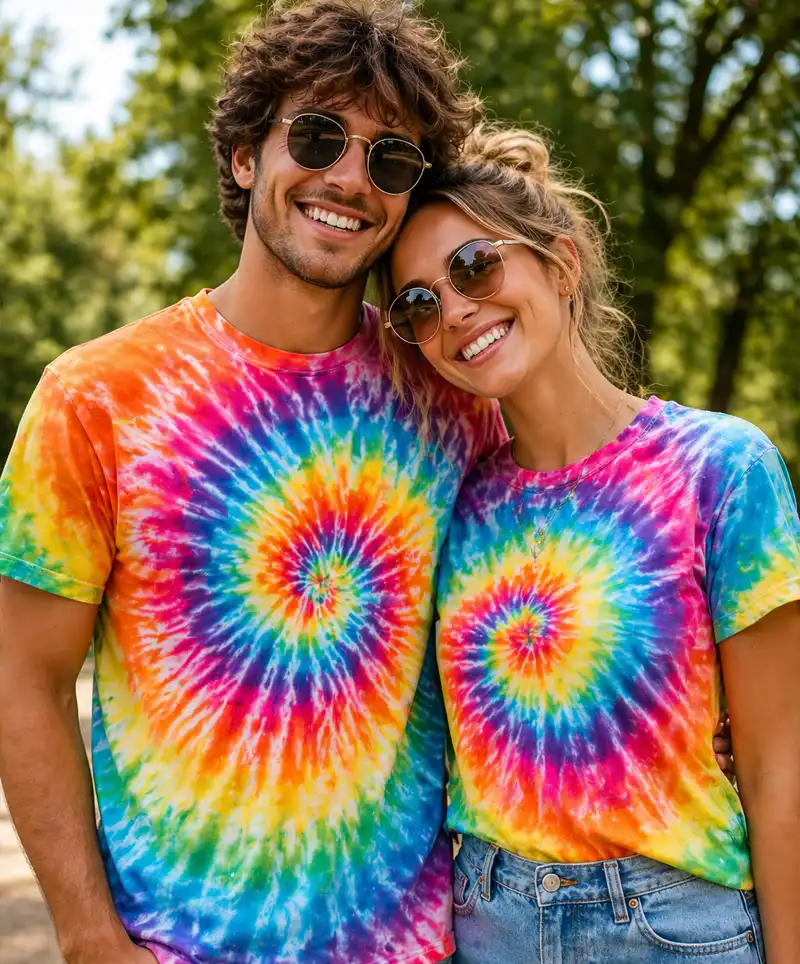
If your wardrobe has ever looked like a rainbow got into a wrestling match with a laundry basket—congratulations, you already understand the spirit of National Tie Dye Day. This colorful celebration honors one of the most creative, chaotic, and downright joyful forms of fabric art ever invented. It’s the one day where matching is optional, bright colors are mandatory, and “Oops, I spilled dye everywhere” counts as artistic expression.
What Is National Tie Dye Day?
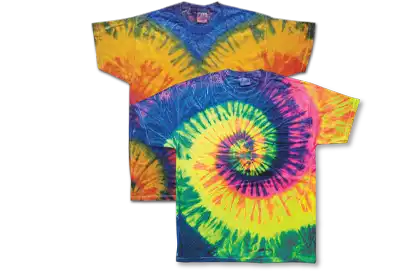
National Tie Dye Day, celebrated each year on April 30, is dedicated to the art of tie-dye—a method of coloring fabric using folds, twists, and bindings to create vibrant, one-of-a-kind patterns. From spiral shirts to psychedelic swirls, tie-dye is all about individuality. No two pieces ever come out exactly the same, which is part of the charm—and part of the gamble.
The day encourages people to:
- Create their own tie-dye clothing
- Wear bold, colorful designs
- Appreciate the history and craftsmanship behind the technique
It’s a hands-on, get-your-hands-dirty kind of celebration. Literally.
A Brief History of Tie Dye
Tie-dye might feel like it was invented in the 1960s (alongside bell-bottoms and questionable mustaches), but its roots stretch back thousands of years to cultures that mastered fabric dyeing long before it became a symbol of peace and free expression. Ancient artisans in India developed bandhani, a meticulous tie-and-dye technique using tiny bindings to create detailed patterns, while in Japan, the art of shibori transformed cloth into intricate designs through folding, stitching, and binding methods that required both patience and precision. Across parts of Africa, resist-dyeing traditions also flourished, producing bold textiles rich with cultural meaning. These early techniques were not just decorative—they were expressions of identity, status, and craftsmanship. By the time tie-dye reemerged in the 20th century as a colorful badge of individuality, it was carrying centuries of history along for the ride—just with a lot more neon.
Ancient civilizations in:
- India used a technique called bandhani
- Japan practiced shibori dyeing
- Africa developed various resist-dyeing traditions
These early methods involved folding, tying, stitching, or binding fabric before dyeing it—preventing certain areas from absorbing color and creating intricate patterns.
Fast forward to the 1960s and 1970s, and tie-dye became a symbol of:
- Peace
- Freedom
- Self-expression
- A general refusal to wear boring clothes
The counterculture movement embraced tie-dye as a visual rebellion against uniformity. In other words, if it looked like your shirt exploded in a paint factory, you were doing it right.
Why Tie Dye Still Matters
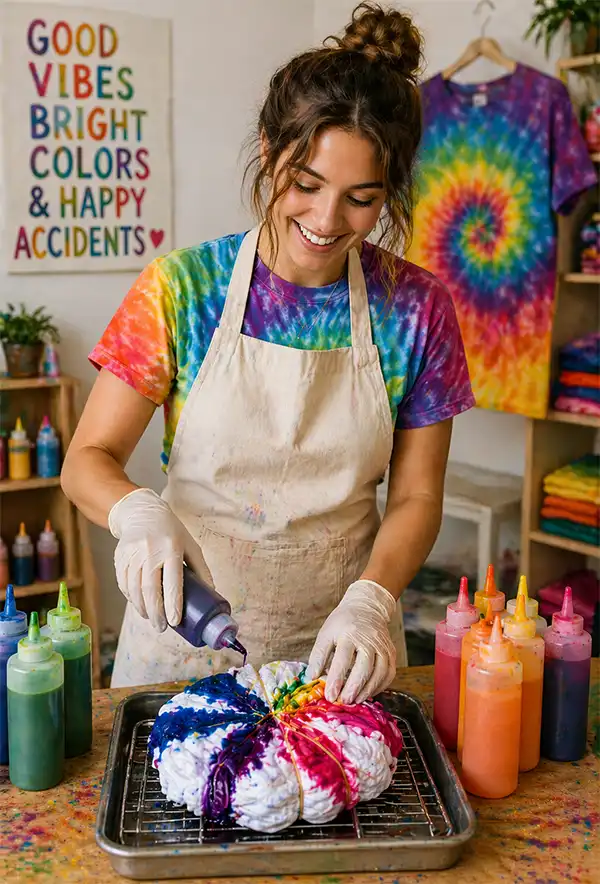
You might think tie-dye is just a nostalgic trend, but it has proven it’s not going anywhere anytime soon. What once defined the free-spirited style of the 1960s has reinvented itself again and again, finding a place in both high fashion and everyday life. Today, you’ll spot tie-dye patterns on designer runways, where top brands give the classic look a polished, modern twist, while at the same time it thrives at backyard tables where families twist up T-shirts and hope for the best. Its appeal crosses generations because it offers something rare—style without strict rules. Whether it’s a carefully crafted luxury piece or a slightly lopsided homemade creation, tie-dye continues to prove that creativity, color, and a little unpredictability never go out of fashion.
Here’s why it continues to thrive:
Creative Freedom
Tie-dye has no strict rules. You can:
-
- Twist it
- Crumple it
- Fold it like you’re trying to confuse the fabric
And somehow, it still turns out looking intentional.
Sustainable Fashion
Many people use tie-dye to:
-
- Upcycle old clothes
- Refresh faded garments
- Reduce textile waste
That old white T-shirt you were about to toss? Give it a splash of color and suddenly it’s “vintage.”
Stress Relief (With Mild Cleanup Regret)
There’s something oddly relaxing about dipping fabric into dye and watching colors blend. It’s like therapy… until you realize your hands are now permanently purple.
How to Celebrate National Tie Dye Day
You don’t need to be an artist to join in—there’s no entrance exam, no grading, and absolutely no requirement to stay inside the lines. All it takes is a willingness to roll up your sleeves, accept that things might get a little messy, and dive headfirst into a world of bold, unapologetic color. Tie-dye is wonderfully forgiving; a twist here, a splash there, and suddenly you’ve created something that looks far more intentional than it probably was. It’s less about perfection and more about participation, where the fun comes from the process as much as the result. And if you end up with dye on your hands, your table, or somehow your elbow, just consider it proof that you did it right.
Create Your Own Tie Dye Designs
Grab a basic kit or go old-school with:
-
- Fabric dye
- Rubber bands
- Plain cotton clothing
Try classic patterns like:
-
- Spirals
- Bullseyes
- Stripes
Or invent your own and pretend you meant it all along.
Host a Tie Dye Party
Invite friends or family and turn it into a full-blown color festival. Just maybe warn them ahead of time not to wear their favorite shoes.
Wear Your Brightest Outfit
Already have tie-dye gear? Today is the day to show it off proudly. The louder the colors, the better.
Teach the Kids
Tie-dye is perfect for kids:
-
- It’s hands-on
- It’s creative
- It keeps them busy long enough for you to drink a cup of coffee while it’s still warm
That alone makes it worth celebrating.
Fun Facts About Tie Dye
Before you twist up another shirt or accidentally redecorate the kitchen table, it’s worth knowing that tie-dye comes with a few surprises of its own. This colorful craft isn’t just about wild patterns and happy accidents—it has a history, a bit of science, and plenty of quirky details that make it even more interesting. From ancient techniques to modern fashion comebacks, these fun facts will give you a new appreciation for every swirl, stripe, and splash of color.
- No two tie-dye patterns are ever identical—your shirt is truly one of a kind
- The process relies on resist dyeing, where tied areas block color absorption
- Tie-dye surged in popularity again during the 2020 lockdowns as people looked for creative at-home activities
- High-end designers have embraced tie-dye, proving that yes, your camp shirt is now “fashion”
The Science Behind the Swirls
Tie-dye isn’t just random splashes—it only looks like that when you’re standing there wondering how your hands turned blue and your shirt turned… well… “interesting.” Behind the swirls and bursts of color is a surprisingly respectable mix of chemistry and technique. Fabric fibers soak up dye molecules like a sponge at a spill, while tightly twisted or bound sections resist the color, creating those signature patterns. Add in a bit of timing, a dash of color theory, and a healthy dose of “let’s see what happens,” and you’ve got yourself a wearable science experiment. It’s part laboratory, part art class, and part blind optimism—but when it works, it looks like you knew exactly what you were doing all along.
The magic happens when:
- Fabric fibers absorb dye molecules
- Bound sections resist the dye
- Colors spread and blend through capillary action
Different folding methods change how the dye flows, which is why a tight spiral looks completely different from a loose crumple. It’s part science experiment, part happy accident.
Why This Day Is Worth Celebrating
In a world that often feels a little too serious and a little too gray, National Tie Dye Day is a reminder to loosen up and add some color—literally and figuratively.
It celebrates:
- Creativity without perfection
- Individual expression
- The joy of making something with your own hands
And let’s be honest—it’s one of the few holidays where making a mess is not only acceptable, it’s encouraged.
A Colorful Final Thought
Tie-dye doesn’t demand perfection, and that’s exactly why it endures. In a world that often leans toward neat lines, predictable patterns, and playing it safe, tie-dye invites you to loosen your grip and embrace a little unpredictability. You twist, you fold, you add color—and then you wait to see what kind of magic (or mild chaos) reveals itself. Sometimes it turns out stunning, sometimes it turns out… memorable—but it’s always uniquely yours.
There’s something refreshingly honest about that process. It reminds us that creativity isn’t about getting everything exactly right the first time. It’s about trying, experimenting, and occasionally laughing at the results. Tie-dye celebrates individuality in the most visible way possible, turning a simple piece of fabric into a statement that says, “I made this,” whether it looks like a masterpiece or a rainbow got a little carried away.
So on National Tie Dye Day, go ahead and embrace the color, the mess, and the unexpected results. Wear something bright. Try something new. And if your creation ends up a little wild, a little uneven, or completely different from what you imagined—well, that just means you’re doing it right.