Mark The Weeks - March

March is the month that can’t pick a lane. One day it’s a lion roaring sleet in your face, the next it’s a lamb sunbathing on your porch. You’re juggling umbrellas, sunglasses, and a suspiciously green cupcake, while basketball brackets ruin friendships and every closet conducts “early spring” auditions. Somewhere between mud season and shamrocks, optimism thaws out.
Week-long celebrations in March are your tune-up for brighter days—small sprints that beat the winter cobwebs off your routine. Think fresh starts without the pressure, traditions with a wink, and just enough structure to feel productive while you wait for the daffodils to show up. Lace up, layer up, and lean in: seven days is the perfect length to try something new, cheer something old, and still have time to hunt for that one glove you lost in February.

- Details
Ghostwriters are the invisible superheroes of the publishing world. They write bestselling memoirs, inspiring speeches, celebrity books, business articles, and sometimes entire novels while somebody else smiles for the author photo. Somewhere right now, a ghostwriter is quietly transforming a pile of voice notes, random thoughts, and half-finished sentences into a polished masterpiece while fueled entirely by caffeine and deadlines. National Ghostwriters Week is the perfect time to recognize the talented writers whose greatest professional achievement is making other people sound brilliant.
Celebrated: Annually, from March 1st to March 7th
Celebrate National Ghostwriters Week with the history, humor, and hidden world of the writers behind bestselling books and speeches

- Details
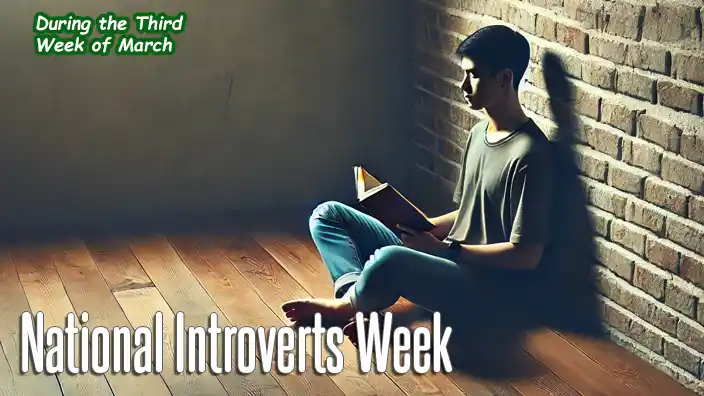
Introverts are like human cats—they thrive in quiet corners, selectively enjoy socializing, and absolutely need time to recharge after an eventful day. They can be the life of the party, but only if the party involves one close friend, a cup of tea, and no small talk. While extroverts might measure success in high-fives and group selfies, introverts are perfectly content with mastering the art of the Irish goodbye and dodging phone calls like it’s an Olympic sport. It’s not anti-social—it’s just pro-serenity.
Celebrated: Annually, during the Third Week of March
Discover the essence of National Introverts Week, a quiet celebration honoring introverts' unique contributions to society and the workplace.


- Details
It starts innocently enough—a quick check of the phone to see the time. Three hours later, they've mastered a new TikTok dance, deep-dived into conspiracy theories about why pizza boxes are square, and somehow joined a Discord server for competitive kazoo players. Teens and tech have a symbiotic relationship; one feeds the other in a loop of endless memes, questionable Google searches, and a level of multitasking that makes adults question their own brainpower.
Celebrated: Annually, beginning on the First Sunday in March
Join Teen Tech Week, where libraries transform into tech hubs for teens to explore coding, robotics, and digital creativity through hands-on activities.


- Details
Have you ever caught a familiar scent and suddenly found yourself reliving a moment from twenty years ago? One whiff of fresh bread, a pine forest after the rain, or hot milk poured over Corn Flakes can send your brain racing backward faster than an old family photo album. National Fragrance Week celebrates those invisible time machines we call scents, proving that sometimes the quickest way to travel through time is simply to take a deep breath.
Celebrated: Annually, during the week of March 21st
Take a deep breath and explore National Fragrance Week! Discover why scents trigger memories, how perfumes are made, and the fragrances that make life unforgettable

- Details
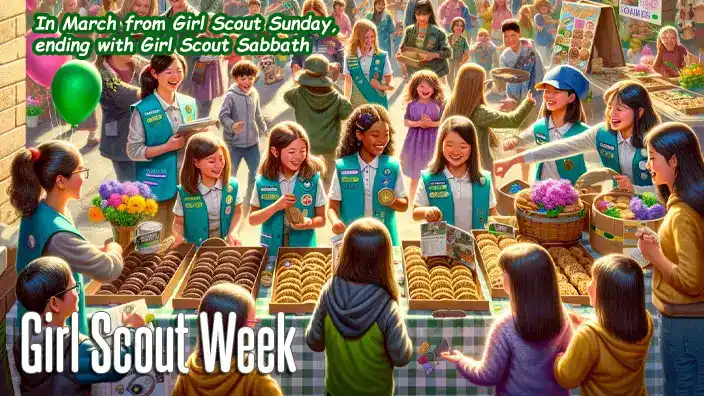
When a group of determined kids in sashes can sell more cookies than a global snack conglomerate, you know they’re onto something special. Whether they’re earning badges for coding, navigating wilderness trails, or starting community projects that would make adults break out in a cold sweat, these young trailblazers prove that age is no barrier to ambition. Armed with a sense of purpose, a can-do attitude, and maybe a box of Thin Mints, they remind us all that the future is in very capable hands.
Celebrated: Annually, in March from Girl Scout Sunday, ending with Girl Scout Sabbath
Celebrate Girl Scout Week by exploring the rich history of an organization empowering girls through cookies, leadership, and community service since 1912.


- Details
Women in construction aren’t just breaking glass ceilings—they’re demolishing them with a wrecking ball and then using the rubble to lay the foundation for something better. They wield power tools like pros, navigate blueprints like treasure maps, and somehow manage to keep the job site running smoother than a fresh coat of concrete. While some skeptics might still clutch their hard hats in disbelief, these women are busy proving that the only thing more outdated than that mindset is asbestos insulation. Whether they’re operating cranes, pouring foundations, or overseeing entire projects, one thing is certain—when women build, they build to last.
Celebrated: Annually, during the First Week of March
Discover the impact of Women in Construction Week, celebrating women's achievements and promoting gender equality in the construction industry. Join the movement towards a more inclusive future!


- Details
Telecommuting: where the daily commute is a treacherous ten-step journey from bed to desk, navigating through perilous obstacles like rogue Lego pieces and snoozing pets. It's a land where business attire and pajamas coexist harmoniously, and the mute button is the unsung hero of every meeting. Here, "traffic jams" involve battling for bandwidth with gaming teenagers, and the phrase "let's circle back" often means another round of searching for that elusive pen under a pile of unsorted laundry. In this world, every day is 'bring your pet to work day', and the biggest office politics involve deciding which coffee mug to use. Welcome to the home office, where productivity meets comfort, and every day is a new adventure in work-life balance!
Celebrated: Annually, during the First Week of March
Telecommuter Appreciation Week: Honoring the work-from-home warriors who balance professional tasks and home comforts with humor and grace.


- Details
In the hands of a master chef, a simple potato becomes a gourmet dish; in the mouth of a skilled orator, an ordinary word can ignite revolutions or soothe the most savage of tempers. Consider the chaos that ensues when someone casually declares, "Let's eat, Grandma," versus the alarming, "Let's eat Grandma." One comma, a world of difference. Words aren’t just tools; they’re the keys to both starting wars and apologizing for them, often in the same breath. Choose wisely, because sometimes what you say may stick around longer than the coffee stain on your favorite shirt!
Celebrated: Annually, during the First Full Week of March
Discover the origins and vibrant celebrations of Words Matter Week, a tribute to the art of communication and the power of playful language.

- Details
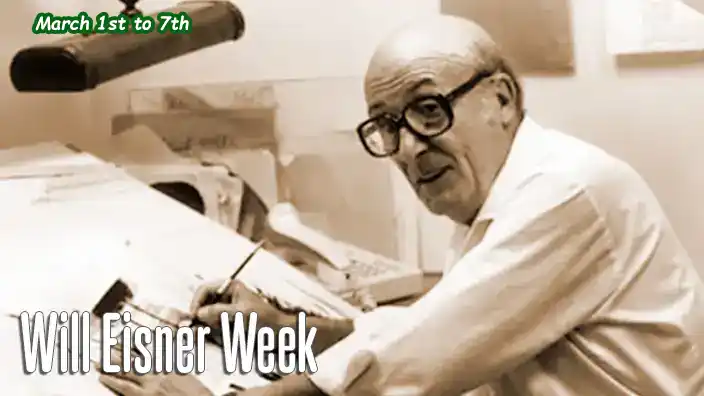
Will Eisner wasn’t just a comic book legend—he was the kind of guy who could probably storyboard his grocery list and make it riveting. Imagine him at a diner, doodling on a napkin while waiting for his coffee, and accidentally inventing a new way to frame action sequences. While most people saw comics as kids’ fare, Eisner saw a blank canvas for high art, deep storytelling, and—let’s be honest—a chance to prove he could do more with a single panel than most novelists could with an entire chapter. If there were a superhero whose power was making editors rethink their entire industry, Eisner would have been it—minus the cape, of course.
Celebrated: Annually, during the First Week of March
Explore the life and legacy of Will Eisner, a pioneer in graphic novels and visual storytelling, whose innovative approach reshaped the comic industry forever.

- Details
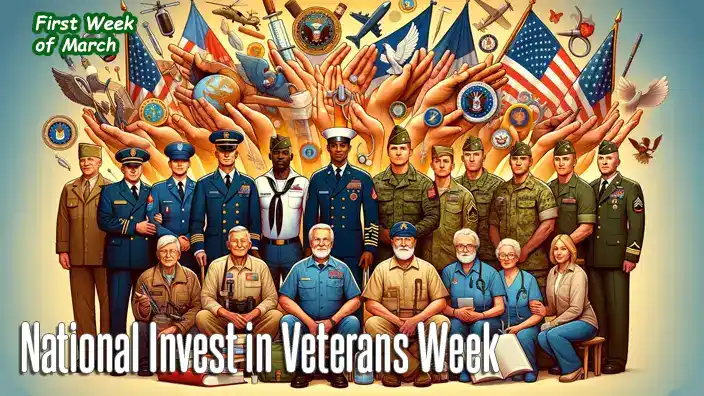
Investing in veterans is a commitment to honoring those who have selflessly served our nation by ensuring they have access to the resources, opportunities, and support they deserve upon their return to civilian life. It is a serious and necessary endeavor, one that recognizes the invaluable skills, discipline, and leadership veterans bring to our communities and workplaces. By providing comprehensive healthcare, education, employment opportunities, and mental health services, we not only pay tribute to their sacrifices but also enrich our society with their diverse experiences and perspectives. Investing in veterans is not just a moral obligation; it is a wise investment in the future of our nation, fostering a culture of gratitude, respect, and mutual support that strengthens the fabric of our society.
Celebrated: Annually, during the First Week of March
National Invest in Veterans Week highlights the importance of supporting veterans as they transition to civilian life, focusing on meaningful investment in their futures.


- Details
This is the one week when e-readers glow brighter than social media screens, and digital pages flip faster than a pancake at a breakfast buffet. Forget about judging a book by its cover; it's time to judge it by its battery life. Whether you're a night owl turning virtual pages under the stars or a multitasker balancing an e-book on one screen and working on another, this week celebrates the art of reading without the fear of a paper cut. So charge up, download, and dive into your next digital adventure, where the only thing heavier than your reading list is the number of devices you use to read them.
Celebrated: Annually, during the First Full Week of March
Join the celebration where digital wanderers embrace the convenience and magic of e-books and explore the evolution of digital reading.


- Details
It’s funny to think that for years, women were kept out of the cockpit because it was deemed “too dangerous” or “too complex” for their delicate sensibilities. Meanwhile, these same women were managing households, navigating the chaos of kids, and multitasking like seasoned air traffic controllers on a busy day. Let’s be honest: if anyone could handle a thousand dials, gauges, and radio chatter while simultaneously reminding everyone to stay calm and buckle up, it was them. The irony? Many of those early male pilots probably could’ve used some of that legendary female sense of direction.
Celebrated: Annually, during the week of March 8th
Celebrate Women of Aviation Worldwide Week, highlighting women's contributions to aviation and inspiring future female pilots through exciting events.

- Details
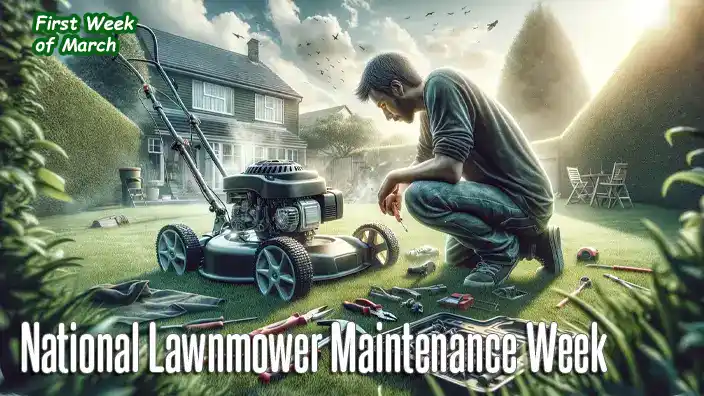
It's that magical time of year when lawnmowers nationwide receive the pampering they've silently yearned for all season. Picture this: hardened blades getting the spa treatment with sharpening and oiling, engines purring in delight at the fresh influx of fuel, and wheels getting aligned for that perfect, straight cut. It's the week when we acknowledge that the hero of the backyard isn't just a grass-chopping gadget but a beloved family member with its own set of needs.
Celebrated: Annually, during the First Week of March
National Lawnmower Maintenance Week blends practical advice with humor, uniting enthusiasts to honor lawn care heroes. Enjoy activities and rituals for a flawless lawn.


- Details
Imagine a morning without the chaos of deciding between cereal or toast—school breakfast steps in like a quiet negotiator, settling all disputes with a tray of perfectly portioned options. It’s the one place where tater tots somehow count as an acceptable side dish before 8 a.m., and no one bats an eye when pancakes and pizza share the same menu rotation. With its mix of efficiency and a sprinkle of mystery (“Is this juice or slightly orange-flavored water?”), school breakfast ensures kids are fueled up for whatever challenges the day—or the cafeteria line—might bring.
Celebrated: Annually, during the First Week of March
Celebrate National School Breakfast Week, a tribute to nutritious breakfasts that fuel academic success and the unsung heroes behind the scenes.


- Details
The Peace Corps: where adventurous souls with a passion for service, a tolerance for unpredictable plumbing, and a knack for makeshift problem-solving unite. It's the only place you'll find people who are equally excited about building bridges (both literal and metaphorical) and battling the local wildlife for the last banana. Volunteers come for the chance to make a difference and stay for the unexpected joys of mastering local dance moves, becoming connoisseurs of every possible variation of rice, and forming unbreakable bonds with people whose names they can barely pronounce. It's like summer camp for adults, but with more vaccinations and less reliable internet. In the end, Peace Corps volunteers may not change the whole world, but they definitely leave their corner of it with a few more smiles, a couple of new latrines, and stories that sound too outrageous to be anything but true.
Celebrated: Annually, during the Week Containing March 1st
Discover the significance of Peace Corps Week, celebrating global volunteerism and the impact of service since 1961. Join in the festivities!

From Our Marks Catelog
-

Peace for one hour? That’s like baking a cake and only eating the crumbs! If we can manage to...
-

There was a time when wearing pink to school might earn you a raised eyebrow, a snicker, or a...
-
Picture this: you're rummaging through a drawer, looking for a pen, but instead, you find a flip...
-

There’s nothing light about Good Friday—after all, it commemorates the darkest day in Christian...
-

Mental health is not just a personal matter—it's a global issue that affects millions of lives...
-

Having a hole in your bucket is nature’s way of saying, “You tried.” It’s the DIY version of a practical...

