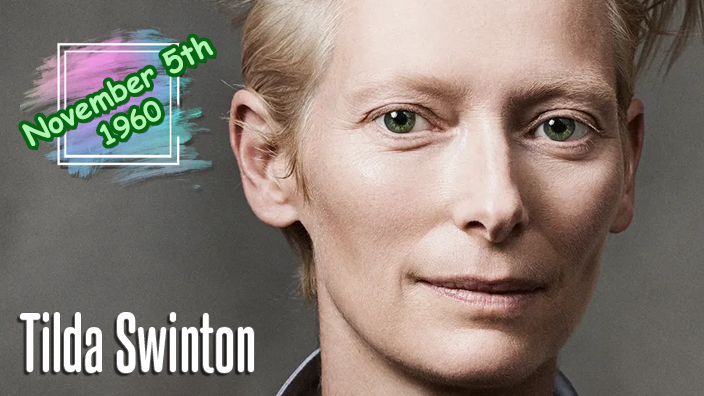
November 5, 1960, in London, England

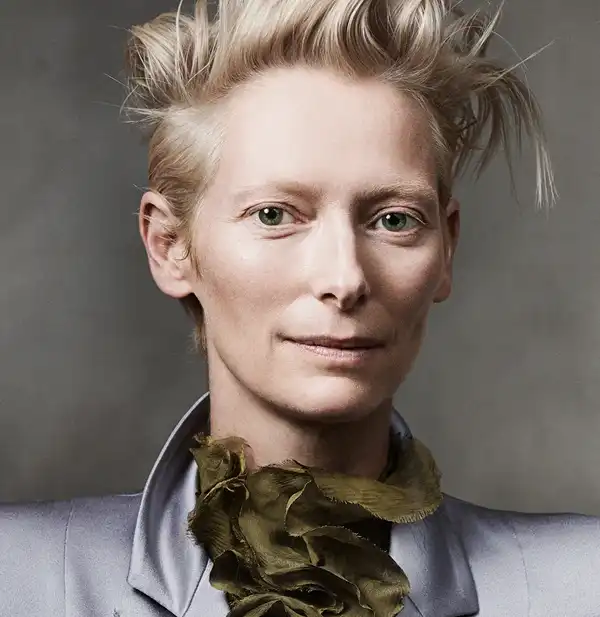
Katherine Matilda Swinton was born on November 5, 1960, in London, England, into a distinguished Scottish family with a long history of military service. Her father, Major-General Sir John Swinton, served in the British Army, while her mother, Judith Balfour, Lady Swinton, was Australian. Tilda grew up with three brothers in an environment shaped by family traditions, education, and a strong sense of Scottish identity. Her family connections stretch back through centuries of Scottish history, but Swinton would eventually choose a profession in which ancient family traditions counted for considerably less than imagination, determination, and the ability to become someone entirely different. Her upbringing may have been conventional in certain respects, but her eventual career would be anything but ordinary.
Swinton attended several schools during her childhood, including West Heath Girls' School in Kent, where one of her fellow pupils was the future Diana, Princess of Wales. She has spoken critically about aspects of her boarding-school experiences, particularly the emotional isolation associated with being separated from family at a young age. These experiences contributed to her independent outlook and her interest in questioning established institutions. She later attended the University of Cambridge, studying social and political sciences at New Hall, now known as Murray Edwards College. During her university years, she became involved in theatrical productions and developed an increasingly serious interest in acting. Her academic background encouraged her to examine social structures, identity, and human behavior, subjects that would eventually become central to many of her most challenging performances.
After completing her studies at Cambridge in 1983, Swinton began pursuing professional acting opportunities. She joined the Royal Shakespeare Company in 1984, gaining experience in classical theater and appearing in productions including Measure for Measure. Although working with such a respected theatrical institution represented an important opportunity, she gradually discovered that conventional stage performance did not entirely satisfy her creative ambitions. Swinton was particularly attracted to experimental theater and filmmaking, where artists could challenge traditional storytelling methods and explore unconventional interpretations of character and identity. Her interest in artistic independence would become one of the defining characteristics of her career, leading her toward collaborations with filmmakers whose work frequently existed outside the boundaries of mainstream commercial cinema.
A decisive turning point came when Swinton began working with British filmmaker Derek Jarman, an influential director known for his experimental visual style, political engagement, and unconventional approach to storytelling. Her feature-film debut came in Jarman's Caravaggio, released in 1986, which explored the life and artistic world of the Italian painter Michelangelo Merisi da Caravaggio. Swinton portrayed Lena, a character involved in the complicated emotional relationships surrounding the artist. The film combined historical subject matter with deliberately modern visual elements, creating an atmosphere that challenged conventional expectations about period drama. For Swinton, the experience introduced her to a collaborative filmmaking environment in which performance, visual art, and personal expression were closely connected.
Her partnership with Jarman became one of the most important artistic relationships of her early career. She appeared in several of his subsequent productions, including The Last of England, War Requiem, The Garden, Edward II, and Wittgenstein. These films explored themes of politics, sexuality, history, personal freedom, and social injustice through experimental imagery and unconventional narrative structures. Swinton's willingness to embrace challenging material made her particularly valuable to Jarman, whose work required performers comfortable with ambiguity and emotional intensity. Their collaboration also helped establish her reputation within international art-house cinema, attracting audiences interested in filmmaking that challenged conventional expectations. While Hollywood was busy producing action heroes and romantic comedies, Swinton was developing a career in films that sometimes required audiences to do a little homework before buying a ticket.
In 1991, Swinton portrayed Isabella of France in Jarman's adaptation of Christopher Marlowe's Edward II. The film presented a stylized interpretation of the historical English monarch's troubled reign and personal relationships, combining Elizabethan drama with contemporary political and social commentary. Swinton's portrayal of Isabella emphasized ambition, emotional frustration, and the complicated consequences of political power. Her performance earned the Volpi Cup for Best Actress at the Venice International Film Festival, providing significant international recognition for her work. The award demonstrated that her unconventional career choices could produce major artistic achievements and helped establish her as one of Britain's most distinctive emerging screen performers.
Swinton achieved another important breakthrough with Orlando, released in 1992 and directed by Sally Potter. Based on Virginia Woolf's celebrated novel, the film follows an English aristocrat who lives across several centuries and experiences a mysterious transformation from male to female. Swinton portrayed the title character, delivering a performance that explored identity, gender, social expectations, and the passage of time. The film's unusual narrative required her to portray a character whose outward circumstances changed dramatically while maintaining a recognizable internal personality. Her striking appearance and understated performance helped make the transformation believable, allowing the film to explore complicated philosophical questions through elegant visual storytelling.
Orlando became an important achievement in international independent cinema and remains one of Swinton's most celebrated early performances. The film received critical acclaim for its visual design, imaginative adaptation, and thoughtful exploration of gender and identity. Swinton's ability to communicate both emotional continuity and profound personal transformation established her as an actress particularly suited to unconventional characters. The role also introduced her to a wider international audience and demonstrated that she could carry a major film through a performance that relied as much on subtle expression as conventional dramatic dialogue. For an actress who would later portray supernatural beings, ancient sorcerers, and mysterious figures of uncertain identity, Orlando provided an ideal introduction to the possibilities of cinematic transformation.
During the 1990s, Swinton continued appearing in independent films that explored unusual psychological and social themes. Her credits included Female Perversions, Conceiving Ada, and Love Is the Devil: Study for a Portrait of Francis Bacon. These productions reflected her interest in artists, outsiders, and individuals struggling against established expectations. She also participated in experimental performance art and gallery projects, demonstrating that her creative interests extended beyond conventional cinema. One of her most unusual artistic appearances involved The Maybe, a performance installation in which she lay apparently asleep inside a glass display case. The work attracted considerable attention because it blurred the boundaries between theatrical performance, visual art, and the ordinary act of sleeping. Most people require considerable persuasion to get out of bed in the morning; Swinton managed to turn staying in one into an artistic event.
Her international profile expanded significantly in 2000 when she appeared in The Beach, directed by Danny Boyle and starring Leonardo DiCaprio. Based on Alex Garland's novel, the film follows a young traveler who discovers an isolated island community in Thailand that initially appears to offer an ideal escape from modern society. Swinton portrayed Sal, the charismatic but increasingly authoritarian leader of the community. Her character's desire to preserve the island's apparent perfection gradually reveals the dangers of secrecy, manipulation, and unchecked authority. The role introduced Swinton to a much larger mainstream audience and demonstrated her ability to portray a commanding antagonist within a major studio production. Sal was certainly persuasive enough to attract followers, although her management style would probably have produced some rather alarming employee satisfaction surveys.
In 2001, Swinton starred in The Deep End, a psychological crime drama directed by Scott McGehee and David Siegel. She portrayed Margaret Hall, a mother who becomes involved in a dangerous situation while attempting to protect her teenage son from the consequences of a mysterious death. The film explored maternal responsibility, moral compromise, and the extraordinary lengths to which ordinary people may go when their families are threatened. Swinton's performance emphasized emotional restraint and quiet desperation, allowing audiences to understand the character's growing fear even when she attempted to maintain an appearance of normality. Her work received widespread critical acclaim and earned a Golden Globe nomination for Best Actress in a Motion Picture Drama, strengthening her reputation as a performer capable of carrying emotionally demanding stories.
Swinton continued appearing in internationally recognized productions, including Vanilla Sky in 2001, Adaptation in 2002, and Young Adam in 2003. In Vanilla Sky, starring Tom Cruise, she portrayed a psychologist involved in the film's mysterious exploration of identity, memory, and reality. In Spike Jonze's Adaptation, she played publishing executive Valerie Thomas, contributing to a self-referential story about screenwriting, creative frustration, and the difficulties of adapting literature for cinema. Young Adam, directed by David Mackenzie and starring Ewan McGregor, explored sexual relationships, guilt, and moral ambiguity within a bleak Scottish setting. These performances demonstrated her ability to move between mainstream Hollywood productions and smaller independent films without abandoning her preference for complicated characters.
In 2005, Swinton appeared in Constantine, the supernatural action thriller starring Keanu Reeves as a detective investigating conflicts between heavenly and demonic forces. She portrayed the angel Gabriel, presenting the character with an ambiguous, otherworldly presence that reflected the film's exploration of morality, divine authority, and human responsibility. Her performance was particularly memorable because she avoided conventional representations of angelic beauty or benevolence, instead creating a figure whose motivations were increasingly unsettling. The role demonstrated her ability to portray supernatural beings through subtle physical and emotional choices, an approach that would become central to several of her later fantasy performances.
That same year, Swinton achieved major mainstream recognition when she portrayed Jadis, the White Witch, in The Chronicles of Narnia: The Lion, the Witch and the Wardrobe. Directed by Andrew Adamson and based on C. S. Lewis's beloved fantasy novel, the film follows four children who discover a magical world threatened by an evil ruler. Swinton's White Witch is a cold, manipulative figure who has condemned Narnia to an endless winter without Christmas. Her elaborate costumes, pale appearance, and commanding manner helped create one of the film's most memorable characters. Rather than relying exclusively on exaggerated villainous behavior, Swinton portrayed Jadis with an unsettling combination of elegance, authority, and cruelty.
The Chronicles of Narnia: The Lion, the Witch and the Wardrobe became a major international box-office success, introducing Swinton to younger audiences and families around the world. Her performance demonstrated that she could create a memorable fantasy villain while maintaining the psychological complexity associated with her independent-film work. The White Witch became an important part of the franchise's visual identity, particularly through her icy costumes and imposing screen presence. Swinton returned to the character through appearances in The Chronicles of Narnia: Prince Caspian in 2008 and The Chronicles of Narnia: The Voyage of the Dawn Treader in 2010. Although her character's appearances in the sequels were more limited, they reinforced her association with one of modern fantasy cinema's most recognizable villains.
Swinton's greatest mainstream awards achievement came with Michael Clayton, released in 2007 and directed by Tony Gilroy. The legal thriller starred George Clooney as a corporate law firm's specialist in resolving difficult situations, while Swinton portrayed Karen Crowder, a senior attorney working for a powerful agricultural corporation. As the film's investigation exposes dangerous corporate misconduct, Crowder becomes increasingly desperate to protect her employer and her own professional position. Swinton's performance revealed a woman struggling to maintain control while confronting the consequences of decisions that become progressively more unethical. Her portrayal combined professional authority with private anxiety, creating a character whose outward confidence concealed profound insecurity.
One of the most memorable aspects of Swinton's performance in Michael Clayton was her ability to reveal Karen Crowder's emotional vulnerability without making the character sympathetic in a conventional sense. Scenes showing her rehearsing professional statements, struggling with anxiety, and attempting to maintain composure demonstrated the enormous psychological pressure beneath her polished corporate appearance. Swinton avoided portraying Crowder as a simple villain, instead emphasizing the complicated relationship between ambition, fear, and moral compromise. Her performance became one of the film's most widely praised elements, particularly because she transformed a seemingly conventional corporate executive into a deeply unsettling and believable character.
At the 80th Academy Awards ceremony in February 2008, Tilda Swinton won the Oscar for Best Supporting Actress for Michael Clayton. The victory marked a major milestone in a career that had developed primarily through experimental and independent filmmaking. She also received the BAFTA Award for Best Actress in a Supporting Role, further recognizing the strength of her performance. The achievement demonstrated that an actress celebrated for unconventional artistic choices could also succeed within mainstream Hollywood's most prestigious awards environment. Swinton's Oscar acceptance speech reflected her distinctive personality and sense of humor, particularly when she joked about the resemblance between George Clooney and the award's famous golden figure.
Following her Academy Award victory, Swinton continued pursuing a remarkably varied selection of roles. In 2008, she appeared in the Coen brothers' dark comedy Burn After Reading, portraying Katie Cox, a woman whose complicated personal relationships become entangled in an absurd espionage misunderstanding. The film featured George Clooney, Brad Pitt, Frances McDormand, and John Malkovich, creating an ensemble of eccentric characters whose questionable decisions produce increasingly disastrous consequences. Swinton's performance combined impatience, emotional distance, and sharp comic timing, demonstrating that she could be just as effective in dark comedy as serious drama. Her character's professional confidence and personal frustrations provided an entertaining contribution to the film's chaotic narrative.
She also appeared in David Fincher's The Curious Case of Benjamin Button in 2008, portraying Elizabeth Abbott, a woman who develops an emotional connection with the film's unusual protagonist. Starring Brad Pitt and Cate Blanchett, the film follows a man who experiences the aging process in reverse, exploring love, mortality, and the passage of time. Swinton's performance was restrained and emotionally sensitive, providing a quieter contrast to some of her more theatrical characters. Her scenes contributed to the film's reflections on relationships and the fleeting nature of human experience, reinforcing her ability to create memorable moments without dominating the entire narrative.
In 2009, Swinton starred in I Am Love, directed by Luca Guadagnino, portraying Emma Recchi, a Russian-born woman married into a wealthy Italian family. The film follows Emma's emotional awakening as she becomes involved in a passionate relationship that challenges her carefully controlled existence. Swinton learned Italian and Russian for the role, demonstrating her commitment to linguistic and cultural authenticity. Her performance relied heavily on subtle expressions, physical movement, and emotional restraint, allowing the film's elaborate visual style to complement the character's internal transformation. I Am Love received widespread critical acclaim and established an important creative partnership between Swinton and Guadagnino.
The psychological drama We Need to Talk About Kevin, released in 2011 and directed by Lynne Ramsay, provided one of Swinton's most emotionally demanding performances. Based on Lionel Shriver's novel, the film explores the relationship between Eva Khatchadourian, portrayed by Swinton, and her troubled son Kevin, played as a teenager by Ezra Miller. Following a devastating act of violence committed by Kevin, Eva struggles with grief, guilt, public hostility, and memories of their difficult relationship. The story moves between different periods of Eva's life, gradually revealing the emotional tensions surrounding motherhood, family responsibility, and the frightening possibility that some human behavior cannot be easily explained.
Swinton's portrayal of Eva was widely praised for its emotional intensity and psychological complexity. Rather than presenting the character as an idealized mother or a simple victim, she explored the contradictions of a woman who experiences resentment, fear, affection, and guilt in deeply uncomfortable ways. The performance required her to communicate extraordinary emotional distress through restrained expressions and physical behavior, frequently allowing silence to convey more than dialogue. We Need to Talk About Kevin received significant critical recognition, and Swinton earned nominations for a Golden Globe Award, a BAFTA Award, and a Screen Actors Guild Award. The film became one of the defining achievements of her dramatic career, demonstrating her willingness to confront difficult subjects without offering audiences reassuring or simplistic conclusions.
Swinton continued exploring unconventional characters through collaborations with internationally respected filmmakers. In 2012, she appeared in Wes Anderson's Moonrise Kingdom, portraying a stern social-services representative whose arrival complicates the lives of two young runaways. The film's distinctive visual style, dry humor, and eccentric characters provided an ideal environment for Swinton's understated comic abilities. Her character was identified simply as Social Services, a wonderfully bureaucratic name for someone who appeared determined to make an already complicated situation even more complicated. The performance began a recurring collaboration with Anderson, whose carefully constructed fictional worlds frequently benefit from actors capable of delivering unusual dialogue with absolute seriousness.
In 2013, Swinton appeared in Bong Joon-ho's science-fiction thriller Snowpiercer, portraying Minister Mason, a grotesquely authoritarian official aboard a train carrying the survivors of a frozen Earth. The film explores social inequality through a society divided into rigid classes according to passengers' positions aboard the train. Swinton transformed herself through elaborate makeup, false teeth, distinctive glasses, and an exaggerated accent, creating a character whose ridiculous appearance concealed genuine cruelty. Her performance combined political satire with unsettling humor, making Mason one of the film's most memorable figures. The role demonstrated Swinton's extraordinary willingness to alter her appearance and physical mannerisms in service of a character, even when the result was deliberately unattractive.
That same period brought Only Lovers Left Alive, directed by Jim Jarmusch, in which Swinton portrayed Eve, a centuries-old vampire whose relationship with another vampire, Adam, played by Tom Hiddleston, forms the emotional foundation of the story. Unlike conventional vampire films centered on violence and horror, the production explored art, music, literature, immortality, and the exhaustion associated with observing human civilization over centuries. Swinton's performance was elegant, reflective, and unexpectedly humorous, creating a supernatural character whose greatest concerns included cultural decline and the difficulties of maintaining a meaningful existence. The film became a favorite among audiences attracted to thoughtful fantasy cinema and demonstrated her ability to make an ancient vampire seem surprisingly relatable.
Her collaboration with Wes Anderson continued in The Grand Budapest Hotel, released in 2014. Swinton portrayed Madame D., an elderly aristocrat whose death becomes central to the film's elaborate mystery involving inheritance, loyalty, and criminal intrigue. The role required extensive prosthetic makeup to transform her appearance, allowing her to portray a character far removed from her usual screen image. The film featured an ensemble cast including Ralph Fiennes, Tony Revolori, Saoirse Ronan, and many other recognizable performers. Swinton's brief but memorable appearance contributed to the movie's distinctive atmosphere of theatrical absurdity and visual elegance.
In 2015, Swinton appeared in the romantic comedy Trainwreck, directed by Judd Apatow and starring Amy Schumer. She portrayed Dianna, the demanding editor of a men's lifestyle magazine whose appearance and personality differed dramatically from many of Swinton's previous roles. Wearing a carefully styled blonde wig and adopting an exaggeratedly polished professional manner, she delivered a sharp comic performance that surprised audiences familiar with her more experimental work. The role demonstrated that Swinton could participate effectively in mainstream American comedy without sacrificing her distinctive approach to characterization. It also suggested that her extraordinary talent for transformation could make her almost unrecognizable even without supernatural powers or elaborate fantasy costumes.
She reunited with Luca Guadagnino for A Bigger Splash, released in 2015, portraying Marianne Lane, a famous rock singer recovering from vocal surgery while vacationing on an Italian island. The film follows the emotional tensions that develop when Marianne and her partner receive unexpected visitors, played by Ralph Fiennes and Dakota Johnson. Because Marianne is recovering from surgery, Swinton performs much of the role with minimal dialogue, relying on gestures, expressions, and physical behavior to communicate the character's emotions. The performance demonstrated her ability to create a compelling screen presence even when deprived of one of an actor's most important tools: the spoken word.
In 2016, Swinton entered the Marvel Cinematic Universe with Doctor Strange, portraying the Ancient One, a powerful sorcerer who trains Stephen Strange, played by Benedict Cumberbatch, in the mystical arts. The character introduces Strange to a world of alternate dimensions, magical abilities, and extraordinary threats to reality. Swinton's performance emphasized calm authority, intelligence, and an otherworldly understanding of existence, creating a mentor whose knowledge extended far beyond ordinary human experience. The casting attracted controversy because the character had traditionally been portrayed as an Asian man in Marvel Comics, prompting discussion about representation and adaptation choices. Swinton's performance nevertheless became an important part of the film's exploration of spiritual discipline, personal transformation, and responsibility.
Swinton returned as the Ancient One in Avengers: Endgame, released in 2019, contributing to the film's elaborate storyline involving time travel and the consequences of altering past events. Her character's conversation with Bruce Banner, portrayed by Mark Ruffalo, helped explain the risks associated with removing powerful artifacts from their original timelines. The scene provided an important narrative connection between the mystical concepts introduced in Doctor Strange and the larger Marvel storyline. Swinton's appearance demonstrated her ability to participate in enormous commercial productions while maintaining the composed, distinctive screen presence that had become her trademark.
Her continued work with Luca Guadagnino included Suspiria, released in 2018, a supernatural horror film inspired by Dario Argento's 1977 classic. Swinton portrayed Madame Blanc, a mysterious instructor at a Berlin dance academy concealing sinister supernatural activities. In an especially unusual creative decision, she also portrayed the elderly psychiatrist Dr. Josef Klemperer under the fictional acting identity Lutz Ebersdorf. Extensive prosthetic makeup allowed her to transform into a character whose age, gender, and physical appearance differed dramatically from her own. The elaborate deception became one of the film's most discussed production details and demonstrated Swinton's enthusiasm for challenging conventional assumptions about performance and identity.
Swinton continued appearing in distinctive films during the late 2010s and early 2020s, including The Dead Don't Die, The Personal History of David Copperfield, and The Souvenir. In Jim Jarmusch's The Dead Don't Die, she portrayed Zelda Winston, an eccentric funeral director with unusual abilities and an enthusiasm for swordsmanship. The film combined zombie horror with deadpan comedy, creating an atmosphere in which Swinton's unusual character seemed entirely appropriate. In Armando Iannucci's adaptation of Charles Dickens's David Copperfield, she portrayed Betsey Trotwood, the formidable but ultimately compassionate aunt who becomes an important influence on the protagonist's life. These contrasting performances demonstrated her ability to move between absurdist horror and literary comedy with equal confidence.
In 2021, Swinton appeared in Memoria, directed by Apichatpong Weerasethakul, portraying Jessica Holland, a woman living in Colombia who begins hearing a mysterious sound that nobody else appears able to perceive. The film explored memory, perception, consciousness, and the relationship between individuals and their surroundings through an unusually meditative narrative. Swinton's restrained performance emphasized uncertainty and curiosity, allowing the story to unfold through silence, atmosphere, and subtle emotional responses. The production received critical acclaim for its experimental approach and reinforced her longstanding commitment to filmmakers whose artistic ambitions extend beyond conventional commercial storytelling.
She also appeared in Wes Anderson's The French Dispatch in 2021, portraying art critic J. K. L. Berensen, and returned to his distinctive cinematic world in Asteroid City in 2023 as Dr. Hickenlooper. These performances continued a productive creative relationship characterized by carefully controlled visual compositions, eccentric personalities, and understated humor. Swinton's ability to deliver elaborate dialogue with complete seriousness makes her particularly effective within Anderson's films, where characters frequently behave as though the most extraordinary situations are perfectly normal. Her performances contribute to the sense that these fictional worlds operate according to unusual but internally consistent rules.
In 2022, Swinton starred opposite Idris Elba in Three Thousand Years of Longing, directed by George Miller. She portrayed Dr. Alithea Binnie, a scholar of narrative and mythology who encounters a djinn capable of granting three wishes. The film explores storytelling, desire, loneliness, and the complicated consequences of attempting to change one's circumstances through supernatural intervention. Swinton's performance emphasized intelligence, emotional reserve, and curiosity, creating a character whose academic understanding of mythology becomes unexpectedly relevant to her personal life. The film's combination of fantasy, romance, and philosophical reflection provided another opportunity for her to explore the boundaries between ordinary human experience and extraordinary fictional possibilities.
That same year, Swinton appeared in The Eternal Daughter, directed by Joanna Hogg, portraying both a middle-aged filmmaker and her elderly mother. The film follows the two women during a visit to a remote hotel connected to their family history, exploring memory, grief, and the complicated emotional relationships between parents and children. Swinton's dual performance required her to create two distinct personalities while maintaining the subtle emotional connections between them. The production was particularly significant because it reunited her with Hogg, whose early student film Caprice had featured Swinton decades earlier. Their continuing collaboration reflected the importance of long-term artistic relationships within her career.
In 2023, Swinton appeared in David Fincher's thriller The Killer, portraying an assassin known as the Expert. Her scenes opposite Michael Fassbender provided a memorable contrast between two highly disciplined individuals whose professional circumstances have placed them in a dangerous confrontation. She also appeared in the independent comedy Problemista, directed by and starring Julio Torres, portraying Elizabeth, an eccentric and demanding art-world personality. The role allowed Swinton to embrace exaggerated behavior and unusual comic situations while contributing to a story about immigration, ambition, and the challenges of establishing a creative career in New York City.
One of her most significant later performances came in The Room Next Door, released in 2024 and directed by Pedro Almodóvar. Swinton starred opposite Julianne Moore in the Spanish filmmaker's first English-language feature film. She portrayed Martha, a woman confronting a terminal illness who reconnects with an old friend, Ingrid, played by Moore. The film explores friendship, mortality, personal autonomy, and the emotional responsibilities associated with supporting someone facing the end of life. Swinton's performance emphasized dignity, determination, and vulnerability, contributing to a deeply reflective drama about the choices people make when confronted with their own mortality.
The Room Next Door won the Golden Lion at the Venice International Film Festival in 2024, providing another major international achievement in Swinton's career. Her collaboration with Almodóvar reflected her continued interest in working with filmmakers whose distinctive artistic visions explore complicated emotional and philosophical questions. The production also demonstrated her ability to approach difficult subjects with restraint and sensitivity, avoiding unnecessary sentimentality while allowing audiences to connect with the characters' experiences. Her performance reinforced her reputation as an actress willing to confront challenging material without compromising its emotional complexity.
Swinton's remarkable career has also included significant recognition beyond individual film performances. In 2020, she received the British Film Institute Fellowship, one of the organization's highest honors, recognizing her contributions to cinema and film culture. That same year, she received the Golden Lion for Lifetime Achievement at the Venice International Film Festival. In 2025, the Berlin International Film Festival honored her with an Honorary Golden Bear, acknowledging her extraordinary artistic achievements and influence on international filmmaking. These distinctions reflected the breadth of her career, which has included experimental cinema, major Hollywood productions, independent filmmaking, and collaborations with some of the world's most respected directors.
Away from acting, Swinton has maintained a strong connection to Scotland, particularly the Highlands, where she has lived with her family. She has two children, twins Honor and Xavier, with Scottish artist and playwright John Byrne. Her daughter, Honor Swinton Byrne, has also pursued acting, appearing in films including The Souvenir and its sequel. Swinton has maintained a longstanding relationship with German artist Sandro Kopp, whose work includes portraiture and other visual art projects. Despite her international recognition, she has generally preferred a relatively private personal life, emphasizing family, artistic collaboration, and independence from conventional Hollywood expectations.
Swinton has also been actively involved in supporting independent cinema and alternative film exhibition. She has participated in projects designed to bring films to audiences outside traditional commercial theaters, including events in Scotland that celebrate the communal experience of watching cinema. Her enthusiasm for film culture extends beyond her own performances, reflecting a belief that movies should be experienced as artistic works capable of challenging, entertaining, and connecting audiences. She has frequently spoken about the importance of preserving opportunities for experimental filmmakers and supporting creative environments where unusual ideas can develop without excessive commercial pressure.
Her distinctive approach to fashion has also attracted considerable attention. Swinton is widely recognized for her striking red-carpet appearances, unconventional hairstyles, and willingness to experiment with clothing that challenges traditional expectations of celebrity glamour. She has collaborated with major fashion designers and appeared in international fashion publications, frequently treating clothing as another form of artistic expression. Her appearance can change dramatically between productions and public events, reinforcing her reputation as a performer who enjoys exploring identity through visual transformation. While some celebrities spend considerable effort developing a consistent public image, Swinton seems considerably more interested in discovering how many different appearances one person can convincingly adopt.
One of the defining characteristics of Tilda Swinton's career is her refusal to become associated with a single type of character or filmmaking style. She has portrayed historical figures, corporate executives, supernatural beings, grieving mothers, aristocrats, scientists, vampires, and eccentric outsiders. Her performances frequently explore the boundaries between identity and appearance, encouraging audiences to question their assumptions about gender, authority, morality, and human behavior. This willingness to challenge expectations has made her particularly valuable to directors interested in unconventional storytelling, while her appearances in major franchises have introduced her work to audiences who might otherwise never encounter experimental cinema.
Her success also demonstrates that independent artistic ambitions and mainstream recognition need not be mutually exclusive. Swinton's collaborations with Derek Jarman, Sally Potter, Lynne Ramsay, Luca Guadagnino, Jim Jarmusch, and other distinctive filmmakers established her reputation as an adventurous performer. Her appearances in The Chronicles of Narnia, Doctor Strange, and Avengers: Endgame demonstrated that the same creative qualities could contribute to commercially successful entertainment. Her Academy Award-winning performance in Michael Clayton brought these different aspects of her career together, showing that an actress known for challenging artistic choices could achieve the highest levels of industry recognition.
From experimental British cinema to Hollywood blockbusters, Tilda Swinton has built an extraordinary career through imagination, independence, and an exceptional ability to transform herself. Her performances in Orlando, Michael Clayton, The Chronicles of Narnia, We Need to Talk About Kevin, Snowpiercer, and The Room Next Door reveal an actress capable of moving between fantasy, psychological drama, political satire, and intimate human stories. She has won an Academy Award, received major international honors, and collaborated with filmmakers whose work has helped shape modern cinema. Yet her greatest achievement may be her continued determination to remain unpredictable. Whether appearing as a wicked queen, a troubled mother, an ancient sorcerer, or an entirely unexpected character hidden beneath elaborate makeup, Tilda Swinton continues to demonstrate that the most interesting performers are often those who refuse to follow the usual rules.
References & Sources