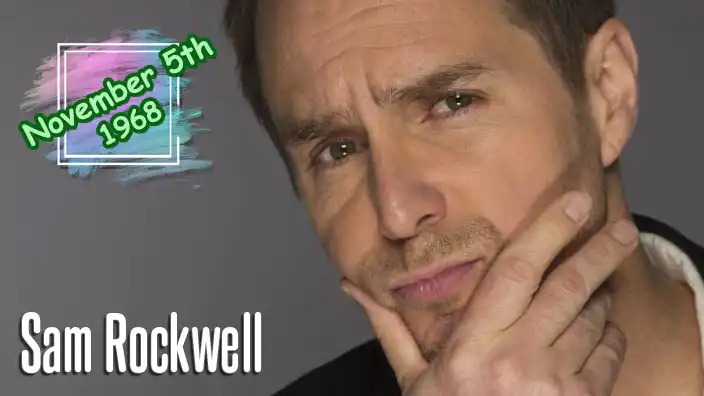
November 5, 1968, in Daly City, California

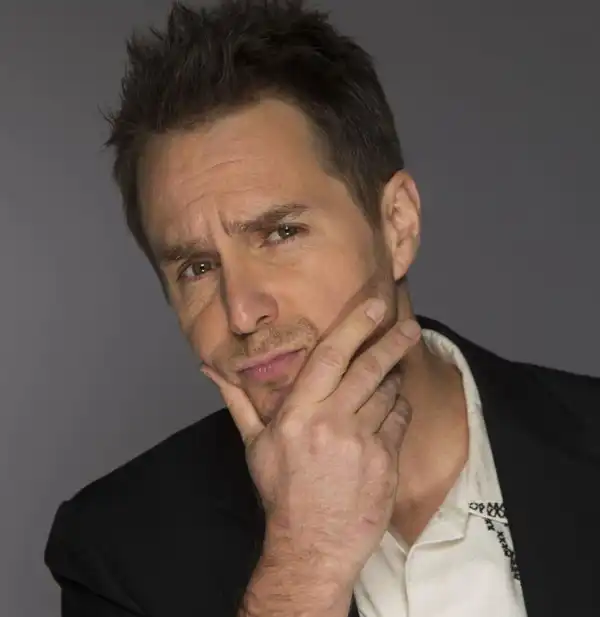
Sam Rockwell was born on November 5, 1968, in Daly City, California, near San Francisco, into a family already connected to the performing arts. His father, Pete Rockwell, and mother, Penny Hess, were both actors, giving their son an early introduction to the unpredictable world of theatrical performance. The family moved to New York City during his early childhood, but his parents separated when he was five. Sam subsequently grew up primarily with his father in San Francisco, spending summers and other periods with his mother in New York. This arrangement exposed him to two distinctive American cities and their different cultural environments, while maintaining his connection with the theater through both parents. Although his upbringing was unconventional, it helped develop the independence, curiosity, and adaptability that would eventually become essential to his acting career.
Rockwell's earliest acting experience came during childhood when he appeared on stage alongside his mother in a theatrical production. Despite having professional actors as parents, he did not immediately embrace the idea of following them into the entertainment industry. As a teenager, he was more interested in socializing, exploring the city, and developing his own identity than pursuing a carefully planned acting career. He attended J. Eugene McAteer High School in San Francisco, where he participated in the School of the Arts program, and later attended an alternative high school. His early educational experiences were not always conventional, but acting gradually became an important outlet for his energy and creativity. The opportunity to explore different personalities and circumstances appealed to him, particularly because performing offered a way to channel his restless imagination into something productive.
While still in high school, Rockwell secured a role in the independent horror film Clownhouse, which was filmed in the late 1980s and released in 1989. The production provided his first substantial experience working on a feature film and introduced him to the demanding routines of professional filmmaking. Although the movie did not immediately establish him as a recognizable Hollywood performer, it encouraged him to pursue acting seriously. Following his early screen experience, Rockwell moved to New York City, where he studied his craft and began the difficult process of establishing a professional career. He attended classes at the William Esper Studio, developing his understanding of character motivation, emotional authenticity, and the practical techniques required for convincing performances.
Rockwell's early years in New York were marked by the familiar difficulties encountered by aspiring actors attempting to survive between auditions. He worked a variety of jobs to support himself, including employment as a restaurant busboy and an assistant to a private investigator. These experiences provided income while allowing him to continue studying acting and seeking professional opportunities. The work was not particularly glamorous, but it exposed him to different personalities and circumstances that could later inform his performances. He also appeared in commercials and accepted small television roles, gradually building the experience necessary to compete for more substantial projects. Like many performers who eventually achieve international recognition, Rockwell spent years learning that the road to Hollywood success involves considerably more waiting than red carpets.
During the early 1990s, Rockwell appeared in television productions including Law & Order, NYPD Blue, and The Equalizer, as well as independent films that allowed him to experiment with different character types. His performances attracted attention because he possessed an unusual ability to make eccentric or morally questionable individuals seem believable and unexpectedly sympathetic. Rather than concentrating exclusively on conventional leading-man roles, he gravitated toward complicated personalities whose behavior could be unpredictable, humorous, or disturbing. This preference became an important characteristic of his career, helping him establish a reputation as an actor willing to explore characters that other performers might have considered too strange or unsympathetic.
An important early breakthrough came with the independent comedy-drama Box of Moon Light, released in 1996 and directed by Tom DiCillo. Rockwell portrayed a free-spirited young man known as the Kid, who develops an unlikely friendship with a disillusioned electrical engineer played by John Turturro. The film explored themes of personal freedom, dissatisfaction, friendship, and the desire to escape the restrictions of everyday life. Rockwell's performance combined eccentric humor with emotional sincerity, creating a character whose unconventional behavior concealed a surprisingly thoughtful outlook. The role attracted critical attention and demonstrated his ability to hold his own opposite established performers. It also helped establish the playful, unpredictable screen personality that would become one of his trademarks.
Rockwell received further recognition for his performance in Lawn Dogs, a 1997 independent drama directed by John Duigan. He portrayed Trent Burns, a working-class landscaper who develops an unusual friendship with a young girl living in an affluent gated community. The film explored social class, prejudice, loneliness, and the consequences of misunderstanding relationships that fall outside conventional expectations. Rockwell's character was gentle and emotionally vulnerable despite the suspicions directed toward him by the surrounding community. His performance received considerable critical praise, particularly for its sensitivity and ability to communicate complex emotions without relying on elaborate dialogue. The film reinforced his growing reputation as a distinctive independent-film actor capable of finding humanity in characters who initially appear difficult to understand.
In 1999, Rockwell appeared in two very different films that introduced his work to wider audiences. The first was The Green Mile, directed by Frank Darabont and based on Stephen King's novel. Set on death row in a Louisiana prison during the Great Depression, the film starred Tom Hanks as a corrections officer whose experiences with an extraordinary prisoner challenge his understanding of justice and humanity. Rockwell portrayed William "Wild Bill" Wharton, a violent, unpredictable inmate whose behavior creates danger for both the prison staff and fellow prisoners. The character was deliberately unpleasant, requiring Rockwell to portray cruelty, instability, and disturbing humor without attempting to make the man likable. His performance became one of the film's most memorable supporting elements, demonstrating his willingness to embrace deeply unsympathetic characters when the story required them.
That same year, Rockwell appeared in Galaxy Quest, the science-fiction comedy starring Tim Allen, Sigourney Weaver, Alan Rickman, and Tony Shalhoub. The film follows the cast of a fictional television science-fiction series who become involved in a genuine intergalactic adventure after extraterrestrials mistake their television performances for historical records. Rockwell portrayed Guy Fleegman, an actor who had appeared briefly in the original fictional program and becomes terrified that his lack of importance makes him expendable during the adventure. His performance was a hilarious parody of the anonymous supporting characters who frequently meet unfortunate ends in science-fiction stories. Rockwell's comic timing and exaggerated panic helped make Guy one of the film's most entertaining personalities. After portraying a terrifying criminal in The Green Mile, he proved equally convincing as a man whose greatest fear was discovering that he was merely an expendable extra.
The success of these contrasting performances helped establish Rockwell as one of Hollywood's most versatile character actors. In 2000, he appeared in the action comedy Charlie's Angels, portraying Eric Knox, a wealthy technology entrepreneur whose apparently charming personality conceals dangerous intentions. The film starred Cameron Diaz, Drew Barrymore, and Lucy Liu as private investigators working for the mysterious Charlie Townsend. Rockwell's performance included a memorable shift in character that allowed him to move from an apparently sympathetic figure to a flamboyant antagonist. His physical expressiveness and enthusiasm for unexpected comic moments helped make the role particularly entertaining. The film also provided an early opportunity for audiences to appreciate his remarkable dancing abilities, which would become a recurring feature of his public appearances and performances.
One of Rockwell's most significant leading roles came in Confessions of a Dangerous Mind, released in 2002 and directed by George Clooney. The film was based on the autobiography of television producer and game-show creator Chuck Barris, who controversially claimed to have worked as an assassin for the Central Intelligence Agency. Rockwell portrayed Barris, capturing his flamboyant personality, professional ambition, insecurities, and increasingly unstable relationship with reality. The film blended comedy, biography, espionage, and psychological drama, deliberately leaving audiences uncertain about the truth of its central character's extraordinary claims. Rockwell's performance required him to move between humorous television-industry scenes and darker moments involving paranoia, violence, and personal isolation.
His portrayal of Chuck Barris earned widespread critical recognition and the Silver Bear for Best Actor at the Berlin International Film Festival. The achievement represented an important milestone because it confirmed his ability to carry a major feature film rather than simply provide memorable supporting performances. Working with George Clooney also introduced him to a director who valued unusual characters and ambitious storytelling. Rockwell's performance demonstrated his talent for balancing absurdity with emotional vulnerability, making Barris fascinating even when his behavior became increasingly difficult to interpret. The role established him as a leading performer capable of handling unconventional material that resisted simple categorization.
In 2003, Rockwell appeared opposite Nicolas Cage in Matchstick Men, directed by Ridley Scott. The crime comedy-drama follows Roy Waller, a highly skilled con artist whose obsessive-compulsive symptoms complicate his professional and personal life. Rockwell portrayed Frank Mercer, Roy's confident and manipulative partner, whose apparently easygoing personality conceals considerable cunning. The film combined elaborate confidence schemes with emotional revelations, requiring Rockwell to portray a character whose loyalty and motivations remain uncertain. His performance complemented Cage's more visibly anxious protagonist, creating an entertaining contrast between two criminals with very different approaches to their profession. The role reinforced Rockwell's reputation for playing charming individuals who might not be entirely trustworthy, a useful quality in Hollywood provided nobody allows them near the household savings.
Rockwell entered another major science-fiction production in 2005 when he portrayed Zaphod Beeblebrox in The Hitchhiker's Guide to the Galaxy, based on Douglas Adams's celebrated comic science-fiction series. The film followed the adventures of Arthur Dent, an ordinary Englishman who unexpectedly becomes involved in intergalactic events after Earth is destroyed to make way for a hyperspace bypass. Rockwell's character was the eccentric, self-absorbed president of the galaxy, a man whose confidence greatly exceeded his judgment. The performance required exaggerated physical comedy, flamboyant costumes, and an enthusiastic disregard for conventional behavior. Rockwell embraced the character's absurdity, creating a memorable interpretation of one of science fiction's most unusual personalities. Considering Zaphod's questionable leadership skills, the galaxy was fortunate that most of his attention was directed toward enjoying himself.
His continued work in independent cinema included Choke, released in 2008 and based on the novel by Chuck Palahniuk. Rockwell portrayed Victor Mancini, a deeply troubled man whose personal relationships and unusual methods of obtaining money reveal considerable emotional instability. The film explored addiction, identity, deception, and family dysfunction through a mixture of dark comedy and psychological drama. Rockwell's performance required him to create a character who could be selfish, manipulative, vulnerable, and unexpectedly sympathetic within the same scene. The role demonstrated his continuing interest in challenging material and reinforced his reputation as an actor willing to explore uncomfortable aspects of human behavior.
In 2008, Rockwell also appeared in Frost/Nixon, directed by Ron Howard and based on Peter Morgan's stage play. The film dramatized the historic 1977 television interviews between British broadcaster David Frost and former United States President Richard Nixon. Rockwell portrayed journalist and researcher James Reston Jr., who played an important role in preparing Frost for the interviews. The film featured Michael Sheen as Frost and Frank Langella as Nixon, exploring the relationship between journalism, political accountability, and public perception. Rockwell's performance contributed to the ensemble's portrayal of the extensive preparation required for one of television's most significant political interviews. The production demonstrated his ability to participate in historically grounded drama while maintaining the energetic personality that characterized his more unconventional roles.
A particularly important achievement arrived in 2009 with Moon, a science-fiction drama directed by Duncan Jones. Rockwell portrayed Sam Bell, an astronaut approaching the end of a lengthy assignment at a lunar mining facility operated by a powerful corporation. Living in near-total isolation, Bell begins experiencing disturbing events that challenge his understanding of his identity, memories, and purpose. The film relied heavily on Rockwell's performance because he carried much of the story with limited interaction with other human characters. Through carefully controlled emotional changes, he portrayed loneliness, frustration, confusion, fear, and the desperate need for human connection. The result was a remarkable demonstration of his ability to sustain an entire film through subtle characterization rather than spectacle.
Moon received widespread critical acclaim for its intelligent screenplay, atmospheric direction, and exploration of identity and corporate exploitation. Rockwell's performance was particularly celebrated, with many critics regarding it as one of the strongest achievements of his career. The film became an important example of modern independent science fiction, demonstrating that compelling stories could be created through thoughtful ideas and convincing acting rather than enormous production budgets. Rockwell's work also highlighted his ability to portray multiple emotional perspectives within a technically demanding production. For an actor whose earlier performances frequently involved eccentric humor and energetic movement, Moon provided an opportunity to demonstrate extraordinary restraint and emotional depth.
In 2010, Rockwell entered the Marvel Cinematic Universe with Iron Man 2, portraying Justin Hammer, an ambitious weapons manufacturer and rival of Tony Stark, played by Robert Downey Jr. Hammer attempts to establish himself as a major defense contractor while compensating for his technological shortcomings through increasingly questionable business decisions. Rockwell approached the character with exaggerated confidence, nervous energy, and considerable comic flair, creating a villain whose ambition was matched only by his inability to recognize his own limitations. His performance included memorable moments of physical comedy and awkward self-promotion, making Justin Hammer a distinctive antagonist within the growing superhero franchise. Unlike the terrifying villains who threatened entire planets, Hammer frequently seemed capable of defeating himself through a combination of vanity and poor judgment.
Rockwell continued exploring emotionally demanding material in Conviction, released in 2010 and starring Hilary Swank. Based on a true story, the film follows Betty Anne Waters, a woman who dedicates years of her life to studying law and attempting to overturn her brother's wrongful murder conviction. Rockwell portrayed Kenny Waters, whose imprisonment creates devastating consequences for his family. His performance emphasized frustration, despair, anger, and the emotional strain of prolonged incarceration. The film provided another opportunity to work within a serious dramatic narrative while exploring the human consequences of failures within the criminal justice system. Rockwell's portrayal helped establish the emotional stakes of the story, particularly through the complicated relationship between Kenny and his determined sister.
In 2012, Rockwell reunited with filmmaker Martin McDonagh for Seven Psychopaths, a dark crime comedy starring Colin Farrell, Christopher Walken, Woody Harrelson, and other notable performers. Rockwell portrayed Billy Bickle, an eccentric actor whose involvement in a dog-kidnapping scheme leads to increasingly violent and absurd circumstances. The film explored storytelling, criminal behavior, friendship, and the strange relationship between fictional violence and real human consequences. Rockwell's performance combined manic energy with moments of surprising emotional vulnerability, creating a character whose enthusiasm for dramatic situations frequently overwhelmed his common sense. His chemistry with Farrell and Walken contributed to the film's distinctive mixture of comedy and suspense. The production also established a creative relationship with McDonagh that would later produce Rockwell's greatest awards success.
Rockwell appeared in the 2013 coming-of-age comedy-drama The Way, Way Back, portraying Owen, the easygoing manager of a water park who befriends an awkward teenage boy played by Liam James. The film follows Duncan, a shy adolescent struggling with family tensions during a summer vacation. Owen becomes an unlikely mentor, encouraging Duncan to develop confidence and discover his own strengths. Rockwell's performance was warm, humorous, and emotionally generous, providing a welcome contrast to some of the darker characters he had portrayed earlier in his career. His scenes with James helped establish the film's central themes of friendship, self-respect, and the importance of supportive relationships. Owen demonstrated that Rockwell could be just as memorable playing a genuinely kind individual as he was portraying criminals, villains, and thoroughly questionable personalities.
His other work during this period included The Winning Season, A Single Shot, Better Living Through Chemistry, and Mr. Right. These productions explored different combinations of comedy, romance, crime, and psychological drama, allowing Rockwell to maintain his connection with independent filmmaking. In Mr. Right, released in 2015, he portrayed a professional killer who develops an unexpected romantic relationship with a woman played by Anna Kendrick. The film combined action sequences with eccentric humor and romance, providing an ideal opportunity for Rockwell to display his physical agility and comic timing. His performance demonstrated the unusual appeal of characters who are charming and dangerous in equal measure, although dating a professional assassin would generally be considered a questionable long-term relationship strategy.
The defining awards achievement of Rockwell's career came with Three Billboards Outside Ebbing, Missouri, released in 2017 and directed by Martin McDonagh. The crime drama starred Frances McDormand as Mildred Hayes, a grieving mother who rents three roadside billboards to criticize local police for failing to solve her daughter's murder. Rockwell portrayed Jason Dixon, an immature, racist, and frequently violent police officer whose behavior reflects serious institutional and personal failures. The character initially appears almost entirely unsympathetic, but the film gradually explores his capacity for change without excusing his earlier actions. Rockwell's performance required extraordinary emotional range, moving between cruelty, insecurity, anger, humiliation, and moments of unexpected compassion.
The film received widespread critical acclaim and became one of the most discussed productions of the 2017 awards season. Rockwell's portrayal of Dixon attracted particular attention because of the character's moral complexity and the difficult questions raised by his development. Rather than presenting a simple transformation from villain to hero, the performance emphasized the uncomfortable possibility that deeply flawed individuals may possess the capacity for change while remaining responsible for their past behavior. His work complemented McDormand's powerful central performance and Woody Harrelson's portrayal of police chief Bill Willoughby. The film's combination of dark humor, grief, anger, and moral uncertainty created a demanding dramatic environment in which Rockwell delivered one of his most accomplished performances.
At the 90th Academy Awards ceremony in March 2018, Sam Rockwell won the Oscar for Best Supporting Actor for Three Billboards Outside Ebbing, Missouri. The victory represented the culmination of decades of work in independent films, major studio productions, television, and theater. He also received a Golden Globe Award, a BAFTA Award, and a Screen Actors Guild Award for the performance, establishing him as one of the most celebrated supporting actors of the year. The recognition was particularly meaningful because Rockwell had built his career through unusual character roles rather than following a conventional path toward Hollywood stardom. His achievement demonstrated that performers willing to explore difficult, unconventional material could eventually receive the industry's highest honors.
Rockwell received another Academy Award nomination the following year for his portrayal of President George W. Bush in Vice, the 2018 political biographical satire directed by Adam McKay. The film starred Christian Bale as former Vice President Dick Cheney and explored the political influence exercised by Cheney during several decades of American public life. Rockwell's performance emphasized Bush's mannerisms, speech patterns, and personality while contributing to the film's satirical interpretation of political events. The role required careful observation of a recognizable public figure, presenting a different acting challenge from the fictional characters that had defined much of his earlier career. His second consecutive Oscar nomination reinforced his reputation as an exceptionally versatile performer capable of transforming himself into widely different personalities.
In 2019, Rockwell appeared in Jojo Rabbit, the satirical comedy-drama written and directed by Taika Waititi. Set in Nazi Germany during World War II, the film follows a young boy whose fanatical beliefs are challenged when he discovers that his mother is hiding a Jewish girl in their home. Rockwell portrayed Captain Klenzendorf, a disillusioned German officer assigned to supervise a Hitler Youth training program. Although the film employs absurdist humor to expose the cruelty and irrationality of Nazi ideology, it also explores themes of prejudice, courage, compassion, and moral responsibility. Rockwell's character combines cynical humor with moments of unexpected humanity, gradually revealing that his apparent indifference conceals a more complicated moral position.
His performance in Jojo Rabbit demonstrated his ability to balance comedy and tragedy within a story addressing profoundly serious historical subjects. Captain Klenzendorf initially appears as an eccentric and disillusioned authority figure, but his actions become increasingly significant as the story develops. Rockwell portrays the character with a mixture of dry humor, weariness, and emotional restraint, contributing to the film's unusual tonal balance. The movie received considerable attention during the awards season and won the Academy Award for Best Adapted Screenplay. For Rockwell, it provided another opportunity to work with an inventive filmmaker and participate in a production that challenged conventional expectations about how difficult historical material could be presented through cinema.
That same year, Rockwell portrayed attorney Watson Bryant in Richard Jewell, directed by Clint Eastwood. Based on real events surrounding the 1996 Centennial Olympic Park bombing in Atlanta, the film follows security guard Richard Jewell, who discovered a suspicious backpack and helped evacuate spectators before an explosion. Despite his actions, Jewell subsequently became a suspect in the investigation and faced intense media scrutiny. Rockwell's character was the attorney who helped defend Jewell against the accusations and public pressure surrounding the case. His performance emphasized professional determination, personal loyalty, and the importance of legal representation when an individual confronts overwhelming institutional power. The film provided another example of Rockwell's ability to portray intelligent, principled characters within serious historical dramas.
Rockwell also expanded his television career in 2019 with the FX limited series Fosse/Verdon, portraying legendary choreographer and director Bob Fosse opposite Michelle Williams as dancer and actress Gwen Verdon. The production explored their complicated personal and professional relationship, including the creative achievements, emotional conflicts, and demanding working methods that shaped American musical theater. Rockwell's portrayal required extensive preparation because Fosse was famous for his distinctive choreography, theatrical innovations, and highly recognizable physical mannerisms. The role allowed Rockwell to combine dramatic acting with his longstanding enthusiasm for dance, making it particularly well suited to his abilities.
Fosse/Verdon received widespread critical acclaim, and Rockwell earned nominations for major television awards, including a Primetime Emmy Award for Outstanding Lead Actor in a Limited Series or Movie. The production highlighted his ability to portray a complicated historical figure whose professional brilliance existed alongside serious personal flaws. His performance also demonstrated that dance was more than an occasional entertaining addition to his screen work; it was a skill he could incorporate into a substantial dramatic characterization. Rockwell's natural rhythm, physical expressiveness, and enthusiasm for movement helped make his portrayal of Fosse convincing, particularly in scenes involving rehearsals and musical performances.
Rockwell has frequently demonstrated his love of dancing during television interviews, awards ceremonies, and film appearances. His movements often incorporate elements of funk, soul, and classic popular dance styles, reflecting influences from performers such as James Brown. He has become particularly recognizable for spontaneous dancing during talk-show appearances, sometimes surprising hosts and audiences with energetic routines. This aspect of his personality provides an entertaining contrast to the troubled, dangerous, or emotionally withdrawn characters he often portrays. It also reveals an important part of his acting approach, since physical movement can communicate personality and emotional states as effectively as dialogue. When Rockwell starts dancing, the audience generally knows that something entertaining is about to happen, even if nobody has explained why.
His voice-acting career has provided additional opportunities to reach younger audiences. In 2020, he voiced Hickory in the animated musical adventure Trolls World Tour, joining an ensemble cast that included Anna Kendrick, Justin Timberlake, and other performers. He also voiced the title character in The One and Only Ivan, a family fantasy film based on Katherine Applegate's award-winning children's novel. The story follows a silverback gorilla living in captivity who begins reconsidering his circumstances after developing friendships with other animals. Rockwell's vocal performance emphasized Ivan's intelligence, humor, and growing emotional awareness, helping bring the character to life without relying on conventional live-action performance.
In 2022, Rockwell voiced Mr. Wolf in the DreamWorks animated comedy The Bad Guys, based on Aaron Blabey's popular children's book series. The film follows a group of animal criminals who attempt to reform their behavior after years of successful robberies and elaborate schemes. Rockwell's character is the charismatic leader of the gang, whose confidence and charm conceal an unexpected desire to become a better individual. His performance captured the character's playful arrogance, quick intelligence, and gradual emotional development. The film became a commercial success and introduced Rockwell's distinctive voice to another generation of viewers. He returned as Mr. Wolf in The Bad Guys 2, released in 2025, continuing the adventures of the reformed criminal gang.
Rockwell returned to live-action comedy and mystery in See How They Run, released in 2022. Set in London's West End theater district during the 1950s, the film follows a police investigation into a murder connected to a theatrical production. Rockwell portrayed Inspector Stoppard, a weary detective whose unconventional partnership with an enthusiastic young constable, played by Saoirse Ronan, creates much of the film's humor. The production combined classic murder-mystery conventions with playful references to theatrical history and detective fiction. Rockwell's understated performance provided an effective contrast to Ronan's energetic character, demonstrating his ability to create comedy through restraint rather than exaggerated behavior.
In 2024, Rockwell appeared in the spy action comedy Argylle, directed by Matthew Vaughn. He portrayed Aidan Wilde, a mysterious operative who becomes involved in the dangerous circumstances surrounding a novelist whose fictional spy stories appear to resemble actual intelligence operations. The film featured an ensemble cast including Bryce Dallas Howard, Henry Cavill, Samuel L. Jackson, and Catherine O'Hara. Rockwell's performance combined action sequences, humor, and romantic chemistry, providing another opportunity to portray a character whose identity and motivations become increasingly complicated. His ability to move comfortably between physical comedy and action made him a natural fit for the film's elaborate espionage adventure.
Rockwell also provided the voice of a character in the 2024 family fantasy film IF, written and directed by John Krasinski. The movie explored the imaginative world of imaginary friends and the emotional connections between childhood memories and adult experiences. His participation reflected his continued interest in voice acting and family-oriented productions alongside more mature dramatic work. The contrast between these projects and his darker film roles demonstrated the unusual breadth of his career, which has encompassed violent crime dramas, superhero adventures, animated comedies, and emotionally sensitive stories for younger audiences.
In 2025, Rockwell made a memorable guest appearance in the third season of HBO's acclaimed anthology series The White Lotus. The season was set in Thailand and featured Leslie Bibb, Rockwell's longtime partner, among its principal cast. Rockwell portrayed Frank, an old acquaintance of Walton Goggins's character, Rick Hatchett, whose unexpected personal revelations became one of the season's most discussed moments. His appearance demonstrated how effectively he could command attention within a relatively limited amount of screen time. The performance earned him another Primetime Emmy Award nomination, reinforcing his reputation for creating memorable characters regardless of the size of the role.
Rockwell returned to leading science-fiction comedy with Good Luck, Have Fun, Don't Die, directed by Gore Verbinski and released in 2026. The film follows a mysterious man claiming to be from the future who arrives at a Los Angeles diner and attempts to recruit a group of strangers for a mission to prevent an artificial-intelligence catastrophe. Rockwell leads an ensemble cast that includes Haley Lu Richardson, Michael Peña, Zazie Beetz, and Juno Temple. The production combines science fiction, dark humor, action, and social commentary, placing Rockwell at the center of an eccentric story involving technology and the unpredictable behavior of ordinary people confronted with extraordinary circumstances. His energetic performance reflects the qualities that have made him particularly effective in unconventional films, where an apparently ridiculous premise can become compelling through a committed central performance.
Another 2026 project, Wild Horse Nine, reunited Rockwell with director Martin McDonagh, whose earlier collaboration with the actor produced his Academy Award-winning performance. The film continued Rockwell's association with character-driven stories combining dark humor, moral uncertainty, and complicated relationships. His recurring work with distinctive filmmakers reflects an important aspect of his professional reputation: directors frequently return to him because he brings intelligence, spontaneity, and unexpected emotional depth to demanding material. Rather than relying on one recognizable screen personality, Rockwell approaches each role as an opportunity to discover a new combination of behavior, motivation, and physical expression.
Rockwell has also maintained a substantial connection with live theater throughout his career. His stage credits include Martin McDonagh's A Behanding in Spokane, which opened on Broadway in 2010 and featured Christopher Walken, Anthony Mackie, and Zoe Kazan. The dark comedy explored deception, violence, and absurd human behavior, providing a theatrical environment well suited to Rockwell's distinctive comic abilities. He later appeared in the 2022 Broadway revival of David Mamet's American Buffalo, alongside Laurence Fishburne and Darren Criss. The production followed three men involved in a small-time criminal scheme, emphasizing the tension between friendship, ambition, and betrayal. Rockwell received a Tony Award nomination for Best Actor in a Play, adding another major recognition to his achievements across film, television, and theater.
Away from his professional work, Rockwell has maintained a longstanding relationship with actress Leslie Bibb, whom he began dating in 2007. Bibb has appeared in numerous films and television productions, including Iron Man, Talladega Nights: The Ballad of Ricky Bobby, and The White Lotus. The couple have occasionally worked together and appeared at industry events, but they have generally maintained a relatively private approach to their personal lives. Their relationship has attracted attention because both performers have established substantial independent careers while remaining supportive of one another's professional achievements. Rockwell has also spoken about the importance of maintaining personal interests and relationships outside the entertainment industry, recognizing that acting careers can become all-consuming without a deliberate effort to preserve balance.
One of the most remarkable characteristics of Rockwell's career is his willingness to portray deeply flawed individuals without attempting to make them conventionally attractive or admirable. Characters such as Wild Bill Wharton in The Green Mile, Jason Dixon in Three Billboards Outside Ebbing, Missouri, and Justin Hammer in Iron Man 2 possess serious moral weaknesses, yet Rockwell approaches each with a clear understanding of the character's internal motivations. His performances frequently reveal the insecurity, desperation, or emotional confusion beneath outward confidence and aggression. This approach allows audiences to understand a character's behavior without necessarily approving of it, an important distinction in dramatic storytelling.
His ability to balance comedy and serious drama has also helped distinguish him from many performers who become associated with a single genre. Rockwell can portray a terrifying criminal, an emotionally isolated astronaut, an incompetent businessman, a supportive mentor, or a historical political figure while maintaining a recognizable commitment to character authenticity. His performances often incorporate unexpected physical details, unusual speech patterns, and subtle emotional changes that make fictional personalities feel distinctive. The resulting characters are frequently unpredictable, but their behavior remains grounded in motivations that audiences can recognize. This combination of spontaneity and discipline has made Rockwell particularly valuable to filmmakers interested in unconventional storytelling.
Sam Rockwell's Academy Award victory for Three Billboards Outside Ebbing, Missouri remains a defining achievement, but his wider career demonstrates a remarkable consistency of creative ambition. From the independent dramas that established his reputation to major studio films, Broadway productions, and acclaimed television series, he has repeatedly chosen roles that challenge expectations. His performances in Moon, Confessions of a Dangerous Mind, Jojo Rabbit, Fosse/Verdon, and The White Lotus reveal an actor comfortable exploring the contradictions of human behavior through humor, vulnerability, and emotional intensity. The awards and nominations reflect the industry's recognition of his abilities, but his lasting appeal also comes from the sense that audiences never know exactly what he will do next.
From an aspiring actor working odd jobs in New York to an Academy Award-winning performer recognized around the world, Sam Rockwell has built an extraordinary career through persistence, imagination, and an unmistakable talent for creating memorable characters. He has portrayed criminals, astronauts, politicians, dancers, superheroes' enemies, and animated animals, frequently transforming supporting roles into some of the most entertaining elements of their films. His performances demonstrate that a character does not need to be heroic, charming, or even particularly sensible to become fascinating when portrayed with intelligence and conviction. Whether delivering a devastating dramatic scene or unexpectedly breaking into a dance routine, Rockwell continues to remind audiences that great acting involves more than simply memorizing dialogue. It requires the ability to make every moment feel alive, unpredictable, and worth watching.
References & Sources