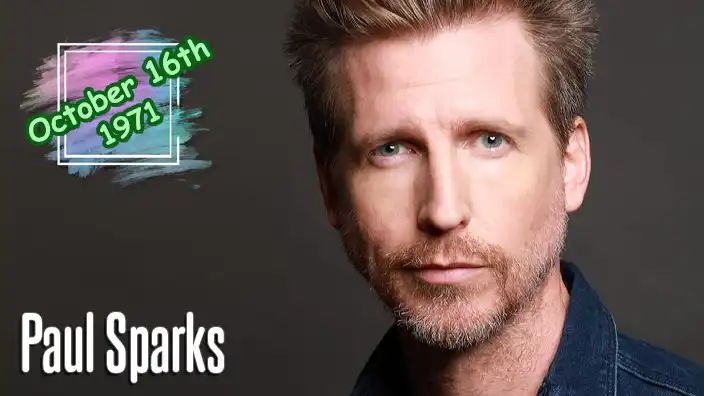
October 16, 1971, in Lawton, Oklahoma
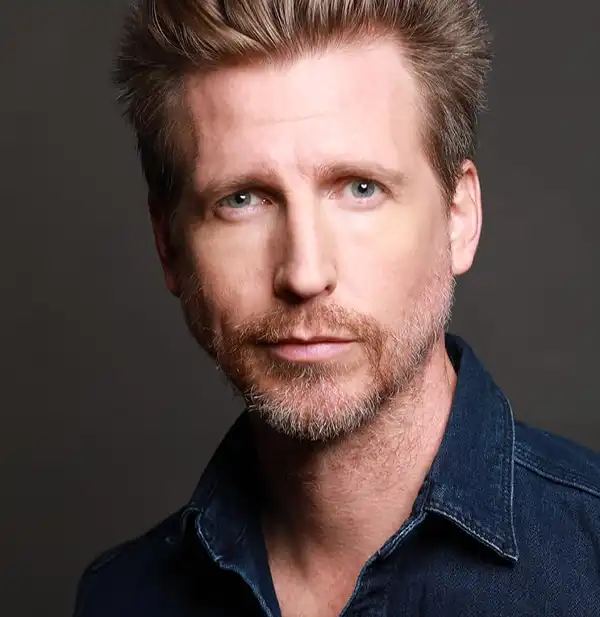
Paul W. Sparks was born on October 16, 1971, in Lawton, Oklahoma, United States, and grew up in the nearby community of Marlow. An accomplished American actor with extensive experience in theater, television, and film, Sparks is best known for portraying Mickey Doyle in HBO's historical crime drama Boardwalk Empire and Thomas Yates in Netflix's political thriller House of Cards. His performances frequently explore morally ambiguous characters, troubled relationships, and individuals operating within complicated systems of power. Although his distinctive voice and expressive features have made him particularly effective in dramatic roles, Sparks has demonstrated considerable versatility throughout his career, appearing in independent films, Broadway productions, psychological thrillers, and acclaimed television series. His ability to make supporting characters memorable has established him as a respected character actor in American entertainment.
Growing up in Oklahoma, Sparks developed an early interest in performing and storytelling. His father, Mike Sparks, worked as a football coach, and Paul attended Marlow High School, where he became involved in competitive speech and dramatic activities. He participated in the school's speech program, developing skills in public performance, interpretation, and communication. These experiences helped build the confidence and discipline required for professional acting. Although Oklahoma might seem an unlikely starting point for a career involving Atlantic City gangsters and Washington political conspiracies, his upbringing provided a practical foundation for an artistic journey that would eventually take him to New York City.
Sparks initially pursued a different academic direction, receiving a scholarship to study chemistry at Oklahoma State University. His interest in performance ultimately proved stronger than his enthusiasm for laboratory work, and he transferred to New York University's prestigious Tisch School of the Arts. He graduated in 1995 with a Bachelor of Fine Arts degree in drama. The move to New York represented an important turning point, placing him within one of America's most active theatrical communities. His formal training provided opportunities to study acting techniques, develop his understanding of dramatic literature, and work with performers committed to serious theatrical productions. Rather than seeking immediate Hollywood recognition, Sparks concentrated on developing his craft through stage work.
New York theater became a central part of Sparks' early professional career. He performed in numerous Off-Broadway productions, gradually earning recognition for his ability to portray psychologically complicated characters. His theatrical credits included Coyote on a Fence, Blackbird, Orange Flower Water, and Essential Self-Defense. These productions frequently explored uncomfortable subjects, strained relationships, and characters facing difficult moral choices. Sparks developed a reputation for performances that combined emotional intensity with subtle humor and an unsettling unpredictability. His work attracted attention from theater critics and earned multiple Drama Desk Award nominations, demonstrating that his acting abilities were being recognized well before his major television breakthrough.
In 2003, Sparks appeared in the Broadway production of Take Me Out, Richard Greenberg's Tony Award-winning play about professional baseball, identity, friendship, and social prejudice. The production explored the consequences of a professional baseball player's decision to reveal his homosexuality and the tensions that emerge within the team. Sparks' participation in the acclaimed production added an important Broadway credit to his growing theatrical résumé. The play's success also reinforced his experience working within ensemble casts, where individual performances contribute to a larger dramatic narrative. That ability to establish memorable characters within complicated ensembles would later become particularly valuable in his television career.
Alongside his stage work, Sparks began securing television appearances during the late 1990s and early 2000s. Like many New York-based actors, he appeared in crime dramas and other productions filmed in the city, including Law & Order: Criminal Intent. These early television roles offered opportunities to adapt his theatrical training to the more restrained demands of screen acting. While stage performances require actors to communicate with an entire auditorium, television cameras capture smaller gestures, expressions, and changes in tone. Sparks proved especially effective at using these details to suggest hidden motives and complicated emotional states, qualities that would become defining characteristics of many of his later performances.
One of his early recurring television roles came in Brotherhood, the Showtime crime drama that aired from 2006 to 2008. Set in Providence, Rhode Island, the series explored the relationship between two brothers operating on opposite sides of the law, one as a politician and the other as a criminal. Sparks portrayed Aaron, appearing within a story that examined organized crime, political corruption, family loyalty, and personal ambition. The series provided valuable experience in serialized television drama, where characters develop across multiple episodes and storylines become increasingly interconnected. Its emphasis on political influence and criminal activity also anticipated the themes that would feature prominently in two of Sparks' most recognizable television roles.
During the same period, Sparks began establishing himself in independent cinema. He appeared in Deception (2008), a thriller starring Hugh Jackman and Ewan McGregor, and Afterschool (2008), a psychological drama directed by Antonio Campos. He also had a role in Charlie Kaufman's Synecdoche, New York (2008), an ambitious and unconventional film examining identity, mortality, and artistic obsession. Another appearance came in Jonathan Demme's Rachel Getting Married (2008), starring Anne Hathaway. These projects introduced Sparks to filmmakers working outside conventional Hollywood formulas and allowed him to develop experience across different styles of cinematic storytelling.
His performance in The Missing Person (2009), an independent mystery film starring Michael Shannon, further demonstrated his connection with character-driven filmmaking. Sparks and Shannon developed a professional association that would continue through several projects. Both actors became known for their willingness to portray unsettling, emotionally complicated individuals rather than relying exclusively on conventional leading-man roles. Their collaborations included Mud, Midnight Special, and later productions. Sparks' involvement in these films reflected his preference for working with filmmakers and performers interested in unusual stories and psychologically demanding material.
The breakthrough that introduced Paul Sparks to a much wider audience arrived in 2010 with HBO's Boardwalk Empire. Created by Terence Winter and executive produced by Martin Scorsese, the historical crime drama explored organized crime, political corruption, and the illegal alcohol trade during Prohibition. Set primarily in Atlantic City, New Jersey, the series followed the rise and fall of criminal organizations operating in the shadow of American politics and changing social attitudes. Its elaborate production design, historically inspired characters, and ambitious storytelling helped establish it as one of HBO's major prestige dramas.
Sparks portrayed Mieczysław "Mickey" Doyle, a bootlegger and criminal associate whose distinctive high-pitched laugh became one of the character's most recognizable features. Mickey was a slippery opportunist, constantly attempting to improve his position within Atlantic City's dangerous criminal hierarchy. Unlike some of the series' more intimidating gangsters, Doyle often relied on charm, deception, quick thinking, and an impressive willingness to change loyalties whenever survival demanded it. Sparks transformed the character into an entertaining mixture of comic irritation and genuine menace, making Mickey memorable even when surrounded by the show's formidable collection of gangsters, politicians, and professional killers.
Mickey Doyle's unusual laugh became a particularly effective character detail. Sparks used the exaggerated sound to communicate nervousness, arrogance, amusement, and a persistent lack of self-awareness. The laugh frequently made Mickey seem ridiculous, but it also helped conceal the character's capacity for manipulation and opportunism. In a television series populated by dangerous men who took themselves extremely seriously, Doyle's peculiar personality provided moments of dark humor. His survival through much of the series also suggested that an ability to annoy practically everyone could occasionally be an effective criminal strategy, although it would be difficult to recommend as a long-term business plan.
Boardwalk Empire ran for five seasons, from 2010 to 2014, with Sparks appearing throughout the series. His character became an important supporting presence as the drama explored shifting alliances, violent rivalries, and the transformation of organized crime during Prohibition. The ensemble cast included Steve Buscemi, Michael Shannon, Kelly Macdonald, Michael Kenneth Williams, and numerous other acclaimed performers. The show's cast received Screen Actors Guild Awards for Outstanding Performance by an Ensemble in a Drama Series, recognizing the collective achievements of its performers. Sparks' work on the series helped establish him as a recognizable television actor capable of contributing memorable performances to ambitious historical dramas.
Following his success on Boardwalk Empire, Sparks continued expanding his film career. He appeared in Mud (2012), directed by Jeff Nichols and starring Matthew McConaughey, Reese Witherspoon, and Tye Sheridan. The film followed two boys who encounter a mysterious fugitive living near the Mississippi River. Sparks portrayed Carver, a dangerous figure connected to the fugitive's troubled past. The film received critical acclaim for its atmospheric storytelling and performances, and its ensemble received the Robert Altman Award at the Independent Spirit Awards. Sparks' participation further strengthened his association with independent films emphasizing character development and regional American storytelling.
He also appeared in Parkland (2013), a historical drama examining the events surrounding the assassination of President John F. Kennedy in Dallas, Texas. The film approached the tragedy through the experiences of medical personnel, law enforcement officers, and other individuals affected by the assassination. Sparks' involvement added another historically oriented production to his filmography. His ability to convey period-appropriate mannerisms and understated tension made him a natural fit for productions examining important moments in American history.
Another major television achievement arrived when Sparks joined the Netflix political drama House of Cards. He portrayed Thomas Yates, a novelist hired to write a book connected to President Frank Underwood's political agenda. Initially introduced as an outsider observing the complicated machinery of Washington politics, Yates gradually became involved in the personal lives of Frank and Claire Underwood. His intelligence, emotional perceptiveness, and willingness to challenge powerful individuals distinguished him from many of the political operatives surrounding the presidential couple.
Thomas Yates developed into a significant recurring character during the third, fourth, and fifth seasons of House of Cards. His relationship with Claire Underwood, portrayed by Robin Wright, became an important element of the series' examination of ambition, intimacy, secrecy, and political power. Unlike characters who approached the Underwoods primarily through professional calculations, Yates attempted to understand the emotional motivations behind their carefully constructed public identities. Sparks portrayed him with quiet confidence, occasional vulnerability, and a growing awareness that personal relationships within the White House could be considerably more dangerous than anything he might encounter in the publishing industry.
His performance in House of Cards earned Sparks a Primetime Emmy Award nomination for Outstanding Guest Actor in a Drama Series in 2016. The recognition marked an important achievement in his television career and demonstrated his ability to command attention alongside established leading performers. Although Thomas Yates differed considerably from Mickey Doyle, both characters revealed Sparks' talent for portraying individuals whose apparent confidence concealed complicated motivations. One operated in the criminal underworld of Prohibition-era Atlantic City, while the other navigated the equally treacherous environment of modern political Washington. The difference, of course, was that one involved illegal bootlegging and the other involved politics, leaving viewers to decide which profession appeared more hazardous.
Sparks continued exploring complex characters in the Starz anthology drama The Girlfriend Experience (2016), inspired by Steven Soderbergh's 2009 film. He portrayed David Tellis, a lawyer whose relationship with a young legal intern becomes increasingly complicated. The series examined intimacy, power, professional ambition, and transactional relationships through a deliberately restrained dramatic style. Sparks' performance contributed to the program's atmosphere of emotional uncertainty, emphasizing the consequences of relationships in which personal and professional boundaries become dangerously blurred.
He also appeared in HBO's acclaimed limited series The Night Of (2016), a crime drama starring Riz Ahmed and John Turturro. The series followed a young man accused of murder and explored the complexities of the American criminal justice system. Sparks portrayed Don Taylor, a character connected to the investigation and the broader circumstances surrounding the crime. The production received widespread critical recognition for its realistic examination of legal procedures, social inequality, and the psychological consequences of criminal accusations. Sparks' participation added another respected dramatic production to his television credits.
In 2016, Sparks appeared in Midnight Special, a science-fiction drama directed by Jeff Nichols and starring Michael Shannon, Joel Edgerton, and Kirsten Dunst. The film followed a father attempting to protect his son, who possesses mysterious abilities attracting the attention of government authorities and a religious community. Sparks portrayed Agent Miller, a government investigator involved in the pursuit. The film combined science-fiction elements with intimate family drama, providing Sparks with another opportunity to work alongside Shannon and Nichols. Its unusual storytelling reflected the type of ambitious independent filmmaking that had become an important part of his career.
His filmography also includes The Greatest Showman (2017), the musical drama starring Hugh Jackman as entertainment entrepreneur P. T. Barnum. Sparks portrayed newspaper publisher and critic James Gordon Bennett, a historical figure associated with the New York Herald. His character represented the skeptical establishment confronting Barnum's unconventional approach to entertainment. Although the film is best remembered for its elaborate musical numbers and energetic performances, Sparks' portrayal contributed to its depiction of the social attitudes and criticism surrounding Barnum's career. The role demonstrated his ability to move comfortably between gritty crime dramas and large-scale musical productions, even when the latter involved considerably more singing and considerably fewer gangland executions.
Sparks appeared in Thoroughbreds (2017), a dark psychological thriller starring Anya Taylor-Joy and Olivia Cooke. The film explored the unsettling friendship between two young women whose privileged lives conceal disturbing emotional problems. Sparks portrayed Mark, a wealthy and controlling stepfather whose presence becomes central to the unfolding conflict. His performance contributed to the film's atmosphere of tension, social discomfort, and dark humor. Once again, Sparks proved particularly effective at portraying a character whose outward respectability offered little reassurance about his actual personality.
In 2018, Sparks portrayed Steve Schneider in the television miniseries Waco, which dramatized the 1993 confrontation between federal authorities and members of the Branch Davidian religious group in Texas. The production starred Taylor Kitsch as David Koresh and Michael Shannon as FBI negotiator Gary Noesner. Sparks' portrayal of Schneider, a senior member of the religious community, required him to explore ideological commitment, group loyalty, and the escalating tensions surrounding the siege. The miniseries addressed a controversial event in modern American history, presenting the circumstances through dramatized perspectives from both inside the compound and among law enforcement authorities.
His television work continued with Sweetbitter (2018–2019), a Starz drama based on Stephanie Danler's novel about a young woman entering the demanding world of upscale New York restaurants. Sparks portrayed Howard, the manager of a prestigious restaurant whose professional authority and complicated relationships influenced the experiences of the younger employees. The role allowed him to explore workplace power, ambition, and personal uncertainty within a setting far removed from organized crime and political intrigue. Although the restaurant industry offered a different environment, the character's ability to make other people uncomfortable remained entirely consistent with Sparks' established screen talents.
In 2019, Sparks appeared in the second season of Hulu's psychological horror anthology Castle Rock, inspired by the fictional universe created by Stephen King. He portrayed John "Ace" Merrill, a character associated with the sinister history of the fictional Maine community. The season featured Lizzy Caplan as Annie Wilkes, another recognizable character from King's literary world. Sparks' performance contributed to the series' unsettling atmosphere, blending familiar small-town relationships with increasingly disturbing supernatural events. His ability to communicate menace through relatively restrained behavior made him particularly well suited to the program's psychological horror.
Sparks later joined the Apple TV+ comedy-drama Physical, which premiered in 2021 and starred Rose Byrne. Set during the aerobics boom of the 1980s, the series explored personal identity, ambition, body image, and the contradictions of suburban American life. Sparks portrayed John Breem, a wealthy mall developer whose religious convictions and complicated personal desires become increasingly important to the story. The role combined awkward comedy, emotional repression, and moral uncertainty, allowing Sparks to demonstrate a more understated form of humor. His performance showed that he could create tension without needing a criminal conspiracy, a murder investigation, or a particularly suspicious political manuscript.
He also appeared in Joe Pickett, a television crime drama based on the novels by C. J. Box, portraying Wacey Hedeman. Set in Wyoming, the series followed a game warden confronting corruption, violence, and complicated relationships within a rural community. The production gave Sparks another opportunity to portray a character connected to local authority and hidden motivations. His work in the series further demonstrated his ability to contribute to stories rooted in distinctive American settings, from Oklahoma and Wyoming to New York, Atlantic City, and Washington.
In 2024, Sparks appeared in The Bikeriders, directed by Jeff Nichols and starring Austin Butler, Jodie Comer, and Tom Hardy. Inspired by Danny Lyon's photographic book documenting motorcycle club culture, the film examined loyalty, masculinity, personal freedom, and the evolution of an American motorcycle club during the 1960s. Sparks portrayed Gary Rogue Leader, contributing to the film's collection of distinctive personalities. The project reunited him with Nichols and Michael Shannon, continuing professional relationships that had become a recurring feature of his film career.
His more recent television work includes The Lowdown (2025), a crime drama starring Ethan Hawke, in which Sparks portrayed Mark Sternwick. He also appeared in the psychological thriller series The Better Sister (2025), adding to a substantial collection of roles in suspenseful, character-driven productions. These appearances reflect his continued demand as a supporting actor capable of bringing complexity and credibility to contemporary television drama. Whether appearing in a major recurring role or a smaller part, Sparks has consistently demonstrated an ability to establish memorable characters without overwhelming the larger story.
Despite his substantial screen career, Sparks has maintained a close connection with live theater. His Off-Broadway work includes productions such as Dusk Rings a Bell, Buried Child, and Edward Albee's At Home at the Zoo. His theatrical performances have earned numerous nominations and critical recognition, reflecting his continuing commitment to challenging dramatic material. In 2025, he appeared in Grangeville, a play by Samuel D. Hunter, earning further recognition for his stage work. Theater has remained an important artistic foundation for Sparks, allowing him to explore characters through sustained performances and the immediate relationship between actors and audiences.
Away from his professional career, Sparks is married to actress Annie Parisse, who is known for her television work, including Law & Order, Person of Interest, and Friends from College. The couple have two children and have generally maintained a relatively private family life. Their shared experience in the entertainment industry provides a professional connection, although Sparks has largely avoided making his personal relationships a central part of his public identity. His approach reflects a preference for allowing his performances to attract attention rather than pursuing celebrity publicity.
Sparks has also spoken publicly about living with Type 1 diabetes and has supported diabetes-related awareness and charitable initiatives. His involvement with organizations concerned with diabetes research and education reflects a personal connection to an issue affecting individuals and families around the world. By discussing his experiences, he has helped draw attention to a chronic medical condition that requires ongoing management and awareness. His advocacy represents another dimension of his public work beyond acting and theatrical performance.
Throughout his career, Paul Sparks has built a reputation for playing characters who are rarely straightforward. His performances often reveal a mixture of confidence, insecurity, ambition, resentment, humor, and vulnerability. He has portrayed gangsters, writers, lawyers, investigators, businessmen, and historical figures, frequently finding ways to make supporting roles distinctive through carefully observed behavior. His stage training has provided a strong technical foundation, while his willingness to work in independent cinema and unconventional television dramas has allowed him to avoid becoming confined to one particular type of character.
Paul Sparks' achievements demonstrate the importance of character actors in modern film and television. Although leading performers often receive the greatest publicity, memorable supporting characters help establish the atmosphere, credibility, and emotional complexity of successful productions. From the unmistakable laugh of Mickey Doyle in Boardwalk Empire to the quietly dangerous intimacy of Thomas Yates in House of Cards, Sparks has repeatedly shown how an apparently secondary character can become an essential part of a larger story. His career across Broadway, independent film, and prestige television reflects dedication, versatility, and an appreciation for challenging material. And while his fictional characters have accumulated an impressive collection of questionable decisions, Sparks himself has made one particularly good career choice: letting other people write the trouble while he earns a living bringing it convincingly to life.