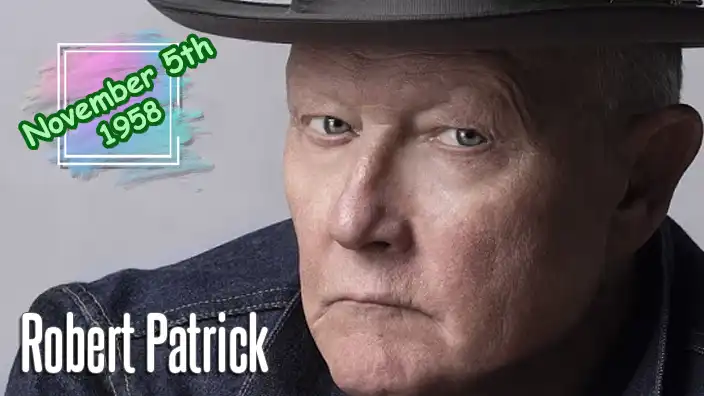
November 5, 1958, in Marietta, Georgia

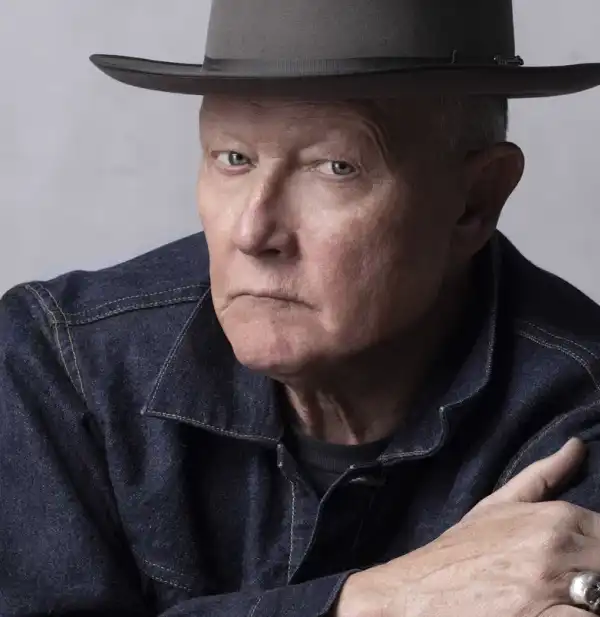
Robert Hammond Patrick was born on November 5, 1958, in Marietta, Georgia, and grew up in a family whose frequent moves introduced him to several different parts of the United States. His parents, Robert Merle Patrick and Nadine Patrick, raised five children, with Robert being the eldest. During his childhood, the family lived in Georgia, Massachusetts, Ohio, and Michigan, giving him a varied upbringing that involved adjusting to new schools, neighborhoods, and friendships. Although he would eventually become internationally famous for portraying some of Hollywood's most intimidating characters, acting was not initially his ambition. In fact, Patrick has recalled being uncomfortable with performing during his school years, particularly when a childhood production of Peter Pan required him to wear green tights. Considering that he would later portray a nearly indestructible killing machine, it is amusing that a pair of theatrical tights once presented such a formidable obstacle.
Patrick attended Farmington High School in Michigan, graduating in 1977, before enrolling at Bowling Green State University in Ohio. An enthusiastic athlete, he participated in football and track and field, initially imagining a future more closely connected to sports than entertainment. His physical abilities would later become an important part of his acting career, particularly when portraying soldiers, law-enforcement officers, and action-movie antagonists. While attending university, however, he developed an interest in drama that gradually changed his professional ambitions. The discovery encouraged him to reconsider his plans, and he eventually left college without completing his degree. His decision did not immediately produce success, but it introduced him to a creative pursuit that would eventually become the defining occupation of his life.
Before establishing himself as an actor, Patrick supported himself through various jobs, including house painting. His early adulthood was marked by uncertainty as he attempted to determine how to turn his interest in performance into a practical career. A particularly significant event occurred in 1984 when he was involved in a serious boating accident on Lake Erie. Patrick reportedly spent approximately three hours swimming to help others stranded during the incident, narrowly escaping drowning himself. The experience profoundly affected his outlook on life and encouraged him to pursue his ambitions more seriously. Shortly afterward, he moved to Los Angeles, determined to become a professional actor. It was a dramatic change in direction, although surviving a dangerous boating accident probably made the prospect of Hollywood auditions seem considerably less intimidating.
Arriving in Los Angeles did not immediately lead to glamorous film premieres or lucrative studio contracts. Like countless aspiring performers, Patrick encountered financial difficulties, uncertain employment, and the demanding process of establishing professional connections. He worked as a bartender to support himself and, during particularly difficult periods, even lived in his car. He attended auditions, studied acting, and accepted opportunities in theater while attempting to attract the attention of casting directors. His determination gradually began producing results, particularly after appearing in a stage production titled Go, which helped him gain early recognition. The experience reinforced his belief that acting was a profession worth pursuing despite the considerable obstacles. Hollywood may eventually have given him a reputation for being unstoppable, but the determination required to survive his early career was entirely human.
Patrick's first substantial screen opportunities came through low-budget action and science-fiction productions during the 1980s. He appeared in films such as Eye of the Eagle, Equalizer 2000, and Future Hunters, several of which were produced in the Philippines and associated with the independent filmmaking industry. These productions often involved demanding shooting conditions, modest budgets, and ambitious action sequences that required performers to adapt quickly to unexpected challenges. Although the films did not bring him immediate international recognition, they provided valuable experience in front of the camera and helped him develop the physical confidence that would become an important part of his screen identity. Working in low-budget productions also taught him the practical realities of filmmaking, where resourcefulness and professional discipline could be just as important as artistic ambition.
In 1990, Patrick appeared in Die Hard 2, the action thriller starring Bruce Willis as New York police officer John McClane. He portrayed O'Reilly, one of the armed mercenaries involved in the takeover of Washington Dulles International Airport. Although the role was relatively small, the film represented an important step into major Hollywood studio productions. Directed by Renny Harlin, Die Hard 2 became a commercial success and exposed Patrick to the demanding production standards of a large-scale action film. His appearance also placed him in the company of established actors and filmmakers working within one of the era's most successful action franchises. It was an encouraging development for someone who had spent years struggling to secure meaningful professional opportunities.
The defining breakthrough of Robert Patrick's career arrived in 1991 when director James Cameron cast him as the T-1000 in Terminator 2: Judgment Day. The science-fiction action film continued the story introduced in Cameron's original The Terminator in 1984, with Arnold Schwarzenegger returning as a cybernetic assassin from the future. This time, however, Schwarzenegger's character was programmed to protect young John Connor, played by Edward Furlong, while Patrick's T-1000 was sent to eliminate him. The new antagonist represented a significant technological advancement over the original Terminator, possessing a body made of mimetic polyalloy, a fictional liquid-metal substance that allowed it to change shape, imitate people, and recover from seemingly devastating injuries. The concept required a performer capable of conveying extraordinary menace without relying on elaborate dialogue or exaggerated facial expressions.
Patrick approached the T-1000 role with remarkable physical discipline, undertaking extensive training in martial arts, running, weapons handling, and controlled movement. He worked to eliminate unnecessary gestures and emotional reactions, creating the impression of a machine that operated with absolute precision. His distinctive running style became one of the film's most recognizable characteristics, particularly during sequences in which the T-1000 pursues John Connor with relentless determination. Patrick's athletic background proved valuable because the character needed to move with extraordinary efficiency while appearing almost completely unaffected by fatigue. His expressionless face and piercing stare helped establish an unsettling contrast with Schwarzenegger's more physically imposing but increasingly sympathetic Terminator. Where the original machine relied on overwhelming strength, Patrick's character appeared frightening because he seemed incapable of hesitation, exhaustion, or doubt.
Terminator 2: Judgment Day became a landmark achievement in action filmmaking and visual effects. Its groundbreaking computer-generated imagery allowed the T-1000 to transform into other people, pass through metal barriers, and recover from injuries in ways that had rarely been attempted convincingly on screen. Industrial Light & Magic developed innovative techniques that combined digital effects with practical makeup, prosthetics, and Patrick's carefully controlled physical performance. The result was a villain whose movements and transformations appeared remarkably believable for the period. The film became the highest-grossing release of 1991 worldwide and won four Academy Awards, including honors for visual effects, sound, sound effects editing, and makeup. Patrick's performance was essential to its success because even the most impressive computer-generated transformations required a convincing human presence to make the character genuinely frightening.
The T-1000 quickly became one of cinema's most recognizable villains, and Patrick's portrayal established a lasting association with cold, relentless antagonists. His performance was particularly effective because he avoided the theatrical exaggeration often associated with science-fiction villains. The T-1000 rarely displayed anger, excitement, or frustration, even when confronted with extraordinary obstacles. Instead, Patrick maintained a controlled expression and economical movements that suggested an artificial intelligence focused entirely on completing its mission. This restraint made the character more disturbing than a conventional villain who shouted threats or delivered elaborate speeches. The T-1000 did not need to explain what it intended to do. One look at Patrick's expression was usually sufficient to encourage everyone nearby to start running.
Patrick's performance became so recognizable that he subsequently appeared in humorous references to the character. In the 1992 comedy Wayne's World, he briefly reprised the T-1000 persona as a police officer who stops Wayne Campbell and asks whether he has seen John Connor. The unexpected appearance created a memorable joke for audiences familiar with Terminator 2. Patrick also appeared in Last Action Hero in 1993, another film starring Arnold Schwarzenegger, in a brief reference to the famous science-fiction villain. These appearances demonstrated that Patrick was willing to embrace the popularity of his most recognizable character while participating in playful acknowledgments of its cultural impact. The ability to make audiences laugh simply by appearing in a familiar police uniform showed how thoroughly the T-1000 had entered popular culture.
Following the success of Terminator 2, Patrick faced the challenge of establishing an identity beyond the character that had made him famous. Hollywood frequently associates performers with particularly successful roles, and Patrick's commanding appearance made him an obvious candidate for additional villains, soldiers, and intimidating authority figures. Rather than reject such opportunities entirely, he accepted a variety of projects that allowed him to build a substantial filmography. In 1993, he appeared in Fire in the Sky, a science-fiction drama based on the reported alien-abduction experience of Travis Walton. Patrick portrayed Mike Rogers, a logging crew foreman whose account of mysterious events becomes central to the story. The film required a more emotionally expressive performance than Terminator 2, allowing him to portray fear, confusion, guilt, and determination within a dramatic narrative.
Fire in the Sky became an important part of Patrick's early post-Terminator career because it demonstrated that he could carry substantial dramatic material without relying on the emotionless persona of the T-1000. His portrayal of Mike Rogers emphasized the psychological consequences of an extraordinary event and the strain placed on relationships when witnesses encounter disbelief and public suspicion. Although the film's story was based on controversial claims of extraterrestrial contact, Patrick approached the character as a believable individual confronting an experience he could neither explain nor escape. The performance attracted attention and helped establish him as an actor capable of more than physically intimidating action roles. It also demonstrated that science-fiction storytelling could provide opportunities for serious character development alongside unusual subject matter.
During the 1990s, Patrick continued appearing in action films, thrillers, and dramas, including Double Dragon, Zero Tolerance, Striptease, and Cop Land. In Striptease, released in 1996 and starring Demi Moore, he portrayed Darrell Grant, the troubled former husband of Moore's character. The role allowed him to explore a manipulative and unstable personality within a crime comedy-drama. The following year, he appeared in Cop Land, directed by James Mangold and starring Sylvester Stallone, Harvey Keitel, Ray Liotta, and Robert De Niro. Patrick portrayed Jack Rucker, a police officer connected to the film's investigation of corruption within a New Jersey community populated by New York City law-enforcement personnel. The ensemble production provided an opportunity to work alongside several major Hollywood performers in a story emphasizing moral conflict, institutional loyalty, and the consequences of corruption.
Patrick also appeared in The Faculty, the 1998 science-fiction horror film directed by Robert Rodriguez. The movie follows a group of high school students who discover that members of their school's staff have been taken over by alien organisms. Patrick portrayed Coach Joe Willis, an intimidating athletic instructor whose increasingly disturbing behavior contributes to the film's atmosphere of paranoia. The role combined his established talent for portraying threatening characters with the exaggerated humor and suspense associated with teenage horror films. The Faculty developed a lasting following among fans of late-1990s genre cinema, and Patrick's performance became one of its memorable elements. His character demonstrated that even an ordinary high school gymnasium could become a dangerous place when Robert Patrick was supervising physical education.
Another important television appearance came in 2000 when Patrick portrayed David Scatino in HBO's acclaimed crime drama The Sopranos. His character was a sporting-goods store owner whose gambling addiction draws him into the dangerous world of organized crime. Scatino's friendship with Tony Soprano, played by James Gandolfini, initially appears to offer some protection, but his escalating debts ultimately have devastating consequences. Patrick's performance emphasized desperation, denial, and the emotional collapse of a man who repeatedly makes disastrous decisions. The role was particularly effective because it presented him as vulnerable rather than physically dominant, allowing audiences to witness a character overwhelmed by circumstances largely created through his own behavior. His work on The Sopranos reinforced his reputation as a versatile actor capable of portraying complicated individuals within critically acclaimed television dramas.
Later in 2000, Patrick joined the cast of The X-Files, one of the most influential science-fiction television series of the 1990s. He portrayed FBI Special Agent John Doggett, a former Marine and New York City police detective assigned to investigate the disappearance of Agent Fox Mulder, played by David Duchovny. Doggett initially approached paranormal investigations with skepticism, relying on conventional investigative techniques and practical reasoning rather than accepting extraordinary explanations. His personality contrasted sharply with Mulder's fascination with unexplained phenomena, creating a new dynamic within the series. Patrick joined the program during a period of significant change, when the departure of a central performer presented considerable challenges for both the writers and the audience.
Patrick's portrayal of John Doggett gradually earned recognition for its sincerity, intelligence, and emotional restraint. Rather than attempting to imitate Mulder, he developed a character with a distinct background, professional philosophy, and personal history. Doggett's relationship with Agent Dana Scully, portrayed by Gillian Anderson, became an important part of the show's later seasons, particularly as Scully increasingly confronted the possibility that the extraordinary events she had witnessed could not be explained through conventional science. Patrick also worked alongside Annabeth Gish, who joined the series as Agent Monica Reyes. The developing partnership between Doggett and Reyes helped establish new investigative relationships while maintaining connections with the show's original mythology.
His work on The X-Files earned Patrick the Saturn Award for Best Actor on Television in 2001, recognizing his successful transition into a demanding leading television role. The achievement was significant because he had entered a series with an established audience strongly attached to its original characters. Winning viewers over required more than physical presence or familiarity from previous films; it demanded a believable character capable of contributing meaningfully to the show's complicated mythology. Doggett's determination, personal integrity, and skepticism gradually made him a respected addition to the series. For Patrick, the role represented one of the most important achievements of his television career and demonstrated that he could sustain a central character across an extended dramatic production.
Patrick continued working extensively in film during the early 2000s, appearing in productions such as Spy Kids, Charlie's Angels: Full Throttle, and Ladder 49. These films allowed him to participate in family adventure, action comedy, and serious drama, demonstrating his willingness to move between different genres. He also appeared in the 2005 television miniseries Elvis, portraying Vernon Presley, the father of legendary musician Elvis Presley. The role required a different kind of characterization, emphasizing family relationships and the complicated circumstances surrounding the rise of one of America's most famous entertainers. Patrick's ability to portray Vernon with a combination of authority, concern, and emotional complexity demonstrated his growing range as a character actor.
In 2005, Patrick appeared in Walk the Line, the acclaimed biographical drama about country music legend Johnny Cash. Directed by James Mangold, the film starred Joaquin Phoenix as Cash and Reese Witherspoon as June Carter. Patrick portrayed Ray Cash, Johnny's father, whose difficult relationship with his son becomes an important part of the musician's emotional development. The character is presented as stern, demanding, and frequently critical, contributing to the family tensions that influence Cash's personal struggles. Patrick's performance emphasized the complicated nature of paternal authority and the lasting effects of childhood experiences. Walk the Line received widespread critical acclaim, and Witherspoon won the Academy Award for Best Actress. Patrick's contribution formed part of a film that successfully combined musical biography with an emotionally grounded family drama.
The following year, Patrick appeared in Flags of Our Fathers, directed by Clint Eastwood. The 2006 war drama examined the experiences of American servicemen associated with the famous flag-raising photograph taken during the Battle of Iwo Jima in World War II. Patrick portrayed Colonel Chandler Johnson, a Marine officer involved in the military operations depicted in the film. The production explored the differences between public heroism, wartime propaganda, and the personal experiences of soldiers confronting extraordinary danger. Patrick's performance drew upon the disciplined military presence that had become a recognizable part of his screen identity, while the film provided an opportunity to participate in a historically significant story directed by one of America's most respected filmmakers.
Patrick also appeared in Bridge to Terabithia in 2007, a fantasy drama based on Katherine Paterson's celebrated novel. He portrayed Jack Aarons, the father of the film's young protagonist, Jess, played by Josh Hutcherson. The story follows two children who create an imaginary kingdom while navigating friendship, family difficulties, and profound loss. Patrick's character initially appears stern and emotionally distant, but the film gradually reveals the importance of parental understanding and compassion. The role allowed him to portray a father whose emotional development contributes to the story's central themes. It also introduced Patrick to a younger audience that might have been unfamiliar with his earlier action films, demonstrating that an actor famous for playing a terrifying cyborg could also contribute meaningfully to a sensitive family drama.
Between 2006 and 2009, Patrick starred in the CBS military drama The Unit, portraying Colonel Tom Ryan. Created by David Mamet and inspired by Eric L. Haney's book Inside Delta Force, the series followed members of a fictional elite American military special operations unit and their families. Patrick's character served as the commanding officer responsible for overseeing dangerous missions and managing the complicated relationships between military responsibilities and personal loyalties. The role required him to project authority, strategic judgment, and professional discipline while navigating morally difficult situations. His performance became an important part of the show's ensemble structure, which included Dennis Haysbert, Scott Foley, and Max Martini. The Unit provided another substantial television role and reinforced Patrick's reputation for convincingly portraying military leaders.
Throughout the following years, Patrick continued building an extensive television résumé through guest appearances and recurring roles in productions including True Blood, Last Resort, and Sons of Anarchy. In True Blood, he portrayed Jackson Herveaux, the father of werewolf Alcide Herveaux, played by Joe Manganiello. The role introduced him to the supernatural world of vampires, werewolves, and complicated family conflicts in the fictional Louisiana community of Bon Temps. His character's rugged personality and difficult relationship with his son provided another opportunity to explore themes of family loyalty, personal responsibility, and the consequences of past decisions. The appearance demonstrated Patrick's ability to participate effectively in television productions with highly stylized fictional worlds while maintaining a recognizable sense of emotional authenticity.
One of Patrick's longest-running television roles came with the CBS action drama Scorpion, which premiered in 2014. He portrayed Cabe Gallo, a federal agent who works with a team of exceptionally intelligent specialists to solve complex technological problems and prevent dangerous situations. The series starred Elyes Gabel as Walter O'Brien, the leader of the unconventional team, alongside Katharine McPhee, Eddie Kaye Thomas, Jadyn Wong, and Ari Stidham. Patrick's character provided a practical connection between the brilliant but socially unconventional specialists and the government agencies that relied upon their expertise. Cabe's experience, authority, and protective instincts helped balance the team's technical abilities, making him an essential part of the series' central relationships.
Scorpion ran for four seasons from 2014 to 2018, giving Patrick a prominent role in a successful network television production. His portrayal of Cabe Gallo combined the familiar characteristics of a tough federal agent with moments of humor, vulnerability, and paternal concern. The character's relationship with Walter O'Brien became particularly important as the series explored trust, forgiveness, and the responsibilities of leadership. Patrick's ability to deliver both dramatic tension and understated comedy helped make Cabe a recognizable figure among the show's audience. Although the series frequently presented elaborate technological emergencies that stretched the boundaries of plausibility, Patrick's grounded performance helped maintain an entertaining balance between action and character-driven storytelling.
Patrick continued appearing in major films during this period, including Gangster Squad in 2013, Identity Thief, and The Poison Rose. In Gangster Squad, he portrayed Officer Max Kennard, a veteran lawman and expert marksman recruited into a secret police unit attempting to dismantle organized crime in postwar Los Angeles. The film featured an ensemble cast including Josh Brolin, Ryan Gosling, Sean Penn, and Emma Stone. Patrick's character contributed a seasoned, no-nonsense presence to the group, reinforcing the actor's suitability for historical crime stories and action-oriented ensemble productions. His performance also demonstrated how effectively he could establish a memorable supporting character through physical confidence and carefully controlled dialogue.
In 2020, Patrick appeared in the action thriller Honest Thief, starring Liam Neeson as a former bank robber attempting to surrender his stolen money and begin a new life. Patrick portrayed FBI Agent Sam Baker, a senior investigator involved in the increasingly complicated case. The film combined crime, betrayal, and action sequences, allowing Patrick to return to the law-enforcement roles that had become a significant part of his career. He also appeared in HBO's Perry Mason, a dramatic reinterpretation of the classic legal character set in Depression-era Los Angeles. In that series, Patrick portrayed Herman Baggerly, a wealthy and influential figure connected to the central mystery. The role provided another opportunity to work within a carefully reconstructed historical setting while exploring a character whose authority conceals complicated personal interests.
Patrick joined the cast of HBO Max's superhero series Peacemaker in 2022, portraying August "Auggie" Smith, the father of Christopher Smith, also known as Peacemaker, played by John Cena. Created by James Gunn as a spin-off from the film The Suicide Squad, the series combined violent action, dark comedy, and emotionally complicated family relationships. Patrick's character was a deeply abusive and prejudiced man who operated as the armored supervillain White Dragon. The role represented one of his most disturbing antagonists, not because of futuristic technology or supernatural powers, but because of the character's cruelty, extremist beliefs, and destructive influence on his son. Patrick approached the role with the intensity necessary to make Auggie a genuinely threatening presence within a series that frequently shifted between outrageous humor and serious emotional consequences.
His portrayal of Auggie Smith became an important element of Peacemaker, particularly as the series explored Christopher Smith's attempts to confront his upbringing and develop a more independent moral identity. Patrick's character served as a representation of the damaging consequences of hatred, abuse, and distorted ideas about masculinity. Although White Dragon possessed elaborate equipment and a distinctive armored costume, the character's most unsettling qualities emerged through his relationships with other people. Patrick's performance demonstrated his continued ability to portray villains who remain memorable because of their psychological impact rather than simply their physical capabilities. He also returned in the show's second season in 2025, maintaining his connection with the DC television universe.
Patrick's later television work included appearances in 1923, the Western drama created by Taylor Sheridan as part of the Yellowstone franchise. He portrayed Sheriff William McDowell, a law-enforcement figure operating within the complicated social and political environment of early twentieth-century Montana. The series starred Harrison Ford and Helen Mirren and explored the challenges facing a ranching family during a period of economic uncertainty and changing American society. Patrick's involvement provided another opportunity to work in a historical Western setting, a genre particularly suited to his commanding physical presence and ability to portray determined authority figures.
He also appeared in the action series Reacher, based on Lee Child's popular novels, portraying Shane Langston in the show's second season. Langston was a corrupt former police officer involved in a dangerous criminal conspiracy, placing Patrick once again in the role of an intimidating antagonist. His performance provided an effective contrast with Alan Ritchson's physically imposing portrayal of Jack Reacher, creating a conflict driven by intelligence, ruthlessness, and determination rather than simple physical strength. Patrick subsequently appeared in Tulsa King, the crime drama starring Sylvester Stallone, portraying Jeremiah Dunmire during the series' third season in 2025. The role reunited him with another major action star and continued his association with stories involving powerful personalities, criminal organizations, and complicated moral choices.
Outside his professional acting career, Robert Patrick has maintained a longstanding interest in motorcycles, particularly Harley-Davidson machines. He has been associated with the Boozefighters Motorcycle Club and became a co-owner of a Harley-Davidson dealership in Santa Clarita, California. His enthusiasm for motorcycles reflects a personal interest in mechanical engineering, open-road travel, and the social traditions surrounding American motorcycle culture. Unlike some celebrity hobbies that exist primarily for publicity, Patrick's connection with motorcycling has been a substantial part of his life. It also seems entirely appropriate for an actor whose screen characters frequently project independence, toughness, and a willingness to confront difficult circumstances without unnecessary hesitation.
Patrick has also devoted considerable attention to supporting American military personnel and veterans. He has participated in United Service Organizations tours, visited wounded service members, and supported initiatives intended to recognize the sacrifices made by military families. His respect for military service is connected partly to his own family history, including relatives who served in the armed forces. Over the years, he has used his public recognition to participate in hospital visits, overseas entertainment programs, and other activities supporting service members. His involvement reflects a personal commitment extending beyond the military characters he has portrayed on screen. While acting allows him to represent soldiers and officers in fictional circumstances, his charitable activities provide opportunities to express appreciation for individuals whose experiences are very real.
Robert Patrick married actress Barbara Hooper in November 1990, and the couple have two children. The family has generally maintained a relatively private life despite Patrick's extensive film and television career. His younger brother, Richard Patrick, is also a prominent figure in entertainment as the founder and lead vocalist of the industrial rock band Filter. Richard previously performed as a guitarist with Nine Inch Nails, establishing a successful musical career distinct from Robert's acting work. The brothers' achievements demonstrate the family's creative interests, although their professional specialties are considerably different. One became famous for portraying a nearly silent killing machine, while the other built a career around making considerably more noise.
An especially interesting aspect of Patrick's career is the remarkable consistency with which he has worked across different generations of film and television production. His early roles emerged during the era of low-budget action films and traditional studio filmmaking, while his later career has included prestige television, major streaming productions, superhero franchises, and independent dramas. He has adapted to changing audience expectations without abandoning the qualities that initially made him recognizable. His intense screen presence, distinctive voice, and disciplined physical performances remain important characteristics, but his career has demonstrated that these qualities can support sympathetic characters, morally conflicted individuals, and outright villains with equal effectiveness.
Patrick's contribution to Terminator 2: Judgment Day remains particularly significant because the T-1000 represented an important moment in the relationship between acting and digital filmmaking technology. The film demonstrated that computer-generated effects could create entirely new kinds of characters when combined with convincing physical performances. Patrick's controlled movements and emotionless expression established a believable foundation for the digital transformations, ensuring that the character remained frightening even when no visual effects were being used. The result influenced subsequent science-fiction and action filmmaking, helping establish new expectations for how technology could expand the possibilities of cinematic storytelling. Although visual effects have advanced enormously since 1991, the T-1000 remains recognizable because the performance beneath the technology was so carefully developed.
His television achievements have also contributed substantially to his reputation as a dependable and versatile performer. John Doggett in The X-Files demonstrated his ability to enter an established series and create a respected new character, while Cabe Gallo in Scorpion revealed a warmer and more humorous side of his screen personality. Colonel Tom Ryan in The Unit emphasized disciplined authority, and Auggie Smith in Peacemaker explored the darker consequences of power and personal cruelty. These characters occupy very different fictional worlds, yet each benefits from Patrick's commitment to portraying individuals with clearly defined motivations and believable behavior. His willingness to accept varied roles has helped sustain a career that extends far beyond the science-fiction villain who originally made him internationally famous.
From struggling actor and former house painter to one of Hollywood's most recognizable character performers, Robert Patrick has built an extraordinary career through determination, adaptability, and professional discipline. His performances in Terminator 2: Judgment Day, The X-Files, The Sopranos, Walk the Line, Scorpion, and Peacemaker demonstrate an impressive range of dramatic abilities. He has portrayed machines, soldiers, fathers, criminals, federal agents, and complicated authority figures, frequently bringing a distinctive intensity to characters who might otherwise have been conventional supporting roles. Although audiences will always associate him with the terrifying liquid-metal T-1000, his extensive filmography reveals an actor whose achievements cannot be reduced to a single performance. Hollywood may have introduced Robert Patrick as a machine that refused to stop, but his enduring career has demonstrated that the real man possesses a remarkably similar determination to keep working.
References & Sources