If the Chute Doesn't Work, Bring It Back - We'll Replace It.
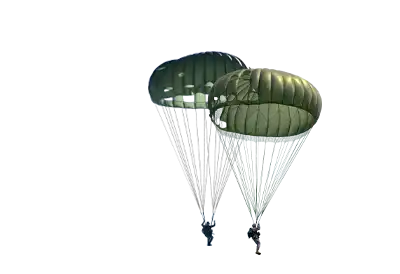
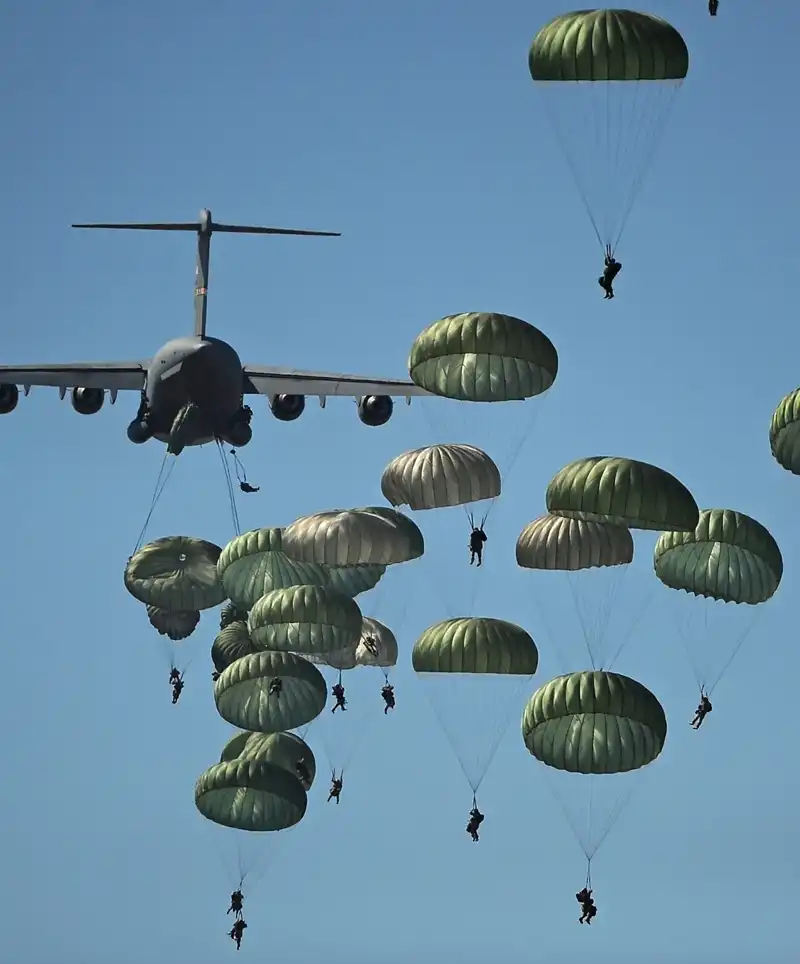
There are easier ways to arrive at work than jumping out of a perfectly good airplane. Most of us prefer a comfortable drive, maybe a cup of coffee, and a parking space close to the entrance. Airborne soldiers looked at that idea and replied, "We'll take the door that opens at 1,200 feet." National Airborne Day celebrates the courage, skill, and determination of the men and women who have willingly traded solid ground for parachutes in service to their country.
What Is National Airborne Day?
National Airborne Day, observed every year on August 16, honors the history, achievements, and sacrifices of America's airborne forces. It celebrates the soldiers who have earned the coveted parachutist wings through demanding training and recognizes the generations of airborne troops who have served with distinction in conflicts, humanitarian missions, and peacekeeping operations around the world.
The observance marks the anniversary of the first official U.S. Army parachute jump, which took place on August 16, 1940, at Fort Benning, Georgia (now Fort Moore). On that historic morning, 48 volunteers from the newly formed U.S. Army Parachute Test Platoon successfully exited their aircraft and landed safely, proving that soldiers could be inserted by parachute behind enemy lines. Their success marked the beginning of the United States Army's airborne program and forever changed modern military tactics.
At the time, the concept of delivering combat troops from aircraft was still considered experimental. While several European nations had begun exploring military parachuting, the United States had yet to determine whether airborne operations could become a practical part of its own armed forces. The courage of those first volunteers demonstrated that parachute assaults were not only possible but could provide commanders with an entirely new way to conduct military operations.
The experiment quickly proved its value. Within just a few years, airborne divisions became an important part of America's military strength during World War II. Paratroopers would participate in some of the conflict's most famous operations, including the invasions of Sicily and Normandy, Operation Market Garden, and the Battle of the Bulge. Their ability to arrive unexpectedly behind enemy lines often gave Allied commanders a critical tactical advantage.
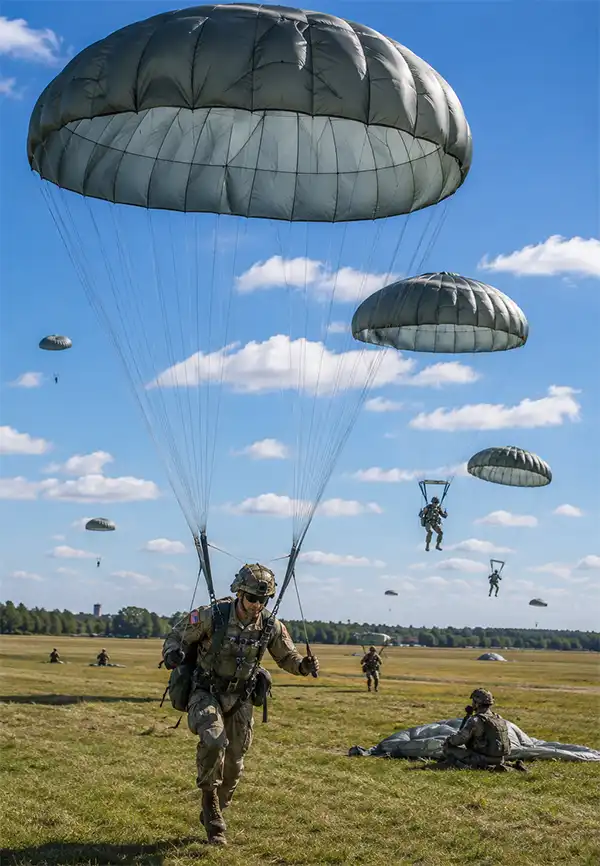
More than sixty years later, in 2002, President George W. Bush officially established National Airborne Day through a presidential proclamation. The proclamation recognized not only the historic achievements of the original Parachute Test Platoon but also the dedication and sacrifices of every airborne service member who followed in their footsteps.
Today, National Airborne Day serves as an opportunity to honor all who have earned the title of paratrooper. It recognizes the demanding training required to qualify for airborne duty, the courage needed to jump into uncertain situations, and the professionalism that has made airborne forces one of the most respected military communities in the world. Whether serving in wartime combat, disaster relief, humanitarian missions, or rapid response operations, airborne soldiers continue to uphold a tradition that began with 48 volunteers willing to take a chance on an idea that changed military history forever.
The Birth of America's Airborne Forces
By the late 1930s, military planners around the world realized that aircraft had transformed warfare. Airplanes could move supplies, conduct reconnaissance, and bomb strategic targets, but a new question emerged: Could soldiers be delivered directly into combat by parachute?
Several European nations were already experimenting with airborne troops. Germany, in particular, had demonstrated that specially trained paratroopers could seize key objectives before conventional ground forces arrived. As World War II spread across Europe, American military leaders watched these developments closely and recognized that the United States could not afford to ignore this emerging form of warfare.
In June 1940, the U.S. Army authorized the creation of an experimental unit known as the Parachute Test Platoon. Volunteers were sought from across the Army, and only those who met demanding physical and mental standards were selected. These soldiers knew they were stepping into unknown territory. Military parachuting was still experimental, training methods were being developed as they went along, and every jump helped answer questions no one could fully predict.
Training took place at Fort Benning, Georgia (now Fort Moore), where instructors developed procedures for safely exiting aircraft, controlling parachutes, landing with equipment, and regrouping quickly after touching down. The techniques may seem routine today, but in 1940 they were entirely new. Every successful jump helped refine the methods that future generations of paratroopers would learn.
That work culminated on August 16, 1940, when 48 members of the Parachute Test Platoon climbed aboard Army aircraft and completed the first official U.S. Army parachute jump. Their successful descent demonstrated that trained soldiers could be deployed rapidly from the air and arrive ready to fight. It was a milestone not only for the Army but also for military aviation and modern combat strategy.
The success of those first volunteers erased much of the skepticism surrounding airborne operations. What had begun as a bold experiment quickly evolved into a permanent military capability. The Army expanded its airborne program, established dedicated training schools, and began forming larger parachute units that would soon play major roles during World War II.
Those original 48 volunteers probably never imagined that their leap into the unknown would inspire generations of airborne soldiers. Yet every paratrooper who has earned jump wings since then can trace the roots of their training and traditions back to that historic day at Fort Benning, when America's airborne legacy quite literally got off the ground.
Airborne Troops During World War II
The new airborne divisions quickly proved their value during the Second World War.
Paratroopers participated in some of history's most famous military operations, including:
- The invasion of Sicily in 1943.
- The Normandy landings (D-Day) in 1944.
- Operation Market Garden in the Netherlands.
- The Battle of the Bulge during the winter of 1944–45.
Their missions were among the most dangerous of the war. Often dropped deep behind enemy lines, airborne soldiers were expected to capture bridges, destroy communication lines, seize strategic positions, and delay enemy reinforcements until larger forces arrived.
Because they frequently landed scattered across unfamiliar territory, every paratrooper had to think independently while working toward the overall mission.
Becoming an Airborne Soldier
Earning the right to wear U.S. Army parachutist wings is a challenge that demands physical fitness, mental toughness, self-discipline, and complete confidence in both training and equipment. Airborne soldiers volunteer for a role that asks them to step into the unknown, trusting their preparation and the teammates beside them.
Most Army paratroopers begin their journey at the Basic Airborne Course at Fort Moore, Georgia (formerly Fort Benning), the historic home of U.S. Army airborne training. Although training methods and equipment have evolved since 1940, the goal remains unchanged: to prepare soldiers to safely exit an aircraft and arrive on the ground ready to accomplish their mission.
The course is traditionally divided into three phases. During Ground Week, students learn the fundamentals of parachuting, including aircraft exit procedures, body position, parachute landing falls (PLFs), and techniques for dealing with emergency situations. The repeated practice of parachute landing falls helps reduce injuries by teaching soldiers how to distribute the impact of landing across different parts of the body rather than absorbing it all at once.
The second phase, known as Tower Week, builds confidence and reinforces the skills learned on the ground. Soldiers practice exiting mock aircraft doors and experience suspended harness training that teaches them how to steer their parachutes and prepare for landing. Historically, the Army's famous 250-foot jump towers gave students a realistic experience before their first aircraft jump, and while modern training methods have changed over the years, confidence-building remains a central part of the course.
The final phase is Jump Week, when students put everything they have learned into practice. To qualify as Army paratroopers, they must successfully complete a series of parachute jumps from military transport aircraft. These jumps include both daytime operations and jumps carrying combat equipment, closely simulating the conditions they could encounter during real military missions.
Airborne training is about far more than simply learning how to use a parachute. Soldiers develop teamwork, discipline, confidence, and the ability to remain calm under pressure. Every jump requires careful preparation, strict attention to safety procedures, and absolute trust in fellow paratroopers. Individual skill is important, but airborne operations succeed because everyone performs their role as part of a coordinated team.
Upon successfully completing the course, graduates earn the Basic Parachutist Badge, more commonly known as jump wings. For many soldiers, receiving those silver wings is one of the proudest moments of their military career. They represent not only successful parachute jumps but also the willingness to volunteer for one of the Army's most demanding specialties.
For airborne soldiers, earning jump wings is not the end of the journey—it is the beginning. Many go on to serve with elite airborne units, participating in training exercises and missions around the world while continuing a tradition that began with the original 48 volunteers in 1940. Every time a new class graduates from Airborne School, another chapter is added to a legacy that has now lasted for more than eight decades.
Why Airborne Forces Are Still Important
Modern warfare has changed dramatically since 1940, yet airborne forces continue to play an important role.
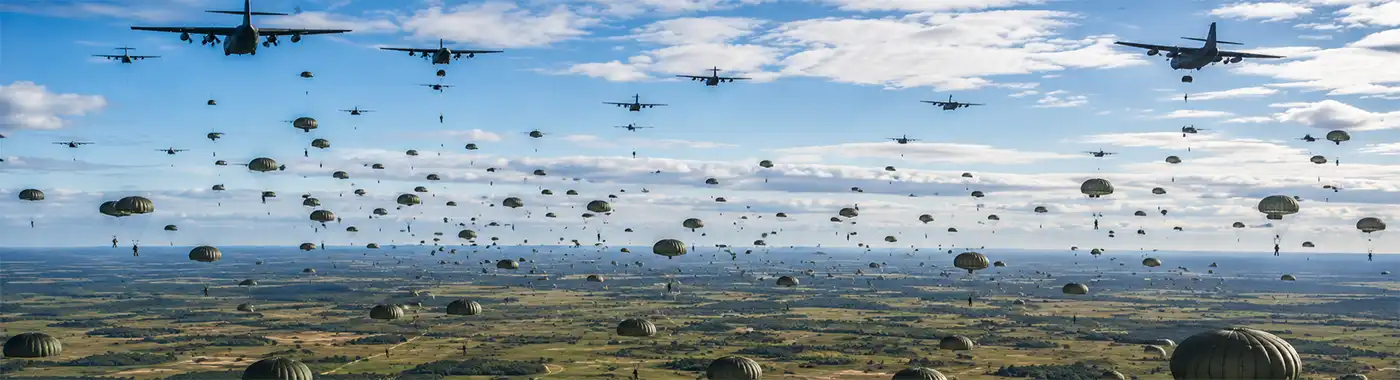
Today's airborne units are trained to deploy rapidly almost anywhere in the world, often arriving before heavier ground forces. They may conduct:
- Airfield seizures.
- Rapid response operations.
- Humanitarian missions.
- Disaster relief.
- Peacekeeping operations.
- Special operations support.
Modern aircraft, navigation systems, and parachute technology have greatly improved safety and precision, but the courage required to step into an open aircraft doorway remains exactly the same.
Traditions of the Airborne Community
Few military organizations possess traditions as rich or as enduring as those of the airborne community. Shared experiences, demanding training, and the unique challenge of parachuting into unfamiliar territory create a bond that often lasts a lifetime. Whether separated by decades or thousands of miles, paratroopers tend to recognize one another as members of a close-knit family.
One of the most recognizable traditions is the greeting "Airborne!" The single word serves many purposes. It can mean hello, yes, understood, well done, or simply express pride in belonging to the airborne community. Among paratroopers, the greeting is instantly understood and reflects a shared identity built on courage, discipline, and mutual respect.
Another phrase deeply associated with airborne service is "All the Way!", the famous motto of the 82nd Airborne Division. The words represent determination, perseverance, and the commitment to finish every mission regardless of the obstacles. Other airborne units have their own proud mottos and traditions, but all share the same spirit of professionalism and readiness.
The silver Parachutist Badge, commonly called jump wings, is one of the Army's most respected qualifications. Soldiers wear it with pride because it represents successful completion of one of the military's most demanding schools. For many veterans, those small silver wings symbolize not only their training but also the friendships, challenges, and experiences that shaped their military careers.
Many airborne soldiers also continue earning additional qualifications throughout their careers. After completing the required number of operational jumps and meeting specific experience requirements, they may qualify for Senior or Master Parachutist Badges, recognizing years of dedication and expertise in airborne operations.
National Airborne Day often brings former paratroopers together for reunions, memorial ceremonies, museum exhibits, parachute demonstrations, and veterans' gatherings. These events provide opportunities to reconnect with old friends, share stories, honor those who never returned, and welcome younger generations into the airborne tradition.
Military museums and memorials across the United States also use the day to preserve the history of airborne operations. Exhibits feature original parachutes, uniforms, equipment, photographs, and personal accounts from soldiers who participated in famous operations such as D-Day, Operation Market Garden, and the Battle of the Bulge. These displays help ensure that the achievements and sacrifices of airborne troops are never forgotten.
Perhaps the strongest tradition within the airborne community is looking after one another. Veterans frequently mentor newly qualified paratroopers, sharing lessons learned through years of service. That willingness to support fellow airborne soldiers reflects the trust developed from countless training exercises and combat operations where every individual depended on the others.
Although equipment, aircraft, and tactics have evolved dramatically since the first jump in 1940, the spirit of the airborne community remains remarkably consistent. The courage to volunteer, the discipline to prepare thoroughly, and the confidence to step through an open aircraft door continue to unite generations of paratroopers. National Airborne Day celebrates not only their history but also the enduring traditions that have made the airborne community one of the most respected brotherhoods and sisterhoods in military service.
How to Celebrate National Airborne Day
National Airborne Day offers an opportunity to learn about one of the most remarkable chapters in American military history while showing appreciation for the men and women who have volunteered for airborne service. Whether you have a personal connection to the military, know someone who proudly wears jump wings, or simply enjoy learning about history, there are plenty of meaningful ways to mark the occasion. You don't have to jump out of an airplane to participate—although some adventurous people certainly do. Even taking a few moments to remember the courage, dedication, and sacrifice of generations of paratroopers is a fitting way to recognize the day.
You might:
- Thank a current or former airborne service member.
- Visit a military museum featuring airborne history.
- Learn about famous airborne operations during World War II.
- Watch documentaries about paratroopers.
- Read memoirs written by airborne veterans.
- Attend local military appreciation events.
- Share the history of the Parachute Test Platoon with family and friends.
- Fly an American flag in honor of those who served.
For the adventurous, some civilian skydiving centers even offer tandem jumps. While not quite the same as military training, it certainly provides a greater appreciation for what airborne soldiers experience.
Interesting Facts About National Airborne Day
National Airborne Day is filled with fascinating stories that go far beyond parachutes and military aircraft. From the daring volunteers who helped launch America's airborne program to the traditions, training, and accomplishments that followed, the history of airborne forces is packed with remarkable milestones. Here are a few interesting facts that highlight why August 16 holds such a special place in military history.
- The first official U.S. Army parachute jump took place on August 16, 1940.
- Exactly 48 volunteers participated in the original Parachute Test Platoon jump.
- Fort Benning, Georgia, served as the birthplace of America's airborne forces.
- The installation is now known as Fort Moore.
- President George W. Bush officially proclaimed National Airborne Day in 2002.
- Airborne soldiers earn their parachutist wings only after successfully completing airborne training.
- The 82nd Airborne Division is one of the world's most recognized airborne units.
- Military parachutes are designed very differently from recreational skydiving parachutes.
- Airborne operations have been conducted in nearly every major American conflict since World War II.
- Thousands of U.S. service members continue airborne training each year.
Why National Airborne Day Matters
National Airborne Day is about far more than celebrating parachutes, airplanes, or military hardware. It recognizes the courage, commitment, and pioneering spirit of the men and women who volunteered to become part of an entirely new kind of fighting force. When the members of the original Parachute Test Platoon stepped out of their aircraft on August 16, 1940, they were doing something no American soldiers had officially done before. Their success opened the door to military tactics that would influence battlefields for generations.
The observance also honors the thousands of airborne soldiers who have served since that first jump. From the battlefields of World War II to Korea, Vietnam, the Persian Gulf, Afghanistan, Iraq, and numerous peacekeeping and humanitarian missions around the globe, airborne troops have repeatedly answered difficult assignments requiring speed, flexibility, and exceptional training. They have often been among the first to arrive when rapid deployment was essential, whether facing enemy forces or providing aid following natural disasters.
National Airborne Day also reminds us that behind every successful airborne operation are countless hours of preparation. Becoming a paratrooper requires physical conditioning, technical skill, teamwork, discipline, and the willingness to trust both equipment and fellow soldiers. The famous jump itself may last only a few minutes, but it represents weeks, months, and often years of training designed to ensure that every soldier reaches the ground ready to accomplish the mission.
The day also preserves an important piece of American military history. The story of the original 48 volunteers, the development of airborne tactics, and the achievements of airborne divisions during World War II continue to inspire new generations of soldiers and historians alike. Their willingness to embrace innovation helped transform military strategy and demonstrated how new ideas, when combined with determination and careful planning, can change the course of history.
Perhaps most importantly, National Airborne Day provides an opportunity to recognize the people behind the uniforms. Airborne soldiers are sons, daughters, husbands, wives, parents, friends, and neighbors who volunteered to take on one of the military's most demanding specialties. Their service deserves not only admiration for their courage but also gratitude for their dedication to protecting others.
Whether you're a military veteran, an active-duty service member, a family member of a paratrooper, or simply someone who appreciates history, National Airborne Day offers a chance to pause and reflect on the remarkable legacy of America's airborne forces. It celebrates those who have earned their jump wings, honors those who made the ultimate sacrifice, and ensures that the spirit of the original Parachute Test Platoon continues to inspire future generations.
As every paratrooper eventually learns, the hardest part isn't always stepping out of the airplane—it's finding room on your jacket for all the stories that come after the landing.
National Airborne Day FAQ
Every year, National Airborne Day sparks curiosity about the history of America's paratroopers, how airborne forces operate, and why August 16 was chosen for this military observance. Whether you're a history enthusiast, have a family member who served in an airborne unit, or simply want to learn more about the origins of U.S. military parachuting, these frequently asked questions cover the basics.
When is National Airborne Day celebrated?
National Airborne Day is observed annually on August 16. The date commemorates the first official U.S. Army parachute jump, which took place on August 16, 1940.
Why is August 16 significant?
On August 16, 1940, 48 members of the U.S. Army Parachute Test Platoon successfully completed the Army's first official parachute jump at Fort Benning, Georgia (now Fort Moore). Their achievement proved that airborne troops could be deployed behind enemy lines.
Who created National Airborne Day?
National Airborne Day was officially established by President George W. Bush through a presidential proclamation issued in 2002, recognizing the contributions and sacrifices of America's airborne forces.
What is an airborne soldier?
An airborne soldier is a military service member who has successfully completed parachute training and is qualified to conduct military parachute operations. In the U.S. Army, graduates of Airborne School earn the Basic Parachutist Badge, commonly known as jump wings.
Where do U.S. Army soldiers attend Airborne School?
The U.S. Army's Basic Airborne Course is conducted at Fort Moore, Georgia (formerly Fort Benning), which has served as the home of Army airborne training for generations.
What are jump wings?
Jump wings are the silver Parachutist Badge awarded to soldiers who successfully complete airborne training. They symbolize qualification as a military parachutist and are worn with great pride throughout a soldier's career.
Did airborne troops only serve during World War II?
No. While airborne forces became famous during World War II, they have continued serving in conflicts including Korea, Vietnam, the Persian Gulf, Iraq, Afghanistan, and in numerous peacekeeping, humanitarian, and rapid-response missions around the world.
Can civilians celebrate National Airborne Day?
Absolutely. Many people observe the day by learning about airborne history, visiting military museums, attending veterans' events, reading about famous airborne operations, or simply thanking current and former paratroopers for their service.
Are military parachutes the same as recreational skydiving parachutes?
No. Military parachutes are designed primarily for safely delivering soldiers and equipment into operational areas. Recreational skydiving parachutes are designed for maneuverability and sport, allowing jumpers much greater control during descent.
Why is National Airborne Day important?
National Airborne Day honors the innovation, courage, and sacrifices of America's airborne soldiers. It recognizes the volunteers who pioneered military parachuting in 1940 and the generations of paratroopers who have continued serving with distinction ever since.
The Last Exit
National Airborne Day reminds us that history is often shaped by people willing to take extraordinary risks in pursuit of extraordinary goals. What began with 48 courageous volunteers stepping into the unknown on August 16, 1940, grew into one of the most respected military traditions in the world. Their willingness to trust their training, their equipment, and one another forever changed modern warfare.
Today, the airborne community continues to represent professionalism, discipline, and an unwavering commitment to duty. Whether serving in combat, responding to humanitarian crises, or standing ready for rapid deployment anywhere in the world, paratroopers carry forward a legacy built over more than eight decades.
So, on this National Airborne Day, take a moment to remember those who earned their jump wings, honor those who never made the trip home, and appreciate the remarkable history of America's airborne forces. After all, not every journey begins with a first step—some begin with a giant leap from an open aircraft door.