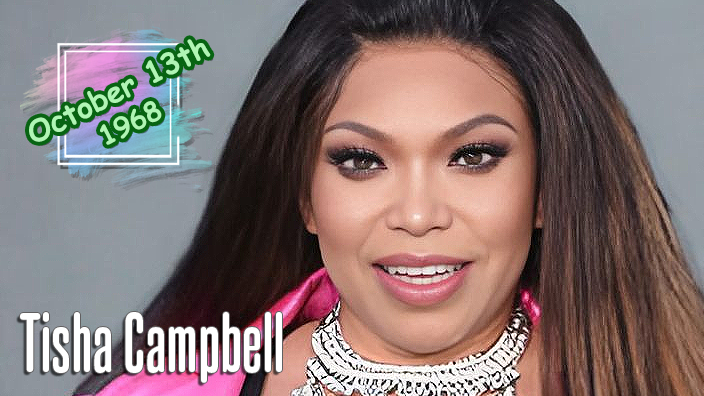
October 13, 1968, in Oklahoma City, Oklahoma
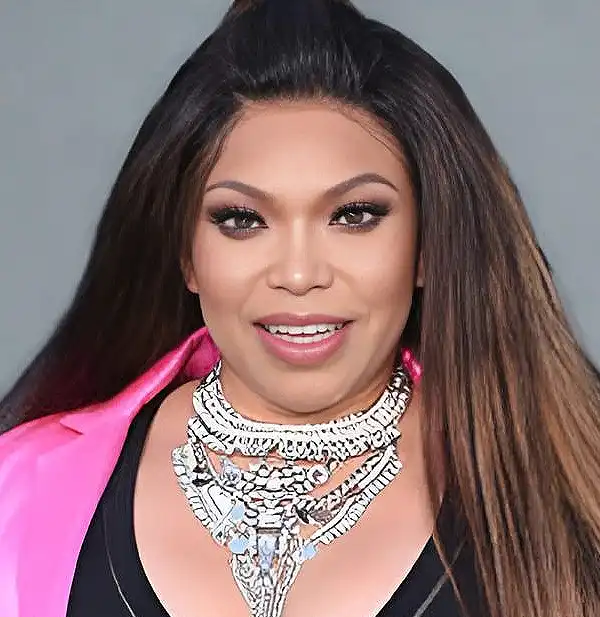
Tisha Michelle Campbell was born on October 13, 1968, in Oklahoma City, Oklahoma, and raised in Newark, New Jersey, where her extraordinary enthusiasm for entertainment began developing almost as soon as she could speak. Her mother, Mona, was a nurse, gospel singer, vocal coach, and talent manager, while her father, Clifton Campbell, worked in a factory and was also musically talented. Growing up in a household where singing, performance, and creativity were encouraged, Campbell developed an early appreciation for music and theater. Her parents recognized her natural abilities and supported her interest in performing, helping establish the foundation for a career that would eventually encompass television comedy, motion pictures, musical recordings, dancing, directing, and producing. For a child growing up surrounded by so much musical encouragement, becoming an entertainer was perhaps inevitable, although few could have predicted just how many television husbands she would eventually have to straighten out.
Campbell's first television appearance came during childhood on the PBS educational program The Big Blue Marble, which introduced viewers to children and cultures around the world. Her appearance included scenes involving her family, school activities, and musical performances, offering an early glimpse of the personality and vocal talent that would later become familiar to television audiences. She also performed in theatrical productions and developed her singing abilities under her mother's guidance. Campbell attended Newark Arts High School, an institution known for encouraging students interested in music, theater, dance, and other creative disciplines. Her education provided opportunities to develop technical skills alongside natural ability, emphasizing that successful performers require discipline, preparation, and a willingness to practice even when nobody is applauding.
As a young performer, Campbell appeared in stage productions including Really Rosie and Betsy Brown, gaining experience with musical theater and ensemble performances. These early opportunities allowed her to combine acting, singing, and dancing, three abilities that would remain important throughout her professional life. Unlike performers who discover their talents after entering adulthood, Campbell was already developing a substantial résumé before most young people had finished deciding what they wanted to do after school. Her theatrical background also helped establish the physical expressiveness and impeccable comic timing that later became defining characteristics of her television performances.
Her first major film opportunity arrived in 1986 with the musical comedy Little Shop of Horrors, directed by Frank Oz and starring Rick Moranis, Ellen Greene, Steve Martin, and Vincent Gardenia. Campbell portrayed Chiffon, one of three streetwise singers who functioned as a musical Greek chorus throughout the film. Alongside Tichina Arnold as Crystal and Michelle Weeks as Ronette, she helped deliver the energetic musical numbers that contributed to the film's distinctive combination of comedy, horror, and rhythm and blues. The production required considerable vocal and dancing ability, allowing Campbell to demonstrate her versatility in a major Hollywood release. It also introduced her to Tichina Arnold, who would become a longtime friend and frequent professional collaborator. Their friendship would eventually prove useful when they found themselves dealing with Martin Lawrence's fictional household, where common sense was occasionally in very short supply.
Following Little Shop of Horrors, Campbell joined the cast of NBC's musical comedy-drama Rags to Riches, which premiered in 1987. The series followed a wealthy businessman, played by Joseph Bologna, who adopts a group of orphaned teenage girls during the early 1960s. Campbell portrayed Marva Foley, one of the young women adjusting to her unusual new family circumstances. The program combined family drama with musical performances featuring popular songs from the period, providing an ideal showcase for Campbell's acting and singing abilities. Although the series lasted only two seasons, it attracted a devoted following and offered valuable experience in the demanding environment of network television production. For Campbell, the role demonstrated that her musical background could complement dramatic storytelling rather than limit her to conventional singing performances.
Her film career continued with Spike Lee's 1988 musical comedy-drama School Daze, in which she portrayed Jane Toussaint. Set at a fictional historically Black college, the film explored relationships, social divisions, cultural identity, and debates surrounding appearance and community expectations. Campbell's performance formed part of an ensemble that included Laurence Fishburne, Giancarlo Esposito, and other emerging performers. The film also provided opportunities for musical performances, allowing Campbell to demonstrate her abilities in a production that combined social commentary with entertainment. Working with Spike Lee introduced her to a filmmaker known for exploring complicated cultural subjects through distinctive visual storytelling, broadening her experience beyond traditional television comedy.
Campbell's growing filmography included Rooftops in 1989, a musical drama directed by Robert Wise, and Another 48 Hrs. in 1990, starring Eddie Murphy and Nick Nolte. These projects demonstrated her ability to move between musical productions, dramatic roles, and mainstream Hollywood entertainment. Her performances helped establish a reputation as an energetic young actress capable of contributing to different types of productions. Although she was still building her professional identity, her combination of singing, dancing, and acting provided opportunities that were not always available to performers specializing in a single discipline.
One of Campbell's most memorable early film roles came in the 1990 comedy House Party, starring Christopher Reid and Christopher Martin of the hip-hop duo Kid 'n Play. Campbell portrayed Sidney, a confident and intelligent young woman whose romantic interests became part of the film's energetic combination of music, comedy, and teenage misadventures. The production featured a memorable dance sequence involving Campbell and her friend Tichina Arnold, highlighting their musical abilities and natural chemistry. House Party became an influential film within African American popular culture, celebrated for its soundtrack, humor, fashion, and portrayal of youthful social life. Campbell's performance earned her a nomination for the Independent Spirit Award for Best Supporting Female, recognizing her contribution to the film's success.
The popularity of House Party led to sequels, with Campbell returning as Sidney in House Party 2 in 1991 and House Party 3 in 1994. These films continued exploring the relationships and adventures of familiar characters while reflecting the changing musical and cultural atmosphere of the early 1990s. Campbell's recurring appearances strengthened her association with a franchise that became an enduring favorite among fans of hip-hop cinema. Her work also demonstrated the importance of performers who could combine convincing acting with genuine musical talent, particularly during a period when rap, rhythm and blues, and popular film were becoming increasingly interconnected.
Campbell also appeared in the 1992 romantic comedy Boomerang, starring Eddie Murphy, Robin Givens, and Halle Berry. The film explored relationships, professional ambition, and changing romantic expectations within a successful African American advertising executive's social circle. Campbell portrayed Yvonne, contributing to an ensemble that combined established stars with emerging performers. Her appearance further strengthened her connections within Hollywood's growing network of Black actors, comedians, and filmmakers. By this point, Campbell had accumulated substantial film and television experience, but the role that would transform her into a household name was just around the corner.
In 1992, Campbell joined the cast of Fox's sitcom Martin, starring comedian Martin Lawrence. She portrayed Regina “Gina” Waters, an ambitious and intelligent public relations professional who became the girlfriend and eventual wife of Lawrence's character, Martin Payne. The series followed Martin, a Detroit radio personality, and his relationships with Gina and their circle of friends. Campbell's character provided an essential balance to Martin's impulsive behavior, outrageous schemes, and seemingly limitless confidence in ideas that rarely survived contact with reality. Gina was affectionate, independent, stylish, and perfectly capable of defending herself when Martin's jokes became a little too enthusiastic. Their relationship became one of the show's central attractions, combining romantic affection with the sort of arguments that make viewers grateful they are watching from a safe distance.
The chemistry between Campbell and Lawrence helped establish Martin as one of the most successful African American sitcoms of the 1990s. Their performances captured the recognizable dynamics of a young couple navigating careers, friendships, jealousy, misunderstandings, and the complications created by Martin's frequently unreasonable behavior. Campbell's comic timing was particularly important because Gina often served as the sensible counterweight to Martin's exaggerated personality. Her facial expressions, sharp responses, and ability to shift quickly between affection and exasperation gave the character depth beyond the conventional sitcom girlfriend. Although Martin Lawrence delivered many of the show's loudest jokes, Campbell frequently earned equally enthusiastic laughter through a single look of disbelief.
The show's supporting cast included Tichina Arnold as Pamela “Pam” James, Gina's outspoken best friend, along with Thomas Mikal Ford as Tommy Strawn and Carl Anthony Payne II as Cole Brown. The friendship between Gina and Pam became an important element of the series, providing opportunities for humorous conversations, friendly disagreements, and memorable confrontations with Martin. Pam and Martin's frequent exchanges of insults became a recurring source of comedy, while Gina often found herself attempting to restore order before the situation deteriorated completely. Campbell and Arnold's longstanding friendship contributed to their convincing on-screen relationship, demonstrating the value of genuine chemistry between performers. Their characters represented confident, independent women who were perfectly capable of challenging the men around them, even when those men were convinced they were the funniest people in Detroit.
Martin became an important part of 1990s television culture, particularly through its portrayal of friendships, romantic relationships, and urban African American life. The series combined physical comedy, recurring catchphrases, elaborate character impersonations, and memorable guest appearances, establishing a distinctive identity within the sitcom landscape. Its popularity extended beyond the original broadcasts through syndication and streaming, introducing the characters to successive generations of viewers. Campbell's portrayal of Gina became especially recognizable, and the character's fashion, hairstyles, and confident personality contributed to her cultural influence. For many viewers, Gina represented a refreshing combination of professional ambition, humor, and independence, even if her choice of boyfriend occasionally raised legitimate questions about her judgment.
Behind the scenes, however, Campbell's relationship with Martin Lawrence became increasingly difficult. In 1997, she filed a lawsuit alleging sexual harassment and other misconduct connected to the production. The dispute was subsequently settled, and Campbell returned to complete the show's final season under arrangements that limited her direct interaction with Lawrence. The circumstances attracted considerable media attention and complicated the conclusion of one of television's most successful comedy partnerships. Campbell later discussed the experience and its personal consequences, while both performers eventually moved toward a more cordial relationship. The situation illustrated the distinction between successful on-screen chemistry and the sometimes difficult realities of professional relationships within the entertainment industry.
Martin concluded in May 1997 after five seasons, leaving Campbell with one of the most recognizable television roles of the decade. The series' continuing popularity helped preserve Gina Waters-Payne as an important character in American sitcom history, while Campbell's performance demonstrated her ability to combine romantic comedy with strong character development. Her work on the show also established professional connections and audience recognition that would support future opportunities. Although departing such a successful series presented challenges, Campbell had already demonstrated sufficient versatility to pursue roles beyond the character that made her famous.
Campbell's musical ambitions continued alongside her acting career. In 1993, she released her self-titled debut album, Tisha, through Capitol Records. The album featured contemporary rhythm and blues and dance-pop material, including the single "Push," which became a hit on Billboard's dance charts. Her recordings demonstrated a powerful vocal style influenced by gospel, soul, and contemporary R&B, reflecting the musical training she had received during childhood. Although her recording career did not achieve the same commercial prominence as her television work, it established her credentials as a legitimate singer rather than simply an actress experimenting with music. Her appearances in music videos and performances with other artists further demonstrated her continued interest in the recording industry.
Her music-related work also included appearances in videos for performers such as Toni Braxton and Will Smith. Campbell's ability to dance, sing, and perform comedy made her particularly well suited to the visual entertainment culture that developed around MTV and other music television outlets during the 1990s. She maintained friendships with several prominent musicians and entertainers, including Janet Jackson, whose influence and support became important parts of her professional life. Campbell's career reflected an era when television, film, popular music, and music videos frequently overlapped, allowing versatile performers to build recognition across multiple entertainment platforms.
Another defining chapter in Campbell's television career began in 2001 when she joined Damon Wayans in ABC's family sitcom My Wife and Kids. Campbell portrayed Janet Marie “Jay” Kyle, the intelligent, affectionate, and frequently exasperated wife of Michael Kyle, played by Wayans. The series followed a suburban family raising three children while navigating the everyday complications of marriage, parenting, school, and household responsibilities. Michael's unconventional parenting methods and elaborate practical jokes frequently created problems that Jay was expected to resolve, providing a familiar comedic arrangement in which Campbell's character represented the voice of reason. Having already spent several seasons managing Martin Payne's unpredictable behavior, she was exceptionally well prepared for another television husband whose confidence regularly exceeded his common sense.
My Wife and Kids became a popular family sitcom, airing for five seasons and attracting audiences through its combination of physical comedy, recognizable parenting situations, and affectionate family relationships. The Kyle children were portrayed by George O. Gore II as Michael Jr., Jennifer Freeman as Claire, and Parker McKenna Posey as Kady, with Jazz Raycole originally playing Claire during the first season. Campbell's character balanced motherhood, marriage, personal ambitions, and the challenges of maintaining order within a household where Michael frequently treated parenting as an opportunity for elaborate entertainment. Her performances emphasized Jay's intelligence and independence while allowing the character to participate fully in the show's comedy rather than simply react to her husband's behavior.
Campbell's work on My Wife and Kids earned her the NAACP Image Award for Outstanding Actress in a Comedy Series in 2003. The recognition acknowledged her ability to create a memorable character within an ensemble comedy and reinforced her reputation as one of television's accomplished sitcom performers. Her partnership with Damon Wayans demonstrated a different comedic dynamic from her earlier work with Martin Lawrence, emphasizing family relationships and the everyday complications of raising children. Although Michael and Jay frequently disagreed, their affection remained central to the show's appeal, creating a family environment that combined humorous conflict with genuine warmth.
The success of My Wife and Kids also strengthened Campbell's association with television portrayals of confident, independent African American women. Both Gina Waters and Jay Kyle were intelligent, outspoken characters who maintained their identities while participating in romantic and family relationships. Their personalities reflected changing expectations surrounding women in American sitcoms, particularly the growing emphasis on characters with professional ambitions, personal interests, and the ability to challenge traditional domestic assumptions. Campbell's performances helped make these characters believable and entertaining, allowing audiences to appreciate their strengths without losing the humor that made the programs successful.
Following the conclusion of My Wife and Kids in 2005, Campbell continued working in television and film. She appeared in the 2008 comedy Zack and Miri Make a Porno, directed by Kevin Smith, and joined the cast of Lifetime's sitcom Rita Rocks, starring Nicole Sullivan. The series followed a suburban mother who rediscovered her passion for music by forming a garage band, providing Campbell with another opportunity to combine comedy and musical interests. She portrayed Patty Mannix, Rita's outspoken friend and colleague, contributing to the show's humor and its exploration of adult friendships and personal reinvention. The series aired from 2008 to 2009, adding another ensemble comedy to Campbell's extensive television résumé.
In 2011, Campbell appeared in the Lifetime crime drama The Protector, portraying Michelle Dulcett, the partner of a Los Angeles police detective played by Ally Walker. The role allowed her to explore a more dramatic character within a procedural television format, demonstrating that her abilities extended beyond the sitcom performances for which she was best known. She also appeared in Disney Channel's musical television film Lemonade Mouth, portraying music teacher Miss Reznick. The production followed a group of teenagers who form a band and discover the importance of friendship, individuality, and artistic expression. Campbell's participation brought her career full circle, allowing her to encourage fictional young musicians much as her own parents and teachers had encouraged her childhood ambitions.
Campbell returned to network television comedy in 2015 with ABC's Dr. Ken, starring comedian and physician Ken Jeong. She portrayed Damona Watkins, a confident and outspoken receptionist working at the medical clinic where Jeong's character practiced. The series combined workplace comedy with family situations, providing Campbell with another opportunity to demonstrate her sharp delivery and expressive reactions. Her character frequently challenged Dr. Ken's decisions and offered humorous observations about his professional and personal behavior. After years of dealing with television husbands whose plans required supervision, Campbell had finally moved into a medical office where the doctor himself occasionally needed someone to explain what was going on.
Dr. Ken ran for two seasons, concluding in 2017, and helped introduce Campbell to audiences who had not experienced her earlier sitcom successes. Her performance reinforced her reputation as an actress capable of strengthening ensemble comedy through memorable supporting characters. She subsequently appeared in the Fox sitcom Outmatched in 2020, portraying Rita, a recurring character in a comedy about working-class parents raising exceptionally intelligent children. The series provided another opportunity to explore family humor and the challenges of maintaining ordinary household routines under extraordinary circumstances.
Campbell also expanded her career into voice acting, lending her distinctive vocal personality to animated productions. Her credits include the Netflix animated comedy Inside Job, in which she voiced Gigi Thompson, a public relations specialist working for a secret organization responsible for managing elaborate global conspiracies. The series combined workplace comedy, science fiction, and satire, offering a different creative environment from traditional live-action sitcoms. Voice acting required Campbell to communicate humor and personality without relying on the facial expressions and physical movements that had become familiar features of her television performances. Her energetic delivery and comic timing proved equally effective in animation, demonstrating that audiences could recognize her personality even when she was represented by a cartoon character.
In 2022, Campbell appeared in Netflix's romantic comedy series Uncoupled, starring Neil Patrick Harris as Michael Lawson, a New York real estate agent unexpectedly navigating single life after the end of a long relationship. Campbell portrayed Suzanne Prentiss, Michael's friend and professional colleague, bringing warmth, humor, and an entertainingly direct personality to the ensemble. The series explored friendship, relationships, professional life, and the complications of starting over, allowing Campbell to demonstrate her ability to work within contemporary comedy formats. Although Uncoupled lasted only one season, she later described it as one of her favorite professional experiences, praising the writing and her chemistry with Harris.
Campbell's continued television work included Act Your Age, a comedy series featuring Kym Whitley and Yvette Nicole Brown. The show centered on three accomplished women navigating friendship, relationships, and personal reinvention while sharing a home in Washington, D.C. Campbell portrayed Keisha, contributing to a comedy that emphasized female friendship and the opportunities for new experiences at different stages of life. The series reflected her continuing interest in portraying confident women whose personalities extend beyond conventional romantic or family roles. Her collaboration with other experienced comedians also demonstrated the value of ensemble performances built around strong character relationships.
The enduring popularity of Martin received renewed attention in 2022 when the surviving principal cast members reunited for Martin: The Reunion, a television special celebrating the show's thirtieth anniversary. Campbell joined Martin Lawrence, Tichina Arnold, and Carl Anthony Payne II to reflect on the program's history, memorable moments, and continuing cultural influence. The reunion also honored Thomas Mikal Ford, who died in 2016, acknowledging his important contribution to the original ensemble. For longtime viewers, the special provided an opportunity to revisit the relationships and comedy that had made the series a defining part of 1990s television. It also demonstrated how performers could acknowledge complicated professional histories while celebrating the work they had created together.
Campbell's friendship with Tichina Arnold has remained one of the most recognizable relationships in her professional life. The two performers first worked together on Little Shop of Horrors and subsequently developed their memorable on-screen friendship as Gina and Pam on Martin. Their continued collaborations, public appearances, and interviews have frequently highlighted their shared experiences within the entertainment industry. Their friendship has also demonstrated the importance of professional relationships that endure beyond individual productions, particularly in an industry characterized by changing projects and unpredictable opportunities. Considering the number of fictional arguments they participated in during Martin, their real-life friendship has proved considerably more durable than many television romances.
Outside acting, Campbell has been open about her experiences as a mother and her commitment to supporting families affected by autism. Her son Xen was diagnosed with autism during childhood, an experience that encouraged her to become involved in advocacy and educational initiatives. Campbell has spoken about the importance of understanding individual developmental needs, encouraging parental involvement, and helping children develop independence and confidence. She co-founded the organization Colored My Mind with other mothers to promote autism awareness and provide information and support to families. Her public discussions have emphasized that children with autism possess individual abilities, personalities, and potential, and that meaningful support should reflect their particular circumstances.
Campbell has also discussed the emotional and practical challenges of balancing professional responsibilities with parenting. Her advocacy reflects personal experiences rather than simply a celebrity association with a charitable cause, and she has encouraged families to seek appropriate resources, educational support, and community connections. Her willingness to discuss these subjects has helped broaden public conversations about autism within communities where developmental conditions may sometimes be misunderstood or inadequately supported. She has also celebrated her son's growing independence, emphasizing the importance of recognizing personal achievements and allowing young adults to develop confidence in their own abilities.
Her personal life included a marriage to actor Duane Martin, whom she wed in August 1996. The couple had two sons, Xen and Ezekiel, before separating in 2018. Their divorce was finalized in 2020. Campbell subsequently spoke about the challenges of rebuilding her personal and financial life following the separation, discussing the importance of independence, resilience, and maintaining a positive outlook. Her experiences became part of a broader public conversation about the difficulties that can accompany major life changes, even for individuals who have enjoyed professional success. Throughout these challenges, she continued working and maintaining a close relationship with her children.
Campbell has also explored opportunities behind the camera, including directing, producing, and developing entertainment projects. Her professional experience has provided an understanding of television production that extends beyond performing scripted dialogue. Having worked with directors, writers, producers, and performers across numerous successful productions, she has developed a perspective on the creative and practical decisions involved in bringing entertainment to audiences. IMDb lists credits reflecting her involvement as an actress, producer, director, writer, and soundtrack performer, illustrating the breadth of her professional interests.
In 2025, Campbell expanded her live entertainment work through stand-up comedy performances, bringing her familiar humor and storytelling abilities directly to audiences. The move represented another professional challenge for an entertainer whose experience included theater, television, music, and film. Stand-up comedy requires a particularly direct relationship with an audience, without the familiar protection of a fictional character or ensemble cast. Campbell's willingness to explore the format reflected her continuing enthusiasm for performance and her confidence in the experiences and observations she had accumulated throughout her career.
Her career continued into 2026 with the Lifetime film Be Happy, directed by Gabourey Sidibe and produced by Mary J. Blige. Campbell starred as Val, a wife and mother seeking to rediscover her personal identity and sense of fulfillment after her child leaves home. The story follows Val's experiences during a trip to New Orleans, exploring marriage, friendship, independence, and the possibility of rediscovering happiness through unexpected opportunities. The production provided Campbell with a leading role centered on a woman's personal development, reflecting the kinds of mature, multidimensional characters she has increasingly embraced.
Tisha Campbell's influence on American television comedy reflects her ability to portray memorable women who combine intelligence, humor, affection, and independence. Her performances as Gina Waters-Payne and Janet “Jay” Kyle helped define two successful sitcoms, while her extensive filmography demonstrates versatility across musical theater, romantic comedy, family entertainment, drama, and animation. Her career also reflects the importance of Black actresses in shaping the development of American television, particularly through portrayals of women whose ambitions, friendships, and personalities extend beyond supporting the male characters around them.
From her childhood television appearance and early musical theater performances to House Party, Martin, My Wife and Kids, Dr. Ken, Uncoupled, and her later projects, Campbell has repeatedly demonstrated a willingness to adapt and explore new creative opportunities. Her achievements as a singer, dancer, actress, producer, and advocate reveal a professional life built on talent, persistence, and a distinctive ability to connect with audiences. And although viewers may always remember her as the woman who somehow managed to keep Martin Payne and Michael Kyle from turning their households into complete disasters, Tisha Campbell has spent her career proving that she is much more than television's favorite voice of reason. She's also the woman who usually gets the biggest laugh while explaining exactly why everyone else is wrong.