August 16, 1975, in Wellington, New Zealand
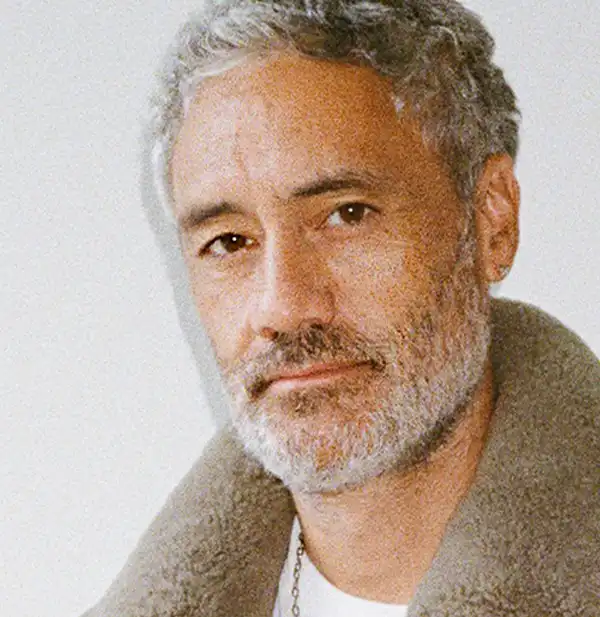
Born Taika David Waititi on August 16, 1975, in Wellington, New Zealand, Waititi grew up with a mixture of Māori and European Jewish heritage that would later influence both his identity and his work. His father was Māori, with roots in the Te Whānau-ā-Apanui people, while his mother, Robin Cohen, was a teacher whose ancestry included Jewish and European heritage.
Waititi spent parts of his childhood on New Zealand's East Coast and in Wellington. Creativity arrived early, and his interests extended well beyond filmmaking. He became involved in acting, comedy, painting, photography and writing, establishing the sort of résumé that suggests choosing one artistic discipline simply wasn't going to be enough.
He attended Victoria University of Wellington, where he studied theater. During the 1990s he became active in New Zealand's comedy and performing arts scene, working with fellow performers including Jemaine Clement. The pair formed the comedy duo The Humourbeasts and developed a working relationship that would eventually lead to considerably bigger projects.
Waititi initially became known primarily as a performer and comedian rather than a filmmaker. He appeared in New Zealand productions and continued developing his own stage material, including solo comedy shows. His acting included the 1999 film Scarfies, for which his performance earned recognition in New Zealand.
Filmmaking gradually became a larger part of his creative work. His 2003 short film Two Cars, One Night, a simple and touching story centered on children meeting outside a rural pub, became an important breakthrough. The film earned Waititi an Academy Award nomination for Best Live Action Short Film, giving Hollywood an early indication that the New Zealander with the unusual comic sensibility might be worth watching.
His first feature film as a director was Eagle vs Shark, released in 2007 and starring Loren Horsley and Jemaine Clement. The romantic comedy displayed many characteristics that would become familiar in Waititi's later work: socially awkward characters, deadpan humor, sadness sitting quietly underneath comedy, and people behaving ridiculously while remaining surprisingly sympathetic.
Waititi followed it with Boy in 2010. Set in rural New Zealand in 1984, the film centers on a Māori boy whose romanticized image of his absent father collides rather painfully with reality when Dad finally returns. Waititi wrote and directed the film and also played the father, Alamein.
The movie was deeply connected to New Zealand culture and Waititi's own background. It demonstrated his growing ability to balance humor with subjects involving family, disappointment, poverty and childhood. Rather than separating comedy from serious emotion, Waititi increasingly made the two work together.
Then came vampires.
In 2014, Waititi and Jemaine Clement co-wrote, co-directed and co-starred in What We Do in the Shadows, a mockumentary about several vampires sharing a house in Wellington. Instead of concentrating on gothic terror, the movie explored the practical problems of immortal life, including household chores, arguments between roommates and the considerable inconvenience of trying to enter nightclubs when nobody has invited you inside.
Waititi played Viago, an unusually polite vampire whose cheerful manners made the blood drinking seem almost secondary. Much of the film's dialogue was improvised, with the actors working from directions rather than simply performing a conventional script word for word.
The movie became a cult success and later inspired the acclaimed American television series of the same name. Waititi remained involved with the television adaptation as an executive producer and director and occasionally returned as Viago.
His next feature, Hunt for the Wilderpeople, arrived in 2016. Starring Sam Neill and Julian Dennison, the film follows a rebellious foster child and his reluctant guardian as they disappear into the New Zealand wilderness and become the subjects of a national manhunt.
The movie combined eccentric comedy, adventure and genuine emotion while remaining unmistakably New Zealand in character. It also became another major success for Waititi and helped demonstrate that his distinctive filmmaking style could appeal well beyond his home country.
Hollywood noticed.
Marvel Studios hired Waititi to direct Thor: Ragnarok, released in 2017. The decision initially seemed surprising. Waititi was known primarily for relatively small, quirky New Zealand films, while Marvel was handing him one of its enormously expensive superhero franchises.
The result dramatically altered the screen personality of Thor.
Chris Hemsworth's thunder god had previously been presented largely as a noble Shakespearean superhero. Under Waititi's direction, Ragnarok embraced comedy, improvisation, vivid visuals and the realization that Hemsworth was extremely good at being funny.
Waititi also joined the cast as Korg, a large rock-like gladiator with an unexpectedly gentle New Zealand accent. The character was originally intended as a relatively small part, but Waititi's performance made Korg a fan favorite. He later reprised the role in other Marvel productions.
Thor: Ragnarok became a major international success and transformed Waititi from an acclaimed independent filmmaker into a director capable of handling blockbuster-scale productions. More importantly, he managed to make a massive studio superhero movie while retaining enough of his personality that audiences could still recognize the filmmaker behind it.
Waititi's most significant critical triumph followed with Jojo Rabbit in 2019. Based on Christine Leunens' novel Caging Skies, the film tells the story of Johannes "Jojo" Betzler, a German boy during the final period of Nazi rule whose unquestioning enthusiasm for Hitler begins to collapse when he discovers that his mother is hiding a Jewish girl.
Waititi wrote and directed the film and made the audacious decision to portray Jojo's imaginary version of Adolf Hitler himself. His Hitler is deliberately childish and absurd, reflecting the distorted fantasy of a boy rather than attempting to portray the historical dictator realistically.
The unusual mixture of satire, childhood innocence, war and tragedy made Jojo Rabbit one of Waititi's most ambitious projects. Beneath the comedy was a story about indoctrination, prejudice and the possibility of learning to reject hatred.
The gamble paid off. At the 92nd Academy Awards, Waititi won the Oscar for Best Adapted Screenplay. Jojo Rabbit was also nominated for Best Picture, with Waititi among its nominated producers.
The screenplay also won the BAFTA Award for Adapted Screenplay. During his acceptance speech, Waititi characteristically found room for jokes while thanking Christine Leunens, his collaborators and his mother, who had introduced him to the novel.
Jojo Rabbit even brought him a Grammy Award. In 2021, Waititi won Best Compilation Soundtrack for Visual Media for the film's soundtrack, giving him another major entertainment award to find shelf space for.
Following Jojo Rabbit, Waititi became one of Hollywood's busiest filmmakers and producers. He directed episodes of The Mandalorian and voiced the droid IG-11, once again demonstrating his habit of directing something and then wandering into the cast while nobody is looking.
He returned to Marvel to direct Thor: Love and Thunder, released in 2022, while again appearing as Korg. The movie pushed the comedic and colorful elements of Ragnarok even further, although its reception was more divided than that of its predecessor.
Waititi also became closely associated with television. He co-created Reservation Dogs with Sterlin Harjo, a comedy-drama centered on Indigenous teenagers growing up in rural Oklahoma. The acclaimed series was notable for its predominantly Indigenous cast and creative team and for presenting Native characters through everyday life, humor, friendship and community rather than the stereotypes historically common in film and television.
Another television success came with Our Flag Means Death, the pirate comedy loosely inspired by the real-life Stede Bonnet. Waititi served as an executive producer, directed the pilot and played the legendary pirate Edward "Blackbeard" Teach. His version of Blackbeard was considerably more emotionally complicated than the traditional terrifying pirate captain, although he remained perfectly capable of terrifying people when necessary. IMDb lists Waititi in 16 episodes across the show's 2022–2023 run.
In 2023, Waititi directed Next Goal Wins, based on the true story of the American Samoa national soccer team's efforts to recover from its infamous 31–0 defeat by Australia and qualify for the FIFA World Cup. Michael Fassbender played coach Thomas Rongen in another Waititi story about outsiders attempting something everyone else considers improbable.
Waititi's work has continued to expand across film and television as a writer, director, producer and performer. IMDb credits him extensively in all four areas, illustrating just how frequently his name appears in several different places on the same production.
That versatility has become one of the defining characteristics of his career. Waititi does not simply move between independent films and enormous studio productions; he also moves between directing, writing, producing and acting without treating those roles as entirely separate professions.
His filmmaking style is similarly difficult to confine to one category. Comedy is almost always present, but the jokes frequently sit beside grief, loneliness, prejudice, broken families and characters searching for somewhere to belong. Boy, Hunt for the Wilderpeople and Jojo Rabbit are very different movies, yet each uses humor to approach subjects that could easily have become overwhelmingly bleak.
Waititi has also brought New Zealand and Māori perspectives into international entertainment without abandoning the cultural identity that helped shape his earliest work. His rise from Wellington's comedy and theater scene to directing some of Hollywood's largest productions has made him one of New Zealand's most internationally recognizable filmmakers.
His personal life has also attracted considerable public attention. Waititi married British singer and actress Rita Ora in 2022. He has two daughters from his previous marriage to filmmaker Chelsea Winstanley.
By the time Waititi reached his 50s, his career had already traveled an extraordinary distance. He had gone from performing comedy in New Zealand to receiving an Oscar nomination for a tiny short film, directing homegrown features, reinventing a Marvel superhero, winning an Academy Award and becoming a prominent international filmmaker.
Yet the smaller films remain essential to understanding his success. The awkward humor, affection for outsiders, improvised performances and willingness to mix absurdity with sadness were there long before Thor picked up a hammer under his direction.
Hollywood gave Taika Waititi bigger budgets, famous actors and considerably more expensive things to destroy. It didn't give him his voice. He brought that with him from New Zealand.