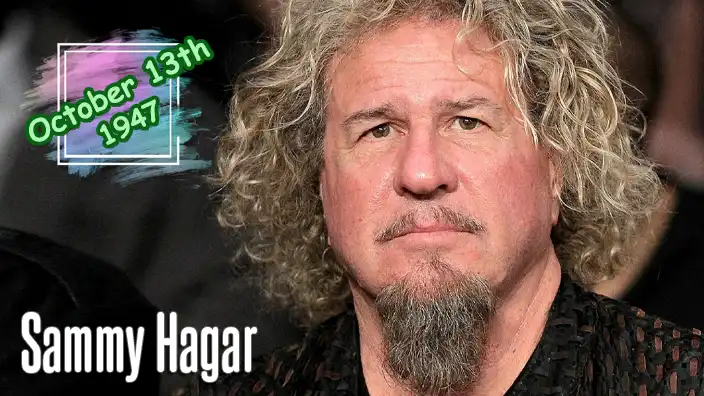
October 13, 1947, in Salinas, California
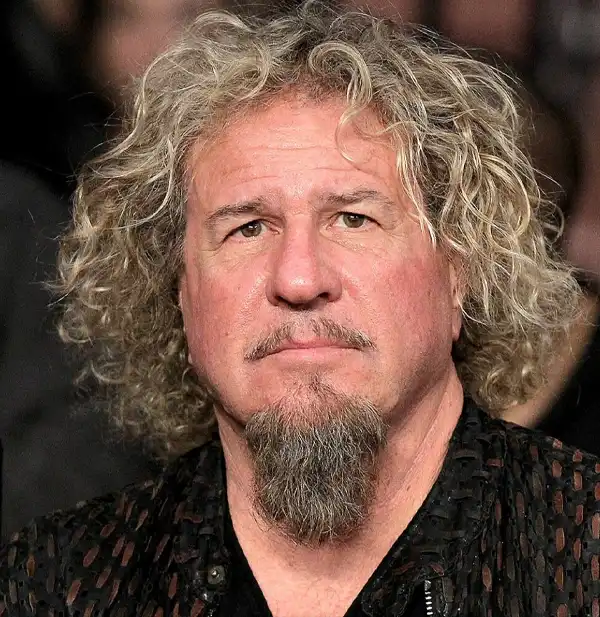
Samuel Roy Hagar was born on October 13, 1947, in California and raised in the working-class community of Fontana, where his early surroundings were considerably less glamorous than the enormous concert stages he would eventually command. His family faced financial difficulties, and his childhood was shaped by hard work, modest circumstances, and a determination to create opportunities beyond those immediately available. His father worked in physically demanding occupations, while his mother struggled to provide stability for the family. Hagar developed an early fascination with music, particularly the emerging sounds of rock and roll, rhythm and blues, and the electrifying performances of artists such as Elvis Presley and Little Richard. In 1960, his mother purchased him a guitar from the Sears catalog for $39, paying for it in installments. It was a modest investment that eventually produced a rather impressive return, although Sears probably never anticipated that its merchandise would help launch a rock-and-roll empire.
As a teenager, Hagar pursued music with considerable enthusiasm, learning guitar and developing the powerful singing voice that would become his trademark. He performed with several local groups, including the Fabulous Castilles, while absorbing the influences of blues, soul, and the increasingly aggressive guitar-driven rock emerging during the 1960s. His early musical ambitions were accompanied by a strong competitive streak, and he also participated in boxing before committing himself fully to a musical career. The discipline and physical endurance required in boxing may have served him well when he began performing lengthy concerts under blazing stage lights. After all, there are certain similarities between surviving twelve rounds in a boxing ring and surviving a three-hour rock concert, although the latter generally involves considerably more applause and fewer medical examinations.
Hagar's major breakthrough arrived in 1973 when he joined Montrose, the hard rock band formed by guitarist Ronnie Montrose. The group's self-titled debut album, Montrose, became an influential recording in the development of American hard rock, featuring explosive guitar riffs, powerful vocals, and songs that helped establish the musical foundations of later heavy metal and arena rock. Tracks including "Rock Candy," "Bad Motor Scooter," and "Space Station No. 5" demonstrated Hagar's vocal range and energetic delivery, introducing audiences to a singer capable of matching the intensity of Ronnie Montrose's guitar playing. Although the album was not an immediate commercial blockbuster, its reputation grew substantially over time, and it became an important influence on numerous musicians. Hagar also contributed to the band's second album, Paper Money, released in 1974, before disagreements led to his departure.
Leaving Montrose presented Hagar with the challenge of establishing an independent musical identity, but he approached the opportunity with characteristic determination. His solo career began with the 1976 album Nine on a Ten Scale, followed by Sammy Hagar in 1977 and Musical Chairs later that year. These early recordings combined hard rock, blues influences, and increasingly accessible melodies, allowing him to develop his songwriting skills while establishing a loyal following. His distinctive red clothing and energetic stage presence eventually earned him the nickname "The Red Rocker," a description that suited both his appearance and his musical personality. While some performers carefully cultivate an air of mystery, Hagar generally preferred to arrive wearing bright red, turn up the amplifiers, and make absolutely certain everyone knew he was there.
His commercial fortunes improved with the release of Street Machine in 1979 and Danger Zone in 1980, followed by Standing Hampton in 1982. The latter album became a significant breakthrough, featuring "There's Only One Way to Rock," "I'll Fall in Love Again," and "Heavy Metal." These recordings strengthened his reputation as a formidable live performer and established him as a recognizable figure in American hard rock. His music was particularly popular among audiences who appreciated powerful guitar riffs, straightforward lyrics, and songs designed to sound even better when performed at considerable volume. "There's Only One Way to Rock" became one of his signature anthems, although generations of musicians have continued debating precisely how many ways there might actually be. Hagar, naturally, has always seemed reasonably confident about his answer.
In 1982, Hagar released Three Lock Box, which included the hit single "Your Love Is Driving Me Crazy." The song became one of his most successful solo recordings, reaching the Top 20 on the Billboard Hot 100 and expanding his audience beyond traditional hard rock listeners. His growing popularity was further strengthened by energetic concert performances and regular exposure on rock radio. Hagar's ability to combine aggressive guitar-driven music with memorable pop melodies proved particularly valuable during the early 1980s, when MTV was helping transform the music industry into a more visually oriented business. Fortunately, Hagar's red wardrobe translated extremely well to television, especially when accompanied by a guitar, a microphone, and enough enthusiasm to power a small municipality.
One of Hagar's most recognizable songs arrived in 1984 with "I Can't Drive 55," released on the album VOA. Inspired by his frustration with the federally imposed 55-mile-per-hour speed limit, the song became an enduring rock anthem celebrating rebellion against restrictive highway regulations. Its music video featured Hagar driving a Ferrari and encountering the predictable disapproval of law enforcement authorities. The recording became closely associated with his public image, capturing his energetic personality and his preference for enjoying life at something considerably faster than a leisurely Sunday afternoon pace. Although American highway speed limits have changed substantially since the song's release, its rebellious spirit has remained popular with listeners who occasionally find themselves wondering whether the accelerator pedal might have a little more to offer.
Hagar also contributed music to several successful motion pictures during the 1980s. His song "The Girl Gets Around" appeared on the soundtrack of Footloose in 1984, while "Winner Takes It All" was featured in the 1987 Sylvester Stallone film Over the Top. His recordings subsequently appeared in numerous films and television productions, helping introduce his music to audiences beyond traditional rock radio. IMDb documents his extensive work as a soundtrack performer, composer, actor, and producer, reflecting a career that has reached into several areas of entertainment. Hagar's unmistakable vocal style proved particularly suitable for action sequences, energetic montages, and scenes involving people doing things their insurance companies would probably prefer they reconsider.
The most commercially successful chapter of Hagar's musical career began in 1985 when he joined Van Halen following the departure of original lead singer David Lee Roth. The band, founded by guitarist Eddie Van Halen and drummer Alex Van Halen, had already established itself as one of the world's most successful hard rock groups. Replacing Roth presented a formidable challenge, particularly because his flamboyant personality and distinctive vocal delivery had become closely associated with the band's identity. Hagar brought a different musical approach, emphasizing his powerful vocal range, melodic songwriting, and ability to collaborate creatively with Eddie Van Halen. The transition was initially controversial among fans, but the group's subsequent commercial achievements demonstrated that Van Halen remained a major force in popular music.
The first Van Halen album featuring Hagar, 5150, appeared in 1986 and reached number one on the Billboard 200. Named after Eddie Van Halen's recording studio and a California law-enforcement code, the album introduced a more melodic direction while preserving the band's energetic guitar-driven sound. Songs including "Why Can't This Be Love," "Dreams," "Love Walks In," and "Best of Both Worlds" became major rock radio favorites, establishing the new lineup's commercial appeal. Hagar's vocals complemented Eddie Van Halen's increasingly sophisticated guitar and keyboard arrangements, creating a sound that appealed to both established fans and new listeners. The album's success helped silence some critics, although arguments about which Van Halen singer was superior would continue with the enthusiasm normally reserved for international sporting rivalries.
Van Halen followed 5150 with OU812 in 1988, another number-one album featuring songs including "When It's Love," "Finish What Ya Started," and "Mine All Mine." The recording further developed the band's mixture of hard rock, polished production, and accessible melodies, while Hagar continued contributing lyrics and musical ideas. The group's 1991 album, For Unlawful Carnal Knowledge, returned to a more aggressive guitar-oriented sound and produced the hit singles "Poundcake," "Top of the World," and "Right Now." The latter became particularly celebrated for its thought-provoking music video, which combined the band's performance with observations about contemporary society. The song earned considerable recognition at the MTV Video
Music Awards and demonstrated that Van Halen could combine commercially successful rock music with more reflective themes.
The group's fourth studio album with Hagar, Balance, arrived in 1995 and also reached number one on the Billboard 200. Its success meant that all four Van Halen studio albums featuring Hagar had topped the American album chart, a remarkable achievement for a band undergoing such a significant change in musical personnel. Songs including "Can't Stop Lovin' You," "Don't Tell Me (What Love Can Do)," and "Not Enough" continued the group's commercial success, although personal disagreements and creative tensions were becoming increasingly difficult to manage. Hagar's relationship with the Van Halen brothers deteriorated, and he departed the band in 1996 under disputed circumstances. Both sides subsequently offered differing accounts of the separation, ensuring that rock journalists would have enough material to occupy themselves for years.
Despite the difficulties surrounding his departure, Hagar's association with Van Halen remained an important part of his career. He briefly reunited with the group in 2004 for a successful concert tour and contributed new recordings to a greatest-hits collection. However, tensions persisted, and the reunion did not develop into a lasting creative partnership. Following Eddie Van Halen's death in October 2020, Hagar spoke publicly about their musical relationship and the reconciliation they had achieved through private communication before Eddie's passing. His reflections emphasized their shared creative accomplishments and the personal significance of their collaboration, demonstrating that even complicated relationships can leave behind extraordinary musical achievements.
After leaving Van Halen, Hagar resumed his solo career with renewed enthusiasm, releasing Marching to Mars in 1997. The album included "Little White Lie," a successful rock radio single that demonstrated his continuing ability to create commercially appealing music outside the band. He subsequently formed Sammy Hagar and the Waboritas, a group that became closely associated with his concerts, recording projects, and relaxed California-meets-Mexico lifestyle. Albums including Red Voodoo, Ten 13, and Not 4 Sale reflected his enthusiasm for straightforward rock music, entertaining lyrics, and an atmosphere of celebration. His concerts increasingly resembled enormous gatherings of friends enjoying music together, although the average backyard barbecue rarely includes professional lighting systems, towering amplifiers, and thousands of enthusiastic guests.
Hagar's entrepreneurial activities developed alongside his musical career, particularly through his affection for Cabo San Lucas, Mexico. He opened the Cabo Wabo Cantina in 1990, establishing a venue that combined live entertainment, food, and a lively social atmosphere. The business became closely associated with his public identity, eventually expanding into the successful Cabo Wabo tequila brand. Hagar sold a controlling interest in the tequila business to Gruppo Campari in 2007, later selling his remaining interest. His success demonstrated an unusual ability to transform a rock musician's personal interests into substantial commercial ventures. While many performers have attempted to diversify their income through clothing lines or celebrity endorsements, Hagar managed to build a business around the concept of having an exceptionally good time in Mexico.
His business interests subsequently expanded into other beverages and hospitality ventures, including Sammy's Beach Bar Rum and Santo Spirits, developed in partnership with celebrity chef Guy Fieri. He also established restaurant and entertainment concepts associated with his music and personal lifestyle. These activities earned him recognition as a successful entrepreneur as well as a rock musician, demonstrating that his enthusiasm extended beyond songwriting and performing. Hagar has frequently described his business philosophy in terms of creating products and experiences he genuinely enjoys, an approach that has helped maintain a recognizable connection between his public personality and his commercial activities. Evidently, the Red Rocker has never been particularly interested in limiting himself to one source of noise—or revenue.
In 2008, Hagar joined guitarist Joe Satriani, former Van Halen bassist Michael Anthony, and Red Hot Chili Peppers drummer Chad Smith to form the supergroup Chickenfoot. The band's self-titled debut album appeared in 2009, followed by Chickenfoot III in 2011. Despite the confusing title, the latter was the group's second studio album, suggesting that rock musicians are occasionally as relaxed about arithmetic as they are about conventional naming practices. Chickenfoot combined hard rock instrumentation with accomplished musicianship, allowing Hagar to collaborate with performers whose individual careers had already established them as respected figures in the industry. The group's recordings and concerts received enthusiastic responses from fans who appreciated the return to energetic, guitar-centered rock music.
Hagar later formed Sammy Hagar and the Circle with Michael Anthony, drummer Jason Bonham, and guitarist Vic Johnson. The group performed songs from various stages of Hagar's career, including material originally recorded with Montrose, Van Halen, and his solo bands. Their studio album Space Between, released in 2019, explored themes involving money, greed, enlightenment, and personal relationships while retaining the group's powerful rock sound. The Circle also released Crazy Times in 2022, continuing Hagar's commitment to recording new music rather than relying exclusively on earlier hits. These projects demonstrated his preference for working with musicians he respects personally and professionally, creating an environment in which musical collaboration remains enjoyable rather than simply another contractual obligation.
Television provided another outlet for Hagar's outgoing personality. His series Rock & Roll Road Trip with Sammy Hagar, which premiered in 2016, featured conversations and musical performances with established musicians and entertainment personalities. The program combined travel, interviews, informal performances, and discussions about the music industry, offering audiences a relaxed perspective on the lives and experiences of celebrated performers. Guests included musicians from several generations and musical genres, reflecting Hagar's broad interests and extensive professional connections. His conversational style and obvious enthusiasm made the program particularly appealing to viewers interested in the personalities behind familiar recordings. Essentially, it allowed Hagar to visit interesting places, talk about music, meet famous friends, and occasionally enjoy a drink—all while someone else handled the television production.
Hagar has also shared his experiences through writing. His autobiography, Red: My Uncensored Life in Rock, published in 2011 with journalist Joel Selvin, became a New York Times bestseller. The book explored his childhood, musical achievements, business ventures, personal relationships, and frequently turbulent experiences within Van Halen. Its candid accounts attracted considerable attention, particularly from readers interested in the complicated personalities and relationships that shaped one of rock music's most successful groups. He followed it with Are We Having Any Fun Yet? The Cooking & Partying Handbook in 2015, a publication combining recipes, entertaining advice, and stories from his life. Few musicians have managed to move quite so comfortably from describing backstage disagreements to explaining what everyone should serve for dinner.
His personal life has included two marriages and four children. He married Betsy Berardi in 1968, and the couple had two sons, Aaron and Andrew, before their marriage ended in divorce. In 1995, he married Kari Karte, with whom he has two daughters, Kama and Samantha. Despite the public excitement surrounding his career, Hagar has frequently emphasized the importance of family, friendships, and maintaining a positive outlook. His charitable activities include the Hagar Family Foundation, established with his wife to support organizations addressing children's needs, hunger, and other community concerns. The foundation has contributed to food banks and nonprofit organizations, reflecting his desire to use his commercial success to assist people facing difficult circumstances.
Recognition of Hagar's musical achievements reached another important milestone in 2007 when Van Halen was inducted into the Rock & Roll Hall of Fame. Hagar attended the ceremony alongside Michael Anthony, representing the band's celebrated history and acknowledging the extraordinary influence of its recordings. The honor recognized Van Halen's impact on rock music, including Eddie Van Halen's revolutionary guitar techniques and the group's enormous commercial success. Hagar's contributions to four chart-topping albums formed a significant part of that legacy, helping establish him as one of the most recognizable voices in hard rock.
In April 2024, Hagar received a star on the Hollywood Walk of Fame, recognizing his achievements in the recording industry. The ceremony celebrated his extensive musical career, entrepreneurial accomplishments, and influence on American popular culture. Guitarist and singer-songwriter John Mayer was among those participating in the occasion, reflecting the respect Hagar has earned among musicians from different generations. His continuing popularity was further demonstrated by The Best of All Worlds Tour, which brought together Hagar, Michael Anthony, Joe Satriani, and drummer Jason Bonham for performances celebrating music from his extensive catalog. The project subsequently continued with drummer Kenny Aronoff and additional concerts, including Las Vegas performances and international appearances.
Hagar's 2026 concert activities included further Best of All Worlds performances, featuring musicians such as Michael Anthony, Joe Satriani, Kenny Aronoff, and Greg Phillinganes. The concerts celebrated his work with Van Halen, Montrose, Chickenfoot, and his solo bands, offering audiences a musical journey through several distinct periods of American hard rock. His official website also announced additional Las Vegas residency performances and international appearances, demonstrating that his enthusiasm for live entertainment remains central to his professional identity.
Sammy Hagar's influence on rock music reflects a combination of powerful vocals, memorable songwriting, energetic performances, and an unusually adventurous professional career. From the hard rock foundations of Montrose to the enormous commercial success of Van Halen, his recordings helped define the sound of American arena rock across several decades. His independent projects, collaborations, television appearances, and business ventures further demonstrate a personality unwilling to remain confined to a single musical identity. Whether performing before thousands of fans, recording with accomplished musicians, or entertaining visitors at his Cabo Wabo Cantina, Hagar has consistently approached life with enthusiasm, determination, and a preference for making the experience memorable. And although he may never have made peace with the old 55-mile-per-hour speed limit, one thing is certain: the Red Rocker has never shown much interest in slowing down.