July smells like charcoal and freedom. Fireworks audition for Broadway, road trips pretend traffic is “part of the experience,” and every beverage suddenly needs ice the size of glaciers. Flip-flops rule. The grill becomes a second religion. And your air conditioner? It’s a tiny, humming hero doing union-level work while you argue about the thermostat like diplomats at a summit.
Week-long celebrations in July are pure summer logic: seven sunny days to lean into parades, cookouts, porch evenings, and “we’ll be there around 2-ish” plans that start at four. Think lawn chairs, lemonade, and traditions you can do in sandals. Keep the sunscreen handy, the cooler stocked, and the schedule loose enough to follow the shade. This is peak season—laugh loud, eat outside, and let the week take the scenic route.
Some weeks are about cupcakes, coffee, and finding excuses to celebrate. This one? This one makes you pause, straighten up a little, and remember that some people run toward danger while the rest of us are busy running the other way. Wildland firefighters don’t get neat office hours or predictable days. They get heat, smoke, steep terrain, and split-second decisions that matter more than most of us will ever have to face. And yet, they show up anyway. This week isn’t just about looking back—it’s about remembering why their work matters, and why their sacrifice should never be reduced to a footnote.
Celebrated: Annually, from June 30th to July 6th
This week honors wildland firefighters who lost their lives and highlights lessons learned from past fires.
Nothing ruins a perfect beach day faster than stepping on something that definitely wasn’t part of the original shoreline design. Clean Beaches Week is here to remind us that sand between your toes is great… mystery objects between your toes, not so much. It’s a time to enjoy the coast the way it was meant to be—clean, beautiful, and free of yesterday’s snack wrappers.
Celebrated: Annually, from July 1st to July 7th
Clean Beaches Week! Check out its history and learn how you can help protect beaches from pollution and keep coastlines beautiful.
There’s always that one person working the grill like it’s a high-stakes operation, while everyone else stands nearby holding a drink and offering absolutely no useful advice. Backyard BBQ Week thrives on this perfect imbalance—one hero, a handful of critics, and a group of happy people pretending they could do it better (they can’t). Add in a little sunshine, some laughter, and the occasional “Are those done yet?” and you’ve got yourself a scene that feels like summer at its finest.
Celebrated: Annually, the Second Week of July
Celebrate Backyard BBQ Week with relaxed outdoor cooking, good company, and the simple joys of summer.
Fluttering chaotically like tiny, winged philosophers contemplating the meaning of light, these nocturnal creatures have an uncanny ability to appear exactly where you don’t want them. One minute, your porch light is peacefully illuminating the night, and the next, it’s the hottest club in town, hosting a full-blown moth rave. Drawn to lamps, candles, and even computer screens, they seem to be on a lifelong quest to find the brightest, most inconvenient place to awkwardly hover—preferably right in front of your face.
Celebrated: Annually, during the Last Full Week of July
Celebrate National Moth Week! Discover the beauty, diversity, and ecological importance of moths with fun facts, activities, and appreciation for these nocturnal wonders.
Hepatitis is a silent destroyer, affecting millions globally with devastating consequences. It inflames the liver, leading to severe damage, cirrhosis, and even liver cancer. Often undetected until it's too late, hepatitis demands our urgent attention and action. Awareness, prevention, and early treatment are critical to combat this hidden epidemic and save lives.
Celebrated: Annually, from July 22nd to July 28th
Learn about Hepatitis Awareness Week, a vital observance focused on raising awareness about hepatitis, its causes, prevention, and global impact. Join the fight against this global health challenge.
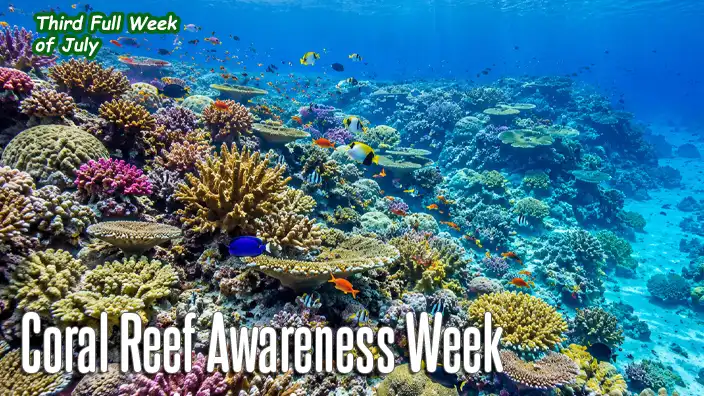
If fish paid property taxes, coral reefs would be some of the most desirable neighborhoods in the ocean. They're colorful, bustling, and packed with interesting residents—from tiny shrimp running cleaning services to sea turtles drifting by like they own the place. Coral Reef Awareness Week is the perfect excuse to dive into these amazing underwater cities without getting your socks wet.
Celebrated: Annually, during the Third Full Week of July
Explore the colorful world of coral reefs with fascinating facts, ocean wildlife, fun activities, and simple ways to help protect these underwater wonders

Armed with hammers, rasps, and an uncanny ability to dodge flying hooves, these unsung heroes of the equine world spend their days shaping, fitting, and replacing horse shoes—often while negotiating with a thousand-pound client who has very strong opinions about having its feet touched. Part blacksmith, part therapist, and part contortionist, they somehow manage to keep horses well-shod while avoiding the occasional overdramatic equine tantrum. And while the horses may never say “thank you,” a farrier knows they’ve done their job right when a freshly shod steed prances off happily—preferably without taking their hat along for the ride.
Celebrated: Annually, during the Second Week of July
Celebrate National Farriers Week by honoring the skilled professionals who ensure our horses’ hooves are healthy. Learn about their vital work and ancient craft.
Imagine a world where the sound of a pickle crunching or someone whispering about medieval pottery...
Imagine a world where your backyard chickens suddenly develop razor-sharp claws, turbocharged...
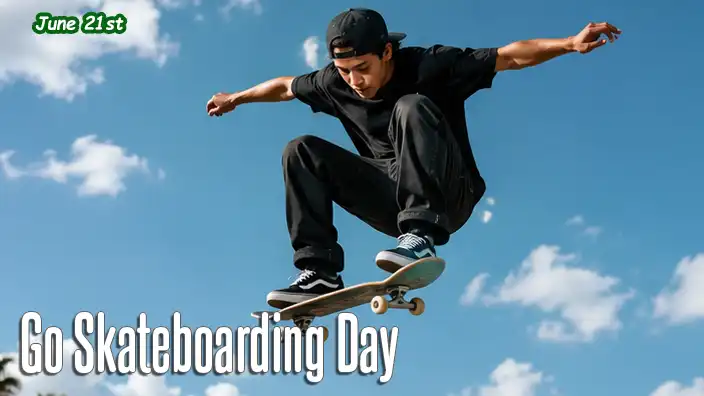
Some people celebrate by relaxing. Others celebrate by eating cake. On Go Skateboarding Day,...
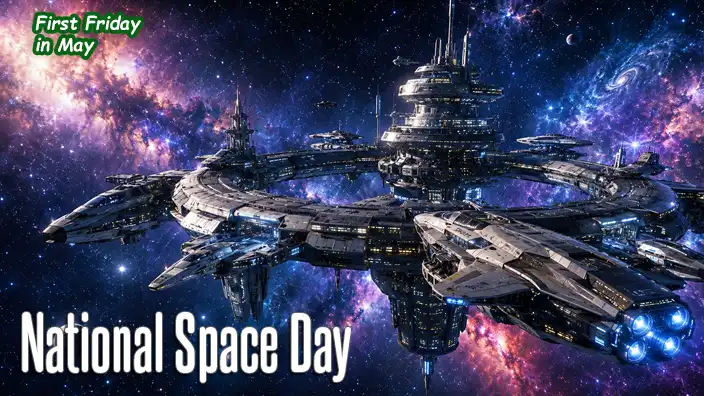
National Space Day celebrates humanity’s endless desire to explore the universe, ask impossible...
They say meditation brings peace, clarity, and inner stillness—but if you've ever tried it, you...
Brothers are like human Swiss Army knives—unpredictable, occasionally useful, and often equipped with at least one...
On October 30, 1864, Helena, Montana, officially came into existence, thanks to four determined gold prospectors and a mining claim appropriately named Last Chance Gulch. Montana's gold fever had begun in earnest in 1862, when prospectors discovered rich placer deposits along Grasshopper Creek. Further discoveries attracted thousands of fortune seekers, all hoping to strike it rich before someone else beat them to it. Among them were four miners who noticed promising signs of gold in the Helena area but initially continued north toward the supposedly richer Kootenai goldfields. When that expedition proved disappointing, they returned to investigate their earlier discovery. Calling it their "last chance" turned out to be remarkably appropriate—and considerably more profitable than they had expected.
Their discovery sparked another gold rush, transforming Last Chance Gulch into one of Montana's richest placer mining districts. Within four years, the area produced an estimated $19 million in gold, an extraordinary fortune for the nineteenth century. Thousands of miners descended upon the settlement, creating an immediate demand for food, accommodation, equipment, and other necessities. Helena rapidly developed into a bustling frontier community, where fortunes could be made not only by digging for gold but also by selling supplies to those doing the digging. After all, even the most determined prospector needed somewhere to sleep and someone willing to sell him a shovel.
Unlike many Western boomtowns that vanished when their mines were exhausted, Helena successfully established a lasting economic foundation. Its position along important transportation routes, access to agricultural resources in the surrounding valley, and proximity to other mining communities helped it develop into a regional commercial center. In 1875, Helena became the capital of Montana Territory, and in 1894, five years after Montana achieved statehood, voters selected it as the permanent state capital. What began as four miners' final gamble had become one of Montana's most important cities—proof that sometimes taking one last chance really does pay off.
On October 30, 1938, a radio broadcast convinced some Americans that visitors from Mars had arrived—and they weren't particularly interested in making friends. The production was Orson Welles' adaptation of H. G. Wells' science-fiction novel The War of the Worlds, performed by the Mercury Theatre on the Air over the CBS radio network. Welles, just 23 years old, had already established himself as a talented actor and radio performer, including his work as the mysterious crime fighter The Shadow. His adaptation was intended as Halloween entertainment, not an elaborate hoax, but its innovative presentation would make it one of the most famous broadcasts in radio history.
The program began at 8 p.m. with a conventional introduction before shifting into what sounded like an ordinary evening of dance music. Suddenly, fictional news bulletins interrupted the entertainment with reports of unusual activity on Mars, followed by the apparent crash of a mysterious object near Grovers Mill, New Jersey. Listeners heard increasingly alarming descriptions of tentacled creatures emerging from a metallic cylinder, unleashing deadly heat rays, and advancing across the countryside in enormous fighting machines. Realistic sound effects, convincing performances, and the familiar style of breaking news reports gave the fictional invasion an unsettling sense of authenticity. Some listeners who tuned in after the opening announcement mistook portions of the drama for genuine news, although later research has shown that contemporary newspaper accounts greatly exaggerated the extent of the resulting panic. Nevertheless, anyone expecting a relaxing evening of music might reasonably have wondered why the Martians had suddenly taken over the airwaves.
The broadcast attracted enormous publicity and prompted scrutiny from the Federal Communications Commission, although no laws were found to have been broken. Its reputation helped establish Welles as an exceptionally inventive director and storyteller, opening doors to Hollywood and a contract with RKO Pictures. In 1941, he directed, co-wrote, produced, and starred in Citizen Kane, a landmark film widely regarded as one of cinema's greatest achievements. Meanwhile, The War of the Worlds became a lasting example of radio's extraordinary ability to capture the imagination—and a reminder that, before fleeing from an alien invasion, it might be wise to check whether the announcer is reading the news or performing a science-fiction drama.
On October 30, 1974, Muhammad Ali delivered one of boxing's greatest upsets when he defeated undefeated heavyweight champion George Foreman in the eighth round of the legendary "Rumble in the Jungle" in Kinshasa, Zaire (now the Democratic Republic of the Congo). Ali, 32, faced a formidable 25-year-old opponent whose devastating punching power had made him the overwhelming favorite. Seven years earlier, Ali had been stripped of his heavyweight title after refusing induction into the U.S. military during the Vietnam War, a decision that also cost him his boxing license and several prime years of his career. Now, fighting before approximately 60,000 spectators, he was determined to reclaim his championship. The event, promoted by Don King and supported by Zaire's president, Mobutu Sese Seko, attracted worldwide attention, with each fighter guaranteed a reported $5 million. The crowd enthusiastically chanted "Ali, bomaye!"—roughly translated as "Ali, kill him!"—although the famously outspoken challenger hardly needed encouragement to make his presence known.
With the bout scheduled for the early morning hours to accommodate American television audiences, Foreman entered the ring expecting to overpower his older opponent. Instead, Ali unveiled a remarkable strategy that became known as the "rope-a-dope." Rather than constantly dancing around the ring, he leaned against the ropes, protected his head and body, absorbed or deflected Foreman's heavy punches, and repeatedly taunted the champion into exhausting himself. Foreman continued attacking, but his tremendous power gradually diminished as the rounds progressed. Ali, meanwhile, conserved energy, landed sharp counterpunches, and waited for the right moment. By the eighth round, Foreman was visibly fatigued. Ali suddenly launched a rapid combination, finishing with a crushing right hand that sent the champion sprawling onto the canvas. Foreman failed to beat the referee's count, and Ali reclaimed the heavyweight championship in one of the most extraordinary comebacks in sporting history. The man who had famously promised to "float like a butterfly and sting like a bee" had spent much of the evening impersonating a punching bag—and somehow made it look like a brilliant career move.
The victory made Ali only the second former heavyweight champion, after Floyd Patterson, to regain the world title, cementing his reputation as one of boxing's most remarkable competitors. He would eventually become the first man to win the heavyweight championship three times before retiring permanently in 1981. Ali died in 2016, leaving a legacy extending far beyond boxing through his influence on civil rights, religious freedom, and opposition to the Vietnam War. Foreman, meanwhile, staged an extraordinary comeback of his own after returning to professional boxing in 1987. In 1994, he defeated Michael Moorer to become the oldest heavyweight champion in history at 45, a record that made his earlier defeat seem like merely an inconvenient chapter in a very long story. Foreman also became a Christian minister, successful businessman, and the famously enthusiastic spokesman for the George Foreman Grill. He died in March 2025. Half a century after their unforgettable encounter in Africa, the Rumble in the Jungle remains a defining moment in sports history—proof that sometimes brains, patience, and a perfectly timed punch can overcome even the most terrifying pair of fists.
On October 30, 2002, the hip-hop world suffered a devastating loss when Jam Master Jay, the pioneering DJ of Run-DMC, was shot and killed inside his recording studio in Queens, New York. Born Jason William Mizell in Brooklyn in 1965, Jay developed an early passion for music, learning to play several instruments before discovering the creative possibilities of turntables and scratching. After his family relocated to Hollis, Queens, he befriended Joseph Simmons and Darryl McDaniels, better known as Run and DMC. Together, they formed Run-DMC, a group that would transform hip-hop from an emerging musical movement into a worldwide cultural phenomenon. With Jay providing the electrifying turntable techniques and driving rhythms, the trio developed a powerful, stripped-down sound that helped define an entire generation. Their self-titled debut album arrived in 1984, followed by King of Rock in 1985, establishing the group as one of rap's most influential acts. Their signature Adidas sneakers, tracksuits, gold chains, and distinctive hats became almost as recognizable as their music—and considerably easier to imitate than Jay's turntable skills.
Run-DMC achieved international superstardom with their 1986 album Raising Hell, which featured their groundbreaking collaboration with Aerosmith on a remake of "Walk This Way." The song brought rap and rock audiences together, helped introduce hip-hop to mainstream MTV viewers, and demonstrated that musical boundaries were considerably less permanent than record executives had imagined. Run-DMC became the first rap group to appear on the cover of Rolling Stone and helped open doors for countless artists who followed. Beyond his performances, Jay became a respected mentor and entrepreneur, establishing Jam Master Jay Records and supporting emerging talent, including the influential rap group Onyx. Despite his international fame, he remained closely connected to his Queens neighborhood, where his studio served as a gathering place for aspiring musicians. That made his murder particularly heartbreaking. On the evening of October 30, 2002, armed attackers entered his studio and fatally shot him. The killing stunned friends, fans, and fellow performers, who struggled to understand why such a widely respected figure had become the victim of a calculated act of violence.
For nearly two decades, Jay's murder remained unresolved, generating numerous theories and frustrating investigators. In 2020, federal prosecutors charged Ronald Washington and Karl Jordan Jr. with his killing, alleging that the motive involved a dispute over a cocaine distribution arrangement from which the two men had been excluded. The allegations revealed a troubling dimension of Jay's private financial affairs that contrasted sharply with his public reputation as a supportive mentor and beloved musician. The lengthy investigation eventually produced major developments in federal court, although the legal proceedings continued to evolve years after the original indictments. Jay's musical legacy, however, has never been in doubt. Run-DMC entered the Rock & Roll Hall of Fame in 2009 and received a Grammy Lifetime Achievement Award in 2016, recognizing the trio's extraordinary contribution to modern music. Jam Master Jay helped establish the DJ as an essential creative force in hip-hop, proving that two turntables, a mixer, and a remarkable imagination could change popular music forever. His life ended tragically, but the beats he helped create continue to echo through generations of artists and audiences.
Note: Karl Jordan Jr.'s 2024 murder conviction was overturned in December 2025, while Ronald Washington's conviction remained in place. Jay Bryant pleaded guilty in April 2026 to helping the killers enter the studio.