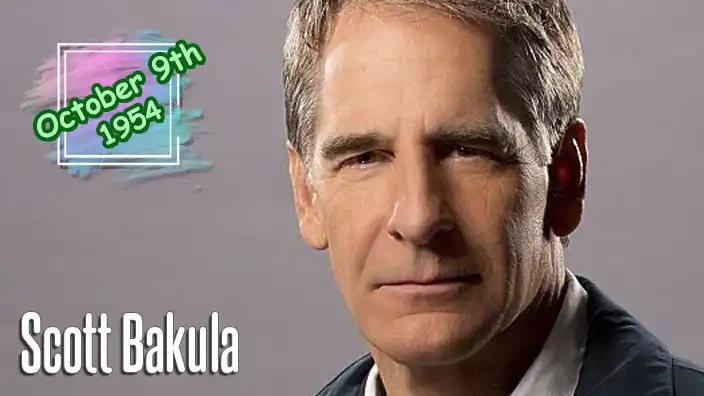
October 9, 1954, in St. Louis, Missouri


Scott Stewart Bakula was born on October 9, 1954, in St. Louis, Missouri, into a family where music and creativity were encouraged. His father, J. Stewart Bakula, worked as a lawyer, while his mother, Sally Zumwinkel, helped nurture a household in which artistic interests were welcomed. Scott developed an enthusiasm for performing early in life, forming a rock band while still in elementary school and writing songs for the group. He also sang with the St. Louis Symphony, gaining experience that would eventually prove useful in a profession requiring considerably more than simply remembering lines. While other youngsters dreamed of becoming astronauts or detectives, Bakula was already preparing for a career that would allow him to become both, with a little time travel thrown in for good measure.
His early education took him to the University of Kansas, where he initially studied law, perhaps following a more conventional professional path. However, the attraction of performing proved stronger than the prospect of spending his working life examining legal documents. He left university before completing his degree and pursued acting professionally, a decision that would ultimately prove rather successful. In 1976, he secured work in a production of the musical Shenandoah, beginning a theatrical journey that would take him to New York and eventually Hollywood. His willingness to exchange the relative security of a traditional career for the uncertainty of show business demonstrated the determination that would characterize his professional life.
Bakula's early years in theater involved the familiar challenges of auditions, rehearsals, modest productions, and the constant search for another opportunity. He developed his singing, dancing, and acting abilities while appearing in regional and New York productions. His Broadway credits included Shenandoah, Is There Life After High School?, and Marilyn: An American Fable, in which he portrayed baseball legend Joe DiMaggio. These experiences helped establish him as a versatile performer capable of handling musical theater as well as conventional dramatic roles. Broadway audiences were discovering his talents long before television viewers became accustomed to seeing him arrive in unfamiliar circumstances and ask what on earth had happened.
His major theatrical breakthrough came with the musical Romance/Romance, which opened on Broadway in 1988. The production featured two separate romantic stories, giving Bakula an opportunity to demonstrate his range as both an actor and singer. His performance earned a Tony Award nomination for Best Actor in a Musical, bringing him national attention and establishing his reputation as an accomplished stage performer. The recognition was particularly important because it arrived before his television career had fully developed, demonstrating that Bakula's abilities extended well beyond the conventional requirements of a handsome leading man. He could sing, dance, deliver comedy, and handle emotionally demanding material, making him an attractive prospect for television producers searching for someone capable of carrying a series.
During the 1980s, Bakula began appearing on television in productions including Gung Ho, Designing Women, and Eisenhower & Lutz. These roles provided valuable exposure, although none immediately transformed him into a household name. His appearances nevertheless demonstrated a natural screen presence, combining approachable charm with the ability to portray intelligent, occasionally troubled characters. He also possessed an expressive face that could communicate confusion, determination, and disbelief without requiring lengthy dialogue. This talent would become particularly useful when television finally handed him a role involving frequent arrivals in situations he neither understood nor particularly appreciated.
That opportunity arrived in 1989 with NBC's science-fiction drama Quantum Leap, created by Donald P. Bellisario. Bakula starred as Dr. Samuel "Sam" Beckett, a brilliant physicist whose experiment in time travel goes disastrously wrong, leaving him trapped in the past and repeatedly transported into the lives of different people. Assisted by his friend Admiral Al Calavicci, played by Dean Stockwell, Sam must correct events that have gone wrong before he can leap into another life. The arrangement was not particularly convenient, especially since Sam never knew whose identity he would assume next. One moment he might be a professional athlete, the next a woman facing discrimination, and shortly afterward someone confronting a difficult personal crisis. Compared with Sam's travel arrangements, modern airline delays seem almost reasonable.
Quantum Leap quickly distinguished itself from conventional science-fiction programming by concentrating on human stories rather than futuristic machinery or spectacular special effects. Although the premise involved time travel, individual episodes explored prejudice, family relationships, personal responsibility, injustice, and the consequences of seemingly insignificant decisions. Sam frequently encountered people whose lives could be improved through courage, compassion, or a better understanding of their circumstances. Bakula's performance was essential to the show's success because he had to portray a consistent central character while adapting to dramatically different situations every week. His ability to combine humor, empathy, and emotional sincerity made Sam Beckett a television hero whose greatest strength was not physical power but his determination to help others.
The partnership between Bakula and Dean Stockwell became one of the series' defining features. Stockwell's Al appeared to Sam as a hologram, providing information from the future, offering advice, and occasionally displaying an enthusiasm for romantic distractions that Sam did not always appreciate. Their contrasting personalities created an entertaining relationship built on friendship, loyalty, and frequent disagreement. Sam generally approached problems with idealism and moral conviction, while Al contributed worldly experience, sarcastic observations, and the occasional questionable suggestion. The chemistry between the actors helped audiences remain invested in the series even when its weekly stories ventured into unusual territory. Whatever identity Sam assumed, viewers knew Al would probably appear with a cigar, a colorful outfit, and news that complicated everything.
The program ran for five seasons, from 1989 to 1993, and became one of the most fondly remembered science-fiction dramas of its era. Bakula received four Primetime Emmy Award nominations for Outstanding Lead Actor in a Drama Series and won the Golden Globe Award for Best Actor in a Television Drama at the 1992 ceremony. His performance required extraordinary versatility, particularly because Sam frequently occupied identities involving different ages, professions, backgrounds, and social circumstances. Some episodes demanded comedy, others explored painful historical subjects, and several required Bakula to sing or dance. The series provided an unusually broad showcase for his abilities while introducing audiences to the exclamation that would become inseparable from his character: "Oh, boy!"
The conclusion of Quantum Leap in 1993 became famous for its bittersweet resolution, revealing that Sam Beckett never returned home. The ending disappointed some viewers while reinforcing the character's extraordinary commitment to helping others. Over the years, the program developed a devoted following through reruns, home video releases, and streaming services. Its combination of science fiction and compassionate storytelling continued to attract new audiences, eventually inspiring a revival series that premiered in 2022. Although Bakula did not reprise his role in that production, the original series remained an important part of television history and the foundation of his enduring popularity.
Following Quantum Leap, Bakula continued exploring different roles rather than attempting to recreate Sam Beckett indefinitely. His film appearances included Sibling Rivalry (1990), Necessary Roughness (1991), Color of Night (1994), and Lord of Illusions (1995). In Necessary Roughness, he portrayed Paul Blake, a former high school football star recruited to help a struggling college team. The sports comedy allowed Bakula to demonstrate his athletic leading-man qualities alongside his comic timing. In Lord of Illusions, based on the work of horror author Clive Barker, he played private detective Harry D'Amour, investigating a dangerous mystery involving supernatural forces and sinister magic. The role was considerably darker than his television work, proving that Bakula could handle unsettling material without requiring a holographic companion to explain the situation.
His film career also included appearances in the Academy Award-winning drama American Beauty (1999), Life as a House (2001), and Steven Soderbergh's The Informant! (2009). Although he was best known for television, these performances allowed him to work with distinguished filmmakers and contribute to stories that differed considerably in tone and subject matter. Bakula developed a reputation as an actor capable of moving between comedy, drama, suspense, and science fiction without appearing uncomfortable in any of them. His familiar screen presence made him particularly effective in roles involving ordinary people confronting extraordinary circumstances, even when those circumstances did not involve accidental journeys through the space-time continuum.
In 2001, Bakula returned to science-fiction television as Captain Jonathan Archer in Star Trek: Enterprise. Set approximately a century before the adventures of Captain James T. Kirk, the series explored humanity's early efforts to travel beyond the solar system and establish relationships with alien civilizations. Archer commanded the starship Enterprise NX-01, one of Earth's first vessels capable of sustained deep-space exploration. Unlike later Starfleet captains, Archer operated without many of the established rules, alliances, and technological advantages familiar to longtime Star Trek audiences. His mission involved discovering unfamiliar worlds while helping humanity develop the diplomatic and ethical principles that would eventually shape the United Federation of Planets.
Bakula approached Archer as an experienced but occasionally impulsive explorer whose enthusiasm for discovery sometimes exceeded his appreciation of interstellar politics. The character possessed courage, curiosity, and a strong sense of responsibility, but he also made mistakes and occasionally struggled with the consequences of his decisions. His relationships with Vulcan officer T'Pol, played by Jolene Blalock, and engineer Charles "Trip" Tucker III, portrayed by Connor Trinneer, provided much of the show's interpersonal drama. Archer also enjoyed the companionship of his beagle, Porthos, who accompanied him aboard the Enterprise. Apparently, even humanity's pioneering deep-space explorers understood that a good dog could improve almost any difficult assignment, although the availability of suitable walking areas aboard a starship remained questionable.
Star Trek: Enterprise ran for four seasons, from 2001 to 2005, and gradually developed a more ambitious exploration of humanity's place in the galaxy. The series examined political tensions, first-contact encounters, military conflicts, and the moral compromises that can arise during dangerous missions. Bakula's performance gave Archer a distinctive identity among the franchise's captains, emphasizing the uncertainties of an era when space exploration was still relatively new. While some viewers initially compared him with more established Star Trek commanders, Archer's imperfect leadership and pioneering circumstances eventually became important elements of the show's appeal. Bakula had successfully moved from traveling through history to helping create the future, which is quite a promotion for someone whose previous television assignment involved repeatedly getting lost.
After Enterprise, Bakula continued appearing in television dramas and comedies, including Boston Legal, The New Adventures of Old Christine, and Chuck. In Chuck, he portrayed Stephen J. Bartowski, the mysterious father of the title character, played by Zachary Levi. The role involved scientific secrets, family complications, and dangerous technology, placing Bakula once again in a story where apparently ordinary circumstances concealed extraordinary possibilities. His presence brought warmth and credibility to a character whose relationship with his children formed an important emotional element of the series. Bakula also appeared in Men of a Certain Age, alongside Ray Romano and Andre Braugher, portraying Terry Elliott, an actor confronting professional uncertainty and the realities of middle age. The comedy-drama offered a thoughtful examination of friendship, relationships, and personal expectations, allowing Bakula to display a more understated and reflective side of his abilities.
His work in the HBO film Behind the Candelabra (2013) provided another notable dramatic opportunity. Directed by Steven Soderbergh, the production explored the relationship between entertainer Liberace, portrayed by Michael Douglas, and Scott Thorson, played by Matt Damon. Bakula appeared as Bob Black, a figure involved in bringing the central characters together. His performance earned a Primetime Emmy nomination for Outstanding Supporting Actor in a Miniseries or Movie, demonstrating that he remained capable of attracting critical recognition outside his established television franchises. The production also allowed him to participate in a highly regarded ensemble drama that explored celebrity, relationships, and the carefully managed public image of a famous entertainer.
In 2014, Bakula began another major chapter of his television career when he took the leading role in CBS's NCIS: New Orleans. He portrayed Special Agent Dwayne Cassius "King" Pride, the leader of a Naval Criminal Investigative Service team operating in and around New Orleans, Louisiana. Pride was a former sheriff's deputy with deep connections to the city, a strong commitment to justice, and a willingness to challenge authority when necessary. The character's personality reflected the distinctive atmosphere of New Orleans, combining Southern hospitality, professional determination, and a personal attachment to the city's music, food, and traditions. Unlike Sam Beckett, Pride generally knew where he was when he woke up in the morning, although his working day could still become unexpectedly complicated.
The series blended conventional crime investigations with the cultural character of Louisiana, frequently incorporating local music, neighborhoods, restaurants, and regional history. Pride's investigations involved crimes connected to the Navy and Marine Corps, while his personal relationships added emotional depth to the stories. Bakula portrayed him as a protective leader who regarded his colleagues as an extended family, often taking personal responsibility for their safety and well-being. His team included characters played by Lucas Black, Vanessa Ferlito, Rob Kerkovich, and CCH Pounder, whose performances contributed to the show's ensemble appeal. Pride's determination occasionally placed him at odds with superiors, but his loyalty to his colleagues remained central to the character's identity.
One of the distinctive features of NCIS: New Orleans was its emphasis on music, particularly jazz and the musical traditions associated with the city. Bakula's own musical background made him especially well suited to a character who enjoyed playing the piano and participating in the local music scene. Rather than treating music as an incidental decorative element, the series incorporated it into Pride's personality and his connection with New Orleans. His piano performances provided quieter moments between investigations, reminding viewers that the character possessed interests and emotional attachments beyond his demanding profession. It also gave Bakula an opportunity to use talents developed long before television audiences knew him as a time traveler or starship captain.
NCIS: New Orleans ran for seven seasons, concluding in May 2021. Throughout its run, Bakula served as both leading actor and executive producer, helping shape a series that combined procedural storytelling with regional character and continuing personal narratives. Pride faced numerous professional and family challenges, including dangerous investigations, threats against colleagues, and difficulties balancing his responsibilities with his private life. The series' conclusion provided a sense of closure for the central character, whose dedication to New Orleans had remained consistent throughout the program. For Bakula, the role represented another successful long-running television assignment and demonstrated his ability to carry a popular network drama well beyond the science-fiction genre.
Outside his three best-known television franchises, Bakula has continued appearing in productions that demonstrate his willingness to experiment with different kinds of characters. He portrayed Lynn, an older entrepreneur and romantic interest, in HBO's Looking, a series exploring the personal and professional lives of gay men in San Francisco. The role allowed him to contribute to a contemporary relationship drama far removed from the adventures of Sam Beckett or the investigations of Dwayne Pride. He also appeared as a fictionalized version of himself in What We Do in the Shadows and Only Murders in the Building, demonstrating a willingness to participate in comedy that plays with his familiar public image. An actor who can convincingly portray himself while allowing the writers to make him part of the joke clearly possesses a healthy appreciation for the absurdities of show business.
His theatrical interests have remained important throughout his career. In 2024, Bakula appeared in the Off-Broadway musical The Connector, portraying Conrad O'Brien, an editor confronting questions about journalism, ambition, and professional integrity. He subsequently returned to the stage in a 2025 Off-Broadway production of The Baker's Wife, taking on the role of Aimable, a village baker whose marriage becomes the center of a musical story about love, jealousy, and community. These productions reinforced his continuing affection for musical theater and provided audiences with opportunities to appreciate the singing and stagecraft that had originally launched his career. Despite decades of television success, Bakula has never abandoned the demanding discipline of performing before a live audience, where there are no convenient second takes if something goes wrong.
Away from the screen, Bakula has maintained a relatively private personal life. He has four children and is married to actress Chelsea Field, whom television audiences may recognize from her own acting career and her recurring appearances on NCIS: New Orleans as Rita Devereaux, Pride's romantic partner. Their professional collaboration gave the couple opportunities to portray a relationship on screen while sharing an established partnership away from the cameras. Bakula also has two children from his previous marriage to actress Krista Neumann. His family life has remained an important consideration throughout his career, particularly given the demanding schedules associated with long-running television productions.
One of Bakula's most recognizable physical characteristics is the distinctive white streak in his hair, which appeared during childhood. According to a story recorded in his IMDb biography, the streak became noticeable when he was four, and his mother initially believed he had somehow gotten paint in his hair while helping a neighbor. The feature eventually became part of his familiar appearance, adding an instantly recognizable detail to a performer whose career has involved so many different characters. In an industry where actors frequently spend considerable time and money trying to develop a distinctive look, Bakula apparently acquired his before he had even finished elementary school.
Throughout his professional life, Bakula has combined the traditional qualities of a television leading man with a willingness to embrace unusual material. His characters are frequently intelligent, compassionate, and determined, but they are rarely without flaws. Sam Beckett struggled with the consequences of changing history, Jonathan Archer confronted the moral uncertainties of space exploration, and Dwayne Pride faced the difficult balance between professional duty and personal loyalty. Bakula's ability to portray these conflicts without losing the audience's sympathy has been an important part of his lasting appeal. He brings an approachable quality to his performances, making extraordinary characters seem like people viewers might actually enjoy meeting, preferably under circumstances that do not involve an interstellar emergency or a murder investigation.
Scott Bakula's career has taken him from the stages of New York to the far reaches of fictional space, through decades of imaginary history, and into the lively streets of New Orleans. Along the way, he has earned a Golden Globe Award, multiple Emmy nominations, a Tony Award nomination, and the affection of audiences who appreciate his combination of talent, humor, and sincerity. His work demonstrates that a successful leading man need not rely on spectacular action sequences or exaggerated heroics when intelligence, warmth, and convincing characterization can accomplish so much more. On October 9, admirers celebrate an actor who has spent decades entertaining viewers while repeatedly accepting assignments that would make an ordinary employment counselor nervous. Whether he is leaping into another life, commanding a starship, or investigating a crime, one thing remains reassuringly consistent: Scott Bakula usually finds a way to make the journey worth watching.