July 13, 1957, in Palm Springs, California
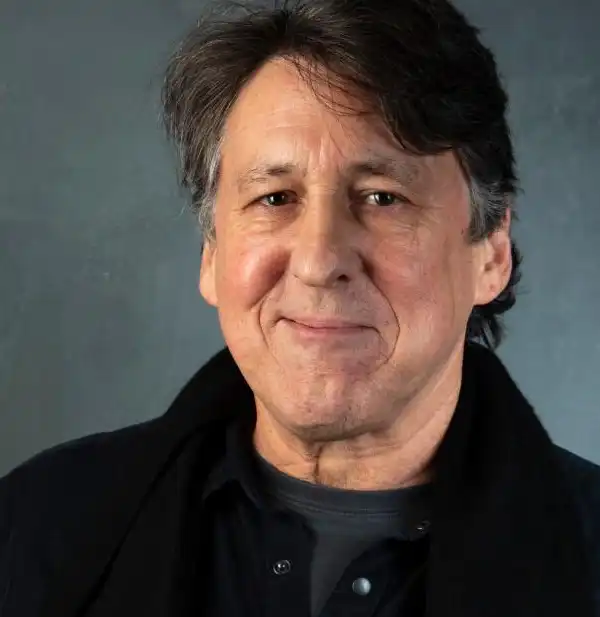
Born in Palm Springs, California, Cameron Crowe became an Academy Award-winning screenwriter, director, producer, author, and music journalist whose work helped shape several generations of popular culture. His films are known for memorable characters, carefully selected music, romantic optimism, and people trying to remain decent while life repeatedly rearranges the furniture.
Crowe was raised largely in San Diego by his father, James, who worked in real estate, and his mother, Alice, a teacher and activist with firm ideas about education. An unusually bright child, he skipped several grades and consequently entered high school younger than nearly everyone around him. That academic head start may have impressed teachers, but it did not necessarily make adolescence any less awkward.
Music provided Crowe with a world in which he felt more comfortable. He began writing about rock at a remarkably young age, contributing to underground publications before attracting the attention of Rolling Stone. By his mid-teens, he was interviewing major performers and traveling with bands at an age when most young people would have needed parental permission merely to attend the concert.
As a writer for Rolling Stone, Crowe interviewed and profiled artists including Led Zeppelin, David Bowie, the Allman Brothers Band, Eric Clapton, and members of the Eagles. His youth sometimes worked to his advantage. Musicians who might have been guarded around veteran reporters often spoke openly with the polite teenager carrying a notebook.
Crowe did not approach musicians merely as celebrities. He was interested in how they worked, what frightened them, and what happened when the stage lights went out. That curiosity would later define his films, which often look beyond public success to examine loneliness, ambition, loyalty, disappointment, and the stubborn desire to be understood.
His move toward filmmaking began with an unusual journalistic experiment. In the late 1970s, Crowe enrolled secretly at a California high school and posed as a student to observe teenage life from the inside. The resulting book, Fast Times at Ridgemont High: A True Story, portrayed students with greater honesty and sympathy than the usual collection of movie stereotypes.
Crowe adapted the book into the screenplay for Fast Times at Ridgemont High, released in 1982 and directed by Amy Heckerling. The movie initially received mixed attention but became one of the most influential American teenage comedies of its era. It also featured early performances by future stars including Sean Penn, Jennifer Jason Leigh, Judge Reinhold, Phoebe Cates, Forest Whitaker, and Nicolas Cage.
The film understood that teenagers could be irresponsible, thoughtful, frightened, confident, and confused—sometimes during the same lunch period. Beneath its comedy, it dealt with work, relationships, pregnancy, peer pressure, and the uncomfortable process of discovering that adulthood was approaching whether anyone felt prepared for it or not.
Crowe made his feature directing debut with Say Anything... in 1989. The film starred John Cusack as Lloyd Dobler, an earnest young man in love with academically gifted Diane Court, played by Ione Skye. Rather than treating Lloyd’s sincerity as weakness, Crowe made it the quality that distinguished him.
One scene became permanently attached to popular culture: Lloyd standing outside Diane’s home holding a boom box above his head while Peter Gabriel’s “In Your Eyes” plays. Countless romantic comedies have attempted similar grand gestures since then, although neighbors and local noise ordinances have probably prevented most of them from achieving the same effect.
Crowe followed with Singles in 1992, a romantic comedy-drama set against Seattle’s rapidly growing alternative-rock scene. The film explored the relationships of young adults living in the same apartment building while featuring appearances and music from bands associated with the city’s grunge movement, including Pearl Jam, Soundgarden, and Alice in Chains.
Although Singles was developed before grunge became a worldwide commercial force, its release arrived just as Seattle became the center of the music industry’s attention. Crowe had once again found himself documenting a musical culture shortly before the rest of the world noticed it.
His greatest commercial breakthrough came with Jerry Maguire in 1996. Tom Cruise played a successful sports agent who suffers a crisis of conscience, writes a mission statement criticizing his profession, and promptly discovers that corporate honesty can be admired right up until it threatens quarterly earnings.
Forced to rebuild his career with one demanding client and one loyal colleague, Jerry gradually learns that professional success cannot compensate for an empty personal life. Cuba Gooding Jr. played football player Rod Tidwell, while Renée Zellweger portrayed Dorothy Boyd, the single mother who takes a considerable risk by joining Jerry’s newly reduced business empire.
The movie became a major box-office success and received five Academy Award nominations, including Best Picture and Best Original Screenplay. Gooding won the Oscar for Best Supporting Actor, and several lines entered everyday speech almost immediately.
“Show me the money,” “You complete me,” and “You had me at hello” became so familiar that people who had never watched the movie could still quote it. Very few screenwriters manage to place one phrase into the cultural vocabulary. Crowe managed several in the same film, which is frankly showing off.
After the success of Jerry Maguire, Crowe was able to make his most personal project, Almost Famous, released in 2000. The film drew heavily from his experiences as a teenage music journalist traveling with rock bands during the 1970s.
Patrick Fugit played William Miller, a young writer assigned to report on the fictional band Stillwater for Rolling Stone. The assignment introduces him to charismatic guitarist Russell Hammond, played by Billy Crudup, and Penny Lane, played by Kate Hudson, who describes herself not as a groupie but as one of the “Band Aids”—women who support the music and the musicians surrounding it.
William is thrilled to enter the world he has admired from a distance, but he soon discovers the difference between loving music and surviving the business built around it. He encounters inflated egos, damaged relationships, broken promises, and performers who want honest journalism only when the truth makes them look impressive.
The film’s emotional center is William’s relationship with his protective mother, Elaine, played by Frances McDormand. The character was inspired in part by Crowe’s own mother, whose suspicion of rock culture did not prevent her from encouraging her son’s intelligence and writing ability.
Almost Famous contains several celebrated musical sequences, including the tour-bus scene in which the band and its companions gradually join Elton John’s “Tiny Dancer.” The moment requires little dialogue because the music allows the characters to repair, temporarily at least, the emotional damage caused by the previous night’s arguments.
Although the movie was not a major theatrical hit during its original release, it earned widespread critical acclaim and developed a devoted following. Crowe won the Academy Award for Best Original Screenplay, as well as a BAFTA Award for the screenplay. The film also earned him a Grammy Award shared with producer Danny Bramson for its compilation soundtrack.
Crowe next directed Vanilla Sky in 2001, reuniting with Tom Cruise for an ambitious psychological drama involving romance, identity, memory, technology, and the uncertain boundary between dreams and reality. The movie divided critics but performed strongly at the box office and continued Crowe’s habit of using music as part of the storytelling rather than as decoration pasted over the closing credits.
In 2005, he released Elizabethtown, starring Orlando Bloom and Kirsten Dunst. The film followed a young man dealing with professional failure, his father’s death, and an unexpected romance during a journey to Kentucky. Its mixture of grief, family eccentricity, music, and hopeful reinvention placed it firmly within Crowe’s familiar emotional territory.
Crowe later directed We Bought a Zoo, released in 2011 and starring Matt Damon and Scarlett Johansson. Based loosely on a true story, the film concerned a widowed father who purchases a struggling zoo while attempting to rebuild life with his children. It offered Crowe another opportunity to explore loss without surrendering to despair.
His 2015 romantic comedy Aloha, starring Bradley Cooper, Emma Stone, Rachel McAdams, and Bill Murray, received a more troubled response. Criticism focused partly on the casting of Stone as a character described as having Hawaiian and Asian heritage. Crowe publicly apologized for the casting decision and acknowledged the concerns raised by viewers.
Crowe has also worked extensively outside fictional filmmaking. He directed music documentaries including Pearl Jam Twenty, released in 2011 to mark the band’s twentieth anniversary, and David Crosby: Remember My Name, a candid 2019 portrait of the influential musician.
His long relationship with musicians has given those documentaries unusual intimacy. Crowe understands both the devoted fan standing near the stage and the journalist required to ask what happens after the applause fades.
He also created the television series Roadies, which premiered in 2016. The series focused on the technicians and crew responsible for keeping a major concert tour moving. Rather than concentrating on the stars under the lights, it celebrated the people taping down cables, repairing equipment, organizing schedules, and preventing expensive artistic temperaments from colliding before showtime.
Crowe adapted Almost Famous into a stage musical that opened on Broadway in 2022. He wrote the musical’s book and lyrics, working with composer Tom Kitt. Although its Broadway run was relatively brief, the production earned Crowe a Tony Award nomination and allowed him to revisit the characters and experiences that had defined much of his creative life.
In 2025, Crowe published The Uncool, a memoir examining his youth, family, music journalism, and encounters with some of rock’s most influential performers. The book returned him to the personal territory behind Almost Famous, revealing how music helped him understand grief, belonging, and his developing identity as a writer.
Crowe’s films are often filled with what he has called “battered idealists”—people whose beliefs have been bruised by experience but not entirely destroyed. His protagonists make mistakes, lose jobs, damage relationships, and occasionally deliver mission statements that empty the office faster than a fire alarm. Yet they continue searching for honesty and connection.
Critics have sometimes found his work overly sentimental, but sentiment is not an accidental ingredient in a Cameron Crowe movie. He is openly interested in sincerity, emotional risk, and people brave enough to say what they feel without hiding behind fashionable cynicism.
Music remains central to that approach. A Crowe soundtrack rarely feels like a stack of popular songs chosen in a marketing meeting. The music reveals character, establishes time and place, and says what the characters are unable—or too frightened—to express themselves.
From teenage journalist to Oscar-winning filmmaker, Cameron Crowe has built a career by paying close attention to the sound of people trying to connect. He gave moviegoers Lloyd Dobler’s boom box, Jerry Maguire’s mission statement, Penny Lane’s bittersweet confidence, and a crowded tour bus singing “Tiny Dancer.”
Hollywood has produced louder filmmakers and more prolific ones, but few have made popular music, romantic hope, and wounded optimism fit together quite like Cameron Crowe. He understands that life rarely follows the perfect soundtrack—but choosing the right song certainly helps.