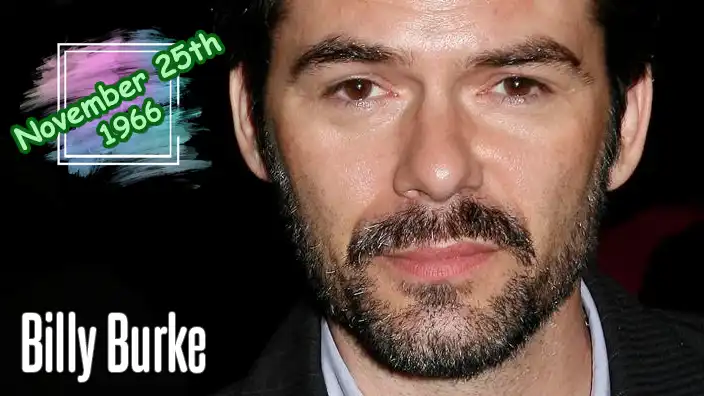
November 25, 1966, in Bellingham, Washington

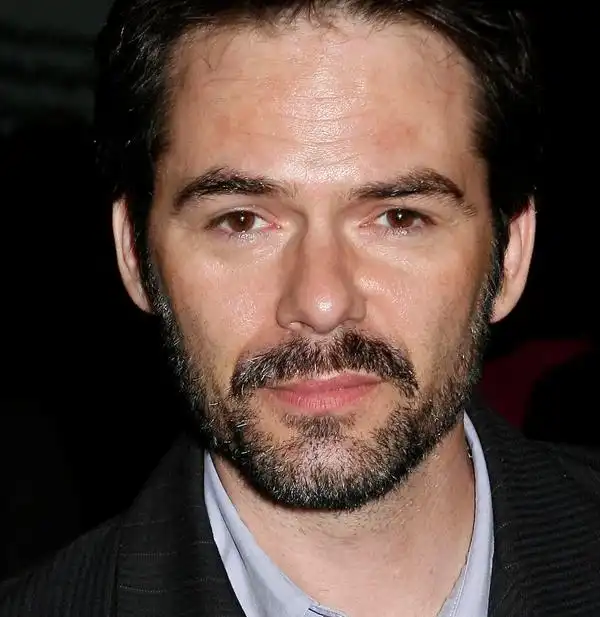
Billy Burke is an American actor, musician, songwriter, writer, and producer whose extensive career has taken him from independent cinema and local theater to internationally successful Hollywood movies and popular television dramas. Best known for portraying Charlie Swan in The Twilight Saga, Miles Matheson in Revolution, Dr. Mitch Morgan in Zoo, and Battalion Chief Vince Leone in Fire Country, Burke has demonstrated remarkable versatility across numerous entertainment genres. His distinctive voice, understated humor, rugged appearance, and ability to portray emotionally complicated characters have made him a familiar and respected presence on both the big and small screens. Whether dealing with supernatural creatures, investigating criminals, surviving apocalyptic disasters, or attempting to understand the behavior of a teenage daughter, Burke frequently finds himself facing circumstances that would make most people reconsider their career choices.
William Albert Burke grew up in Bellingham, Washington, a community surrounded by the natural beauty of the Pacific Northwest. His earliest ambitions involved music rather than acting, and he began singing during childhood before joining a band in his teenage years. His enthusiasm for performing encouraged him to study drama at Western Washington University, where he developed his theatrical abilities while continuing to pursue music. Burke gained valuable experience appearing in Seattle theatrical productions, including performances associated with the Annex Theatre, New City Festival, and A.H.A. Theatre. Although Hollywood would eventually recognize him primarily as an actor, his original ambition was to establish himself in the recording industry.
Burke eventually relocated to Los Angeles in pursuit of a professional music career. Unfortunately, an anticipated recording agreement failed to materialize, encouraging him to concentrate more seriously on acting. Having already gained experience in independent filmmaking and theatrical productions, Burke began attending auditions and securing professional acting assignments. What initially appeared to be a considerable disappointment ultimately opened the door to a successful entertainment career. It is an interesting example of how an unsuccessful business arrangement can occasionally become the best thing that ever happened to someone. Had the recording contract progressed as planned, Bella Swan might have found herself with an entirely different father.
Burke made his feature film debut in the independent production Daredreamer, around the beginning of the 1990s. The film combined music, fantasy, comedy, and youthful ambition, providing an appropriate introduction to the entertainment industry for someone whose interests extended across both acting and music. He subsequently appeared in To Cross the Rubicon (1991), continuing to develop his experience in independent cinema. These early productions offered opportunities to learn the practical demands of filmmaking without the enormous budgets and considerable commercial pressures associated with major Hollywood studios. They also helped establish the naturalistic approach to acting that would distinguish many of his subsequent performances.
Throughout the 1990s, Billy Burke began appearing in a variety of American television programs, including Star Trek: Deep Space Nine, Party of Five, All-American Girl, Strange Luck, and VR.5. These guest appearances allowed him to explore numerous characters while becoming increasingly familiar with the demands of television production. His rugged appearance frequently encouraged casting directors to consider him for characters with questionable intentions, and Burke developed a particular aptitude for portraying individuals whose motives were not immediately apparent. Fortunately, audiences would eventually discover that beneath the facial hair and occasionally threatening expressions was an actor possessing an excellent sense of humor.
One of Burke's earliest major studio movie opportunities arrived with the 1998 comedy Jane Austen's Mafia!, also known simply as Mafia!. Directed by Jim Abrahams, the movie parodied traditional organized crime films, particularly Francis Ford Coppola's celebrated Godfather trilogy. Burke portrayed Joey Cortino in a production overflowing with visual jokes, outrageous situations, exaggerated characters, and thoroughly ridiculous interpretations of cinematic conventions. The opportunity demonstrated his ability to deliver comedy with a straight face, an important skill when surrounded by performers behaving as though common sense had been officially outlawed.
That same year, Burke appeared in Without Limits, a biographical sports drama directed by Robert Towne. The movie examines the life and career of American distance runner Steve Prefontaine and his relationship with influential running coach Bill Bowerman. Burke portrayed Kenny Moore, an accomplished Olympic distance runner who subsequently became a respected sports journalist. The production provided a considerable contrast to the exaggerated comedy of Mafia!, allowing Burke to explore a character associated with athletic achievement, determination, and personal ambition. His ability to move between such different productions demonstrated an increasingly valuable quality for a developing character actor: convincing audiences that he belonged in virtually any cinematic environment.
Burke's musical background became particularly useful when he secured the title role in the 1999 mockumentary Dill Scallion. The film chronicles the rise and fall of an eccentric aspiring country music performer whose enthusiasm for achieving fame is not necessarily matched by his understanding of the entertainment industry. Featuring appearances by several established country music personalities, the production combined affectionate satire with an examination of celebrity culture and the unpredictable nature of musical success. Burke's experience as a musician allowed him to approach the character with an authenticity that contributed considerably to the comedy. After all, having personally experienced the frustrations of pursuing a recording contract, he was particularly well qualified to portray someone discovering that the music business occasionally operates in mysterious ways.
Although Dill Scallion did not become a major commercial blockbuster, it ultimately played a surprisingly important role in Burke's professional development. Director Catherine Hardwicke remembered his performance when she later began casting the movie adaptation of Stephenie Meyer's enormously successful vampire romance novel Twilight. Burke's understated comedic abilities and natural screen presence made a lasting impression, contributing to his eventual selection as Charlie Swan. It was a remarkable example of how a relatively modest independent production could influence casting decisions for a future international entertainment phenomenon. Hollywood occasionally rewards actors for work they completed years earlier, although predicting which particular performance will open the next door remains considerably more complicated than it sounds.
In 2000, Burke joined the cast of the ABC medical drama Wonderland, created by Peter Berg. He portrayed Dr. Abe Matthews in a series examining the professional and personal challenges experienced by employees working within a psychiatric hospital. The production adopted a serious approach to mental illness, medical ethics, workplace pressures, and the difficulties surrounding psychiatric treatment. Although the series experienced a short initial broadcast run, it attracted critical attention for its ambitious storytelling and willingness to address challenging subjects. Burke's performance demonstrated his ability to contribute to complicated dramatic material without relying upon the exaggerated characteristics frequently associated with his earlier roles.
Burke returned to major studio filmmaking in 2001 with Along Came a Spider, a psychological crime thriller starring Morgan Freeman as detective and forensic psychologist Alex Cross. Adapted from the novel by James Patterson, the film follows an investigation involving a kidnapping and an increasingly complicated criminal conspiracy. Burke portrayed Secret Service Agent Ben Devine, contributing to the movie's atmosphere of suspicion, uncertainty, and investigative tension. His participation in the commercially successful thriller helped strengthen his reputation as an actor capable of working alongside established Hollywood stars. It also marked the beginning of an increasingly familiar professional association with criminal investigations and law enforcement characters.
Television audiences encountered a considerably darker side of Burke when he appeared in the second season of the popular action thriller 24. Starring Kiefer Sutherland as counterterrorism agent Jack Bauer, the series became famous for its real-time storytelling, political conspiracies, international threats, and extraordinarily eventful working days. Burke portrayed Gary Matheson, an abusive husband and father whose behavior becomes particularly significant within the storyline involving Kim Bauer, played by Elisha Cuthbert. The disturbing nature of the character provided Burke with an opportunity to portray a deeply unpleasant individual whose presence generated considerable tension. His ability to make Gary convincing demonstrated that the actor possessed considerably more dramatic range than audiences might have anticipated from his earlier comedic performances.
In 2004, Billy Burke appeared alongside John Travolta and Joaquin Phoenix in the firefighter drama Ladder 49. Directed by Jay Russell, the movie follows the experiences of Baltimore firefighter Jack Morrison, exploring professional camaraderie, personal sacrifice, family responsibilities, and the dangers associated with emergency service work. Burke portrayed Dennis Gauquin, one of the firefighters working within the department. The production sought to portray firefighters as ordinary individuals performing extraordinary duties, emphasizing both their courage and the emotional consequences of their profession. Nearly two decades later, Burke would return to firefighting in Fire Country, although this time Hollywood decided that he had accumulated sufficient experience to become the man issuing the instructions.
Burke continued establishing himself through appearances in popular television productions, including Monk, Gilmore Girls, Law & Order, and The Jury. His performance as Alex Lesman in Gilmore Girls introduced him as a romantic interest for Lorelai Gilmore, portrayed by Lauren Graham. The role provided an opportunity to demonstrate a more relaxed and approachable personality, contrasting with the intense and frequently threatening individuals he had portrayed elsewhere. His involvement in such varied television programs helped establish his reputation as a dependable performer who could contribute effectively to an existing ensemble without disrupting the established dynamics of a series.
Another important milestone arrived in 2007 when Burke appeared alongside Anthony Hopkins and Ryan Gosling in the psychological legal thriller Fracture. Directed by Gregory Hoblit, the film follows a talented young prosecutor attempting to secure a conviction against an exceptionally intelligent defendant who appears to have manipulated the legal system in his favor. Burke portrayed Detective Rob Nunally, whose personal involvement in the circumstances surrounding the investigation creates considerable complications. The character required a combination of professional authority, emotional vulnerability, and personal desperation, providing Burke with an opportunity to demonstrate his ability to handle morally complicated dramatic material.
The same year, Burke appeared in Feast of Love, a romantic drama directed by Academy Award-winning filmmaker Robert Benton and featuring Morgan Freeman, Greg Kinnear, Radha Mitchell, and Selma Blair. Adapted from Charles Baxter's novel, the production examines different aspects of romantic relationships, including attraction, commitment, disappointment, and the uncertainties that frequently accompany human affection. Burke portrayed David Watson, contributing to a collection of interconnected stories exploring the unpredictable nature of love. It was a considerably quieter production than many of his crime thrillers, although its characters occasionally demonstrated that romantic relationships can become every bit as complicated as a criminal investigation.
In 2008, Burke appeared opposite Diane Lane in Untraceable, a crime thriller examining the darker possibilities of internet technology. He portrayed Detective Eric Box, a Portland police officer assisting an FBI investigation into a criminal using online platforms to attract attention to disturbing activities. The movie explored questions surrounding online anonymity, public fascination with violence, technological responsibility, and the challenges facing law enforcement in an increasingly connected society. Burke's grounded performance provided a dependable presence within the movie's unsettling environment, further establishing his reputation for portraying intelligent and determined law enforcement professionals.
The defining breakthrough in Billy Burke's international career arrived in 2008 when he portrayed Charlie Swan in Twilight. Directed by Catherine Hardwicke and adapted from Stephenie Meyer's bestselling novel, the movie follows Bella Swan, a teenage girl who relocates to the rainy town of Forks, Washington, and becomes romantically involved with the mysterious Edward Cullen. While much of the story concentrates on supernatural romance, Burke's Charlie provides an important connection to the ordinary human world. As Bella's father and the local police chief, he attempts to maintain a sensible household while remaining largely unaware of the extraordinary circumstances surrounding his daughter. Considering her increasingly unusual romantic preferences, one might argue that Charlie was entitled to a considerably longer vacation.
Burke's portrayal of Charlie Swan became particularly popular because of his understated humor, awkward paternal affection, and thoroughly believable approach to fatherhood. Unlike the glamorous vampires and physically imposing werewolves occupying much of the franchise, Charlie is an ordinary working man who enjoys fishing, baseball, familiar routines, and a relatively uncomplicated existence. His attempts to reconnect with his daughter often involve uncomfortable conversations, expressions of concern, and practical gestures rather than elaborate emotional declarations. Burke captured these characteristics with a natural warmth that helped audiences appreciate a character whose greatest ambition was simply to ensure that his daughter remained safe.
Charlie Swan's relationship with Bella, portrayed by Kristen Stewart, provided some of the franchise's most relatable moments. His uncertainty about discussing relationships, his protective attitude toward his daughter, and his increasingly bewildered reactions to her unusual social circle introduced humor into a story frequently dominated by dramatic supernatural events. Burke's expressive reactions often communicated considerably more than lengthy dialogue could have achieved. While audiences debated whether Bella should choose Edward or Jacob, Charlie Swan appeared to favor an entirely different option involving sensible decisions, reasonable curfews, and perhaps a young man whose body temperature remained within the normal human range.
Burke reprised his role in all four subsequent movies: The Twilight Saga: New Moon (2009), The Twilight Saga: Eclipse (2010), The Twilight Saga: Breaking Dawn – Part 1 (2011), and The Twilight Saga: Breaking Dawn – Part 2 (2012). Throughout the franchise, Charlie's relationship with Bella evolved as he confronted her increasingly complicated circumstances and eventual marriage to Edward Cullen. Burke maintained the character's recognizable personality while revealing greater emotional depth as Charlie struggled to understand changes in his daughter's life. The five-film franchise generated billions of dollars at the worldwide box office and transformed its principal cast members into internationally recognized entertainment personalities.
One particularly enjoyable aspect of Charlie Swan's popularity was the attention devoted to his distinctive mustache. Although the franchise featured impossibly attractive supernatural beings, elaborate special effects, dramatic transformations, and considerable romantic intensity, Charlie's facial hair developed something approaching a celebrity status of its own among fans. His appearance perfectly complemented the character's practical personality and traditional approach to life. In a cinematic universe where vampires sparkle in sunlight, perhaps an ordinary police chief with an impressive mustache was precisely the reassuring presence audiences needed.
Burke reunited with Twilight director Catherine Hardwicke in the 2011 dark fantasy movie Red Riding Hood. Starring Amanda Seyfried, Gary Oldman, and Shiloh Fernandez, the production offers a considerably darker interpretation of the traditional European fairy tale. Burke portrayed Cesaire, the father of Seyfried's character Valerie, whose community finds itself threatened by a mysterious werewolf. The film combined supernatural suspense, romantic intrigue, family secrets, and medieval-inspired settings. For Burke, it represented another opportunity to portray a father dealing with supernatural complications, although by this stage of his career, one could reasonably assume that he had become thoroughly familiar with the occupational hazards of raising daughters in Hollywood fantasy productions.
That same year, Burke demonstrated his talent for portraying villains in the supernatural action movie Drive Angry, starring Nicolas Cage and Amber Heard. He portrayed Jonah King, a sinister cult leader whose activities bring him into conflict with Cage's character, John Milton. The production embraced an exaggerated approach to action filmmaking, combining supernatural themes, spectacular stunts, unusual characters, and deliberately outrageous situations. Burke's performance provided a considerable contrast to his sympathetic portrayal of Charlie Swan, demonstrating that the qualities that made him convincing as a protective father could also make him an effective and intimidating antagonist.
While his involvement in The Twilight Saga brought international recognition, Burke continued pursuing diverse television opportunities. In the crime drama The Closer, starring Kyra Sedgwick, he portrayed Phillip Stroh, a defense attorney whose connection to serious criminal investigations made him one of the series' most disturbing recurring characters. Burke subsequently reprised the role in the spin-off series Major Crimes, extending the character's influence across both productions. His restrained performance emphasized intelligence, manipulation, and an unsettling ability to maintain composure. The contrast between Phillip Stroh and Charlie Swan was particularly striking, considering that both characters operated within the criminal justice system but possessed dramatically different interpretations of acceptable behavior.
Burke also appeared in Rizzoli & Isles, the popular crime drama starring Angie Harmon and Sasha Alexander. He portrayed FBI Special Agent Gabriel Dean, whose investigative responsibilities occasionally brought him into contact with Boston homicide detective Jane Rizzoli. The character's professional experience and romantic connection with Rizzoli added another dimension to the series' combination of criminal investigations, personal relationships, and workplace humor. Burke's familiarity with law enforcement characters made him a natural addition to the production. By this point, his fictional experience in policing and criminal investigations was becoming sufficiently extensive that Hollywood could probably have established an entire police department using characters from his previous productions.
In 2012, Burke secured one of his most substantial television leading roles when he became Miles Matheson in the NBC science fiction adventure series Revolution. Created by Eric Kripke and executive produced by J.J. Abrams, the series takes place in a world where electricity has mysteriously ceased to function, causing the collapse of modern civilization. Governments, communications networks, transportation systems, and familiar technological conveniences have disappeared, leaving survivors to establish new communities and political structures. Burke's character is a former military officer whose combat experience and complicated personal history make him an important figure in the struggle to survive this dramatically transformed world.
Miles Matheson was a considerably more physically demanding character than many of Burke's previous television roles. The series frequently required him to participate in elaborate action sequences, sword fights, and dramatic confrontations while exploring the emotional consequences of his character's previous decisions. Despite his formidable abilities, Miles is reluctant to embrace traditional heroism and often conceals his compassion beneath sarcasm, frustration, and a desire to avoid unnecessary responsibility. Burke's dry humor and natural screen presence proved particularly effective in portraying a man whose preferred solution to most problems involved getting the situation resolved before somebody created an even bigger one.
Revolution continued for two seasons, concluding in 2014 after establishing a devoted audience interested in science fiction, adventure, and post-apocalyptic storytelling. Burke received a Saturn Award nomination for his performance, recognizing his contribution to a production that combined large-scale action with complicated character relationships. The series also explored humanity's dependence upon technology and the difficulties associated with rebuilding civilization after losing familiar conveniences. For modern audiences, the premise presented a particularly frightening possibility: an entire world without electricity, refrigeration, internet access, or the ability to complain about any of these inconveniences on social media.
Burke's film career during this period included Freaky Deaky (2012), a crime comedy adapted from the novel by Elmore Leonard. Set in the 1970s, the movie follows an unconventional collection of criminals and investigators whose ambitions become entangled in increasingly complicated circumstances. Burke portrayed Chris Mankowski, a Detroit police officer whose investigation introduces him to corruption, eccentric personalities, and elaborate criminal schemes. The production allowed him to combine his experience in crime dramas with the deadpan humor that had characterized several of his earliest successes. Elmore Leonard's distinctive approach to criminal dialogue and unconventional characters provided an appropriate environment for Burke's understated acting style.
In 2015, Burke starred in and helped produce the independent comedy-drama Divine Access. He portrayed Jack Harriman, a man possessing an unusual ability to discuss religion, spirituality, and human belief who unexpectedly develops a following through television appearances. The film examines faith, celebrity, personal responsibility, and the complicated relationship between genuine spiritual curiosity and commercial opportunity. Burke's involvement behind the camera demonstrated an interest in the creative and practical aspects of filmmaking beyond performing. It also provided an opportunity to explore material considerably different from the mainstream action and crime productions that had established his reputation.
That same year, Burke joined the cast of the CBS science fiction thriller Zoo, based on the novel by James Patterson and Michael Ledwidge. The series follows a group of scientists, investigators, and specialists attempting to understand a mysterious worldwide change in animal behavior. Burke portrayed Dr. Mitch Morgan, a veterinary pathologist whose scientific knowledge, analytical abilities, and distinctly sarcastic personality become essential to the group's investigations. Rather than presenting Mitch as an enthusiastic adventurer, Burke emphasized the character's preference for scientific reasoning and his occasionally limited patience with other people's behavior.
Throughout its three seasons, Zoo developed increasingly ambitious storylines involving genetic manipulation, environmental changes, scientific experimentation, and threats to human civilization. Burke's performance became one of the production's recognizable features, with Mitch frequently providing humor amid otherwise serious circumstances. His ability to deliver sarcastic observations while confronting increasingly extraordinary situations contributed significantly to the character's popularity. After surviving the disappearance of electricity in Revolution, Burke apparently decided that battling the entire animal kingdom represented a reasonable next step in his professional development.
Horror audiences encountered Burke in the 2016 supernatural movie Lights Out, directed by David F. Sandberg and produced by James Wan. The film explores a terrifying supernatural presence associated with darkness and the psychological difficulties experienced by a family attempting to understand its origins. Burke portrayed Paul, whose appearance contributes to the establishment of the movie's unsettling atmosphere. The production achieved considerable commercial success against a relatively modest budget, illustrating the continuing popularity of horror films that rely on suspense, atmosphere, and effective storytelling rather than enormous production expenditures. Having previously experienced an entire television series without electricity, Burke was perhaps unusually well prepared for a movie in which turning the lights off represented a particularly serious mistake.
Burke returned to the thriller genre in 2018 with Breaking In, starring Gabrielle Union as a determined mother attempting to protect her children during a dangerous home invasion. Burke portrayed Eddie, the leader of a criminal group whose plans become increasingly complicated when confronted by a woman unwilling to surrender her family's safety. The production reversed a familiar pattern in Burke's career by placing him on the opposite side of a parent's protective instincts. Having previously spent several movies attempting to protect Bella Swan, he now found himself confronting a mother whose determination made his character's criminal ambitions considerably more difficult to achieve.
In 2020, Burke joined the cast of 9-1-1: Lone Star, the emergency services drama starring Rob Lowe. Set in Austin, Texas, the series explores the professional and personal experiences of firefighters, paramedics, police officers, and emergency dispatchers responding to unusual and frequently dangerous situations. Burke portrayed Captain Billy Tyson, an experienced firefighter whose relationship with Captain Owen Strand develops through professional disagreements, personal challenges, and complicated workplace politics. The recurring role allowed him to revisit the world of emergency services while exploring the rivalries and responsibilities associated with leadership. Apparently, Hollywood had decided that Burke looked particularly convincing standing beside a fire engine, although it occasionally remained undecided about whether he should be putting out fires or creating them.
One of Burke's most critically significant dramatic performances arrived in 2021 with the Netflix limited series Maid. Inspired by Stephanie Land's memoir Maid: Hard Work, Low Pay, and a Mother's Will to Survive, the production stars Margaret Qualley as Alex, a young mother attempting to escape an abusive relationship while confronting poverty, housing insecurity, and the difficulties associated with low-paid employment. Burke portrayed Hank, Alex's estranged father, whose complicated history and strained relationship with his daughter contribute to her emotional and practical challenges.
Unlike many of Burke's action-oriented productions, Maid concentrates on everyday struggles that are painfully familiar to individuals experiencing financial hardship and domestic difficulties. His portrayal of Hank required considerable emotional restraint, revealing the contradictions of a man whose attempts at reconciliation coexist with unresolved problems from his past. The series received widespread critical acclaim for its performances and sensitive exploration of domestic abuse, economic insecurity, and family relationships. Burke's involvement demonstrated his ability to contribute effectively to realistic, socially significant drama without the assistance of supernatural creatures, dramatic chases, or elaborate special effects.
Comic book enthusiasts discovered another aspect of Burke's talents when he provided the voice of James Gordon in the animated adaptation of Batman: The Long Halloween (2021). The two-part production, based on the celebrated comic book storyline by Jeph Loeb and Tim Sale, follows Batman's investigation into a series of mysterious crimes connected with Gotham City's organized crime families. Burke's distinctive voice proved particularly suitable for Gordon, a determined law enforcement officer attempting to maintain order in a city where ordinary policing frequently becomes an extraordinary challenge. From Charlie Swan to James Gordon, Burke appeared to have developed a particular talent for portraying police officers surrounded by individuals possessing questionable relationships with the laws of nature.
In 2022, Billy Burke returned to network television as Battalion Chief Vince Leone in the CBS drama Fire Country. Created by Max Thieriot, Tony Phelan, and Joan Rater, the series explores the experiences of professional firefighters and incarcerated individuals participating in a firefighting program in Northern California. Thieriot stars as Bode Donovan, a young man seeking redemption while confronting complications involving his family, personal history, and relationships within his hometown of Edgewater. Burke's Vince Leone is an experienced firefighter and Bode's father, whose professional responsibilities frequently collide with deeply personal concerns.
Burke's performance as Vince Leone brought considerable emotional depth to Fire Country. The character is a respected leader whose strong sense of responsibility occasionally creates difficulties within his family. Alongside Diane Farr, who portrays his wife Sharon Leone, Burke helped establish the complicated family relationships that form an important foundation of the series. Vince's experiences involve grief, forgiveness, professional duty, parental expectations, and the difficulty of maintaining personal relationships in an occupation where every emergency carries potentially serious consequences. Although the series features impressive firefighting sequences, many of Burke's most compelling moments occur during quieter conversations that reveal the emotional pressures experienced by emergency personnel and their families.
The success of Fire Country introduced Burke to another generation of television audiences while reminding longtime fans of his earlier involvement in Ladder 49. His portrayal of Vince throughout the show's first three seasons demonstrated the continuing appeal of his grounded acting style and authoritative screen presence. The character's mixture of traditional values, professional determination, paternal concern, and occasional stubbornness made him particularly believable. Burke's ability to communicate affection without excessive sentimentality once again proved valuable, although unlike Charlie Swan, Vince rarely had the option of escaping his problems by going fishing.
Despite the enormous success of his acting career, Billy Burke never entirely abandoned his original musical ambitions. In 2010, he released an album titled Removed, demonstrating his continuing enthusiasm for songwriting and musical performance. His music provides an opportunity to explore personal expression outside the limitations of fictional characters and scripted dialogue. Burke also combined his musical and acting careers through songs associated with Fire Country, including Burn and History. The opportunity to incorporate his own musical work into a successful television production represented an especially satisfying development for an entertainer whose original journey to Hollywood had been motivated by the desire to establish a recording career.
Burke has also continued exploring creative opportunities through writing and producing. His writing credits include involvement in the independent movie Something More and a story credit for the unconventional horror comedy Dead & Breakfast. These projects reflect his appreciation for independent filmmaking and imaginative storytelling. Unlike large studio productions, independent movies frequently offer performers greater opportunities to contribute to the creative direction of a project. Burke's experience across music, acting, writing, and production demonstrates that his artistic interests extend considerably beyond appearing in front of a camera and convincingly delivering somebody else's dialogue.
Billy Burke's enduring appeal can be attributed partly to his ability to portray characters who feel recognizable despite their extraordinary circumstances. Whether playing a police chief attempting to understand his daughter, a reluctant hero confronting the collapse of civilization, a scientist investigating global mysteries, or a firefighter struggling to balance professional duty with family responsibility, Burke brings a sense of authenticity to his performances. His humor rarely depends upon excessive movement or exaggerated expressions. Instead, he frequently relies upon carefully timed observations, meaningful pauses, understated reactions, and the occasional expression suggesting that everyone around him has temporarily misplaced their common sense.
His extensive career demonstrates that an unsuccessful recording contract does not necessarily represent the end of a dream. For Billy Burke, it became the beginning of an entirely different professional adventure, ultimately allowing him to pursue both acting and music. From independent movies and Seattle theater to internationally successful film franchises and acclaimed television dramas, Burke has continually demonstrated versatility, intelligence, and a distinctive sense of humor. He has confronted vampires, werewolves, criminals, supernatural forces, rebellious animals, collapsing civilizations, and devastating wildfires. Yet perhaps his greatest fictional challenge remains attempting to have a straightforward conversation with Bella Swan. Even Hollywood's most experienced firefighters might have struggled to extinguish that particular romantic complication.
IMDb – Billy Burke – Filmography, acting credits, television appearances, videos, and awards. IMDb – Billy Burke Biography – Early life, musical ambitions, theatrical training, and professional development. Paramount Press Express – Billy Burke – Official CBS biography, Fire Country, and notable film and television performances. TV Insider – Billy Burke – Career highlights, television productions, and biographical information. TV Guide – Billy Burke – Extensive movie, television, writing, and production credits. Apple – Billy Burke – Musical recordings, songwriting, albums, and screen performances. TVmaze – Billy Burke – Television appearances, character names, and episode credits. Entertainment Weekly – The Twilight Cast, Then and Now – The Twilight franchise and the subsequent careers of its principal performers. Wikipedia – Billy Burke – Supplementary career history, filmography, award nominations, and production credits. References & Sources