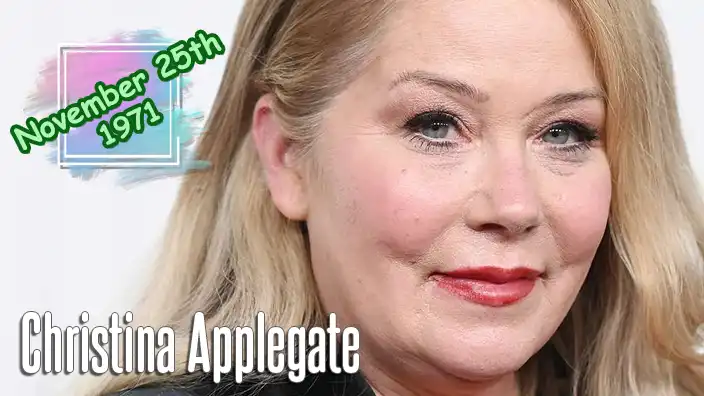
November 25, 1971, in Hollywood, California

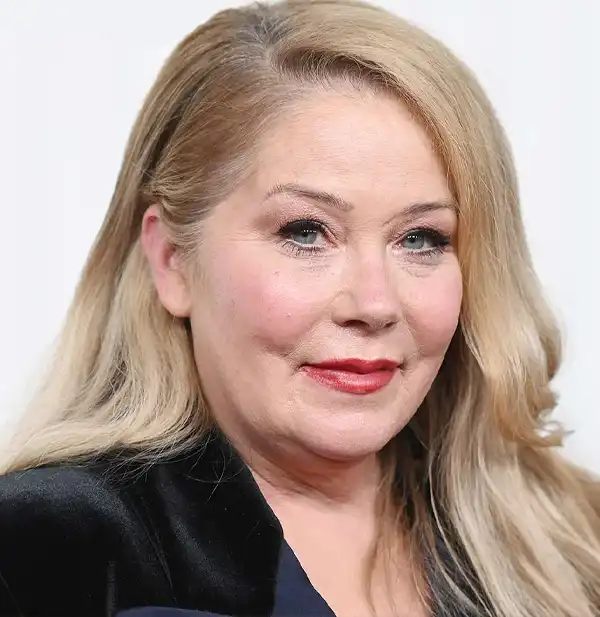
Christina Applegate is an internationally recognized American actress, producer, dancer, author, and humanitarian whose remarkable entertainment career spans television sitcoms, Hollywood blockbusters, Broadway musicals, animated productions, and critically acclaimed streaming dramas. Best known for portraying Kelly Bundy in Married... with Children, Veronica Corningstone in Anchorman: The Legend of Ron Burgundy, Samantha Newly in Samantha Who?, and Jen Harding in Dead to Me, Applegate has demonstrated exceptional versatility throughout her career. Her natural comic timing, expressive personality, and ability to combine outrageous humor with genuine emotional depth have earned her an Emmy Award, multiple Golden Globe nominations, and a Tony Award nomination. Although she initially became famous for portraying a character whose intellectual abilities occasionally appeared to be on extended vacation, Applegate has built a career requiring considerable intelligence, determination, and professional discipline.
Christina Applegate was born in Hollywood, California, into a family already familiar with the entertainment industry. Her mother, Nancy Priddy, was an actress and singer, while her father, Robert Applegate, worked as a record producer and music industry executive. Her parents separated shortly after her birth, leaving her mother primarily responsible for raising her. Growing up around musicians, actors, and entertainment professionals introduced Applegate to the creative arts long before she could appreciate their professional significance. Among the musicians associated with her childhood was Stephen Stills, celebrated for his involvement with Buffalo Springfield and Crosby, Stills & Nash, who presented her with a guitar that she continued to treasure.
Applegate's introduction to television occurred during infancy when she appeared alongside her mother in the daytime soap opera Days of Our Lives. She subsequently appeared in a television commercial for Playtex baby products, beginning her professional association with advertising before she could reasonably have understood what was being advertised. Unlike most performers who spend years attending auditions before securing their first television appearance, Applegate entered the entertainment industry before mastering the considerably more fundamental skills of walking and talking. Her earliest professional performances presumably required little preparation beyond remaining reasonably cooperative during filming.
Throughout her childhood, Applegate appeared in commercials, television programs, and feature films, gradually developing the acting experience that would contribute to her later success. Her early movie credits included Jaws of Satan (1981) and Beatlemania (1981), while her television appearances included Father Murphy, Charles in Charge, Silver Spoons, and Family Ties. These productions gave her opportunities to work across several genres and become familiar with the demanding routines of television production. Although many of these early appearances were relatively brief, they helped establish the confidence and professionalism necessary for a performer attempting to build a lasting career in Hollywood.
In 1986, Applegate appeared in the NBC police drama Heart of the City, portraying Robin Kennedy, the daughter of a widowed police detective played by Robert Desiderio. The series examined the difficulties of combining law enforcement responsibilities with the challenges of raising a family. Although the program was short-lived, it provided Applegate with a recurring television role and additional experience in character development. Her next major opportunity, however, would introduce her to a fictional family whose understanding of parental responsibility was considerably less conventional.
The defining breakthrough in Christina Applegate's career arrived in 1987 when she was cast as Kelly Bundy in the Fox sitcom Married... with Children. Created by Michael G. Moye and Ron Leavitt, the series presented a deliberately exaggerated and rebellious alternative to the wholesome family sitcoms that had traditionally dominated American television. Instead of portraying an affectionate household where misunderstandings were resolved through meaningful conversations and reassuring moral lessons, the Bundy family seemed united primarily by sarcasm, financial difficulties, questionable decisions, and a remarkable ability to insult one another before breakfast.
Applegate portrayed Kelly Bundy, the attractive but spectacularly absent-minded daughter of Al and Peggy Bundy, played by Ed O'Neill and Katey Sagal. Her younger brother, Bud, portrayed by David Faustino, frequently attempted to exploit Kelly's intellectual shortcomings for his own amusement. Despite the character's apparent lack of academic accomplishments, Kelly occasionally demonstrated surprising instincts, confidence, and an unexpected ability to outmaneuver the people who underestimated her. Applegate's performance transformed what could easily have become a repetitive stereotype into one of the most recognizable characters in American television comedy.
Playing a character such as Kelly Bundy required considerably more skill than audiences might initially appreciate. Applegate had to carefully manage the character's misunderstandings, confused expressions, unexpected observations, and confidently incorrect statements without allowing the humor to become tiresome. Her ability to deliver questionable observations with complete sincerity became one of Kelly's defining characteristics. The comedy frequently emerged because Kelly was entirely convinced that she understood what was happening, even when everyone else in the room had reached a very different conclusion. Portraying someone who is unintentionally hilarious requires exceptional comic timing, and Applegate consistently demonstrated that ability.
Throughout its eleven seasons, Married... with Children became one of the programs most closely associated with the establishment of Fox as a major American television network. The series challenged traditional broadcasting conventions through its irreverent humor, exaggerated personalities, and frequently controversial storylines. Its popularity extended internationally, introducing audiences around the world to the unfortunate experiences of shoe salesman Al Bundy and his thoroughly unconventional family. While traditional television families frequently inspired viewers to improve their own households, the Bundys provided the considerably more comforting realization that things could always be worse.
As Kelly Bundy developed throughout the series, Applegate demonstrated that the character could occasionally display genuine warmth, loyalty, and affection beneath her exaggerated personality. Kelly's relationship with her father provided some particularly memorable moments, with Al simultaneously expressing frustration over her behavior and fierce protectiveness whenever someone threatened her well-being. Her ongoing rivalry with Bud also contributed significantly to the program's comedy, capturing the entertaining hostility frequently associated with fictional sibling relationships. Beneath the insults and ridiculous situations, Applegate helped establish Kelly as a character audiences genuinely enjoyed rather than simply someone placed on screen to deliver predictable jokes.
Although Married... with Children concluded in 1997, Kelly Bundy remained one of Applegate's most recognizable performances. The show's continuing popularity through syndication and streaming introduced the character to audiences who had never experienced its original television broadcasts. Applegate subsequently worked to establish an identity beyond the role, recognizing the dangers of becoming permanently associated with a single character. Hollywood has an unfortunate tendency to assume that an actor who convincingly portrays a particular personality must be incapable of portraying anything else. Applegate would spend much of her subsequent career demonstrating just how inaccurate that assumption could be.
While still appearing in Married... with Children, Applegate began establishing herself as a leading actress in feature films. Her most memorable early movie arrived in 1991 with Don't Tell Mom the Babysitter's Dead, a comedy directed by Stephen Herek. Applegate portrayed Sue Ellen Crandell, known as Swell, a teenage girl whose plans for an enjoyable summer become considerably more complicated following the unexpected death of the family's elderly babysitter. Rather than informing their vacationing mother about the situation, the children attempt to manage their household independently, producing an increasingly entertaining collection of financial and domestic complications.
Applegate's character secures employment at a clothing company by exaggerating her qualifications and presenting herself as an experienced professional. The movie follows her attempts to maintain this deception while managing workplace relationships, household responsibilities, and the demands of her younger siblings. Unlike Kelly Bundy, Sue Ellen demonstrates considerable resourcefulness and determination, allowing Applegate to showcase a different dimension of her acting abilities. The film developed a devoted following and became particularly popular through home video and television broadcasts. Its underlying message about surviving the corporate world remains surprisingly relevant, although most career advisers would strongly discourage adopting Sue Ellen's approach to preparing a résumé.
Applegate continued expanding her movie career throughout the 1990s with appearances in Streets, Across the Moon, Vibrations, and Wild Bill. The latter, directed by Walter Hill and starring Jeff Bridges as legendary American frontier figure Wild Bill Hickok, introduced Applegate to the Western genre. She portrayed Lurline Newcomb, contributing to a production that explored the mythology, violence, personal relationships, and historical uncertainties surrounding one of the American West's most recognizable personalities. Her willingness to appear in historical dramas demonstrated that her acting ambitions extended considerably beyond contemporary comedy.
In 1998, Applegate appeared alongside Mark Wahlberg and Lou Diamond Phillips in the action comedy The Big Hit. Directed by Kirk Wong, the movie follows a professional hitman whose attempts to balance criminal employment with personal relationships produce increasingly chaotic consequences. Applegate portrayed Pam Shulman, the demanding fiancée of Wahlberg's character, Melvin Smiley. The production combined exaggerated action sequences, criminal misunderstandings, romantic complications, and dark humor. Her performance demonstrated that she could contribute effectively to a movie where normal domestic disagreements were occasionally interrupted by circumstances involving professional assassins.
That same year, Applegate returned to network television as the title character in the NBC sitcom Jesse. The series follows Jesse Warner, a single mother living in Buffalo, New York, who attempts to balance employment, parenthood, family responsibilities, romantic relationships, and her ambitions for a better life. Unlike Kelly Bundy, Jesse was an intelligent, hardworking woman whose challenges emerged primarily from everyday responsibilities rather than spectacular misunderstandings. The role provided Applegate with an opportunity to establish herself as a leading television actress while exploring a considerably more grounded and emotionally complicated character.
Jesse continued for two seasons between 1998 and 2000, earning Applegate a Golden Globe nomination and recognition at the People's Choice Awards. Her performance demonstrated that she could successfully carry a television comedy without relying upon the distinctive characteristics that had established her earlier fame. The series also allowed her to explore the difficulties of single parenthood and personal independence while maintaining the humor audiences expected from her. After spending eleven seasons portraying a member of the Bundy household, Applegate had finally entered a fictional family where someone occasionally demonstrated a genuine interest in paying the bills.
Applegate also explored horror and science fiction through appearances in Disturbing Behavior (1998) and The Visitors remake, Just Visiting (2001). In Just Visiting, she appeared alongside Jean Reno and Christian Clavier in a comedy involving medieval travelers who unexpectedly find themselves in contemporary Chicago. Applegate portrayed both Princess Rosalind and her modern descendant, Julia Malfete. The production combined historical misunderstandings, romantic comedy, and the considerable confusion experienced by individuals unfamiliar with modern technology. Medieval visitors discovering American society provided a particularly entertaining opportunity to examine inventions and customs that contemporary audiences generally take for granted.
Another interesting aspect of Applegate's career involves a major Hollywood role that she chose not to pursue. The screenplay for Legally Blonde reportedly came to her attention shortly after the conclusion of Married... with Children. Concerned that portraying another character associated with the stereotype of an unintelligent blonde woman might reinforce her existing image, Applegate declined the opportunity. The role of Elle Woods ultimately went to Reese Witherspoon, whose performance transformed the movie into an enormously successful comedy franchise. Applegate later expressed admiration for Witherspoon's portrayal, acknowledging that the character had found the right performer. Sometimes the most important professional decisions involve recognizing which opportunities are better suited to somebody else.
In 2002, Applegate appeared alongside Cameron Diaz and Selma Blair in the romantic comedy The Sweetest Thing. Directed by Roger Kumble, the movie follows three friends navigating romantic relationships, personal adventures, and the occasionally embarrassing consequences of impulsive decisions. Applegate portrayed Courtney Rockcliffe, an outspoken and confident woman whose friendship with Diaz's character contributes significantly to the movie's comedy. The production developed a following among audiences who appreciated its unconventional approach to female friendship and romantic comedy, demonstrating Applegate's ability to participate in ensemble productions featuring strong comedic personalities.
One of the most celebrated achievements in Christina Applegate's television career arrived through a relatively brief guest appearance on the enormously successful NBC sitcom Friends. Applegate portrayed Amy Green, the self-absorbed and frequently tactless sister of Rachel Green, played by Jennifer Aniston. Her first appearance occurred in the 2002 Thanksgiving episode The One with Rachel's Other Sister, during which Amy's remarkable lack of social awareness creates considerable tension among the assembled friends. Her character possesses the extraordinary ability to offend virtually everyone present while remaining convinced that she is contributing positively to the conversation.
Applegate's performance earned her the 2003 Primetime Emmy Award for Outstanding Guest Actress in a Comedy Series. She subsequently returned in the 2003 episode The One Where Rachel's Sister Babysits, receiving another Emmy nomination in 2004. Despite appearing in only two episodes of a television series that continued for ten seasons, Applegate established Amy Green as one of its most memorable guest characters. Her success demonstrated that a performer does not necessarily require years of screen time to make a lasting impression. Occasionally, two family gatherings and a spectacular lack of diplomacy will accomplish the job quite effectively.
In 2003, Applegate appeared in Grand Theft Parsons, an independent comedy based loosely on the unusual circumstances surrounding the death of influential country-rock musician Gram Parsons. Starring Johnny Knoxville, the production follows a rather unconventional attempt to fulfill the musician's final wishes. Applegate portrayed Barbara, a fictionalized character whose involvement adds further complications to an already extraordinary situation. The film demonstrated her willingness to embrace independent projects and unusual storytelling rather than concentrating exclusively on productions with enormous commercial expectations.
One of Applegate's most iconic movie roles arrived in 2004 when she portrayed Veronica Corningstone in Anchorman: The Legend of Ron Burgundy. Directed by Adam McKay and starring Will Ferrell, Steve Carell, Paul Rudd, and David Koechner, the comedy satirizes American television news broadcasting during the 1970s. Applegate's character is an ambitious and talented journalist determined to establish herself within a newsroom dominated by men whose professional qualifications appear to consist primarily of confidence, impressive hairstyles, and an exceptionally generous understanding of their own importance.
Veronica Corningstone provided the perfect contrast to Ferrell's outrageously self-important Ron Burgundy. While Burgundy considered himself an extraordinarily distinguished television journalist, Veronica demonstrated genuine intelligence, professional ambition, and determination. Their rivalry and romantic relationship formed an important foundation of the movie's comedy, while Applegate's ability to remain convincing amid increasingly absurd circumstances contributed significantly to its success. Playing the comparatively sensible character in a production populated by magnificent idiots is not always an easy assignment, particularly when those magnificent idiots are portrayed by some of Hollywood's most talented comedians.
Anchorman: The Legend of Ron Burgundy became a major cultural phenomenon, developing an enthusiastic following and producing numerous widely repeated expressions and memorable scenes. Applegate's performance demonstrated her ability to combine sophisticated comedy with physical humor and dramatic confidence. Her character's determination to succeed in a male-dominated profession also introduced a meaningful social theme beneath the movie's exaggerated absurdity. For all its outrageous jokes and deliberately ridiculous characters, Anchorman explored genuine historical attitudes toward women working in American television journalism.
Applegate also appeared in the 2004 holiday comedy Surviving Christmas, starring Ben Affleck, James Gandolfini, and Catherine O'Hara. The movie follows a wealthy but lonely businessman who attempts to recreate the atmosphere of his childhood Christmas celebrations by paying the occupants of his former family home to behave as his relatives. Applegate portrayed Alicia Valco, whose arrival introduces additional complications to the unconventional arrangement. The production examines loneliness, family relationships, commercialism, and the occasionally unrealistic expectations associated with Christmas celebrations. Renting an entire family for the holidays is certainly an imaginative solution to personal difficulties, although it would probably require an exceptionally complicated contract.
Beyond her accomplishments in television and cinema, Christina Applegate has maintained a strong interest in dancing and musical performance. Her experience includes jazz dancing and extensive theatrical preparation, skills that eventually contributed to one of the most ambitious projects of her professional career. She was also associated with the early development of the Pussycat Dolls, the Los Angeles burlesque dance troupe founded by choreographer Robin Antin. The troupe's early rehearsals took place in Applegate's garage, making it an unexpectedly significant location in the history of contemporary popular entertainment. Most garages contain lawn equipment, forgotten Christmas decorations, and boxes nobody remembers packing. Applegate's helped launch an internationally recognized entertainment group.
In 2005, Applegate made her Broadway debut starring as Charity Hope Valentine in a revival of the musical Sweet Charity. Originally developed by choreographer and director Bob Fosse, the musical follows an optimistic dance-hall hostess whose determination to find love frequently leads to disappointment. The production features celebrated musical numbers including Big Spender, If My Friends Could See Me Now, and The Rhythm of Life. Taking on the leading role required Applegate to demonstrate considerable singing, dancing, and acting abilities while maintaining the stamina necessary for repeated live theatrical performances.
Her Broadway journey became particularly challenging when she broke her foot during the production's pre-Broadway engagement in Chicago. The injury temporarily threatened her ability to continue performing and placed the musical's future in considerable uncertainty. Rather than abandoning the project, Applegate worked toward recovery and helped ensure that the production eventually reached Broadway. Her determination reflected a level of professional commitment that extended considerably beyond the relatively glamorous public perception of musical theater. Performing complex dance routines is demanding enough without having to persuade one of your feet to resume active participation.
Applegate's performance in Sweet Charity earned her a Tony Award nomination for Best Actress in a Musical and a Theatre World Award recognizing her Broadway debut. The achievement demonstrated that her abilities extended beyond the requirements of television and film comedy. Broadway audiences encountered an actress capable of sustaining an emotionally demanding performance while singing and dancing before a live audience. There were no opportunities to request another take, adjust the camera angle, or send somebody else into the scene when the choreography became particularly challenging. Her success represented an important milestone in establishing her reputation as a genuinely versatile entertainer.
In 2007, Christina Applegate returned to network television as the title character in the ABC comedy series Samantha Who?. The program follows Samantha Newly, a woman who awakens from a coma suffering from retrograde amnesia and gradually discovers that her previous personality was considerably less admirable than she might have hoped. As Samantha attempts to reconstruct her memories, she becomes increasingly determined to improve her behavior and establish more meaningful relationships. The premise provided Applegate with an ideal opportunity to combine physical comedy, emotional vulnerability, romantic complications, and humorous observations about personal identity.
Unlike traditional sitcom characters whose personalities remain relatively consistent, Samantha effectively confronts two different versions of herself. Her present-day personality attempts to become more compassionate and considerate, while memories of her former behavior frequently reveal an ambitious, selfish, and manipulative individual. Applegate's ability to communicate the embarrassment and disbelief associated with discovering one's own shortcomings contributed significantly to the program's appeal. Most people occasionally regret something they said at a social gathering. Samantha had the considerably larger problem of discovering that her entire previous personality appeared to require a comprehensive apology.
The series featured an accomplished supporting cast including Jean Smart, Jennifer Esposito, Melissa McCarthy, Barry Watson, and Kevin Dunn. Applegate's chemistry with her fellow performers helped establish the program's distinctive balance of humor and emotional storytelling. She also served as a co-executive producer, expanding her involvement in the creative direction of the series. Her performance earned consecutive Primetime Emmy nominations for Outstanding Lead Actress in a Comedy Series, further demonstrating her ability to portray complicated leading characters. Although Samantha Who? concluded in 2009 after two seasons, it remains one of the more inventive television comedies associated with her career.
During this period, Applegate confronted one of the most serious challenges of her personal life when she was diagnosed with breast cancer in 2008. Her family history had already encouraged her to remain attentive to breast health, and medical testing identified the disease at an early stage. Applegate subsequently underwent a bilateral mastectomy after learning that she carried a BRCA1 gene mutation associated with an increased risk of certain cancers. Her decision to speak publicly about her experiences contributed to wider discussions concerning genetic testing, early detection, access to screening, and the personal complexities surrounding cancer treatment.
Following her treatment, Applegate established Right Action for Women, a charitable initiative designed to improve access to appropriate breast cancer screening for women at elevated risk who faced financial barriers. The organization particularly emphasized the importance of making advanced screening technologies accessible to individuals who might otherwise struggle to afford them. Her humanitarian efforts demonstrated that her public influence could be directed toward practical assistance and health awareness. She subsequently continued discussing the importance of informed medical decisions while acknowledging the emotional difficulties that frequently accompany serious health challenges.
Applegate expanded her career into animated entertainment when she provided the voice of Brittany Miller in Alvin and the Chipmunks: The Squeakquel (2009). Brittany, the confident and occasionally demanding leader of the Chipettes, became an important character in the movie franchise's musical adventures. Applegate reprised the role in Alvin and the Chipmunks: Chipwrecked (2011) and Alvin and the Chipmunks: The Road Chip (2015). Voice acting provided another opportunity to demonstrate her comedic abilities without the physical demands associated with live-action filmmaking. After years of portraying humans with complicated romantic relationships, Applegate discovered that animated chipmunks were apparently experiencing many of the same difficulties.
In 2010, Applegate appeared alongside Drew Barrymore and Justin Long in the romantic comedy Going the Distance. The movie explores the difficulties of maintaining a long-distance relationship while pursuing professional ambitions in different cities. Applegate portrayed Corrine, the protective and frequently outspoken sister of Barrymore's character. Her performance contributed significantly to the movie's humor, particularly through her character's candid observations about relationships and domestic circumstances. The production provided another opportunity to demonstrate her talent for supporting characters whose practical opinions are considerably more entertaining than the romantic optimism of the principal couple.
The following year, Applegate appeared in Hall Pass, directed by Peter and Bobby Farrelly and starring Owen Wilson and Jason Sudeikis. The movie follows two married men whose wives provide them with temporary permission to behave as unmarried individuals, producing consequences considerably different from those anticipated. Applegate portrayed Grace, the wife of Sudeikis's character, Fred. The production explored marital complacency, misplaced confidence, temptation, and the sometimes considerable distance between romantic fantasies and practical reality. The film's central experiment also provided an entertaining reminder that some domestic arrangements are probably best left unexplored.
Applegate returned to leading television comedy in 2011 with the NBC sitcom Up All Night. Created by Emily Spivey, the series stars Applegate as Reagan Brinkley, a successful television producer attempting to balance professional responsibilities with the challenges of raising a newborn daughter. Will Arnett portrays her husband, Chris, while Maya Rudolph appears as Ava, the eccentric television personality for whom Reagan works. The series examines parenthood, marriage, career ambitions, friendship, and the considerable adjustments required when previously independent adults discover that a remarkably small person has taken control of their household schedules.
The subject matter carried particular relevance for Applegate, who had recently welcomed her daughter, Sadie Grace, with musician Martyn LeNoble. Her understanding of the practical challenges of parenthood contributed to the authenticity of her performance. The series captured the humor associated with attempting to maintain professional competence while surviving interrupted sleep, domestic confusion, and the realization that spontaneous social activities now require considerable logistical preparation. Parenthood may not come with an instruction manual, but Up All Night demonstrated that it certainly provides sufficient material for a television sitcom.
In 2013, Applegate reunited with Will Ferrell and the original Anchorman ensemble for Anchorman 2: The Legend Continues. Set during the emergence of around-the-clock cable news broadcasting, the sequel follows Ron Burgundy as he attempts to establish himself within an increasingly competitive media environment. Applegate reprised her role as Veronica Corningstone, whose professional success and evolving relationship with Burgundy introduce additional complications. The production satirized sensationalism, commercial competition, celebrity journalism, and the transformation of television news into continuous entertainment. Ron Burgundy remained convinced of his exceptional importance, while Veronica continued providing the inconvenient presence of actual professional competence.
Applegate contributed her voice to another animated production in 2014 when she portrayed Mary Beth in The Book of Life. Produced by Guillermo del Toro and directed by Jorge R. Gutiérrez, the movie draws inspiration from Mexican cultural traditions, particularly Día de los Muertos, to tell a colorful story involving love, family, remembrance, courage, and personal identity. The production's distinctive visual design and musical elements earned widespread attention. Applegate's participation broadened her voice-acting experience beyond the musical enthusiasm of the Chipettes and introduced her to an animated story celebrating cultural heritage and the continuing importance of family memories.
In 2015, Christina Applegate starred alongside Ed Helms in Vacation, a continuation of the popular National Lampoon comedy franchise. Helms portrays the adult Rusty Griswold, who decides to recreate the memorable family road trip experienced during his childhood. Applegate portrays his wife, Debbie Griswold, whose patience is repeatedly challenged by her husband's enthusiasm and the extraordinary collection of disasters encountered along the journey. The movie features appearances by Chevy Chase and Beverly D'Angelo, reprising their roles as Clark and Ellen Griswold. Anyone familiar with the Griswold family's previous travel arrangements could reasonably have predicted that purchasing comprehensive travel insurance would have been an excellent investment.
Applegate's portrayal of Debbie balanced frustration, affection, personal embarrassment, and considerable resilience. Her character frequently found herself attempting to maintain some degree of normality while surrounded by circumstances that had abandoned any recognizable relationship with common sense. The production demonstrated that her comic abilities remained particularly effective when portraying relatively sensible individuals forced to participate in somebody else's ridiculous decisions. It also reinforced one of the enduring lessons of the Vacation franchise: occasionally, the most relaxing part of a family holiday is finally returning home.
In 2016, Applegate appeared in the commercially successful comedy Bad Moms, starring Mila Kunis, Kristen Bell, and Kathryn Hahn. The movie follows a group of mothers who become increasingly frustrated with the unrealistic expectations surrounding modern parenthood. Applegate portrayed Gwendolyn James, an intimidating and exceptionally demanding parent-teacher association president whose understanding of successful motherhood involves considerable enthusiasm for rules, appearances, and judging everybody else's performance. Her character provided an entertaining antagonist whose commitment to maintaining standards occasionally appeared to exceed the administrative responsibilities of several government departments.
Applegate's performance in Bad Moms demonstrated her willingness to portray characters who were deliberately unpleasant while maintaining their comedic appeal. Gwendolyn's exaggerated perfectionism satirized the pressures experienced by parents attempting to balance employment, household responsibilities, children's activities, and social expectations. The character also revealed the considerable insecurity that can exist beneath an apparently perfect public image. Applegate reprised her role in A Bad Moms Christmas (2017), continuing her involvement in a franchise that celebrated the wonderfully imperfect realities of family life.
One of the most critically acclaimed chapters of Christina Applegate's career began in 2019 with the Netflix dark comedy-drama Dead to Me. Created by Liz Feldman, the series stars Applegate as Jen Harding, a recently widowed real estate agent attempting to cope with grief following her husband's death. She develops an unlikely friendship with Judy Hale, portrayed by Linda Cardellini, whose sympathetic personality conceals complicated secrets. The production combines mystery, dark humor, emotional drama, friendship, guilt, and the increasingly unpredictable consequences of personal decisions.
Jen Harding represented one of the most emotionally complicated characters Applegate had undertaken. Her grief frequently manifests through anger, sarcasm, impatience, and an understandable frustration with the people attempting to offer conventional expressions of sympathy. Rather than presenting bereavement as an orderly emotional process, the series examines its contradictions, uncomfortable moments, and occasionally unexpected humor. Applegate's performance captured the exhaustion and confusion experienced by someone attempting to maintain family responsibilities while confronting enormous personal loss. Jen was neither a traditionally sympathetic heroine nor a straightforward comic personality, making her considerably more recognizable as a human being.
The chemistry between Applegate and Linda Cardellini became one of the defining strengths of Dead to Me. Their characters develop a close friendship despite circumstances that frequently threaten to destroy their relationship. Both performers brought considerable emotional authenticity to scenes that could move from hilarious exchanges to devastating revelations within moments. James Marsden also contributed significantly to the production through his memorable performances in multiple roles. The series demonstrated that dark comedy can successfully examine serious emotional experiences without diminishing their significance.
Applegate also served as an executive producer on Dead to Me, contributing to its creative development beyond her responsibilities as the leading actress. The production earned widespread critical recognition, including three Primetime Emmy nominations for Applegate's performance and an additional nomination for her involvement as an executive producer. She also received a Golden Globe nomination for her portrayal of Jen Harding. It was a particularly noteworthy achievement for an actress whose original television fame had been associated with a deliberately uncomplicated sitcom character. Kelly Bundy had introduced Applegate's comedic abilities to the world, but Jen Harding demonstrated the extraordinary depth those abilities could achieve.
During the production of Dead to Me, Applegate publicly disclosed in 2021 that she had received a diagnosis of multiple sclerosis. She subsequently discussed the considerable challenges she experienced while completing the show's third and final season, including difficulties with mobility, fatigue, and physical discomfort. The production accommodated her changing circumstances, enabling her to complete the series alongside colleagues who supported her throughout filming. Applegate has since spoken candidly about the experience, emphasizing both her determination to finish the project and the difficulties involved in continuing to work while experiencing significant health problems.
The final season of Dead to Me premiered in November 2022, bringing the complicated relationship between Jen and Judy to its conclusion. Applegate's performance received another Emmy nomination, recognizing her contribution to a series that successfully combined extraordinary plot developments with deeply personal storytelling. Her willingness to complete the production despite considerable physical difficulties earned admiration from colleagues and audiences. The experience also demonstrated the importance of providing practical accommodations within workplaces rather than expecting individuals facing serious health challenges to operate under unchanged circumstances.
In November 2022, Christina Applegate received a star on the Hollywood Walk of Fame, recognizing her extensive contributions to television, cinema, and theatrical entertainment. Former Married... with Children colleagues Katey Sagal and David Faustino attended the ceremony, alongside her Dead to Me co-star Linda Cardellini. The gathering represented a particularly meaningful connection between different stages of her remarkable career. From the exaggerated comedy of the Bundy household to the emotionally powerful storytelling of Dead to Me, Applegate had spent decades demonstrating that entertainment careers need not be confined to the characters that originally made performers famous.
Applegate made another memorable public appearance during the Primetime Emmy Awards ceremony held in January 2024. Assisted by host Anthony Anderson and using a walking cane, she received a standing ovation from the assembled entertainment professionals. Her characteristic sense of humor remained evident throughout the appearance, allowing her to acknowledge the audience's emotional response while maintaining the self-deprecating wit that has distinguished much of her public career. The occasion demonstrated the considerable affection audiences and colleagues have developed for a performer whose work has entertained several generations.
In 2024, Applegate launched the podcast MeSsy alongside actress Jamie-Lynn Sigler, best known for portraying Meadow Soprano in The Sopranos. The podcast explores personal experiences, friendship, health challenges, family relationships, emotional vulnerability, and the complicated realities of everyday life. Its conversations frequently combine serious discussions with refreshing humor, allowing both performers to speak openly about subjects that are often uncomfortable or difficult to address publicly. Rather than presenting carefully polished celebrity interviews, the program encourages honest discussions about uncertainty, frustration, personal growth, and the importance of supportive relationships.
Applegate's willingness to discuss her health has included acknowledging changes and uncertainties in her medical situation. In October 2026, she revealed that her original multiple sclerosis diagnosis was considered incorrect, leaving her seeking further answers concerning her continuing symptoms. Her account emphasized that receiving a revised diagnosis did not mean her physical difficulties had disappeared. Her experiences have helped illustrate the emotional and practical challenges faced by individuals navigating complicated medical investigations, particularly when a definitive explanation for persistent symptoms remains elusive.
In March 2026, Christina Applegate expanded her creative career by publishing You with the Sad Eyes: A Memoir. The book offers an intensely personal examination of her childhood, relationships, experiences within the entertainment industry, motherhood, health challenges, and the emotional difficulties concealed behind her public image. Rather than constructing a conventional celebrity autobiography concentrating exclusively on professional achievements and amusing encounters with famous people, Applegate addressed painful and complicated experiences with considerable openness. Her writing also incorporated the humor that has helped distinguish her personality throughout her career.
The memoir provides readers with an opportunity to better understand the individual behind Kelly Bundy, Veronica Corningstone, Samantha Newly, and Jen Harding. It explores the complicated relationship between public success and private struggles, reminding readers that professional recognition does not automatically eliminate personal uncertainties or emotional difficulties. Applegate's willingness to challenge her own previous public statements and expectations also demonstrates a reflective approach to examining her experiences. For someone who spent decades interpreting dialogue written by other people, writing a memoir represented an opportunity to tell her own story without requiring approval from a fictional television family.
Away from her professional career, Applegate has maintained a strong commitment to her family. She married actor Johnathon Schaech in 2001, although their marriage ended in divorce in 2007. She subsequently developed a relationship with Dutch musician Martyn LeNoble, a founding member of the alternative rock band Porno for Pyros. The couple welcomed their daughter, Sadie Grace, in 2011 and married in 2013. Applegate has spoken publicly about the importance of motherhood and the emotional significance of her family relationships, revealing priorities considerably different from those of many of her fictional characters.
Christina Applegate's enduring appeal lies partly in her remarkable ability to connect comedy with recognizable human emotions. Whether portraying a hilariously confused teenager, a determined television journalist, an overwhelmed mother, an amnesiac attempting to improve her personality, or a grieving widow confronting extraordinary circumstances, Applegate brings intelligence and authenticity to her performances. Her humor frequently emerges from precise timing, expressive reactions, and an appreciation of the absurdities that accompany ordinary human behavior. She has also demonstrated that comedic performers are frequently capable of delivering exceptionally moving dramatic performances when presented with opportunities to explore more complicated material.
From her earliest television appearances alongside her mother to internationally successful sitcoms, Hollywood movies, Broadway musicals, charitable initiatives, podcasting, and personal writing, Christina Applegate has established an extraordinary professional and personal legacy. Her achievements include an Emmy Award, eight Emmy nominations, multiple Golden Globe nominations, a Tony Award nomination, and recognition on the Hollywood Walk of Fame. More importantly, she has consistently demonstrated determination, creative versatility, and a willingness to challenge expectations about what audiences might expect from her. Kelly Bundy may have struggled to remember the simplest pieces of information, but Christina Applegate has given television and cinema audiences decades of performances they are unlikely to forget.
IMDb – Christina Applegate – Extensive filmography, television appearances, acting credits, production credits, videos, and awards. IMDb – Christina Applegate Biography – Early life, family background, professional development, personal interests, and career trivia. Television Academy – Christina Applegate – Official Primetime Emmy Award win and nominations, television achievements, and production recognition. Golden Globes – Christina Applegate – Official Golden Globe nominations, Broadway achievements, and film and television career highlights. Biography – Christina Applegate – Childhood, entertainment career, family relationships, health challenges, and updated medical information. Associated Press – Christina Applegate's Memoir – Her memoir, personal experiences, entertainment career, and reflections on public and private life. BookBrowse – Christina Applegate – Author biography, literary achievements, podcasting, and humanitarian activities. Apple – Christina Applegate – Movies, television productions, and the MeSsy podcast with Jamie-Lynn Sigler. City of Los Angeles – Christina Applegate Recognition – Official municipal recognition of her entertainment career and professional accomplishments. References & Sources