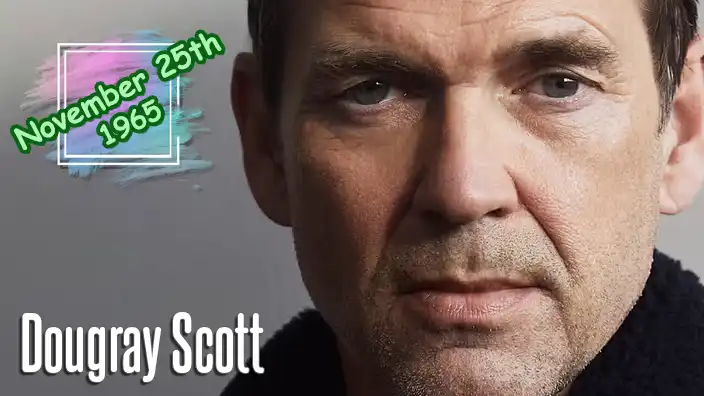
November 25, 1965, in Glenrothes, Scotland

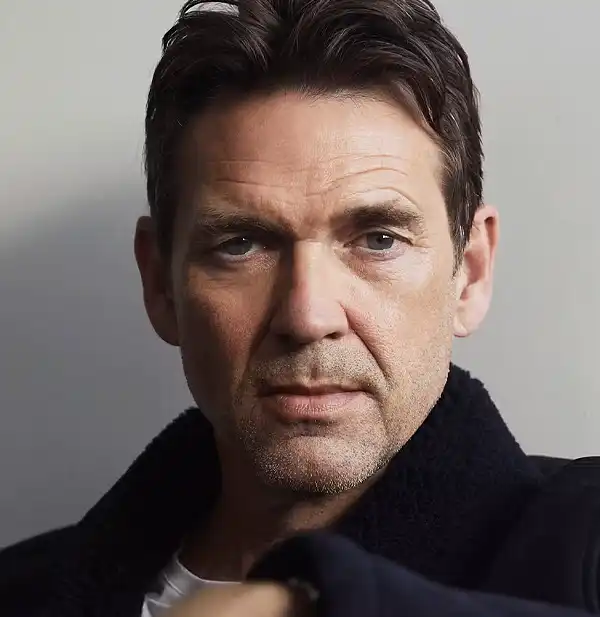
Dougray Scott is an internationally recognized Scottish actor and producer whose accomplished career spans Hollywood blockbusters, British television dramas, romantic comedies, historical productions, and psychological thrillers. Best known for his performances in Mission: Impossible 2, Ever After, Desperate Housewives, and the award-winning crime drama Crime, Scott has established himself as one of Scotland's most versatile performers. His commanding screen presence, distinctive voice, and ability to portray charming gentlemen as convincingly as thoroughly unpleasant villains have earned him considerable recognition throughout the entertainment industry. He has played princes, criminals, detectives, military officers, and historical figures, although his professional résumé nearly included retractable metal claws and a licence to kill. Hollywood scheduling departments, unfortunately, had other ideas.
Born Stephen Dougray Scott in Glenrothes, Fife, Scotland, he grew up in a family with connections to both healthcare and entertainment. His mother, Elma, worked as a nurse, while his father, Allan, was an actor and salesman. Scott attended Auchmuty High School before pursuing his growing interest in theatrical performance at what is now Fife College. His experiences there encouraged him to continue his education at the Royal Welsh College of Music and Drama in Cardiff, where he received recognition as the most promising drama student. His professional name incorporates his French grandmother's surname, Dougray, which he adopted because another actor was already registered under the name Stephen Scott. It was an early lesson in the peculiarities of show business, where even having your own name does not necessarily guarantee exclusive rights to it.
Following his formal training, Scott began developing his acting career through theatrical productions and British television appearances. His early stage work included Scottish national theatre productions, where he gained valuable experience performing before live audiences. Among his notable theatrical credits were The Rover, The Power and the Glory, and Unidentified Human Remains and the True Nature of Love. These productions allowed him to explore complex characters while developing the emotional intensity and physical confidence that would later distinguish his screen performances. Unlike actors who become overnight celebrities through a single television appearance, Scott spent years learning his profession in an environment where forgetting a line could not be corrected by simply asking the director for another take.
Scott's early television appearances included roles in popular British productions such as Taggart, Lovejoy, Stay Lucky, and The Crow Road. These programs introduced him to increasingly wider audiences while allowing him to explore crime dramas, comedy, mystery, and character-driven storytelling. His more substantial television breakthrough arrived with the ITV military drama Soldier Soldier, in which he portrayed Major Rory Taylor. The series followed the professional and personal experiences of British Army personnel, combining military responsibilities with the complications of family life and relationships. Scott's performance demonstrated his ability to portray characters occupying positions of authority while revealing the personal vulnerabilities concealed beneath their professional obligations. The uniform certainly helped, although an impressive military bearing would later prove equally useful when attempting to take over the world.
During the 1990s, Dougray Scott began establishing himself in feature films, appearing in productions including Princess Caraboo (1994) and Twin Town (1997). The latter, a darkly humorous British crime comedy set in Swansea, Wales, featured brothers Rhys Ifans and Llŷr Ifans as two troublesome young men whose misadventures produce increasingly disastrous consequences. Scott's involvement in the film demonstrated his willingness to embrace unconventional characters and productions that did not necessarily conform to traditional Hollywood storytelling. British independent cinema provided him with opportunities to explore darker humor and morally complicated personalities, qualities that would become recurring features of his acting career.
Scott also appeared in Regeneration (1997), a historical drama adapted from Pat Barker's novel examining the psychological consequences of the First World War. Known in the United States as Behind the Lines, the film explores the experiences of military personnel receiving psychiatric treatment at Craiglockhart War Hospital in Scotland. Its treatment of psychological trauma, military duty, and the human cost of warfare contrasted considerably with more conventional action-oriented war movies. Scott's participation in productions of this nature illustrated his interest in serious dramatic material long before international audiences became familiar with his performances in major Hollywood action films.
International recognition increased substantially in 1998 when Scott appeared in Deep Impact, the science fiction disaster movie directed by Mimi Leder. Featuring an ensemble cast including Morgan Freeman, Robert Duvall, Téa Leoni, Elijah Wood, and Vanessa Redgrave, the film follows humanity's efforts to confront a potentially civilization-ending comet approaching Earth. Unlike disaster movies that concentrate almost exclusively on spectacular destruction, Deep Impact devoted considerable attention to personal relationships and the emotional consequences of an impending global catastrophe. Scott's appearance in the commercially successful production introduced him to a wider international audience, although his next major film would involve considerably more romance and substantially fewer astronomical objects threatening the planet.
Scott's international breakthrough came with his portrayal of Prince Henry in Ever After: A Cinderella Story (1998), starring Drew Barrymore, Anjelica Huston, and Melanie Lynskey. Directed by Andy Tennant, the movie presented a refreshing reinterpretation of the traditional Cinderella fairy tale, replacing many of its magical elements with historical settings, personal determination, and a heroine capable of rescuing herself. Scott's Prince Henry was considerably more complicated than the charming but relatively interchangeable royal figures commonly encountered in fairy tales. His character possessed intelligence, curiosity, rebellious tendencies, and a growing appreciation of a young woman whose abilities extended considerably beyond looking attractive in formal evening wear.
The success of Ever After established Dougray Scott as a romantic leading man and introduced him to countless audiences who had previously been unfamiliar with his British television work. His chemistry with Drew Barrymore contributed significantly to the film's enduring popularity, while its humorous treatment of traditional fairy-tale conventions distinguished it from earlier adaptations. Scott later expressed considerably less enthusiasm for certain aspects of the period costumes, particularly the historically inspired codpiece he was required to wear. Apparently, becoming a fairy-tale prince comes with occupational hazards rarely mentioned in the original bedtime stories.
Hollywood soon recognized Scott's potential in considerably less romantic circumstances. Tom Cruise personally selected him to portray Sean Ambrose, the principal antagonist in Mission: Impossible 2 (2000). Directed by renowned action filmmaker John Woo, the movie follows Impossible Missions Force agent Ethan Hunt as he attempts to prevent a dangerous biological weapon from falling into the wrong hands. Scott's Ambrose is a former intelligence operative whose ambition, intelligence, and ruthlessness make him a formidable opponent. The role required Scott to combine physical action with the psychological intensity necessary to portray a villain capable of challenging one of cinema's most resourceful secret agents.
Mission: Impossible 2 became the highest-grossing film worldwide in 2000, significantly increasing Scott's international profile. The production featured elaborate action sequences, spectacular motorcycle stunts, dramatic confrontations, and John Woo's characteristic visual style, including slow-motion photography and an enthusiastic appreciation of airborne doves. Scott's transformation from romantic prince to ruthless international criminal demonstrated his impressive versatility, although it also introduced audiences to a recurring feature of his Hollywood career: if Dougray Scott appeared in a suspiciously expensive suit, there was a reasonable possibility that something unpleasant was about to happen.
One of the most fascinating chapters of Scott's career concerns a role he never actually played. While working on Mission: Impossible 2, Scott had been cast as Logan, better known as Wolverine, in Bryan Singer's X-Men (2000). Unfortunately, production delays on the Tom Cruise movie, compounded by an injury Scott sustained during filming, prevented him from fulfilling his commitment to the superhero production. The role ultimately went to Australian actor Hugh Jackman, whose performance became one of the most successful and enduring character portrayals in superhero cinema. Scott's experience remains one of Hollywood's most frequently discussed examples of how production schedules can dramatically alter the direction of an actor's career.
Scott has subsequently discussed the circumstances surrounding his departure from X-Men, acknowledging the disappointment while continuing to pursue other opportunities. Rather than allowing the missed role to define his professional identity, he developed an extensive body of work across numerous genres. His career also attracted speculation that he might succeed Pierce Brosnan as James Bond, although Daniel Craig ultimately secured the role. Between Wolverine, James Bond, and his appearance opposite Tom Cruise, Scott accumulated an impressive collection of connections to major action franchises. Unfortunately, collecting associated press coverage is not quite the same as collecting the corresponding paychecks.
In 2001, Scott starred opposite Kate Winslet in Enigma, a historical romantic thriller directed by Michael Apted and adapted from Robert Harris's novel. Set during the Second World War, the movie follows the activities of British codebreakers working at Bletchley Park, where deciphering encrypted German communications became critically important to the Allied war effort. Scott portrayed Tom Jericho, a gifted mathematician and cryptanalyst whose professional responsibilities become entangled with personal mysteries and romantic complications. The production combined historical intrigue, espionage, psychological suspense, and the extraordinary intellectual challenges faced by wartime intelligence personnel.
Although Enigma incorporates fictional characters and dramatic liberties, it helped introduce wider audiences to the remarkable achievements of the men and women who worked at Bletchley Park. Scott's portrayal of Jericho required a considerably different approach from his previous performance as Sean Ambrose. Rather than relying upon physical intimidation and explosive confrontations, the character's strengths involved intelligence, concentration, emotional determination, and the ability to recognize patterns within apparently incomprehensible communications. For once, Scott was attempting to save civilization using mathematics rather than motorcycles, firearms, or a spectacularly expensive special-effects budget.
Scott demonstrated another dimension of his acting ability in Ripley's Game (2002), a psychological thriller directed by Liliana Cavani and based on Patricia Highsmith's novel. Starring John Malkovich as the sophisticated but morally disturbing Tom Ripley, the movie examines manipulation, desperation, and the consequences of becoming involved with individuals possessing remarkably flexible ethical standards. Scott portrayed Jonathan Trevanny, a terminally ill picture framer drawn into Ripley's dangerous activities. His character's vulnerability and increasingly difficult moral decisions provided a powerful contrast to the calculating personality of Ripley. The film illustrated Scott's ability to portray ordinary individuals trapped in extraordinary circumstances rather than simply relying upon the commanding authority that characterized many of his earlier performances.
His career continued to diversify through productions including To Kill a King (2003), in which he portrayed Thomas Fairfax, the prominent Parliamentary military commander during the English Civil War. Appearing alongside Tim Roth as Oliver Cromwell and Rupert Everett as King Charles I, Scott explored the complicated relationships between military responsibility, political loyalty, personal conscience, and revolutionary change. Preparing for the role involved researching Fairfax's life, developing his horse-riding skills, and studying historical military tactics. Scott's commitment to understanding the character reflected the seriousness with which he approached historical performances. Playing a seventeenth-century general apparently required rather more preparation than purchasing an impressive hat and shouting instructions at assembled infantry.
In 2005, Scott appeared alongside Jennifer Connelly in Dark Water, an American psychological horror movie directed by Walter Salles. Adapted from the Japanese film of the same name, the production follows a mother and daughter attempting to establish a new life in an unsettling apartment building. Scott portrayed Kyle, the estranged husband involved in an increasingly difficult custody dispute. The movie relied upon psychological tension, emotional isolation, mysterious circumstances, and atmospheric storytelling rather than exclusively depending upon conventional horror techniques. Scott's contribution to the production further demonstrated his ability to work within stories where personal relationships and emotional uncertainties were as important as the supernatural elements themselves.
Scott became increasingly familiar to American television audiences during the mid-2000s. In the biblical miniseries The Ten Commandments (2006), he portrayed Moses, taking on one of history's most widely recognized religious figures. The production explored the traditional biblical account of Moses leading the Israelites out of Egypt, combining elaborate historical settings with themes of faith, leadership, responsibility, and freedom. His appearance in the miniseries demonstrated his willingness to undertake characters carrying considerable cultural and religious significance. Having already portrayed royalty, military commanders, and international criminals, Scott could now add dividing the Red Sea to his increasingly unconventional list of professional qualifications.
The same year, Scott starred in the NBC crime series Heist, portraying Mickey O'Neil, a professional thief involved in an ambitious robbery scheme targeting luxury jewelry stores in Beverly Hills. Although the series was short-lived, its combination of criminal planning, personal relationships, suspense, and humor provided Scott with another opportunity to explore morally complicated characters. His performance reinforced his suitability for roles involving intelligence, confidence, and considerable determination, particularly when those qualities were being employed for purposes unlikely to receive approval from local law enforcement agencies.
One of Scott's most recognizable American television roles arrived when he joined the cast of Desperate Housewives during its third season. The enormously popular ABC comedy-drama, created by Marc Cherry, examined the complicated lives of suburban residents living on the seemingly picturesque Wisteria Lane. Beneath its carefully maintained gardens, attractive houses, and friendly neighborhood gatherings lurked an astonishing collection of secrets, romantic complications, rivalries, and criminal activities. Scott portrayed Ian Hainsworth, a charming British gentleman who became romantically involved with Susan Mayer, played by Teri Hatcher.
Ian's storyline developed while Susan's longtime love interest, Mike Delfino, was in a coma. At the same time, Ian was dealing with his own emotionally difficult circumstances involving his comatose wife. The relationship introduced considerable romantic uncertainty into the series, eventually developing into a complicated love triangle. Scott's sophisticated screen presence and British charm made him a convincing romantic rival, while his performance introduced audiences primarily familiar with his action roles to a considerably more sentimental character. Having previously faced Ethan Hunt in international espionage, Scott discovered that negotiating romantic relationships on Wisteria Lane could be an equally hazardous occupation.
His involvement with Desperate Housewives also brought recognition through Screen Actors Guild Award nominations shared with the ensemble cast. The series became an international television phenomenon, attracting audiences through its distinctive combination of melodrama, dark humor, mystery, and social satire. Scott's departure following the third season concluded a particularly memorable romantic storyline, although the experience demonstrated his adaptability to American network television. Wisteria Lane was certainly an unusual neighborhood, where a homeowners' association meeting could probably have provided sufficient material for an entire season of a criminal investigation series.
In 2007, Dougray Scott appeared in Hitman, an action thriller adapted from the successful video game franchise of the same name. Starring Timothy Olyphant as the genetically engineered professional assassin Agent 47, the film follows an international conspiracy involving political intrigue, intelligence agencies, and competing criminal interests. Scott portrayed Mike Whittier, an Interpol investigator determined to apprehend the elusive assassin. His character provided a law enforcement perspective within a story populated by professional killers and individuals whose understanding of international law appeared to be somewhat limited. The role marked another contribution to Scott's substantial collection of action films and demonstrated his suitability for characters operating within morally complicated environments.
Scott returned to British and Irish television drama with Father & Son, originally broadcast in Ireland in 2009 and subsequently shown in the United Kingdom. He portrayed Michael O'Connor, a former criminal attempting to establish a respectable life while confronting the consequences of his troubled past. The production explored family relationships, loyalty, criminal responsibility, and the difficulty of escaping previous mistakes. Scott's performance received considerable critical attention, particularly for its emotional complexity and portrayal of a man struggling to reconcile his responsibilities as a father with the dangerous circumstances surrounding his family. The role illustrated his ability to make vulnerability as convincing as the intimidating confidence frequently associated with his Hollywood characters.
Another notable television appearance arrived with the BBC's 2009 adaptation of John Wyndham's classic science fiction novel The Day of the Triffids. Scott portrayed Dr. Bill Masen, a scientist whose knowledge of a dangerous species of mobile plants becomes increasingly important following a worldwide catastrophe. The production featured an impressive ensemble cast including Joely Richardson, Brian Cox, Vanessa Redgrave, and Eddie Izzard. Its exploration of civilization's dependence on technology, environmental manipulation, and humanity's ability to survive extraordinary circumstances provided a modern interpretation of Wyndham's influential novel. For Scott, it also represented a career milestone in which even the vegetation had become professionally hostile. Gardening would never look quite the same again.
In 2011, Scott portrayed legendary Scottish football manager Sir Matt Busby in the BBC television drama United. The production examined the history of Manchester United's celebrated young team, commonly known as the Busby Babes, and the devastating Munich air disaster of 1958. Scott's portrayal of Busby explored the manager's determination, commitment to his players, and the immense personal and professional challenges that followed the tragedy. The production carried particular significance for Scott, whose personal enthusiasm for football is well documented. His performance provided a sensitive interpretation of one of the most influential figures in British football history.
That same year, Scott appeared in the critically acclaimed biographical drama My Week with Marilyn, starring Michelle Williams as Marilyn Monroe and Kenneth Branagh as Laurence Olivier. Scott portrayed American playwright Arthur Miller, who was married to Monroe during the production of The Prince and the Showgirl. The movie examined Monroe's experiences while filming in Britain, exploring the tensions between celebrity, artistic ambition, public expectations, and personal insecurity. Scott's portrayal of Miller required a restrained and thoughtful approach, reflecting the playwright's intellectual reputation and complicated relationship with one of Hollywood's most recognizable personalities.
Scott also appeared alongside his wife, English actress Claire Forlani, in the romantic comedy Love's Kitchen (2011). He portrayed Rob Haley, a talented chef attempting to rebuild his personal and professional life by transforming a countryside pub into a successful dining establishment. Forlani appeared as a food critic, while celebrity chef Gordon Ramsay made an appearance as himself. The production combined romance, culinary ambition, personal recovery, and the considerable challenges of operating a restaurant. Fortunately, Scott's character had considerably more experience dealing with dangerous situations than most professional chefs, although surviving Gordon Ramsay's kitchen commentary might still have presented a formidable challenge.
Science fiction enthusiasts welcomed Scott into another celebrated British entertainment franchise when he appeared in the Doctor Who episode Hide in 2013. Starring Matt Smith as the Eleventh Doctor and Jenna Coleman as Clara Oswald, the story follows the Doctor's investigation of mysterious supernatural activity at an isolated mansion. Scott portrayed Professor Alec Palmer, a paranormal investigator working alongside psychic Emma Grayling, played by Jessica Raine. The episode combined traditional ghost-story elements with science fiction, emotional drama, and the Doctor's characteristic tendency to discover that seemingly straightforward mysteries are considerably more complicated than initially expected.
Scott's 2013 thriller Last Passenger presented another compelling example of his ability to sustain tension within confined circumstances. He portrayed Lewis Shaler, a doctor traveling aboard a late-night train with his young son when the journey develops into a potentially catastrophic situation. Unlike large-scale action movies that constantly relocate their characters, the film concentrated much of its suspense within the restricted environment of railway carriages. Scott's performance balanced parental concern, professional determination, and the urgent need to understand what was happening. Anyone who has experienced Britain's occasionally unpredictable railway services might appreciate the movie's underlying suggestion that simply arriving at one's intended destination should never be taken entirely for granted.
His international action career continued through films and television productions including Taken 3, Strike Back, and Snatch. In Taken 3 (2014), Scott appeared alongside Liam Neeson, Forest Whitaker, Famke Janssen, and Maggie Grace in the third installment of the successful action franchise. He portrayed Stuart St. John, a character whose involvement in the film's complicated events brought him into conflict with Neeson's famously determined Bryan Mills. Given Mills' considerable reputation for possessing a particular set of skills, becoming involved in his personal affairs was never likely to be a sensible career decision. Scott, however, had already accumulated sufficient experience opposing virtually indestructible Hollywood action heroes.
Horror audiences encountered Scott in productions including Hemlock Grove, The Vatican Tapes, and Fear the Walking Dead. In the Netflix supernatural horror series Hemlock Grove, he portrayed Dr. Norman Godfrey, a psychiatrist connected to a prominent family whose history contains considerably more than its fair share of disturbing secrets. His subsequent appearance in Fear the Walking Dead introduced him as Thomas Abigail, a significant figure in the personal history of Victor Strand. These productions demonstrated his continuing willingness to explore dramatic situations involving psychological uncertainty, supernatural threats, and complicated human relationships. Apparently, even the collapse of civilization could not guarantee Scott a peaceful afternoon.
In 2019, Scott entered the expanding universe of DC Comics television adaptations when he joined the cast of Batwoman. He portrayed Jacob Kane, the father of Kate Kane and commander of a private security organization known as the Crows. The character's experiences involved complicated family relationships, personal losses, professional responsibilities, and disagreements concerning Gotham City's masked vigilantes. Scott brought authority and emotional depth to the role, emphasizing the conflict between Kane's responsibilities as a security commander and his responsibilities as a father. Although Scott had missed the opportunity to portray Wolverine, his appearance in Batwoman ensured that comic book adaptations remained part of his extensive acting résumé.
One of the most significant achievements in Dougray Scott's career came through his portrayal of Detective Inspector Ray Lennox in Crime, a television adaptation of Scottish author Irvine Welsh's novel. Set against the atmospheric backdrop of Edinburgh, the series follows a determined detective investigating disturbing criminal cases while struggling with addiction, psychological trauma, and personal demons. Scott's interpretation of Lennox combined emotional vulnerability, investigative intelligence, frustration, determination, and an occasionally overwhelming sense of responsibility. The character was considerably more complicated than the stereotypical television detective who solves every murder before returning home to enjoy a quiet evening and a conveniently uncomplicated personal life.
Scott's performance in Crime earned him the 2022 BAFTA Scotland Award for Actor in Television and the International Emmy Award for Best Performance by an Actor. These prestigious honors represented major recognition of his dramatic abilities and the dedication he brought to the character. His involvement in the production extended beyond acting, as he also served as an executive producer. The awards were particularly meaningful in demonstrating the success of a Scottish production centered upon Scottish characters and storytelling. After decades of working internationally, Scott achieved some of his most distinguished professional recognition by returning to the culture and surroundings that had originally inspired his acting ambitions.
Scott has continued expanding his television and film career through productions such as Vigil, A Town Called Malice, The Crow Girl, Sherlock & Daughter, Exterritorial, and My Oxford Year. These projects demonstrate the remarkable variety of his professional interests, encompassing military thrillers, crime dramas, literary adaptations, romantic storytelling, and international suspense. His portrayal of Professor Moriarty in Sherlock & Daughter added another celebrated fictional antagonist to his résumé. Meanwhile, his appearance in the German-language thriller Exterritorial presented additional linguistic and dramatic challenges. For an actor whose career has already involved secret agents, investigators, supernatural creatures, and murderous conspiracies, the prospect of learning additional dialogue in another language seems almost refreshingly straightforward.
Away from his professional activities, Dougray Scott maintains strong connections to Scotland and has expressed considerable enthusiasm for football, particularly Hibernian Football Club. His appreciation of Scottish culture and storytelling has remained evident throughout his career, including his involvement in projects that promote the country's creative industries. Scott was previously married to casting director Sarah Trevis, with whom he has twins. He married actress Claire Forlani in 2007 during a ceremony in Italy, and the couple have a son. His association with performers and entertainment professionals has extended throughout his personal and professional life, with fellow Scottish actor Ewan McGregor notably serving as best man at his first wedding.
Dougray Scott's extensive career demonstrates that lasting success in the entertainment industry is not necessarily determined by securing one particular role. Although his missed opportunity to portray Wolverine remains a fascinating piece of Hollywood history, his achievements extend considerably beyond the character that slipped through his fingers. From his theatrical beginnings in Scotland to his international success in Hollywood, American television, British drama, and award-winning crime productions, Scott has continually demonstrated intelligence, versatility, and a willingness to challenge himself professionally. He has confronted Tom Cruise, charmed Cinderella, investigated supernatural plants, navigated the romantic minefield of Wisteria Lane, and earned international recognition for portraying a deeply troubled Scottish detective. As career achievements go, that is an impressive collection for a man who never needed those metal claws after all.
IMDb – Dougray Scott – Filmography, television appearances, acting credits, videos, and awards. IMDb – Dougray Scott Biography – Personal background, theatrical training, family information, and career trivia. Fife College – Dougray Scott – Scottish upbringing, education, theatrical training, and professional achievements. TV Guide – Dougray Scott – Celebrity biography, interesting facts, award wins, and nominations. TV Insider – Dougray Scott – Early life, professional name, Hollywood breakthrough, and television career. Rotten Tomatoes – Dougray Scott – Movie credits, career highlights, and critical reception. British Film Database – Dougray Scott – British cinema appearances and feature film credits. TVmaze – Dougray Scott – Television productions, character appearances, and acting history. Wikipedia – Dougray Scott – Supplementary biographical information, filmography, television performances, and awards. References & Sources