October 21, 1957, in Los Angeles, California

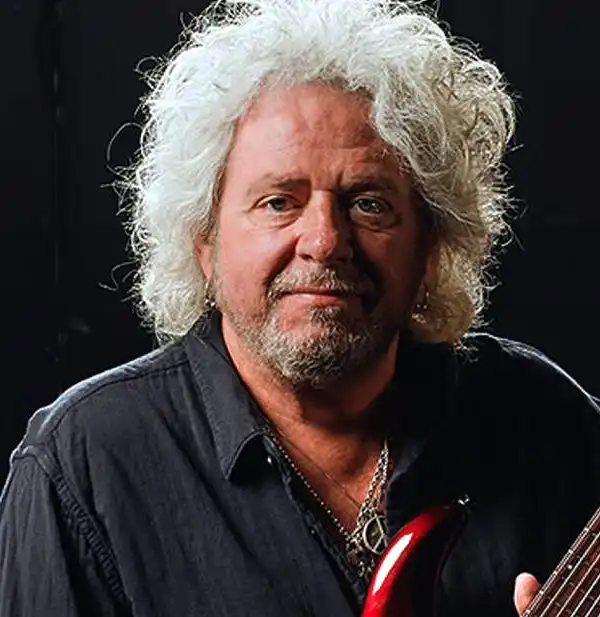
Steven Lee Lukather was born on October 21, 1957, in the San Fernando Valley of Los Angeles, California, and grew up surrounded by the sounds of an extraordinary period in American popular music. Known affectionately as "Luke" to fellow musicians and fans, he would become one of the most accomplished guitarists, singers, songwriters, and record producers of his generation. As a founding member of the internationally successful rock band Toto, Lukather helped create some of the most recognizable songs in modern music, while his remarkable career as a session guitarist placed him on recordings by an astonishing collection of legendary performers. His playing has appeared across thousands of albums, spanning rock, pop, jazz, rhythm and blues, and numerous other musical styles. For anyone wondering how one guitarist could possibly find the time to contribute to so many recordings, the most reasonable explanation is that Lukather somehow discovered a way to squeeze additional hours into the working day.
Steve Lukather's fascination with music began during childhood, when his father gave him an inexpensive Kay acoustic guitar and a copy of the Beatles album Meet the Beatles! when he was seven. The gift proved life-changing, particularly after Lukather became captivated by the sounds of George Harrison and the emerging British rock movement. Like countless aspiring musicians of the period, he spent hours listening to records and attempting to reproduce the sounds that fascinated him. Unlike most of those youngsters, however, Lukather developed the extraordinary technical ability and musical understanding necessary to turn his enthusiasm into a professional career. He initially taught himself to play by ear, absorbing influences from the Beatles, Jimi Hendrix, Eric Clapton, Jeff Beck, and other celebrated guitarists. His musical interests eventually expanded to include jazz and fusion, giving him a broader understanding of harmony, improvisation, and musical arrangement. What began as a childhood fascination would become a lifelong occupation, proving that occasionally a child's noisy new hobby really does lead somewhere worthwhile.
During his teenage years, Lukather attended Grant High School in Van Nuys, California, where he developed friendships with several young musicians who would become central figures in his professional life. Among them were keyboardist David Paich and drummer Jeff Porcaro, along with Jeff's brothers Steve and Mike Porcaro. These connections would eventually help establish Toto, but their importance extended beyond the formation of a successful rock band. The young musicians were already developing a reputation for exceptional ability within the Los Angeles music community, where technical skill, versatility, and reliability were essential qualities for professional studio work. Lukather also studied with respected jazz guitarist Jimmy Wyble, who helped him develop his knowledge of music theory, reading, and arranging. These lessons provided a valuable foundation for the demanding work that awaited him in recording studios, where musicians were often expected to understand complicated arrangements immediately and deliver polished performances without requiring endless rehearsals.
Lukather's early professional opportunities came through the thriving Los Angeles recording industry of the 1970s. He began working with established musicians and participated in recording sessions that introduced him to the exacting standards of professional studio production. His association with drummer Jeff Porcaro and keyboardist David Paich proved particularly valuable, as both were becoming highly respected session musicians. Lukather also worked with singer Boz Scaggs, whose recordings helped establish the sophisticated mixture of rock, soul, and rhythm and blues that would become associated with the West Coast sound. The Los Angeles session scene demanded musicians who could adapt quickly to different artists, musical arrangements, and production techniques. Lukather possessed precisely those abilities, combining impressive technical skill with an instinctive understanding of what a song required. He could deliver a delicate acoustic passage, a polished rhythm guitar arrangement, or an explosive electric solo, sometimes before the producer had finished explaining what was needed.
In 1976, David Paich and Jeff Porcaro invited Lukather to join a new band alongside singer Bobby Kimball, bassist David Hungate, and keyboardist Steve Porcaro. The group became known as Toto, a name that would soon become familiar to music audiences around the world. Unlike many rock bands that developed gradually through local performances, Toto emerged from a group of musicians who already possessed considerable professional recording experience. Their technical abilities allowed them to combine sophisticated arrangements with accessible melodies, creating a distinctive sound that incorporated rock, pop, jazz, funk, and rhythm and blues. Lukather became the band's principal guitarist and an increasingly important songwriter and vocalist, while the collective talents of its members helped establish Toto as one of the most accomplished musical groups of its era. Critics sometimes questioned whether a band composed of professional studio musicians could possess the personality and excitement associated with traditional rock groups. Toto responded by making successful records, selling millions of albums, and leaving the critics to argue among themselves.
Toto released its self-titled debut album in 1978, introducing audiences to a polished musical style that balanced commercial appeal with exceptional instrumental performances. The album's most successful single, "Hold the Line," became an international hit and established the group as a major new force in rock music. Written by David Paich, the song featured Bobby Kimball's powerful vocals, a memorable keyboard introduction, and Lukather's distinctive guitar work. His solo demonstrated the combination of melodic sensitivity and technical precision that would become one of his trademarks. The album also included "I'll Supply the Love" and "Georgy Porgy," recordings that highlighted the band's ability to explore different musical styles without losing its recognizable identity. The success of the debut album earned Toto a Grammy nomination for Best New Artist and established Lukather as a guitarist whose talents could attract attention even within a band filled with exceptional musicians.
Following their successful debut, Toto released Hydra in 1979 and Turn Back in 1981, albums that demonstrated the group's growing musical ambition. Although neither matched the commercial impact of the first record, both allowed Lukather and his bandmates to explore more elaborate arrangements, harder rock influences, and sophisticated instrumental passages. Lukather's guitar playing became increasingly prominent, while his contributions as a songwriter and vocalist continued developing. During this period, Toto also experienced the pressures associated with maintaining commercial success in an industry where record companies expected each new release to outperform its predecessor. The band members remained committed to producing carefully arranged music, even when popular trends favored simpler approaches. Their dedication to musicianship would eventually produce one of the most successful albums of the early 1980s, although reaching that achievement required considerable determination and a recording budget that probably caused several accountants to develop nervous habits.
The turning point arrived in 1982 with the release of Toto IV, an album that transformed Toto into international superstars. Featuring the enormous hits "Rosanna," "Africa," and "I Won't Hold You Back," the record showcased the group's exceptional musicianship, sophisticated songwriting, and meticulous production. "Rosanna," written by David Paich, combined an infectious rhythm, powerful vocals, and a memorable guitar solo from Lukather, becoming one of Toto's defining recordings. The song reached number two on the American Billboard Hot 100 and received widespread critical recognition. "Africa," written by Paich and Jeff Porcaro, became an even greater commercial success, reaching number one in the United States in 1983. Its atmospheric keyboards, intricate rhythms, and unforgettable chorus helped establish it as one of the most enduring songs of the decade. Meanwhile, "I Won't Hold You Back," written by Lukather, demonstrated his considerable talents as a songwriter and lead vocalist, becoming another major international hit.
The success of Toto IV culminated at the 1983 Grammy Awards, where Toto dominated the ceremony with six awards, including Album of the Year and Record of the Year for "Rosanna." Lukather also received recognition for his songwriting contribution to George Benson's "Turn Your Love Around," which won Best Rhythm & Blues Song. The achievements confirmed Toto's position among the most successful recording groups of the period and established Lukather as a major figure in contemporary music. Yet the recognition represented more than commercial popularity. The album demonstrated that musicians with extensive studio experience could combine technical excellence with songs that connected with mainstream audiences. Toto's music was meticulously arranged and performed, but it retained enough energy and emotional appeal to become enormously popular. For Lukather, the awards were recognition of years spent developing his craft, although carrying home several golden gramophones probably made the evening considerably more enjoyable.
While Toto was enjoying international success, Steve Lukather was simultaneously building an extraordinary reputation as one of Los Angeles's most sought-after session guitarists. During the late 1970s and throughout the 1980s, his playing appeared on recordings by Michael Jackson, George Benson, Aretha Franklin, Diana Ross, Barbra Streisand, Elton John, Donna Summer, Joni Mitchell, and numerous other prominent performers. He also worked with artists including Lionel Richie, Don Henley, Olivia Newton-John, and the Pointer Sisters, contributing to recordings that helped define the sound of popular music during the period. His versatility allowed him to move effortlessly between musical genres, while his ability to create memorable guitar parts made him particularly valuable to producers. In an era before digital recording software allowed endless manipulation of individual performances, musicians were expected to arrive prepared, understand the material, and deliver excellent results. Lukather became one of the professionals producers trusted to accomplish precisely that, often while juggling several recording sessions in a single day.
One of Lukather's most celebrated session contributions came during the recording of Michael Jackson's landmark 1982 album Thriller. Working with producer Quincy Jones and fellow musicians, including members of Toto, Lukather contributed guitar performances to one of the most commercially successful albums ever released. His work on "Beat It" is particularly notable, as he played the song's driving guitar parts while Eddie Van Halen supplied the famous solo. Lukather also contributed to other material associated with the album, including "Human Nature," a song co-written by Toto keyboardist Steve Porcaro and songwriter John Bettis. The involvement of several Toto musicians in Thriller demonstrated their importance within the Los Angeles recording community and their ability to contribute to recordings far beyond their own band. The album's extraordinary worldwide success introduced Lukather's guitar playing to an enormous audience, many of whom had no idea that the musician helping power Michael Jackson's recordings was also responsible for some of Toto's biggest hits.
Lukather's distinctive guitar style combines elements of rock, blues, jazz, and fusion, creating an approach that emphasizes melody, expressive phrasing, and technical precision. Although capable of performing extraordinarily fast and complicated passages, he has frequently emphasized the importance of playing what best serves the song rather than attempting to impress listeners with unnecessary displays of speed. His solos often feature fluid melodic lines, carefully controlled bends, expressive vibrato, and a powerful sense of rhythm. His extensive studio experience also encouraged him to develop a sophisticated understanding of guitar tone, amplification, and recording techniques. Over the years, he has become closely associated with Music Man guitars, particularly the signature models developed in collaboration with Ernie Ball Music Man. These instruments reflect his preferences for comfortable design, versatile electronics, and reliable performance, demonstrating that even a legendary guitarist occasionally appreciates equipment that behaves itself without requiring a stern conversation.
Despite his demanding recording schedule, Lukather remained deeply committed to Toto as the group navigated changing musical trends and personnel changes throughout the 1980s. Albums including Isolation in 1984, Fahrenheit in 1986, and The Seventh One in 1988 demonstrated the band's continuing musical development. Lukather assumed increasingly prominent vocal responsibilities and contributed more extensively to the songwriting process. The group's sound evolved to incorporate contemporary production techniques while retaining the sophisticated arrangements that had established its reputation. Songs such as "I'll Be Over You" and "Pamela" helped maintain Toto's international popularity, particularly in markets where the band's melodic rock style continued attracting enthusiastic audiences. Although the group's commercial fortunes varied, Lukather's musicianship remained a constant element, and his dedication helped preserve Toto's identity during periods of considerable change.
In 1989, Lukather released his first solo album, appropriately titled Lukather, providing an opportunity to explore musical ideas beyond Toto's established sound. The album featured contributions from numerous accomplished musicians and demonstrated his abilities as a singer, songwriter, and guitarist working under his own name. His solo career continued with Candyman in 1994, Luke in 1997, Santamental in 2003, Ever Changing Times in 2008, All's Well That Ends Well in 2010, and Transition in 2013. These recordings explored rock, blues, jazz fusion, and more personal songwriting, allowing Lukather greater freedom to experiment with arrangements and musical influences. His solo projects also demonstrated that his identity extended beyond the famous Toto recordings, although audiences naturally continued associating him with the band that had first brought him international recognition. Escaping the shadow of "Africa" was always going to be difficult, particularly when the song remained perfectly capable of following him into virtually any radio station on the planet.
A particularly painful moment in Toto's history occurred in 1992 when drummer Jeff Porcaro died unexpectedly. Porcaro had been one of Lukather's closest friends and musical collaborators, and his death profoundly affected the surviving members of the band. His extraordinary drumming had been central to Toto's sound, and replacing his musical contribution was an enormous challenge. The group nevertheless continued, bringing in accomplished drummer Simon Phillips, whose technical ability and distinctive playing style helped establish a new chapter. Lukather assumed an increasingly important leadership role, helping guide Toto through changing circumstances while preserving the musical standards associated with its earlier recordings. The experience reinforced the importance of the friendships and creative relationships that had shaped his career since his teenage years. For Lukather, Toto was never simply a commercial enterprise; it represented decades of shared musical experiences, personal relationships, and memories that extended far beyond the recording studio.
In addition to his work with Toto and his solo recordings, Lukather developed a reputation for memorable collaborations with other distinguished guitarists. His friendship and musical partnership with jazz fusion guitarist Larry Carlton produced the acclaimed live album No Substitutions: Live in Osaka, which won the Grammy Award for Best Pop Instrumental Album in 2002. The recording captured two exceptional musicians exploring their shared enthusiasm for improvisation, expressive guitar playing, and sophisticated arrangements. Lukather has also performed with guitarists such as Joe Satriani and Steve Vai, participating in concerts that showcase different approaches to instrumental rock music. These collaborations demonstrate the respect he commands among fellow musicians, many of whom recognize his ability to combine technical excellence with musical sensitivity. When guitarists of this caliber share a stage, the audience can generally expect an extraordinary performance, while the equipment technicians may reasonably expect a particularly demanding evening.
Another important musical relationship in Lukather's career has been his association with former Beatles drummer Ringo Starr. Lukather became a member of Ringo Starr & His All-Starr Band, joining a rotating collection of accomplished musicians performing classic songs from their respective careers. His participation has allowed him to perform alongside one of the artists whose music originally inspired his childhood fascination with the guitar. The connection carries particular significance because the Beatles played such an important role in Lukather's earliest musical development. Having received Meet the Beatles! as a child, he eventually found himself sharing concert stages with the group's legendary drummer. He has also recorded with Paul McCartney and George Harrison during his career, making his connections with the Beatles especially remarkable. For a youngster who once sat listening to their records while learning his first guitar chords, the opportunity to work with musicians he admired must have felt like an extraordinary journey coming full circle.
Toto experienced a period of inactivity beginning in 2008, but the group's story was far from finished. In 2010, several members reunited for performances supporting bassist Mike Porcaro, who had been diagnosed with amyotrophic lateral sclerosis, commonly known as ALS. The reunion eventually developed into further touring and recording activities, demonstrating the continuing affection audiences held for the band's music. Toto released Toto XIV in 2015, presenting new material while maintaining the polished musicianship associated with its earlier recordings. The group continued performing internationally, although its lineup changed as members pursued other projects or stepped away from touring. Lukather remained the only founding member who had maintained a continuous association with Toto throughout its history, serving as an essential link between the band's original achievements and its later performances.
The enduring popularity of Toto's music received an unexpected boost during the streaming era, particularly through renewed enthusiasm for "Africa." The song became an internet phenomenon, attracting millions of new listeners through streaming platforms, online videos, and social media discussions. In 2018, the American rock band Weezer released a successful cover version following an online fan campaign, introducing the composition to another generation. The renewed attention demonstrated the remarkable ability of classic recordings to find new audiences decades after their original release. For Lukather and his fellow musicians, the resurgence provided further evidence that carefully crafted songs could survive dramatic changes in popular music and technology. The internet may have transformed the way audiences discover music, but apparently it still appreciates a good chorus about rain in Africa.
Lukather continued developing his solo career with I Found the Sun Again in 2021 and Bridges in 2023. The latter project was particularly significant because it reunited him with several longtime musical collaborators, including David Paich and Joseph Williams, reflecting the enduring creative relationships associated with Toto. The album combined melodic rock, sophisticated arrangements, and Lukather's unmistakable guitar playing, demonstrating his continuing enthusiasm for recording original music. His work also revealed an appreciation for the traditional recording process, emphasizing performances by accomplished musicians rather than relying entirely on computer-generated arrangements. While modern technology has transformed music production, Lukather has consistently championed the importance of musicians listening to one another and creating performances through genuine interaction. There is something reassuring about an accomplished guitarist who still believes the best way to record a guitar is to have someone who knows how to play one.
Beyond his musical recordings, Lukather has shared his experiences through interviews, public appearances, and his autobiography, The Gospel According to Luke, published in 2018. Written with journalist Paul Rees, the book explores his childhood, professional relationships, experiences with Toto, and extraordinary adventures within the recording industry. It offers a revealing account of the Los Angeles music scene during the 1970s and 1980s, when major recording studios were filled with exceptional musicians working on albums that would become part of popular music history. Lukather's storytelling is frequently humorous, outspoken, and occasionally colorful, reflecting a personality that has never been particularly enthusiastic about unnecessary formality. His recollections provide valuable insight into the realities of professional music-making, including the demanding schedules, creative disagreements, personal challenges, and remarkable friendships that accompanied his success.
Throughout his career, Lukather has received numerous awards and honors recognizing his contributions to music. His Grammy achievements include recognition for Toto's landmark recordings, his songwriting work, and his collaboration with Larry Carlton. He has also received accolades from guitar publications and fellow musicians, including recognition for his exceptional studio performances and his lasting influence on guitar playing. Toto was inducted into the Musicians Hall of Fame in Nashville in 2009, acknowledging the extraordinary technical accomplishments of the group's members. Such recognition is particularly appropriate for Lukather, whose career has consistently demonstrated that musical excellence involves more than performing a memorable solo. His contributions as an arranger, songwriter, producer, vocalist, and collaborator have helped shape recordings enjoyed by audiences around the world.
Steve Lukather's influence extends across generations of guitarists who admire his versatility, expressive playing, and ability to move between musical styles. His recordings provide examples of sophisticated rhythm guitar arrangements, memorable melodic solos, and the importance of understanding a song's overall musical structure. Young musicians studying his performances discover that his apparent ease is supported by decades of disciplined practice, musical knowledge, and professional experience. His career also illustrates the value of adaptability in an industry that continually changes its fashions, technology, and commercial expectations. From the analog recording studios of the 1970s to modern digital production and international concert tours, Lukather has remained committed to the fundamental importance of musicianship. The equipment may have changed, but the requirement to play the correct notes at the correct time has remained stubbornly consistent.
As a guitarist, singer, songwriter, and founding member of Toto, Steve Lukather has helped create a musical legacy that reaches far beyond any single band or recording. His work on songs such as "Hold the Line," "Rosanna," "Africa," and "I Won't Hold You Back" remains familiar to millions, while his session contributions have shaped countless recordings by other celebrated artists. His collaborations with Michael Jackson, Ringo Starr, Larry Carlton, and numerous other musicians demonstrate the extraordinary range of his professional accomplishments. More importantly, his continuing enthusiasm for performing and recording reflects a genuine devotion to music that began with a childhood guitar and a Beatles record. Steve Lukather has spent decades proving that remarkable musical ability, hard work, and a little creative imagination can produce an extraordinary career. And if anyone ever attempts to calculate exactly how many guitar notes he has played, they had better bring a very large calculator and clear their schedule for the foreseeable future.