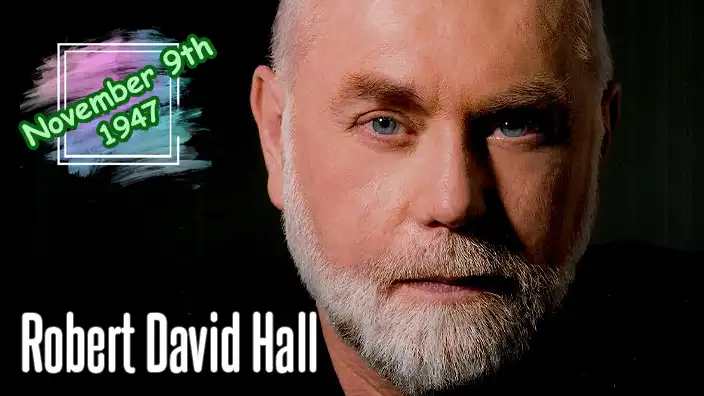
November 9, 1947, in East Orange, New Jersey

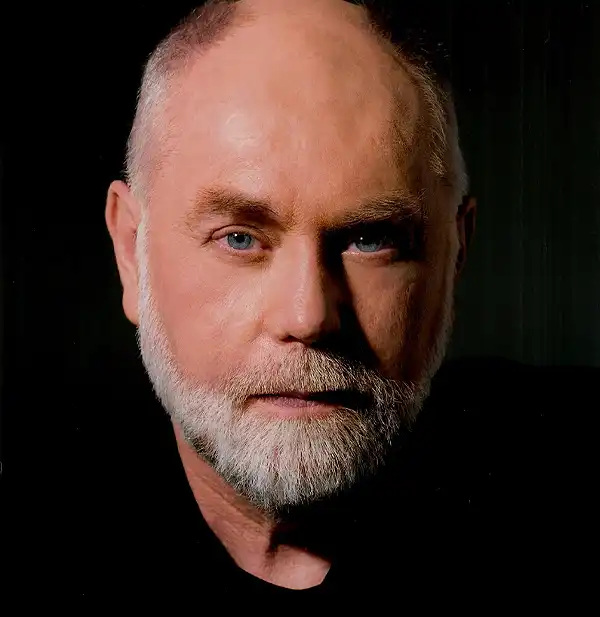
Robert David Hall, born on November 9, 1947, in East Orange, New Jersey, is an American actor, musician, voice artist, and disability rights advocate best known for his portrayal of Dr. Albert "Al" Robbins on the enormously successful CBS television series CSI: Crime Scene Investigation. His distinguished career encompasses television drama, feature films, animated productions, radio broadcasting, and professional music, demonstrating a versatility that extends far beyond his most famous role. Although millions of viewers recognize him as the thoughtful, occasionally sarcastic medical examiner who helped solve murders in Las Vegas, Hall's personal journey is equally remarkable. His determination to pursue a career in entertainment following a devastating accident, combined with his tireless advocacy for performers with disabilities, has made him an influential figure both in front of the camera and throughout the entertainment industry.
Although born in New Jersey, Hall grew up in California, where he developed interests in literature, music, and performance. He attended Tustin High School before continuing his education at the University of California, Los Angeles, graduating in 1971 with a degree in English literature. His academic background reflected a natural interest in storytelling and creative expression, but music initially occupied much of his attention. Hall became an accomplished guitarist, pianist, and mandolin player, performing with various bands during the 1960s and 1970s while developing his abilities as a singer and songwriter. He also played the flute and French horn during his younger years, establishing a musical foundation that would remain an important part of his professional and personal life. Long before television audiences knew him as the man examining bodies in the Las Vegas morgue, Hall was considerably more likely to be found holding a guitar than a scalpel.
Hall's early professional career included working as a radio disc jockey and music director in Los Angeles, where his distinctive voice, musical knowledge, and engaging personality proved valuable assets. He spent several years working in radio, including a position with KNX-FM, while simultaneously pursuing acting classes and developing his performance skills. His experience behind the microphone eventually opened opportunities in commercial voiceovers, narration, and animated television, allowing him to build a career that combined his interests in music, storytelling, and entertainment. Radio also taught him the importance of timing, vocal expression, and communicating personality without relying on facial expressions or physical movement. Those skills would later become particularly useful when portraying a television medical examiner whose most memorable moments frequently involved delivering perfectly timed observations while everyone else was busy trying to solve a murder.
In July 1978, Hall's life changed dramatically when his car was struck by an eighteen-wheel truck on a Los Angeles freeway. The collision caused a fire that left him with severe burns and life-threatening injuries, ultimately resulting in the amputation of both legs. His recovery required extensive medical treatment, rehabilitation, and the difficult process of adapting to prosthetic limbs. The accident presented enormous physical and emotional challenges, but Hall remained determined to continue pursuing his creative ambitions rather than abandon the career he had been building. His experiences profoundly influenced his outlook on life and eventually inspired his commitment to improving opportunities for people with disabilities. Rather than allowing the accident to define his identity, he continued developing his talents and demonstrated that disability need not prevent someone from succeeding in a demanding and competitive profession.
Following his recovery, Hall increasingly pursued opportunities in acting and voice performance, establishing himself as a versatile character actor. His distinctive voice made him particularly suitable for animation, commercials, and narration, while his natural screen presence helped him secure television and film roles. During the 1980s, he provided voices for the animated children's series The Littles and contributed to productions associated with G.I. Joe. Voice acting offered an opportunity to portray characters without the physical limitations sometimes imposed by casting directors, allowing his personality, timing, and expressive delivery to take center stage. His growing experience demonstrated that he possessed the talent and professionalism necessary for sustained employment in entertainment, although Hollywood's willingness to recognize performers with disabilities still had considerable room for improvement.
Hall gradually expanded his television career with appearances in popular dramas, including L.A. Law, The Practice, The West Wing, and Touched by an Angel. He also appeared in Life Goes On, a groundbreaking family drama recognized for its portrayal of characters with disabilities and its willingness to explore social issues rarely addressed in mainstream television. These performances helped establish Hall as a reliable supporting actor capable of portraying authority figures, professionals, and characters with complex personal histories. His work also demonstrated the importance of casting performers with disabilities in roles that were not necessarily written exclusively around their physical conditions. Hall wanted to be recognized for his acting ability, not simply as someone whose personal circumstances made him suitable for a particular type of character.
His film career included appearances in the legal drama Class Action in 1991, the romantic thriller Dream Lover in 1993, and the science-fiction action film Starship Troopers in 1997. In Starship Troopers, directed by Paul Verhoeven, Hall portrayed a military recruiting sergeant, appearing in a film that combined futuristic warfare, political satire, and spectacular visual effects. He also appeared in the 1998 crime thriller The Negotiator, starring Samuel L. Jackson and Kevin Spacey. These productions allowed him to work alongside established performers while expanding his experience across several film genres. Although his movie roles were generally smaller than his later television work, they contributed to his growing reputation as a capable character actor who could bring credibility and individuality to supporting performances.
Hall's most significant professional breakthrough arrived in 2000 when he was cast as Dr. Albert Robbins, the chief medical examiner on CSI: Crime Scene Investigation. Created by Anthony E. Zuiker, the CBS procedural drama followed forensic investigators working for the Las Vegas Police Department as they examined physical evidence to solve complex criminal cases. Hall's character was originally intended to appear in a single episode, but the producers recognized his contribution and expanded the role into a recurring position that eventually became a major part of the series. Dr. Robbins quickly developed into one of the show's most recognizable supporting characters, providing forensic expertise, thoughtful observations, and occasional moments of humor amid the frequently disturbing circumstances surrounding criminal investigations. It was a remarkable career opportunity, although most actors probably wouldn't describe spending fifteen seasons in a fictional morgue as their dream assignment.
Dr. Robbins became an essential member of the CSI team, performing autopsies, examining injuries, identifying causes of death, and helping investigators interpret medical evidence. His professional relationship with Gil Grissom, portrayed by William Petersen, became particularly memorable because both characters shared intellectual curiosity, dry humor, and an appreciation for music. Hall's portrayal gave Robbins a reassuring humanity that contrasted effectively with the grim nature of his work. Rather than treating the character as merely a source of technical information, Hall developed him into a thoughtful professional with a recognizable personality, personal interests, and genuine relationships with his colleagues. His ability to balance serious dramatic material with understated comedy made the character especially appealing, even when the surrounding circumstances were anything but cheerful.
One of the most distinctive aspects of Hall's performance was the way his musical background became part of Dr. Robbins' personality. The character occasionally sang, played music, or shared musical moments with other members of the forensic team, particularly Grissom. These scenes allowed Hall to demonstrate abilities that many viewers might not otherwise have associated with a television medical examiner. His natural musical talent added warmth and individuality to the character, creating memorable moments that helped distinguish CSI from other crime dramas. Hall also enjoyed the opportunity to portray Robbins as someone with interests beyond his professional responsibilities, reminding audiences that even people who spend their working days examining suspicious deaths are entitled to hobbies. Admittedly, performing a musical number in a morgue might not appeal to everyone, but Robbins managed to make it seem surprisingly normal.
Hall's character also represented an important development in the portrayal of disability on mainstream television. Like the actor himself, Dr. Robbins used prosthetic legs, but his disability was not presented as the defining feature of his personality or professional competence. Instead, audiences encountered a knowledgeable, experienced medical examiner whose contributions were essential to solving criminal investigations. Hall appreciated that the character could be portrayed as a complete individual rather than reduced to a familiar television stereotype. His presence on one of America's most popular television programs helped demonstrate that actors with disabilities could successfully portray established professionals in mainstream entertainment without requiring every storyline to revolve around their physical circumstances.
During its original run from 2000 to 2015, CSI: Crime Scene Investigation became an international television phenomenon, attracting enormous audiences and inspiring several successful spin-off series. The program helped popularize forensic science and introduced viewers to terminology and investigative techniques that had previously been unfamiliar to many television audiences. Hall remained associated with the production throughout its fifteen-season run, appearing in hundreds of episodes and returning as Dr. Robbins for the 2015 television finale, CSI: Immortality. His long involvement made him one of the show's enduring performers, and his character contributed significantly to the familiar atmosphere that audiences came to associate with the Las Vegas forensic team. While other investigators searched crime scenes, interviewed suspects, and followed evidence across the city, Robbins remained a reassuring presence in the medical examiner's office, patiently waiting for the next mystery to arrive.
The success of CSI brought Hall considerable professional recognition, including participation in the show's ensemble achievements. In 2005, the cast received the Screen Actors Guild Award for Outstanding Performance by an Ensemble in a Drama Series, recognizing the collective work of the performers who helped make the program successful. Hall's contribution reflected his ability to develop a supporting character who remained engaging and memorable across an unusually long television run. His work also demonstrated the value of ensemble storytelling, where even characters who do not dominate every episode can become essential to the identity of a successful series. Dr. Robbins might not have been the person chasing suspects through Las Vegas, but he frequently supplied the information that made those dramatic pursuits worthwhile.
Beyond his acting career, Hall became an outspoken advocate for disability rights and equal employment opportunities in entertainment. He served as a national board member of the Screen Actors Guild and held leadership positions involving performers with disabilities, including work with SAG and AFTRA committees. He also served on the board of the National Organization on Disability and participated in initiatives designed to challenge discrimination, improve accessibility, and encourage employers to recognize the abilities of qualified individuals with disabilities. Hall spoke publicly about the barriers facing disabled performers, particularly the assumption that hiring them would create production difficulties or limit creative possibilities. His advocacy emphasized that disability should not automatically determine which roles an actor can perform, and that authentic representation requires genuine opportunities rather than occasional symbolic appearances.
Hall's activism extended beyond Hollywood through public speaking, educational programs, and appearances supporting disability awareness. He testified before lawmakers, participated in discussions about employment discrimination, and encouraged entertainment executives to consider performers with disabilities for a broader range of roles. In 2010, he participated in a White House event commemorating the twentieth anniversary of the Americans with Disabilities Act, introducing President Barack Obama during the celebration. His involvement reflected years of advocacy focused on practical improvements in accessibility and professional opportunity. Hall understood that meaningful change required more than positive publicity; it depended on challenging established assumptions and ensuring that talented people were evaluated according to their abilities rather than their disabilities.
Music remained another important part of Hall's life, even as his acting career became increasingly successful. An accomplished singer, guitarist, pianist, and mandolin player, he continued writing and performing songs while developing projects that reflected his musical interests. He released original music and appeared at the Grand Ole Opry, demonstrating that his professional talents extended well beyond television drama. His musical performances frequently reflected the storytelling qualities that had attracted him to acting, combining thoughtful lyrics with personal observations and an appreciation for traditional musical styles. For audiences familiar only with his forensic television character, discovering Hall's musical career offered a pleasant surprise. Apparently, the man who could identify a cause of death on television could also identify a troublesome chord progression without consulting the crime laboratory.
Hall's personal life has included his marriage to Judy Stearns, whom he married in 1999 after a relationship that began through their shared involvement in music. He also has a son, Andrew, from an earlier marriage. Throughout his career, Hall has spoken candidly about the importance of family, friendship, personal determination, and maintaining interests beyond professional success. His experiences have given him a distinctive perspective on the unpredictability of life, and he has frequently emphasized the importance of continuing to pursue meaningful goals despite unexpected setbacks. His combination of professional achievement, musical creativity, and public advocacy illustrates a career shaped by far more than the circumstances of a single life-changing event.
Robert David Hall's contribution to television and entertainment extends beyond his memorable portrayal of Dr. Al Robbins. He helped establish a recognizable character in one of the most successful crime dramas in television history while demonstrating the importance of authentic disability representation in mainstream programming. His extensive voiceover work, musical accomplishments, film appearances, and public advocacy reveal an entertainer whose talents cannot be confined to a single profession. More importantly, his efforts to improve opportunities for performers with disabilities have helped challenge longstanding assumptions within the entertainment industry. His career illustrates that professional excellence depends on ability, preparation, determination, and opportunity, rather than conformity to narrow expectations about who belongs on screen.
As fans celebrate Robert David Hall's birthday on November 9, they recognize an actor whose performances brought intelligence, warmth, and humor to television while his work beyond the screen helped promote greater inclusion and understanding. From his early years as a musician and radio personality to his unforgettable appearances on CSI: Crime Scene Investigation, Hall has demonstrated a remarkable commitment to creativity and professional achievement. His portrayal of Dr. Robbins remains an enduring part of television history, while his advocacy continues to provide an important example of how public recognition can support meaningful social change. And if there is one thing audiences learned from his years in the Las Vegas morgue, it is that even the most serious profession benefits from a little music, a dry sense of humor, and someone who knows how to deliver a perfectly timed one-liner.
References & Sources