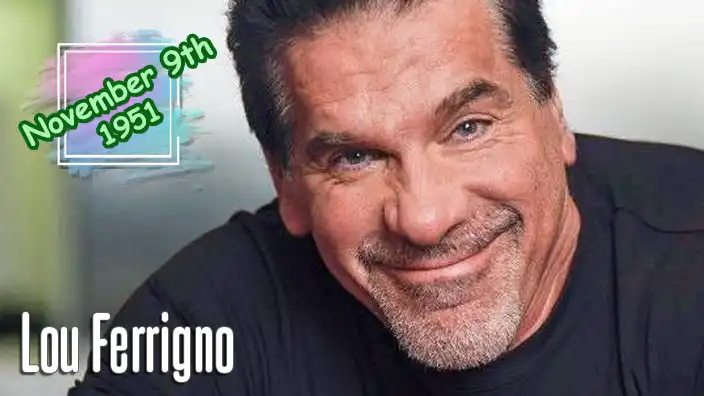
November 9, 1951, in Brooklyn, New York

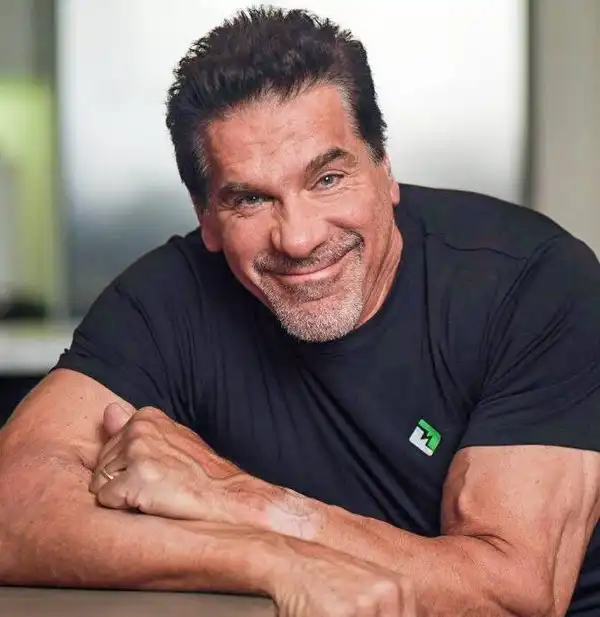
Louis Jude Ferrigno, born on November 9, 1951, in Brooklyn, New York, is an American actor, professional bodybuilder, fitness personality, and motivational speaker best known for portraying the Hulk in the CBS television series The Incredible Hulk. His extraordinary physique, imposing screen presence, and distinctive performance helped bring one of Marvel Comics' most famous characters to life during an era when computer-generated superheroes were still decades away. Before becoming a television sensation, Ferrigno established himself as an elite competitive bodybuilder, winning major championships and challenging some of the sport's most celebrated competitors. His journey from a young boy struggling with hearing loss and bullying to an internationally recognized entertainer is a remarkable story of perseverance, physical determination, and an occasional willingness to be covered from head to toe in green paint.
Ferrigno grew up in Brooklyn in a working-class Italian-American family, the son of Victoria and Matthew Ferrigno, a New York City police officer. His childhood was complicated by significant hearing loss resulting from ear infections during infancy, a condition that affected his speech development and made communication difficult. He began using hearing aids and faced teasing from other children, experiences that contributed to feelings of isolation and insecurity. Rather than allowing those difficulties to determine his future, Ferrigno developed an interest in comic books and larger-than-life heroes, particularly characters whose extraordinary strength allowed them to overcome seemingly impossible obstacles. Superman and the Hulk became important childhood inspirations, providing imaginative examples of the power and confidence he hoped to develop in himself.
His fascination with superheroes eventually led him toward bodybuilding, a pursuit that would transform both his appearance and his confidence. As a teenager, Ferrigno began lifting weights, inspired by bodybuilding magazines and the impressive physiques of athletes such as Steve Reeves and Arnold Schwarzenegger. Without access to elaborate training equipment, he improvised some of his early workouts using basic weights and homemade exercise arrangements. His dedication quickly became apparent as he developed exceptional muscular size and strength through disciplined training, careful nutrition, and an increasingly serious commitment to competitive bodybuilding. For a boy who had once felt physically vulnerable, weightlifting offered a powerful sense of personal achievement. It also provided a practical solution to one particular childhood problem: bullies tend to reconsider their career choices when their intended victim begins resembling a small mountain.
Ferrigno graduated from Brooklyn Technical High School and continued pursuing bodybuilding with extraordinary determination. During the early 1970s, he emerged as one of the sport's most promising young competitors, combining exceptional height with impressive muscular development and symmetry. Standing approximately six feet five inches tall, he possessed a physique that made him particularly noticeable even among professional bodybuilders. His competitive breakthrough arrived in 1973 when he won the IFBB Mr. America title, establishing himself as a major figure in the sport. That same year, he captured the IFBB Mr. Universe championship, demonstrating that his accomplishments were not simply the result of unusual physical size but also reflected the dedication and discipline necessary to succeed at the highest levels of competitive bodybuilding.
Ferrigno repeated his Mr. Universe success in 1974, becoming one of the youngest competitors to achieve such recognition in the sport. His remarkable development attracted attention from bodybuilding enthusiasts and the wider fitness community, particularly because his enormous frame offered a striking contrast to the physiques of many established competitors. At a time when bodybuilding was beginning to attract mainstream interest, Ferrigno represented a new generation of athletes whose achievements helped expand the sport's visibility. He trained relentlessly, maintaining demanding routines designed to develop every major muscle group while preparing for competitions against some of the world's most accomplished bodybuilders. His success required years of sustained effort, careful preparation, and the ability to endure physical discomfort that would have sent most ordinary people searching for a comfortable chair and a packet of biscuits.
One of the defining moments of Ferrigno's bodybuilding career came through his rivalry with Arnold Schwarzenegger, who was already establishing himself as one of the sport's most celebrated personalities. Their competitive relationship became internationally famous through the 1977 documentary Pumping Iron, which followed competitors preparing for the 1975 Mr. Olympia and Mr. Universe contests. The film portrayed Ferrigno as a determined challenger hoping to defeat Schwarzenegger, whose confidence, psychological gamesmanship, and established reputation created a fascinating contrast between the two athletes. Ferrigno's father also appeared prominently in the documentary, encouraging his son's training and competitive ambitions. Although Schwarzenegger ultimately won the 1975 Mr. Olympia title, Ferrigno's appearance introduced him to a much broader audience and helped establish his reputation as one of bodybuilding's most recognizable figures.
Pumping Iron became an influential documentary that helped bring bodybuilding into mainstream popular culture, introducing audiences to the personalities, rivalries, and demanding preparation associated with elite competition. Ferrigno's participation was particularly memorable because his imposing physique contrasted with a comparatively quiet and reserved personality. Viewers saw an athlete working intensely toward an ambitious goal while confronting the pressures of competing against an established champion. The documentary also helped establish a lasting public association between Ferrigno and Schwarzenegger, whose careers would subsequently take different but equally fascinating directions into entertainment. Schwarzenegger eventually became a major Hollywood action star and California governor, while Ferrigno discovered that his extraordinary muscles were ideally suited to portraying a comic-book character whose primary method of problem-solving involved smashing things.
Ferrigno's transition from professional bodybuilding to acting began in earnest when television producers sought a performer capable of portraying the Hulk in a live-action adaptation of Marvel Comics' popular superhero. The character, created by writer Stan Lee and artist Jack Kirby, had first appeared in The Incredible Hulk comic book in 1962. Television producer Kenneth Johnson developed the adaptation around Dr. David Banner, a scientist whose exposure to gamma radiation caused him to transform into a powerful green creature during moments of extreme emotional stress. Unlike modern superhero productions, which rely heavily on sophisticated digital effects, the television series required an actual performer whose physical appearance could convincingly suggest extraordinary strength. Ferrigno's enormous muscular build made him an exceptional candidate for the role.
The television version of The Incredible Hulk premiered with a pilot movie in November 1977, starring Bill Bixby as Dr. David Banner and Ferrigno as the Hulk. The regular series followed in 1978 and continued until 1982, becoming one of the most memorable superhero programs of its era. Each episode typically followed Banner as he traveled across America, attempting to remain anonymous while helping people facing difficult or dangerous situations. Whenever circumstances became sufficiently stressful, Banner transformed into the Hulk, whose enormous strength allowed him to overcome threats that ordinary humans could not manage. Ferrigno portrayed the transformed character through physical movement, facial expressions, and powerful gestures, while Bixby provided the emotional complexity of the scientist struggling to control the destructive force within him.
Ferrigno's portrayal of the Hulk required considerable physical stamina and patience. His transformation into the famous green character involved extensive makeup sessions, including the application of green body paint, facial prosthetics, and a specially designed wig. The production also relied on carefully staged action sequences, practical effects, and camera techniques to create the illusion of extraordinary strength. Ferrigno performed physically demanding scenes while maintaining the character's distinctive expressions of anger, confusion, and occasional tenderness. Although the Hulk spoke very little, the role required more than simply displaying enormous muscles. Ferrigno had to communicate emotions through movement and expression, portraying a creature who could be terrifying one moment and surprisingly compassionate the next. And unlike today's digital superheroes, Ferrigno couldn't simply ask a computer to make his arms look bigger. They were already quite large enough.
The relationship between Bill Bixby's David Banner and Ferrigno's Hulk became central to the show's success. Bixby portrayed Banner as an intelligent, compassionate man burdened by an uncontrollable transformation, while Ferrigno gave the Hulk a recognizable physical personality that reflected the character's confusion and instinctive desire to protect others. The series frequently explored themes of loneliness, prejudice, compassion, and the struggle to find acceptance, giving its superhero premise an emotional depth that distinguished it from many other action-oriented programs. Ferrigno's performance helped make the Hulk sympathetic despite his intimidating appearance, allowing audiences to recognize the humanity beneath the green makeup. His portrayal became so closely associated with the character that generations of viewers continued identifying Ferrigno as the definitive live-action Hulk long after the original series ended.
The success of The Incredible Hulk transformed Ferrigno into an international television personality and established his place in superhero entertainment history. The program developed a devoted following and became an important part of the evolution of comic-book adaptations for television. Its combination of dramatic storytelling, action sequences, and recognizable characters helped demonstrate that superhero stories could appeal to audiences beyond traditional comic-book readers. Ferrigno's portrayal also influenced later interpretations of the Hulk, particularly the emphasis on physical power combined with emotional vulnerability. Although the show's production techniques now appear modest compared with modern blockbuster films, its popularity reflected strong performances and storytelling rather than an endless supply of digital explosions.
After the original series ended, Ferrigno returned to the character in three television reunion movies: The Incredible Hulk Returns in 1988, The Trial of the Incredible Hulk in 1989, and The Death of the Incredible Hulk in 1990. These productions reunited Ferrigno with Bill Bixby and expanded the television universe by introducing additional Marvel characters, including Thor and Daredevil. The reunion films allowed audiences to revisit the familiar relationship between Banner and the Hulk while exploring new storylines and dramatic challenges. Ferrigno's continued involvement demonstrated the lasting popularity of his interpretation of the character, even as superhero entertainment began evolving toward increasingly ambitious cinematic productions. For many fans, the sight of Ferrigno emerging in green makeup remained considerably more satisfying than any complicated explanation involving gamma radiation.
Ferrigno also pursued other acting opportunities beyond his signature superhero role. In 1983, he starred in the Italian fantasy adventure Hercules, portraying the legendary Greek hero in a production that combined mythology, action, and imaginative special effects. He returned for the sequel The Adventures of Hercules in 1985, further establishing his association with physically powerful characters. His imposing appearance made him a natural choice for fantasy and adventure films, although these productions frequently required him to perform demanding physical scenes and maintain the extraordinary muscular condition that had originally made him famous. His film career also included appearances in Sinbad of the Seven Seas, Cage, and other action-oriented projects that capitalized on his distinctive screen presence.
One of Ferrigno's more entertaining television appearances came through the CBS comedy The King of Queens, in which he played a fictionalized version of himself as a neighbor of Doug and Carrie Heffernan. His recurring appearances allowed him to demonstrate a lighter side of his personality, frequently using his reputation as the Hulk for humorous effect. The role introduced him to audiences who might not have watched the original superhero series and demonstrated his willingness to laugh at his own public image. Ferrigno also made appearances in other television productions, documentaries, and entertainment programs, maintaining a recognizable presence in popular culture long after his initial breakthrough. After years of portraying a character who became angry enough to destroy furniture, appearing in a sitcom where the biggest crisis might involve a neighborly disagreement must have been a refreshing change of pace.
Ferrigno's connection with the Hulk continued into the era of modern superhero cinema. He made a cameo appearance as a security guard in the 2003 film Hulk, directed by Ang Lee, and appeared again in The Incredible Hulk in 2008. He also contributed vocal performances associated with the Hulk in Marvel productions, connecting his original live-action portrayal with later interpretations of the character. These appearances recognized his importance in the character's screen history and introduced him to audiences familiar with the computer-generated versions of the superhero. Although modern technology made it possible to create a Hulk of almost unlimited size and strength, Ferrigno's original performance remained distinctive because the character's physical presence came from an actual athlete rather than a digital creation.
Despite his success in entertainment, Ferrigno never abandoned his interest in bodybuilding and physical fitness. He returned to professional competition during the early 1990s, participating in the 1992 and 1993 Mr. Olympia contests after many years away from the competitive stage. His comeback attracted considerable attention because it required him to prepare for elite competition against a new generation of bodybuilders who had developed during his absence. Although he did not reclaim the sport's highest titles, his return demonstrated his continued commitment to training and his willingness to challenge himself physically. He subsequently competed in the Masters Olympia competition in 1994, reinforcing his reputation as an athlete whose dedication to bodybuilding extended far beyond his early championship victories.
Ferrigno also developed a successful career as a personal trainer and fitness consultant, working with clients interested in improving their strength, conditioning, and overall health. His experience as a professional bodybuilder provided a foundation for sharing practical advice about exercise, nutrition, and maintaining physical fitness. He became a familiar presence at bodybuilding exhibitions, fitness conventions, and public events, where his approachable personality contrasted with the intimidating characters he had portrayed on screen. Ferrigno frequently emphasized the importance of consistency, discipline, and setting realistic goals, encouraging people to pursue improvements suited to their individual abilities. Fortunately, his fitness advice did not require everyone to become the size of the Hulk. Most people would have difficulty finding shirts that fit.
His hearing loss remained an important part of his personal story, and Ferrigno became an advocate for people experiencing hearing difficulties. He has spoken openly about the challenges he encountered during childhood and adulthood, including communication barriers and the emotional effects of being treated differently. Over the years, he adopted improved hearing technology and discussed the positive changes that hearing aids and other advances made in his daily life. His willingness to address these experiences publicly helped raise awareness about hearing loss and encouraged others to seek appropriate support. Ferrigno's achievements also challenged assumptions about what individuals with hearing impairments could accomplish, particularly in demanding professions requiring communication, physical coordination, and public performance.
Ferrigno's personal life has included his marriage to Carla Green, whom he married in 1980. The couple raised three children: Shanna, Louis Jr., and Brent. His family became an important part of his life outside bodybuilding and entertainment, while his children pursued interests of their own in acting, fitness, and other professional fields. Ferrigno has frequently discussed the importance of family support throughout his career, particularly during periods when demanding training schedules, filming commitments, and public appearances required extensive travel. His long association with the Hulk also made him a familiar figure at comic-book conventions, where fans often approached him with childhood memories of watching the television series. For many visitors, meeting Ferrigno offered an opportunity to encounter a genuine piece of superhero history, preferably without provoking a transformation.
In addition to acting and fitness, Ferrigno pursued an unusual professional opportunity when he became a reserve deputy sheriff with the Los Angeles County Sheriff's Department in 2006. He later served in law enforcement-related volunteer and reserve capacities, including involvement with the San Luis Obispo County Sheriff's Office. His interest in law enforcement reflected a longstanding respect for public service, influenced in part by his father's career as a police officer. Although his celebrity status naturally attracted attention, Ferrigno approached these responsibilities as an opportunity to contribute to his community. It also created the amusing possibility of a suspect discovering that the officer approaching them was the same enormous man who had spent years throwing villains across television sets. One suspects that resisting arrest would suddenly seem like a particularly poor decision.
Throughout his career, Ferrigno has remained a recognizable figure in bodybuilding, superhero entertainment, and popular culture. His achievements helped bridge two very different worlds, demonstrating how competitive athletic success could provide opportunities in television and film while also showing that physical appearance alone was not enough to sustain a lasting entertainment career. His portrayal of the Hulk required dedication, discipline, expressive performance, and the ability to connect with audiences despite having very little dialogue. Meanwhile, his work as a fitness advocate and public speaker demonstrated a commitment to encouraging others to overcome personal obstacles and pursue meaningful goals.
As fans celebrate Lou Ferrigno's birthday on November 9, they recognize a man whose extraordinary career transformed him from a determined young bodybuilder into one of television's most beloved superheroes. His championship victories, memorable performances, and contributions to fitness culture established a legacy that continues to influence athletes, actors, and comic-book enthusiasts. More importantly, his determination to overcome childhood challenges and pursue ambitious goals provides an example of the value of persistence and self-belief. Ferrigno may always be remembered as the original television Hulk, but his achievements extend well beyond green makeup and torn trousers. And while audiences have spent decades enjoying the spectacle of the Hulk smashing everything in sight, Ferrigno himself has demonstrated that genuine strength is often measured by determination, kindness, and the ability to keep moving forward when life becomes difficult.
References & Sources