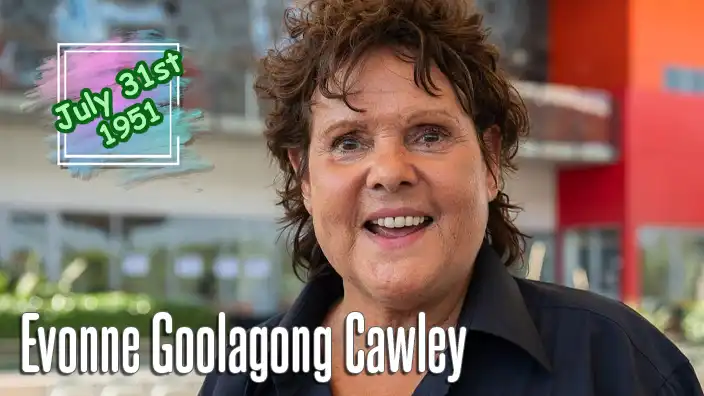
July 31, 1951, in Griffith, Australia
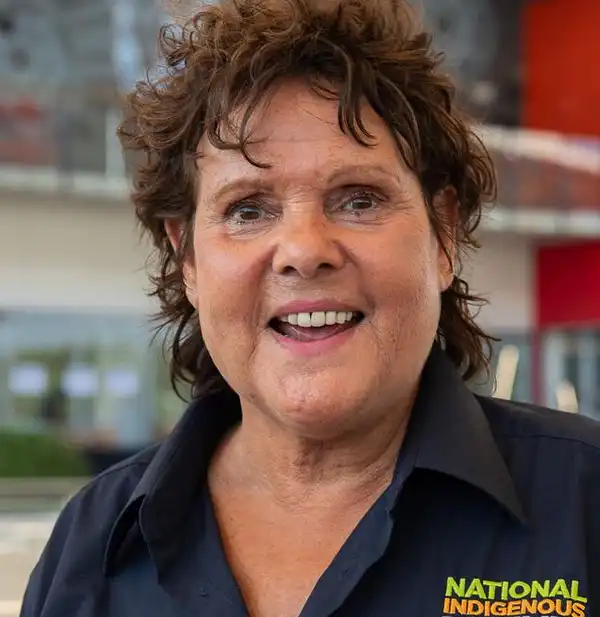
Evonne Goolagong Cawley is one of the greatest players in tennis history and one of Australia's most admired sporting icons. Renowned for her graceful movement, elegant shot-making, and calm demeanor, she became a World No. 1 player, won 14 Grand Slam titles across singles, doubles, and mixed doubles, and inspired generations of athletes both in Australia and around the world. Her remarkable career broke barriers, set new standards of excellence, and left an enduring mark on the sport.
Born on July 31, 1951, in Griffith, New South Wales, Australia, Evonne Fay Goolagong grew up in the small rural town of Barellan. She was the third of eight children in a Wiradjuri Aboriginal family. At a time when opportunities for Indigenous Australians were limited, her extraordinary natural talent quickly became apparent.
Her first "tennis racket" was little more than a piece of wood used to hit balls against a wall. Local supporters recognized her remarkable ability and helped raise funds so she could travel to tournaments and receive proper coaching. Coach Vic Edwards later discovered her talent and invited her to Sydney, where she developed into one of Australia's brightest young prospects.
The tennis world soon realized it was witnessing a special player. Goolagong combined exceptional athleticism with effortless court coverage, smooth footwork, remarkable anticipation, and delicate touch around the net. Rather than relying purely on power, she outmaneuvered opponents with intelligence, precision, and elegance.
Her breakthrough came in spectacular fashion in 1971. At just 19 years old, she captured the French Open before winning Wimbledon only weeks later, instantly becoming an international star. As the first Indigenous Australian to win a Grand Slam singles title, her success carried enormous significance far beyond the tennis court.
Over the following decade, Goolagong established herself among the greatest competitors in women's tennis. She won four consecutive Australian Open singles titles from 1974 through 1977 and regularly battled legendary rivals including Margaret Court, Billie Jean King, Chris Evert, and Martina Navratilova.
In total, Goolagong Cawley won seven Grand Slam singles championships, four Grand Slam women's doubles titles, and one Grand Slam mixed doubles title, giving her an impressive total of 12 major championships. In addition, she captured two season-ending championships and amassed 68 career singles titles.
One of the defining moments of her career came after becoming a mother. Following the birth of her daughter Kelly in 1977, many believed her greatest tennis was behind her. Instead, she returned to competition and, in 1980, captured Wimbledon for a second time. That victory made her the first mother to win the Wimbledon singles title since 1914, a feat that remains one of the sport's most inspiring achievements.
Her career also included an unusual chapter in tennis history. Although she reached the No. 1 ranking in April 1976, a computer-ranking error prevented official recognition at the time. More than thirty years later, in 2007, the WTA formally acknowledged that she had indeed been the world's top-ranked player during that period.
Beyond trophies, Goolagong Cawley became an ambassador for Australian sport and a powerful role model for Indigenous Australians. Her achievements demonstrated that talent, determination, and opportunity could overcome enormous obstacles, inspiring countless young athletes to pursue their dreams.
She has remained closely connected to tennis through coaching, mentoring, and youth development programs. In particular, the Goolagong National Development Camp has helped encourage and support young Indigenous tennis players across Australia, continuing her lifelong commitment to expanding opportunities for future generations.
Her many honors include being named Australian of the Year in 1971, induction into the International Tennis Hall of Fame, and appointment as a Companion of the Order of Australia for her contributions to sport and the community.
Today, Evonne Goolagong Cawley is remembered not only for her remarkable list of accomplishments but also for the beauty of her game. Few players have ever moved with such natural grace or competed with such quiet confidence. Her legacy reaches far beyond championships, serving as a reminder that excellence, humility, and perseverance can leave an impact that lasts for generations.