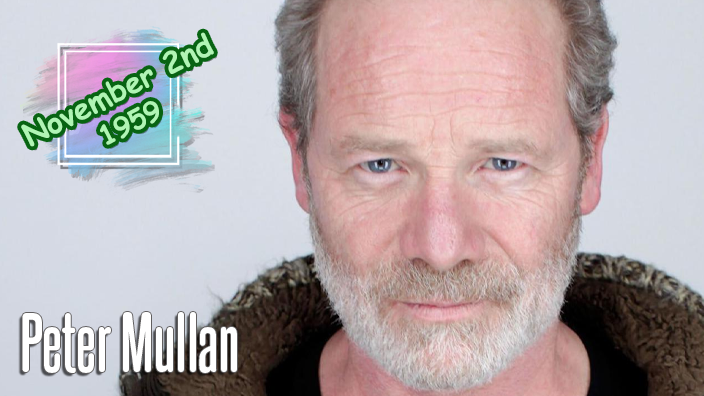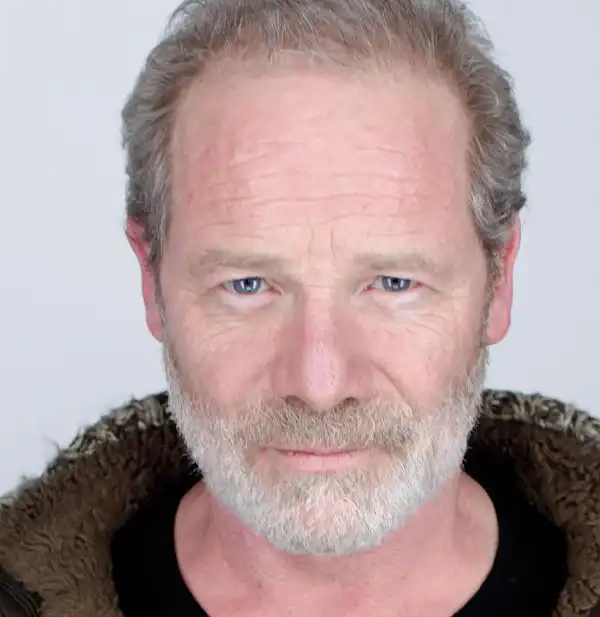
Peter Mullan was born on November 2, 1959, in Peterhead, Aberdeenshire, Scotland, and grew up primarily in Glasgow. His childhood was shaped by the working-class communities of the city, where economic hardship, strong neighborhood identities, and complicated family relationships influenced his understanding of human behavior. His father worked as a laboratory technician, and Mullan grew up in a large family. The difficulties he experienced during his early years would later influence the themes he explored as both an actor and filmmaker, particularly stories involving poverty, authority, violence, and people struggling to overcome circumstances beyond their control.
Mullan's early life was far removed from the glamorous world of movie premieres and celebrity interviews. As a teenager, he experienced personal difficulties and became involved in the political and social issues affecting his community. His interest in storytelling eventually led him toward acting, although he did not follow the conventional route of attending an elite drama school and immediately pursuing a professional stage career. Instead, he studied economic history and drama at the University of Glasgow, where he developed a deeper understanding of social structures, politics, and the experiences of ordinary people. These interests would become recurring influences throughout his creative work.
During his university years, Mullan became increasingly involved in theater and discovered that acting offered an opportunity to examine human behavior from different perspectives. He began performing with local theater groups and gradually developed a reputation for intense, emotionally convincing performances. His background gave him a particular affinity for working-class characters, although his abilities would eventually extend to historical figures, authority figures, criminals, and individuals facing profound moral conflicts. Rather than relying on exaggerated theatrical gestures, Mullan developed an understated style that could communicate anger, fear, vulnerability, or determination through the smallest changes in expression.
Mullan began his screen career during the late 1980s and early 1990s, appearing in British television productions and independent films. His early work included roles in Riff-Raff (1991), directed by Ken Loach, a filmmaker known for realistic stories about working-class life. The film followed construction workers navigating unemployment, unsafe working conditions, and personal relationships in contemporary Britain. Mullan's involvement introduced him to the naturalistic filmmaking style that would become an important influence on his own directing career. Loach's emphasis on believable dialogue, ordinary environments, and social issues closely matched Mullan's developing artistic interests.
His growing reputation led to appearances in additional British productions, including Shallow Grave (1994), the darkly comic thriller directed by Danny Boyle. The film starred Ewan McGregor, Christopher Eccleston, and Kerry Fox as three flatmates whose discovery of a large sum of money leads to increasingly dangerous consequences. Mullan played Andy, a supporting character whose presence contributed to the film's atmosphere of suspicion and criminal intrigue. Shallow Grave helped establish Boyle as an important British filmmaker and introduced audiences to a distinctive combination of black humor, suspense, and stylish visual storytelling.
Mullan became more widely recognized through his appearance in Trainspotting (1996), another Danny Boyle film that became one of the defining British movies of the decade. Based on Irvine Welsh's novel, the film followed a group of young people in Edinburgh whose lives were shaped by heroin addiction, friendship, crime, and attempts to escape destructive circumstances. Mullan portrayed Swanney, also known as Mother Superior, a drug dealer whose nickname offered a particularly dark example of the film's irreverent humor. Although his role was relatively small, his performance contributed to the film's unforgettable collection of dangerous and eccentric characters.
Trainspotting achieved international success and became famous for its energetic direction, distinctive soundtrack, and uncompromising portrayal of addiction. The film helped launch or strengthen the careers of several British actors and introduced international audiences to a new generation of Scottish cinema. Mullan's involvement brought him greater recognition, although his career would soon demonstrate that he was capable of far more than playing intimidating supporting characters. His naturalistic style and ability to convey emotional complexity made him particularly attractive to filmmakers interested in challenging, character-driven stories.
A major turning point arrived in 1998 when Mullan starred in My Name Is Joe, directed by Ken Loach. He portrayed Joe Kavanagh, a recovering alcoholic living in Glasgow who attempts to rebuild his life while becoming romantically involved with a social worker. Joe's determination to remain sober and escape his troubled past is complicated by poverty, friendship, loyalty, and the difficult choices facing people living on the margins of society. Mullan delivered a deeply emotional performance that combined humor, tenderness, frustration, and vulnerability, creating a character whose struggles felt painfully authentic.
His performance in My Name Is Joe earned him the Best Actor Award at the 1998 Cannes Film Festival, one of international cinema's most prestigious honors. The recognition established Mullan as a major dramatic actor and demonstrated the international appeal of stories rooted in specific working-class communities. His portrayal of Joe was particularly admired for avoiding sentimentality, allowing the character's flaws and good intentions to exist side by side. The film also strengthened his professional relationship with Ken Loach, whose commitment to social realism closely reflected Mullan's own interests as a storyteller.
While his acting career continued to develop, Mullan was also establishing himself as a filmmaker. He had already directed several short films, including Close (1993), Good Day for the Bad Guys (1995), and Fridge (1996). These projects allowed him to experiment with directing techniques, develop his approach to storytelling, and explore subjects that interested him personally. His early directing work often featured dark humor, troubled relationships, and characters confronting uncomfortable social realities. Rather than creating films designed simply to entertain, Mullan was interested in provoking discussion and challenging audiences to consider experiences they might otherwise prefer to ignore.
In 1998, Mullan made his feature-film directing debut with Orphans, a dark comedy-drama set in Glasgow. The story followed four adult siblings coping with the death of their mother while their personal conflicts and emotional difficulties threatened to overwhelm them. The film combined tragedy with moments of absurd humor, reflecting Mullan's belief that comedy and suffering frequently exist alongside each other in everyday life. Orphans received critical recognition, including awards at the Venice Film Festival, and established him as a filmmaker with a distinctive voice and an interest in emotionally challenging material.
Mullan continued appearing in major films during the early 2000s, including The Claim (2000), directed by Michael Winterbottom, and Session 9 (2001), a psychological horror film directed by Brad Anderson. In Session 9, he portrayed Gordon Fleming, the leader of an asbestos-removal crew working inside an abandoned psychiatric hospital. As tensions develop among the workers, the building's disturbing history and the characters' psychological vulnerabilities create an atmosphere of mounting dread. Mullan's restrained performance helped make the film unsettling without relying exclusively on conventional horror effects. It also suggested that if a workplace contains dark corridors, mysterious recordings, and an alarming number of locked rooms, requesting a transfer might be a sensible career decision.
In 2002, Mullan directed The Magdalene Sisters, a powerful historical drama examining the experiences of young women confined in Ireland's Magdalene laundries. The institutions, operated by religious orders, housed women and girls who were often subjected to harsh labor, humiliation, and restrictions on their freedom. Mullan's film followed three fictional young women whose experiences reflected documented abuses associated with the institutions. The production addressed difficult questions about authority, institutional power, social attitudes, and the treatment of vulnerable women.
The Magdalene Sisters received widespread international attention and won the Golden Lion at the 2002 Venice Film Festival. The film also generated controversy because of its portrayal of religious institutions and the historical treatment of women. Mullan defended the importance of confronting uncomfortable subjects and encouraging public discussion about experiences that had often been concealed or minimized. The film became one of his most significant achievements as a director, demonstrating his willingness to tackle difficult historical material even when doing so invited criticism.
Mullan's acting career continued alongside his directing work. He appeared in Children of Men (2006), Alfonso Cuarón's dystopian science-fiction drama about a future society facing human extinction through global infertility. Mullan portrayed Syd, a corrupt immigration officer involved in the dangerous circumstances surrounding the film's central characters. The movie's bleak atmosphere, political themes, and innovative filmmaking techniques made it one of the most acclaimed science-fiction films of its decade. Mullan's performance contributed to the story's unsettling vision of a society in which desperation and institutional corruption have become everyday realities.
In 2007, Mullan appeared in The Last Legion, a historical adventure film starring Colin Firth and Aishwarya Rai Bachchan. He portrayed Odoacer, the Germanic ruler whose forces helped bring an end to the Western Roman Empire. The role allowed him to explore a very different historical setting, trading contemporary Scottish streets for the political and military conflicts of ancient Europe. Although the film received mixed reviews, it demonstrated Mullan's versatility and his ability to bring a commanding presence to large-scale historical productions.
Mullan returned to directing with Neds (2010), a drama set in 1970s Glasgow. The title refers to a Scottish term associated with young delinquents, and the film follows John McGill, an intelligent schoolboy whose promising future becomes increasingly threatened by gang violence, social expectations, and the pressures of his environment. Drawing partly upon experiences familiar from his own upbringing, Mullan explored the relationship between education, class, masculinity, and violence. He also appeared in the film as John's father, adding another layer of personal involvement to the project.
Neds received critical recognition and won the Golden Shell for Best Film at the San Sebastián International Film Festival. The production reinforced Mullan's reputation as a filmmaker willing to examine the darker aspects of working-class life without dismissing the humanity of his characters. Its portrayal of young people facing limited opportunities and destructive social pressures reflected themes that had appeared throughout his earlier work. Mullan's films frequently ask difficult questions about why individuals behave as they do, emphasizing that personal responsibility and social circumstances can be deeply connected.
In 2011, Mullan delivered another acclaimed performance in Tyrannosaur, the feature directing debut of actor Paddy Considine. He portrayed Joseph, a deeply troubled man whose violent temper and personal grief have left him isolated from much of the world. His developing friendship with Hannah, played by Olivia Colman, reveals emotional wounds and unexpected opportunities for compassion. The film explored domestic violence, grief, faith, and the possibility of personal change through an uncompromising but deeply humane story. Mullan's performance was widely praised for its emotional intensity and willingness to portray a character who could be both frightening and sympathetic.
Tyrannosaur received numerous awards and critical honors, further establishing Mullan as one of Britain's most respected character actors. His portrayal of Joseph demonstrated his ability to communicate complex emotions without lengthy speeches or theatrical exaggeration. Much of the performance depended on silence, physical tension, and the gradual revelation of vulnerability beneath the character's anger. It was the kind of role that demanded considerable emotional commitment, and Mullan's work helped make the film one of the most memorable British dramas of its period.
Mullan reached another enormous international audience through his appearance in Harry Potter and the Deathly Hallows – Part 1 (2010), portraying Yaxley, a Death Eater associated with Lord Voldemort's takeover of the Ministry of Magic. The role placed him within one of cinema's most successful fantasy franchises and introduced him to younger viewers who might never have encountered his earlier independent films. Yaxley was an intimidating and ruthless character, making effective use of Mullan's talent for portraying men whose presence suggests that trouble is probably about to begin. In a world filled with dragons, dark magic, and dangerous creatures, Mullan managed to make a government official seem particularly unpleasant.
His television career also expanded significantly during the 2010s. He appeared in the BBC crime drama Top of the Lake (2013), created by Jane Campion and Gerard Lee, portraying Matt Mitcham, a powerful and deeply troubling figure in a remote New Zealand community. The series starred Elisabeth Moss as Detective Robin Griffin, whose investigation into the disappearance of a pregnant girl exposes violence, secrecy, and complicated family relationships. Mullan's performance as Matt was widely praised for its disturbing intensity and psychological complexity, reinforcing his reputation for bringing unsettling authority to difficult characters.
In 2014, Mullan appeared in Hercules, starring Dwayne Johnson, portraying Sitacles, a Greek military commander. He also continued working in British television and independent film, taking roles that ranged from historical dramas to contemporary thrillers. His ability to move between major Hollywood productions and smaller character-driven projects reflected a career guided more by interesting material than by a single commercial formula. For Mullan, a compelling character could be found in an expensive fantasy adventure just as readily as in a modestly budgeted drama set on a Glasgow housing estate.
One of his most recognizable later television roles came in HBO's science-fiction series Westworld. Mullan appeared in the second season, which premiered in 2018, portraying James Delos, the wealthy and powerful businessman whose investment in the futuristic theme park became central to the series' exploration of artificial intelligence, memory, and mortality. The character's ambition and determination to overcome human limitations led to disturbing experiments involving consciousness and the possibility of extending life beyond the body's natural limits.
Mullan's portrayal of James Delos became one of the most memorable elements of Westworld's second season. His scenes explored the unsettling consequences of attempting to reproduce human identity through advanced technology, raising questions about whether consciousness can truly survive when separated from the original person. Mullan brought a combination of arrogance, desperation, and vulnerability to the role, creating a character whose immense wealth could not protect him from the most fundamental limitations of human existence. Apparently, even a billionaire with access to extraordinary technology can discover that the universe does not offer a convenient customer-service department.
In 2018, Mullan also appeared in The Vanishing, a psychological thriller inspired by the mysterious disappearance of three lighthouse keepers from the Flannan Isles in 1900. Starring alongside Gerard Butler and Connor Swindells, he portrayed Thomas Marshall, one of the men assigned to maintain an isolated lighthouse off the Scottish coast. The film explored suspicion, greed, and psychological tension as the characters become involved in increasingly dangerous circumstances. Its remote setting and harsh weather provided an atmospheric backdrop for a story about ordinary people facing extraordinary pressures.
Mullan later appeared in the acclaimed Netflix crime drama Ozark, portraying Jacob Snell, a dangerous and influential local criminal whose operations bring him into conflict with the show's central characters. Alongside Lisa Emery, who played his wife Darlene, Mullan created a memorable portrayal of a man accustomed to exercising power through intimidation and violence. His performance added another distinctive antagonist to a career already filled with characters who could make an ordinary conversation feel like a potentially life-threatening encounter.
In 2022, Mullan joined the cast of Amazon Prime Video's fantasy series The Lord of the Rings: The Rings of Power, portraying King Durin III, the ruler of the Dwarven kingdom of Khazad-dûm. Set thousands of years before the events of The Lord of the Rings, the series explored the political struggles, alliances, and emerging dangers of Middle-earth's Second Age. Mullan's character was a proud and cautious monarch whose disagreements with his son, Prince Durin IV, reflected tensions between tradition, ambition, and the responsibilities of leadership.
As King Durin III, Mullan brought authority and emotional depth to a character whose decisions carried enormous consequences for his people. His performance emphasized the complicated relationship between a father determined to protect his kingdom and a son eager to embrace new opportunities. The role introduced him to another worldwide fantasy audience while allowing him to explore themes that had appeared throughout his career, including family conflict, authority, loyalty, and the consequences of difficult decisions. The elaborate costumes, magnificent underground halls, and spectacular visual effects were certainly a considerable change from the Glasgow streets of his earlier films.
Despite his involvement in internationally successful productions, Mullan has remained closely associated with Scottish cinema and the tradition of socially conscious filmmaking. His work as a director frequently explores the effects of poverty, violence, institutional authority, and social inequality, while his acting performances often reveal the humanity hidden beneath difficult or intimidating personalities. He has never seemed particularly interested in portraying flawless heroes, preferring characters whose contradictions make them believable. His willingness to examine uncomfortable subjects has occasionally attracted controversy, but it has also helped establish him as a distinctive creative voice.
Mullan's achievements as both an actor and filmmaker have earned recognition at major international film festivals, including Cannes, Venice, and San Sebastián. His Cannes Best Actor Award for My Name Is Joe, the Golden Lion for The Magdalene Sisters, and the Golden Shell for Neds represent important milestones in a career shaped by artistic independence. These honors reflect not only his individual talent but also his contribution to films that explore social issues through compelling human stories.
Peter Mullan's career demonstrates that memorable acting does not depend on conventional leading-man glamour or predictable heroic roles. His characters are often angry, wounded, stubborn, frightening, or deeply conflicted, yet he approaches them with enough understanding to reveal the experiences and emotions beneath their behavior. Whether portraying a recovering alcoholic, a ruthless prison-era authority figure, a wealthy technology investor, or a Dwarven king, he brings an unmistakable intensity to the screen.
For audiences who remember him from Trainspotting, Peter Mullan remains an essential part of the gritty Scottish cinema movement that helped reshape British filmmaking during the 1990s. For viewers of Westworld, Ozark, and The Rings of Power, he is a formidable character actor whose performances can dominate a scene without unnecessary theatrics. Behind those roles is also an accomplished filmmaker whose work has challenged institutions, explored difficult histories, and encouraged audiences to think more deeply about the world around them. He may not always play the friendliest fellow in the room, but when Peter Mullan appears on screen, there is a very good chance that something interesting, uncomfortable, or thoroughly dramatic is about to happen.
References & Sources