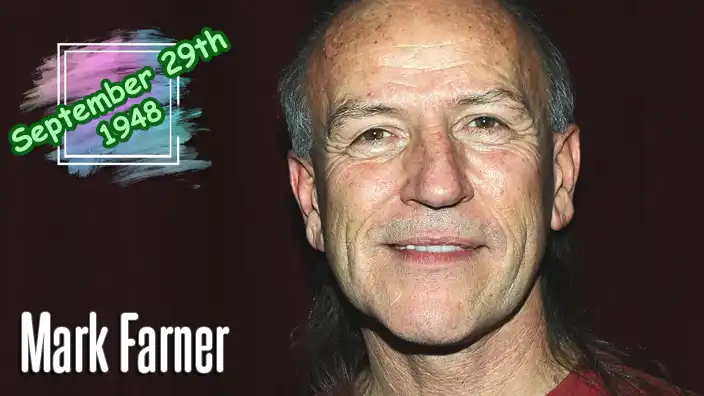
September 29, 1948, in Flint, Michigan
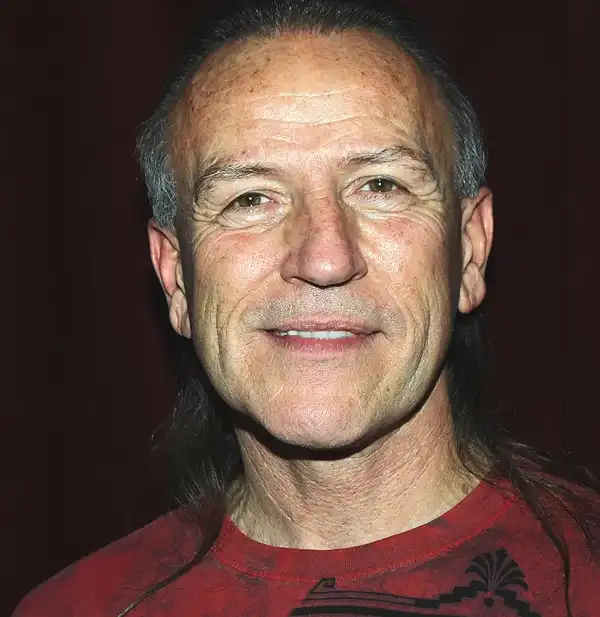
Born on September 29, 1948, in Flint, Michigan, Mark Fredrick Farner grew up in a city defined by factories, automobiles and working-class life. That environment would become an important part of both his musical identity and the appeal of Grand Funk Railroad. Farner did not emerge from an art-school scene or cultivate the detached image fashionable among some rock musicians of the period. His music was direct, muscular and emotional, reflecting the industrial Michigan surroundings from which he came. Before Grand Funk Railroad, he gained experience in local groups including Terry Knight and the Pack, where he worked alongside drummer Don Brewer.
Terry Knight and the Pack achieved regional success during the 1960s, but the arrangement eventually ran its course. Knight stepped away from performing while Farner and Brewer continued looking for their next musical direction. Bassist Mel Schacher, who had played with ? and the Mysterians, joined them, and the three musicians formed a power trio in 1969. Terry Knight returned in a different capacity as their manager and producer. The new band took its name from the Grand Trunk Western Railroad, familiar throughout Michigan, with a little linguistic adjustment producing the considerably more memorable Grand Funk Railroad.
The original Grand Funk Railroad was almost brutally uncomplicated in construction. Farner handled guitar and most lead vocals, Schacher played bass, and Brewer supplied drums and additional vocals. There was no need for an enormous ensemble because the three musicians were quite capable of generating an enormous ensemble's worth of noise by themselves. Their combination of blues, soul, hard rock and pounding rhythms developed into a sound particularly suited to large live audiences. Grand Funk wasn't trying to whisper profound musical secrets into the listener's ear. It tended to arrive through the front door at considerable speed.
A major breakthrough came at the Atlanta International Pop Festival in 1969, where Grand Funk performed without a fee and made a powerful impression on the audience. Their performance helped secure a contract with Capitol Records, and their debut album, On Time, appeared that year. It was followed remarkably quickly by Grand Funk, beginning an intense period of recording and touring. While early radio support was limited and rock critics could be openly hostile, audiences responded enthusiastically. Five of the group's eight releases between 1969 and 1972 eventually achieved platinum status, while the remaining releases from that period went gold.
Farner became the band's principal songwriter as well as its highly visible frontman. His songs tended to communicate directly rather than hide behind elaborate lyrical puzzles, and subjects included relationships, peace, war, spirituality and ordinary human concerns. His own website credits him with writing more than 90 percent of the original Grand Funk catalog. Songs including "Heartbreaker," "Mean Mistreater," "Footstompin' Music" and "Rock & Roll Soul" helped establish the band's identity, but one composition in particular became inseparable from Farner's career.
"I'm Your Captain (Closer to Home)," released on the 1970 album Closer to Home, developed into one of Grand Funk Railroad's defining recordings. Built around Farner's vocal and guitar work, the lengthy composition gradually moves from its rock foundation toward an expansive closing section centered on the repeated desire to get closer to home. Its scale and emotional directness made it particularly effective on FM radio and in concert. The Closer to Home album became Grand Funk's first multi-platinum release, firmly establishing the group among America's major rock attractions.
If there remained any doubt about Grand Funk's drawing power, Shea Stadium provided a rather large answer. The band played the New York stadium in 1971, entering territory forever associated with the Beatles' landmark appearances there. Grand Funk's Shea Stadium concert became part of the band's mythology, with the group repeatedly noting that tickets sold out faster than they had for the Beatles' famous appearance. Whatever one makes of comparisons between two very different bands and ticketing circumstances, the important point is difficult to dispute: Grand Funk Railroad had become capable of filling one of America's largest stadiums before it had even achieved its later run of number-one pop singles.
The band's relationship with Terry Knight deteriorated dramatically, however, and Grand Funk dismissed him as manager in 1972. What followed was an unpleasant legal battle involving lawsuits and disputes over money and control. The conflict consumed much of the year before the parties eventually separated financially. For a group that had spent several years moving at extraordinary speed, it was a harsh introduction to the business side of being a successful rock band.
Grand Funk emerged from the turmoil and expanded musically. Keyboardist Craig Frost joined the group, and producer Todd Rundgren was brought aboard for the 1973 album We're an American Band. The title track, written and sung by Don Brewer rather than Farner, became Grand Funk's first number-one single on the Billboard Hot 100. The following album, Shinin' On, produced another number-one single with the band's energetic version of Little Eva's "The Loco-Motion." Grand Funk had made the transition from a massive album-and-concert attraction to a group capable of dominating AM pop radio as well.
Farner remained central to the group's success during this period, and his songwriting produced another major hit with "Bad Time." Released in 1975, the song demonstrated the more melodic side of Grand Funk and reached No. 4 on the Billboard Hot 100. It was quite a distance from the heavy power-trio attack that had introduced the band only a few years earlier and showed that Farner could write a concise pop-rock song just as effectively as he could construct sprawling pieces such as "I'm Your Captain." Grand Funk had begun with brute force, but it had acquired considerably more polish without completely putting down the hammer.
By the middle of the decade, however, Grand Funk's extraordinary commercial momentum was slowing. The band worked with Frank Zappa as producer on Good Singin', Good Playin', released in 1976. Zappa might seem an unusual choice for a group often dismissed by critics as straightforward arena rock, but he treated the musicians seriously and helped capture their playing without attempting to turn them into something they weren't. The album became the final studio release of Grand Funk Railroad's original 1970s run, and Farner departed for a solo career.
His first self-titled solo album arrived in 1977, followed by No Frills in 1978. Farner subsequently underwent a significant spiritual change that increasingly influenced both his life and his songwriting. During the 1980s he moved into contemporary Christian music, releasing albums including Just Another Injustice and Wake Up.... His song "Isn't It Amazing" became a substantial Christian music success, reaching No. 2 on the gospel chart according to AllMusic. For listeners who knew him primarily as the long-haired, bare-chested frontman roaring across enormous 1970s stages, it represented a different chapter, although Farner's preference for direct, heartfelt messages remained recognizable.
Grand Funk Railroad itself experienced several reunions. Farner, Brewer and Schacher reunited during the 1990s, including performances connected with charitable efforts for Bosnia, before Farner again went his own way. The Grand Funk Railroad name subsequently continued without him, while Farner performed his own material and songs from the band's classic catalog under his own name and later with Mark Farner's American Band. The distinction has occasionally confused casual listeners: Farner is a founding member and the original principal singer, guitarist and songwriter of Grand Funk Railroad, but he is not a member of the touring group that currently uses the Grand Funk Railroad name.
Farner's music has nevertheless remained very much alive onstage. His concerts continue to draw heavily upon the songs that established Grand Funk's reputation, including "I'm Your Captain (Closer to Home)," "Heartbreaker," "Footstompin' Music," "Rock & Roll Soul," "Bad Time" and other staples of 1970s American rock. His official biography credits Grand Funk with more than 30 million records sold worldwide and emphasizes his continuing connection with the audiences who first encountered the music decades ago.
Farner has also continued making new music rather than treating his career entirely as a traveling museum of the 1970s. In November 2024 he released Closer to My Home, an album deliberately connecting his present work with the song that became his signature more than half a century earlier. The project included a new recording of "I'm Your Captain (Closer to Home)" along with new material, while the singles "Real" and "Anymore" received contemporary radio attention. In 2025 he signed with ARM Entertainment for worldwide booking representation for performances by Mark Farner's American Band, and his official website continued announcing concerts into 2026.
Farner's reputation is also inseparable from his distinctive style as a guitarist. Grand Funk's early recordings were never exercises in delicate studio perfection. His playing was rhythmic, aggressive and designed to function inside a three-piece band where there was nowhere for a guitarist to hide. He had to provide rhythm, riffs, fills and solos while simultaneously singing lead. That combination gave the early Grand Funk records their raw character and made Farner an especially physical live performer. The band's appeal came less from pristine technique than from the sensation that all three musicians were pushing the music forward at once.
That quality also helps explain the unusual divide between Grand Funk Railroad's contemporary critical reputation and its enormous popularity. Some rock critics were famously unimpressed, while audiences bought albums and filled arenas and stadiums. Grand Funk developed largely through direct contact with those audiences, touring constantly and building a following before pop radio fully embraced it. Farner later described Grand Funk as "the people's band," arguing that listeners responded to the honesty and sincerity of the music. Whether critics approved became increasingly irrelevant when tens of thousands of people were already waiting outside the venue.
Mark Farner's place in American rock history therefore extends well beyond being the singer of a handful of familiar classic-rock songs. As guitarist, frontman and principal songwriter of the original Grand Funk Railroad, he helped build one of the most commercially successful American hard-rock groups of the early 1970s. He helped take a working-class Michigan power trio from local rehearsal rooms to major festivals, platinum albums and stadium concerts while creating songs that have remained fixtures of American rock radio.
There was nothing particularly subtle about Grand Funk Railroad at full throttle, and that was largely the point. Mark Farner brought the voice, guitar, songs and enormous stage energy; Mel Schacher supplied a bass sound capable of rearranging furniture; Don Brewer attacked the drums; and together they discovered that three fellows from Flint could make a quite unreasonable amount of noise. More importantly, millions of people wanted to hear it.