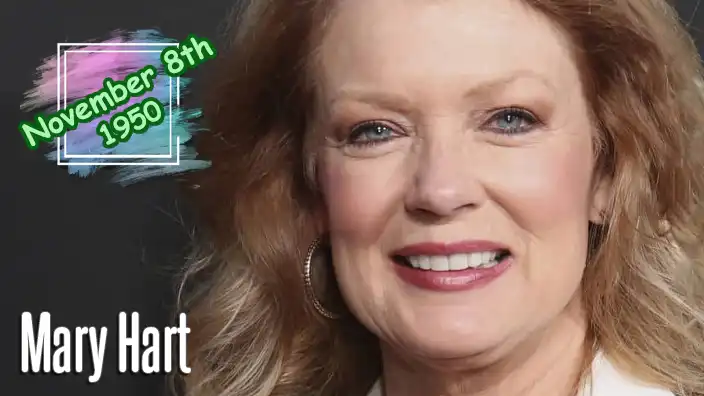
November 8, 1950, in Madison, South Dakota

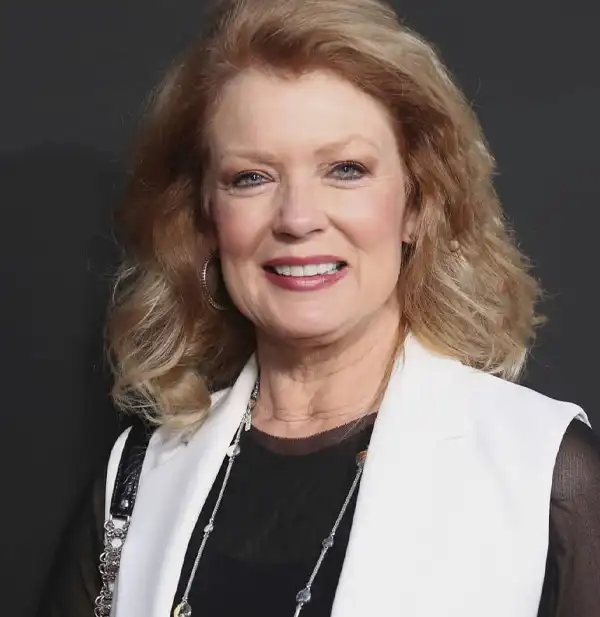
Mary Johanna Harum, professionally known as Mary Hart, was born on November 8, 1950, in Madison, South Dakota. Growing up in a family of Scandinavian heritage, she spent portions of her childhood in Sioux Falls, South Dakota, and in Denmark and Sweden. These international experiences helped her develop fluency in Danish and Swedish, adding an unusual linguistic accomplishment to her future broadcasting credentials. Her upbringing combined traditional Midwestern values with an appreciation for different cultures, qualities that would later contribute to her approachable interviewing style. Long before she became a familiar face on American television, Mary was developing the communication skills and confidence that would eventually help her navigate the unpredictable world of Hollywood entertainment.
Mary's early ambitions included education, performance, and broadcasting, although her path to national television was anything but straightforward. She attended Augustana College in Sioux Falls, graduating in 1972 with a degree in English. Before completing her education, she entered the world of beauty pageants and was crowned Miss South Dakota in 1970. She subsequently competed in the Miss America pageant, where she reached the semifinals. These experiences provided valuable opportunities to develop public-speaking skills, stage presence, and the ability to remain composed while being watched by large audiences. They also introduced her to the demanding world of public appearances, where looking relaxed while everything around you is carefully choreographed is practically an Olympic sport.
Following college, Mary worked as a high school English teacher, demonstrating that her professional abilities extended well beyond television presentation and beauty competitions. During this period, she also became involved in local broadcasting, producing and hosting television programming in South Dakota. Her combination of teaching experience, communication skills, and natural enthusiasm made her particularly suited to the rapidly developing world of television journalism. Although teaching offered a respectable career, the attraction of broadcasting eventually proved irresistible. Mary began pursuing opportunities that would allow her to reach larger audiences, gradually moving from regional television into increasingly prominent presenting positions.
Her early broadcasting career included work at television stations in Omaha, Nebraska, and Oklahoma City, Oklahoma. In Oklahoma City, she became a co-host of Dannysday, a local talk show featuring broadcaster Danny Williams. The program gave her valuable experience interviewing guests, managing live television conversations, and responding to unexpected developments without losing her composure. Local television was an excellent training ground because presenters frequently had to handle everything from serious interviews to lighthearted entertainment segments, sometimes with very little preparation. Mary developed the versatility and confidence that would later become defining characteristics of her national television career.
In 1979, Mary moved to Los Angeles, determined to establish herself in the competitive entertainment industry. Like many aspiring television personalities, she discovered that Hollywood offered plenty of opportunities to be rejected before offering anyone a proper job. She pursued acting and broadcasting assignments, eventually becoming a co-host of the Los Angeles edition of PM Magazine. Her work attracted attention, and in 1981 she joined Regis Philbin as co-host of his national NBC talk show. Unfortunately, the program was canceled after only a few months, creating another unexpected obstacle in her career. However, what initially appeared to be a professional disappointment soon became the opportunity that changed her life.
Following the cancellation of the Regis Philbin program, Mary was interviewed by the relatively new television entertainment news program Entertainment Tonight. Her personality and broadcasting experience impressed the show's producers, who offered her a position as a correspondent. Within a few months, she had advanced to co-host, beginning an association that would make her one of the most recognizable television personalities in America. What started as an interview about a canceled television program had unexpectedly turned into the beginning of an extraordinary career. It was the sort of Hollywood plot twist that even an experienced screenwriter might have considered a little too convenient.
Mary became the principal female host of Entertainment Tonight in 1982, helping transform the syndicated program into a major force in American television. The show had launched in 1981 with an ambitious concept: deliver daily news about movies, television, music, and celebrities directly into viewers' homes. At the time, entertainment reporting was not the enormous industry it would later become, and some observers questioned whether there would be enough material to sustain a daily program. As it turned out, Hollywood had absolutely no difficulty providing a continuous supply of premieres, romances, breakups, awards ceremonies, and occasional spectacular embarrassments. Mary became central to the show's identity, combining professional presentation with an enthusiastic interest in the people she interviewed.
Throughout her years on Entertainment Tonight, Mary worked alongside several prominent television personalities, including Ron Hendren, Robb Weller, John Tesh, Bob Goen, and Mark Steines. Her partnership with John Tesh became particularly memorable, with the pair developing an easygoing chemistry that appealed to viewers across the country. Their polished presentation helped establish the program as a dependable source of entertainment news during an era when audiences relied heavily on television rather than websites and social media for celebrity information. Mary brought warmth and familiarity to the format, making viewers feel as though they were receiving the latest Hollywood news from a knowledgeable friend rather than a distant television personality.
One of Mary's greatest professional strengths was her ability to interview an extraordinary range of celebrities without appearing intimidated by their fame. During her career, she spoke with major entertainment figures, including Elizabeth Taylor, Tom Hanks, Paul McCartney, and countless other actors, musicians, and filmmakers. She also interviewed prominent public figures and attended major cultural events around the world. Among her particularly memorable experiences was interviewing legendary comedian Lucille Ball, an encounter Mary later recalled as one of the rare occasions when she felt genuinely starstruck. She also accompanied Michael Jackson on tour, gaining unusual behind-the-scenes access to one of the world's most famous entertainers. Her interviews frequently balanced professional curiosity with genuine admiration, allowing celebrities to discuss their work in a comfortable and conversational atmosphere.
Mary's popularity extended beyond her interviewing abilities, and her appearance became an unexpected part of television history. During the 1980s, her legs attracted considerable public attention, eventually leading to a hosiery endorsement and a widely publicized insurance arrangement. A short-term policy reportedly insured her legs for $1 million each through Lloyd's of London, creating one of the more unusual publicity stories associated with American television. The insurance arrangement became so famous that it remained part of her public image long after the policy itself had expired. When a redesign of the Entertainment Tonight studio concealed her legs behind the set, viewers reportedly complained, prompting changes to the presentation. It was an extraordinary reminder that television audiences sometimes become attached to details that producers never anticipated.
Her cultural influence became so widespread that she occasionally found herself becoming part of the entertainment stories she normally reported. One particularly memorable example occurred in the television comedy Seinfeld, when the character Cosmo Kramer experienced seizures supposedly triggered by the sound of Mary's voice. The unusual storyline was inspired by reports of a real medical case involving a woman whose seizures were reportedly associated with hearing the television presenter's voice. Although the situation was certainly unusual, it demonstrated how thoroughly Mary had entered American popular culture. Few television personalities can claim that their voice became the subject of both a medical discussion and a memorable sitcom storyline. Most broadcasters would probably settle for having people recognize their opening greeting.
Mary also made numerous appearances outside her regular presenting duties, demonstrating her willingness to participate in comedy, film, animation, and other entertainment projects. Her screen credits include the animated feature Jimmy Neutron: Boy Genius in 2001, in which she voiced a newscaster, and appearances in films such as The Great Buck Howard and Swing Vote, both released in 2008. She appeared as herself in television productions including Frasier and provided the voice of Fairy Hart in the animated series The Fairly OddParents. These appearances frequently played upon her established identity as a familiar entertainment news personality, allowing audiences to enjoy the amusing contrast between her polished broadcasting image and fictional television situations.
Her contributions to television were recognized through several prestigious professional honors. In 1989, Mary received a star on the Hollywood Walk of Fame, acknowledging her growing influence in entertainment broadcasting. She was inducted into the Broadcasting & Cable Hall of Fame in 1999, further recognizing her achievements in television. Her work also earned recognition from organizations celebrating women's contributions to the media, including a Gracie Allen Award in 2002. These honors reflected the significance of her role in developing entertainment journalism as a recognizable and commercially successful television format. At a time when the television industry was undergoing substantial changes, Mary helped demonstrate that celebrity reporting could attract loyal audiences and become a permanent feature of American broadcasting.
Away from the cameras, Mary's personal life included her marriage to television and film producer Burt Sugarman on April 8, 1989. Sugarman was already well established in the entertainment industry, having produced television programs and films, including the influential late-night music series The Midnight Special. The couple welcomed a son, Alec Jay Sugarman, and Mary frequently emphasized the importance of family alongside her professional responsibilities. Maintaining a demanding television career while raising a family required careful planning, particularly during the years when Entertainment Tonight involved extensive travel, major events, and frequent interviews. Her marriage and family life became an important part of her identity beyond the entertainment news desk.
After nearly three decades as the familiar face of Entertainment Tonight, Mary announced in 2010 that she intended to leave the program. Her final broadcast as a regular host aired in May 2011, bringing an extraordinary chapter in television history to a close. During her tenure, the entertainment industry had changed dramatically, moving from an era dominated by traditional movie studios, television networks, and printed celebrity magazines into a world increasingly influenced by digital media and instant online reporting. Mary had witnessed those changes firsthand, interviewing generations of performers and reporting on countless important moments in popular culture. Her departure marked the end of one of the longest and most recognizable hosting careers in entertainment television.
Although she stepped away from daily hosting responsibilities, Mary did not disappear from public life. She continued making occasional television appearances, participating in entertainment events, and returning to Entertainment Tonight for special reunions and anniversary celebrations. Her appearances alongside former colleagues, including John Tesh, provided nostalgic reminders of the program's earlier years and the personalities who helped establish its popularity. She also remained connected to the entertainment community through charitable events, public appearances, and longstanding friendships developed throughout her career. For viewers who had watched her for decades, seeing Mary return to the familiar television set was rather like welcoming back a favorite neighbor who had moved away but still remembered everyone's name.
Mary has also devoted considerable attention to charitable and community activities. She has supported Children's Hospital Los Angeles, serving in leadership and fundraising roles to help improve medical facilities and services for young patients. In 2011, she became a spokesperson for the Edith Sanford Breast Cancer Initiative, helping raise awareness of breast cancer research and education. Her charitable work has reflected a commitment to using her public recognition for purposes beyond entertainment reporting. By supporting healthcare organizations and community initiatives, she has demonstrated that a successful broadcasting career can provide opportunities to make meaningful contributions outside the television studio.
Another enduring part of Mary's public personality is her enthusiastic support for the Los Angeles Dodgers. A devoted baseball fan, she has frequently attended games and become a recognizable presence near home plate at Dodger Stadium. Her enthusiasm has attracted attention from television cameras and fellow spectators, particularly during important games and postseason celebrations. She has also performed the national anthem at baseball events, combining her love of sports with her experience as a public performer. While many celebrities attend sporting events primarily for publicity, Mary's longstanding devotion to the Dodgers has become a familiar part of her public identity. Apparently, even after decades of interviewing Hollywood's biggest stars, she still appreciates a good baseball game and the opportunity to cheer herself hoarse.
Mary Hart's remarkable broadcasting career helped define an entire era of American entertainment television. From her early days as a South Dakota schoolteacher and local television presenter to her extraordinary run on Entertainment Tonight, she demonstrated the importance of professionalism, persistence, and an approachable personality. Her work helped bring Hollywood into millions of living rooms, making celebrity interviews and entertainment news part of everyday television viewing. Although the media landscape has changed enormously since she first appeared behind the Entertainment Tonight desk, her influence remains part of the history of television journalism. And while today's celebrities can announce their latest news directly to millions of social media followers, there was a time when Hollywood's biggest stories simply weren't complete until Mary Hart had told America about them.
IMDb – Mary Hart — Biography, television and film credits, personal information, and trivia. Oklahoma Historical Society – Mary Hart — Early life, education, broadcasting career, and professional recognition. Hollywood Walk of Fame – Mary Hart — Broadcasting achievements and Hollywood Walk of Fame recognition. Entertainment Tonight – Mary Hart — Career retrospectives, interviews, and special appearances. Entertainment Tonight – Mary Hart Returns — Reflections on memorable celebrity interviews and her years with the program. TV Guide – Mary Hart Biography — Television career, charitable activities, and professional milestones. Los Angeles Times – Mary Hart — Television career, celebrity interviews, and the story behind her famous insured legs.References & Sources