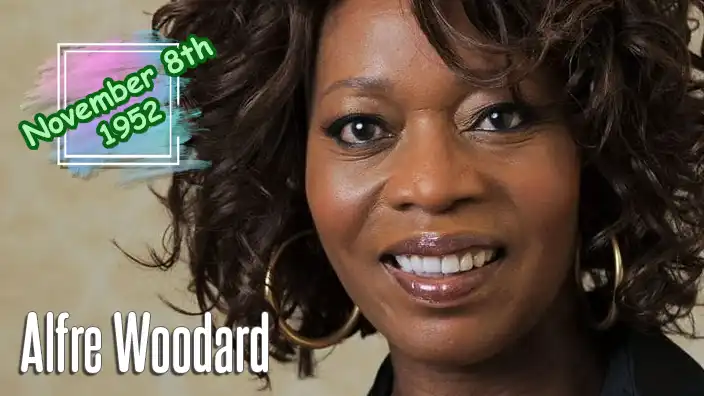
November 8, 1952, in Tulsa, Oklahoma


Alfre Woodard was born on November 8, 1952, in Tulsa, Oklahoma, the youngest of three children born to Constance Woodard, a homemaker, and Marion H. Woodard, an interior designer. Growing up in a close-knit family, she developed an appreciation for education, creativity, and the importance of expressing herself with confidence. Her early years were shaped by the social changes taking place across America, particularly the civil rights movement and the expanding opportunities available to African American performers. Although she would eventually become one of the entertainment industry's most respected actresses, acting was not originally her childhood ambition. Like many successful performers, she discovered her calling through an unexpected opportunity that would permanently change the direction of her life.
While attending Bishop Kelley High School in Tulsa, Alfre was encouraged by a teacher to audition for a school production. The experience introduced her to the excitement and discipline of theatrical performance, revealing an ability to communicate emotion and inhabit characters that she had not previously considered pursuing professionally. She subsequently attended Boston University, where she studied drama and graduated with a Bachelor of Fine Arts degree in 1974. Her formal theatrical education provided a strong foundation in acting technique, character development, and stage performance. Unlike performers who find themselves suddenly thrust into the spotlight, Alfre developed her craft through serious training and practical experience, building the skills that would eventually allow her to move confidently between theater, television, and film.
Following her graduation, Alfre began establishing herself in professional theater, working with regional companies and developing a reputation for her expressive performances. One of her important early opportunities came through the Los Angeles production of For Colored Girls Who Have Considered Suicide / When the Rainbow Is Enuf, the groundbreaking theatrical work by Ntozake Shange. The production explored the experiences, struggles, relationships, and resilience of African American women through poetry, movement, and dramatic storytelling. Participating in such an emotionally demanding production helped demonstrate Alfre's ability to portray complex characters while contributing to socially meaningful artistic work. It also established a pattern that would continue throughout her career: a willingness to select challenging material rather than simply pursue roles offering the greatest commercial exposure.
Alfre made her feature-film debut in the 1978 thriller Remember My Name, directed by Alan Rudolph. Although the film was not a major commercial success, it provided valuable experience and introduced her to the demands of screen acting. She continued appearing in film and television productions, gradually attracting attention for her naturalistic performances and commanding presence. Her early work demonstrated a remarkable ability to communicate emotional complexity through subtle facial expressions, carefully controlled dialogue, and physical gestures. These qualities would become particularly important as she moved into more prominent dramatic roles, where audiences and critics increasingly recognized her capacity to transform supporting characters into memorable personalities.
Her breakthrough in film came with Cross Creek in 1983, a biographical drama based on the life of author Marjorie Kinnan Rawlings. Alfre portrayed Geechee, a domestic worker whose relationship with Rawlings, played by Mary Steenburgen, formed an important part of the story. Her performance earned an Academy Award nomination for Best Supporting Actress, introducing her talent to a much wider audience and establishing her as a serious contender for major dramatic roles. The nomination was especially significant because it arrived relatively early in her film career, confirming the promise that theater audiences and industry professionals had already recognized. Although she did not take home the Oscar, the nomination helped open doors to a remarkable range of future opportunities.
Television soon became another major showcase for Alfre's abilities. In 1983, she appeared in the acclaimed medical drama St. Elsewhere, portraying Dr. Roxanne Turner, a character whose storylines explored the personal and professional challenges faced by medical professionals. Her work on the series earned significant critical recognition, including a Primetime Emmy Award for Outstanding Supporting Actress in a Drama Series in 1984. The performance demonstrated her ability to bring depth and credibility to a recurring television character while working within the demanding production schedules of network drama. It also marked the beginning of an extraordinary relationship with the Emmy Awards, which would recognize her performances across several decades and multiple television genres.
In 1986, Alfre delivered another celebrated television performance in the NBC drama Hill Street Blues, portraying Doris Robson in a memorable guest appearance. Her portrayal earned a Primetime Emmy Award for Outstanding Guest Performer in a Drama Series, further establishing her reputation for making a powerful impression even in limited screen time. Unlike performers who require an entire season to establish a character, Alfre possessed the unusual ability to create believable personalities within a single episode. This skill made her particularly valuable to television producers seeking actors who could bring emotional weight and authenticity to important guest roles. Her success also demonstrated the versatility that would eventually make her one of the most frequently honored performers in television history.
Her film career continued expanding during the late 1980s and early 1990s, with performances in productions including Miss Firecracker, Grand Canyon, and Passion Fish. She frequently portrayed women facing difficult personal circumstances, social pressures, and complicated family relationships, approaching each character with empathy and psychological insight. In 1992, she appeared in Passion Fish, directed by John Sayles, playing Chantelle, a caregiver whose relationship with a disabled former television actress becomes central to the story. The film received widespread critical praise, and Alfre's performance was recognized for its emotional intelligence and refusal to reduce her character to a convenient supporting stereotype. Her work helped demonstrate that stories about friendship, independence, and personal transformation could be as compelling as the more spectacular subjects traditionally favored by Hollywood.
One of Alfre's most celebrated film performances came in the 1997 independent drama Down in the Delta, directed by Maya Angelou. She portrayed Loretta Sinclair, a struggling mother sent with her children to spend time with relatives in Mississippi, where she begins rebuilding her life and reconnecting with her family's history. The film explored themes of addiction, family responsibility, cultural identity, and personal redemption. Alfre's performance brought humanity and emotional credibility to a character confronting serious difficulties without losing her capacity for growth. The collaboration with Maya Angelou was particularly meaningful because both women shared an interest in storytelling that acknowledged the complexity and dignity of African American experiences.
Throughout the 1990s, Alfre also appeared in major Hollywood productions that introduced her work to audiences beyond independent cinema and television drama. She played Betty Applewhite in the popular ABC series Desperate Housewives, joining the cast during its second season in 2005. Her character became central to a mysterious storyline involving family secrets, deception, and the carefully maintained appearances of suburban life. The role allowed Alfre to explore a different kind of television drama, combining suspense, dark humor, and emotional conflict. Although the character's storyline generated discussion among viewers and critics, her performance once again demonstrated her ability to bring conviction and dramatic intensity to unconventional material.
Another important television achievement came with the HBO production Miss Evers' Boys in 1997, a historical drama inspired by the infamous Tuskegee syphilis study. Alfre portrayed Nurse Eunice Evers, a character whose professional responsibilities and moral conflicts form the emotional center of the story. The film examined medical ethics, racial discrimination, and the devastating consequences of institutional wrongdoing. Her performance earned a Primetime Emmy Award for Outstanding Lead Actress in a Miniseries or Movie, adding another major honor to her growing collection. The role was especially demanding because it required her to portray a woman caught between professional loyalty, personal compassion, and increasingly troubling ethical realities.
In 2003, Alfre won another Primetime Emmy Award for her guest appearance in the legal drama The Practice, portraying Denise Freeman in an emotionally charged storyline. The award brought her total number of competitive Primetime Emmy wins to four, confirming her remarkable consistency across different television formats. Over the course of her career, she has received numerous additional Emmy nominations, placing her among the most recognized performers in the awards' history. Her achievements are particularly notable because they span leading roles, supporting performances, guest appearances, and television movies. Rather than becoming associated with a single character or genre, she has built a career defined by versatility and an exceptional ability to interpret challenging material.
Alfre continued demonstrating that versatility through roles in films such as The Forgotten, Beauty Shop, Take the Lead, and 12 Years a Slave. In the 2013 historical drama 12 Years a Slave, directed by Steve McQueen, she portrayed Mistress Shaw, a formerly enslaved woman whose circumstances illustrate the complicated social relationships within the American slaveholding system. Although her appearance was relatively brief, the character contributed an important perspective to the film's exploration of power, survival, and racial injustice. Alfre's ability to create a memorable performance within limited screen time once again demonstrated why filmmakers continued seeking her participation in ambitious dramatic productions.
Her career also extended into the world of superhero entertainment when she joined the Marvel Cinematic Universe. In 2016, she appeared in Captain America: Civil War as Miriam Sharpe, a grieving mother who confronts Tony Stark over the death of her son during the Avengers' battle in Sokovia. Although her appearance was brief, the character's emotional confrontation helped establish the moral conflict driving the film's central storyline. That same year, she portrayed Mariah Dillard in the Netflix series Luke Cage, playing a politically ambitious Harlem councilwoman whose complicated relationships and increasingly questionable decisions made her one of the show's central figures. The two Marvel roles were distinct characters, illustrating the unusual flexibility of a fictional universe where even an accomplished actress can apparently hold two entirely different identities without anyone calling the authorities.
In Luke Cage, Alfre delivered one of her most memorable contemporary television performances. Mariah Dillard began as a politically influential figure attempting to establish legitimacy in Harlem, but her storyline gradually revealed darker ambitions and deeply rooted personal conflicts. Alfre approached the character with psychological complexity, refusing to portray her simply as a conventional villain. Her performance explored the relationships between political power, family history, personal trauma, and moral compromise, helping distinguish the series from more straightforward superhero adventures. Her work attracted praise from viewers and critics, demonstrating that sophisticated character development could coexist with action sequences and comic-book storytelling.
Alfre's career reached another dramatic milestone with the 2019 film Clemency, directed by Chinonye Chukwu. She portrayed Bernadine Williams, a prison warden whose responsibility for overseeing executions gradually takes a profound emotional and psychological toll. The film explored capital punishment through the perspective of someone working within the correctional system, focusing on the personal consequences of carrying out institutional responsibilities. Alfre's restrained and deeply affecting performance earned widespread critical acclaim, including nominations and awards from numerous critics' organizations. Many reviewers regarded her work as one of the year's strongest dramatic performances, highlighting her ability to communicate exhaustion, moral uncertainty, and suppressed emotion without relying on exaggerated dialogue or theatrical gestures.
In addition to live-action performances, Alfre has established herself as a respected voice actress. She voiced Sarabi, Simba's mother, in Disney's 2019 computer-animated remake of The Lion King, bringing warmth and dignity to the familiar character. Her distinctive voice has also appeared in animated television productions, documentaries, and other projects requiring narration or character performance. Voice acting presents its own challenges because performers must communicate personality and emotion without relying on facial expressions or physical movement. Alfre's rich vocal qualities and precise delivery have made her particularly effective in these roles, adding another dimension to an already remarkably varied career.
Beyond acting, Alfre has maintained a longstanding commitment to humanitarian causes and social activism. She is a co-founder of Artists for a New South Africa, an organization established to support the struggle against apartheid and later involved in efforts addressing HIV/AIDS and related humanitarian concerns in South Africa. Her activism reflects a belief that artists can use their visibility and influence to support social change and draw attention to important international issues. She has also participated in initiatives promoting education, healthcare, and opportunities for underserved communities. Rather than separating her professional achievements from her personal convictions, Alfre has consistently demonstrated an interest in using her public platform to encourage constructive action.
Her personal life has included a long marriage to writer and producer Roderick Spencer, whom she married in 1983. The couple have two children, Mavis and Duncan, and Alfre has frequently spoken about the importance of family, relationships, and maintaining a balanced life despite the demands of the entertainment industry. Her marriage has endured through decades of professional commitments, location filming, and the unpredictable schedules associated with acting. While Hollywood relationships often become headline material for all the wrong reasons, Alfre and her family have generally maintained a comparatively private personal life, allowing her professional achievements to remain the primary focus of public attention.
Alfre Woodard's influence extends well beyond the impressive number of awards and nominations associated with her name. She has helped expand opportunities for African American actresses by demonstrating that complex, intelligent, and emotionally challenging roles can attract audiences across racial and cultural boundaries. Her career has encompassed independent cinema, major Hollywood productions, prestige television, historical dramas, and popular entertainment franchises. Through these varied projects, she has consistently challenged simplistic portrayals of women and demonstrated the value of nuanced storytelling. Her achievements have inspired younger performers who recognize in her career an example of artistic independence, professional discipline, and the courage to pursue demanding material.
With an Academy Award nomination, four Primetime Emmy Awards, a Golden Globe Award, and an extraordinary collection of memorable performances, Alfre Woodard has established a remarkable legacy in American entertainment. Her career illustrates the importance of patience, versatility, and artistic integrity in an industry that frequently rewards temporary popularity over lasting achievement. Whether portraying a compassionate caregiver, a conflicted prison warden, a powerful political figure, or the mother of a future lion king, she brings intelligence and emotional authenticity to every role. Hollywood may have plenty of stars, but Alfre has demonstrated that genuine acting excellence requires something considerably more substantial than a familiar face and a good publicity department.
IMDb – Alfre Woodard — Personal biography, film and television credits, awards, trivia, photographs, and videos. Television Academy – Alfre Woodard — Official Primetime Emmy Awards and nomination history. Golden Globes – Alfre Woodard — Golden Globe recognition and career achievements. Oklahoma Historical Society – Alfre Woodard — Early life, education, and acting career. Oklahoma Hall of Fame – Alfre Woodard — Biography, professional honors, and humanitarian contributions. Presidency of South Africa – National Orders 2014 — Recognition of her contributions to the anti-apartheid movement. Rotten Tomatoes – Alfre Woodard — Filmography, television roles, and career overview.References & Sources