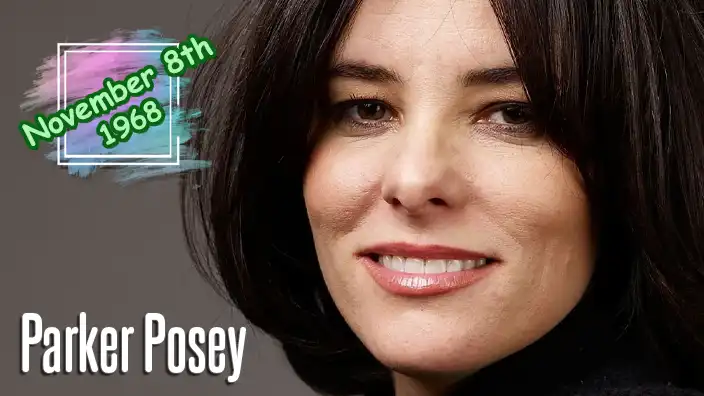
November 8, 1968, in Baltimore, Maryland

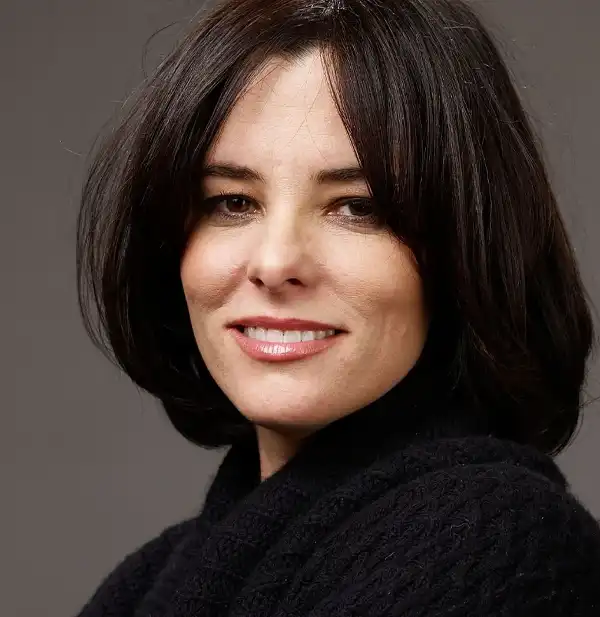
Parker Christian Posey was born on November 8, 1968, in Baltimore, Maryland, to Lynda and Chris Posey. Her mother worked as a chef, while her father operated a car dealership, providing a family background far removed from the Hollywood entertainment industry she would eventually enter. Parker was born alongside her twin brother, Christopher, and the family later settled in Monroe, Louisiana, where she spent much of her childhood. Growing up in the American South helped shape her distinctive personality, appreciation for colorful characters, and fascination with the peculiarities of everyday human behavior. Her childhood experiences would eventually become useful material for an actress whose career frequently involved portraying people who were charming, unpredictable, socially awkward, or occasionally all three at once.
Parker developed an interest in performing during her school years, discovering that acting offered an opportunity to explore personalities and situations beyond her everyday experiences. She attended the University of North Carolina School of the Arts, where she studied drama and received formal training in theatrical performance. Her education emphasized the importance of character development, movement, vocal expression, and the discipline required to perform convincingly before an audience. She later moved to New York City, where the city's energetic theater and independent film communities offered opportunities for ambitious young performers willing to experiment with unconventional material. Rather than pursuing a conventional route toward mainstream Hollywood stardom, Parker gravitated toward creative projects that valued originality, character-driven storytelling, and artistic freedom.
Her early professional career included an appearance on the daytime soap opera As the World Turns, where she portrayed Tess Shelby in the early 1990s. The experience provided valuable exposure to television production and the demanding schedules associated with serialized drama. However, Parker's artistic interests increasingly drew her toward independent cinema, which was experiencing a remarkable period of growth in the United States. Independent filmmakers were experimenting with unusual stories, unconventional characters, and low-budget productions that challenged the formulas dominating major Hollywood studios. Parker's expressive personality, sharp comic timing, and willingness to embrace eccentric roles made her particularly well suited to this developing movement.
Her breakthrough arrived in 1993 with Richard Linklater's coming-of-age comedy Dazed and Confused. Set in Texas during the final day of school in 1976, the film followed a group of teenagers navigating parties, friendships, social expectations, and the complicated rituals of high school life. Parker portrayed Darla Marks, an intimidating senior student whose enthusiasm for humiliating younger girls made her one of the film's most memorable characters. Although Dazed and Confused was not an enormous commercial success during its original theatrical release, it gradually developed a devoted following and became a cult classic. Parker's performance demonstrated her ability to transform an unpleasant character into someone audiences could not easily forget, even if they would probably have preferred to avoid meeting Darla in an actual school corridor.
The success of Dazed and Confused introduced Parker to a generation of independent filmmakers seeking performers who could bring authenticity and originality to unusual stories. Throughout the 1990s, she appeared in a remarkable collection of independent productions, including Sleep with Me, Amateur, The Doom Generation, Kicking and Screaming, and The House of Yes. Her performances frequently explored characters whose personalities were difficult to categorize, blending humor, insecurity, ambition, vulnerability, and eccentricity. Rather than attempting to make every character sympathetic, Parker embraced their contradictions and flaws, creating performances that felt unpredictable and genuinely human. Her willingness to take creative risks helped establish her as one of the defining actresses of the American independent film movement.
One of her most celebrated early performances came in the 1995 independent comedy Party Girl, directed by Daisy von Scherler Mayer. Parker played Mary, a fashionable New York party enthusiast whose carefree lifestyle begins unraveling when she is forced to confront financial responsibilities and the possibility of finding meaningful employment. After taking a job at a library, Mary gradually discovers that organization, education, and personal responsibility might have certain advantages over spending every evening at a nightclub. Parker brought warmth, humor, and remarkable energy to the character, transforming what could have been a simple comedy into an entertaining portrait of personal growth. The film became closely associated with her emerging reputation as an independent cinema icon and remains one of her signature performances.
Her reputation grew further with the 1997 black comedy The House of Yes, directed by Mark Waters and based on the play by Wendy MacLeod. Parker portrayed Jackie-O Pascal, a psychologically troubled young woman obsessed with Jacqueline Kennedy Onassis and entangled in a deeply dysfunctional family relationship. The role demanded an unusual combination of dark humor, emotional instability, theatrical intensity, and carefully controlled performance. Parker's portrayal earned her the Special Jury Prize for Acting at the Sundance Film Festival, recognizing her exceptional work in a challenging independent production. The film demonstrated that her talents extended far beyond quirky comedy, revealing an actress capable of exploring disturbing psychological material without losing her distinctive screen presence.
By the late 1990s, Parker had become so closely associated with independent filmmaking that Time magazine famously described her as the "Queen of the Indies" in 1997. The nickname reflected both the extraordinary number of independent films in which she appeared and her influence on the movement's artistic identity. While many aspiring actresses viewed low-budget productions as temporary stepping stones toward major studio contracts, Parker embraced independent cinema as a creative environment offering unusual roles and greater freedom. Her willingness to work with emerging directors and experimental storytellers helped bring attention to films that might otherwise have struggled to find audiences. The title became an enduring part of her public identity, although being a queen in independent cinema rarely came with the sort of palace, servants, and generous royal treasury normally associated with the position.
Parker also became a frequent collaborator with writer and director Christopher Guest, whose improvised mockumentary comedies provided an ideal showcase for her comic abilities. Their collaboration included Waiting for Guffman in 1996, Best in Show in 2000, A Mighty Wind in 2003, and For Your Consideration in 2006. Guest's films frequently relied on detailed character development, improvisation, and the ability of actors to create believable personalities within absurd situations. Parker excelled in this environment, contributing performances that combined carefully observed human behavior with wonderfully exaggerated comic details. Her work alongside performers such as Catherine O'Hara, Eugene Levy, Fred Willard, and Jennifer Coolidge helped establish these films as enduring favorites among audiences who appreciate sophisticated character comedy.
In Best in Show, Parker portrayed Meg Swan, a neurotic dog owner who enters a prestigious canine competition with her husband, Hamilton, played by Michael Hitchcock. The couple's obsessive anxieties, strained relationship, and excessive concern for their dog created some of the film's funniest moments. Parker's performance captured the ridiculous intensity with which ordinary people can approach apparently harmless competitions, particularly when personal insecurities become tangled with the desire to win. Her comic timing and improvisational skills helped make Meg one of the film's most memorable characters. The performance also demonstrated that Parker could make audiences laugh simply by expressing mounting panic over something as ordinary as a missing dog toy.
Her appearances in Christopher Guest's films helped establish a reputation for exceptional improvisational ability. Unlike traditional scripted productions, Guest's mockumentaries frequently provided performers with detailed character backgrounds and story outlines while allowing them considerable freedom to develop dialogue during filming. This approach required actors to remain completely immersed in their characters while responding spontaneously to other performers. Parker's theatrical training and instinctive understanding of comic behavior made her particularly effective in these circumstances. Her performances frequently revealed the humor hidden within everyday anxieties, ambitions, and social interactions, demonstrating that comedy could emerge from recognizable human weaknesses rather than elaborate jokes or physical stunts.
Her performance in Scream 3, released in 2000, became particularly popular among fans of the horror franchise. Parker portrayed Jennifer Jolie, an actress playing Gale Weathers in the fictional film-within-a-film Stab 3. The character's exaggerated confidence, nervous energy, and determination to remain involved in the investigation created a humorous contrast with Courteney Cox's original Gale Weathers. Parker embraced the film's self-referential comedy, delivering a performance that frequently provided comic relief amid the suspense and violence. Jennifer Jolie became one of the franchise's most memorable supporting characters, proving that even in a horror film populated by masked killers, Parker could still find opportunities to make audiences laugh.
In 2001, Parker appeared in the musical comedy Josie and the Pussycats, portraying Fiona, an eccentric music industry executive involved in a bizarre scheme to manipulate teenage consumers through popular music. The film satirized commercial advertising, manufactured celebrity culture, and the music industry's obsession with marketing. Parker's exaggerated performance complemented the film's deliberately absurd tone, allowing her to create a villain whose behavior was both ridiculous and strangely believable. Although the movie initially received mixed reviews and struggled commercially, it later developed a cult following among viewers who appreciated its sharp satire of consumer culture. Parker's performance became one of its most entertaining elements, offering another example of her ability to transform outrageous material into memorable comedy.
Parker continued exploring independent cinema through collaborations with filmmaker Henry Jaglom and other directors interested in unconventional storytelling. She also worked with acclaimed filmmaker Woody Allen, appearing in Irrational Man in 2015 and Café Society in 2016. Her performances in these films demonstrated her ability to adapt to dialogue-driven stories centered on complicated relationships, moral uncertainty, and social observation. Throughout her career, Parker has frequently gravitated toward directors who value distinctive personalities and actors capable of bringing unexpected qualities to their characters. This artistic curiosity has allowed her to maintain an unusually varied filmography without becoming permanently associated with a single genre.
Television also provided Parker with opportunities to explore more substantial recurring roles. In 2006, she appeared in the drama series Boston Legal, portraying attorney Marlene Stanger, a character whose professional confidence and unconventional behavior fit comfortably within the show's eccentric legal environment. She later appeared in productions including The Good Wife, New Girl, and Inside Amy Schumer, demonstrating her ability to move between serious drama, sitcom comedy, and sketch-based entertainment. Her guest appearances frequently became memorable because of her talent for creating distinctive characters within limited screen time, an ability that had already served her well throughout her independent film career.
One of Parker's most significant television roles came with the Netflix science-fiction series Lost in Space, which premiered in 2018. She portrayed Dr. Smith, a deceptive and manipulative character whose true identity was June Harris. The role reimagined the character originally portrayed by Jonathan Harris in the classic 1960s television series, transforming the familiar scheming antagonist into a psychologically complex woman whose survival instincts frequently led her into morally questionable decisions. Parker's performance combined charm, calculation, vulnerability, and menace, making Dr. Smith one of the show's most unpredictable personalities. Her interpretation demonstrated that a familiar television villain could be reinvented without losing the essential qualities that made the character entertaining.
Throughout the three seasons of Lost in Space, Parker's character became central to the Robinson family's struggle to survive dangerous environments and unexpected threats. Her ability to manipulate others while occasionally displaying genuine emotion created an intriguing mixture of villainy and reluctant cooperation. The performance required Parker to balance dramatic tension with moments of dark humor, drawing upon the skills she had developed through decades of independent film and improvisational comedy. Her work introduced her to younger audiences who may have been unfamiliar with her earlier films, confirming that her distinctive acting style remained effective within modern, high-budget streaming television.
Parker also earned attention for her performance in the 2018 independent drama The Con Is On, alongside Uma Thurman and Tim Roth, and continued appearing in films that allowed her to explore unconventional characters. Her willingness to move between small independent productions and major entertainment projects reflected a career philosophy centered on interesting material rather than the size of a production's budget. She has frequently spoken about the creative satisfaction of working with filmmakers who encourage experimentation and allow actors to contribute ideas to their characters. This approach has helped her maintain a reputation for artistic independence even as the entertainment industry has changed dramatically since her early career.
In 2018, Parker published her memoir, You're on an Airplane: A Self-Mythologizing Memoir, an unconventional collection of personal reflections, stories, and observations. Rather than presenting a straightforward chronological account of her life, the book adopted a playful and imaginative approach that reflected her distinctive personality. She explored her experiences growing up, working in entertainment, developing relationships, and navigating the unpredictable circumstances of an acting career. The memoir received attention for its humor, originality, and conversational style, offering readers an opportunity to encounter the woman behind the memorable screen characters. Even when writing about herself, Parker apparently saw little reason to follow the traditional rules of storytelling.
Her career reached another major milestone when she joined the third season of HBO's acclaimed comedy-drama The White Lotus, which premiered in 2025. Parker portrayed Victoria Ratliff, a wealthy Southern woman vacationing with her family at a luxury resort in Thailand. The character's privileged lifestyle, distinctive Southern accent, emotional detachment, and dependence on medication created a fascinating mixture of comedy and social satire. Parker's performance drew upon her understanding of Southern culture and her extraordinary ability to portray characters who are simultaneously ridiculous and recognizably human. Her exaggerated pronunciation, carefully controlled facial expressions, and unpredictable reactions quickly attracted attention from viewers and critics.
The White Lotus introduced Parker to another generation of television audiences and demonstrated the continuing relevance of her distinctive comic abilities. Victoria Ratliff became one of the season's most discussed characters, with audiences particularly fascinated by her unusual speaking style and reactions to the increasingly uncomfortable circumstances surrounding her family. The performance earned Parker significant awards recognition, including a Primetime Emmy nomination for Outstanding Supporting Actress in a Drama Series. It also reinforced her reputation for creating characters whose behavior might appear absurd on the surface but reflects carefully observed aspects of human personality. Decades after earning the title "Queen of the Indies," Parker was still finding new ways to make audiences marvel at her ability to portray people who seem completely unaware of how extraordinary their behavior has become.
Beyond her film and television work, Parker has remained closely connected to theater and the artistic community in New York City. Her stage appearances include productions of plays by respected contemporary dramatists, allowing her to return to the immediacy and discipline of live performance. Theater offers a different creative environment from film and television, requiring actors to sustain characters through complete performances without the assistance of editing or repeated takes. Parker's continuing interest in stage work reflects her formal training and commitment to acting as a craft rather than simply a route to celebrity recognition.
Parker has also become recognized for her distinctive personal style and influence on independent film culture. Her fashion choices frequently reflect the same individuality that characterizes her performances, combining vintage influences, unusual accessories, and an appreciation for playful self-expression. During the 1990s, her appearances in independent films helped define a particular kind of alternative Hollywood glamour that rejected conventional expectations of how leading actresses should behave or present themselves. Rather than attempting to fit into an established celebrity mold, Parker developed an identity built around creativity, humor, and a willingness to appear eccentric. Her influence can be seen in subsequent generations of performers who embrace unusual roles and unconventional career paths.
Her personal life has generally remained more private than those of many Hollywood celebrities. Parker has spoken about her friendships, family relationships, and the importance of maintaining connections outside the entertainment industry, but she has rarely made her private affairs central to her public identity. She has spent much of her adult life in New York City, where the city's artistic communities and cultural diversity have provided inspiration for her work. Her affection for animals, particularly dogs, has also appeared in interviews and personal stories, occasionally offering amusing parallels with the obsessive canine enthusiasts she portrayed so memorably in Best in Show.
Parker Posey's contribution to American cinema extends beyond her individual performances. She became an important figure during a period when independent filmmakers were challenging Hollywood conventions and creating opportunities for stories that might otherwise have remained untold. Her willingness to work on unconventional projects helped demonstrate that memorable characters and compelling performances did not require enormous budgets or established commercial formulas. Through her collaborations with directors such as Richard Linklater, Christopher Guest, and numerous independent filmmakers, she contributed to an era of American filmmaking celebrated for its originality, experimentation, and creative independence.
Her career has also challenged traditional expectations about actresses in Hollywood. Rather than limiting herself to conventional romantic leads or carefully polished characters, Parker has embraced women who are difficult, awkward, manipulative, insecure, eccentric, and sometimes spectacularly unpleasant. Her performances demonstrate that flawed characters can be entertaining, emotionally engaging, and worthy of serious artistic attention. This willingness to explore the less flattering aspects of human behavior has made her an important influence on character-driven comedy and independent cinema, where authenticity often matters more than conventional glamour.
Parker Posey's remarkable career illustrates the value of individuality in an entertainment industry frequently dominated by predictable formulas and commercial expectations. From Dazed and Confused and Party Girl to Best in Show, Lost in Space, and The White Lotus, she has created an extraordinary collection of memorable characters while maintaining a fiercely independent artistic identity. Her sharp comic instincts, improvisational talent, and willingness to embrace unconventional material have secured her place among America's most distinctive actresses. Hollywood may have originally crowned her the "Queen of the Indies," but Parker has demonstrated that her talents extend far beyond independent cinema. And if her characters have taught audiences anything, it is that being a little strange can be wonderfully entertaining, provided someone remembers to keep the cameras rolling.
IMDb – Parker Posey — Personal details, film and television credits, career achievements, and trivia. Mississippi Encyclopedia – Parker Posey — Childhood, education, independent cinema, and early career. Television Academy – Parker Posey — Emmy nominations, including The White Lotus and Mr. & Mrs. Smith. Rotten Tomatoes – Parker Posey — Filmography, critical reception, and career overview. Netflix – Parker Posey Discusses Lost in Space — Her interpretation of Dr. Smith and memories of the original television series. TV Guide – Parker Posey Biography — Early career, film appearances, and professional recognition.References & Sources