Mark The Days - January

January kicks down the door shouting, “New year, new you!” while most of us are still digesting cheese logs and trying to remember what day it is. It’s a month built on resolutions, optimism, and the subtle judgment of kale. The parties are over, the decorations are down, and suddenly everyone’s into self-improvement and budgeting—until about the 12th. But January has its perks: fresh starts, fresh calendars, and the joy of celebrating completely random things like National Bubble Bath Day (because self-care still counts if it’s slippery). It’s cold, it’s hopeful, and it’s mostly held together with caffeine.
- Details
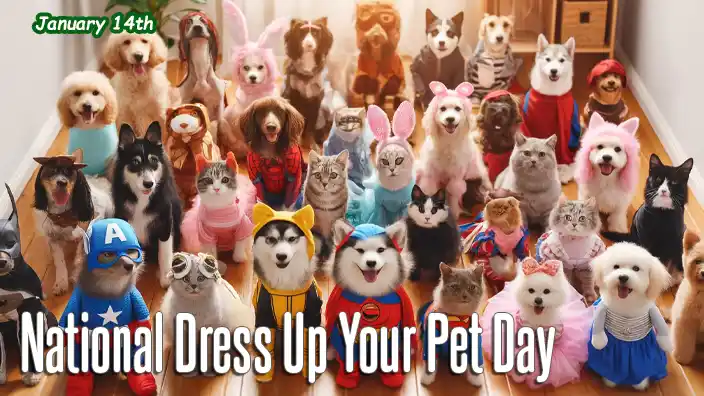
Your cat may never forgive you for this, and your dog will wag its tail in confused joy. Imagine your furry friend dressed as a tiny astronaut, a miniature superhero, or a small, disgruntled dragon. It’s the perfect chance to prove that fashion isn’t just for humans, and the only day of the year your pet might accidentally become an Instagram sensation—or plot their stylish revenge.
Celebrated: Annually, on January 14th
National Dress Up Your Pet Day is a fashion fiesta where pets become fashion icons, turning sidewalks into runways and dog parks into paparazzi hotspots.


- Details
Corn chips are the only snack that can double as both food and a public announcement. One bite, and suddenly everyone within a ten-foot radius knows exactly what you’re doing. But let’s be honest—if you’re going to be loud about something, it might as well be something this delicious.
Celebrated: Annually, on January 29th
Celebrate National Corn Chip Day with a look at the history, crunch, and creative ways to enjoy this classic snack.

- Details
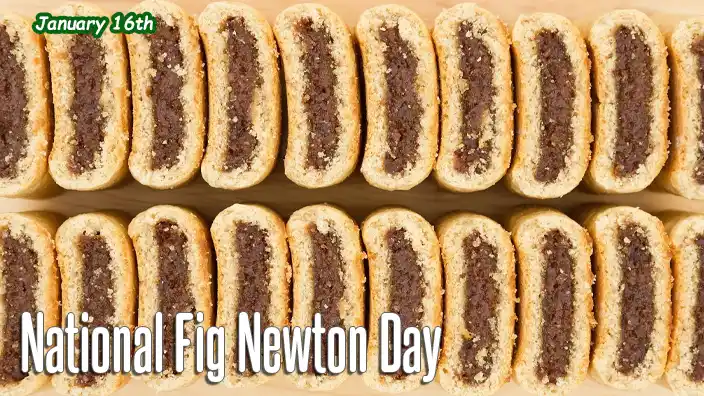
When it comes to fruits, figs are the mysterious, eyebrow-raising cousins in the fruit family. They're not flashy like strawberries, nor do they have the universal appeal of apples. Instead, figs are the understated, enigmatic characters you might find in a spy novel, quietly hiding their sweet secrets under a modest, bulbous exterior. They've been around since ancient times, probably gossiping in the background about historical events. Rumor has it that they were Cleopatra's favorite snack – talk about having a taste for drama! And if that wasn't enough, figs play hard to get, ripening only when they're good and ready, ensuring every bite is an adventure in timing and patience. In short, figs are the fruit equivalent of a wise, old sage with a mischievous twinkle in their eye, always ready to surprise you with their depth of flavor and ancient anecdotes.
Celebrated: Annually, on January 16th
Discover the joys of National Fig Newton Day! Dive into the history, fun facts, and unique ways to celebrate this beloved fig-filled treat every January 16th.


- Details
When a group of powdered wigs gathers around a table and everyone agrees on something, you know it’s either a miracle or the end of a really long argument. That’s exactly what happened when the Treaty of Paris was finally ratified—a moment where pens replaced muskets, and everyone awkwardly shook hands, probably wondering who got the last piece of cake at the signing party. It marked the official "we’re done fighting, let’s move on" declaration, proving that even the most stubborn nations can eventually agree, as long as there’s enough parchment and quill ink involved.
Celebrated: Annually, on January 14th
Celebrate Ratification Day on January 14th, commemorating the Treaty of Paris and the birth of American independence and democracy.


- Details
Using poetry at work is a bold move, because nothing changes the mood of a meeting faster than someone clearing their throat and saying, “I’d like to share a few lines about quarterly projections.” Imagine a staff memo written in rhyme, or a performance review that ends with a dramatic stanza about teamwork and coffee shortages. It might start as a joke, but before long you’ve got the accounting department trading haikus about expense reports and the boss delivering motivational sonnets before lunch. Sure, it may not speed up productivity, but at least when the work piles up, you can say it’s all part of the company’s ongoing epic poem. 😄📜
Celebrated: Annually, on the Second Tuesday in January
Discover the joy of Poetry at Work Day, a whimsical celebration encouraging creativity and poetic expression in everyday office life.


- Details
The social stigma attached to leprosy, steeped in centuries of misinformation and fear, casts a long, debilitating shadow over those it touches. Beyond the physical battles lies a deeper, more insidious struggle against societal ostracization and psychological scars. Leprosy stigma not only strips individuals of their dignity and self-worth but also erects invisible walls of isolation, severing connections with communities and loved ones. This stigma, a relic of ancient fears, continues to challenge the very essence of human empathy and acceptance, making the journey of healing and reintegration a labyrinth of unseen emotional hurdles. In addressing leprosy, it's imperative to combat this social stigma with equal vigor, fostering a world where compassion and understanding triumph over baseless fears and prejudices.
Celebrated: Annually, on the Last Sunday in January
Mark World Leprosy Day by understanding and addressing the medical and social aspects of leprosy, aiming to eradicate stigma and support healing.

- Details
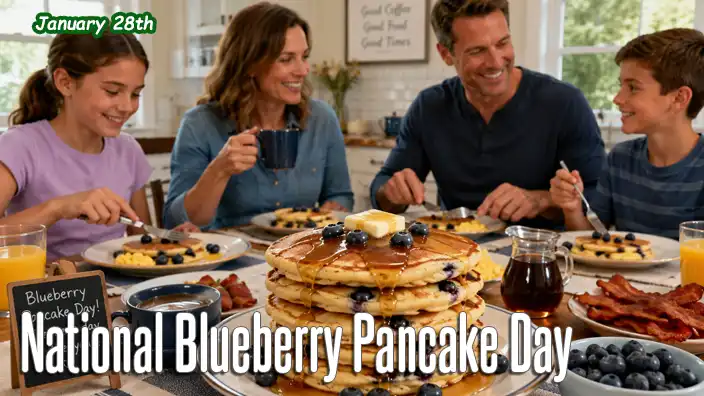
Some breakfasts whisper politely. Blueberry pancakes kick the kitchen door open, carrying butter, syrup, and absolutely no concern for your diet plans. National Blueberry Pancake Day celebrates those glorious mornings when flipping pancakes feels like a public service and counting blueberries somehow makes the entire stack “healthy.” Somewhere between the first bite and the syrup-covered plate, all of life’s problems suddenly seem at least 73% more manageable.
Celebrated: Annually, on January 28th
Celebrate National Blueberry Pancake Day with a humorous and factual look at fluffy pancakes, blueberries, breakfast traditions, and syrup-covered fun
- Details
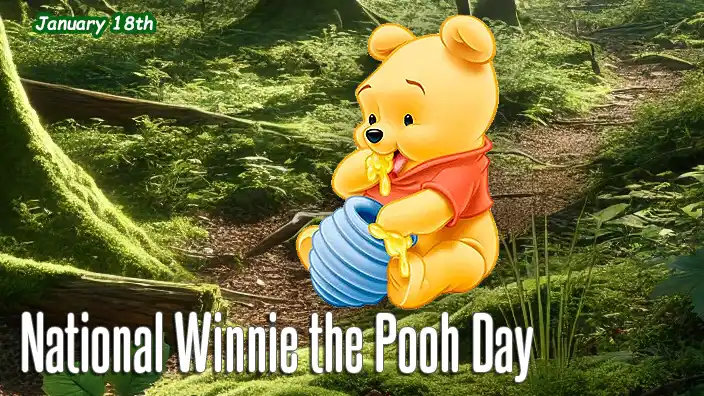
Life in the Hundred Acre Wood teaches you that no problem is too big if you have a jar of honey in one hand and a loyal Piglet by your side. Whether it’s a missing tail, a bouncing Tigger, or a philosophical debate over why bees make honey, the solution almost always involves food, naps, or Pooh’s unique blend of accidental wisdom. After all, who else could turn “Oh bother” into an iconic life motto?
Celebrated: Annually, on January 18th
Discover the origins of Winnie the Pooh, the beloved bear created by A.A. Milne, and celebrate National Winnie the Pooh Day with fun activities and trivia.


- Details
Scotland, the land where kilts are considered high fashion and bagpipes the ultimate soundtrack, isn't just a country; it's an experience wrapped in tartan. Here, the national animal is a unicorn, which makes perfect sense, because finding someone who dislikes a well-made haggis is equally mythical. The landscapes are breathtaking, possibly because the air is flavored with the hearty scent of malt whisky. And let's not forget the bagpipers, the rock stars of the Highlands, who know that the only thing better than the sound of bagpipes... is more bagpipes. Whether you're tossing a caber, savoring a dram, or just trying to pronounce "Loch Lomond" after said dram, Scotland is where legends roam, stories echo in the glens, and every raindrop whispers another excuse to wear that cozy, albeit slightly itchy, wool sweater.
Celebrated: Annually, on January 26th
Celebrate Dundee Day with a dash of Scottish spirit and Dundonian flair. Explore a city rich in history, culture, innovation, and mischievous fun. Join the festivities and embrace the vibrant tapestry of Dundee's past, present, and future.
- Details
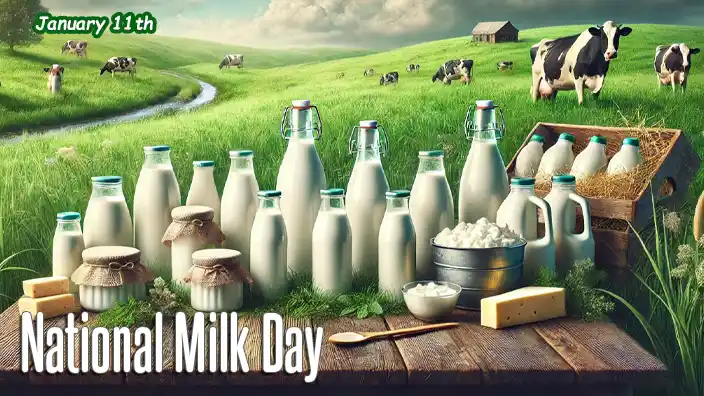
In the grand hierarchy of beverages, there’s one that manages to be both the breakfast champion and the unsung hero of dessert. Whether it's swirling into coffee, cushioning a spoonful of cereal, or transforming into rich, creamy cheese, it quietly makes life better with every pour. It doesn’t demand attention or come with flashy flavors—its charm lies in its simplicity. But let’s be honest, the real magic is its universal appeal. From toddlers with mustaches to cats sneaking sips, it has a way of winning everyone over without breaking a sweat.
Celebrated: Annually, on January 11th
Explore the rich history and cultural significance of milk, from its ancient origins to modern alternatives, and celebrate National Milk Day.

- Details
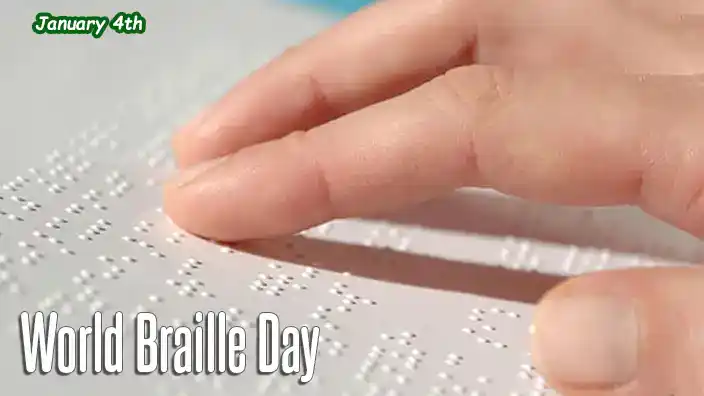
Braille is proof that when life gives you bumps, you make an alphabet. Invented by Louis Braille, who apparently looked at a dot and thought, “This could be a book,” it’s the only writing system where proofreading involves running your fingers over sentences like a miniature roller coaster. It’s tactile genius, but you have to wonder—did the first reader ever shout, “Whoa, slow down, I can’t read 30 words per minute uphill!” Braille reminds us that reading doesn't always require a pair of glasses, just a good sense of touch and a willingness to appreciate the dot-to-dot art of storytelling.
Celebrated: Annually, on January 4th
World Braille Day celebrates accessibility and the legacy of Louis Braille, who transformed communication for the visually impaired with his innovative six-dot system.

- Details
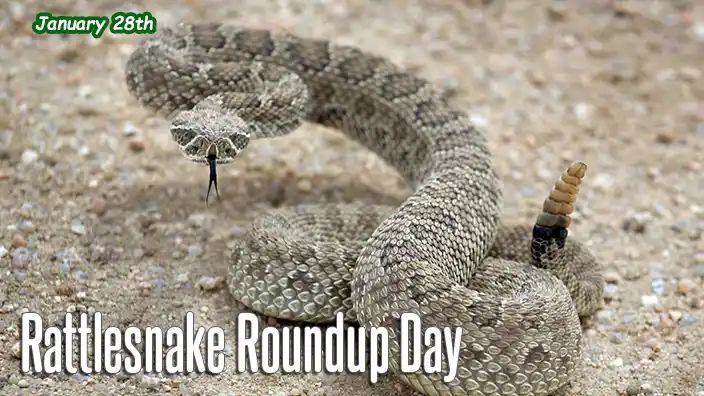
Catching rattlesnakes is like playing the world's most dangerous game of tag, where the 'tagger' has venomous fangs and a temper. It's for those who looked at regular snake catching and thought, "This is nice, but how can I raise the stakes?" Armed with a stick and a sack, these intrepid souls tiptoe into the rattlesnake's living room, trying to convince a creature that's basically all tail and bad attitude to kindly hop into a bag. It's a hobby that combines the thrill of adventure with the excitement of not getting bitten, proving that sometimes, the best way to get a leg up on danger is to avoid having it bite you in the leg.
Celebrated: Annually, on January 28th
Discover Rattlesnake Roundup Day: a blend of snake wrangling, education, and quirky fun in a unique celebration.
- Details
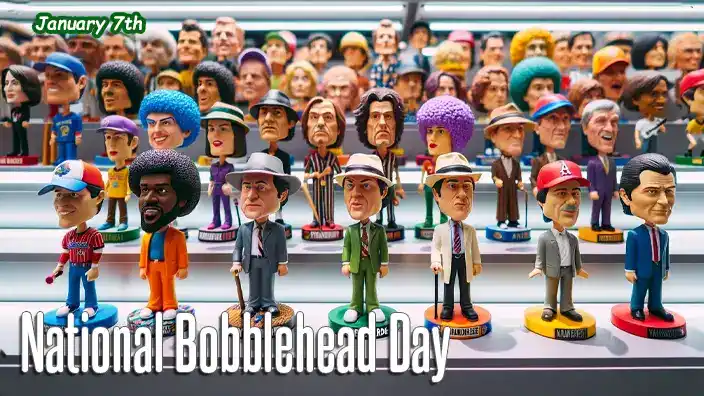
This is when we celebrate those nodding little figures that agree with everything we say—no questions asked. It’s the one day a year your bobblehead collection can take center stage without any backtalk, literally. Whether it's your favorite athlete who perpetually nods in approval of your couch-potato lifestyle or a historical figure who seems to bobble in disbelief at your questionable life choices, today is their day to shine, nod, and make no comment. So dust off those agreeable little companions and let them bobble till they
Celebrated: Annually, on January 7th
Discover the fascinating world of bobbleheads and their quirky charm as collectors worldwide celebrate National Bobblehead Day on January 7th. Explore the history, sports connections, and pop culture influence of these delightful nodding figurines.


- Details
The hero of the postal world and the arch-nemesis of silence. It's the only packaging material that doubles as a stress-relief tool and a DIY pop concert. Who hasn't been tempted by the siren call of those little air-filled pockets, each pop a miniature explosion of joy? It's like nature's way of saying, "Here, have a tiny burst of happiness!" And let's be real: receiving a package is cool, but the real treasure is the bubble wrap. It's the adult equivalent of finding bubble gum in your lollipop – a surprise bonus that keeps on giving, one pop at a time. Just remember, popping bubble wrap is like eating chips; you can't stop at just one, and suddenly, it's 3 AM, and you're wondering where all the bubble wrap went.
Celebrated: Annually, on January 29th
Celebrate National Bubble Wrap Day with a pop! Discover the journey of bubble wrap from quirky wallpaper idea to pop culture icon, and the joy of popping.


- Details
Some holidays come with fireworks, others with parades—but Haitian Independence Day comes with something far more powerful: a story that basically looked at the 18th century, folded its arms, and said, “No, we’re doing things differently.” And then it actually did. If history had a highlight reel, this one would be in bold, underlined, and probably playing dramatic music in the background.
Celebrated: Annually, on January 1st
Haitian Independence Day celebrates January 1, 1804, when Haiti became the first Black republic and the first nation to abolish slavery.


- Details
Bouncing between playful and sophisticated, these little round wonders have a way of sneaking into everything from vintage dresses to coffee mugs. They’re proof that sometimes, life’s most delightful surprises come in small, circular packages. While some patterns demand attention with sharp angles or bold lines, this one prefers to charm its way into your heart with a soft and rhythmic design. It’s not just a style—it’s a celebration of simplicity with a twist of fun, proving that a few dots can make a world of difference.
Celebrated: Annually, on January 22nd
Join the fun of National Polka Dot Day with creative ideas, DIY projects, and a look at the cultural significance of polka dots in fashion and art. Celebrate with style!


- Details
Hot chocolate is like a warm hug in a mug, but with fewer awkward pats on the back and more marshmallows. It's the only drink that can simultaneously scald your tongue and warm your heart. Legend has it that each sip contains a tiny bit of magic, probably stolen from a grumpy unicorn who was trying to enjoy his morning cocoa in peace. It's the solution to most of life's problems, except maybe 'How do I get this chocolate stain out?' Let's face it, if there were a Nobel Prize for Beverages, hot chocolate would have its own shelf of awards by now.
Celebrated: Annually, on January 31st
Today is National Hot Chocolate Day! Discover fun facts, quirky traditions, and why this day is a must-celebrate for chocolate lovers.

- Details
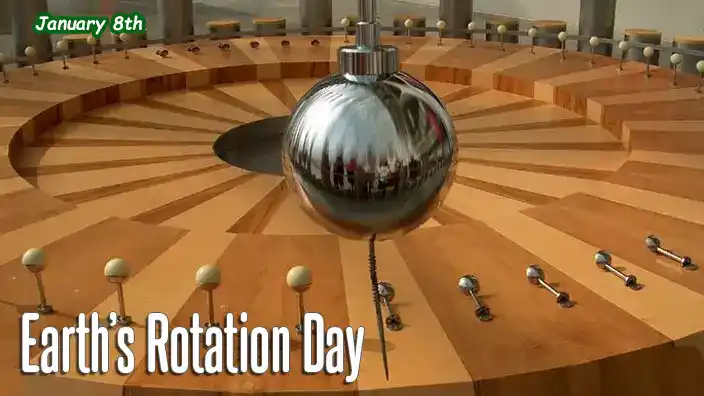
Earth’s rotation is like the planet’s version of a lazy dance move—it just spins in place and hopes no one notices it’s been doing the same thing for billions of years. Imagine if we could hear it: a constant whoosh as Earth insists on showing off its “360 degrees in 24 hours” routine, like an overenthusiastic figure skater stuck in perpetual motion. And don’t even get it started on time zones—it’s the ultimate party trick. Meanwhile, we’re all just clinging to the surface, acting like gravity is keeping us grounded, when really, Earth is just spinning too fast for us to let go!
Celebrated: Annually, on January 8th
Celebrate Earth's Rotation Day on January 8th! Join the fun with science, themed parties, and learn about our planet's incredible spinning journey.

From Our Marks Catelog
-

Brussels sprouts: the tiny green orbs that have been sparking dinner table debates for...
-
Elegance, mystery, and just the right amount of arrogance—some things demand admiration without lifting...
-
National Cake Day is the one day of the year when it's socially acceptable to have your cake and eat...
-

Forget glow-in-the-dark snack cakes and cheese that comes in a spray can—there’s something wildly...
-
If there were an Olympic event for clumsiness, someone would be rolling down the hill, missing their...
-
Gazpacho Soup Day isn’t just a day to honor cold tomato soup; it’s a day to revel in the absurdity of...

